
Maybe you've been priced out of Seattle's eastside and someone mentioned Bainbridge Island as a softer landing. Maybe you already know it's expensive but you're not sure how expensive, or what you actually get for the money. The honest answer is this: Bainbridge Island is one of the priciest residential markets in the entire Puget Sound region — and the price is inseparable from the geography. You are buying onto an island. The ferry ride, the forest, the 35-minute crossing to downtown Seattle — all of it is baked into every listing price.
What softens the blow is Washington's tax structure. There is no state personal income tax, which matters enormously if you're commuting to Amazon or Microsoft on a six-figure salary. Sales tax runs close to 9.5% combined, but unprepared groceries are exempt. Property taxes are lower than most people expect for a market at this price point. The median household income here is $172,188 — one of the highest in Kitsap County — and the community has calibrated itself around dual-income professional households who treat the ferry commute as a deliberate lifestyle choice rather than an inconvenience.
The non-housing costs carry their own island premium. Groceries run noticeably above the national average, water and sewer rates are rising to fund significant infrastructure upgrades, and if you drive your car onto the ferry for a Seattle day trip, that's a real per-trip cost. Overall, depending on the index, Bainbridge Island's cost of living runs somewhere between 19% and 28% above the national average — with housing doing the heaviest lifting by a wide margin.
Whether you're weighing a move from Seattle, comparing notes against Poulsbo or Bremerton, or just trying to build an honest monthly budget, the sections below break down Bainbridge Island's home prices, rents, everyday expenses, a side-by-side city comparison, and what Washington's tax structure means for your bottom line.
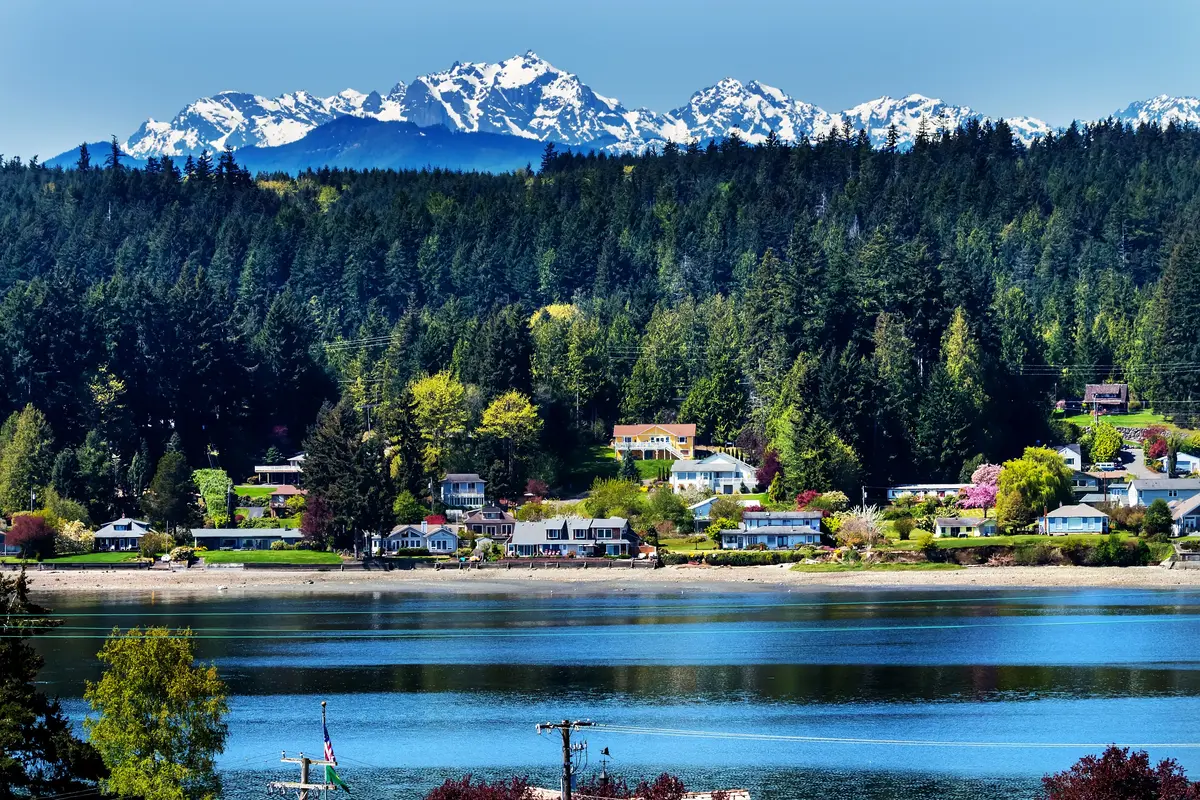
What It Really Costs to Live in Bainbridge Island
The Zillow Home Value Index put the typical home value on Bainbridge Island at $1,184,279 as of May 2026 — a figure that places it among the seven most expensive communities in Washington State. That number is not a ceiling; it is a midpoint. Entry-level homes exist, but they come with genuine trade-offs in size, condition, or location on the island.
What drives the price here is not one thing but a combination that is hard to replicate anywhere else in the Puget Sound: ferry-connected proximity to Seattle, a low-density wooded landscape that is legally protected from rapid development, and a community infrastructure that draws families who are specifically shopping for it. Supply is structurally constrained by the island's shoreline and its rural-residential zoning. That constraint is permanent.
Compared to Seattle's most sought-after neighborhoods, Bainbridge Island prices are broadly in the same conversation — and in some submarkets, lower. Compared to Poulsbo or Bremerton, Bainbridge Island is in a different tier entirely. The overhead cost of island living — ferry fares, island-premium groceries, rising utility rates — adds several hundred dollars a month to a budget that already carries a substantial housing line item. Anyone doing the math seriously needs to account for both sides of that equation.
Housing: Rent vs Buy in Bainbridge Island
The Buying Reality
Entry-level purchases on Bainbridge Island — typically older construction, smaller square footage, or properties farther from the ferry terminal — start in the high $700,000s to low $800,000s. The city-wide median sits at $1,184,279 (Zillow Home Value Index, May 2026), meaning most of the island's housing stock trades above $1 million. Waterfront and view properties move well into the $2–4 million range.
The effective property tax rate is approximately 0.80% — meaningfully lower than what buyers from California or the Pacific Northwest's higher-tax counties are used to. On a median-priced home, that works out to an annual tax obligation that the interactive calculator below can model for your specific purchase price. Because voter-approved levies shift from parcel to parcel, actual bills vary — the 0.80% figure is the effective rate, not a flat promise.
The Renting Reality
The rental market on Bainbridge Island is thin. Inventory turns slowly because most long-term residents own, and the island's physical size limits multifamily development. Island-wide, two-bedroom rentals run in the mid-to-upper $2,000s per month, with three-bedroom and waterfront units commanding meaningfully more. These are ranges drawn from current listings, not guarantees.
Renting makes the most practical sense for people relocating here before they've decided whether the ferry commute works for their lifestyle long-term — a smart move, because a meaningful number of buyers who don't road-test the ferry schedule end up reselling within two to three years. The island rewards people who know what they're signing up for.
Best for:
Buying: Dual-income households already working in Seattle or on the Eastside who want more space and a daily decompression built into the commute. Renting first: Anyone relocating from outside the Pacific Northwest who hasn't experienced a Puget Sound winter crossing yet.

Everyday Costs Beyond Housing in Bainbridge Island
Electricity on Bainbridge Island runs approximately $213 per month for a typical residence — about 14% below the national average annual electric bill, according to EnergySage data from July 2026, even though the local rate is around 16 cents per kilowatt-hour. The Pacific Northwest's hydro-power grid keeps rates relatively manageable.
Water and sewer costs are a different story. The city has approved significant rate increases through 2028 to fund long-deferred infrastructure upgrades, and current residents are already seeing the effect on their bills. Budget for water and sewer costs that climb meaningfully over the next few years regardless of where on the island you land.
Groceries carry an island premium — approximately 16.3% above the national average, per AreaVibes cost-of-living data. The logistics of supplying an island community are real, and they show up at checkout. The ferry is the dominant transportation cost for anyone commuting to Seattle: walk-on commuters can buy a 31-round-trip monthly pass for $144.65, or a 10-ride card for $90.40 (rates effective May 2026). Driving a vehicle aboard costs $21.30 each way — a cost that adds up fast if you're crossing multiple times a week. For day-to-day on-island errands, most residents drive; the island's transit options are limited compared to the mainland.
| Category | Typical Monthly Cost | Notes |
|---|---|---|
| Housing (island-wide rent) | Mid-to-upper $2,000s range | Owners: use the mortgage calculator above for a purchase estimate |
| Electricity | ~$213 | EnergySage estimate, July 2026; varies by home size and season |
| Water & Sewer | $80 – $140 | Rates rising significantly through 2028 per city-approved infrastructure plan |
| Groceries (2-person household) | $700 – $950 | Approximately 16% above national average; unprepared groceries are sales-tax exempt |
| Transportation & Ferry | $145 – $300 | Walk-on monthly pass $144.65; add gas and vehicle ferry costs if driving to Seattle |
| Phone & Internet | $120 – $200 | Island broadband options are improving but remain more limited than urban Seattle |
| Miscellaneous / Discretionary | $400 – $800 | Dining along the main commercial strip, weekend activities, and island amenities |
These figures are estimates for planning purposes, not guarantees. Your actual costs will vary based on household size, commuting frequency, and lifestyle.
Looking to buy in Bainbridge Island? Estimate your payment.
Enter your numbers to see an estimated monthly mortgage payment.
Estimate only. Excludes HOA fees and mortgage insurance. The interest rate above is a starting point, not a quoted rate — replace it with your own to see real numbers. Insurance is a flat placeholder, not a Bainbridge Island quote.
Bainbridge Island vs Nearby Cities: Cost Comparison
| City | Median Home Price | Typical 2BR Rent | Cost vs Bainbridge Island |
|---|---|---|---|
| Bainbridge Island | $1,184,279 (Zillow Home Value Index, May 2026) | Mid-to-upper $2,000s/mo | — (baseline) |
| Seattle | ~$850,000 – $950,000 | $2,600 – $3,500/mo | Homes noticeably cheaper; rent roughly comparable |
| Poulsbo | ~$575,000 – $650,000 | $1,700 – $2,200/mo | Substantially cheaper across the board |
| Bremerton | ~$390,000 – $450,000 | $1,400 – $1,800/mo | Far more affordable; different market tier |
| Kingston | ~$500,000 – $580,000 | $1,600 – $2,100/mo | Meaningfully cheaper; ferry-connected but longer crossing |
| Suquamish | ~$550,000 – $650,000 | $1,700 – $2,200/mo | Noticeably cheaper; no direct ferry to Seattle |
The gap between Bainbridge Island and its Kitsap neighbors is substantial — in most cases, buyers can find homes for roughly half the price across the water or in Poulsbo. What those markets don't offer is the same 35-minute walk-on ferry connection to downtown Seattle, or the community infrastructure that Bainbridge Island has built around itself over decades.
Taxes & the Bottom Line for Bainbridge Island
No State Income Tax
Washington levies no personal income tax on wages or salaries. For a household earning $172,188 — the island's median — this is a meaningful annual advantage over states like Oregon or California. Tech workers commuting to Amazon or Microsoft are effectively capturing thousands of dollars a year that residents in neighboring states are not.
Sales Tax
The combined state and local sales tax rate in Washington runs approximately 9.51% in 2026 — among the higher rates in the country. The important carve-out: unprepared groceries are exempt. You'll feel the rate most when buying electronics, furniture, vehicles, or appliances. A kitchen remodel or a new car purchase carries a real tax bite at that rate.
Washington's Capital Gains Tax
Washington taxes 7% on long-term capital gains above a $278,000 standard deduction for 2025, rising to 9.9% on gains above $1,000,000. Primary home sales are exempt, which matters enormously on an island where the typical home has appreciated significantly. Retirement accounts and most small business sales are also exempt. This tax matters most to investors and people selling equity stakes, not to the typical homeowner.
Property Tax Rate
The effective property tax rate of approximately 0.80% is one of the more buyer-friendly aspects of Bainbridge Island's cost structure. At the home-price level discussed above, that rate results in a meaningful annual obligation — but it is lower than the effective rates in many comparable coastal markets. The rate can shift slightly as voter-approved levies come and go.
The Honest Bottom Line
Bainbridge Island's finances work most cleanly for dual-income households with combined earnings well above $175,000, who have made peace with the ferry as a feature rather than a burden, and who can stay long enough to let appreciation and Washington's tax structure work in their favor. The island consistently disappoints buyers who underestimate the ferry's time cost, overestimate how often they'll drive to Seattle, or stretch to buy at the top of their range and then feel squeezed by island-premium grocery and utility bills on top of it. If the numbers require you to ignore any one of those friction points, that's the signal to look at Poulsbo or Kingston first.
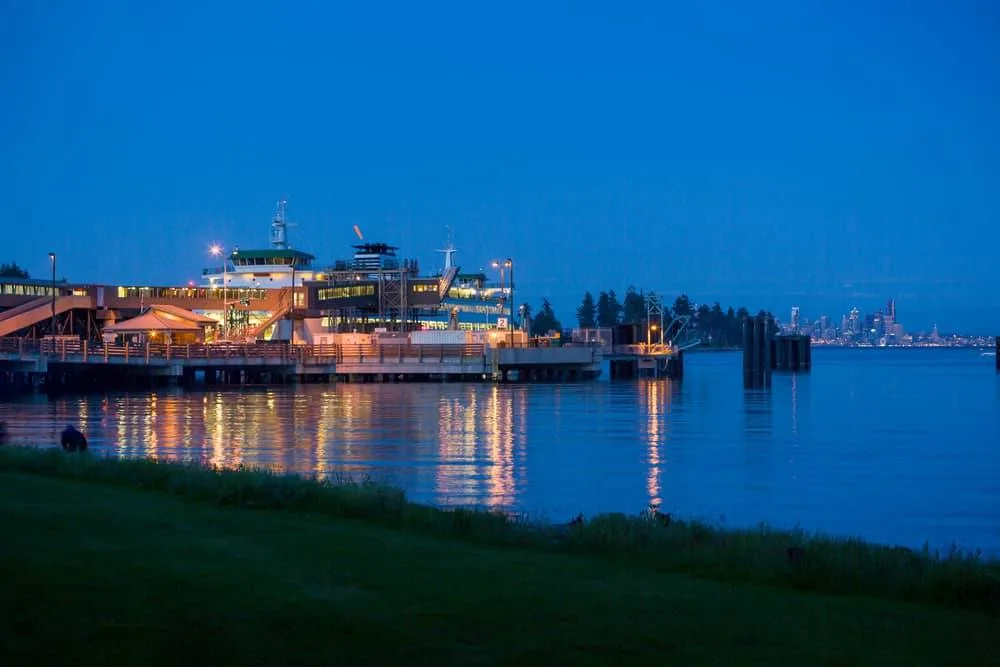
Local Expert Takeaway: The ferry pass is the hidden line item most newcomers forget to budget. At $144.65 for a 31-round-trip monthly pass, a walk-on commuter spends close to $1,750 a year just getting to Seattle — before a single dinner along the main commercial strip or a pint at one of the island's independent breweries. That's not a reason to rule out the island, but it belongs on the spreadsheet. The buyers who thrive here have done the full math, tested the crossing in February, and decided the trade — a $1.18 million median, an island grocery premium, and rising utility bills — is worth the forest and the fact that Washington takes nothing from their paycheck.
Quick Takeaways & FAQs
✅ Washington's zero state income tax is a genuine financial advantage — a high-earning tech commuter saves thousands annually compared to living in Oregon or California.
⚠️ The typical home value of $1,184,279 (Zillow Home Value Index, May 2026) means Bainbridge Island is a significantly pricier market than every Kitsap County neighbor, including Poulsbo, Kingston, and Bremerton.
📍 Ferry costs are a real monthly line item: walk-on commuters spend $144.65 on a monthly pass, while driving your car aboard runs $21.30 each way — budget this before you fall in love with a listing.
What is the typical home price on Bainbridge Island in 2026?
Is it cheaper to live on Bainbridge Island than in Seattle?
How much does the ferry cost for daily commuters from Bainbridge Island to Seattle?
Does Washington State have an income tax that affects Bainbridge Island residents?
What is the property tax rate on Bainbridge Island?
Moving to Washington?
Tell us what you need help with and we'll connect you with local resources.
