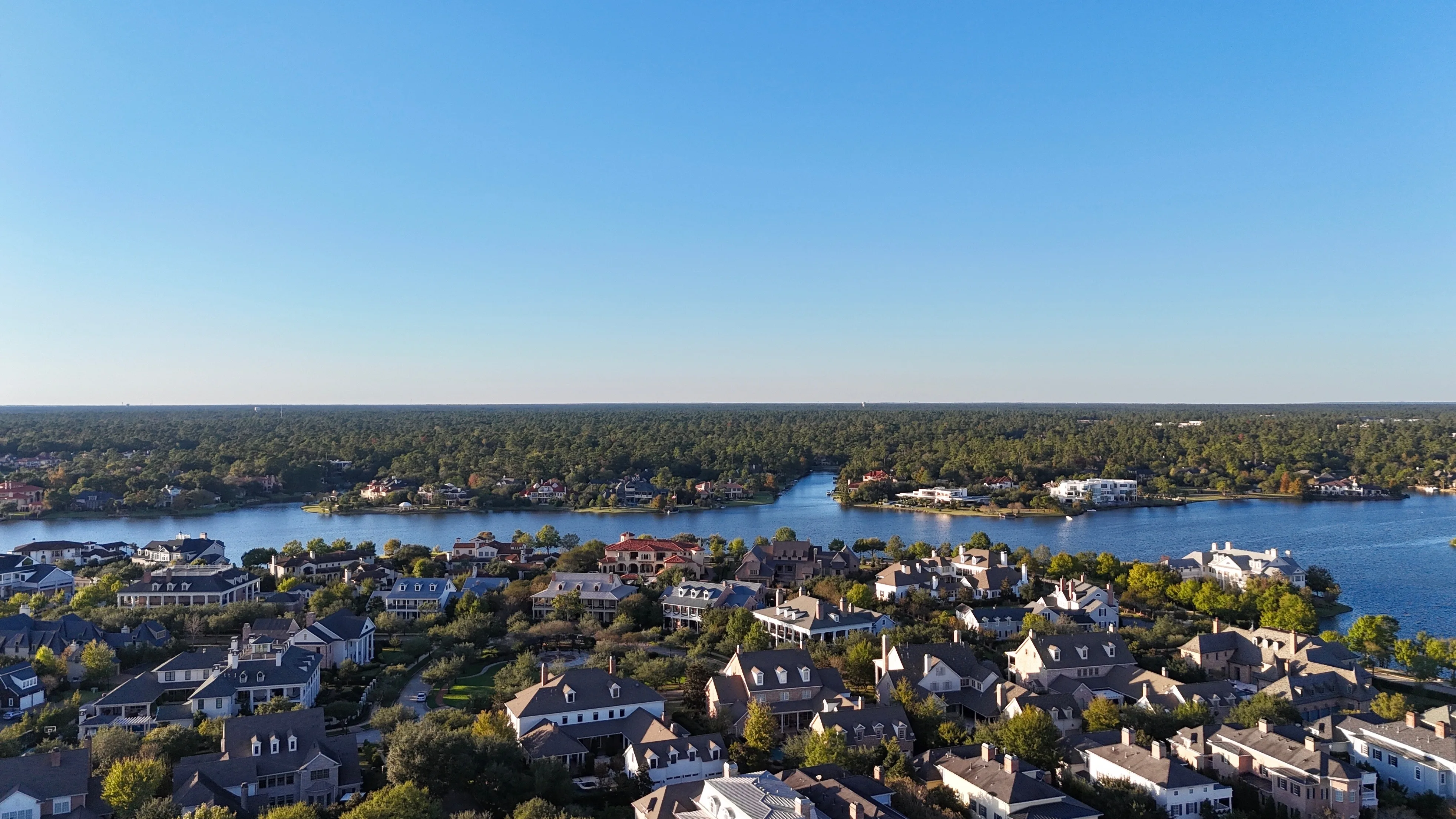
North Houston · Best Places to Retire · 2026
Best Places to Retire in North Houston, Texas — Every City Ranked
Cities graded on healthcare access, walkability, affordability, Gulf Coast climate, and overall quality of life for retirees.
Cities graded on healthcare access, walkability, affordability, Gulf Coast climate, and overall quality of life for retirees.
Choosing where to retire in North Houston is not the same decision it was a decade ago. The corridor stretching from Harris County into Montgomery County has grown fast enough that some cities here now carry price tags and amenity rosters that rival suburban Dallas or Austin — while others remain working small towns where your dollar goes further and the pace is quieter. I-45 is the spine most people picture when they think of this region, but the actual spread of communities runs from the Piney Woods east of US-59 all the way west to the rolling country around FM-1488. What ties these cities together is a shared Gulf Coast climate that no ranking can fully soften: hot, humid summers and fewer sunny days than most of Texas are the reality everywhere on this list.
The differences between these cities are bigger than most buyers expect when they start their search. Cities with hospitals right inside their limits offer a fundamentally different retirement calculus than ones where a meaningful drive separates you from emergency care. Walkability — genuinely rare in suburban Houston — exists in a few pockets here, and where it does it changes daily life considerably. The sections below break down each city on the factors that matter most to retirees: access to care, getting around on foot, what your housing dollar buys, how livable the climate actually is, and what daily life looks and feels like.
Each city is scored 1-10 on every dimension below against a fixed statewide scale — never against the other cities in this region — then combined into one weighted Composite score out of 10.
Ranked by overall composite score. Click any city to jump to the full breakdown.
| # | City | Composite | Healthcare | Walkability | Median Price |
|---|---|---|---|---|---|
| 1 | Conroe Montgomery County | 6.5/10 | 8 | 6 | $315,986 |
| 2 | New Caney Montgomery County | 5.7/10 | 6 | 6 | $263,075 |
| 3 | Tomball Harris County | 5.5/10 | 8 | 6 | $361,053 |
| 4 | The Woodlands Montgomery County | 5.4/10 | 8 | 6 | $630,000 |
| 5 | Spring Harris County | 5.2/10 | 6 | 8 | $369,011 |
| 6 | Klein Harris County | 4.6/10 | 6 | 6 | $368,676 |
| 7 | Jersey Village Harris County | 4.2/10 | 6 | 2 | $387,116 |
| 8 | Montgomery Montgomery County | 3.7/10 | 4 | 4 | $393,324 |
| 9 | Magnolia Montgomery County | 3.6/10 | 4 | 4 | $364,817 |

#1 Top Overall · Montgomery County
Best for retirees who want healthcare in town and real city variety.
Conroe is one of the more complete retirement pictures in North Houston, anchored by a hospital right inside city limits and a genuine variety of dining, parks, and landmarks that give residents something to do without a long drive. A $315,986 typical home price puts it within reach for buyers who want the services and infrastructure of a city the size of Conroe — the 35th-largest incorporated city in Texas — without the premium of a fully master-planned community. The 55+ communities here include Villas at White Oak Ranch and Water Crest on Lake Conroe, the latter giving waterfront access that is genuinely rare on this list. I-45 carries you toward Houston when you need a specialist, and Loop 336 keeps local errands manageable.
Conroe suits retirees who want strong local healthcare and real community variety. It is a more urban, activity-rich environment than Montgomery or Magnolia, and the housing cost reflects solid services without the significant premium that comes with a fully built-out planned community — making it a practical choice for buyers who want proximity to major care while keeping housing costs in check.

#2 Top Affordability · Montgomery County
Best for budget-conscious retirees comfortable with a rural pace.
New Caney sits deep in the Piney Woods along I-69 and US-59, and that location defines almost everything about the retirement experience here. There is no hospital inside city limits, though a regional facility is a manageable drive away for routine needs. What New Caney does offer is an accessible price point for the North Houston corridor — a $263,075 typical home price driven by newer construction that gives buyers good bones. Valley Ranch Town Center brings real dining and retail options that did not exist here a few years ago.
No dedicated 55+ communities were found in New Caney, and the car-dependent layout means daily independence requires staying comfortable behind the wheel. This city tends to suit retirees who are budget-conscious, comfortable with a more rural-leaning pace, and not prioritizing walkability or on-the-ground hospital access as their first criteria.
#3 Top Healthcare · Harris County
Best for retirees who want a walkable downtown and a hospital nearby.
Tomball's Old Town corridor is one of the few genuinely walkable downtown pockets in suburban Houston, and for retirees who want to park the car and wander — antique shops, casual dining, a historic rail depot — it delivers something that few other cities in this region can offer. A hospital is right in town, which matters enormously for retirees weighing where to plant roots long-term. The trade-off is a $361,053 typical home price in a small city where the amenity count, outside Old Town, is modest by suburban Houston standards. Winfrey Estates is the one named 55+ community here.
Tomball tends to appeal to retirees who put walkable character and on-the-ground healthcare near the top of their list and are willing to accept a quieter, smaller-city footprint. Buyers coming from Spring or Klein will find a more intimate feel and a genuine downtown; buyers coming from The Woodlands will find fewer services and a very different pace.
#4 Top Healthcare · Montgomery County
Best for retirees who want maximum services and a polished community.
The Woodlands is one of the most comprehensively built-out communities in Texas — with multiple hospitals in town, a rich mix of dining and outdoor amenities, and a master-planned environment where daily life is genuinely comfortable. All of that comes with a $630,000 typical home price that puts it in a separate tier from every other city on this list. Windsor Hills is the named 55+ community here. SH-99 and I-45 give strong regional connectivity, and the Waterway area provides a walkable, resort-like environment that is unusual for suburban Houston — even if most daily errands still require a car.
The Woodlands suits retirees for whom budget is secondary to services, safety, and a polished community environment. Buyers who find the price difficult to absorb but still want Montgomery County's property tax environment often look at Conroe or Magnolia instead — the trade-off is fewer on-the-ground services for meaningfully less housing cost.
#5 Top Walkability · Harris County
Best for retirees who value a walkable historic core in suburbia.
Spring carries something genuinely rare for suburban Houston: Old Town Spring is a walkable historic district with real pedestrian life in a large suburban community. That walkable core matters for retirees who want to move through their daily lives without always depending on a car. There is no hospital inside city limits, but a regional facility is close by. The typical home price of $369,011 reflects a community that has attracted steady demand from buyers who want suburban convenience without fully giving up on neighborhood character.
Spring tends to suit retirees who value walkable daily life and a connected location along I-45 and SH-99. No dedicated 55+ communities were found here, so buyers looking for that specific community structure will need to look at Conroe, Tomball, or The Woodlands instead.
#6 Established Northwest Suburb · Harris County
Best for retirees already rooted in northwest Harris County.
Klein is a large, established Harris County community that sits in the thick of the North Houston suburban fabric — close to major retail, along SH-249 and SH-99, and within a reasonable drive of multiple hospital systems even though there is no hospital inside Klein proper. The typical home price of $368,676 is consistent with what much of suburban Harris County commands. The daily experience here is car-dependent in the way most of suburban Houston is, and the dining and landmark variety is more modest than comparably sized communities on this list.
Klein tends to suit retirees who are already rooted in the northwest Harris County area, value proximity to Houston's job centers for visiting family, and are not prioritizing walkability or on-the-ground hospital access. No dedicated 55+ communities were found here, which is worth factoring in if community structure matters to your retirement plan.
#7 Enclave City · Harris County
Best for retirees who want to stay close to Houston's core.
Jersey Village is a small, self-contained city entirely surrounded by Houston, which gives it a genuinely different character than the Montgomery County communities on this list — and the environment is fully car-dependent. A full hospital is close by even though none sits inside city limits. The typical home price of $387,116 buys into a tight-knit, established neighborhood with a local golf course and parks, but the amenity count is modest and walkability is limited in a meaningful way. US-290 is the primary connector.
Jersey Village tends to suit retirees who want to stay close to Houston's core for family, medical specialists, or cultural amenities, and who prefer a small, stable community footprint over a growing suburban one. No dedicated 55+ communities were found here. Buyers who want more walkable daily life or on-the-ground hospital access will find better fits elsewhere on this list.
#8 Rural Lake Town · Montgomery County
Best for retirees who want rural quiet near Lake Conroe.
Montgomery is a genuinely small town — the 489th-largest incorporated city in Texas — with a historic square and a rural character that the communities further south on I-45 simply do not have. What it trades for that quiet is distance: the nearest hospital is a meaningful drive away in Conroe, which is a serious consideration for retirees weighing long-term healthcare access. The typical home price of $393,324 is notable for a town this small and rural, reflecting demand from buyers who want acreage and privacy near Lake Conroe without paying the premium of a fully planned community. TX-105 and FM-149 are your primary routes.
No dedicated 55+ communities were found in Montgomery. This town tends to suit retirees who genuinely want a rural pace, are comfortable driving for nearly all services, and prioritize landscape and quiet over proximity to care. Buyers with serious ongoing medical needs will want to weigh that hospital distance carefully before committing.
#9 Growing Country Town · Montgomery County
Best for retirees seeking a quieter pace west of The Woodlands.
Magnolia is a small, fast-growing Montgomery County town along FM-1488 and FM-1774, with a character that sits somewhere between rural and emerging suburb. There is no hospital in town, and reaching the nearest emergency room requires a meaningful drive. The typical home price of $364,817 reflects a community that has attracted buyers looking for a quieter pace west of the master-planned suburbs, though the amenity picture — dining options, outdoor landmarks, everyday retail — is thinner than most other cities on this list.
No dedicated 55+ communities were found in Magnolia. This town tends to suit retirees who want a quieter, more rural pace, are comfortable being car-dependent for nearly everything, and do not require on-the-ground hospital access in their immediate community. Buyers who want more services close by will find Conroe or Tomball a better fit.
No city in North Houston fully escapes the Gulf Coast climate, so the real retirement decision here comes down to healthcare access and what kind of daily life you want — walkable small-town character, master-planned amenities, or rural quiet with a longer drive to everything.
Tell us what you need help with and we'll connect you with local resources.
