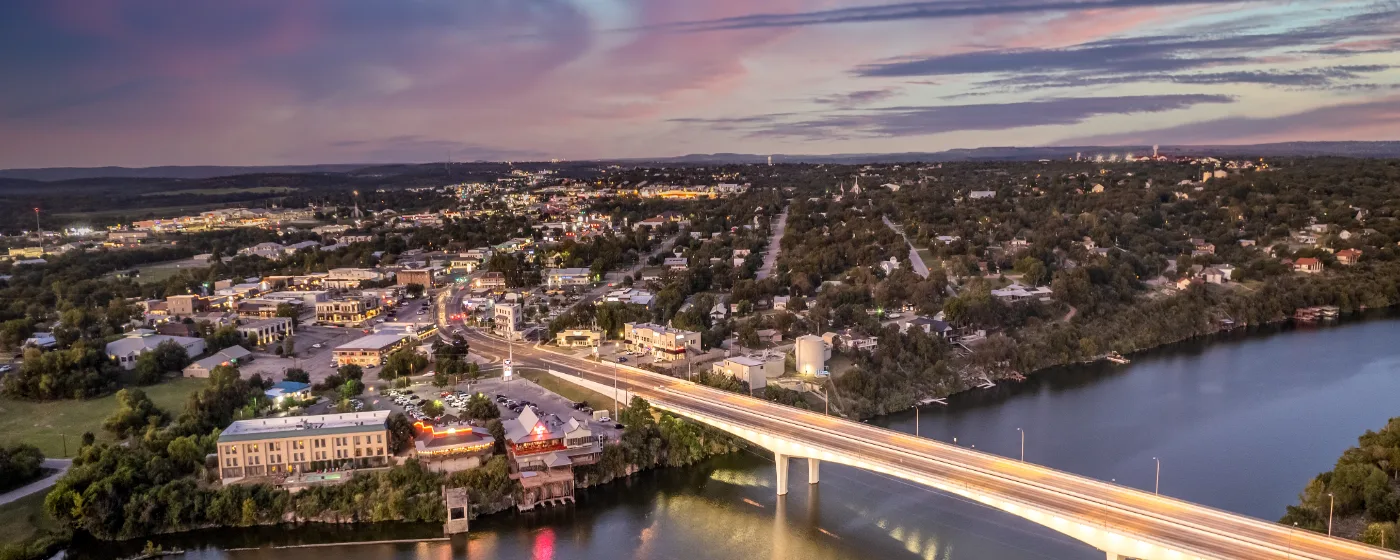
What Is Living in Marble Falls, Texas Like?
Maybe you've been priced out of Austin and someone mentioned Marble Falls. Maybe you drove through on TX-71 on a weekend getaway and thought, wait — people actually live here? The city sitting on the Colorado River in Burnet County doesn't look like a boomtown from the outside. Then you check the Census data: its population jumped by roughly 24% in a single year, from 7,594 in mid-2023 to 9,413 in mid-2024, with city officials pointing squarely at westward migration from the Austin metro. That growth rate is not a rounding error. It reflects a real shift in where Texas families are deciding to plant roots, and it is reshaping a small lakeside city faster than its infrastructure anticipated. Understanding what is driving people here — and what they find once they arrive — is the honest starting point for any decision about moving to Marble Falls.
The economic backbone here is compact but real. The Marble Falls Independent School District, with 4,066 students enrolled in 2025-26, is among the city's anchoring employers alongside the City of Marble Falls itself and a regional health system that brought institutional investment and jobs when it opened. Walmart Supercenter rounds out the local employer picture, which tells you something honest about the economy: this is not a corporate campus town. Many residents commute out, work remotely, or run small businesses tied to the Hill Country tourism and trades economy. The school district holds a C rating, according to the Texas Education Agency — worth understanding before assuming Hill Country charm translates to top-rated schools. For families with school-age children, that rating is a real part of the calculus. The full picture on Marble Falls ISD is on the schools page.
On cost of living, Marble Falls sits in an interesting position. The typical home price of $403,309 (Zillow Home Value Index, July 2026) is noticeably below what comparable lake-adjacent properties command in the Austin suburbs, but it is also well above what the local median household income of $57,925 can comfortably carry. Many buyers moving here are bringing equity from Austin or out of state — and that gap between local wages and local home prices is a real tension for anyone not in that position. Day-to-day life benefits from 226 sunny days a year, a genuinely walkable Historic Downtown Main Street with independent shops and restaurants, and immediate access to Lake Marble Falls, Lake Lyndon B. Johnson, and several hundred acres of Colorado River recreation land. The full cost breakdown — including the effective property tax rate of 1.30% and typical rent of $1,551/mo — is on the cost of living page.
Whether you're deciding between Marble Falls and a closer-in Austin suburb, or you're arriving from out of state and the Hill Country lifestyle is the draw, the sections below break down Marble Falls's neighborhoods, the housing market, daily commuting realities, local favorites, and what life here actually looks like once the weekend-trip feeling wears off.
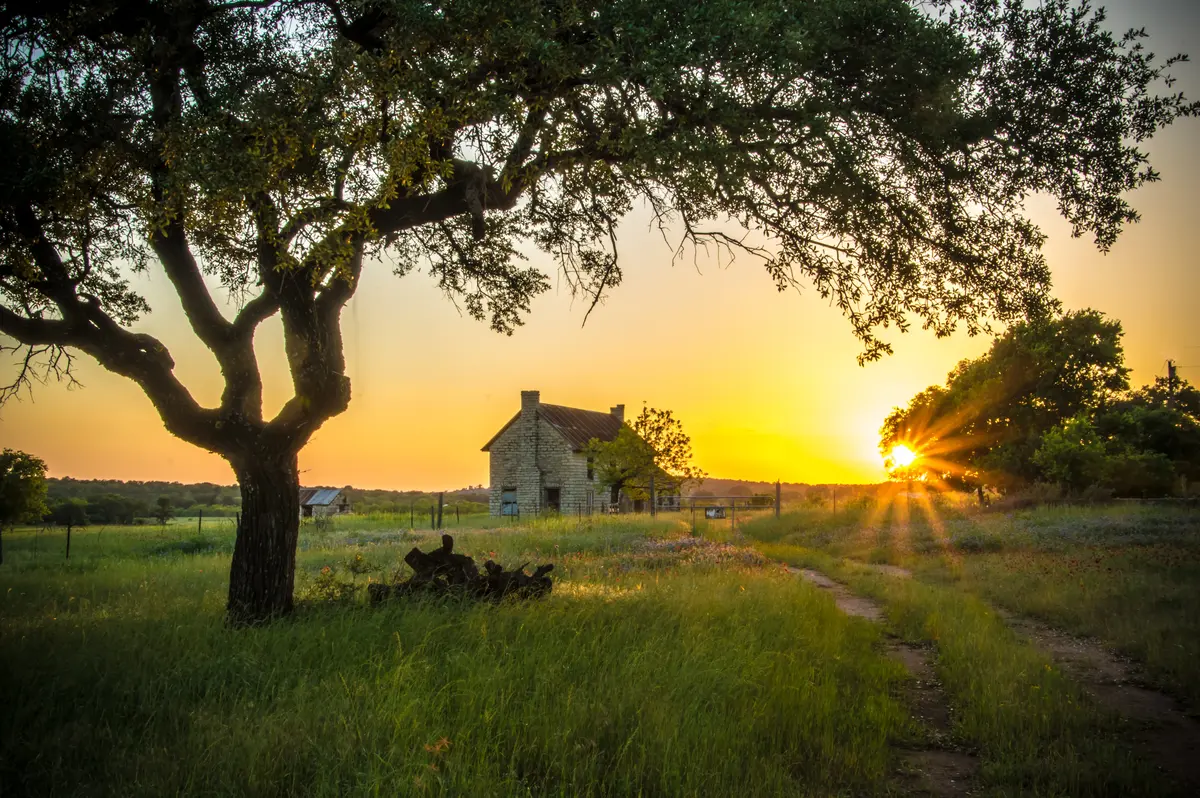
Marble Falls at a Glance
Looking to buy in Marble Falls? Estimate your payment.
Enter your numbers to see an estimated monthly mortgage payment.
Estimate only. Excludes HOA fees and mortgage insurance. The interest rate above is a starting point, not a quoted rate — replace it with your own to see real numbers. Insurance is a flat placeholder, not a Marble Falls quote.
Why Are People Moving to Marble Falls?
The pull is simple to state and harder to live up to: a small Colorado River city with a real downtown, lake access, Hill Country scenery, and a price point that still looks reasonable when compared to the Austin neighborhoods people are leaving. What has changed is the pace — the city that once grew slowly is now absorbing hundreds of new households a year, and that growth is visible in the construction cranes along the newer subdivisions and in the wait times at the intersection of US-281 and TX-71.
Who Is Actually Moving Here
The most common profile is an Austin-area household — often with remote work flexibility, or a long commute they've decided to accept — trading a smaller house in a crowded suburb for more square footage, a lakeside setting, and a different quality of daily life. A significant share of retirees and pre-retirees is also arriving, drawn by the scenery and the pace; the 2020 Census found that 22.1% of residents were 65 or older, which is a notably high share for a city this size. That mix of young families and older arrivals gives Marble Falls a more balanced social texture than many pure-retiree Hill Country towns.
What the Growth Actually Means
The subdivisions of Thunder Rock, Gregg Ranch, and Legacy Crossing were enabled by deliberate infrastructure investment — a 2008 bond funded roughly 6 miles of water and wastewater lines that made large-scale development possible on the edges of town. As of 2024-25, approximately $60.1 million in active construction and development projects were underway across the city. That is real momentum, but it also means buyers entering now are buying into a city that is still figuring out its roads, its services, and its identity as something larger than it was five years ago.
The Honest Case Against Moving Here
The income-to-price gap is the most important number in this decision. The median household income in Marble Falls sits well below — by about $70,000 — what is needed to carry the typical home price. If you are not bringing outside equity or remote income, the affordability story is harder than the lake views suggest. And the commute to Austin — about 55 minutes to Austin under normal conditions — is longer than most people imagine when they first fall in love with the drive on a weekend. For buyers weighing what the move costs financially, see the full breakdown on the cost of living page.
What Daily Life Feels Like in Marble Falls
Daily life in Marble Falls has two speeds: the slower, lake-town rhythm that drew most people here, and the increasingly busy arterial reality of a city absorbing rapid growth. Both are real, and which one dominates your experience depends almost entirely on where you live relative to US-281 and how often you need to leave town for work or major errands.
The Downtown Core
Historic Downtown Main Street is genuinely walkable once you're in it — a stretch of locally owned shops, galleries, and restaurants along limestone sidewalks, close enough to Lake Marble Falls that you can see the water from the main commercial blocks. The Old Highway 281 Bridge and the Falls on the Colorado Museum anchor the historical identity of the area; the museum chronicles everything from prehistoric geology to the Highland Lakes dam projects that created the lake in 1951. It is a real small-city downtown, not a manufactured tourist strip, though it does draw weekend visitors from Austin who push into the parking and the restaurant wait lists.
Weekend Tourist Traffic: The Surprise for New Residents
Longtime residents know it; newcomers often don't: Marble Falls becomes a different city on Friday afternoons in spring and fall. Hill Country tourism is a real economic engine here, and the same waterfront setting that makes the city attractive to residents makes it a destination for Austin-area day-trippers and weekenders. The restaurants fill up, US-281 through town slows to a crawl, and the lake launches get busy. Most locals time their errands and restaurant visits around the weekend surge — going early, going on weekdays, or heading to spots that don't show up in the travel blogs. After six months, it becomes habit. Before six months, it catches almost everyone off-guard.
Schools and Families
Marble Falls ISD operates across 7 schools with active UIL athletics programs — the Marble Falls Mustangs have a following, and Friday night football is a genuine community event that fills the stands. The district's academic picture, including that on 2024-25 state assessments, 33% of students reached math proficiency and 45% reached reading proficiency, is covered in full on the schools page. Families with kids should read that page before assuming the Hill Country setting correlates with high academic performance; it doesn't, and the C rating from the Texas Education Agency is part of an honest assessment of the tradeoffs here.
Safety Context
Marble Falls carries a violent crime rate of 3.23 per 1,000 residents and a property crime rate of 18.85 per 1,000 residents — both running close to Texas state averages. The full safety picture, with the neighborhood context, is on the safety page.
The Marble Falls Housing Market Right Now
The typical home price in Marble Falls stands at $403,309 (Zillow Home Value Index, July 2026). That figure puts this city in a specific and honest position: well below the Austin-area suburbs buyers are often leaving, noticeably higher than nearby Burnet, and nowhere close to the lake-resort pricing in Horseshoe Bay. For a thorough comparison and the full cost breakdown, see the cost of living page.
What That Price Buys
The housing stock in Marble Falls ranges from compact cottages and older ranch-style homes in and around the Old Town core to larger new construction in the outer subdivisions like Thunder Rock and Gregg Ranch. The newer developments were deliberately built to accommodate growth — they have the HOA structures, the wider lots, and the modern finishes that relocating Austin buyers tend to want. Older inventory closer to downtown sits on smaller lots and tends to be more characterful and more variable in condition.
The Affordability Gap
The central tension for local buyers is real: the median household income in Marble Falls is below the income needed to comfortably carry the typical home here by about $70,000. Most transactions are being driven by buyers with outside equity — from Austin home sales, from out-of-state moves, or from remote income well above the local wage base. If you are a first-time buyer relying primarily on local income, the math is tight; the first-time homebuyer page covers the buying process and what to expect in this market.
Rental Market
The city-wide typical rent runs at $1,551/mo (Zillow, July 2026). That figure covers a range that skews toward smaller homes and older apartment stock near downtown, with newer units in the developing areas running higher. Rental inventory in Marble Falls is relatively limited compared to the pace of ownership-market demand, which is worth understanding if you are considering renting first while you learn the neighborhoods. The neighborhood character breakdown — which areas suit which lifestyle — is on the best neighborhoods page.
Marble Falls Neighborhoods
Marble Falls has several distinct areas — each with its own character and appeal. Here’s a breakdown to help you narrow down where to focus your home search.
🏡 Old Town / Downtown Marble Falls
The historic core of the city, closest to the lake and Historic Downtown Main Street, with a mix of older cottages, bungalows, and small lots that reward buyers who want to walk to restaurants and galleries. It suits buyers who prioritize character and location over square footage.
🏠 Gregg Ranch
One of the larger newer subdivisions enabled by the city's infrastructure expansion, Gregg Ranch draws families and relocating Austin buyers looking for modern homes with HOA-maintained amenities. The feel is planned and family-oriented rather than lakeside and walkable.
🌳 Thunder Rock
A newer development on the growing edges of town that attracted buyers early in the city's recent growth surge, Thunder Rock offers contemporary construction and larger lots in a quieter setting removed from the downtown tourist activity.
🏘 Flatrock Crossing
A residential area that suits buyers looking for newer construction in a less heavily trafficked part of the city, Flatrock Crossing appeals to families and remote workers who want proximity to Marble Falls without being in the middle of the weekend tourism flow.
🏔 Legacy Crossing
Part of the same infrastructure-enabled development wave as Gregg Ranch and Thunder Rock, Legacy Crossing is geared toward buyers seeking newer homes in an established subdivision framework, with the trade-off of being further from the downtown core.
🌆 Lydia Parke
A newer neighborhood that tends to attract buyers prioritizing modern finishes and a quieter residential setting, Lydia Parke suits families and retirees who want contemporary homes without the bustle of the downtown and lake tourist corridor.
Pros & Cons of Living in Marble Falls
The Pros
- Lakeside Hill Country lifestyle with direct access to Lake Marble Falls and Lake LBJ
- Full-service hospital in town, unusual for a city this size
- Lower cost of living and property taxes than nearby Austin metro
- Walkable historic downtown with local shops and dining
The Cons
- Rapid population growth has strained water and infrastructure
- School district test proficiency runs below the state average despite a high graduation rate
- Housing market has cooled sharply, creating price uncertainty for sellers
Getting Around & Commuting in Marble Falls
A car is not optional in Marble Falls — it is the precondition for daily life. Most errands, all grocery runs, and every commute require driving, and the city's position in the Hill Country means that meaningful retail, employment centers, and services outside the immediate downtown core involve real distances. Understanding the road network here is one of the most important things you can do before buying.
The Road Network
Four routes carry virtually all of the city's traffic: US-281 runs the main north-south corridor, connecting Marble Falls to Burnet in the north and to the US-183 corridor toward San Antonio in the south. TX-71 is the primary route east toward Austin — the road most commuters depend on for everything from daily work to airport runs and major shopping. FM-1431 and FM-2147 handle east-west movement and connect to the lake communities along the Colorado River. TxDOT held a public environmental hearing in April 2026 on a proposed $243 million turbine interchange redesign at the US-281 and TX-71 junction, which is the most congested node in the city and the intersection that shapes every commuter's morning. That project, if funded and built, would reshape the most pinched point in the local road network — but it is a long-horizon proposal, not a near-term fix.
The Austin Commute
The commute to Austin is about 55 minutes to Austin under favorable conditions — meaning off-peak, traveling east on TX-71 with no incidents. In practice, the actual experience during a weekday morning push runs longer. Residents who do this daily generally adjust their departure times, leave early, and treat the commute as a known cost of the lifestyle. Those who underestimate it before moving tend to find it the primary frustration of the first year. It is the most common answer to "what would you change?" in conversations with people who made the move from Austin.
Regional Transit
CARTS — the Capital Area Rural Transportation System — operates an Interurban Coach route connecting Marble Falls to Austin and Austin-Bergstrom International Airport, which sits 54 miles away. This is a reservation-style regional service, useful for medical appointments, airport trips, or occasional travel, but it is not a daily commuter option. Most residents rely entirely on their own vehicles for daily life.
Airport Access
Austin-Bergstrom International Airport is the practical gateway for air travel. The drive is manageable for occasional trips, and CARTS provides an alternative for those who prefer not to drive and park. For frequent flyers, the distance is a real consideration — build it into your commute math alongside the daily Austin drive.
Schools in Marble Falls
Families relocating to Marble Falls have public, private, and higher-education options nearby. Here’s a quick overview.
🎓 School District
Marble Falls Independent School District serves K–12 students across Marble Falls and the surrounding area. Rated C (source: Texas Education Agency, 2025 A-F accountability rating (2024-25 school year)).
🏆 Graduation Rate
The 4-year high-school graduation rate here is approximately 97%.
📚 Higher Education
Texas’s public universities — the University of Texas at Austin, Texas A&M University, and the University of Houston — offer four-year degrees statewide, with one of the largest community college systems in the country (50+ public community college districts) providing two-year and workforce programs.
🌐 Online Learning
UT Austin Online and Texas A&M University Online offer fully accredited online degrees for remote learners across the state.
Safety in Marble Falls
A quick look at how Marble Falls compares on the numbers that matter most when weighing a neighborhood or a move.
🛡 Violent Crime
Approximately 3.23 per 1,000 residents.
🔒 Property Crime
Approximately 18.85 per 1,000 residents.
Compared to the most recent national figures from the Bureau of Justice Statistics (2024), Marble Falls’s violent crime is below the national average (about 3.7 per 1,000), and property crime is about the same as the national average (about 18.4 per 1,000).
Against Texas as a whole, Marble Falls’s violent crime is somewhat below the state average, and property crime is about the same as the state average (Bureau of Justice Statistics, Crime Known to Law Enforcement, 2024 (tables 2 and 3)).
Crime rates can vary a lot within a single city, so the citywide numbers above are only a starting point. Some neighborhoods in Marble Falls run well below these averages, while others run higher — the kind of block-by-block detail that matters most when you’re actually choosing where to live. The full guide below breaks it down neighborhood by neighborhood.
Working in Marble Falls
Marble Falls’s largest employers span several industries — here are some of the anchors of the local job market.
🎓 Marble Falls Independent School District
Education
🏛 City of Marble Falls
Municipal government
🏥 Baylor Scott & White Medical Center – Marble Falls
Healthcare
🛒 Walmart Supercenter
Retail
Parks & Recreation in Marble Falls
Some of the outdoor spaces that shape everyday life in Marble Falls.
🌱 Lake Marble Falls
Marble Falls residents don’t have to go far for green space — spots like Lake Marble Falls are part of everyday life here, whether that’s a morning walk, a weekend hike, or just somewhere to unwind outside. The full guide below covers more of what Marble Falls has to offer for parks and outdoor recreation.
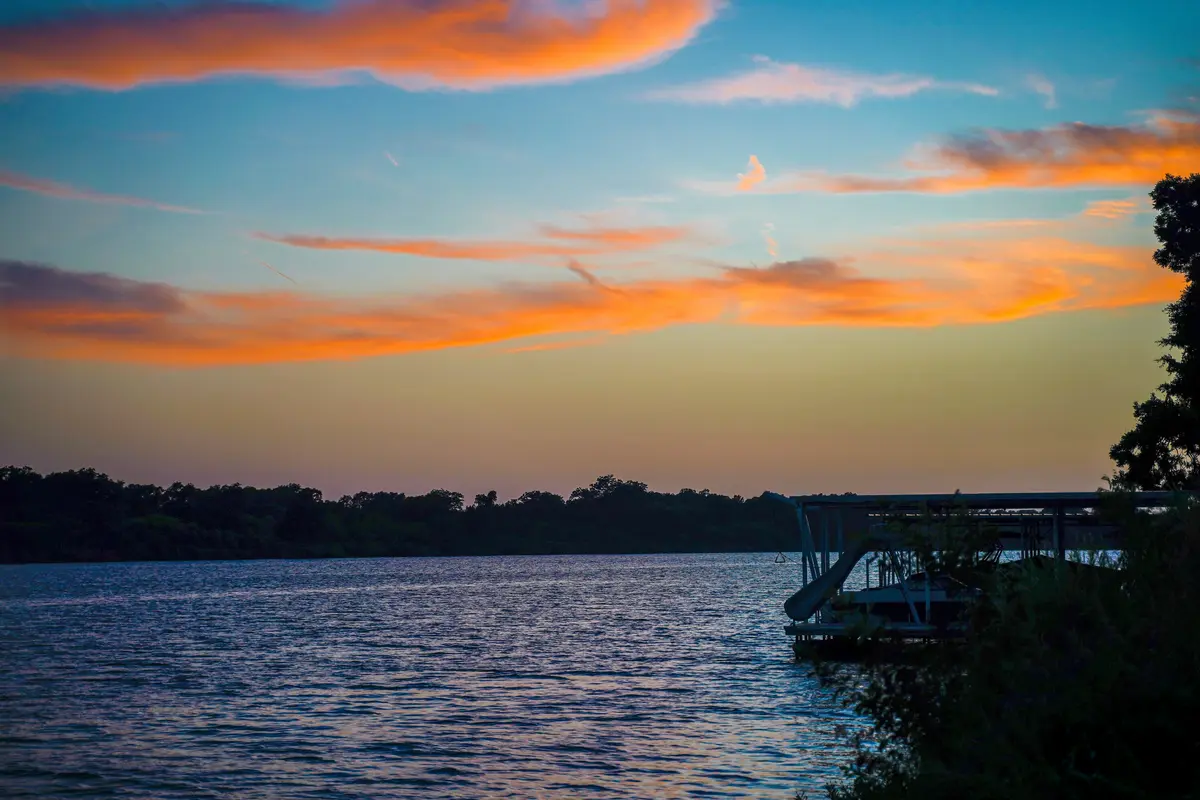
Retiring in Marble Falls
Marble Falls draws retirees for its balance of amenities, outdoor access, and cost. Here’s what to weigh.
🌤 Climate
Marble Falls sees 226 sunny days a year with hot summers that routinely push into the 90s and mild winters that rarely produce extended cold stretches. Spring and fall are the peak seasons — warm enough for outdoor recreation, cool enough to make the Hill Country genuinely pleasant. Summer heat is the primary climate challenge for new retirees arriving from cooler states.
🍴 Lifestyle
The walkable Historic Downtown Main Street, lake access on Lake Marble Falls, and a solid local dining scene anchored by long-running local institutions give retirees a daily texture that most Hill Country towns this size can't match. The Falls on the Colorado Museum and the surrounding state parks add cultural and outdoor depth for residents who want variety beyond the lake.
🏚 55+ Communities
No 55+ communities were found in Marble Falls. Retirees settling here are buying into the general housing market — older homes near downtown or newer construction in the outer subdivisions — alongside families and remote workers. The 2020 Census found 22.1% of residents were 65 or older, so the retiree presence is real; it just arrives without a dedicated community product.
✈ Getting Around
A car is essential for all daily errands and medical appointments. Austin-Bergstrom International Airport is 54 miles away and is the primary gateway for air travel. CARTS operates a regional coach service connecting Marble Falls to Austin and the airport, which is useful for occasional trips without driving. TxDOT has proposed a major interchange redesign at the US-281 and TX-71 junction that would improve the most congested point in town if ultimately funded and built.
🏛 Texas Taxes for Retirees — What to Know
- No state income tax — Texas has no personal income tax — constitutionally protected under Article VIII, Section 24. Social Security, pensions, 401(k)/IRA withdrawals, and annuity payments are all untaxed at the state level, with no state return to file.
- Sales tax is the tradeoff — The state sales tax is 6.25%, and local add-ons bring the combined rate in Marble Falls to 8.25% (Texas Comptroller of Public Accounts, city sales and use tax rates, July 2026). Groceries and prescription drugs are exempt.
- Property taxes — the real tradeoff — Texas’s effective property tax rate averages about 1.40%, among the highest in the country, since property tax (not income tax) funds most local government and schools.
- Over-65 homestead exemption and school-tax freeze — Homeowners 65+ (or disabled) get an additional $60,000 exemption from their home’s value for school district taxes, on top of the general homestead exemption — $200,000 off school taxable value combined, following November 2025’s Proposition 11 (SB 23), which raised the over-65 exemption to $60,000, and Proposition 13 (SB 4), which raised the general homestead exemption to $140,000. Once claimed, your school district tax bill is frozen at that year’s amount and cannot increase as home values rise, and the ceiling can transfer if you move to a new home within Texas.
- Deferral option if cash is tight — Homeowners 65+ can defer property tax payment entirely for as long as they live in the home, rather than paying it currently — interest accrues, but no forced sale.
- No estate or inheritance tax — Texas has no estate tax, no inheritance tax, and no gift tax.
- No separate capital gains tax — Because Texas has no state income tax, capital gains — including on investments and home sales — are not taxed at the state level at all, unlike states such as Washington that tax capital gains separately from income.
Tax laws change frequently and individual situations vary. This is general information, not tax advice — always consult a qualified Texas tax professional or CPA for personalized retirement tax planning.
Weekends & Local Favorites in Marble Falls
What Marble Falls does best on a weekend is what drew most people here: lake access, Hill Country scenery, a walkable downtown, and a genuinely deep bench of locally owned food and coffee that punches well above the city's size. The tourist traffic is real, but so is the local scene — and the two coexist without fully crowding each other out.
On the Water
Lake Marble Falls anchors the city's outdoor life — boating, fishing, kayaking, and walking trails along the shoreline are the default weekend activity for a significant share of residents. Lake Lyndon B. Johnson extends the Highland Lakes experience further west, and Johnson Park and Camp Creek Park provide accessible launch and gathering points without the full boat-ramp production. Turkey Bend Recreation Area, a 400-plus-acre stretch along the Colorado River, offers hiking, mountain biking, fishing, and primitive camping for residents who want to get further out. The Falls on the Colorado Museum is worth a visit for anyone newly arrived — it puts the lake itself in geological and historical context, including the three limestone falls formations that gave the city its name and now sit underwater behind Max Starcke Dam.
Food and Coffee Worth Knowing
Blue Bonnet Cafe has been operating since 1929 and is one of the most recognized local institutions in the Texas Hill Country — the all-day breakfast and the homemade pie case are the reasons, and the line on a weekend morning is not a coincidence. River City Grille and The Real New Orleans Style Restaurant are local anchors for lunch and dinner, while Bella Sera Marble Falls handles the more formal end of the dining spectrum and Jardin Corona Marble Falls covers dependable Tex-Mex. For coffee, Mojo Coffee Marble Falls and Numinous Coffee Roasters are the independent options locals reach for; HTeaO handles the tea and cold drink end of the morning routine. The Ragtime Oriole and Lost Roads Baking Co. round out the café and bakery scene with the kind of specificity you do not expect in a city of 9,633.
Day Trips and the Wider Hill Country
Within an hour of Marble Falls, five Texas state parks are accessible — the Hill Country is not just a backdrop here, it is a usable recreational network. The surrounding area includes Hill Country wineries and craft breweries that draw weekend traffic and, for residents, provide a rotating calendar of nearby things to do without driving to Austin. The Historic Downtown Main Street galleries and shops fill out a Saturday morning for anyone who prefers to stay in town — the scale is right for a few hours on foot, especially on a weekday when the tourist volume drops.
Local favorites in Marble Falls
Restaurants
- Blue Bonnet Cafe
- River City Grille
- The Real New Orleans Style Restaurant
- Bella Sera Marble Falls
- Jardin Corona Marble Falls
Outdoors
- Lake Marble Falls
- Lake Lyndon B. Johnson
- Johnson Park
- Camp Creek Park
Coffee
- Mojo Coffee Marble Falls
- Numinous Coffee Roasters
- HTeaO - Marble Falls
- The Ragtime Oriole
- Lost Roads Baking Co.
Top Things Locals Say About Marble Falls
The best intel about a city comes from the people who actually live there. Here’s what Marble Falls residents say when newcomers ask the questions everyone’s thinking.
“I knew the commute would be longer, but I told myself I'd leave early and it would be fine. Six months in, I leave earlier than I ever imagined and I've stopped scheduling anything in Austin on a Friday afternoon. The lake makes up for it — I just wish someone had been more specific about what 'about 55 minutes' means when there's an incident on TX-71.”
— Recent Marble Falls home buyer
“What's the most surprising thing about living in Marble Falls?”
How much the city changes on weekends in spring and fall. When the Hill Country tourism season hits, US-281 through downtown turns into a slow-moving line of out-of-towners, and the restaurants people moved here for suddenly have an hour wait on Saturday night. Locals learn the timing within the first season — early Saturday mornings work, weekday evenings are calm — but the first few weekends in March can be a genuine shock if you expected a sleepy lake town.
“What do locals love most about Marble Falls?”
The lake, without question. Having Lake Marble Falls genuinely accessible shapes how people spend their free time in a way that's hard to replicate in a suburb. The Historic Downtown Main Street, with its walkable blocks and local restaurants, gives the city a center that most Texas towns this size simply don't have. And the Hill Country itself, with state parks and recreation land within an easy drive, means the outdoor calendar stays full year-round.
“What should newcomers to Marble Falls know?”
Plan the US-281 and TX-71 intersection into every trip that involves leaving town. That junction is the pinch point for everything — Austin commutes, airport runs, weekend errands — and it backs up more reliably than newcomers expect. Also, a serious shopping trip means driving out of town; the local retail covers daily needs but not everything. Build that into your weekly routine rather than being caught short on a Sunday when the drive feels longer.
“How much do you need a car in Marble Falls?”
Completely and without exception. The Historic Downtown Main Street is walkable once you're in it, but getting there from most neighborhoods requires driving, and everything outside downtown — groceries, the lake launches, the newer subdivisions, any medical appointment — means getting in the car. CARTS operates a regional coach service to Austin and the airport, which is useful for specific trips, but daily life here is organized entirely around car ownership. Budget accordingly.
Cities Near Marble Falls
Other communities near Marble Falls worth a look — each with its own character and price point.
| City | Distance | Best For | Vibe | Median Rent | Median Buy |
|---|---|---|---|---|---|
| Granite Shoals | 6 mi | Budget buyers & lake access | Quiet, established, water-adjacent | $1,600 | $382,603 |
| Horseshoe Bay | 9 mi | Resort lifestyle & retirees | Upscale, golf-and-lake community | $2,800 | $750,418 |
| Burnet | 14 mi | Value seekers & rural feel | Small-town, working Hill Country | $1,500 | $414,044 |
More Helpful Guides for Marble Falls
Going deeper on Marble Falls? Our blog series covers everything from first-time buying to retiring here — explore the guides below.
Local Expert Takeaway: Marble Falls is growing faster than it anticipated, and the city that newcomers move to in year one is different from the one they'll live in by year three. The lakeside downtown and the Hill Country access are real — Blue Bonnet Cafe's line and the weekend crowds on Lake Marble Falls are not manufactured. But the Austin commute on TX-71 is genuinely long, the school district's C rating from the Texas Education Agency is a real data point for families, and the gap between local wages and local home prices means most buyers are arriving with outside equity rather than local income. Know those three things going in, and Marble Falls delivers on what it promises. Overlook them, and the first year carries some surprises.
Quick Takeaways & FAQs
✅ Marble Falls sits on Lake Marble Falls in the Texas Hill Country with a genuinely walkable Historic Downtown Main Street, immediate lake access, and Blue Bonnet Cafe — one of the most recognized local institutions in the Hill Country, operating since 1929.
⚠️ The commute to Austin is about 55 minutes under normal conditions and runs longer during peak hours — residents who underestimate it consistently name it the biggest adjustment after moving from the Austin suburbs.
📍 The city grew by roughly 24% in a single year (mid-2023 to mid-2024) according to Census data, and roughly $60 million in active development projects were underway as of 2024-25 — the infrastructure is still catching up.
How far is Marble Falls from Austin?
Is Marble Falls a good place to raise a family?
What is the typical home price in Marble Falls?
How do people get around in Marble Falls?
Why is Marble Falls growing so fast?
Helpful Links for Moving to Marble Falls
Moving to Texas?
Tell us what you need help with and we'll connect you with local resources.
