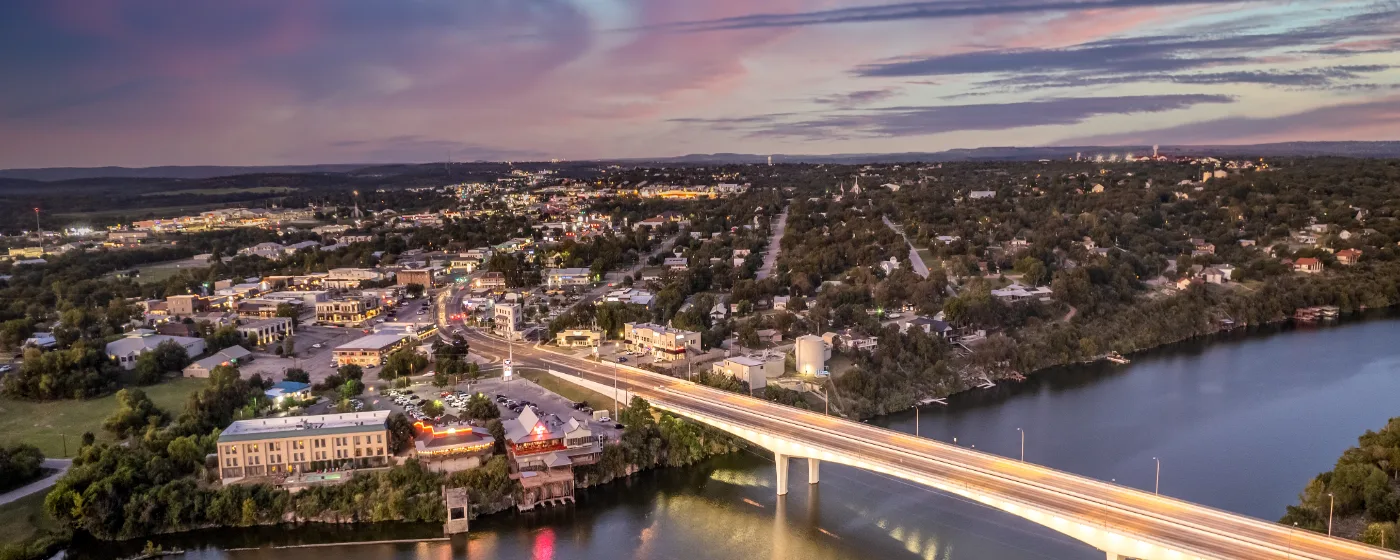
People moving to a city of 9,633 in the Texas Hill Country often assume small means safe — and for Marble Falls, the data mostly backs that up. But the full picture is more textured than a single headline number. Marble Falls sits at the intersection of US-281 and TX-71, which makes it the commercial and service hub for a wide stretch of Burnet County. That regional draw — the restaurants, the retail, the tourism traffic around Lake Marble Falls — means a steady flow of visitors and shoppers who inflate certain crime counts even when the residential neighborhoods are quiet.
The city carries a violent crime rate of 3.23 per 1,000 residents and a property crime rate of 18.85 per 1,000 residents. Both figures sit below Texas state averages. The violent rate is also below the national figure. The property rate lands modestly above the national benchmark — a pattern that shows up repeatedly in small tourist-adjacent Texas towns where retail activity creates more opportunity for theft than a town of this size would otherwise generate. Understanding that distinction is the most important thing you can do before drawing conclusions about what it means to live here.
The residential experience of safety in Marble Falls diverges meaningfully from the statistical composite. Residents in community forums describe the city as safe, with community concerns skewing toward scams and opportunistic theft rather than violent crime. Violent incidents have trended downward over the past five years, and the city has been actively investing in public safety infrastructure — most visibly with the March 2026 groundbreaking of a new fire station near the Thunder Rock development on the south side of town.
Whether you are weighing Marble Falls against Burnet, Horseshoe Bay, or a neighborhood across town, the sections below break down the city's crime figures in context, map out which parts of town run quieter, and explain what the city is doing to maintain and improve public safety as it grows.

How Marble Falls Crime Rates Compare to Texas and the Nation
The two numbers that anchor any honest safety conversation here: a violent crime rate of 3.23 per 1,000 residents and a property crime rate of 18.85 per 1,000 residents. The section below shows a full comparison table against state and national figures from the Bureau of Justice Statistics, Crime Known to Law Enforcement, 2024 (tables 2 and 3).
The violent crime picture is genuinely reassuring. The state benchmark sits at 4 per 1,000, and the national figure is 3.7 per 1,000 — Marble Falls clears both. For a city that hosts significant tourist and day-tripper traffic, that is a meaningful result.
Property crime deserves more careful reading. The 18.85 per 1,000 figure is below Texas's 20.7 per 1,000 state rate, which is progress. But it sits modestly above the national 18.4 per 1,000 figure. This is not a signal that Marble Falls is unusually dangerous — it reflects the reality that retail corridors and tourism destinations generate more vehicle break-ins, shoplifting incidents, and theft opportunities than purely residential communities of the same size. The commercial core around the main retail strip and the lakefront tourism zone accounts for a disproportionate share of these incidents.
The directional trend matters too. Over the past five years, both violent crime and property crime counts have declined in Marble Falls. A city that is growing — adding residential developments, attracting more visitors — while simultaneously reducing crime is doing something structurally right.
Where Crime Concentrates: The North-South-West Pattern
In a city of 9,633 people, aggregate crime statistics only tell part of the story. The more useful question for anyone choosing a neighborhood is where incidents actually cluster — and in Marble Falls, there is a clear directional pattern.
The northern part of the city, where commercial activity and retail density are highest, generates the largest total incident count. This is where the tourist-adjacent retail effect is most visible: more foot traffic, more parked vehicles, more opportunity-based property crimes. A higher incident count in that zone does not mean residents of those neighborhoods face elevated personal risk — it means that the statistical denominator (residents) stays small while the numerator (incidents in a commercial zone) stays elevated.
The west side of the city runs markedly quieter. Directional data points to the west as the lowest-incident area in Marble Falls by raw incident count, and residents consistently describe it as the calmer part of town. The gap between the north and the west is substantial: the west side logs roughly a quarter of the annual incident volume that the northern commercial corridor does.
The newer residential developments on the south side — including Thunder Rock and surrounding subdivisions — sit in a middle tier by incident count and are growing fast enough that the city specifically designed its new Fire Station No. 2 to improve emergency response times there. Established neighborhoods like Old Town and Downtown Marble Falls carry the complexity of any historic urban core: walkable, characterful, and worth researching closely before settling on a block. For a deeper look at how these neighborhoods compare on character and housing stock, see the best neighborhoods guide.
What the Per-Resident Rate Can Mislead You On
Crime rates expressed per 1,000 residents are the standard — and they are the right tool for comparing cities. But inside a single city, they can distort the picture in commercial zones, because the resident count in those areas is low while daily activity is high. A retail block that logs ten incidents a year with fifty residents looks alarming per-capita; the same ten incidents on a residential street with five hundred residents looks fine. Marble Falls's central commercial district is the clearest example of this locally. When residents say the city feels safe, they are describing their lived neighborhood — not a downtown parking lot at closing time.
What Residents Actually Experience Day to Day
Numbers are one data point. The other is what people who live here say when they talk to their neighbors. In local community conversations, the tone around safety in Marble Falls is consistently calm. The concerns that generate discussion are not violent crime — they are the opportunistic issues that show up in any growing small town: package theft, phone scams targeting older residents, and the occasional vehicle break-in in an unlocked car. That profile is consistent with what the crime data shows.
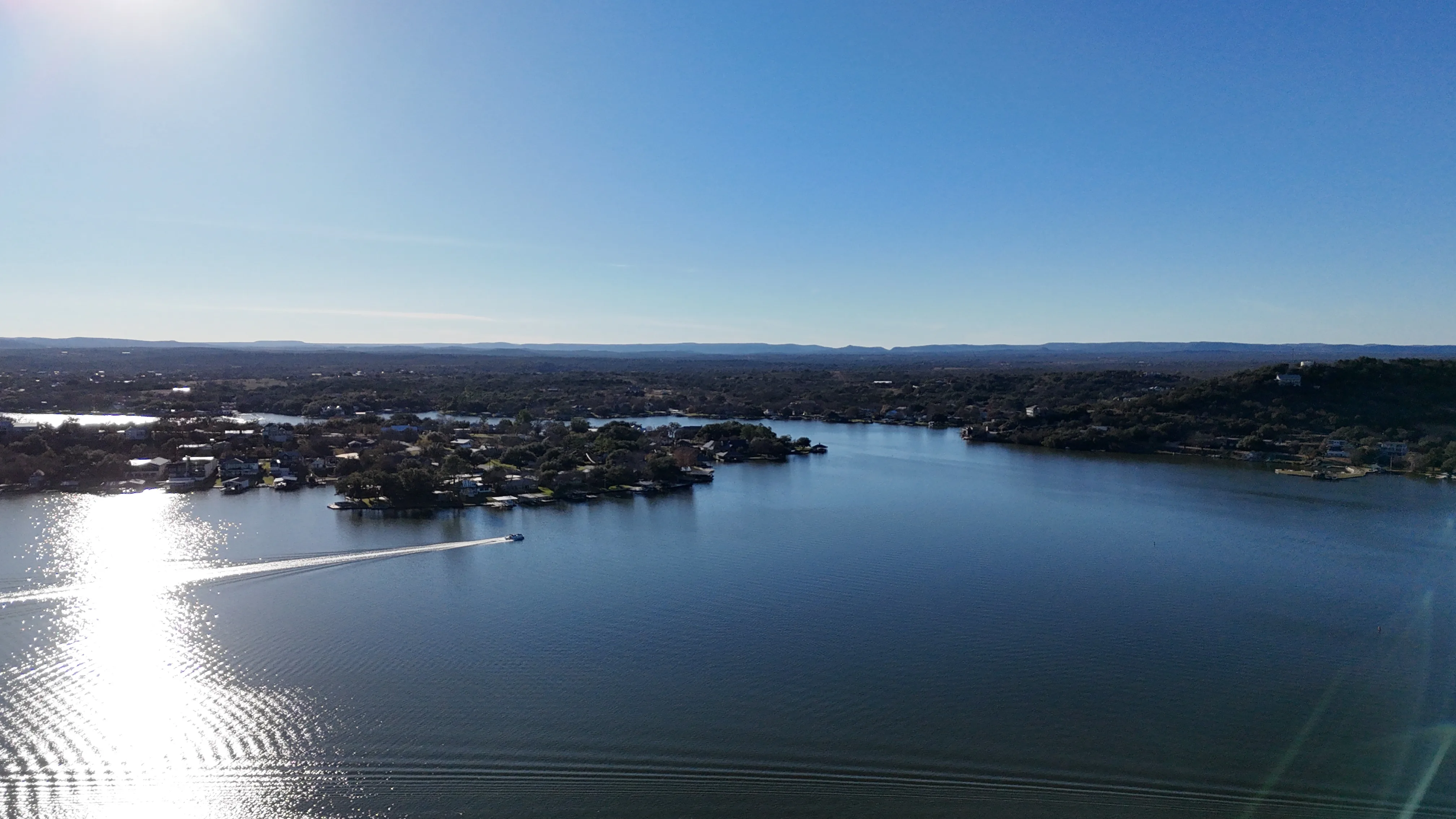
One surprise for newcomers: the summer tourist season changes the texture of the city noticeably. Lake Marble Falls and the surrounding Hill Country draw a significant weekend and vacation crowd from Austin and San Antonio, concentrated along the lakefront and the commercial corridors. The city feels meaningfully busier from late spring through Labor Day, and some of the property-crime uptick that appears in warmer months tracks with that population surge rather than with any change in the residential community. Visitors leave vehicles parked in unfamiliar places, which is where most of the opportunistic theft happens.
The flip side of that tourism reality is that Marble Falls has built its public infrastructure to handle more people than its 9,633 residents alone would require. The police department, the fire rescue, and the emergency services are sized for a city that routinely hosts many more people than live here full-time — which, for a resident, generally means faster response and more visible patrol presence than you might expect from a town this size.
Community Policing in Practice
The Marble Falls Police Department runs a community-policing model focused on drug activity, violent street crime, and quality-of-life concerns. The department participates in National Night Out and Halloween in the Park, maintains school resource officers in Marble Falls ISD schools, and runs reading programs at the public library. These are not just optics — they reflect a department that is embedded in the community rather than reactive to it. Officers maintain Texas Commission on Law Enforcement (TCOLE) certification through at least 40 hours of annual in-house training, with additional specialized training that includes drone operations.
Looking to buy in Marble Falls? Estimate your payment.
Enter your numbers to see an estimated monthly mortgage payment.
Estimate only. Excludes HOA fees and mortgage insurance. The interest rate above is a starting point, not a quoted rate — replace it with your own to see real numbers. Insurance is a flat placeholder, not a Marble Falls quote.
Fire, EMS, and Emergency Infrastructure
Safety in a residential context is not only about crime. In the Texas Hill Country, where wildland fire risk is real and where distances to major trauma centers matter, fire and emergency medical response are just as relevant to a relocation decision.
Marble Falls Fire Rescue handles fire suppression, medical first response, wildland fire response, hazardous materials incidents, and non-emergency management. The department also carries emergency management oversight for the city — a meaningful function in a region that sees periodic flooding along the Colorado River corridor and carries genuine wildfire exposure in dry years.
The most significant public-safety development in recent years is the groundbreaking of Fire Station No. 2 in March 2026. The city funded an 8,526-square-foot facility to be built near the Thunder Rock development on the south side of Marble Falls — a $5.73 million decision driven by the south side's position as the fastest-growing part of the city, where call volume had been rising accordingly. The station was under construction as of spring 2026 and, when complete, will house Marble Falls Fire Rescue, an ambulance, Marble Falls Area EMS personnel, and a satellite office for the Marble Falls Police Department.
The practical upshot for homeowners is material: the new station is projected to move Marble Falls from a split ISO 3X rating to a uniform ISO Class 3 rating across the city. ISO ratings directly affect homeowners' insurance premiums — a better rating means lower premiums. Residents in the southern parts of Marble Falls who currently pay more because of that split rating should see relief once the station is operational and the reclassification takes effect.
Regional Emergency Coordination
The Marble Falls Police Department trains regularly with the Burnet County Sheriff's Office, Granite Shoals Police Department, Marble Falls Area EMS, and Marble Falls Fire Rescue to prepare for large-scale emergencies. That level of regional coordination matters in a county seat town that serves as the emergency hub for a wide surrounding area — and it means that a major incident here draws on more capacity than the city's own headcount would suggest.
Practical Safety Guidance for Anyone Choosing a Neighborhood Here
The aggregate picture is favorable. A violent crime rate of 3.23 per 1,000 residents and a property crime rate of 18.85 per 1,000 residents both sit below Texas state benchmarks, violent crime has been trending down, and the city is actively building public safety capacity. That said, no city of any size is uniform, and Marble Falls is small enough that a few concentrated areas account for a meaningful share of the total incident count.
If minimizing property crime exposure is a priority, the west side of the city is where that pattern runs quietest, based on directional incident counts. Newer residential areas on the south side — including Thunder Rock and adjacent developments — are growing but also gaining dedicated emergency infrastructure with the new fire station. Old Town and the Downtown Main Street corridor carry more complexity, as historic downtowns typically do; they reward a closer look at specific streets rather than a blanket judgment.
The northern commercial zone deserves honest framing: it logs the highest raw incident count in the city. Most of what happens there is property crime in a retail context — it is not a neighborhood where many people live. But if you are evaluating a home near that corridor, it is worth understanding why the per-capita numbers look higher there and what kind of incidents they reflect.
What to Actually Look Into Before Choosing an Area
For anyone narrowing down a neighborhood, a few practical steps yield more than any aggregate statistic. Search the specific block in local community forums — the local tone of those conversations tells you quickly whether residents treat safety as an active concern or a background non-issue. Check the parcel's proximity to commercial corridors, since that is where the majority of property incidents cluster. And pay attention to what the new Fire Station No. 2 means for your specific address — response time improvement will be most noticeable for homes in the southern quadrant of the city that were previously in the split-rated zone.
The cost-of-living context for Marble Falls is covered in more depth on the cost of living page, and for a fuller look at how neighborhoods differ in character, the best neighborhoods guide goes deeper on each area. The overall safety picture here is one of Marble Falls's genuine strengths — the numbers are solid, the trend is positive, and the city is investing to keep it that way.
Local Expert Takeaway: Marble Falls runs below Texas averages on violent crime and below the state benchmark on property crime too — both are real positives. The one honest caveat is property crime in commercial and tourist-adjacent zones, which inflates the city's overall number without reflecting what residents in places like Lydia Parke or Homestead at Mormon Mill actually experience on their streets. If you want the quietest corner statistically, look west. If you want the most infrastructure investment right now, the south side near Thunder Rock is getting a brand-new $5.73 million fire station that should also trim homeowners' insurance premiums once it opens.
Quick Takeaways & FAQs
✅ Marble Falls's violent crime rate sits below both the Texas state average and the national figure — a genuine strength for a city of its size and tourist traffic.
⚠️ Property crime runs modestly above the national benchmark, driven largely by retail and tourism activity rather than residential neighborhoods — the aggregate number overstates the risk in quieter parts of town.
📍 The city broke ground in March 2026 on Fire Station No. 2 near the Thunder Rock development; when complete, it is projected to shift Marble Falls to a uniform ISO Class 3 fire rating, which typically reduces homeowners' insurance premiums.
Is Marble Falls, TX a safe place to live?
What part of Marble Falls has the least crime?
How does Marble Falls crime compare to the rest of Texas?
What is Marble Falls doing to improve public safety?
Does the tourist season affect crime in Marble Falls?
Moving to Texas?
Tell us what you need help with and we'll connect you with local resources.
