
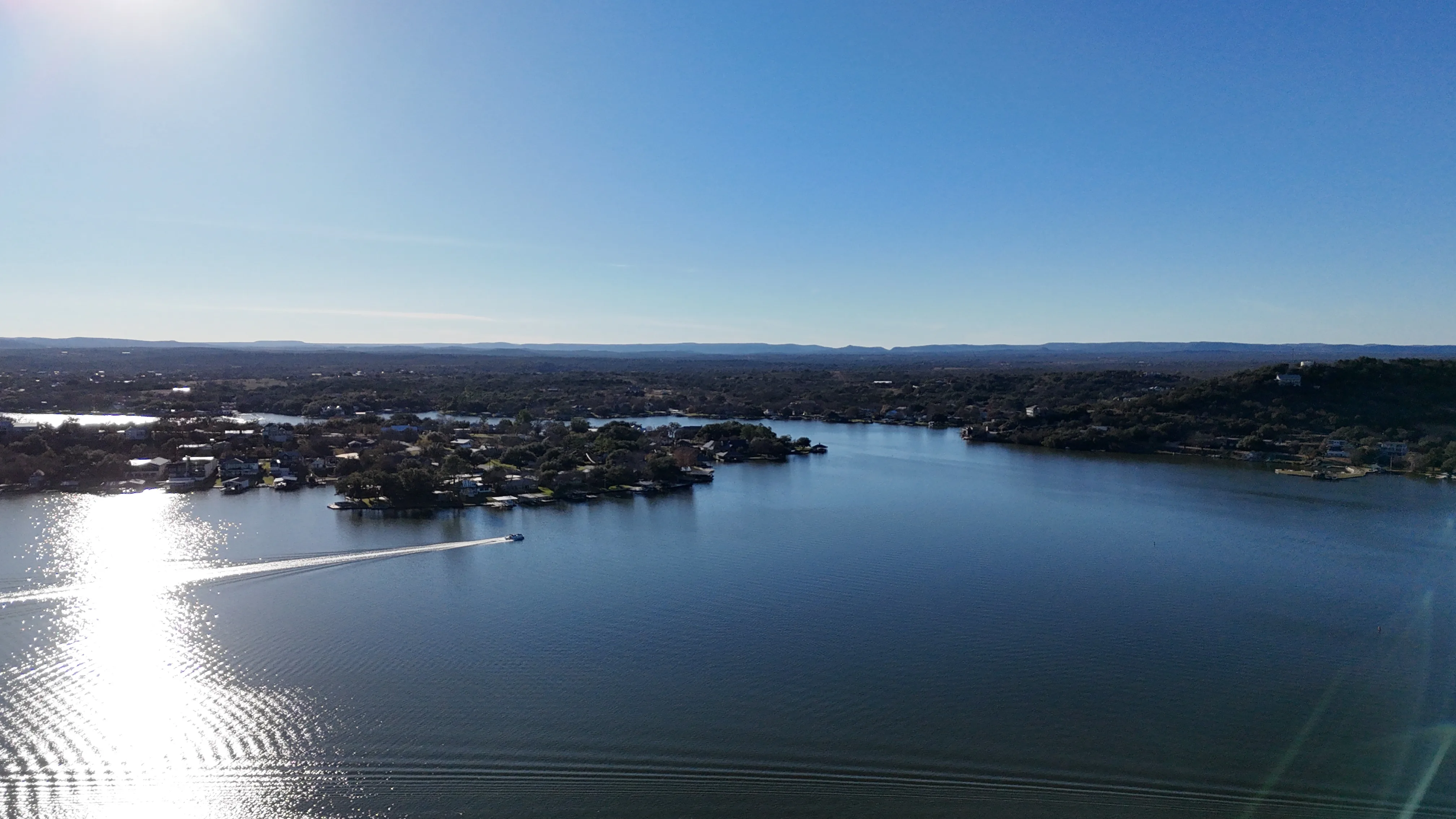
Maybe you've been priced out of Austin proper and someone mentioned the Hill Country. Maybe you found Marble Falls on a weekend drive and started running the numbers. Either way, the city surprises people — it is not cheap by Texas standards, and it is not trying to be. Marble Falls sits in Burnet County along the Colorado River, roughly an hour from Austin via US-281 and TX-71. At 9,633 residents, it is small enough to feel like a real town, large enough to have its own school district and a commercial strip that handles most daily needs. The cost picture is shaped primarily by one thing: Lake Marble Falls and the broader Hill Country scenery command a real premium on land, and that premium runs through every housing number here.
The economic anchor of Marble Falls is the school district, city government, a regional healthcare presence, and Walmart — not a tech campus or a manufacturing base. That employer mix sets a ceiling on local wages: the median household income is $57,925, which sits well below what a buyer needs to comfortably carry the typical home here. Who moves to Marble Falls tends to be retirees, remote workers, second-home buyers from Austin, and households drawn by the lake and the pace of life. The Marble Falls Independent School District, which holds a C rating according to the Texas Education Agency, serves a community that is growing but not yet flush with the tax base of a fast-appreciating suburb. For a deeper look at schools and the job picture, see the schools page and the living in Marble Falls guide.
Housing is where Marble Falls diverges most sharply from the Texas average — groceries track closely to the national norm, and electricity rates actually come in below it on a per-kilowatt-hour basis. The home price, driven by Austin spillover and second-home demand, is what pulls the overall budget above what a comparable inland Texas city would cost. The Hill Country scenery is not free, and the numbers say so plainly.
Whether you are weighing a purchase, planning a budget, or comparing Marble Falls against Horseshoe Bay or Burnet, the sections below break down housing costs, everyday expenses, the tax picture, and how this city stacks up against the places buyers most often compare it to.

What It Really Costs to Live in Marble Falls
Whether Marble Falls feels affordable depends almost entirely on whether you are renting, buying, or arriving with equity from somewhere more expensive. The non-housing side of the budget — groceries, phone, internet, miscellaneous retail — runs close to national norms. The home-price figure is what gives the overall picture its character.
The typical home price in Marble Falls was $403,309 as of July 2026 (Zillow Home Value Index). For Texas, that is meaningfully above the statewide middle ground — most inland Texas cities sit well below that level. The driver is straightforward: this is a lake town in the Hill Country with documented demand from Austin buyers seeking a quieter life an hour out. Land along and near Lake Marble Falls commands a real premium, and that premium bleeds into the broader market across the city.
Compared to Horseshoe Bay — the resort enclave just up the road — Marble Falls is noticeably lower. Compared to Burnet, prices run about the same. Granite Shoals comes in somewhat lower. So Marble Falls occupies a middle tier in its immediate region: not the entry point into Hill Country living, but not the luxury ceiling either. For a full side-by-side comparison, see the table in the section below.
Housing: Rent vs Buy in Marble Falls
Buying in Marble Falls means entering a market shaped by outside demand. Entry-level homes — older construction, smaller lots, away from the waterfront — start in the low-to-mid $300s when they surface. The city-wide typical home price of $403,309 (July 2026) reflects the full mix, including newer builds in planned communities like Gregg Ranch, Thunder Rock, and Flatrock Crossing that have pulled the median upward over the past several years. For guidance on which parts of the city offer what, the best neighborhoods page covers the distinctions without attaching prices to specific areas.
The affordability gap here is real and worth naming directly. With a median household income of $57,925 and a home-value-to-income ratio of approximately 7.0x, the math does not close for a buyer relying solely on local wages. Many buyers arrive with equity from Austin or another high-cost market, which changes the picture considerably. A buyer starting from zero, without substantial savings or a high income, will feel the stretch.
The effective property tax rate in Marble Falls is approximately 1.30%. Texas funds its schools and local services through property tax rather than income tax, so that rate matters more here than it would in a state with a balanced tax mix — plan for it as a meaningful annual line item.
Renting makes sense in Marble Falls when you are not yet certain about the area, or when you are waiting for the right property. The city-wide typical rent runs $1,551 per month (Zillow ZORI, July 2026), which is competitive relative to the purchase price — renting buys time to understand the market without locking into a price that reflects outside demand as much as local fundamentals.
| Buyer Type | Situation | Best For |
|---|---|---|
| Equity buyers from Austin | Arriving with proceeds from a higher-cost sale | Value |
| Remote workers | Income decoupled from local wage scale | Views Nature |
| Retirees downsizing | Fixed income + equity from prior home | Quiet |
| First-time buyers on local wages | Median income falls well short of purchase | Renter |
| Second-home / lake buyers | Purchasing for lifestyle, not primary shelter | Luxury |
| Families relocating from out of state | Comparing favorably to coastal markets | Families |
Everyday Costs Beyond Housing in Marble Falls
| Category | Typical Monthly Cost | Notes |
|---|---|---|
| Housing (typical rent) | $1,551/mo | City-wide typical rent. Buying? Use the calculator above for a mortgage estimate. |
| Utilities | $190–$270/mo | Electricity, gas, water, sewer, trash |
| Groceries | $520–$700/mo | Food at home, household of 2–3 |
| Transportation & Gas | $170–$300/mo | Fuel, and transit where it is a real option |
| Phone & Internet | $110–$180/mo | Mobile plan plus home broadband |
| Misc / Discretionary | $200–$420/mo | Dining out, entertainment, subscriptions |
Non-housing figures are estimates for a household of two to three, not a sourced index; housing is the city-wide typical rent (Zillow ZORI, July 2026). Refreshed with the rest of the city data.
Groceries in Marble Falls track closely to the U.S. average — meats, dairy, produce, and staples cost roughly what they cost in most mid-sized Texas cities. Texas exempts most food staples from sales tax, which helps: the combined sales tax rate of 8.25% applies to prepared food and most non-grocery retail, but your weekly market run is largely shielded from it. Walmart Supercenter handles the bulk of everyday shopping for most households; a serious specialty or big-box run means driving out of town.
Utilities are the one non-housing line item that consistently runs above average. Combined monthly utility costs — electricity, gas, water, and trash — average approximately $202 per month, roughly 23% above the national average. The Hill Country climate is the reason: summers are long and genuinely hot, and air conditioning load from June through September is the primary driver. Electricity is supplied by Pedernales Electric Cooperative, a member-owned cooperative, and residential rates have come in below the national average on a per-kilowatt-hour basis — so it is usage volume, not rate, that pushes the bill up. Natural gas is provided by Atmos Energy on a regulated basis. Water, wastewater, garbage, and recycling are bundled on a single city bill.
Most errands here mean a drive. The city's commercial strip handles daily needs well enough, but anything beyond the basics — specialty groceries, larger retail, medical specialists — requires a trip out of town. Anyone commuting toward Austin regularly should budget honestly for fuel and mileage; the drive via US-281 and TX-71 is the main route and takes about 55 minutes under ordinary conditions.
Looking to buy in Marble Falls? Estimate your payment.
Enter your numbers to see an estimated monthly mortgage payment.
Estimate only. Excludes HOA fees and mortgage insurance. The interest rate above is a starting point, not a quoted rate — replace it with your own to see real numbers. Insurance is a flat placeholder, not a Marble Falls quote.
Marble Falls vs Nearby Cities: Cost Comparison
| City | Typical Home Price | Typical Rent | Cost vs Marble Falls |
|---|---|---|---|
| Marble Falls (this city) | $403,309 | $1,551/mo | — |
| Granite Shoals | $382,603 | $1,600/mo | 5% lower |
| Horseshoe Bay | $750,418 | $2,800/mo | 86% higher |
| Burnet | $414,044 | $1,500/mo | 3% higher |
Source — home prices: Zillow ZHVI, July 2026; rent: Zillow ZORI, July 2026. Nearby-city figures are the same series, refreshed together.
Marble Falls sits near the middle of its immediate Hill Country peer group — more affordable than the resort end of the lake corridor, roughly in line with the county seat to the north, and above the smaller lake communities nearby. The table below shows the current figures for this city alongside its neighbors.
Taxes & the Bottom Line for Marble Falls
The Texas Tax Posture
Texas collects no state income tax. Every dollar you earn stays out of the state's hands, which is a genuine structural advantage — especially for remote workers or retirees drawing investment income. The tradeoff is a property tax rate that does real work: at approximately 1.30% of assessed value annually, it is the mechanism Texas uses to fund schools and local services instead of income tax. On a home priced at the typical level discussed above, that rate translates into a meaningful annual obligation — the interactive calculator above will put a current dollar figure on it.
Sales Tax
The combined sales tax rate is 8.25% — the 6.25% Texas state base plus a 2% local component added by the city. That is at the ceiling for Texas cities, not an outlier. Grocery staples are exempt from Texas sales tax, which softens the impact on everyday household spending. Clothing, home goods, restaurant meals, and most retail purchases carry the full rate.
Who This Budget Actually Fits
The honest read: Marble Falls works well for buyers who arrive with equity, remote workers earning above-average incomes, and retirees whose housing costs are covered by a prior sale. The income-to-price gap — a home-value-to-income ratio of approximately 7.0x — means that a household living entirely on local wages will find ownership a genuine stretch at the typical price point discussed in the sections above. Renting at the city-wide typical rate is more accessible, but even that requires a reasonable income relative to what the local job market pays most workers.
The city is not overpriced in any absolute sense — the Hill Country setting, lake access, and proximity to Austin create real demand that the price reflects. But buyers expecting Texas to automatically mean affordable should run the full number before committing. The no-income-tax advantage is real; the property tax rate and the home price together are equally real. For buyers coming from California or other high-cost states, the California comparison page maps out where the savings show up and where they do not.

Local Expert Takeaway: Marble Falls costs more than most of inland Texas, and the reason is the lake and the Hill Country backdrop — not the local economy. The income-to-price gap is the single most important number to understand before making an offer: a median household income of $57,925 does not carry a $403,309 home without substantial equity or outside income. Buyers who arrive with Austin proceeds or a remote salary above that median often find the city a genuine value compared to where they came from. For everyone else, renting at the city-wide typical rate of $1,551 per month buys time to confirm the fit before committing. The property tax rate at approximately 1.30% and the utility bill that runs above the national average are both real line items — plan for them from day one.
Quick Takeaways & FAQs
✅ Texas has no state income tax, which gives Marble Falls residents a structural take-home advantage over most other states.
⚠️ The home-value-to-income ratio sits at approximately 7.0x — buyers relying on local wages alone will find ownership a genuine financial stretch at current prices.
📍 Utility costs run about 23% above the national average, driven primarily by air conditioning load during the long Hill Country summers, not by above-average electricity rates.
Is Marble Falls, TX expensive compared to the rest of Texas?
What is the property tax rate in Marble Falls?
How much does it cost to rent in Marble Falls?
Why are utilities higher in Marble Falls than the national average?
Can a median-income household afford to buy a home in Marble Falls?
Moving to Texas?
Tell us what you need help with and we'll connect you with local resources.
