
What Is Living in Laredo, Texas Like?
Most people who move to Laredo come for the cost of living and stay because of the culture. What catches newcomers off guard is the scale of what actually drives this city: Port Laredo recorded $353.94 billion in international trade in 2025, making it the Western Hemisphere's leading land port. That single fact shapes the economy, the traffic, the job market, and the daily texture of life here in ways that don't show up on a spreadsheet. Laredo sits at the southern end of I-35 in Webb County, directly on the Rio Grande across from Nuevo Laredo, Mexico — and that border position is not incidental. It is the reason the city of 269,515 exists at the scale it does.
The economic backbone here runs through trade and public institutions. The transportation and warehousing sector employs over 18,000 people in Webb County, generating thousands of jobs in logistics, customs brokerage, and freight forwarding. The two largest employers are the Laredo Independent School District and United Independent School District — between them, they touch nearly every family in the city. The Laredo ISD holds a B rating, according to the Texas Education Agency, with enrollment in the tens of thousands. Texas A&M International University and Laredo College anchor higher education and produce a notably young city: the median age here is approximately 29.9 years, and roughly 95% of residents are Hispanic or Latino, reflecting a bicultural identity that shapes everything from the food to the festivals to how business gets done across the river.
The cost-of-living story is real and significant. Laredo's overall cost of living runs noticeably below the national average, with housing costs well below it — the typical home price is $223,127 (July 2026), a figure that gives buyers real purchasing power compared to most Texas metros. The city-wide typical rent sits at $1,305 per month. For context on what that means day to day — groceries, utilities, and taxes — see the full breakdown on the Laredo cost of living page. The trade-off is a climate that demands respect: August highs average near 99–100°F, and the city gets only about three months of genuinely comfortable weather each year.
Whether you're considering a move or just researching the area, the sections below break down Laredo's neighborhoods, housing market, commute patterns, local economy, and what daily life here is really like.
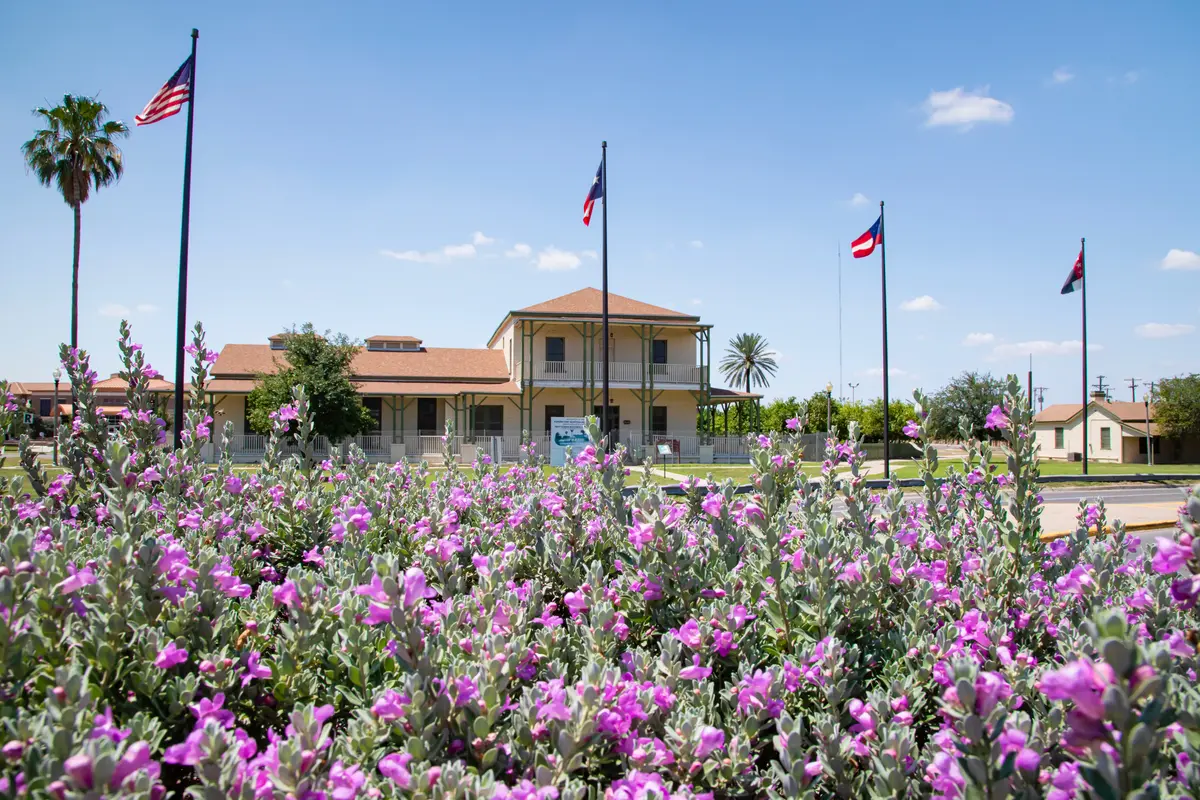
Laredo at a Glance
Looking to buy in Laredo? Estimate your payment.
Enter your numbers to see an estimated monthly mortgage payment.
Estimate only. Excludes HOA fees and mortgage insurance. The interest rate above is a starting point, not a quoted rate — replace it with your own to see real numbers. Insurance is a flat placeholder, not a Laredo quote.
Why Are People Moving to Laredo?
People moving to Laredo typically fall into one of three groups: those chasing affordability, those following the port economy, and those with deep family roots pulling them back. Each group finds something different, and all three are right about what they came for.
The Port Economy as a Job Engine
The port is not background noise — it is the city's primary economic engine. An average of 20,000 commercial truck crossings per day in 2025 keeps logistics, customs brokerage, warehousing, and freight forwarding in constant demand. Port Laredo has now achieved five consecutive years of record-breaking trade activity, handling approximately 35% of all U.S.–Mexico binational trade. If your career touches international trade in any form, Laredo is one of the few mid-sized American cities where the industry is genuinely dominant rather than peripheral.
Public Institutions as a Stable Foundation
Outside the port economy, the city's largest employers are institutions: the Laredo Independent School District and United Independent School District collectively employ thousands of teachers, administrators, and support staff. The City of Laredo, International Bank of Commerce, and Concentrix — a major business process outsourcing operation — round out a job base that is anchored more by public service and trade than by any single private sector. A major regional health system also contributes significantly to local employment.
Affordability That Is Actually Affordable
At $223,127 (July 2026), the typical home price in Laredo sits well below what most Texas metros ask at entry level. The homeownership rate is approximately 64% — close to the national average — which suggests residents are actually buying, not just looking. It is worth noting that the median household income of $63,915 sits slightly below what's needed to carry the typical home price, so affordability is real but not unconditional; buyers still need to be deliberate about where their finances land.
The Honest Tradeoff
Population growth slowed sharply between 2024 and 2025, driven primarily by a decline in international migration. That slowdown did not reverse the fundamentals, but it does mean Laredo is not a boom city right now. People who move here from larger metros often say month six is the adjustment: the entertainment options thin out, a serious shopping run means driving out of town, and the summer heat is longer and more intense than anywhere they've lived. Those who stay past year one tend to stay a long time.
What Daily Life Feels Like in Laredo
Laredo is bicultural in the most literal sense. Spanish and English flow together in the same conversation, the same store, the same school. The city's median age of approximately 29.9 years means it skews young — this is a city of young families with kids, not retirees, and daily life reflects that energy.
The Geographic Reality
The Rio Grande riverfront anchors the city's southern edge, with the World Trade International Bridge carrying commercial traffic into Nuevo Laredo daily. San Agustín Plaza and its 1872-era cathedral form the historical and social center of downtown, and the monthly art walk — held on the first Friday of each month — brings galleries and cultural performances into the historic district. This is not a sleepy border town; it is an active commercial crossroads with deep civic traditions.
Where Families Actually Gather
Lake Casa Blanca International State Park, approximately five miles north of downtown, is the city's main outdoor gathering place — fishing, boating, swimming, mountain biking, hiking, and camping all happen there, and on weekends in the cooler months it draws the whole city. The Chacon Creek Trail and Slaughter Park handle everyday recreation closer to the neighborhoods. Uni-Trade Stadium anchors sports culture for both adults and youth leagues. Active UIL athletics programs run through both school districts, and Friday night football fills the stands at high schools across the city.
What Newcomers Don't Expect
The Washington's Birthday celebration in February is one of the largest and oldest of its kind in the United States — newcomers from outside Texas are routinely caught off guard by the scale of it, and by how seriously the city takes it. It is not a small parade; it is a multi-week civic event that shuts down parts of downtown and draws crowds from across the region. Plan around it in your first year, and embrace it in your second.
The Summer Reality
August highs averaging near 99–100°F is not a weather quirk — it is the defining fact of Laredo summers. The city gets 220 sunny days a year, which sounds appealing until July arrives and the heat becomes the main organizing principle of daily life. Errands happen early or after dark. Outdoor plans get made in October. Newcomers from cooler climates consistently underestimate how much this reshapes a daily routine, and it is the most common reason people move back out.
The Laredo Housing Market Right Now
The typical home price in Laredo is $223,127 (July 2026, Zillow Home Value Index) — a figure that gives this city a different feel than most of Texas. This is not a market where buyers are fighting over starter homes at prices that strain every budget; it is a market where a household with stable income can realistically own a house, not just a condo or a townhome.
The city-wide typical rent is $1,305 per month. Some areas of the city sit well above the city-wide median — neighborhoods like San Isidro, Plantation, La Bota Ranch, and Crown Ridge attract buyers looking for newer construction and more established surroundings. The full neighborhood breakdown is on the Laredo neighborhoods page.
What the Market Feels Like
Laredo is not a market driven by speculative demand or out-of-state investor pressure. It is a local market, shaped by local incomes, local employers, and local family decisions. That stability cuts both ways: it protects buyers from the volatility that hit other Texas metros, but it also means appreciation has been measured rather than dramatic.
The effective property tax rate is 1.54% — higher than some buyers from out of state expect, but in line with the broader Texas pattern of trading income tax for property tax. For a fuller picture of what homeownership actually costs here month to month, the cost of living page has the detail on taxes, utilities, and everyday expenses.
Who the Market Suits
First-time buyers and families with school-age children are the natural fit here — the price point is accessible, the school districts are substantial, and the neighborhoods with newer construction give buyers options that most Texas border cities don't offer at this price. Buyers who have been priced out of San Antonio or Austin will find the numbers here look entirely different.
Laredo Neighborhoods
Laredo has several distinct areas — each with its own character and appeal. Here’s a breakdown to help you narrow down where to focus your home search.
🏡 San Isidro
San Isidro is one of Laredo's more established residential areas, drawing families with kids who want newer construction and a neighborhood feel that supports long-term roots. It sits above the city-wide typical home price and tends to attract buyers who want more house for the money without leaving the city proper.
🏠 Plantation
Plantation has a well-settled, residential character that appeals to buyers looking for a quieter pace within Laredo — the housing stock skews toward single-family homes on larger lots, and it consistently runs above the city median in price. It suits families and long-term buyers who prioritize stability over novelty.
🌳 Del Mar Hills
Del Mar Hills is a solid mid-city choice for families with school-age children, with a residential texture that feels established without feeling dated. It sits above the city-wide typical home price and is close enough to major corridors to keep commutes reasonable.
🏘 Crown Ridge
Crown Ridge attracts buyers who want newer construction and a neighborhood where the infrastructure — streets, parks, schools — feels intentional rather than improvised. It runs above the city median and is a common landing spot for families relocating from outside Texas.
🏔 La Bota Ranch
La Bota Ranch is among Laredo's most sought-after residential developments, built around a planned community feel with consistent housing quality and green space. It sits above the city-wide typical home price and draws buyers who want the newest construction the city offers.
🌆 Winfield
Winfield is a newer residential area that has grown steadily with families prioritizing modern housing and neighborhood cohesion. It sits above the city median in price and offers a suburban character that suits parents with school-age children who want a distinct neighborhood identity.
Pros & Cons of Living in Laredo
The Pros
- North America's busiest inland port drives steady logistics and trade jobs
- Relatively affordable housing compared to major Texas metros
- Low cost of living
- Deep bilingual, bicultural community and cuisine
The Cons
- Extremely hot, long summers with little relief
- Overall crime rate above national average even if comparable to similarly sized cities
- Limited high-paying white-collar job diversity outside trade/logistics
Getting Around & Commuting in Laredo
Laredo is a car city, full stop. Over 92% of commuters drive alone, and the average household owns two cars. This is not a market where buyers debate whether to live close to a rail line — it is a market where you decide which part of the city makes your daily drive shortest.
The Commute Picture
The internal commute is short by national standards. Most residents are looking at roughly 22 minutes one way for their daily drive — well below the national average of roughly 27 minutes. I-35 is the city's main north-south spine, carrying both commercial truck traffic and commuter cars. Loop 20 provides a way around the city's center for those crossing between the eastern and western sides. I-69W, US-83 (Zapata Highway), and SH-359 handle movement toward the surrounding region.
The Commercial Truck Factor
An average of 20,000 commercial truck crossings per day use the international bridges. That volume concentrates along specific corridors — particularly near the World Trade International Bridge and the routes feeding it — and newcomers who work near those corridors quickly learn to time their trips around the truck traffic peak. It is the one commute reality that sets Laredo apart from most mid-sized Texas cities.
Transit and Airport
El Metro Transit operates citywide bus service covering most residential areas and major employment centers. For most residents, though, the bus is a backup rather than a primary option. Laredo International Airport (LRD) sits within five miles of downtown, with direct service to major Texas hubs — the practical upside of a relatively small airport is that getting through it takes almost no time compared to larger metros.
What Locals Know
Spur 260 (Jaime Zapata Memorial Highway) and US-59 handle east-west movement in ways that aren't immediately obvious to newcomers. The city's street grid is straightforward once you've driven it a few times, and the short average commute means most residents spend less time in their cars than people in larger Texas metros — even with the truck traffic factored in.
Schools in Laredo
Families relocating to Laredo have public, private, and higher-education options nearby. Here’s a quick overview.
🎓 School District
Laredo Independent School District serves K–12 students across Laredo and the surrounding area. Rated B (source: Texas Education Agency, 2025 A-F accountability rating (2024-25 school year)).
🏆 Graduation Rate
The 4-year high-school graduation rate here is approximately 93.7%.
📚 Higher Education
Texas’s public universities — the University of Texas at Austin, Texas A&M University, and the University of Houston — offer four-year degrees statewide, with one of the largest community college systems in the country (50+ public community college districts) providing two-year and workforce programs.
🌐 Online Learning
UT Austin Online and Texas A&M University Online offer fully accredited online degrees for remote learners across the state.
Safety in Laredo
A quick look at how Laredo compares on the numbers that matter most when weighing a neighborhood or a move.
🛡 Violent Crime
Approximately 4 per 1,000 residents.
🔒 Property Crime
Approximately 15 per 1,000 residents.
Compared to the most recent national figures from the Bureau of Justice Statistics (2024), Laredo’s violent crime is above the national average (about 3.7 per 1,000), and property crime is below the national average (about 18.4 per 1,000).
Against Texas as a whole, Laredo’s violent crime is about the same as the state average, and property crime is roughly two-thirds of the state average (Bureau of Justice Statistics, Crime Known to Law Enforcement, 2024 (tables 2 and 3)).
Crime rates can vary a lot within a single city, so the citywide numbers above are only a starting point. Some neighborhoods in Laredo run well below these averages, while others run higher — the kind of block-by-block detail that matters most when you’re actually choosing where to live. The full guide below breaks it down neighborhood by neighborhood.
Working in Laredo
Laredo’s largest employers span several industries — here are some of the anchors of the local job market.
🎓 Laredo Independent School District
Education
🎓 United Independent School District
Education
🏛 City of Laredo
Municipal government
🏥 Laredo Medical Center
Healthcare
💼 Concentrix
Business process outsourcing
🏦 International Bank of Commerce
Financial services
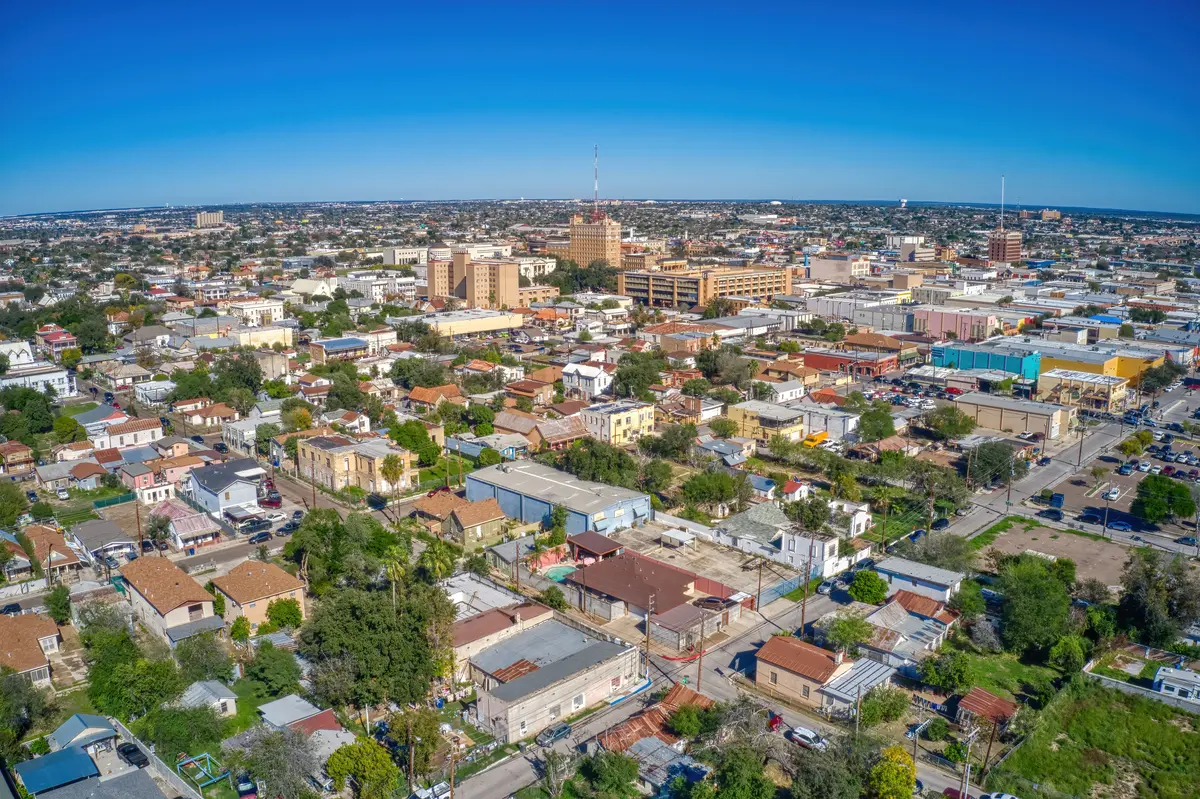
Retiring in Laredo
Laredo draws retirees for its balance of amenities, outdoor access, and cost. Here’s what to weigh.
🌤 Climate
Laredo's semi-arid climate delivers 220 sunny days a year and genuinely mild winters — January highs typically reach the mid-60s. The flip side is an intense summer that runs from May through September, with August highs averaging near 99–100°F. Retirees who are heat-tolerant or who travel during peak summer months tend to find the climate manageable.
🍴 Lifestyle
Daily life for retirees in Laredo centers on the historic downtown core — San Agustín Plaza, the Laredo Center for the Arts, and the Republic of the Rio Grande Museum — along with outdoor access at Lake Casa Blanca and the Rio Grande riverfront. The monthly art walk and the February Washington's Birthday celebration give the cultural calendar real anchors. The food scene is bicultural and deeply local.
🏚 55+ Communities
No 55+ communities were found in Laredo. Retirees who move here typically buy in established residential neighborhoods like Plantation or Del Mar Hills, both of which sit above the city-wide typical home price and offer a quieter residential character.
✈ Getting Around
A car is the practical requirement for daily life in Laredo — most errands, medical appointments, and dining are a drive away. Internal commutes are short by national standards. Laredo International Airport (LRD) sits within five miles of downtown, with connections to major Texas hubs, which makes it a practical option for retirees who travel frequently.
🏛 Texas Taxes for Retirees — What to Know
- No state income tax — Texas has no personal income tax — constitutionally protected under Article VIII, Section 24. Social Security, pensions, 401(k)/IRA withdrawals, and annuity payments are all untaxed at the state level, with no state return to file.
- Sales tax is the tradeoff — The state sales tax is 6.25%, and local add-ons bring the combined rate in Laredo to 8.25% (Texas Comptroller of Public Accounts, city sales and use tax rates, July 2026). Groceries and prescription drugs are exempt.
- Property taxes — the real tradeoff — Texas’s effective property tax rate averages about 1.40%, among the highest in the country, since property tax (not income tax) funds most local government and schools.
- Over-65 homestead exemption and school-tax freeze — Homeowners 65+ (or disabled) get an additional $60,000 exemption from their home’s value for school district taxes, on top of the general homestead exemption — $200,000 off school taxable value combined, following November 2025’s Proposition 11 (SB 23), which raised the over-65 exemption to $60,000, and Proposition 13 (SB 4), which raised the general homestead exemption to $140,000. Once claimed, your school district tax bill is frozen at that year’s amount and cannot increase as home values rise, and the ceiling can transfer if you move to a new home within Texas.
- Deferral option if cash is tight — Homeowners 65+ can defer property tax payment entirely for as long as they live in the home, rather than paying it currently — interest accrues, but no forced sale.
- No estate or inheritance tax — Texas has no estate tax, no inheritance tax, and no gift tax.
- No separate capital gains tax — Because Texas has no state income tax, capital gains — including on investments and home sales — are not taxed at the state level at all, unlike states such as Washington that tax capital gains separately from income.
Tax laws change frequently and individual situations vary. This is general information, not tax advice — always consult a qualified Texas tax professional or CPA for personalized retirement tax planning.
Weekends & Local Favorites in Laredo
Weekends in Laredo run on outdoor access, local food, and cultural events that you won't find replicated anywhere else in Texas. The city's bicultural character is most visible on a Saturday morning — Spanish on the radio, birria and breakfast tacos competing for the same table, and the Rio Grande visible from the historic plaza.
Outdoor Life
Lake Casa Blanca International State Park is the anchor — fishing, boating, swimming, mountain biking, hiking, and camping all happen here, and it is the kind of park that justifies making Laredo your permanent base. The Rio Grande riverfront is recognized as one of the better birding destinations in South Texas, drawing serious birders from across the state during migration season. For a closer-to-home trail, Chacon Creek Trail and Father Charles M. McNaboe Park handle the daily run or bike ride, and Slaughter Park draws families from the surrounding neighborhoods.
Food and Coffee
The local food scene leans heavily bicultural — the best meals in Laredo tend to be places that span Mexican and South Texas traditions without self-consciously calling attention to it. Palenque Grill Hwy 35 is a local institution for grilled meats and traditional Mexican preparations. La Finca Bruncheria & Café handles the weekend brunch crowd. Rudy's "Country Store" and Bar-B-Q brings Texas barbecue into the rotation. A well-regarded Cajun seafood spot draws the crowd that wants something different. Main Event Laredo covers the family entertainment side of a night out.
For coffee, Dósis Coffee TX LLC, Café La Oficina LLC, MoonLane Coffee, Borderland Espresso & Gifts, and Black and White Coffee House have all built real local followings — each with a distinct personality, and none of them a chain. The farmers market scene includes El Centro de Laredo Farmers Market and a local weekly market, both drawing vendors who reflect the city's agricultural and culinary roots.
Arts and Culture
The Laredo Center for the Arts and the Republic of the Rio Grande Museum sit within the historic downtown core, near San Agustín Plaza. The monthly art walk on the first Friday of each month animates galleries and performance spaces throughout the historic district. The Washington's Birthday celebration every February is the city's signature civic event — one of the largest of its kind in the United States, and something every new resident should experience before deciding what they think of Laredo.
Local favorites in Laredo
Restaurants
- Main Event Laredo
- Rudy's "Country Store" and Bar-B-Q
- Palenque Grill Hwy 35
- La Finca Bruncheria & Café
- Mr.crabby's cajun seafood and bar
Outdoors
- Lake Casa Blanca International State Park
- Father Charles M. McNaboe Park
- Uni-Trade Stadium area trails
- Slaughter Park
- Chacon Creek Trail
Coffee
- Dósis Coffee TX LLC
- Café La Oficina LLC
- MoonLane Coffee
- Borderland Espresso & Gifts
- Black and White Coffee House
Farmers Markets
- El Centro de Laredo Farmers Market
- Farmer's Market
Top Things Locals Say About Laredo
The best intel about a city comes from the people who actually live there. Here’s what Laredo residents say when newcomers ask the questions everyone’s thinking.
“I expected to save money on the house — I did not expect to actually like it here so much. The community is tight, the food is genuinely great, and nobody warned me about February. The Washington's Birthday celebration is a whole thing, and by the end of my first one I understood why people stay.”
— Recent Laredo home buyer
“What's the most surprising thing about living in Laredo?”
How self-contained it feels. You come in expecting a border city with a transient population, and what you find is multigenerational families who have been here for decades, strong neighborhood loyalty, and a civic culture that takes its traditions seriously. The Washington's Birthday celebration alone tells you everything you need to know — this is a city that knows who it is.
“What do locals love most about Laredo?”
The food and the community are the things people come back to. The bicultural scene means you get two culinary traditions in the same meal, sometimes on the same plate. Lake Casa Blanca is genuinely beautiful in the cooler months, and the Rio Grande riverfront near San Agustín Plaza has a historic weight to it that grows on you. Commutes are short, housing is real-person affordable, and the people who live here tend to actually know their neighbors.
“What should newcomers to Laredo know?”
Two things: learn the truck traffic patterns near the international bridges early, because the commercial crossings are constant and they concentrate on specific corridors at predictable times. And front-load your outdoor plans into fall and spring — once August arrives, Lake Casa Blanca and Chacon Creek Trail become early-morning or evening-only propositions. The city rewards people who adapt to its rhythms rather than fighting them.
“How much do you need a car in Laredo?”
A car is essential for virtually everything — over 92% of commuters drive alone, and the average household owns two. El Metro Transit runs citywide bus service and covers most of the city, but most residents treat it as a backup rather than a daily option. The upside is that the commutes are short: most trips across the city take well under half an hour, and Laredo International Airport is a quick drive from nearly any neighborhood.
Cities Near Laredo
Other communities near Laredo worth a look — each with its own character and price point.
| City | Distance | Best For | Vibe | Median Rent | Median Buy |
|---|---|---|---|---|---|
| Rio Bravo | 15 mi | Budget-conscious buyers and families | Small-town, affordable, close-knit | $900 | $150,000 |
| El Cenizo | 10 mi | Entry-level buyers seeking quiet | Residential, modest, border-community feel | $850 | $140,000 |
| Cotulla | 66 mi | Rural land buyers and energy workers | Small-town, open land, ranch country | $950 | $165,000 |
More Helpful Guides for Laredo
Going deeper on Laredo? Our blog series covers everything from first-time buying to retiring here — explore the guides below.
Local Expert Takeaway: Laredo is a city where the numbers make sense and the culture surprises you. The typical home price of $223,127 (July 2026) gives buyers real options — San Isidro and La Bota Ranch offer newer construction well above the city median, while the overall market stays accessible compared to any other Texas city of comparable size. The port economy is the real story here: if your work touches logistics, customs, or international trade, you are in the right city. If you're coming for a government or education job, the school districts and city employer base are stable anchors. Learn the truck traffic corridors near the World Trade International Bridge early, get to Lake Casa Blanca before the summer heat locks in, and show up for the Washington's Birthday celebration your first February — it will tell you more about Laredo in a weekend than a month of driving around the neighborhoods.
Quick Takeaways & FAQs
✅ Port Laredo handles approximately 35% of all U.S.–Mexico binational trade, generating thousands of local jobs in logistics, customs, and freight forwarding that no other mid-sized American city can match.
⚠️ August highs average near 99–100°F, and newcomers consistently underestimate how significantly the summer heat reshapes daily routines — it is the most common reason people move back out.
📍 The average one-way commute runs roughly 22 minutes for most residents, but buyers near the World Trade International Bridge corridors should learn the commercial truck traffic patterns before choosing a neighborhood.
Is Laredo, TX a good place to live?
What is the cost of living like in Laredo, TX?
What are the best neighborhoods in Laredo, TX?
What is the job market like in Laredo?
How safe is Laredo, TX?
Helpful Links for Moving to Laredo
Moving to Texas?
Tell us what you need help with and we'll connect you with local resources.
