
Most people picture Laredo as a border crossing and a trade hub — not a place you'd relocate for the hiking. That assumption is worth revisiting. With 220 sunny days a year and a river ecosystem that ornithologists rank among the most biodiverse in North America, Laredo offers outdoor recreation that genuinely surprises newcomers who arrive expecting a concrete landscape and leave with a trail map. The Rio Grande isn't just a border here; it's the ecological engine behind everything worth doing outside.
The city of 269,515 sits at the southern end of one of the great bird migration corridors on the continent, and the parks system reflects that. Lake Casa Blanca International State Park anchors the east side with 1,680 surface acres of open water. The Chacon Creek Trail stitches together neighborhoods from the north end of the city all the way to the Rio Grande. Father Charles M. McNaboe Park puts riverside trails and sports fields along the riverbank in north Laredo. These aren't afterthoughts — they're the places residents actually spend their weekends.
The honest caveat is heat. From late May through September, midday outdoor activity in Laredo is uncomfortable at best and genuinely dangerous at worst. The trails empty out by 9 a.m. in summer and don't fill again until evening. Newcomers from cooler climates consistently underestimate this in their first season. The flip side: October through April is some of the finest weather in Texas, and Laredo's parks feel entirely different once the temperature drops below 85 degrees. Winter here is genuinely mild, and that's when the birding calendar peaks.
Whether you're moving here from a city with more green space or trading in a backyard for borderland trails, the sections below cover Laredo's signature parks, the Chacon Creek trail system, the Rio Grande riverfront, and what birding on the border actually looks like day to day.
Lake Casa Blanca: Laredo's Signature Outdoor Destination
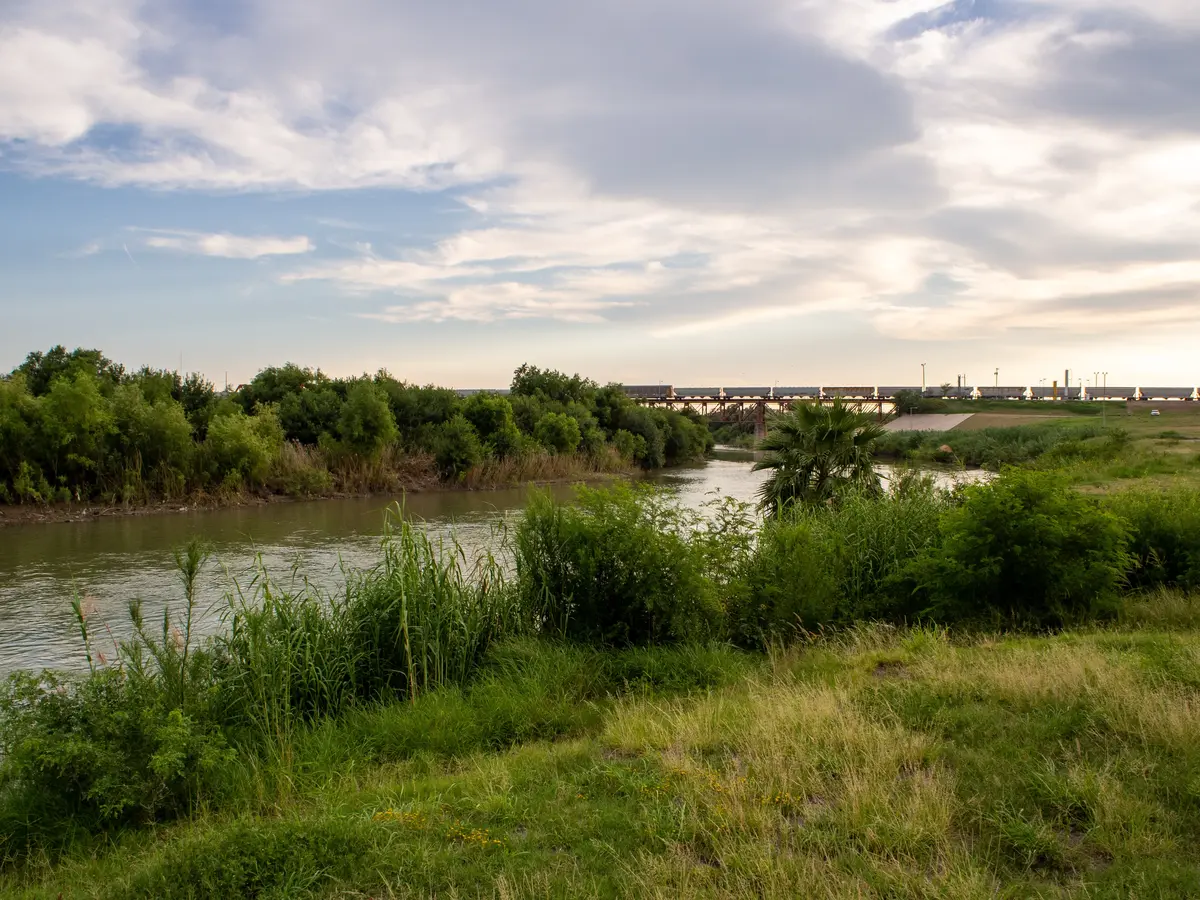
There is one park in Laredo that settles the question of where to spend a Saturday, and it's Lake Casa Blanca International State Park. Managed by the Texas Parks and Wildlife Department since it opened in 1991, the park sits on the eastern edge of the city and covers 525 acres of land wrapped around a 1,680-surface-acre lake — an impoundment of Chacon Creek, itself a tributary of the Rio Grande.
The park draws consistently from across the region and beyond. For a city of Laredo's size, that reflects something beyond casual use. This is where residents camp, water-ski, fish, and bring out-of-town family when they want to show off what the city offers.
What You Can Actually Do Here
The activity list at Lake Casa Blanca is genuinely broad for a single site. On the water, that means boating, water-skiing, lake swimming, and fishing. On land, the park supports mountain biking, hiking, picnicking, geocaching, and birding. Park rangers run structured programs in birding, geocaching, and fishing — and Junior Ranger Explorer Packs are available for families with younger kids, which makes this a destination rather than just a drop-off point.
The wetland edges of the lake attract wintering ducks, shorebirds, Osprey, and American White Pelicans. The creek corridor below the dam is walkable for Green Jays, native sparrows, and migrating warblers. If you move to Laredo with any interest in wildlife photography, this park will occupy more of your time than you plan for.
Day-Use Entry
Day-use fees are set by Texas Parks and Wildlife and are affordable enough that regular visits don't require budget planning. Children 12 and under enter free. That accessibility keeps the park genuinely open to the full range of families who live here.
One thing newcomers don't always account for: arrive early, especially in warmer months. The park fills quickly on weekends, and the shade options near the water are limited once the sun is fully up.
Chacon Creek Trail: 9.4 Miles Through the City's Heart
The Chacon Creek Hike and Bike Trail is the closest thing Laredo has to a spine for daily outdoor life. The approximately 9.4-mile paved multi-use path follows Chacon Creek through multiple neighborhoods, passing under major road and railroad crossings before terminating where the creek meets the Rio Grande near the US-Mexico border.
The southern end of the trail gives walkers and cyclists a genuinely rare vantage point — views of the Rio Grande and the Mexican shore on the opposite bank. It's a reminder that this trail isn't just an urban amenity; it's geography made walkable.
Who Uses It and How
The trail sees a mix of cyclists, joggers, dog walkers, and birders, often using it before 8 a.m. in summer and through the middle of the day in winter. Benches and picnic tables are spaced along the route, which makes it useful for anything from a 30-minute walk to a full morning out. The surface is paved throughout, so it works for strollers and road bikes as well as trail runners.
The Chacon Creek Trail is also named alongside Lake Casa Blanca as one of the primary sites for the annual Laredo Birding Festival. The creek corridor functions as a legitimate birding hotspot, not just a pleasant walk with occasional birds. Access points run through several city parks along the creek, so you're not limited to a single trailhead.
The Bat Colony — A Seasonal Detail Nobody Warns You About
During the annual winter migration, the bridges over Chacon Creek become home to a large bat colony. The city has installed an interpretive exhibit along the trail to explain the bats and ask users to give the habitat space. If you're moving from a city where this kind of wildlife encounter doesn't happen, the first time you walk through at dusk in January is memorable. The exhibit is worth reading; it reframes what could feel unsettling as something worth protecting.
Riverfront Parks: McNaboe and Slaughter
Laredo's park system isn't built around one signature site and nothing else. Father Charles M. McNaboe Park and Slaughter Park both carry enough amenities to serve as community anchors in their own right — and they serve different parts of the city.
Father Charles M. McNaboe Park
McNaboe Park sits along the Rio Grande riverbank in north Laredo. The setting is the draw — jogging trails with river views, two ponds, and wildlife including deer that move through the grounds regularly. For a park inside a city of 269,515, the sense of space here is real.
The facility side is equally complete: soccer fields, volleyball nets, basketball courts, tennis courts, a dog park, BBQ areas, and a covered children's playground. This is where north-side residents run in the morning and bring kids on weekend afternoons. The dog park in particular fills reliably — Laredo has a large population of working families who don't have large private yards, and McNaboe's dog park serves that gap.
Slaughter Park
Slaughter Park — also called the Slaughter Sports Complex — covers roughly 46 acres and leans more athletic than McNaboe. Baseball and football fields, a covered basketball court, and soccer fields make it a primary destination for organized youth leagues. It also offers walking and running trails, picnic areas, exercise equipment, children's playgrounds, and nature trails near the river with meaningful tree cover — which matters in a city where shade is scarce in summer.
The tree cover along the river-side nature trails at Slaughter is worth noting for anyone who runs outdoors year-round. Shaded segments extend the usable window in hot weather by a meaningful amount. It's not a dramatic canyon or a forested greenway, but in Laredo's landscape, established tree canopy along a trail is something regulars plan around. For a full breakdown of youth sports programs that use these facilities, see the Laredo schools page.
| Park | Size | Key Features | Best For |
|---|---|---|---|
| Lake Casa Blanca International State Park | 525 land acres / 1,680 lake acres | Boating, swimming, fishing, mountain biking, camping, birding, ranger programs | Families Nature |
| Chacon Creek Trail | ~9.4 miles (paved) | Multi-use trail, birding corridor, bat colony bridges, Rio Grande terminus | Nature Walkable |
| Father Charles M. McNaboe Park | Riverfront (north Laredo) | River views, two ponds, dog park, tennis, basketball, soccer, covered playground | Families Quiet |
| Slaughter Park / Sports Complex | ~46 acres | Baseball, football, soccer, basketball, shaded nature trails, exercise equipment | Families Value |
Looking to buy in Laredo? Estimate your payment.
Enter your numbers to see an estimated monthly mortgage payment.
Estimate only. Excludes HOA fees and mortgage insurance. The interest rate above is a starting point, not a quoted rate — replace it with your own to see real numbers. Insurance is a flat placeholder, not a Laredo quote.
Birding on the Border: What Makes Laredo Different
Laredo occupies a specific and unusual position in the North American birding world. The city sits at a point where subtropical species from Mexico reach the northernmost edge of their range, overlapping with migratory birds following the Rio Grande corridor. The result is a species list that serious birders travel specifically to see.
Laredo is considered part of the 'birdiest' corridor in North America, and the signature species list reflects why. The Morelet's Seedeater, Gray Hawk, Audubon's Oriole, Green Parakeets, Red-billed Pigeon, and Clay-colored Thrush are all findable in the right season along Laredo's riverfront and creek systems. Several of these are essentially unavailable anywhere else in the United States.
The Laredo Birding Festival
The Laredo Birding Festival is organized by the Rio Grande International Study Center and the Monte Mucho Audubon Society. An established event that draws birders from across the country, it brings full-day guided trips along the riverfront, creek systems, nature trails, and private ranchlands in and around the city. The Chacon Creek Trail and Lake Casa Blanca are both named as top festival sites.
If you move here with any interest in birds, this event reframes what you thought you knew about South Texas. It also introduces you to a community of residents who spend their mornings on the Chacon Creek Trail with binoculars — which is a faster way to meet people than you'd expect.
Where to Go Without a Festival
Outside of festival season, the most productive daily birding runs through the Chacon Creek Trail early in the morning, the wetland edges of Lake Casa Blanca during winter, and the riverfront sections of McNaboe Park for waterfowl and parakeet flyovers at dusk. None of these require a guide or specialized equipment. They require showing up before the heat sets in — which, in Laredo, is advice that applies to every outdoor activity regardless of whether you're watching birds or running intervals.
The honest seasonal reality: summer birding in Laredo is thin compared to October through March. The species that make the city famous are most visible during migration and winter residency. If you're planning your move partly around outdoor life, the fall arrival timing matters more here than it would in most Texas cities.
Local Expert Takeaway: Laredo's outdoor recreation is anchored by three things most newcomers don't expect: a 1,680-acre state park lake on the east side of town, a nearly 10-mile paved trail that runs from the urban core to the Rio Grande, and a birding ecosystem that draws specialists from across the country every winter. The heat is real — plan any trail use before 9 a.m. from June through September — but the October-through-April window is genuinely excellent. Lake Casa Blanca, the Chacon Creek Trail, and Father McNaboe Park are the parks that actually get used week to week, and they're the reason residents who care about being outside choose Laredo over similar-sized Texas border cities.
Quick Takeaways & FAQs
✅ Lake Casa Blanca International State Park offers boating, swimming, fishing, and camping inside city limits, with affordable Texas Parks and Wildlife day-use fees that keep it genuinely accessible for regular visits.
⚠️ Summer heat is a genuine constraint — Laredo's outdoor recreation calendar runs best October through April, and newcomers consistently underestimate how early the trails empty out in July.
📍 The Chacon Creek Trail ends at the US-Mexico border where the creek meets the Rio Grande, giving walkers a rare view of the river and Mexico from inside a city park.
Is Lake Casa Blanca State Park worth it for families with young kids?
Can you swim in Lake Casa Blanca?
Is the Chacon Creek Trail paved and suitable for bikes and strollers?
When is the best time of year to do outdoor activities in Laredo?
Is Laredo actually a good place to go birding, or is that mostly tourist marketing?
Moving to Texas?
Tell us what you need help with and we'll connect you with local resources.
