
You've done the math — or someone did it for you — and the number is hard to ignore. Laredo's typical home price of $223,127 (July 2026, Zillow ZHVI) sits at a fraction of California's statewide typical home value of $773,735. That gap alone is enough to get a Californian on a plane. But Laredo is not a suburb of Austin or a Sun Belt boomtown that happens to be cheaper. It is a city of 269,515 people on the Rio Grande, shaped almost entirely by its identity as the busiest land port in the Western Hemisphere — and that context matters before you sign anything.
The economy here runs on trade. Port Laredo processed $353.94 billion in international trade in 2025, and I-35 originates right here, carrying that commerce 1,568 miles north toward the country's interior. The major employers reflect that structure: the Laredo Independent School District, United Independent School District, the City of Laredo, Concentrix, and International Bank of Commerce anchor the local job market, alongside the logistics and transportation industries that flow from the port. For Californians moving with remote jobs — and many do — the employment base matters less than the cost picture, which tilts dramatically in your favor the moment you cross the state line.
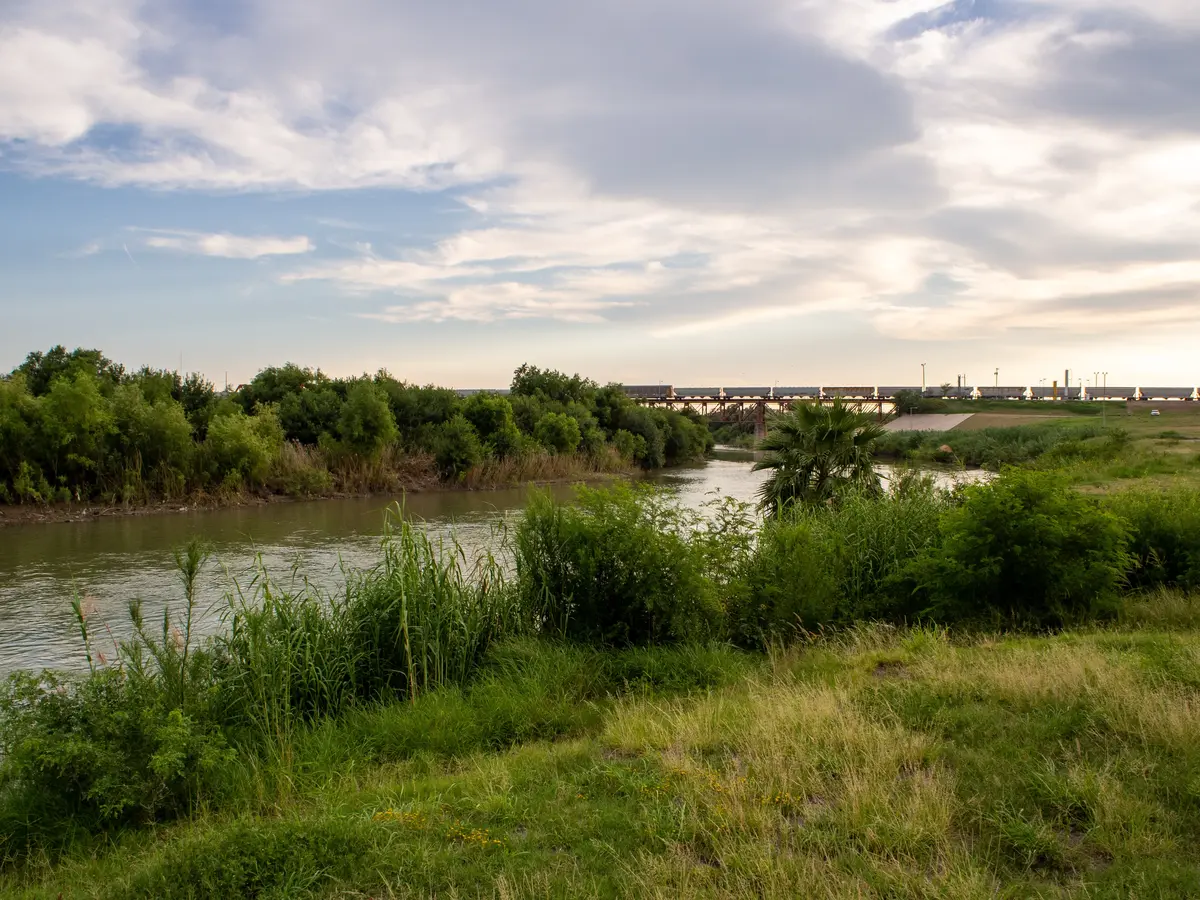
Daily life in Laredo runs warmer, slower, and more bilingual than most places Californians come from. Spanish is the first language for a large share of residents, and the cultural tilt toward northern Mexico is genuine — in the food, in the family-centered social culture, in the way the river defines where the city looks. The Rio Grande riverfront, San Agustin Plaza, and the World Trade International Bridge are not just landmarks; they are the geographic and civic anchors that give Laredo its specific character. For more on how the full cost picture breaks down day to day, that page covers utilities, groceries, and transportation in depth.
Whether you are leaving California because of housing costs, insurance premiums, or taxes — or all three — the sections below break down the real financial comparison between the two states, what Laredo's neighborhoods and climate actually look like, and the honest trade-offs that nobody mentions in the moving-company brochure.
The Home Price Gap: What California's Market Has Been Costing You
California's statewide typical home value of $773,735 is the figure most Californians are trying to escape. Laredo's typical home price of $223,127 (July 2026, Zillow ZHVI) means a buyer crossing that gap could purchase a Laredo home outright with money that would barely cover a California down payment.
That spread is not a rounding error — it is the difference between a city built around trade infrastructure and a state built around constrained supply. In Laredo, entry-level construction exists in actual quantity. Neighborhoods like Cuatro Vientos Norte offer options below the city median, while areas like San Isidro, La Bota Ranch, and Crown Ridge sit above it — still a fraction of what comparable suburban development costs in most California markets. For a detailed look at what each neighborhood actually feels like, see the Laredo neighborhoods guide.
One thing Californians consistently underestimate: the homeowners insurance situation in California has become its own cost driver. Premiums in California rose 84% between late 2020 and early 2026, deductibles have climbed sharply, and seven of the state's twelve largest insurers have reduced or stopped writing new policies. FAIR Plan enrollment surged 43% in roughly fifteen months following the 2025 Los Angeles wildfires. In Laredo, homeowners insurance is not cheap — the climate produces its own risks — but it is available at standard market terms, without the insurer exodus that now defines California's market.
One structural shift worth understanding before you buy in Laredo: Texas has no Proposition 13 equivalent. There is no cap tying your assessed value to what you paid years ago. The state does offer a $100,000 homestead exemption on school district taxes and a 10% annual cap on homestead appraisal increases, which softens the exposure somewhat. But if you have owned a California home for a decade or more and your assessed value has been frozen well below market, your property tax bill in Laredo will feel different regardless of the lower purchase price.
Taxes: The Biggest Financial Shift of the Move
Texas has no state income tax. That single fact reshapes the financial picture for nearly every Californian who moves here, and it is worth sitting with before you focus on any other line item.
California's top state income tax rate of 13.3% applies only to the highest earners, but the brackets climb steeply well before that ceiling. A household earning $100,000 in California pays somewhere in the range of $5,055 to $5,208 per year in state income tax that a Texas resident does not pay at all. On a $150,000 remote salary — the kind that funds a California-to-Laredo move — the annual savings compound into a number that rivals several months of mortgage payments. For a full breakdown of what that means for your monthly budget, the Laredo cost of living page puts these figures in context.
The trade-off that Californians sometimes miss is property taxes. California's effective property tax rate of 0.71% is kept artificially low by Proposition 13, which caps assessments at the purchase price and limits annual increases. Laredo's effective rate of 1.54% — more than double California's — applies to assessed values that can rise with the market. On Laredo's typical home, the dollar amount remains manageable compared to what a California homeowner at California prices would pay. But if you are comparing rates as percentages, Laredo's is higher, and it is not trivial.
Sales tax rounds out the picture favorably. California's statewide base sales tax rate of 7.25% is the floor; local add-ons push many California cities into the 9% to 10.75% range. Texas's base rate is 6.25%, with local jurisdictions able to add up to 2%, bringing the maximum to 8.25%. In most day-to-day shopping, Laredo residents pay less at the register than they would have in a mid-size California city.
| Tax Category | California | Texas / Laredo |
|---|---|---|
| State income tax | California's top state income tax rate of 13.3%; progressive brackets from 1% | 0% — no state income tax |
| Effective property tax rate | California's effective property tax rate of 0.71% (Proposition 13 constrained) | 1.54% effective rate in Laredo |
| Base sales tax rate | California's statewide base sales tax rate of 7.25%; local adds push to 9–10.75% | 6.25% state base; max 8.25% combined |
| Homestead protection | Prop 13: assessed value capped at purchase price, 2% annual max increase | $100,000 school district exemption; 10% annual appraisal increase cap on homesteads |
| Investment & retirement income | Taxed as ordinary income at California rates | Not taxed at the state level |
| Capital gains | Taxed as ordinary income — up to 13.3% | No state capital gains tax |
Health insurance premiums run noticeably below what you were paying in California, though you will drive farther for specialist care. That trade-off is real and worth factoring in before you finalize your decision.
Climate and Daily Life: The Adjustment Californians Don't Anticipate
Most Californians think they understand heat. Laredo's summer will correct that assumption. Average August highs reach 100°F, and the city recorded a high of 108°F in August 2025. From roughly May through September, outdoor life shifts toward early mornings and evenings; the middle of the day is genuinely inhospitable in a way that coastal or even inland California heat rarely is.
The flip side is a winter that Californians from the Bay Area or Los Angeles will find startlingly pleasant. January highs average near 67°F, with lows around 50°F. Laredo gets 220 sunny days a year, and the mild winters mean the outdoor life that becomes impossible in summer fully returns from October through April. Chacon Creek Trail, Lake Casa Blanca International State Park, and Slaughter Park are where residents actually spend those months — running, cycling, and gathering in a climate that no longer requires constant air conditioning.
What takes longer to adjust to is the insularity of the geography. Laredo is not close to other Texas cities in any meaningful driving sense. San Antonio is the nearest major metro, and it is a real trip. Residents who come from California cities with dense suburban grids and multiple urban cores nearby will feel the distance. This is not a city where you casually drive to a neighboring metro for a weekend — the nearest options are across the river into Nuevo Laredo, which is a genuinely different kind of urban experience.
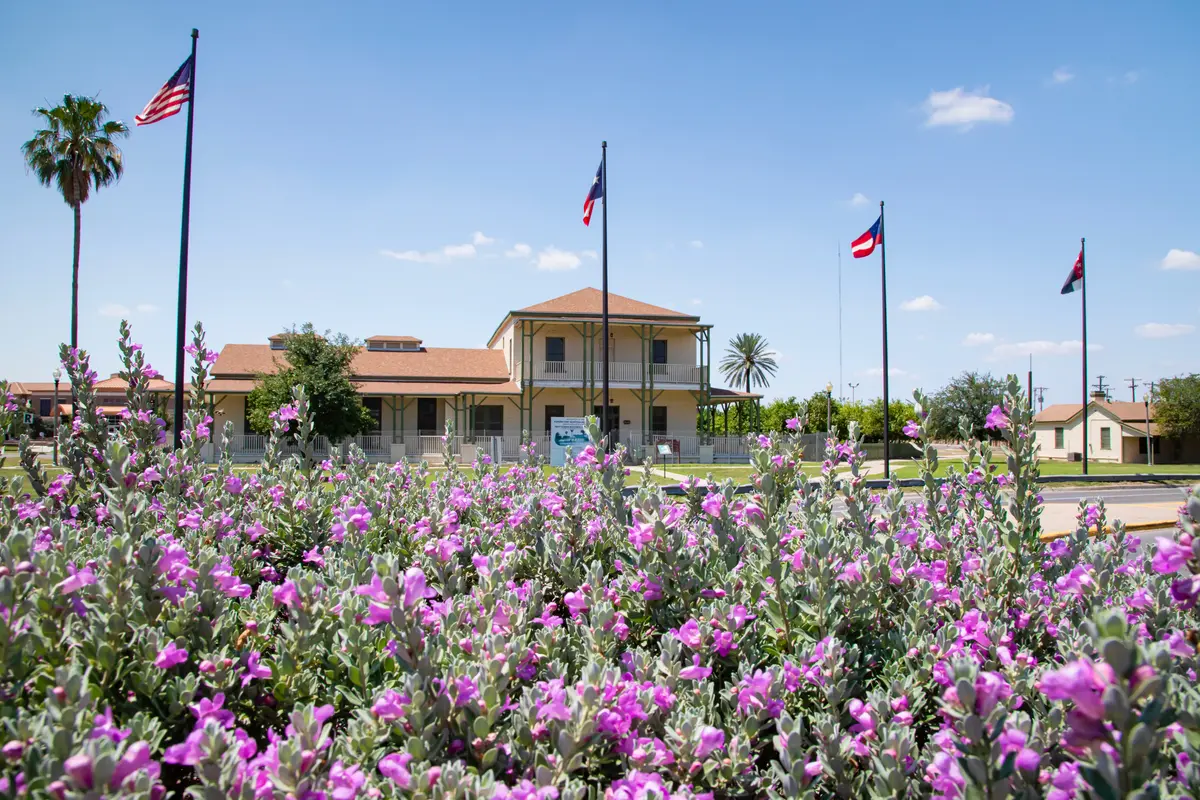
The local culture is one of the most distinctly bilingual in the continental United States. San Agustin Plaza is the city's civic heart, the Republic of the Rio Grande Museum anchors the historical identity, and the Laredo Center for the Arts keeps a cultural program running year-round. The restaurant and coffee scene is more developed than most outsiders expect — and that is addressed in the weekends section below.
Looking to buy in Laredo? Estimate your payment.
Enter your numbers to see an estimated monthly mortgage payment.
Estimate only. Excludes HOA fees and mortgage insurance. The interest rate above is a starting point, not a quoted rate — replace it with your own to see real numbers. Insurance is a flat placeholder, not a Laredo quote.
What Californians Get Right — and Wrong — About Laredo's Economy
The trade economy is the fact that most Californians don't fully process before arriving. Port Laredo is not a regional freight hub — it is the busiest land port in the Western Hemisphere, handling approximately 40% of all U.S.–Mexico trade. Automotive components, energy products, technology parts, and consumer goods all move through here at a volume that makes I-35 a genuine economic artery, not just a highway. For anyone in logistics, supply chain, customs brokerage, or international trade finance, the professional opportunity in Laredo is real and specific.
For everyone else, the employer base is more limited than California cities of comparable size. The Laredo Independent School District and United Independent School District are the largest institutional employers. The City of Laredo, Concentrix, and International Bank of Commerce fill out the list. Many Californians who make this move do so with remote income already secured — and that is not a workaround, it is the honest picture of how the economics work for people arriving from higher-cost states.
There is a near-term headwind worth naming honestly. Population growth in Laredo slowed sharply — from 3.2% growth in the prior period to roughly 0.2% in the period ending July 2025, with the Texas Tribune reporting that no U.S. metro was hit harder by the decline in international migration tied to changes in federal immigration policy. A city whose economy is built on cross-border movement is more exposed to federal immigration and trade policy than most. That does not make Laredo a bad bet — the port's structural role in U.S.–Mexico commerce is not going away — but it is a risk factor that a California buyer evaluating a purchase should factor in, not ignore.
For a fuller look at the employment landscape and commute patterns, the living in Laredo overview covers both in depth.
Weekends and Local Favorites: What the Move Actually Feels Like
After six months in Laredo, most California transplants say the same thing: they underestimated how self-contained the city is. You are not running up to Austin for a weekend without real effort. What you have instead is a city that has built its own social fabric around the border, the river, and the trade culture — and once you stop looking for what Laredo isn't, the city is more interesting than the arrival-week impression.
Lake Casa Blanca International State Park is the weekend anchor for a lot of families. Father Charles M. McNaboe Park and Slaughter Park serve different parts of the city as gathering spots. The Chacon Creek Trail system gives runners and cyclists a green corridor that works through most of the year. Uni-Trade Stadium draws crowds for soccer, and the riverfront near the World Trade International Bridge is worth walking — there is nothing in California quite like standing at a functioning international crossing and watching the commercial reality of the border economy move in real time.
The food and coffee scene is a genuine surprise. Rudy's "Country Store" and Bar-B-Q brings the Central Texas barbecue tradition to the border corridor. Palenque Grill brings northern Mexican cuisine at a serious level. A well-regarded Cajun seafood spot has built a loyal local following. Main Event Laredo covers the family entertainment side. For coffee, Borderland Espresso & Gifts and Black and White Coffee House reflect the independent scene; Dósis Coffee TX LLC, MoonLane Coffee, and Café La Oficina LLC each bring a distinct character that is specific to this city rather than imported from somewhere else.
The El Centro de Laredo Farmers Market gives residents a local food connection, and the broader market runs through the warmer stretches of the year. What Californians used to farmers markets in every neighborhood will notice is that Laredo's version is smaller and less curated — but it is there, it is local, and it reflects the agricultural character of the Webb County region. The schools, if you are arriving with children, carry their own considerations — the Laredo Independent School District holds a B rating, according to the Texas Education Agency, with 19,495 students enrolled in 2025-26. A fuller picture of what that means in practice is on the Laredo schools page.
Local Expert Takeaway: Laredo's financial case for California buyers is genuinely strong — no state income tax, home prices well below California's statewide typical home value, and an insurance market that hasn't collapsed under wildfire exposure. The honest counterweight is climate, isolation, and a local economy tied more tightly to federal border and trade policy than most Texas cities. Buyers who arrive with remote income, a tolerance for triple-digit summers, and genuine curiosity about a bilingual border city tend to stay. Buyers who expect Laredo to feel like a cheaper version of San Diego or Sacramento tend to leave inside two years.
Quick Takeaways & FAQs
✅ Texas has no state income tax — a household earning $100,000 saves over $5,000 per year compared to paying California rates.
⚠️ Laredo's effective property tax rate of 1.54% is more than double California's, and there is no Proposition 13 equivalent protecting your assessed value from rising with the market.
📍 Port Laredo handles approximately 40% of all U.S.–Mexico trade, making I-35 an economic artery and giving the city a job base in logistics, customs, and international trade that has no California equivalent at this price point.
How much cheaper is it to buy a home in Laredo compared to California?
Does moving to Texas really eliminate state income tax?
Is Laredo's property tax rate higher than California's?
What is the summer heat actually like in Laredo, and how do residents handle it?
How bilingual is daily life in Laredo, and will I need Spanish?
Moving to Texas?
Tell us what you need help with and we'll connect you with local resources.
