
Laredo surprises most people who research it from a distance. At 269,515 residents, it is the 11th-largest incorporated city in Texas — not a small border town, but a full-scale metro with real neighborhood variety, from guard-gated communities with wildlife ponds to walkable entry-level subdivisions served by city bus lines. The city spreads almost entirely north and east from the Rio Grande, which means choosing a neighborhood here is less about east-vs-west and almost entirely about how far north you go along I-35 and what you're willing to trade for that distance.
The local economy runs on trade — Laredo is the largest inland port in the United States, and that identity shapes everything from employer density to the industrial corridors that ring some residential areas. Laredo Independent School District holds a B rating, according to the Texas Education Agency. United Independent School District serves portions of the northern and western growth areas, and which district a home falls into is one of the first questions serious buyers ask.
On cost, the typical home price sits at $223,127 (Zillow Home Value Index, July 2026) — noticeably below what most Texas metros charge, though the median household income of $63,915 means affordability is tighter than the sticker price suggests. Day-to-day life outside the home leans on Lake Casa Blanca International State Park, the Chacon Creek Trail system, and a dining and coffee scene that has genuinely expanded in the last decade. Getting around means driving; the city's El Metro Transit connects some neighborhoods but most residents rely on Loop 20 and I-35 for their daily movement.
Whether you're weighing a move here or sorting through specific ZIP codes, the sections below break down Laredo's eight key neighborhoods, compare them by buyer type, flag the most common purchasing mistakes, and give renters an honest look at where to start their search.
The Laredo Reality
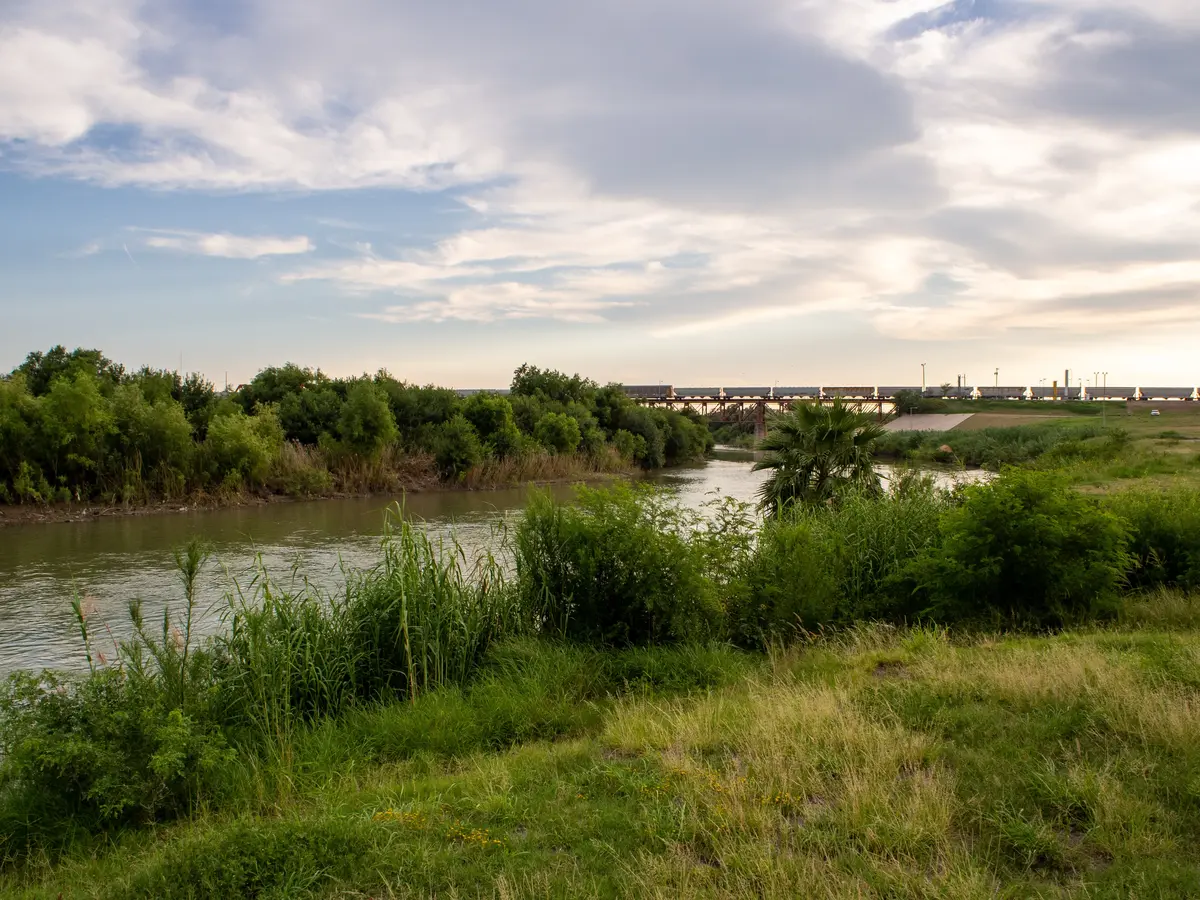
The single most consequential divide in Laredo real estate is the north-south axis along I-35. Everything that most buyers want — newer construction, HOA governance, guard gates, larger lots, and the bulk of the grocery and retail infrastructure — sits in the northern third of the city, anchored by the Loop 20 corridor. The further south you go, the older the housing stock, the denser the urban fabric, and the closer you are to the World Trade International Bridge commercial corridor. Neither direction is wrong, but assuming they're interchangeable is where relocation decisions go sideways.
School boundary lines cut across this geography in ways that don't always match neighborhood reputation. Laredo ISD and United ISD do not follow the same north-south logic that housing prices do, and a home on one block can feed into a different campus than the one two streets away. Buyers with school-age children who skip this step — assuming a neighborhood's overall reputation translates into a specific school assignment — are one of the most common sources of post-closing regret in this market.
The warehouse and logistics corridor running along Loop 20 is the other factor that reshapes expectations. Laredo's port activity is an economic engine, but it also means that some of the city's most desirable residential addresses sit within a short drive of heavy industrial activity. In neighborhoods like Crown Ridge and La Bota Ranch, the transition from single-family streets to ranchland and warehouse zones happens abruptly — worth seeing in person before making an offer.
Neighborhoods at a Glance
| Neighborhood | Best For | Vibe |
|---|---|---|
| San Isidro | Families Schools | Master-planned, HOA-governed, newer construction with a full retail hub steps away |
| Plantation | Luxury Quiet | Established, tree-shaded lots anchored by the country club golf course |
| Del Mar Hills | First-Time Families | Three distinct sub-areas ranging from starter homes to custom builds |
| Crown Ridge | Commuter Privacy | Quiet 1990s-era neighborhood at the city's edge, close to I-35 and the logistics corridor |
| La Bota Ranch | Luxury Families | Laredo's first gated community — 24/7 guard entry, walking trails, pond, and wildlife |
| Winfield | Families Quiet | Newer, owner-occupied corridor adjacent to Plantation — understated and residential |
| Cuatro Vientos / Cuatro Vientos Norte | First-Time Walkable | Sidewalk-lined entry-level ownership with solid transit access and a genuine neighborhood feel |
| Hillside Terrace | Transit Commuter | Mid-city location near Mall del Norte, served by El Metro, with Zacate Creek greenway nearby |
Laredo typical home price: $223,127 (Zillow ZHVI, July 2026). Typical rent: $1,305/mo (Zillow ZORI, July 2026). Neighborhood tiers on this page are relative to these figures.
Best Neighborhood by Buyer Type
| Buyer Type | Best Neighborhood | Why |
|---|---|---|
| First-Time Buyer | Cuatro Vientos / Cuatro Vientos Norte | The only neighborhood in Laredo's top eight with prices below the city median, plus HOA structure and walkable streets that make ownership feel manageable from day one. |
| Luxury Buyer | La Bota Ranch | Guard-gated entry, a community pond, trails, and the prestige of being Laredo's original gated address make this the top-shelf choice in the market. |
| Walkability Seeker | Hillside Terrace | Mall del Norte and two El Metro bus lines give this neighborhood the most on-foot access of any area on this list. |
| Families with Kids | San Isidro | Master-planned infrastructure, parks with junior soccer fields and playgrounds, and direct proximity to the H-E-B Plus retail hub make daily family logistics straightforward. |
| Commuters | Crown Ridge | Sitting off I-35 about 7 miles north of downtown, Crown Ridge puts the World Trade Bridge commercial corridor within a manageable daily drive. |
| Large-Lot Buyers | Plantation | The Laredo Country Club's 130-acre campus creates a buffer that keeps the neighborhood genuinely spacious, with mature trees and larger footprints that newer subdivisions can't replicate. |
| Renters | Hillside Terrace | Transit access, proximity to retail, and a mid-city location make it the most practical rental base for someone without a car or who wants to minimize driving costs. |
Looking to buy in Laredo? Estimate your payment.
Enter your numbers to see an estimated monthly mortgage payment.
Estimate only. Excludes HOA fees and mortgage insurance. The interest rate above is a starting point, not a quoted rate — replace it with your own to see real numbers. Insurance is a flat placeholder, not a Laredo quote.
Most Popular Neighborhoods
San Isidro
San Isidro is where Laredo's growth story is most visible. The master-planned layout means sidewalks, HOA oversight, and a consistent streetscape of New Traditional and Spanish Colonial homes, most built within the last 25 years. Father Charles M. McNaboe Park anchors the green space here, with junior soccer fields, playgrounds, and walking trails — and North Central Park's roughly four-mile trail system is reachable from this area as well. The catch is that San Isidro's popularity has pushed prices above the city median, and the neighborhood's northern position means any errand not covered by the I-35 retail hub involves real driving.
Best for: Families with school-age children who want new construction, HOA structure, and a full retail hub within the neighborhood.
Plantation
Plantation is probably the most distinctive neighborhood in Laredo because of what sits at its center: the Laredo Country Club's 130-acre, 18-hole golf course, with tennis courts, a seasonal aquatics facility, and a fitness center for members. Homes here come with mature trees — a genuinely rare commodity in this part of South Texas — and larger lots than the city's newer subdivisions offer. Prices run above the city median, and membership at the country club is a separate cost that shapes the neighborhood's overall lifestyle calculus.
Best for: Buyers who want established character, larger lots, and a social anchor that newer HOA communities simply don't have.
Del Mar Hills
Del Mar Hills works differently than it looks on a map because the three sub-areas — A, B, and C, separated by East Del Mar Boulevard — function almost as distinct markets. Sub-areas A and B lean toward starter homes and offer one of the more accessible entry points in a neighborhood that overall prices above the city median. Sub-area C is custom-build territory: larger footprints, newer construction, and prices that reflect it. Texas A&M International University sits about three miles east, which adds a cultural draw — the Lamar Bruni Vergara Planetarium runs public astronomy and science shows — and creates some rental demand in the area that owner-occupants should factor in.
Best for: Buyers who want flexibility — entry-level options in sub-areas A and B, or a custom build in C — without committing to a fully HOA-governed master plan.
Crown Ridge
Crown Ridge sits roughly seven miles north of downtown, off I-35, and its defining characteristic is where the city ends. The neighborhood transitions abruptly from 1990s-era New Traditional and Spanish-style single-family homes into warehouse zones and ranchland — a reality that surprises buyers who don't visit before making an offer. That edge-of-city position also means quiet streets and a sense of space that more central neighborhoods can't offer. Prices are above the city median, though the 1990s-era construction is older than what La Bota Ranch and San Isidro offer at comparable price points.
Best for: Buyers who want privacy and I-35 access and are unbothered by the industrial adjacency that comes with Laredo's port economy.
La Bota Ranch
La Bota Ranch holds a specific place in Laredo's real estate identity as the city's first gated community. The 24/7 guard entry is the headline, but the community amenities — a pool, tennis and basketball courts, a soccer field, walking and biking trails, a playground, a pond, and actual wildlife — make it function more like a private park than a typical subdivision. Homes are primarily medium-to-large single-family residences, many built in 2000 or later, and prices are above the city median. The trade-off that buyers don't always anticipate: the logistics corridor along Loop 20 borders the northern edge of this part of the city, so the buffer the gate provides is residential, not industrial.
Best for: Buyers who want the security of a gated address, a full suite of community amenities, and are at peace with being at the far northern end of Laredo's residential footprint.
Winfield
Winfield is the quieter partner to Plantation — adjacent, similarly priced above the city median, and composed largely of medium-to-large owner-occupied homes, many built in 2000 or later. What it doesn't have is Plantation's defining anchor: there's no country club at the center, no 130-year-old golf course shaping the streetscape. That's not a flaw so much as a different offer — Winfield suits buyers who want north Laredo's quality of housing stock and the Plantation corridor's stability without paying for club-adjacent prestige. Data on this neighborhood specifically is limited, and buyers should lean on a local agent who knows the individual streets.
Best for: Buyers who want the Plantation-corridor experience at a slightly more understated address, without HOA governance as the primary structural feature.
Cuatro Vientos / Cuatro Vientos Norte
Cuatro Vientos is the clearest answer in Laredo for buyers who want genuine ownership — not renting — at the most accessible price point. It's the only neighborhood on this list with prices below the city median, and the construction quality is solid: one- and two-story brick homes with two-car garages, sidewalk-lined streets, and HOA governance dating to at least 2002. US-83 (Zapata Highway) provides the primary connection to the rest of the city. The honest limitation is location — sitting in south and central Laredo puts residents further from the north-side retail and park infrastructure that other neighborhoods access easily.
Best for: First-time buyers, those prioritizing ownership over square footage, and anyone who values a walkable neighborhood over a northern address.
Hillside Terrace
Hillside Terrace occupies a mid-city sweet spot that few Laredo neighborhoods can match for pure access. Mall del Norte — one of the largest regional shopping destinations in South Texas — is within walking distance, two El Metro Transit bus lines serve the area, and Zacate Creek weaves through the eastern portion of the neighborhood, adding a natural edge to what is otherwise an urban residential area. Prices sit above the city median despite its in-between location, which reflects the transit and retail access rather than housing stock newness. Buyers looking for large lots or insulation from city density will be disappointed here.
Best for: Renters transitioning to ownership, commuters who rely on El Metro, and buyers who want mid-city convenience over subdivision quiet.
Common Mistakes Buyers Make in Laredo
Assuming All North Laredo Neighborhoods Are Equivalent
San Isidro, Crown Ridge, La Bota Ranch, and Winfield all sit in the northern arc of the city and all price above the city median — but their characters diverge significantly. La Bota Ranch is gated with round-the-clock security; Crown Ridge is open and edges directly into ranchland and warehouse zones. Buyers who pick a zip code rather than a specific street often end up with the industrial adjacency they were trying to avoid.
Skipping the School District Line Check
Laredo ISD and United ISD both operate in the northern growth areas, and the boundary lines don't follow neighborhood borders cleanly. A home in San Isidro may feed into a different campus than a home two blocks away in what looks like the same subdivision. Families who assume that a neighborhood's overall reputation translates into a specific school assignment — without pulling the actual boundary map — are the single most common group to call a buyer's agent with post-closing frustration.
Chasing Square Footage Over Location in Del Mar Hills
Del Mar Hills sub-areas A and B offer larger homes at prices that look attractive compared to sub-area C's custom builds. What buyers sometimes don't factor in is that A and B are older stock with fewer updates, and the difference in resale trajectory between the three sub-areas is meaningful. Buying the biggest home in sub-area A rarely produces the same outcome as a smaller, newer build in C — a trade-off that's easy to miss when you're comparing square footage across the same neighborhood name.
Underestimating the Loop 20 Corridor's Impact
Loop 20 is the city's logistics spine, and buyers new to Laredo often don't realize how close residential streets come to active warehouse and freight infrastructure. Crown Ridge and La Bota Ranch sit near this transition zone. Driving through on a weekday — not a Sunday afternoon — gives a much more accurate picture of truck traffic patterns and the ambient noise environment than any listing photo will.
Best Areas to Rent in Laredo
| Area | Ideal For | Trade-off |
|---|---|---|
| Hillside Terrace | Renters who rely on El Metro Transit or want walkable access to major retail | Above-median ownership prices mean competition for rentals is real; expect less space for the money |
| Cuatro Vientos / Cuatro Vientos Norte | Renters who want a stable, HOA-governed neighborhood feel without the ownership commitment | South and central location means a longer drive to the north-side retail and park corridors |
| Del Mar Hills (Sub-areas A & B) | Renters near Texas A&M International University or seeking mid-city positioning | Older housing stock in A and B means more variation in unit condition — inspect carefully before signing |
| San Isidro Corridor | Renters who want new construction quality, HOA-managed streets, and the full north-side retail hub | Rentals here are scarcer; the neighborhood skews heavily owner-occupied, so availability is limited and turnover is low |
| Plantation / Winfield Area | Renters seeking quiet, established streets and proximity to North Central Park's trail system | This corridor is almost entirely owner-occupied; rental options exist but require patience to find |
Laredo's city-wide typical rent runs at $1,305 per month (Zillow ZORI, July 2026) — well below what most Texas metros charge for comparable space. The catch is that rental inventory tilts toward older, centrally located units; the newer north-side subdivisions that dominate the buyer market were built for ownership and offer far fewer rental options. Renters who want newer construction in San Isidro or La Bota Ranch territory should expect a longer search and limited availability. See the full Laredo cost-of-living breakdown for context on how rent fits into the broader household budget here.
Local Expert Takeaway: Laredo's neighborhood decision almost always comes down to two questions: how far north are you willing to live, and which school district matters more to you? If you want the full package — gate, amenities, newer construction — La Bota Ranch and San Isidro are the answer, and you'll pay above the city median for it. If you want to own without stretching, Cuatro Vientos is the honest starting point. And if you're renting first to get the lay of the land, Hillside Terrace's El Metro access and Mall del Norte proximity make it the most practical base while you figure out where you actually want to buy.
Quick Takeaways & FAQs
✅ The typical home price of $223,127 (July 2026) puts homeownership within reach at price points that most Texas metros haven't seen in years.
⚠️ Seven of the eight neighborhoods on this list price above the city median — meaning Cuatro Vientos is the only genuine entry-level ownership option in Laredo's top neighborhoods.
📍 The transition from residential streets to warehouse and ranchland happens abruptly in Crown Ridge and near La Bota Ranch — a weekday drive through both areas before making an offer is worth the hour.
What is the safest neighborhood in Laredo, TX?
Which Laredo neighborhood is best for families with young children?
Is Cuatro Vientos a good place to buy a first home in Laredo?
How do Laredo's neighborhoods compare by commute to downtown and the bridge corridor?
What is the difference between Laredo ISD and United ISD, and how does it affect where I buy?
Moving to Texas?
Tell us what you need help with and we'll connect you with local resources.
