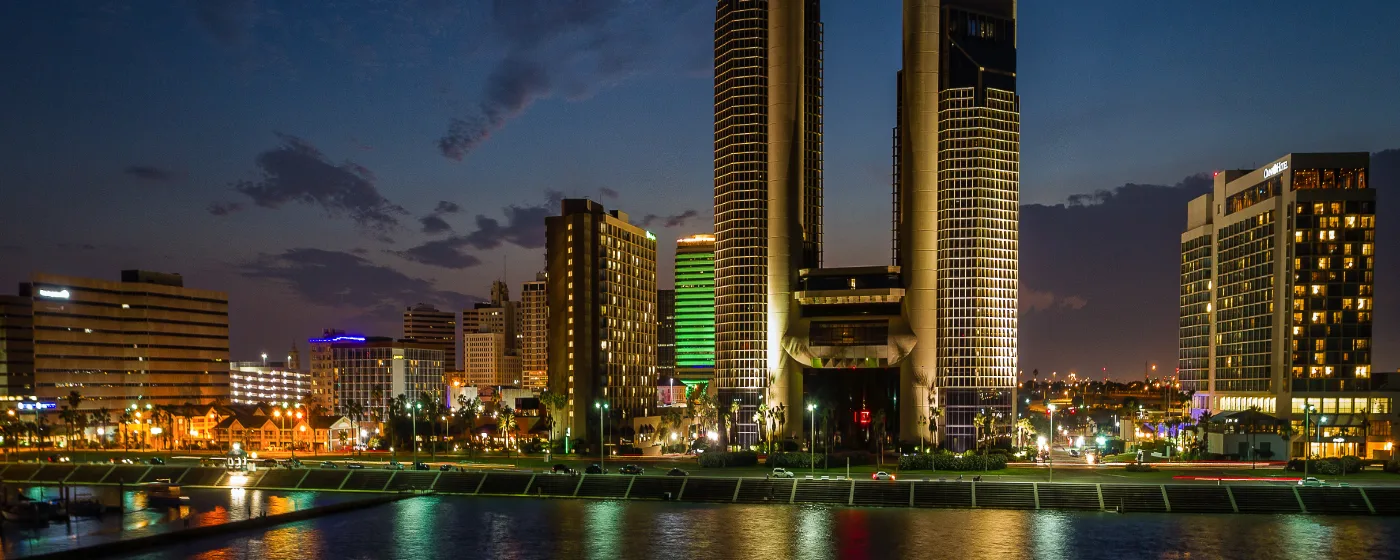
What Is Living in Corpus Christi, Texas Like?
Maybe your company has ties to the energy sector. Maybe you've been priced out of Austin or Houston and someone mentioned Corpus Christi. Maybe you drove through on the way to the beach and the city surprised you. Corpus Christi is Texas's 8th-largest incorporated city — 317,247 people stretched across Nueces County and the Coastal Bend, connected to the coast in a way that shapes everything from the job market to the weekend agenda. The city sits where I-37 meets the shore, with the Corpus Christi Ship Channel cutting through the heart of it and the new Harbor Bridge — a $1.3 billion cable-stayed span that opened June 28, 2025 — carrying US-181 above it all with 538-foot towers visible for miles. That bridge isn't just infrastructure; it's a signal of where this city is pointed.
The economic backbone here is harder-edged than the beach town image suggests. Naval Air Station Corpus Christi and the Corpus Christi Army Depot anchor an aerospace sector that employs more than 4,300 workers. Valero's refineries are a constant presence in the industrial corridor. The Port of Corpus Christi — the largest energy export terminal in the United States and the third-largest exporter of crude oil in the world — moved more than 2.4 million barrels per day in 2025. The Corpus Christi Independent School District, which holds a B rating according to the Texas Education Agency, 32,041 students enrolled in 2025-26. The families and professionals who relocate here come for the military assignments, the refinery and port jobs, and increasingly, the remote-work lifestyle that a waterfront city with Gulf breezes and a cost of living noticeably below the national average makes genuinely appealing.
Housing costs run roughly 21–27% below the U.S. average — a meaningful gap if you're arriving from a major Texas metro. The typical home price stood at $224,996 as of July 2026 (Zillow Home Value Index), and the city-wide typical rent is $1,428 per month. That affordability comes with honest trade-offs: utilities run above the national average, the effective property tax rate is 2.05%, and the median household income of $67,394 sits below what it takes to comfortably carry the typical home here. But the outdoor life — Mustang Island State Park, the Seawall and Bayfront, Oso Bay Wetlands Preserve — costs nothing, and 223 sunny days a year means you'll use it. For a fuller look at taxes, grocery costs, and what the numbers actually mean month to month, the cost of living page breaks it down.
Whether you're weighing a PCS move to NAS Corpus Christi, following an energy-sector opportunity, or simply looking for a Gulf Coast city where your dollar stretches, the sections below cover Corpus Christi's neighborhoods, housing market, commute patterns, employers, local favorites, and what daily life here is actually like once you've unpacked.
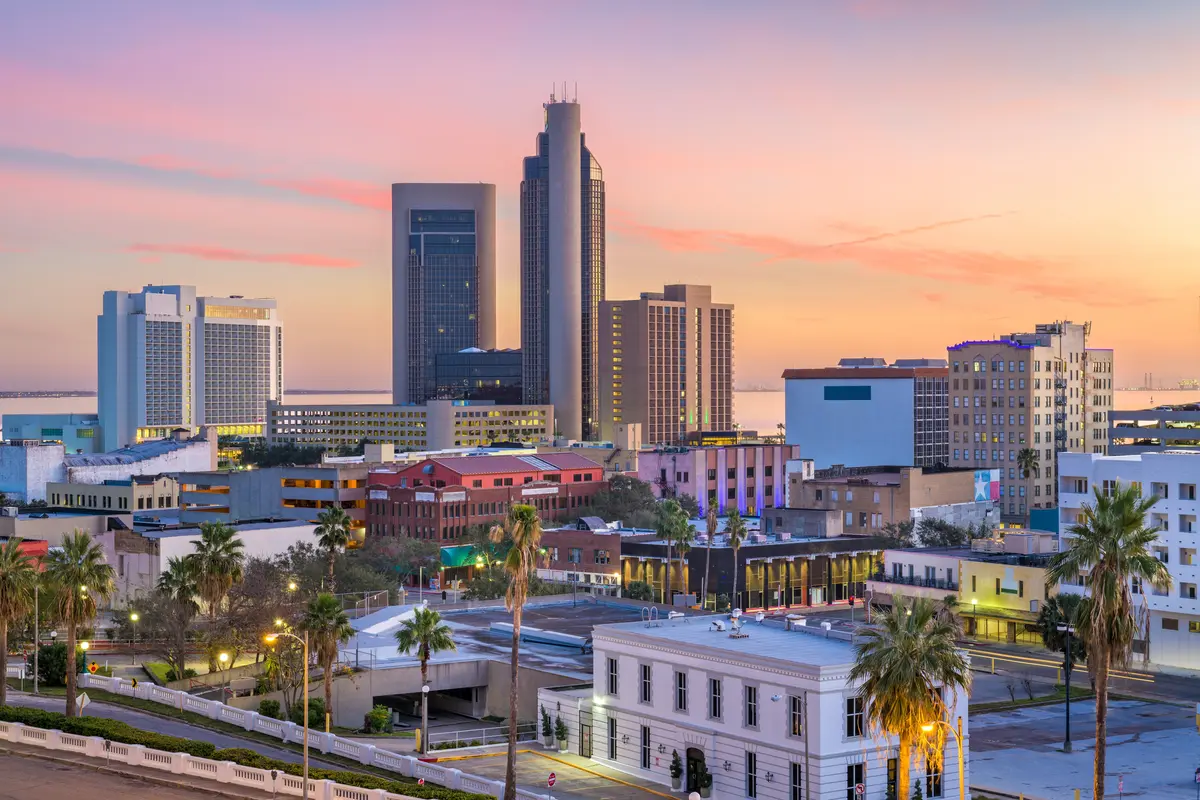
Corpus Christi at a Glance
Looking to buy in Corpus Christi? Estimate your payment.
Enter your numbers to see an estimated monthly mortgage payment.
Estimate only. Excludes HOA fees and mortgage insurance. The interest rate above is a starting point, not a quoted rate — replace it with your own to see real numbers. Insurance is a flat placeholder, not a Corpus Christi quote.
Why Are People Moving to Corpus Christi?
The honest case for Corpus Christi starts with the economy, not the beach — though the beach doesn't hurt. This is a city where a genuinely diverse industrial base creates the kind of job stability that coastal resort towns rarely have.
The Energy and Port Engine
The Port of Corpus Christi is not a regional talking point — it is the largest energy export terminal in the United States. In 2024, $88.6 billion in goods moved through it, representing 21% of all Texas seaport trade. Port tonnage in the first half of 2026 rose 7.7% over the same period in 2025, with LNG volumes up 36.3%. For workers in logistics, engineering, petrochemicals, and maritime operations, this is where the jobs are concentrated.
Manufacturing — led by petroleum refining, chemical production, and fabricated metals — accounts for just over 40% of total regional output. Valero Corpus Christi Refineries is one of the most visible names in that ecosystem, but the supply chain that surrounds the port touches hundreds of businesses across the metro.
The Military and Aerospace Cluster
Naval Air Station Corpus Christi and the Corpus Christi Army Depot form one of the most significant military-aerospace hubs in the South. The aerospace sector here employs more than 4,300 workers, and military families account for a meaningful share of the city's rental and purchase market. PCS moves bring a steady rotation of buyers and renters who need to make decisions quickly — that dynamic shapes how the housing market behaves.
The Public Sector and Healthcare Anchor
The Corpus Christi Independent School District and the City of Corpus Christi are major employers in their own right, and a major regional health system rounds out the list. Together, the public and healthcare sectors provide a base of employment that insulates the local economy when energy prices cycle.
Affordability Relative to the Texas Metros
People who've been outpriced in San Antonio or priced out entirely in Austin show up in Corpus Christi and feel the difference immediately. The overall cost of living runs roughly 9–13% below the national average. That gap is real and livable — with the honest caveat that utilities and property taxes deserve a close look before you run the numbers. See the full breakdown on the cost of living page.
| Employer / Sector | Industry | Why It Matters for Relocators |
|---|---|---|
| Naval Air Station Corpus Christi | Military / Federal | Major PCS destination; drives rental demand |
| Corpus Christi Army Depot | Aerospace / Military | Part of a 4,300+ worker aerospace cluster |
| Valero Corpus Christi Refineries | Petrochemicals | Industrial anchor in the energy corridor |
| Port of Corpus Christi | Maritime / Energy Export | Largest energy export terminal in the U.S. |
| CCISD (Corpus Christi ISD) | Education | 32,041 students; major local employer |
| City of Corpus Christi | Municipal Government | Stable public-sector employment base |
| Major regional health system | Healthcare | Anchors medical employment in the metro |
The labor force across the Corpus Christi MSA stood at 213,700 as of April 2025, with over 6,200 net new workers added in the prior year. For a city this size, that pace of growth is meaningful — and it's concentrated in sectors that aren't going anywhere.
What Daily Life Feels Like in Corpus Christi
Six months after moving here, most people say the same thing: they didn't expect to love the pace this much. Corpus Christi doesn't run at Austin speed. It has the texture of a working port city that also happens to sit on the coast.
The Geographic Reality
The city sprawls in ways that matter for daily life. The Southside is where most of the newer residential development has landed — shopping, schools, and suburban infrastructure concentrated along South Padre Island Drive (TX-358). The bayfront and downtown sit to the north, where Ocean Drive curves along the water and the USS Lexington Museum on the Bay and Texas State Aquarium anchor the tourism corridor. Getting between them means driving, and understanding that divide is one of the first things newcomers have to internalize.
The new Harbor Bridge changed something concrete about how the city connects. The shared bicycle and pedestrian path across it is the first time the Ship Channel has been crossable on foot — a small thing that means something symbolic in a city that has long been more car-dependent than its size would suggest.
The Weather Bargain (and Its Catch)
More than 223 sunny days a year sounds like a selling point until your first August. Heat and coastal humidity are a genuine presence from May through September. Hurricane season runs June through November, and longtime residents have a practiced relationship with storm prep — tracking systems, knowing when to leave, knowing when the forecasters are overreacting. Newcomers from inland Texas are usually underprepared for the combination of heat and humidity; newcomers from the Pacific Coast are underprepared for hurricane season entirely.
The flip side is that winters are mild enough that Cole Park fills with people jogging the bayfront in January.
Where Families Actually Gather
The Corpus Christi Southside Farmers' Market and the Grow Local South Texas farmers market draw a consistent crowd of families with school-age children who've settled into the Southside neighborhoods. Cole Park along the bayfront is the city's informal gathering point — weekend afternoons pull in a cross-section of the city that you won't see in any single neighborhood. The Seawall is where people walk in the evenings when the coastal breeze makes it bearable.
What Surprises People After Six Months
The wind. Everyone knows it's a coastal city, but the near-constant Gulf breeze catches newcomers off guard — it's a genuine quality-of-life asset in summer and a minor nuisance the rest of the year. It also means the salt air works on everything: cars, gutters, exterior paint. Ask any longtime homeowner here about maintenance costs and they'll tell you the same thing.
For a deeper look at how the neighborhoods divide and what each one actually feels like to live in, the neighborhoods page covers it in detail. Safety data — including how different areas compare — is on the safety page. Corpus Christi carries a violent crime rate of 8.6 per 1,000 residents and a property crime rate of 30.1 per 1,000 residents, which run above both state and national averages — understanding which areas that reflects is worth the read before you start touring homes.
The Corpus Christi Housing Market Right Now
The typical home price in Corpus Christi stood at $224,996 as of July 2026 (Zillow Home Value Index) — a figure that looks almost disorienting if you've been shopping in Dallas or Austin. It is not a typo, and it is not a distressed-market number. It reflects a real, functioning city with a genuine job base and a cost structure that has stayed accessible in ways that most Texas metros have not.
The honest counterpoint: the median household income of $67,394 sits below the income needed to carry the typical home here, which means affordability is real but not frictionless. Buyers who arrive assuming the math is easy often find the effective property tax rate of 2.05% adds more to monthly costs than they modeled.
What the Market Looks Like in Practice
Southside, Flour Bluff, and Calallen all run above the city-wide typical home price — the Southside in particular, where newer construction and strong school assignments push demand. The Bay Area neighborhoods along Ocean Drive sit at roughly the city median, offering older, larger homes on the water at prices that would be remarkable in any other coastal Texas city. King's Crossing draws buyers who want the Southside's amenities with a quieter, more established feel.
Some areas cost noticeably more than others, and the gap between the bayfront and the inland Southside matters more than a single city-wide figure suggests. The neighborhoods page walks through each area's character and what drives pricing in each one.
Renting Before You Buy
The city-wide typical rent is $1,428 per month — a reasonable entry point for anyone arriving on military orders or wanting to learn the city before committing. Military buyers often go straight to purchase given the timeline pressures of PCS moves, but renting first in Corpus Christi is a legitimate strategy: the market rewards buyers who understand the geographic and neighborhood distinctions before they make an offer. See neighborhood-level rent context on the neighborhoods page.
For first-time buyers working through financing options and what a purchase actually looks like step by step, the first-time homebuyer page covers the process in detail.
Corpus Christi Neighborhoods
Corpus Christi has several distinct areas — each with its own character and appeal. Here’s a breakdown to help you narrow down where to focus your home search.
🏡 Southside
The Southside is where most of Corpus Christi's newer residential growth has concentrated — it's the area families with school-age children choose for its school assignments, retail access along South Padre Island Drive, and newer housing stock. It runs above the city-wide typical home price, and the trade-off for that premium is a suburban infrastructure that makes daily life genuinely convenient.
🏠 Flour Bluff
Flour Bluff sits on a narrow strip of land between two bays, giving it a water-adjacent feel that few other parts of the city can match. It draws buyers who want proximity to Padre Island and the Naval Air Station without paying Ocean Drive prices, and housing runs above the city median while still feeling more affordable than the Southside's newest developments.
🌳 North Padre Island
North Padre Island is the only part of Corpus Christi where you can wake up to Gulf surf sounds — a barrier island community connected to the mainland via a causeway crossing, with Mustang Island State Park at its southern end. It suits buyers who prioritize the beach lifestyle over urban convenience and are comfortable with the commute back across the water for most daily errands.
🏘 Calallen
Calallen is the city's northwest corner — more spread out, more established, with a community identity distinct enough that longtime residents will correct you if you call it just another Corpus Christi suburb. It runs above the city-wide typical home price and attracts families who want larger lots and a quieter pace while still staying within about 20 minutes of the city's major employment centers.
🏔 Bay Area / Ocean Drive
Ocean Drive is Corpus Christi's most recognizable address — a curving bayfront boulevard lined with mid-century homes and the kind of water views that would command a dramatic premium in any other coastal Texas city. The Bay Area neighborhoods sit at roughly the city-wide typical home price, making them one of the more remarkable value propositions for buyers who prioritize established character and proximity to the bayfront over new construction.
🌆 King's Crossing
King's Crossing offers the Southside's access and school quality in a more established, less frenetic setting — mature trees, quieter streets, and a neighborhood feel that newer Southside developments haven't had time to develop yet. It draws buyers who've done their homework on the city and know what they want.
Pros & Cons of Living in Corpus Christi
The Pros
- Affordable coastal living with direct beach and bay access
- Strong energy, petrochemical, and military job base
- Mild winters and a long boating/fishing season
- Rich Tejano and coastal cultural heritage
The Cons
- Crime rates run well above national averages in several citywide measures
- Hurricane and flood exposure along the coast and downtown
- Hot, humid summers with high heat-index days
Getting Around & Commuting in Corpus Christi
Corpus Christi is a driving city. That is the baseline, and understanding it early saves frustration. The average commute time here is approximately 20.9 minutes — well below the national average of 26.4 minutes — but that figure masks a trend worth knowing: in 2012, 63% of residents traveled under 10 miles to work. By 2023, that share had fallen to 49%, with 27% now traveling more than 50 miles. The city's job centers and its residential growth are pulling apart geographically.
The Road Network
I-37 is the primary artery connecting downtown and the port to the rest of Texas — San Antonio is roughly two hours northwest, which matters for residents who travel for work or weekend trips. I-69E carries traffic toward the Rio Grande Valley. TX-358, known locally as South Padre Island Drive or SPID, is the commercial and commuter spine of the Southside, and if you live there, you will develop opinions about it quickly. TX-286 — the Crosstown Expressway — is the north-south connector that ties the Southside to downtown. US-181 now crosses the Ship Channel on the new Harbor Bridge, which opened June 28, 2025, with its 538-foot towers and a bicycle and pedestrian path for the first time in the corridor's history.
Transit Options
The Corpus Christi Regional Transportation Authority (CCRTA) covers a large service area with multiple fixed bus routes and B-Line Paratransit service. Bus transit is a real option for some commutes — particularly for workers commuting to the downtown corridor — but most residents default to driving for the majority of their errands and daily travel.
The Airport
Corpus Christi International Airport (CRP) sits about 10 miles from the city center. In August 2025, City Council approved a Minimum Revenue Guarantee agreement to bring Frontier Airlines nonstop service to Denver International Airport — a meaningful addition to a regional airport that has historically required connections for most destinations. Direct service matters for the military and energy workforce that travels frequently.
Commuting to NAS and the Port
The commute reference that shapes the most relocation decisions in this city: it's about 20 minutes to Downtown Corpus Christi and Corpus Christi Naval Air Station from most established neighborhoods. That commute stays manageable if you're thoughtful about where you land — Calallen and the Southside both put you within that window, though via different corridors. The morning congestion on South Padre Island Drive is the chokepoint most Southside residents learn first.
Schools in Corpus Christi
Families relocating to Corpus Christi have public, private, and higher-education options nearby. Here’s a quick overview.
🎓 School District
Corpus Christi Independent School District serves K–12 students across Corpus Christi and the surrounding area. Rated B (source: Texas Education Agency, 2025 A-F accountability rating (2024-25 school year)).
🏆 Graduation Rate
The 4-year high-school graduation rate here is approximately 90.6%.
📚 Higher Education
Texas’s public universities — the University of Texas at Austin, Texas A&M University, and the University of Houston — offer four-year degrees statewide, with one of the largest community college systems in the country (50+ public community college districts) providing two-year and workforce programs.
🌐 Online Learning
UT Austin Online and Texas A&M University Online offer fully accredited online degrees for remote learners across the state.
Safety in Corpus Christi
A quick look at how Corpus Christi compares on the numbers that matter most when weighing a neighborhood or a move.
🛡 Violent Crime
Approximately 8.6 per 1,000 residents.
🔒 Property Crime
Approximately 30.1 per 1,000 residents.
Compared to the most recent national figures from the Bureau of Justice Statistics (2024), Corpus Christi’s violent crime is above the national average (about 3.7 per 1,000), and property crime is above the national average (about 18.4 per 1,000).
Against Texas as a whole, Corpus Christi’s violent crime is about double the state average, and property crime is about one and a half times the state average (Bureau of Justice Statistics, Crime Known to Law Enforcement, 2024 (tables 2 and 3)).
Crime rates can vary a lot within a single city, so the citywide numbers above are only a starting point. Some neighborhoods in Corpus Christi run well below these averages, while others run higher — the kind of block-by-block detail that matters most when you’re actually choosing where to live. The full guide below breaks it down neighborhood by neighborhood.
Working in Corpus Christi
Corpus Christi’s largest employers span several industries — here are some of the anchors of the local job market.
🏛 Naval Air Station Corpus Christi
Military
🏛 Corpus Christi Army Depot
Aerospace, military
🏥 CHRISTUS Spohn Health System
Healthcare
🎓 Corpus Christi Independent School District
Education
🏛 City of Corpus Christi
Municipal government
💼 Valero Corpus Christi Refineries
Petrochemicals
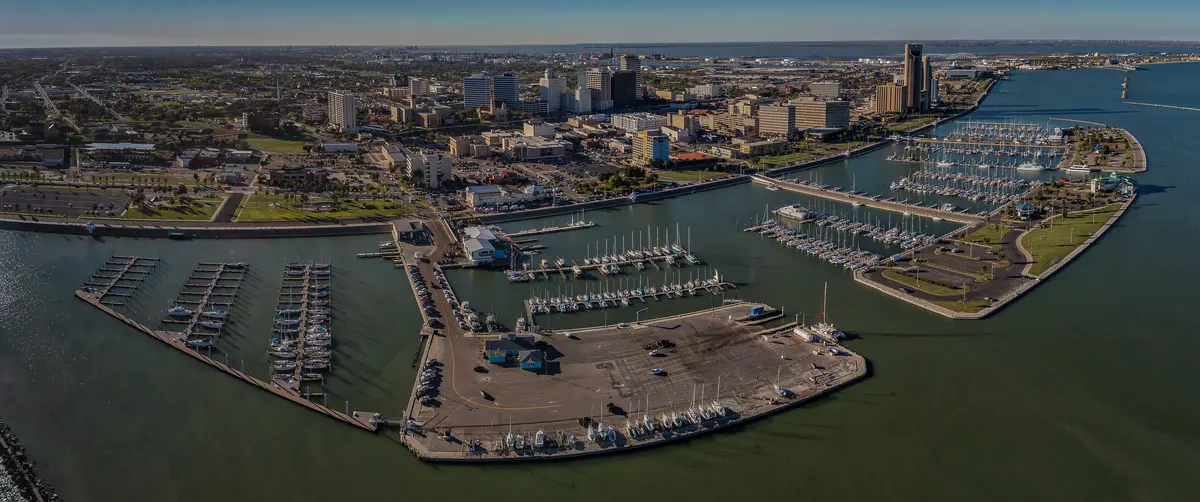
Retiring in Corpus Christi
Corpus Christi draws retirees for its balance of amenities, outdoor access, and cost. Here’s what to weigh.
🌤 Climate
Corpus Christi offers mild winters with average January highs in the low 60s — genuinely comfortable for outdoor activity year-round. Summers run hot and humid from June through September, and hurricane season from June through November requires preparation. The trade-off is 223 sunny days a year and the ability to walk the Seawall in January without a heavy coat.
🍴 Lifestyle
The bayfront offers daily walking and cycling, the USS Lexington Museum and Art Museum of South Texas provide cultural anchors, and the Gulf seafood scene gives the dining calendar a strong local identity. Mustang Island State Park and Oso Bay Wetlands Preserve serve retirees who want active outdoor access without driving far. The overall cost of living runs meaningfully below the national average, which stretches a fixed income further than in most coastal cities.
🏚 55+ Communities
No 55+ communities were found in Corpus Christi. Retirees buying here typically enter the general single-family market, with the Bay Area and Ocean Drive corridor drawing older buyers who want waterfront character and established neighborhoods. The schools page and retiring page have more on lifestyle considerations for older buyers.
✈ Getting Around
A car is essential for daily life in Corpus Christi — the city's scale and layout make driving the default for most errands and appointments. Corpus Christi International Airport (CRP) is approximately 10 miles from downtown, with nonstop service to Denver added in 2025 and connections to major hubs. The flat terrain and bayfront paths make cycling and walking pleasant for recreation, if not for most practical trips.
🏛 Texas Taxes for Retirees — What to Know
- No state income tax — Texas has no personal income tax — constitutionally protected under Article VIII, Section 24. Social Security, pensions, 401(k)/IRA withdrawals, and annuity payments are all untaxed at the state level, with no state return to file.
- Sales tax is the tradeoff — The state sales tax is 6.25%, and local add-ons bring the combined rate in Corpus Christi to 8.25% (Texas Comptroller of Public Accounts, city sales and use tax rates, July 2026). Groceries and prescription drugs are exempt.
- Property taxes — the real tradeoff — Texas’s effective property tax rate averages about 1.40%, among the highest in the country, since property tax (not income tax) funds most local government and schools.
- Over-65 homestead exemption and school-tax freeze — Homeowners 65+ (or disabled) get an additional $60,000 exemption from their home’s value for school district taxes, on top of the general homestead exemption — $200,000 off school taxable value combined, following November 2025’s Proposition 11 (SB 23), which raised the over-65 exemption to $60,000, and Proposition 13 (SB 4), which raised the general homestead exemption to $140,000. Once claimed, your school district tax bill is frozen at that year’s amount and cannot increase as home values rise, and the ceiling can transfer if you move to a new home within Texas.
- Deferral option if cash is tight — Homeowners 65+ can defer property tax payment entirely for as long as they live in the home, rather than paying it currently — interest accrues, but no forced sale.
- No estate or inheritance tax — Texas has no estate tax, no inheritance tax, and no gift tax.
- No separate capital gains tax — Because Texas has no state income tax, capital gains — including on investments and home sales — are not taxed at the state level at all, unlike states such as Washington that tax capital gains separately from income.
Tax laws change frequently and individual situations vary. This is general information, not tax advice — always consult a qualified Texas tax professional or CPA for personalized retirement tax planning.
Weekends & Local Favorites in Corpus Christi
Corpus Christi was formally designated a Tourism Friendly Texas Certified Community in February 2025 — the first year of the Travel Texas program — which is official recognition of something residents already knew: this city has a genuine outdoor and cultural identity that goes well beyond the beach strip.
On the Water and Along the Shore
The Corpus Christi Seawall and Bayfront is the city's communal living room. Weekend mornings bring runners, cyclists, and families pushing strollers along the water. The USS Lexington Museum on the Bay — an Essex-class aircraft carrier permanently moored on the bayfront — draws visitors and locals alike, and the Texas State Aquarium next to it has earned a reputation as one of the stronger regional aquariums in the South. The Selena Memorial, known locally as the Mirador de la Flor, sits along Shoreline Boulevard and marks both a cultural landmark and a gathering spot for fans who make the pilgrimage from across the country.
Mustang Island State Park, accessible via TX-358 and a causeway crossing, offers miles of undeveloped Gulf beach that feels genuinely removed from the city. Oso Bay Wetlands Preserve, on the Southside, is where birdwatchers and kayakers go when they want something quieter and closer to home. Cole Park along the bayfront is the anchor for weekend afternoons in the urban core.
The Art Museum of South Texas
The Art Museum of South Texas, positioned on the bayfront near the marina, holds a permanent collection and rotating exhibitions that consistently surprise people who expected a city this size to have a smaller cultural footprint. It's the kind of institution that gives the bayfront corridor something to do on a Saturday afternoon beyond the tourist attractions.
Food, Coffee, and the Local Scene
The seafood along the water is as good as the geography promises. Pier 99 Restaurant and Snoopy's Pier are where locals take out-of-town visitors — straightforward Gulf seafood in settings where the view earns its place. Doc's Seafood and Steaks and Blackbeard's On the Beach are two more waterfront anchors that have been feeding Corpus Christi for long enough to feel like institutions. Water Street Oyster Bar draws a different crowd — more downtown, more local regulars, the kind of place you find on a Tuesday night rather than a Sunday afternoon.
For coffee, the local scene runs deeper than most newcomers expect. Island Joes Coffee and Gallery doubles as an art space — a combination that fits the Corpus Christi pace. The Coffee Mugg, Saigon's Civet Cafe, Roasted Coffee Shop Inc, and Creatures Coffee & Tea Co. round out a genuinely independent coffee culture that doesn't require a chain to feel complete.
The Corpus Christi Southside Farmers' Market and the Grow Local South Texas: Farmers Market and Education hub bring a weekly rhythm of local produce and community gathering that the Southside has organized its Saturday mornings around.
The Parks Page Has More
The outdoor life in Corpus Christi — trails, water access, birding, and what each major park actually offers — is covered in full on the parks and recreation page.
Local favorites in Corpus Christi
Restaurants
- Pier 99 Restaurant
- Doc's Seafood and Steaks
- Snoopy's Pier
- Blackbeard's On the Beach
- Water Street Oyster Bar
Outdoors
- Mustang Island State Park
- Oso Bay Wetlands Preserve
- Cole Park
Coffee
- Island Joes Coffee and Gallery
- The Coffee Mugg
- Saigon's Civet Cafe
- Roasted Coffee Shop Inc
- Creatures Coffee & Tea Co.
Farmers Markets
- Corpus Christi Southside Farmers' Market
- Grow Local South Texas: Farmers Market and Education
Top Things Locals Say About Corpus Christi
The best intel about a city comes from the people who actually live there. Here’s what Corpus Christi residents say when newcomers ask the questions everyone’s thinking.
“I kept reading about the heat before we moved, and I thought I was ready — I grew up in San Antonio. What I wasn't ready for was the humidity plus the wind plus salt air all at once. By month three I'd stopped fighting it and just bought a better ceiling fan and started keeping the windows open. It's a different kind of hot than anything I'd experienced.”
— Recent Corpus Christi home buyer
“What's the most surprising thing about living in Corpus Christi?”
How much the geographic divide between the Southside and the bayfront actually matters in daily life. People who buy in one and work or socialize mostly in the other end up spending a lot of time on South Padre Island Drive. That road is fine when it's not rush hour and a genuine time sink when it is. Most people figure that out in the first month.
“What do locals love most about Corpus Christi?”
The water access, without a doubt. Cole Park on a winter afternoon, Mustang Island when you want to feel like you're away from everything, the bayfront Seawall in the evenings when the Gulf breeze makes it actually pleasant — you're never more than 20 minutes from something that feels genuinely coastal. For a city with a real industrial and military economy, that access to nature is a daily quality-of-life asset that doesn't show up in any spreadsheet.
“What should newcomers to Corpus Christi know?”
Get hurricane-ready before you need to be, not after. That means supplies, a plan, and knowing whether the home you're buying is in a flood zone — because flood insurance isn't optional in many parts of this city, and the cost is real. The other thing: don't underestimate the salt air's effect on anything metal or painted. Homeowners here spend more on exterior maintenance than people coming from inland Texas expect.
“How much do you need a car in Corpus Christi?”
You need a car for most of daily life. The Corpus Christi Regional Transportation Authority runs bus service across a large area, and transit is a practical option for certain commutes into the downtown corridor, but the city's scale and sprawl means most errands, school runs, and weekend trips require driving. The Southside in particular is built around the car. The bayfront and downtown core are walkable once you're parked in them, but getting there typically means driving first.
Cities Near Corpus Christi
Other communities near Corpus Christi worth a look — each with its own character and price point.
| City | Distance | Best For | Vibe | Median Rent | Median Buy |
|---|---|---|---|---|---|
| Portland | 9 mi | Families seeking quieter suburban feel | Small-town, newer development, bay views | $1,616 | $271,705 |
| Ingleside | 16 mi | Military families, value-conscious buyers | Affordable, small-town, industrial edge | $1,250 | $255,000 |
| Robstown | 18 mi | Budget buyers, rural lifestyle seekers | Working-class, agricultural, low-density | $950 | $117,318 |
More Helpful Guides for Corpus Christi
Going deeper on Corpus Christi? Our blog series covers everything from first-time buying to retiring here — explore the guides below.
Local Expert Takeaway: Corpus Christi's affordability is real, but the city rewards buyers who do their geographic homework before signing anything. The Southside and Calallen have the newer infrastructure and stronger school assignments; the bayfront neighborhoods along Ocean Drive have the water views and older character at prices that would be genuinely hard to find on any other Texas coast. The Port and military installations mean the job market here is more stable than the city's beach-town reputation suggests — but the property tax rate and Gulf Coast utility costs both deserve a line in your budget before you run the numbers. Get to know South Padre Island Drive before you decide where to live. Your relationship with that road will define your daily life more than any other single factor.
Quick Takeaways & FAQs
✅ Corpus Christi is home to the largest energy export terminal in the United States, anchoring a job market that runs far deeper than the coastal tourism economy.
⚠️ The effective property tax rate of 2.05% and above-average utility costs are real offsets to the city's housing affordability — build both into your budget before you commit.
📍 The new Harbor Bridge, which opened June 28, 2025, added a pedestrian and bicycle crossing over the Corpus Christi Ship Channel for the first time — a concrete change to how the city connects.
Is Corpus Christi a good place to live for military families?
What is the cost of living like in Corpus Christi compared to other Texas cities?
What are the best neighborhoods in Corpus Christi for families?
How are the schools in Corpus Christi?
Does Corpus Christi have hurricane risk, and how do residents handle it?
Helpful Links for Moving to Corpus Christi
Moving to Texas?
Tell us what you need help with and we'll connect you with local resources.
