
Maybe your financial planner told you Texas is one of the best states to retire in for tax reasons, and Corpus Christi caught your eye on the coast. Maybe you've spent decades vacationing on the Gulf and always said you'd move here someday. Either way, the city tends to surprise people once they dig past the postcard image. Corpus Christi is the 8th-largest incorporated city in Texas — a working city of 317,247 people shaped by naval air operations, petrochemical refining, and a bay that genuinely defines daily life. It is not a sleepy retirement enclave. That is both a feature and a warning, depending on what you're looking for.
The economic case is real and specific. Texas collects no state income tax, which means your Social Security check, pension, and IRA withdrawals arrive without a state-level haircut. Housing costs run noticeably below the national average — the typical home price stood at $224,996 as of July 2026 — and the city's dominant health system, CHRISTUS Spohn, operates cardiac, cancer, and neuroscience programs that are unusually strong for a market this size. For retirees who need serious medical access without paying Austin or San Antonio prices, that combination is hard to find elsewhere on the Gulf Coast.
The honest counter-case is also worth stating plainly. Corpus Christi is car-dependent in a way that catches newcomers off guard — most errands require a vehicle, even in the more active parts of the city. Summers are long, humid, and genuinely hot, with gulf humidity that feels different from inland Texas heat. The property tax rate, at approximately 2.05%, is high by national standards, though the state's over-65 school-tax ceiling and homestead exemptions soften the blow considerably for homeowners. Utilities run above the national norm, which partially offsets the grocery and housing savings.
Whether you're weighing a move here seriously or still comparing options along the Texas coast, the sections below break down Corpus Christi's healthcare system, retiree budget picture, community infrastructure, downsizing landscape, and how the city stacks up against nearby retirement alternatives.
Why Retirees Are Choosing Corpus Christi
The retirees who land here and stay tend to share a few things: they want a real city with real medical infrastructure, they're comfortable in a car-dependent environment, and they'd rather have a bay view than a mountain view. Corpus Christi delivers on all three.
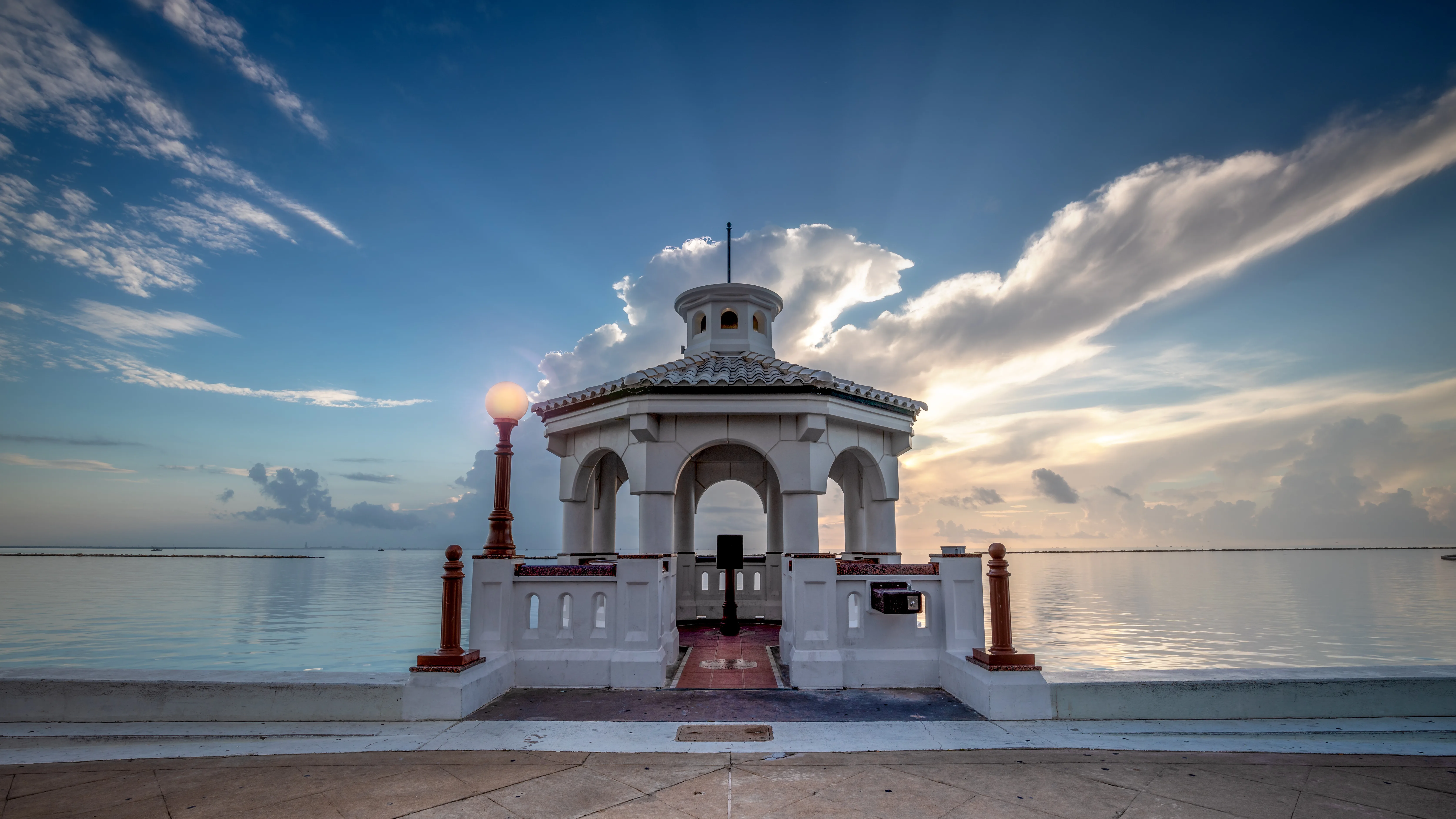
The Gulf Coast lifestyle is genuinely accessible here — Cole Park along the bay, the Corpus Christi Seawall and Bayfront, and the USS Lexington Museum on the Bay are not just tourist draws but places residents actually use. The city gets 223 sunny days a year, which matters when you're planning retirement around outdoor living. The pace of life along Ocean Drive and the Bay Area neighborhoods reads as relaxed without being remote.
Who should look elsewhere? Retirees who prioritize walkability and want to run errands on foot will find Corpus Christi frustrating. Those who need highly specialized tertiary care — complex neurosurgery, organ transplant programs, major academic medical centers — will eventually need to travel, most likely to San Antonio or Houston. And anyone expecting a quiet small-town feel should understand they're moving to a city of over 300,000, with the traffic, noise, and scale that implies. For the right buyer, though — someone who values coastal access, genuine healthcare depth, and one of the most retirement-friendly tax structures in the country — the city makes a compelling case. The typical home price of $224,996 (July 2026) also means a retiree downsizing from a higher-cost market often arrives with meaningful equity to work with. See the full cost-of-living breakdown for how the numbers stack up day to day.
Healthcare & Medical Access in Corpus Christi
The System Anchoring Care Here
CHRISTUS Spohn Health System is the city's dominant healthcare network and the largest acute-care medical system in South Texas. The flagship facility — CHRISTUS Spohn Hospital Corpus Christi – Shoreline — is the closest major hospital to most of the city, located inside city limits. For most retirees, this is the facility where serious care happens.
The depth here matters. CHRISTUS Spohn operates a Heart Institute with a cardiac rehabilitation program certified by the American Academy of Cardiovascular and Pulmonary Rehabilitation, a nationally accredited Cancer Center, neuroscience services, and acute rehabilitation — a range of specialties that many coastal retirement cities at this population level simply do not have. Through a partnership with Cardiology Associates of Corpus Christi, patients can access ten cardiologists covering general, invasive, interventional, and diagnostic cardiovascular services. For a retirement-age population where heart health is often the deciding factor in a relocation, that is substantive local depth.
The Honest Distance Reality
What CHRISTUS Spohn cannot fully replicate is a major academic medical center. Complex cases — organ transplants, rare cancers, highly specialized surgical subspecialties — may require a trip to San Antonio or Houston. That drive is roughly two hours, which is a manageable but real consideration for anyone with a condition likely to require tertiary-level care over a multi-year retirement. For most retirees in good health who need solid primary care, cardiology, oncology, and orthopedics, Corpus Christi covers the ground. For those who anticipate frequent need of the most specialized interventions, proximity to a major academic center deserves weight in the decision.

The Retiree Budget in Corpus Christi
Texas Tax Structure
Texas levies no state income tax. That means Social Security benefits, pension payments, 401(k) distributions, and IRA withdrawals are entirely free from state-level taxation — federal income tax rules still apply, but the state takes nothing. Texas voters also approved a 2025 constitutional amendment explicitly prohibiting new estate, inheritance, and gift taxes, which adds another layer of planning certainty for retirees with significant assets to pass on.
The effective property tax rate here is approximately 2.05%, which is high by national standards. The meaningful offset for retirees who own their home: Texas offers homestead exemptions and an over-65 school-tax ceiling — a freeze on the school portion of the property tax bill — that can meaningfully reduce the actual tax burden over time. Retirees should apply for both the moment they qualify; the savings compound across a long retirement. The cost-of-living page covers the full tax picture in more detail.
Day-to-Day Cost on a Fixed Income
The overall cost of living in Corpus Christi runs approximately 13% below the national average. Housing costs land about 27% lower than the U.S. average, and groceries run roughly 7% cheaper — meaningful relief on a fixed income. Healthcare services here run about 5% less expensive than the national norm, which compounds favorably for retirees with regular medical needs.
The honest offset: utilities run about 15–16% above the national norm, driven largely by Gulf Coast heat loads and air conditioning demands across a long summer. Budget for that line item carefully — it is the one category where Corpus Christi costs more, and for retirees on tight margins it matters. Assisted living in the Coastal Bend runs noticeably below both the Texas state average and the national average — a meaningful advantage if care needs evolve in later retirement years.
Looking to buy in Corpus Christi? Estimate your payment.
Enter your numbers to see an estimated monthly mortgage payment.
Estimate only. Excludes HOA fees and mortgage insurance. The interest rate above is a starting point, not a quoted rate — replace it with your own to see real numbers. Insurance is a flat placeholder, not a Corpus Christi quote.
Walkability, Community & Staying Active in Corpus Christi
The Walkability Reality
Corpus Christi is car-dependent, and retirees who move here expecting to walk to errands will be disappointed. Even the most walkable pockets of the city require a vehicle for most daily needs. Public transit bus lines serve the downtown core, but the network is limited in reach and frequency. Plan to drive.
That said, the city's outdoor infrastructure for active retirees is genuinely strong. Corpus Christi has 229 parks, with 6% of city land dedicated to parks and recreation. Cole Park along the bay draws walkers and cyclists year-round. The Oso Bay Wetlands Preserve offers flat, accessible trails through coastal habitat that works well for retirees looking for low-impact outdoor activity. Mustang Island State Park, a short drive from the city, provides beach access and nature programming at a scale that rewards regular visits. The terrain throughout the city is essentially flat — a real advantage for anyone with mobility considerations.
Senior Centers and Community Life
The city's Parks and Recreation Department operates eight senior centers distributed across Corpus Christi, offering programs for adults 50 and older: yoga, Tai Chi, chair volleyball, arts and crafts, fitness center access, and special events, most at free or low cost. Eight centers across a single city is genuine geographic coverage — most neighborhoods have reasonable access to at least one.
A federally sponsored senior volunteer program active in Nueces County since 1977 connects adults age 55 and older with service opportunities at local nonprofits — for retirees who find meaning in structured volunteering, this is an established, well-organized entry point. The Corpus Christi Southside Farmers' Market and the Grow Local South Texas Farmers Market and Education market both draw a regular crowd and function as genuine community gathering points for the city's older residents — the kind of weekly ritual that builds a social network over time.
Right-Sizing: Downsizing in Corpus Christi
The Single-Level Inventory Picture
Corpus Christi's housing stock skews toward ranch-style and single-story construction — a function of the flat coastal terrain and the building patterns of a Sun Belt city that grew rapidly in the mid-20th century. For retirees prioritizing single-level living, this is genuinely good news: one-story homes are the default in many neighborhoods rather than the exception. The Southside and Calallen areas, both running above the city median in price, tend to have newer construction that more reliably delivers the open-floor-plan, low-maintenance layouts downsizing buyers want. The Bay Area and Ocean Drive corridor offers an older, more varied stock where single-story options exist but require more searching.
Patio homes and smaller detached properties appear throughout the city, particularly in the Southside where planned subdivisions have clustered this product type. Condos are available but concentrated around the waterfront and North Padre Island — a trade-off between bay views and the logistics of condo ownership, including HOA fees that can run meaningfully higher in coastal flood-zone buildings.
55+ Communities
No 55+ age-restricted home-purchase communities were found in Corpus Christi. The city's senior residential options focus on assisted living, memory care, and independent-living rental facilities. MRC Mirador stands out as the Coastal Bend's only nonprofit, faith-based senior living community — part of Methodist Retirement Communities, an organization with more than 60 years of service in Texas, operating on a 17-acre campus in the city. For retirees who want a continuing-care model with a nonprofit mission, this is a meaningful local option. Retirees specifically looking for an age-restricted neighborhood for active ownership will need to look at nearby markets, or consider Corpus Christi's conventional housing stock — which, given the terrain and construction norms, accommodates retirement-style living reasonably well even without a formal age restriction.
Corpus Christi vs Nearby Retirement Destinations
| City | Cost vs Corpus Christi | Primary Hospital | Walkability | Senior Living Depth | Overall Retirement Fit |
|---|---|---|---|---|---|
| Corpus Christi | Anchor | CHRISTUS Spohn Shoreline — strong cardiac, cancer, neuro | Car-dependent; flat terrain; 229 parks | 8 senior centers; MRC Mirador; robust senior volunteer program | Strong for healthcare access and tax posture; limited 55+ buy options |
| Port Aransas | Noticeably pricier | Dependent on Corpus Christi hospitals | Walkable island core; beach access; very small town | Minimal; very small permanent population | Best for retirees who want beachfront living and can drive to CC for care |
| Portland | Noticeably higher | Dependent on Corpus Christi hospitals | Car-dependent; suburban character | Limited; smaller city with fewer dedicated programs | Quieter suburban feel; pays more for less medical infrastructure nearby |
| Ingleside | Somewhat higher | Dependent on Corpus Christi hospitals | Car-dependent; small-town scale | Very limited; small population base | Appeals to retirees wanting a quieter industrial-bay community; drives to CC for care |
| Robstown | Noticeably lower | Dependent on Corpus Christi hospitals | Car-dependent; rural character | Minimal senior infrastructure | Lowest entry cost in the region; trade-off is distance from services and amenities |
| Aransas Pass | About the same | Dependent on Corpus Christi hospitals | Car-dependent; small fishing-town feel | Limited; some senior programming through county | Waterfront character at a comparable price point; fewer city-level services |
The clearest conclusion from this comparison: Corpus Christi is the healthcare hub of the Coastal Bend. Every surrounding community — Port Aransas, Portland, Ingleside, Robstown, Aransas Pass — depends on Corpus Christi's hospital system for serious care. Retiring in one of those smaller towns means accepting a drive to the city whenever anything medically significant happens.
Port Aransas wins on lifestyle if you want beach-first retirement and can afford the premium, but it has almost no local senior infrastructure of its own. Robstown offers the lowest entry cost in this region by a meaningful margin, but the trade-off is a rural character with limited amenities and a longer drive to everything. Portland delivers a quieter suburban feel at a price noticeably above Corpus Christi, without adding meaningfully to what you get in terms of healthcare or senior programming.
For retirees whose priority list runs healthcare access, tax efficiency, and coastal lifestyle — in roughly that order — Corpus Christi itself is the strongest case in the region. The surrounding cities make sense as lifestyle variations or budget alternatives, not as upgrades on the things that tend to matter most in a twenty-year retirement.

Local Expert Takeaway: Corpus Christi works best for retirees who come in knowing it's a real city — one with gulf-coast beauty, a healthcare system that punches above its weight in cardiology and oncology, eight city-run senior centers, and a tax structure that keeps more of your retirement income in your pocket. The catch is honest: you will drive everywhere, summers demand serious air conditioning, and the property tax rate is high enough that the over-65 school-tax ceiling isn't optional reading — it's essential. MRC Mirador on its 17-acre campus is the standout residential option for retirees who want a nonprofit, faith-based community with a full continuum of care. For everything else, the city's conventional single-story housing stock — especially on the Southside — covers the downsizing need reasonably well even without dedicated 55+ communities.
Quick Takeaways & FAQs
✅ Texas levies no state income tax on Social Security, pensions, or retirement account withdrawals, and a 2025 constitutional amendment now permanently bans estate and inheritance taxes — a meaningful advantage for retirees with assets to protect.
⚠️ Corpus Christi is car-dependent in a way that surprises newcomers: even the most walkable parts of the city require a vehicle for most errands, and the summer utility bills — running well above the national average — partially offset the housing and grocery savings.
📍 CHRISTUS Spohn Hospital Corpus Christi – Shoreline anchors a health system that includes a certified cardiac rehab program, a nationally accredited Cancer Center, and access to ten cardiologists — unusually deep coverage for a Gulf Coast city that isn't San Antonio or Houston.
Is Corpus Christi a good place to retire on Social Security alone?
What hospital will I use if I retire in Corpus Christi?
Are there 55+ communities in Corpus Christi for buyers?
How does the Corpus Christi heat and humidity affect retirement here?
How does retiring in Corpus Christi compare to retiring in Port Aransas?
Moving to Texas?
Tell us what you need help with and we'll connect you with local resources.
