
You've done the math. Home prices in California have pushed you to a spreadsheet, and Corpus Christi keeps appearing at the top. What surprises most Californians in the first few months isn't the heat or the humidity — it's how different the financial picture looks once you're actually living it. No state income tax, a typical home priced at $224,996 (July 2026), and a Gulf Coast address: the numbers work in ways that feel almost implausible if you've been paying California prices for the last decade. Corpus Christi sits on the Texas Gulf Coast, a city of 317,247 and the 8th-largest incorporated city in Texas, anchored by a deep-water port and a military presence that keeps the local economy from swinging with any single industry.
The economic backbone here is genuinely diverse for a mid-sized coastal city. Naval Air Station Corpus Christi and the Corpus Christi Army Depot together anchor the region's employment base. Valero Corpus Christi Refineries and the Port of Corpus Christi — the No. 1 crude oil export gateway in the United States — drive the energy and industrial side. The Corpus Christi Independent School District, with 32,041 students enrolled in 2025-26, is a major employer in its own right. Californians coming from aerospace, logistics, energy, or government work often find that their backgrounds translate surprisingly well here. Families with kids will find the district holds a B rating, according to the Texas Education Agency, which places it in a reasonable range for a large urban district, with more detail available on the schools page.
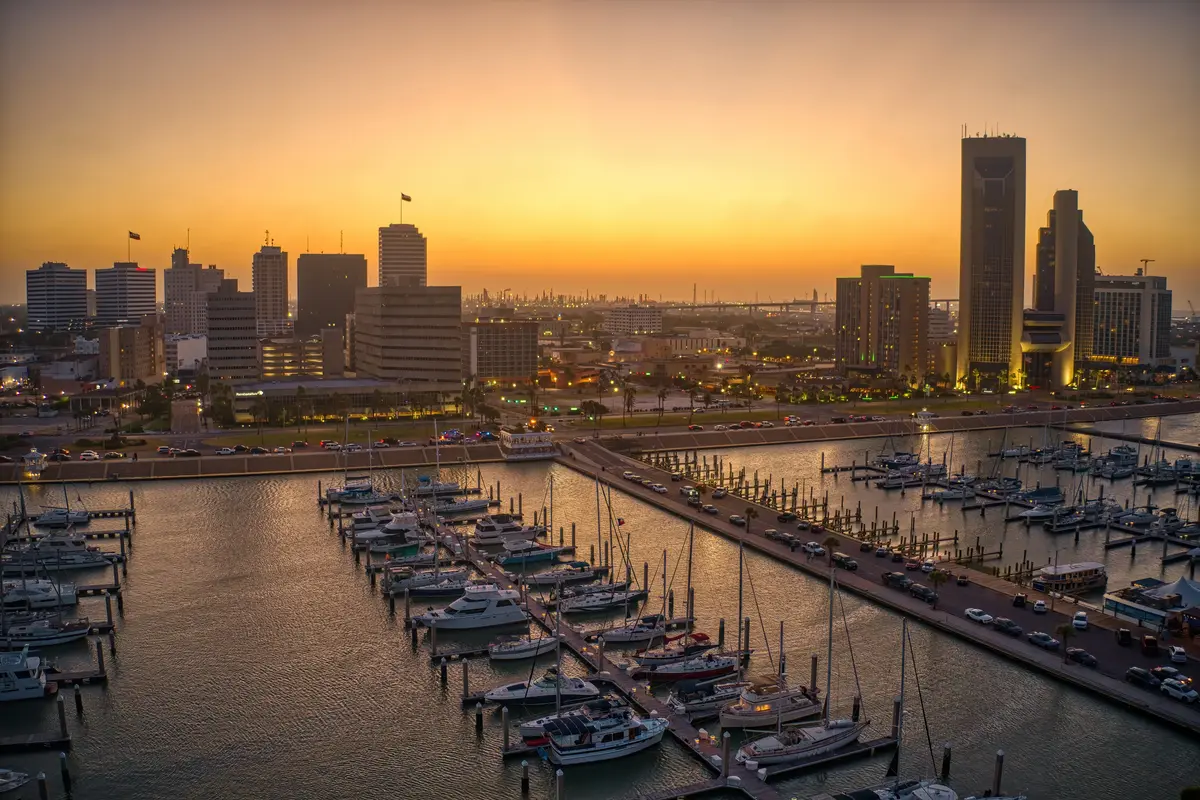
The cost of living difference between coastal California and Corpus Christi is not marginal — it is structural. Housing costs run roughly 27% below the national average here, and the overall cost of living sits approximately 13% below that same benchmark. The Corpus Christi Seawall and Bayfront, Mustang Island State Park, and Oso Bay Wetlands Preserve give the city a genuine outdoor identity that isn't a consolation prize for leaving California's coastline. With 223 sunny days a year, the weather case for the move is straightforward. The trade-off is real, though: this is a car-dependent city, summer heat and hurricane season demand preparation, and the restaurant and cultural scene requires different expectations than what San Diego or the Bay Area delivers.
Whether you're weighing the financial case carefully or already packing boxes, the sections below break down the home price and tax comparison, what your California dollars actually buy here, the honest lifestyle adjustments, what Californians typically don't expect after six months, and where to spend a weekend once you've arrived.

The Home Price Reality: What California's Statewide Typical Value Means Here
The single largest financial shift in this move is the purchase price of a home. California's statewide typical home value of $773,735 (Zillow Home Value Index) puts the baseline well above what most Corpus Christi buyers pay for a finished, move-in-ready property. The typical home in Corpus Christi sits at $224,996 as of July 2026 — meaning the cash freed up by this move is not a rounding error.
For buyers arriving from coastal California markets, that difference translates directly into down payment size, monthly carrying costs, and the realistic question of what neighborhood you can afford. In Corpus Christi, neighborhoods like the Southside, Flour Bluff, and Calallen run above the city median, while the Bay Area / Ocean Drive corridor sits right at it. The neighborhoods page breaks down character and fit by area; what matters here is that even the above-median neighborhoods in Corpus Christi are priced in a range that California buyers rarely encounter outside of the inland valleys.
A California seller arriving with equity in hand is in a strong position. If you've owned for several years in a California market, the proceeds from a sale often allow a Corpus Christi purchase with a substantial down payment — sometimes outright. That changes the monthly math entirely, and it's worth working through that scenario before assuming you'll carry a mortgage sized to what you're used to.
One nuance worth knowing: Corpus Christi's effective property tax rate is 2.05%, which is noticeably higher than California's effective property tax rate of 0.71%. California's Proposition 13 caps annual increases at 2% of purchase price, so long-term California homeowners have often benefited from that compounding protection for years. In Texas, new buyers are assessed at full market value immediately — there's no equivalent cap on the starting rate. The annual property tax bill is real, and it needs to factor into your monthly budget from day one. That said, it's being applied to a home value far below what you were paying taxes on in California, so the absolute dollar figure often lands in a range that feels manageable. For a full breakdown of property taxes, sales tax, and other costs, see the cost of living page.
The Income Tax Difference — and Why It Compounds
Texas levies no state income tax. That is a constitutional prohibition, not a policy position that changes with an election — removing it would require a statewide voter referendum. California's top state income tax rate of 13.3% applies only to the highest earners, but California's progressive income tax runs from 1% all the way up, and the bracket where most professional earners land is still well into the mid-single digits.
At $100,000 of earned income, the annual state income tax difference between a California and a Texas resident runs approximately $5,208, according to CountryTaxCalc's 2026 calculator. That figure is income-dependent and reflects a single filer — your exact savings will vary with your bracket and filing status — but the direction is consistent across virtually every income level above the lowest brackets. At higher incomes, the gap is larger.
For retirees making this move, the picture is even more favorable. All forms of retirement income in Texas — Social Security, pensions, 401(k) distributions, and military pay — are exempt from state tax. California taxes most of those. If you are retiring on a combination of pension and investment income, leaving California's income tax system behind is one of the most durable financial decisions you can make in your last working decade.
Texas also carries no estate tax or inheritance tax. California levies neither at the state level either, but federal estate exposure in California is frequently higher simply because asset values — particularly real estate — are elevated. Moving to Texas and buying at Corpus Christi prices often reduces your total estate value, which has downstream planning implications worth discussing with an estate attorney if that applies to your situation.
On sales tax, the comparison is close. California's statewide base sales tax rate of 7.25% is the highest state-level base rate in the nation, and California's combined state-and-local rate averages around 8.99%. Texas's combined rate averages 8.19%, with a 6.25% state base. You will notice the difference at the register, but it's the smaller of the tax stories in this move.
One more line item that Californians notice quickly at the pump: California's gasoline tax runs 73.6 cents per gallon — the highest in the country — against Texas's 20 cents per gallon. In a car-dependent city like Corpus Christi, where most people drive rather than use transit, that gap shows up in the weekly budget in a way that's easy to underestimate before you move.
What the Cost Difference Feels Like Day to Day
The financial comparison on paper is one thing. What Californians actually report after six months in Corpus Christi is a more granular list of adjustments — some pleasant, a few genuinely surprising in the other direction.
Groceries run roughly 7% below the national average here. That's noticeable but not dramatic — the bigger relief is housing, which is running about 27% below the U.S. average. The combination means that a household budget calibrated to a California income often feels materially looser here, even when nominal wages in Corpus Christi are lower than California rates for the same role.
What many Californians don't anticipate is the air conditioning cost. Coastal California's climate is mild enough that many households run little or no cooling for most of the year. In Corpus Christi, summers are long and the heat is genuine — utility bills from June through September can be a real line item, and the city's 223 sunny days a year come with humidity that makes the temperature feel higher than it reads. Budget for it before you arrive, not after the first bill.
Health insurance premiums run noticeably below what most Californians were paying, though you will drive farther for specialist care — the full picture on that trade-off is on the retiring page.
Corpus Christi is a driving city. Most errands — grocery runs, school pickups, and routine appointments — mean getting in a car, and almost every part of the city is laid out with that assumption baked in. Californians coming from walkable urban neighborhoods will feel this immediately. It's not a small adjustment, and it's worth being honest with yourself about whether the lifestyle fits before you commit to a neighborhood. The Southside and Calallen areas are laid out for car commuters; Bay Area / Ocean Drive offers more of a walkable feel along the waterfront, though you will still rely on your car for most daily needs. The neighborhoods guide walks through these differences in detail.
The flip side: the outdoor recreation here costs little to access once you've arrived. Cole Park along the seawall, Oso Bay Wetlands Preserve for birding and paddling, and Mustang Island State Park on the barrier island give the city a recreational baseline that requires no membership and no long drive to a trailhead. Californians who spent significant money accessing outdoor recreation — permit systems, crowded parks, long drives — often find this part of the budget genuinely lighter.
Looking to buy in Corpus Christi? Estimate your payment.
Enter your numbers to see an estimated monthly mortgage payment.
Estimate only. Excludes HOA fees and mortgage insurance. The interest rate above is a starting point, not a quoted rate — replace it with your own to see real numbers. Insurance is a flat placeholder, not a Corpus Christi quote.
What Californians Get Here — and What They Give Up
The honest version of this comparison requires naming both sides. Corpus Christi delivers things that California markets have priced out of reach for most buyers: a Gulf Coast address, a real sense of civic identity built around the water, and a job market that skews toward industries with staying power. The Port of Corpus Christi has attracted over $65 billion in capital investment, and the Coastal Bend's energy and manufacturing economy — led by petroleum refining, chemical production, and fabricated metals — accounts for just over 40% of total regional output. For workers in those sectors, this is not a compromise market. It is the market.
Military families transferring to Naval Air Station Corpus Christi often find the city easier to land in than they expected. The base has been central to the city's identity for generations, and the infrastructure around it — from housing supply to school enrollment — reflects that history. Corpus Christi Independent School District has 32,041 students enrolled in 2025-26 and active UIL athletics programs across the district; Friday night football is genuinely a community event here in a way that most California cities lost decades ago.
What you give up is mostly about scale and diversity of choice. The restaurant and cultural scene is real but not deep — there are excellent seafood options along the waterfront and a local dining culture worth exploring, but the variety that a California metro delivers in food, arts, and entertainment simply does not exist at this city's size. The Art Museum of South Texas and the Texas State Aquarium are genuine institutions, and the city's deep connection to its South Texas heritage shows up in its music, its food, and its civic memory in ways that take time to appreciate but reward the effort. But if cultural density was part of what you were paying for in California, be clear-eyed that Corpus Christi offers something different rather than something equivalent.
Hurricane season is the other honest entry on this list. California has earthquakes and wildfire; Corpus Christi has Gulf storms. The risk profile is different but not necessarily worse — the city has infrastructure and community knowledge built around it — but it is real, and it affects insurance premiums, home construction choices, and the periodic reality of evacuation preparation. Californians who have never tracked a tropical weather system will want to spend some time understanding what that annual rhythm actually looks like before the first June arrives.
People who move out of Corpus Christi most commonly cite three things: the summer heat and humidity, the limited cultural and nightlife scene compared to what they left, and the pace of infrastructure development in a fast-growing city that is visibly catching up to its own population. Those are real, and none of them are secret. The crime picture is also worth reading carefully — the safety page covers the specifics in full.
Weekends and Local Favorites in Corpus Christi
One of the first things Californians ask after arriving is where locals actually spend their time. The answer along the water is Pier 99 Restaurant and Snoopy's Pier — both are established waterfront spots where the outdoor seating, the view, and the seafood are the whole point. Doc's Seafood and Steaks and Blackbeard's On the Beach are the kind of places that develop a regulars culture quickly; you will recognize the faces within a few months. Water Street Oyster Bar has a downtown anchor quality that makes it the default for out-of-town visitors and the comfortable Friday option for people who've lived here a decade.
For coffee, Island Joes Coffee and Gallery has a creative, coastal character that feels nothing like a chain. The Coffee Mugg, Saigon's Civet Cafe, Roasted Coffee Shop Inc, and Creatures Coffee & Tea Co. round out a local scene that is genuinely independent — no shortage of good morning options for a city this size.
The weekend outdoor routine here is built around the barrier island and the bay. Mustang Island State Park is the signature experience — miles of Gulf beach accessible enough to drive to on a Saturday morning and uncrowded enough to feel like a discovery. Oso Bay Wetlands Preserve draws birders seriously; the Coastal Bend is one of the top migratory corridors in North America, and what you see there on a November morning is not something you replicate anywhere in coastal California. Cole Park is where the city gathers for casual afternoons, with the Corpus Christi Seawall and Bayfront providing the backdrop that anchors the city's entire identity.
For fresh produce and local goods, the Corpus Christi Southside Farmers' Market and Grow Local South Texas: Farmers Market and Education give the city two distinct market options — one focused on convenience and scale, the other on agricultural education and community growing. Californians used to weekly farmers market culture will find both worth building into the routine.
The USS Lexington Museum on the Bay is worth an afternoon even if you've lived here for years — it's the kind of civic landmark that locals take for granted and visitors can't stop photographing. The Art Museum of South Texas is a genuine regional institution, and the city's South Texas cultural identity runs through its music, its food traditions, and its public life in ways that take a few months to fully notice but that make Corpus Christi feel like somewhere specific rather than anywhere.
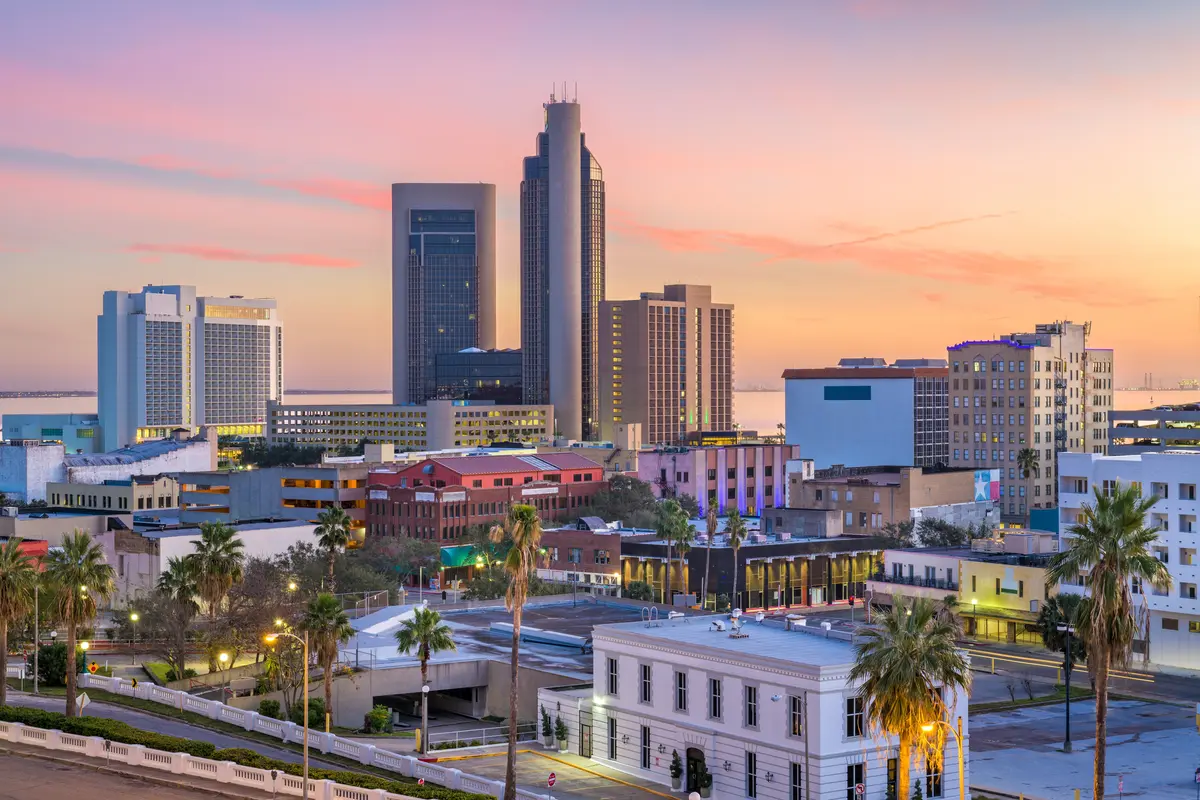
Local Expert Takeaway: The financial case for moving to Corpus Christi from California is one of the cleaner ones you'll find in any Texas city: no state income tax, a typical home price of $224,996 as of July 2026 against California's statewide typical home value of $773,735, and a Gulf Coast lifestyle that costs little to access once you're here. The honest adjustment is this: Corpus Christi is a driving city with a car-dependent layout, genuine summer heat, and a cultural scene sized to a mid-sized Texas metro rather than a California coastal hub. Buyers who price that trade-off accurately and land in the right neighborhood — Southside for families, Bay Area / Ocean Drive for the waterfront feel — tend to stay. Buyers who expected a smaller California tend to leave within two years. Know which one you are before you make an offer.
Quick Takeaways & FAQs
✅ Texas's constitutional prohibition on state income tax saves most working households thousands of dollars per year compared to California — more at higher incomes.
⚠️ Corpus Christi's effective property tax rate of 2.05% is applied immediately at full assessed value, unlike California's Proposition 13 protections — budget for it from day one.
📍 The Corpus Christi Southside Farmers' Market and the waterfront at Cole Park are where you will spend your Saturday mornings within the first month of living here.
How much cheaper are homes in Corpus Christi compared to California?
Does Texas really have no state income tax, and does that apply to retirement income?
What is the property tax situation in Corpus Christi, and is it really higher than California?
What do most Californians not expect about life in Corpus Christi after six months?
How does Corpus Christi's job market compare for someone leaving California?
Moving to Texas?
Tell us what you need help with and we'll connect you with local resources.
