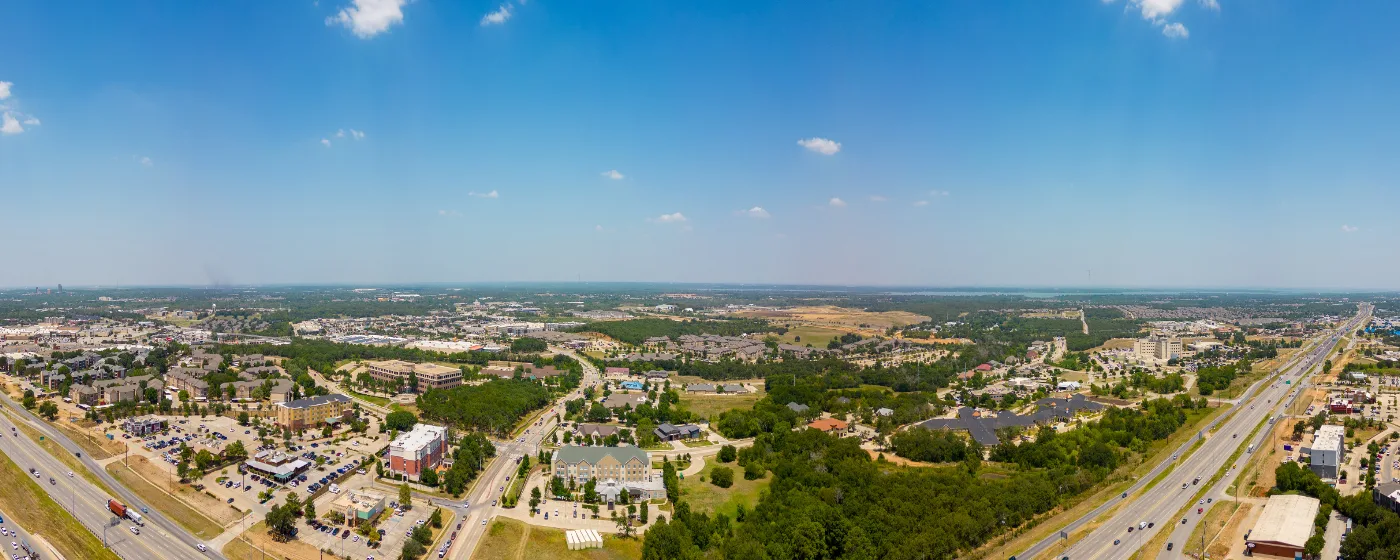
Most families moving to Denton from inside the Dallas–Fort Worth Metroplex already know the name: Denton Independent School District. What surprises them once they're actually here is the scale. With 33,177 students enrolled in 2025-26 across 46 campuses, this is not a mid-size suburban district quietly humming along — it is one of the fastest-growing school systems in the entire DFW area, adding new buildings and boundary adjustments at a pace that catches newcomers off guard. The district holds a B rating, according to the Texas Education Agency, which is a solid foothold in a region packed with well-regarded suburban systems.
The people who move to Denton for its schools tend to be doing more than chasing a rating. They're drawn by a district that includes everything from a Regional Day School Program for the Deaf to dual credit pathways through North Central Texas College, alongside four comprehensive high schools with active UIL athletics programs. The district's student body is genuinely diverse — approximately 35% Hispanic, 34% White, 21% African American, 4% Asian, and 5% two or more races — which reflects the city's mix of university employees, longtime North Texas families, and newer arrivals from across the country. The presence of the University of North Texas and Texas Woman's University shapes the community in real ways: you get a city that takes education seriously at every level.
The honest picture on academic achievement is more complicated. On 2024-25 state assessments, 39% of students reached math proficiency and 54% reached reading proficiency — figures that trail state averages and are the district's most visible area for improvement. Students are completing their diplomas at a strong clip, which tells a different story about how students move through the system. Both realities are real, and a family researching the district needs both. For cost of living context, the typical Denton home price sits at $350,224 as of July 2026; the full breakdown is at the cost of living page.
Whether you have a kindergartner or a high schooler heading into AP courses, the sections below cover how Denton ISD is structured, which campuses draw the most attention, what Career and Technical Education looks like here, how youth sports are organized outside of school, and who this district is — and is not — the right fit for.

Denton ISD at a Glance: Structure and Growth
Denton ISD is organized into four high school learning zones, each led by an Area Superintendent. That structure matters practically: it means your child's elementary and middle school experience is intentionally pipeline-linked to one of four high schools, and boundary shifts — which happen regularly given the district's growth — follow those zones. If you're buying a home and care which high school your child eventually attends, confirming the current zone before you close is one of the most important steps you can take.
The growth numbers are real. At the start of the 2024-25 school year, the district opened three new campuses, including a relocated Newton Rayzor Elementary — a nearly 101,000-square-foot building funded through the district's 2018 bond election. New facilities in a fast-growing district signal investment, but they also mean that maps, boundaries, and staff assignments move. What was true for a neighborhood two years ago may not be today.
Teachers across the district bring solid experience to the classroom — the kind of consistency that acts as a stabilizing factor even as the administrative footprint keeps expanding.
What the Rating Tells You — and What It Doesn't
A B rating from the Texas Education Agency reflects a district performing solidly across its accountability domains: student achievement, school progress, and closing the gaps. It is not an honor roll score, and it is not a warning label. It puts Denton ISD in the credible middle tier of a state that grades hard.
The proficiency numbers on state assessments are the clearest signal of where the district is still developing. On 2024-25 state assessments, 39% of students reached math proficiency and 54% reached reading proficiency. Students here complete their diplomas at a strong clip — a counterweight that matters and one the district points to with good reason. For families whose priority is preparation for competitive four-year universities, those proficiency figures matter most. For families focused on whether kids are supported through to a diploma, the district's completion culture is the thing to hold onto.
Three Schools Worth Knowing by Name
Denton ISD has 46 campuses. Trying to rank them here would take the rest of the page and still miss things. Three high schools consistently come up in conversations with families researching the district — not because the others don't matter, but because these three represent distinct options worth understanding before you decide where to live.
Guyer High School
Guyer is the campus that draws the most outside attention. It offers AP courses, a Project Lead The Way curriculum with an engineering and technology focus, and a Gifted & Talented program that begins feeding in from the elementary level. GreatSchools notes it performs above average compared to public and charter schools in Texas — a descriptor that carries weight in a state where the comparison pool is large and competitive. Friday nights at Guyer pull serious crowds; the school has the kind of athletic and extracurricular culture that fills parking lots well before kickoff.
Families who specifically seek out Guyer's zone when house-hunting in Denton are not imagining a difference — the campus has built a reputation that precedes it. That said, it is one school inside a district still working on system-wide proficiency, and what happens at the campus level depends heavily on program placement and teacher relationships that no map can predict.
Best for: families prioritizing STEM pathways, AP depth, and a high-energy campus culture.
Ray Braswell High School
Braswell opened in 2016 and carries the advantages that newer buildings tend to: modern lab spaces, updated infrastructure, and a campus that hasn't had decades to accumulate deferred maintenance. It sits near the US-380 corridor and serves the district's eastern growth areas, which means it draws heavily from newer subdivisions including parts of the Rayzor Ranch and Villages of Carmel neighborhoods. The academic focus is strong, and the campus has developed a community identity faster than many newer schools manage.
If you're buying in the eastern part of the city and want a high school that feels purpose-built rather than retrofitted, Braswell is the name you'll hear most.
Best for: families in newer east-side neighborhoods who want a modern, focused campus without the enrollment density of a longer-established school.
Denton High School
Denton High is the original. It serves the city's core and carries decades of history alongside its active UIL programs and a student body that reflects the neighborhood diversity of central Denton. It is the flagship in the most literal sense — the one that has been here the longest and the one that tends to attract students from the city's more eclectic, mixed-income areas. That diversity is a genuine asset; it is also a fair description of a campus that serves a broader range of academic preparation levels than Guyer or Braswell.
For families living downtown or in the Southridge area who want their kids connected to the city's history and its full demographic range, Denton High is the natural fit.
Best for: families in the city's core who value a campus with deep local roots and a diverse student experience.
Career and Technical Education: The Program Most Families Overlook
Denton ISD's Career and Technical Education program — CTE — is one of the most underappreciated parts of the district for families new to Texas public schools. Every high school in the district offers CTE pathways, and the range is specific enough to matter: HVAC, fire science, EMT training, education and training, and hospitality and tourism are all available programs of study, not just course names on a catalog page.
Upper-division high schoolers can pursue dual credit options through North Central Texas College, which means students can leave Denton ISD with both a diploma and transferable college hours — a real financial head start for families thinking about the cost of what comes next. The presence of UNT and TWU in the city also creates informal pathways: some students cross into university life through mentorship and dual enrollment arrangements that a district this size can negotiate in ways smaller systems cannot.
Special Education and Support Programs
The district runs a Regional Day School Program for the Deaf (RDSPD), which is a rarer offering than most families realize — it means Denton ISD is a designated regional hub for Deaf and hard-of-hearing students, drawing from outside its own attendance zone. That kind of specialized infrastructure signals a district that invests in differentiated programming beyond what state minimums require.
Special education services are staffed across campuses, and the district's size means it can maintain specialists that smaller neighboring districts often cannot staff in-house. If your family is evaluating Denton ISD specifically because of a child's learning needs, the RDSPD and the breadth of the special education services are genuine distinguishing factors worth discussing directly with the district before making a housing decision.
Looking to buy in Denton? Estimate your payment.
Enter your numbers to see an estimated monthly mortgage payment.
Estimate only. Excludes HOA fees and mortgage insurance. The interest rate above is a starting point, not a quoted rate — replace it with your own to see real numbers. Insurance is a flat placeholder, not a Denton quote.
Youth Sports and Kids Activities in Denton
Youth sports in Denton run on two parallel tracks: the school-based UIL programs that kick in at the middle and high school level, and a well-organized recreational layer that serves kids from age six onward. Both tracks are active enough that weekends here, especially in fall and spring, have the feel of a sports town — not because of professional franchises, but because a city of 169,431 with two universities and a fast-growing family population generates a lot of kids who need somewhere to play.
City Recreation Leagues
The City of Denton Parks and Recreation Athletics Division manages recreational leagues for youth and adults across soccer, basketball, baseball, softball, volleyball, tennis, pickleball, and adapted recreation. Registration runs through the TeamSideline platform, which gives parents a single place to track schedules and sign up across seasons. These are participation-first programs — the goal is access, not development pipelines — and the adapted recreation option means kids who need accommodations aren't siloed into a separate system.
North Lakes Park and South Lakes Park are the settings where a lot of this activity happens on weekends. Both are large enough to run multiple fields simultaneously, which means a Saturday morning might have soccer on one end and baseball on the other, with parents cycling between sidelines.
Denton Corridor Community Sports
Denton Corridor Community Sports — DCCS — is the nonprofit option for families who want something between a casual city rec league and a full-commitment club program. It operates youth leagues for ages 6 through 16 in football (both tackle and flag), basketball, volleyball, and softball, with a stated mission of keeping costs low enough that financial background doesn't determine whether a kid gets to play. The leagues run along the US-380 corridor and draw from families across the eastern part of the city and neighboring areas.
DCCS fills a genuine gap. Club sports in the DFW area can run into serious money quickly, and not every family moving to Denton is arriving with a club budget. Having a structured, affordable option at the nonprofit level matters.
UIL Athletics at the School Level
All Denton ISD high schools carry active UIL athletics programs. Texas UIL athletics are a cultural fixture here in a way that's hard to fully explain to families moving from outside the state — Friday night football in Denton is not a metaphor, it is a weekly event that shapes social life for students and parents alike. The same culture extends to UIL fine arts: marching band, choir, and theater programs run on a competitive calendar alongside athletics, and families often find that band or theater consumes as much of a student's schedule as any sport.
Each high school carries its own campus identity, and students tend to develop strong school affiliations that persist well past graduation. If you have a kid who thrives on that kind of community belonging, the UIL ecosystem here delivers it.
Denton Diablos FC
For soccer-focused families, the Denton Diablos FC is a semi-professional club that moved to USL-2 as of January 2025. It gives local youth players a regional club to follow at the community level — the kind of visible, accessible semi-pro presence that reinforces soccer culture for kids who are serious about the game without requiring a trip to a major stadium to see it.
Who Denton ISD Is — and Is Not — the Right Fit For
Denton ISD is genuinely strong in some areas and still developing in others. Knowing which is which before you sign a lease or make an offer saves a lot of frustration later.
This District Works Well For…
Families who want a diverse, large-district experience with real program breadth will find a lot here. The CTE pathways, dual credit access, RDSPD services, and the sheer variety across 46 campuses mean that a student with a specific interest — whether that's engineering, fire science, or a specialized learning need — has a better chance of finding a program that fits than in a smaller system with three schools total.
Parents who value UIL culture — athletics, marching band, theater, speech — will find the community investment here substantial. Friday nights in Denton during football season are the kind of social infrastructure that bonds neighborhoods in ways that are hard to manufacture.
Families moving from larger urban districts in other states often find Denton ISD's structure familiar and the school size manageable. A campus serving a few thousand students is not a surprise if you've lived in a major metro; it may be a bigger adjustment if you're arriving from a smaller market.
Where the District May Disappoint
Families whose primary benchmark is standardized test proficiency will find the numbers harder to accept. On 2024-25 state assessments, 39% of students reached math proficiency and 54% reached reading proficiency — these are not the figures of a top-performing suburban district, and no amount of program description changes what they say. If test scores are your leading indicator, neighboring Flower Mound and Argyle both carry different profiles, though housing costs in those markets run noticeably higher than Denton's.
The district's growth also creates real friction. Boundary changes, new campuses, and shifting staff assignments mean that what a neighbor tells you about their child's school experience may be only partially relevant to yours — especially if you're buying in a subdivision that's been annexed in the last five years. Families who value stability and predictability in school assignments sometimes find the pace of change here more disruptive than they expected after six months.
If your child needs a small, cohesive environment where teachers know every kid by name in a building of four hundred students, a 46-campus district with rapid enrollment growth is not likely to provide that. Smaller private options exist in the area, but the public school experience in Denton is fundamentally large-district in character — the richness and the friction come from the same source.
Weekends and Local Favorites
A guide to Denton schools that ignored what life actually looks like here on a weekend would miss half the picture for families. After the games and the homework, Denton has a food and coffee culture that's shaped heavily by its university population — which means independent spots, late hours, and an atmosphere that's more creative and less chain-dependent than most DFW suburbs of this size.
West Oak Coffee Bar, Jupiter House, Zera Coffee & Events, Froth Coffee & Dessert Bar Denton, and Aura Coffee are all operating in the city and represent a genuine local café culture. These are places where families end up after weekend sports, where teenagers study, and where new arrivals tend to meet the people who've been here a decade.
For food, LSA Burger Co. has built a following that extends well beyond the university crowd. Seven Mile Cafe draws the breakfast-and-brunch set. Oldwest Cafe Of Denton is the kind of place that regulars treat as a default. Cartwright's Ranch House and Rooster's Roadhouse fill out the more Texas-flavored end of the dining scene — neither is trying to be anything other than what it is, which is exactly the appeal.
The Denton Community Market and the Farmer's Market give families a recurring weekly reason to be outside together, and Clear Creek Natural Heritage Center offers trails and open land close enough to feel like a genuine escape on a weekday afternoon. Lake Lewisville and Ray Roberts Lake State Park pull families further out for camping and water recreation — both are within reasonable driving distance and are large enough to absorb a crowd without feeling crowded.
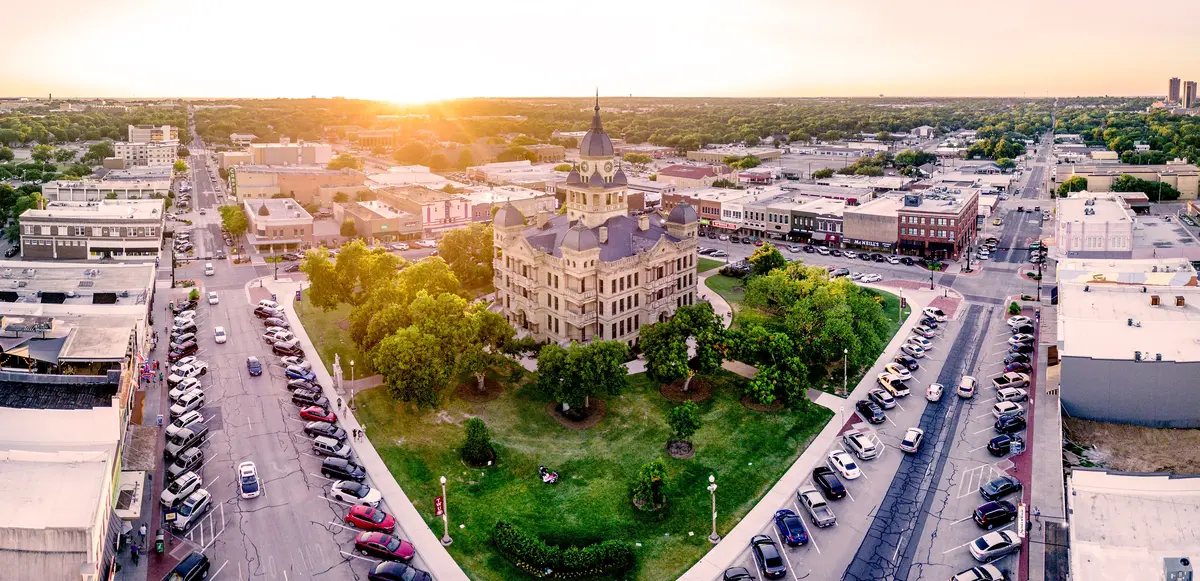
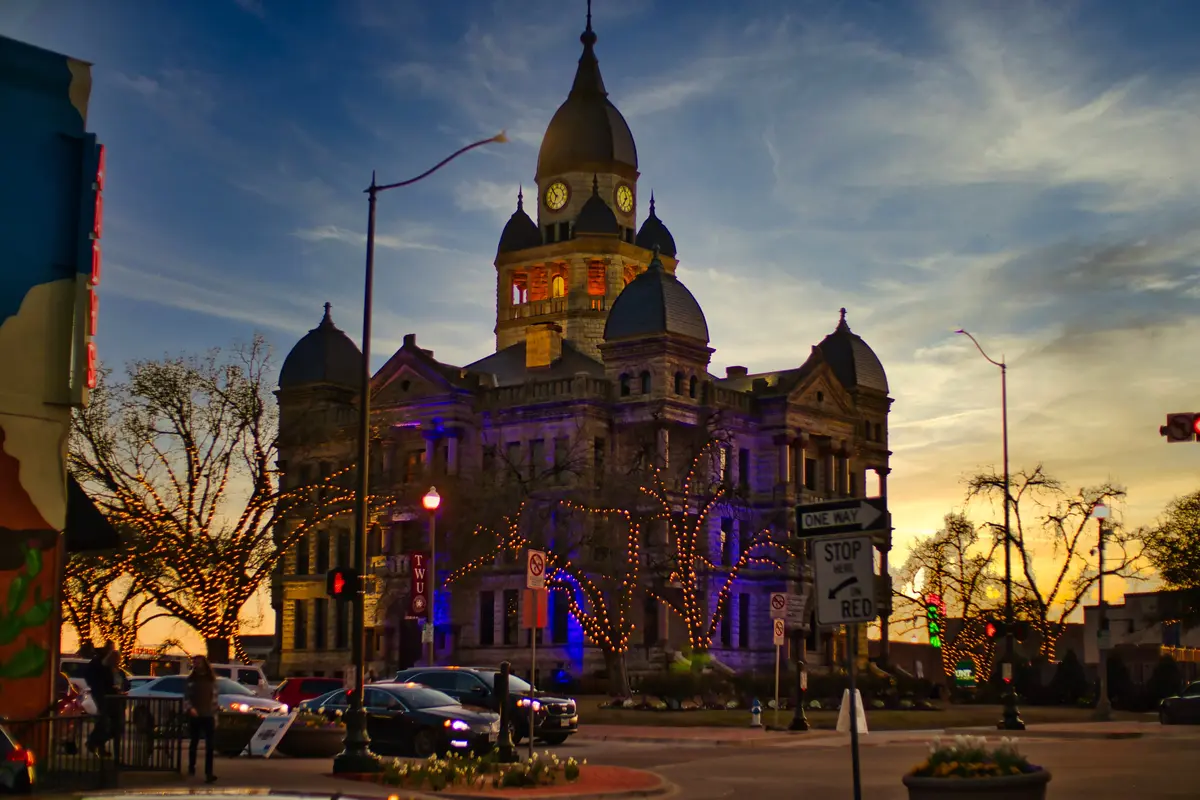
The Historic Denton County Courthouse-on-the-Square anchors the city's social geography in a way that most DFW suburbs simply can't replicate. Denton has a downtown that actually functions as one, and families new to the area consistently name the Square as the first place they felt like they were somewhere specific — not just another node on the Metroplex grid.
Local Expert Takeaway: Denton ISD is a B-rated, fast-growing district that rewards families who do their boundary homework before buying. Guyer High's STEM and AP depth, Braswell's modern east-side campus, and Denton High's core-city roots give you three meaningfully different high school experiences within a single district. The proficiency numbers on state assessments are the honest friction point — they trail state averages, and no family should overlook them. But strong diploma completion rates, the CTE dual credit pipeline through North Central Texas College, and the RDSPD program for Deaf students reflect a district investing seriously in breadth. Add city rec leagues, the DCCS nonprofit sports option, UIL athletics that fill stadiums on Friday nights, and the Denton Diablos FC for soccer families, and the picture that emerges is a city that takes both education and kids' activities as seriously as any place in the Metroplex — with a price point still noticeably below Flower Mound and Corinth.
Quick Takeaways & FAQs
✅ Denton ISD's diploma completion rate is a genuine system-wide strength that stands out even as the district works to improve standardized test proficiency.
⚠️ On 2024-25 state assessments, only 39% of students reached math proficiency — the district's most honest area for improvement, and worth weighing alongside completion numbers.
📍 School boundary changes happen frequently as the district grows; confirm your zone before you close on a home, not after.
What rating does Denton ISD have?
How do Denton ISD's test scores compare to state averages?
Which Denton ISD high schools are worth knowing about?
What youth sports options exist in Denton outside of school?
Does Denton ISD have special education or vocational programs?
Moving to Texas?
Tell us what you need help with and we'll connect you with local resources.
