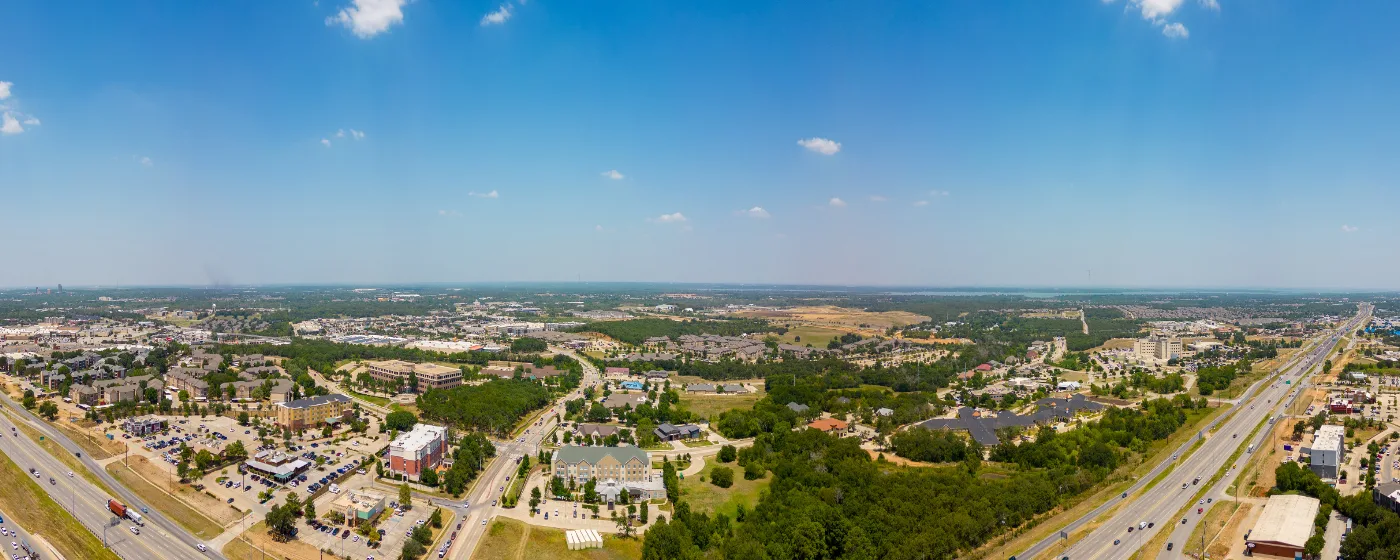
Most people moving to Denton are chasing a university-town energy they didn't expect to find this far inside the Dallas-Fort Worth Metroplex. The retirees who land here, though, often have a different story: they came for family nearby, stayed for the Square, and quietly discovered that a city with two major universities has a cultural calendar most Texas towns four times its size can't match. Denton sits at the convergence of I-35E and I-35W — the two arms of the interstate that bracket the metroplex — which means the city is genuinely accessible without being swallowed by the suburban sprawl to the south. It is the 19th-largest incorporated city in Texas, with a population of 169,431, yet it retains a walkable historic core that surprises newcomers every time.
The economic and civic backbone here is layered. The University of North Texas and Texas Woman's University together anchor a steady stream of public lectures, gallery shows, and concerts that retirees actually use. Medical City Denton, the city's Level II Trauma Center, sits inside city limits — not out on some suburban loop thirty minutes away. The Denton Independent School District is present in the background for grandparents who care about where their grandchildren land, and the city's employment base — education, municipal services, manufacturing, healthcare — keeps the local economy stable. Retirees moving here from more expensive metros consistently say the same thing: they expected a suburb and found a real city.
Cost of living is where Denton earns serious consideration. The typical home price sits at $350,224 (Zillow Home Value Index, July 2026) — meaningfully below what comparable access to a major metro costs in most Sun Belt markets. Texas levies no state income tax, and homeowners 65 and older qualify for property tax exemptions that can freeze the school-district portion of their bill. The catch is that Texas's effective property tax rates run higher than many states, and Denton is no exception. The 228 sunny days a year are real, but so are the summers, which run genuinely hot through September and catch transplants from milder climates off guard. Daily errands still require a car for most residents outside of the immediate downtown core.
Whether you're weighing a full relocation or comparing Denton against nearby options like Flower Mound, Lewisville, or Argyle, the sections below walk through what the retiree experience actually looks like here — healthcare depth, the tax picture, active-adult community, downsizing options, and an honest side-by-side with the alternatives.
Why Retirees Are Choosing Denton
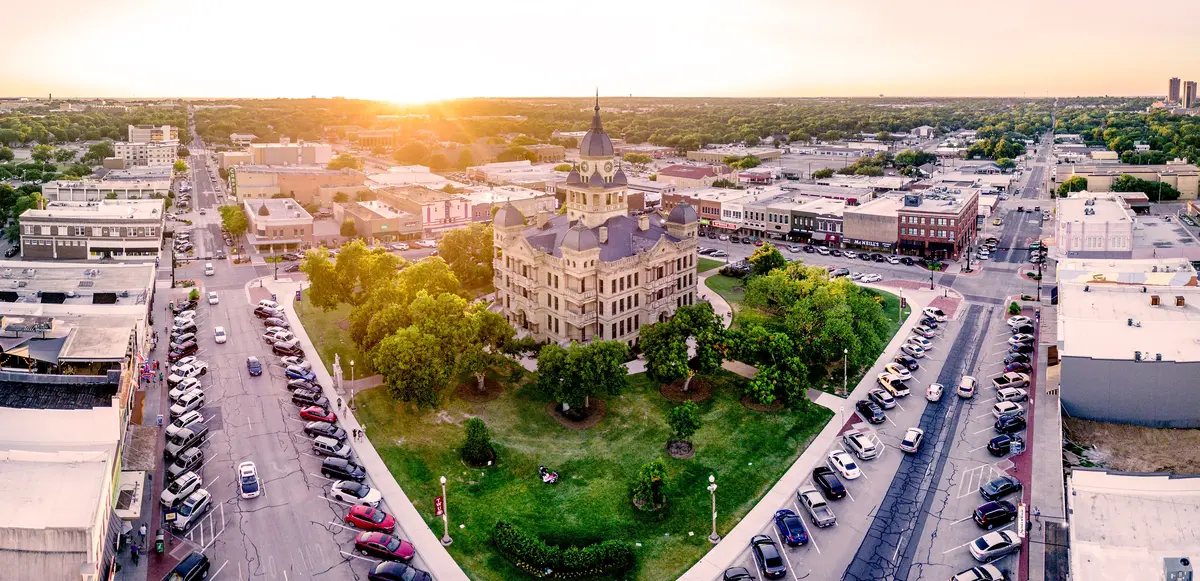
Denton fits a specific kind of retiree well: someone who wants genuine cultural life without paying big-city prices for it. The University of North Texas and Texas Woman's University generate a constant rotation of public events — free concerts, art exhibitions, speaker series — that you simply don't find in most Texas cities under 200,000. The Historic Denton County Courthouse-on-the-Square gives the city a focal point that suburban bedroom communities never quite manage to replicate.
The typical home price of $350,224 (July 2026) puts homeownership within reach for many retirees downsizing from larger properties, and the Texas income-tax advantage compounds that affordability for anyone drawing Social Security or retirement distributions. Families with grandchildren in the area find that Denton's position at the top of the metroplex puts them close without being deep inside the congestion of the Dallas suburbs.
The honest counterpoint: if you're looking for a quiet, slow-paced retirement town, Denton is not that. It's a city of nearly 170,000 with a significant student population and the energy that comes with it. Traffic on US-380 and around the university corridors can be genuinely frustrating, and the summer heat — weeks above 100°F — is not a minor detail. Retirees who prioritize walkable errands without a car will find only the immediate downtown area delivers that; most of the city requires driving. And if access to a major medical center for complex specialty care beyond what's available locally is a priority, that means a trip south toward the Dallas hospital corridor.
Healthcare & Medical Access in Denton
Medical City Denton is the nearest hospital — inside city limits — and for a community-level facility, it punches above its class. The 228-bed acute-care hospital operates as a Level II Trauma Center, a Primary Stroke Center, and an accredited Chest Pain Center. For retirees, those three designations together matter: trauma, stroke response, and cardiac intervention are precisely the emergencies that require speed, and not having to drive thirty miles for them is a real advantage.
The cardiovascular depth here is notable. In 2026, Medical City Denton completed an $8 million cardiovascular intensive care unit — an 8-bed dedicated CICU designed for patients recovering from open-heart surgery, complex vascular procedures, and advanced heart failure. The hospital has received national recognition for vascular surgery excellence and surgical quality from independent healthcare rating organizations for multiple consecutive years. It carries a broad specialist bench for a city this size, with physicians across cardiovascular, orthopedic, and women's health specialties.
Orthopedics and women's health round out the local specialty picture — relevant for retirees managing joint issues or long-term chronic care. Where the hospital's depth thins is in highly specialized oncology, complex neurosurgery, and tertiary-level organ transplant programs. For those needs, the major health systems in the Dallas medical district are the practical answer, and the drive there is about 45 minutes. That's a manageable distance for scheduled appointments, less comfortable as an emergency reality — though Medical City Denton's trauma and stroke capabilities mean the most time-sensitive crises are handled locally first.
Primary care access in Denton is solid, with multiple independent practices and health system clinics distributed across the city. The DCTA A-train can get a car-free retiree to Carrollton and the DART network for medical appointments further south, though most residents find driving the more practical option for anything outside the immediate corridor.
The Retiree Budget in Denton
Texas's most retiree-friendly financial feature is the one everyone mentions first: no state income tax. Social Security benefits, pension distributions, IRA withdrawals, and investment income are all sheltered from state taxation. For retirees drawing from multiple income streams, that adds up to a meaningful real-dollar advantage compared to states like Colorado, Missouri, or Arizona that tax retirement income even partially.
Property taxes are the tradeoff that requires honest acknowledgment. Denton's effective property tax rate runs approximately 1.73% — higher than the national average and higher than what retirees moving from low-tax western states typically expect. On a home priced at the city's typical level, that's a real annual bill. What softens it for residents 65 and older is the Denton County over-65 exemption: $55,000 on top of the standard homestead exemption, plus a freeze on the school-district portion of the tax bill that prevents it from rising in future years regardless of what the underlying appraised value does. Eligible homeowners can also defer tax collection entirely on their primary homestead, which matters for retirees managing cash flow on fixed income. These exemptions are set locally and confirmed annually through the Denton Central Appraisal District — worth verifying each year at dentoncad.com.
For the full breakdown on cost of living in Denton — including groceries, utilities, and how the city's overall affordability compares to the broader metroplex — the cost-of-living page has that picture in detail. On a day-to-day basis, retirees coming from higher-cost metros generally find Denton's dining, services, and grocery costs comfortable. The Denton Community Market near the Square is a genuinely useful weekly resource for fresh produce at accessible price points.
Dallas/Fort Worth International Airport sits 27 miles away — the nearest major airport — and connects the region to an extensive network of nonstop domestic and international destinations. For retirees who travel frequently or have family across the country, that access is a practical asset that belongs in any honest budget conversation: flights out of DFW are consistently more competitive than those out of smaller regional airports.
Looking to buy in Denton? Estimate your payment.
Enter your numbers to see an estimated monthly mortgage payment.
Estimate only. Excludes HOA fees and mortgage insurance. The interest rate above is a starting point, not a quoted rate — replace it with your own to see real numbers. Insurance is a flat placeholder, not a Denton quote.
Walkability, Community & Staying Active in Denton
The walkability reality in Denton is bifurcated. Downtown — the Square, the surrounding streets, a handful of independent cafés and restaurants within a few blocks — is genuinely on-foot friendly, and retirees who live close to it can run meaningful errands and social engagements without a car. Everywhere else in the city, a car is essentially required. The terrain is relatively flat, which matters for cyclists and older adults who walk for exercise, but the sprawl beyond the urban core is standard Texas suburban.
The social infrastructure for active adults is stronger than Denton's size would suggest, largely because of the University of North Texas. The Osher Lifelong Learning Institute (OLLI) at UNT is one of the most substantive programs of its kind in North Texas — a non-credit learning community for adults 50 and older offering courses, special-interest groups, and Metroplex day trips. It was founded at UNT in 2009 and formally endowed as an OLLI in 2017. City Rec Pass holders aged 50 and older receive a discounted annual OLLI membership rate through a formal partnership between Denton Parks and Recreation and the program.
Denton Parks and Recreation facilities accept SilverSneakers and Silver&Fit fitness benefits — practically useful for retirees on Medicare Advantage plans that include those programs. The city maintains more than 50 park sites across more than 2,400 acres of maintained parkland. North Lakes Park and South Lakes Park are the two largest municipal anchors, and Clear Creek Natural Heritage Center offers trails through preserved natural landscape that retirees use for walking year-round. Lake Lewisville and Ray Roberts Lake State Park extend the outdoor picture significantly for those who fish, kayak, or simply want a half-day drive into open water and trees.
The cultural calendar tied to UNT and TWU is the detail that genuinely separates Denton from other North Texas retirement options. Free and low-cost public concerts, gallery openings at the university museums, and speaker series run throughout the academic year. The Historic Denton County Courthouse-on-the-Square anchors the weekly Denton Community Market and the live-music scene that fills the surrounding streets on weekend evenings. Retirees who moved here from artistically thinner suburbs consistently name this as the thing they didn't expect to value as much as they do.
Right-Sizing: Downsizing in Denton
The downsizing picture in Denton is more limited than in some larger Sun Belt retirement markets, but it is not thin. Single-level living is available — patio homes and ranch-style construction exist across several neighborhoods — though buyers looking specifically for one-story homes should plan to search with that filter active from the start, because the city's newer subdivisions mix single and two-story builds without obvious separation.
Robson Ranch is Denton's sole dedicated 55+ master-planned community, and it is worth understanding in some detail because it dominates this category locally. It operates under HOPA age-restriction guidelines, requiring at least one resident per household to be 55 or older, and the community is gated. The community's scale gives it genuine self-contained amenity depth. The 18-hole championship golf course was designed by Gary Stephenson. The clubhouse runs 17,500 square feet and includes a 450-seat ballroom and stage. The Pinnacle Fitness Center covers weight training and cardio; the Cimarron Sports Club adds an indoor lap pool, whirlpool, saunas, a full-service salon, and an indoor gymnasium used for pickleball and volleyball. Outdoor amenities include a dog park, fishing lake, walking paths, gardens, and a softball field.
Robson Ranch sits above the city-wide typical home price — it runs at the higher end of the Denton market — so buyers coming from less expensive markets should account for that in their planning. The community's size also means it functions almost as a city within a city, which some retirees find appealing and others find isolating from the broader Denton experience.
For retirees who want to be closer to the Square and the university-town energy, condos and smaller patio homes in and near Downtown Denton are an alternative, though that segment of the market is smaller and inventory can be limited. The Preserve at Pecan Creek neighborhood sits below the city median on price, which can create entry-level downsizing opportunities for buyers working with tighter budgets. For the full neighborhood picture and how each area compares, the Denton neighborhoods guide has the detail.
One practical note for buyers used to Pacific Northwest or Northeast markets: single-level new construction in Texas typically does not include basements, and the standard subdivision home here is slab-on-grade. That simplifies some maintenance questions but removes the extra storage that retirees downsizing from large homes often rely on.
Denton vs Nearby Retirement Destinations
| City | Cost vs Denton | Primary Hospital | Walkability | Senior Living Depth | Overall Retirement Fit |
|---|---|---|---|---|---|
| Denton | Anchor | Medical City Denton — Level II Trauma, Stroke Center, CICU | Downtown walkable; car required elsewhere | Robson Ranch (large 55+ community); OLLI at UNT; city senior programs | Strong for active adults who want culture and community at a mid-range price |
| Flower Mound | Noticeably higher | Regional medical access via Medical City Las Colinas corridor | Low; almost entirely car-dependent suburban layout | Several active-adult neighborhoods; no single dominant 55+ campus | Quieter, more affluent suburb; better for buyers prioritizing school-district quality for grandchildren nearby |
| Lewisville | Somewhat higher | Medical City Lewisville inside city limits | Moderate; some walkable commercial corridors | Moderate; smaller active-adult inventory than Denton | A practical middle ground — closer to DFW, more affordable than Flower Mound, less cultural depth than Denton |
| Corinth | Noticeably higher | Relies on Medical City Denton and Lewisville facilities | Low; residential suburb with minimal walkable core | Limited; small city without dedicated 55+ infrastructure | Appeals to buyers who want newer construction and quiet streets but aren't prioritizing amenities or walkability |
| Argyle | Noticeably higher | Relies on Denton and Fort Worth corridor hospitals | Very low; rural-suburban character with large lots | Minimal; no significant senior-specific infrastructure | Best for retirees who genuinely want acreage, privacy, and a slower pace — not a cultural or healthcare hub |
| Little Elm | About the same | Regional access; no in-city major hospital | Low to moderate; newer development with limited walkable centers | Growing; some active-adult neighborhoods tied to lake-lifestyle marketing | Suits lake-oriented retirees who prioritize outdoor water access over urban amenity depth |
For healthcare-focused retirees, Denton holds a genuine edge among these options: Medical City Denton's Level II Trauma designation, dedicated CICU, and national recognition for vascular surgery excellence put it ahead of what most of these neighboring cities can offer inside their own limits.
On cost, Little Elm comes closest to Denton's price level, while Lewisville runs somewhat higher and Flower Mound, Corinth, and Argyle run noticeably higher — making Denton the most affordable entry point among the better-amenitied options in the northern Metroplex.
Flower Mound and Argyle appeal to retirees who put quiet, space, and a more affluent suburban feel above cultural programming — but if you want a walkable square, a live music scene, an active lifelong-learning program, and a trauma center inside your city, none of the nearby alternatives match what Denton delivers at this price point.
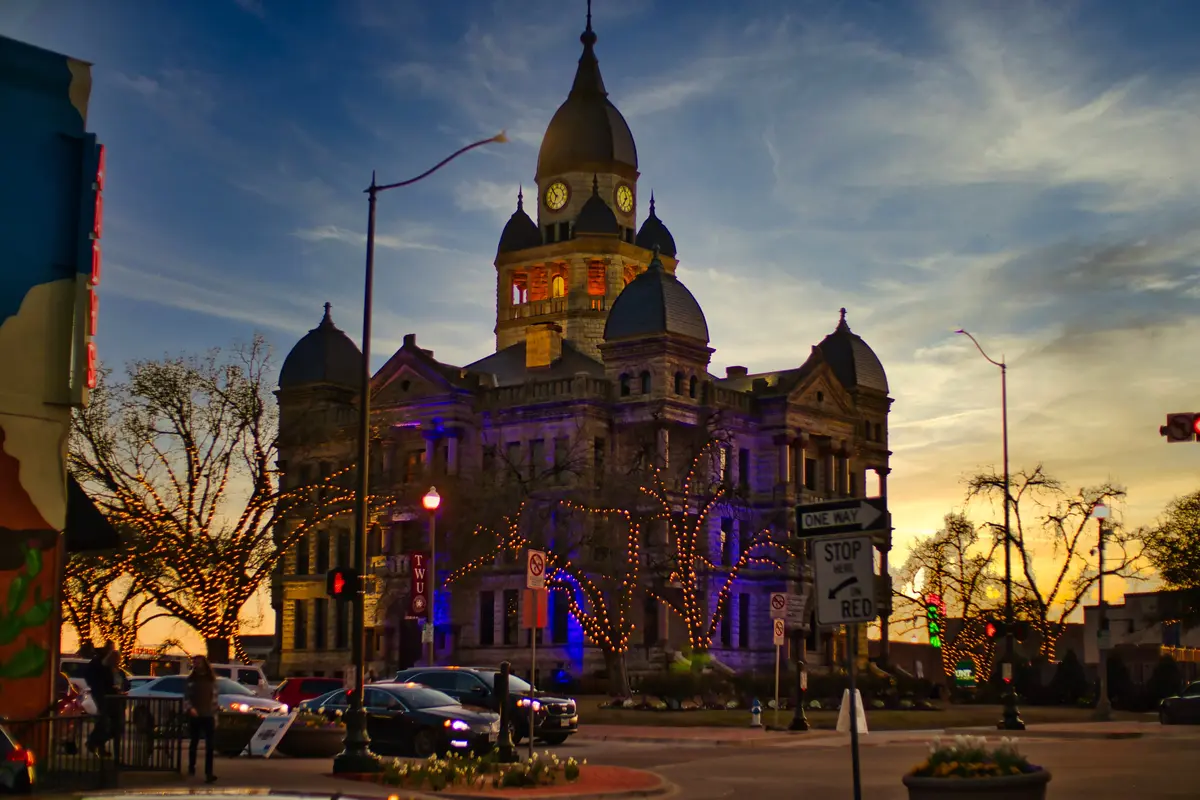
Local Expert Takeaway: Denton's retirement case rests on three things working together that rarely coexist at this price level: a Level II Trauma Center and nationally recognized vascular surgery program inside city limits, a genuine university-town cultural calendar through OLLI at UNT and the Square, and the Texas over-65 property tax freeze that caps one of retirement's most unpredictable costs. The catch is that this is a real city with real city energy — students, traffic on US-380, summer heat that runs into September — and retirees who picture a quiet small town tend to be surprised by that. If Robson Ranch's scale and self-contained amenity depth appeal to you, it is one of the more complete 55+ communities in North Texas. If you'd rather be embedded in the city proper, the downtown and nearby neighborhoods offer a very different but equally viable version of Denton retirement.
Quick Takeaways & FAQs
✅ Medical City Denton — inside city limits — is a Level II Trauma Center with national recognition for vascular surgery and surgical excellence, putting serious cardiac and emergency care closer than most North Texas suburbs can offer.
⚠️ Texas's effective property tax rate runs higher than the national average, and at approximately 1.73% in Denton, that bill is real — though the over-65 county exemption and school-district tax freeze provide meaningful relief for homeowners 65 and older.
📍 The Osher Lifelong Learning Institute at the University of North Texas is the kind of active adult intellectual community — with courses, interest groups, and Metroplex day trips — that most Texas cities this size simply don't have; Denton's college-town DNA is the reason it exists here.
Is Denton a good place to retire in Texas?
What is Robson Ranch like for retirees in Denton?
Does Texas tax Social Security or retirement income?
How good is healthcare in Denton for retirees?
What senior programs and activities are available in Denton?
Moving to Texas?
Tell us what you need help with and we'll connect you with local resources.
