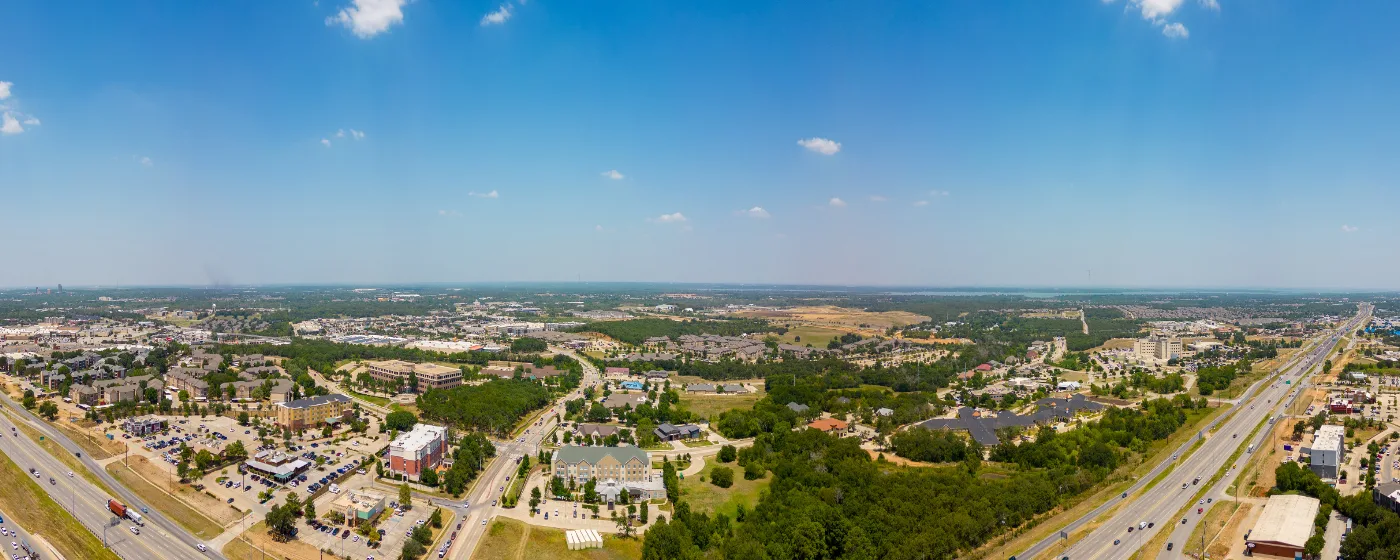
Maybe your company relocated you to the DFW Metroplex and you landed in Denton because someone said it was the affordable option up north. Maybe you've been renting near the University of North Texas for a few years and finally feel ready to stop paying someone else's mortgage. Either way, the first thing most buyers discover is that Denton sits at a genuine price advantage over the closer-in suburbs — and that advantage is real, but it comes with its own set of tradeoffs worth understanding before you start scheduling tours.
Denton is the 19th-largest incorporated city in Texas, with a population of 169,431, and it functions as an employment hub in its own right. The Denton Independent School District, the City of Denton, the University of North Texas, Texas Woman's University, Peterbilt Motors Company, and Medical City Denton collectively anchor the local economy and draw a steady stream of first-time buyers who want to live near where they work rather than commuting from a cheaper exurb. That resident base — students who stayed, university staff who settled, young professionals who priced out of Flower Mound or Corinth — gives the market a depth that keeps demand relatively stable even when the broader Metroplex cools.
Cost of living here runs noticeably below comparable suburbs closer to Dallas. The typical home price stands at $350,224 (Zillow Home Value Index, July 2026), which is meaningfully lower than what buyers face in Corinth or Flower Mound, and the city's position at the junction of I-35E and I-35W means you still have access to the full DFW job market — about 45 minutes to Dallas on a reasonable day. For first-timers specifically, the current market has more room to negotiate than the 2021–2022 peak, new construction is expanding the supply of entry-level options, and Texas closing costs run below the national average. None of that makes the purchase easy, but it makes it more achievable here than in much of the Metroplex.
This guide covers what your budget actually buys in Denton today, the step-by-step process for getting from pre-approval to keys, a plain-numbers budget snapshot, and the specific mistakes that trip up first-timers in this market most often.

The Denton First-Time Buyer Reality
The typical home price in Denton is $350,224 (July 2026), and that number tells an incomplete story. The entry point into homeownership here — older construction in areas like Southridge or the Preserve at Pecan Creek — can run below that figure, while newer master-planned communities and established neighborhoods push above it. For a first-timer, the practical question is whether your income can bridge the gap between renting and owning, and the honest answer is that it is a stretch for many buyers: the median household income in Denton sits about $30,000 below what is typically needed to carry the city's median-priced home at current rates. That does not close the door — it means down payment size, loan type, and seller concessions matter more here than in a market where prices and incomes align more cleanly.
The market has shifted in buyers' favor since 2022. Sellers are more willing to accept price reductions, offer repair credits, or contribute toward closing costs than they were two or three years ago, and well-priced homes that would have gone in a weekend now sit long enough for buyers to take a breath. New construction is also a real option: Hillwood Communities broke ground in November 2025 on Landmark, a 3,200-acre master-planned community off I-35W, with more than 6,000 single-family homes planned at full build-out. Builders in projects like this commonly offer rate buydowns and closing cost assistance to move inventory as new phases open — concessions that can materially change the math for a first-timer who shops new construction alongside resale.
One thing many first-timers don't think about until month three: Denton's property tax effective rate is 1.73%, and Texas taxes are paid in arrears. At closing, the seller credits you for their prorated share of the year's tax — that credit appears on your settlement statement, but your own tax obligation starts accumulating from day one of ownership. Factor that rate into your monthly budget before you fall in love with a price point, not after. For more on how the full cost of living shakes out here, see the cost of living in Denton page.
The Homebuying Process in Denton, Step by Step
Step 1: Get Pre-Approved — Before You Tour Anything
In a market where well-priced homes still move, showing up to a tour without a pre-approval letter is a real liability. Pre-approval is not the same as pre-qualification: a pre-approval involves a lender pulling your credit, verifying your income and assets, and issuing a written commitment up to a specific loan amount. In Denton, sellers and their agents expect this before they take an offer seriously.
One detail worth knowing: under the federal HUD definition used by most Texas loan programs, a "first-time homebuyer" is anyone who has not owned a primary residence in the past three years. If you owned a home six years ago, sold it, and have been renting since, you likely qualify — which may open loan programs you didn't think applied to you. Confirm this with your lender before assuming you don't qualify.
Step 2: Define Your Search Boundaries Early
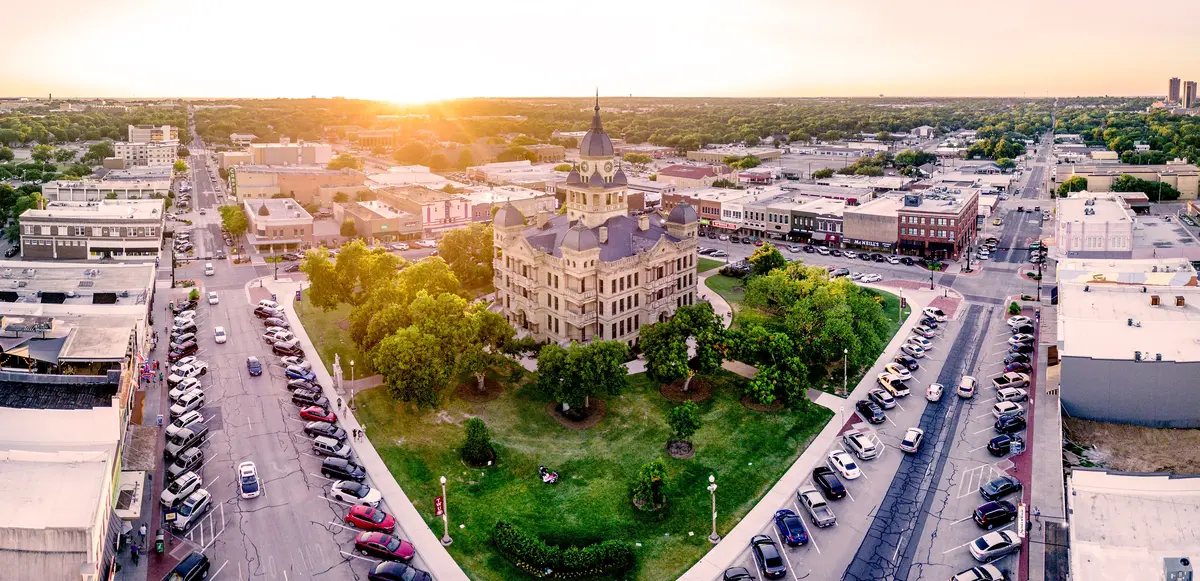
Denton is bigger and more spread out than first-timers expect. The neighborhoods closest to the University of North Texas and the Historic Denton County Courthouse-on-the-Square feel nothing like the master-planned subdivisions off Loop 288 or I-35W. Decide whether you need to be walkable to the square, close to a specific school boundary, or within a certain distance of I-35E or I-35W for your commute — then let those answers filter your search rather than touring across the whole city and getting overwhelmed.
Step 3: Make an Offer with the Right Contingencies
In the current Denton market, you have more room to negotiate than buyers did in 2021. Use it. A well-structured offer includes an inspection contingency — non-negotiable for a first-timer — and a financing contingency that protects your earnest money if your loan falls through. Sellers here are more open to repair credits and closing cost concessions than they were at peak, so asking is reasonable rather than risky.
Step 4: Inspection and Appraisal
Do not waive the inspection to win an offer in Denton. The area's clay soil causes foundation movement that is common enough to be a standard agenda item on every general inspection report — and significant enough that buyers who skipped the inspection have ended up with five-figure repair bills within two years of closing. Pay for a thorough inspection; ask specifically about the foundation, HVAC age, and roof condition.
Your lender will order an appraisal independently. If the home appraises below your purchase price, you have three options: renegotiate the price, cover the gap in cash, or walk away using your financing contingency. In a more balanced market like today's Denton, renegotiating is a realistic outcome.
Step 5: Closing
Texas closing costs average roughly 0.93% of the purchase price for buyers — below the national average — though your actual figure will vary based on lender fees, title costs, and any concessions negotiated. The City of Denton offers a free Homebuyer 101 Class covering the buying process; attending before you start your search, not after you're under contract, is when the information is most useful.
How Much Home Can You Afford in Denton
The table below shows what different purchase prices and loan types require at the closing table, using estimated ranges. Closing costs are approximated at roughly 1% of the purchase price for the buyer's side — consistent with Texas state averages — but your actual figure will depend on your lender, title company, and any seller concessions you negotiate. Use this as a planning tool; confirm every figure with your lender before making an offer.
| Scenario | Purchase Price | Down Payment | Est. Closing Costs | Cash Needed at Table |
|---|---|---|---|---|
| FHA (3.5%) — entry-level | ~$275,000 | ~$9,625 (3.5%) | ~$2,750 | ~$12,375 |
| Conventional (3%) — entry-level | ~$275,000 | ~$8,250 (3%) | ~$2,750 | ~$11,000 |
| FHA (3.5%) — city median range | ~$350,000 | ~$12,250 (3.5%) | ~$3,500 | ~$15,750 |
| Conventional (3%) — city median range | ~$350,000 | ~$10,500 (3%) | ~$3,500 | ~$14,000 |
| Conventional (5%) — above median | ~$400,000 | ~$20,000 (5%) | ~$4,000 | ~$24,000 |
| Conventional (10%) — above median | ~$425,000 | ~$42,500 (10%) | ~$4,250 | ~$46,750 |
All figures are estimates for planning purposes only; verify with a licensed Texas lender before making decisions. Closing costs shown are buyer-side estimates and do not include prepaid items such as homeowners insurance or escrow reserves, which add to the cash you'll need at the table.
A few Denton-specific notes worth keeping in mind. The 1.73% effective property tax rate means the annual tax on a $350,000 home runs meaningfully above what buyers coming from lower-tax states expect — and because Texas taxes are paid in arrears, you'll start accruing your own tax obligation on day one of ownership even though the bill itself doesn't arrive until October. Build that into your monthly budget at the outset. If you're considering new construction in a community like Landmark off I-35W, ask the builder directly about rate buydowns and closing cost contributions — those incentives are real and currently common, and they can shift the math on your down payment and cash-to-close figures significantly.
Looking to buy in Denton? Estimate your payment.
Enter your numbers to see an estimated monthly mortgage payment.
Estimate only. Excludes HOA fees and mortgage insurance. The interest rate above is a starting point, not a quoted rate — replace it with your own to see real numbers. Insurance is a flat placeholder, not a Denton quote.
Common First-Time Buyer Mistakes in Denton
Waiving the Inspection Contingency
This is the highest-stakes mistake in Denton specifically. The city's expansive clay soils mean foundation movement is not a rare finding — it is an expected one. A home that looks structurally sound on a walkthrough can have active foundation issues that only a qualified inspector catches. First-timers who waive the inspection to compete on an offer — or who assume a new-construction home doesn't need one — have learned this the expensive way. Keep the contingency; use the findings to negotiate, not to walk away reflexively.
Shopping Before You Have Pre-Approval
Touring homes without a pre-approval letter is how buyers fall in love with a price point they can't actually reach. Denton's market, while more balanced than 2022, still moves on well-priced homes. A seller's agent will not take your offer seriously without pre-approval documentation, and you'll waste your own time — and your agent's — building emotional attachment to homes you're not positioned to buy.
Ignoring the School-Boundary and Commute Reality
Denton Independent School District covers a large and geographically varied city. A home listed in Denton doesn't automatically feed into the specific school you've researched. Boundary lines within the district shift, and a move of a few blocks can change which campus your children attend. Check the current boundary map against the specific address before you make an offer, not after. Similarly, the drive to Dallas is roughly 45 minutes in normal conditions from a central Denton location — but buyers who buy on the far north or east side without checking their specific commute path to I-35E or I-35W can add meaningful time to that figure. The highway access is real; verify it from the neighborhood you're actually considering.
Underestimating the Cash You Need at the Table
First-timers consistently plan for the down payment and forget what surrounds it. Closing costs, prepaid homeowners insurance, your initial escrow deposit for taxes and insurance, the home inspection — these add up fast and are due at closing regardless of whether the seller contributes anything. Texas closing costs for buyers average roughly 0.93% of the purchase price on the cost side alone, and your lender will require prepaid escrow reserves on top of that. Treat any seller concession you negotiate as a welcome reduction rather than something to count on before it's confirmed in writing.
One resource worth using before you get too deep into the search: the City of Denton runs a free Homebuyer 101 Class that covers the buying process and available programs. Attending before you're actively shopping — rather than after you're already under contract — is when the information does the most good.

Local Expert Takeaway: Denton gives first-time buyers something increasingly rare in the DFW Metroplex: a real city with its own employment base, a university culture that keeps the housing stock diverse, and a typical home price well below what nearby suburbs like Flower Mound or Corinth ask. The catch is that the median household income still falls short of what it takes to carry the typical home here at current rates, which means down payment size and loan type matter more than they might elsewhere. Get pre-approved before you tour anything, keep your inspection contingency no matter what, and plan for the full cash-to-close figure — not just the down payment. If new construction is on the table, ask builders in communities like Landmark about rate buydowns and closing cost concessions; those deals are currently common and can shift the numbers meaningfully.
Quick Takeaways & FAQs
✅ Denton's typical home price of $350,224 (July 2026) sits noticeably below comparable DFW suburbs like Flower Mound and Corinth, giving first-timers a genuine entry point into the Metroplex.
⚠️ The median household income in Denton falls about $30,000 short of what's typically needed to carry the city's median-priced home — which means down payment size and negotiated concessions matter more here than in a market where incomes and prices align.
📍 Denton's clay soils make foundation movement a standard inspection finding, not a rare one — never waive the inspection contingency, even on newer construction.
What credit score do I need to buy a home in Denton, TX?
How long does it take to close on a home in Denton?
Are there first-time homebuyer classes in Denton?
Is it better to buy new construction or resale in Denton right now?
What does the first-time homebuyer definition mean in Texas?
Moving to Texas?
Tell us what you need help with and we'll connect you with local resources.
