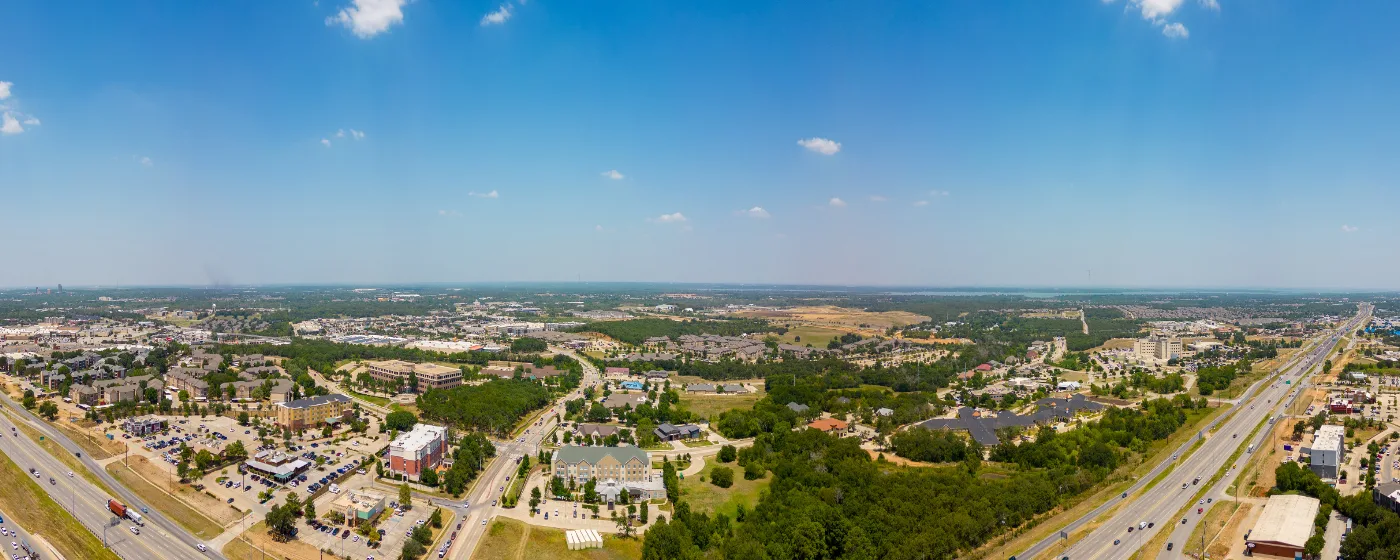
If you're choosing between staying in California and moving to Denton, the decision usually comes down to one hard question: how much of what you're paying for in California are you actually getting? Denton sits at the northern edge of the Dallas-Fort Worth Metroplex in Denton County, roughly about 45 minutes to Dallas via I-35E. It is a city of 169,431 — large enough to have a genuine downtown, two major universities, and a music scene that draws regional attention, but compact enough that you still recognize faces at the farmers market. That combination is not accidental, and it is not replicated anywhere else in the metro.
The economic backbone here is the University of North Texas and Texas Woman's University, both of which put Denton in a different category from most DFW bedroom communities. Those institutions anchor a job market that also includes Peterbilt Motors Company, the Denton Independent School District, and the City of Denton itself. For Californians relocating without a pre-arranged remote position, that diversity matters — the local employment base is more varied than you will find in comparable suburbs to the south. The school district holds a B rating, according to the Texas Education Agency, with 33,177 students enrolled in 2025-26.
The cost shift from California is real and immediate. Denton's typical home price is $350,224 (Zillow ZHVI, July 2026) — measured against California's statewide typical home value of $773,735, the gap is substantial. Day-to-day costs run roughly 4% below the national average, groceries are a bit cheaper, and routine health coverage tends to cost noticeably less than what most Californians were paying — though you should expect to drive farther for specialist care than you would from a coastal metro. The A-Train commuter rail links Denton to the broader DART network, which surprises many new arrivals who assume North Texas means a car for everything.
Whether you are weighing the tax picture, trying to understand which neighborhoods suit your budget, or just figuring out what weekends here actually look like, the sections below break down the California-to-Denton comparison on home prices, state taxes, lifestyle, the local culture, and the honest tradeoffs worth knowing before you sign anything.
The Home Price Reality: What Your California Money Buys Here
California's statewide typical home value of $773,735 (Zillow ZHVI) is the number most departing Californians carry in their heads. In Denton, the typical home price is $350,224 as of July 2026. That is not a different tier — it is a fundamentally different market structure.
At that price point in Denton, you are looking at newer construction with a two-car garage, a yard with actual grass, and a neighborhood that is not a compromise. Entry-level options exist across neighborhoods like Preserve at Pecan Creek and parts of the south side, which both sit below the city median. Communities like Robson Ranch, Oakmont, and Southridge run above the city median and attract buyers who want larger lots or resort-style amenities.
One thing Californians consistently underestimate: Denton is not the cheapest option in this part of DFW, but it competes well. Nearby Flower Mound runs noticeably higher than Denton's typical price. Corinth runs noticeably higher as well. Lewisville comes in somewhat higher. Denton, for what it offers — a walkable historic square, two university campuses, a live music culture — is competitively priced within the metro.
The affordability picture is honest but not perfectly simple. The median household income of $76,019 falls below what it takes to comfortably carry the typical home at current rates, so buyers coming with California equity tend to have the clearest path. If you are selling a California home and arriving with proceeds, your purchasing power here is genuinely transformative. If you are buying without California equity behind you, the math is tighter than the sticker price suggests — not unlike what you left, just at a lower number.
What the Purchase Actually Costs to Own
Texas has no state income tax, but it does collect through property taxes. Denton's effective property tax rate runs 1.73%. On a $350,224 home, that is a meaningful annual line item — and unlike California's Proposition 13, which caps assessed value growth for long-term owners, Texas reassesses at market value annually for non-homestead properties.
Two recent changes soften the impact for owner-occupants. Texas Senate Bill 4 (2025) raised the homestead exemption for school district taxes to $140,000, producing savings of roughly $1,500 or more per year on a typical Denton home. There is also a 10% annual cap on homestead appraisal increases for qualifying properties. Both protections apply only after you file for homestead status — that filing is not automatic, and missing the deadline is the most common first-year mistake Denton buyers make. Denton ISD voters also approved a tax rate adjustment in November 2025; verify the current rate with the Denton County Tax Assessor before closing, because the figure on a listing sheet may not reflect the most recent change.
A CPA familiar with both California and Texas tax law is worth the conversation before you close — the net outcome between the two systems depends heavily on your income level and purchase price, and the numbers move in your favor, but not uniformly.
The Tax Shift: From California's Brackets to Texas Zero
Texas levies no state income tax — the prohibition is written into the state constitution. For Californians, that means stepping off one of the steepest income tax structures in the country the moment you establish Texas residency.
California's top state income tax rate of 13.3% applies only to the highest earners, but the brackets climb steeply well before that ceiling. At $100,000 of income, the estimated savings from moving to Texas run approximately $5,055 per year in state income tax alone (single filer, 2025 tax year estimates — illustrative, not personalized tax advice). At $150,000, that figure rises to roughly $9,500 annually. For dual-income households or anyone with significant W-2 income, those numbers compound quickly.
Sales Tax: A Different Story
California's statewide base sales tax rate of 7.25% is the highest state-level rate in the country, and local additions push the combined average higher still. Texas's state base rate is lower, and the combined state-plus-local average across Texas comes in below California's comparable average. The difference at the register is real, though it will not change your life the way the income tax removal does.
The Property Tax Trade
The honest version of the California-to-Texas tax story includes this: you are trading income tax for property tax. California's Proposition 13 caps effective property tax rates at roughly 1% of the original purchase price, with limited annual increases — a structure that rewards long-term ownership and punishes new buyers who paid a lot. Texas assesses at market value annually, which means Denton's 1.73% effective rate applies to what your home is actually worth today, not what someone paid for it in 2003.
For Californians who have been renting — and never benefited from Prop 13 personally — this is a wash or better. For those selling a home where Prop 13 held a very low assessed base for years, the shift can feel sharp. Running the full comparison against your actual income and purchase price with a CPA is the only way to know where you land.
| Tax Category | California | Texas (Denton) |
|---|---|---|
| State income tax | California's top state income tax rate of 13.3% (progressive brackets) | $0 — constitutionally prohibited |
| State base sales tax | California's statewide base sales tax rate of 7.25% | 6.25% state base; up to 8.25% with local |
| Effective property tax rate | ~1% of purchase price (Prop 13 cap) | 1.73% of annual assessed market value |
| Homestead exemption | Limited; $7,000 assessed value reduction | $140,000 school district exemption (SB4, 2025) |
| Annual appraisal growth cap | 2% under Prop 13 | 10% cap on homestead appraisals |
| State capital gains tax | Taxed as ordinary income (up to 13.3%) | $0 state-level |
The table captures the structure. Where you land on net depends on your income, your purchase price, and how long you plan to stay.
Daily Life in Denton: What Stays the Same and What Changes
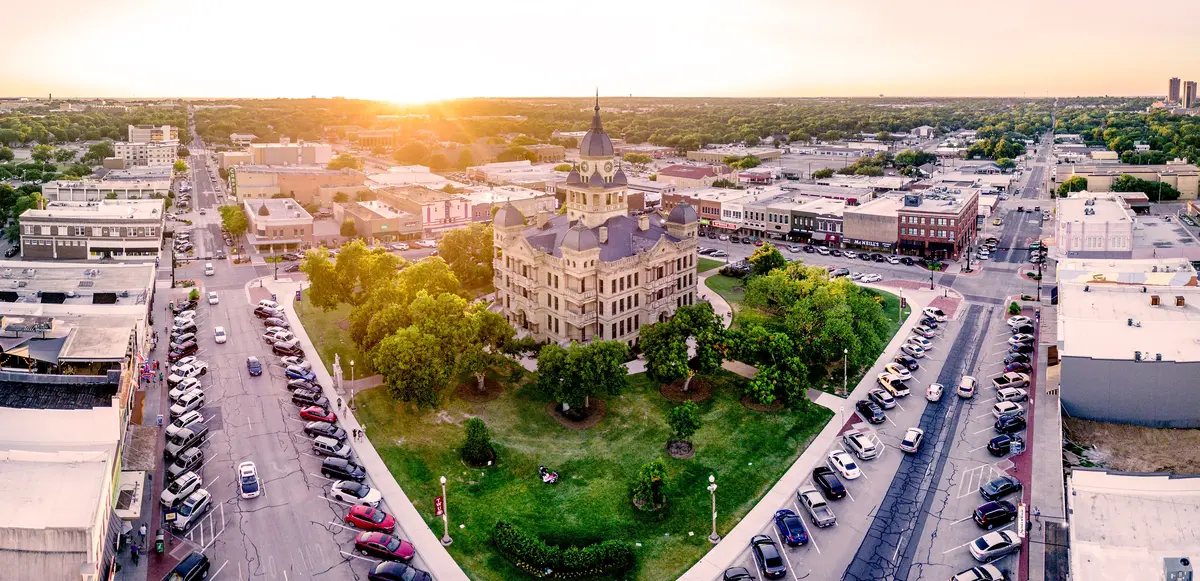
The adjustment from California living is real, but it is not the culture shock the coasts like to imagine. Denton is a genuine city — 169,431 people, a walkable historic square anchored by the Historic Denton County Courthouse-on-the-Square, two universities that keep the median age down and the energy up, and a live music calendar that runs nearly every night of the week.
The Music Scene Is Not Incidental
The Texas Music Office has certified Denton as Music-Friendly, and Paste Magazine has listed it among the best music scenes in the country. The University of North Texas College of Music feeds a deep pool of working musicians into the local venues — enough that the downtown scene operates at a level that would be unusual for a city this size in most other states. The Denton Arts and Jazz Festival draws crowds from across the region and is free to attend — an event that encapsulates what the city does well when it leans into its own identity.
What Californians Notice First
Six months in, most California transplants say the same thing: they did not expect to feel settled this fast. The cost difference extends beyond housing — groceries run a bit cheaper, routine health coverage costs noticeably less, and there is no state income tax showing up as a monthly psychological weight. The A-Train commuter rail connects Denton to the broader DART system, which means getting to Dallas without driving is genuinely possible — something many newcomers dismiss until they try it.
What catches people off guard is the weather. Denton gets 228 sunny days a year — respectable, but the summer heat is a different animal from California's dry warmth. Humidity climbs, and July and August are genuinely punishing in a way that the winter mild spells do not compensate for in the minds of people who moved from the Bay Area or San Diego coastal zones. The flip side: winters are mild and rarely severe, and the spring wildflower season along the corridors toward Ray Roberts Lake State Park is something no one warns you about.
Getting Around
Denton sits at the junction of I-35E and I-35W, which gives it direct access to both Dallas and Fort Worth. Dallas/Fort Worth International Airport (DFW) is 27 miles away — manageable for regular travelers, and meaningfully shorter than the airport runs many Bay Area residents were making. Loop 288 and US-380 (University Drive) handle most of the local traffic. The A-Train runs south toward the DART connection, and it is used more than most newcomers expect once they discover it.
Looking to buy in Denton? Estimate your payment.
Enter your numbers to see an estimated monthly mortgage payment.
Estimate only. Excludes HOA fees and mortgage insurance. The interest rate above is a starting point, not a quoted rate — replace it with your own to see real numbers. Insurance is a flat placeholder, not a Denton quote.
Neighborhoods: Where California Buyers Tend to Land
Californians arrive with a specific instinct: they want the walkable, character-filled option first, and the suburban grid second. Denton has room for both, and the full breakdown is worth reading before you narrow your search.
Downtown Denton
The Historic Square and the streets radiating from it carry the genuine downtown energy that most DFW suburbs completely lack. Proximity to both UNT and Texas Woman's University keeps foot traffic constant. This area sits below the city-wide typical price, which makes it the entry point for buyers who want the walkable version of Denton. Best for: Walkable First-Time Buyers
Robson Ranch
Denton's dedicated 55+ community is a self-contained development with resort-style amenities that attracts a specific buyer: California retirees who sold well and want comfort without the maintenance of a large standalone home. It runs above the city-wide typical price, and for good reason — the amenity package is extensive. Best for: Quiet Luxury
Oakmont
An established neighborhood with mature trees and larger lots, Oakmont draws families with school-age children who want space and proximity to good schools without paying the Flower Mound premium. Pricing runs above the city median. Best for: Families Schools
Southridge
Southridge is newer construction with the curb appeal and square footage that California buyers are accustomed to, delivered at a price point above the city median but well below what comparable suburban construction runs in California. Best for: Families Commuters
Preserve at Pecan Creek
One of the more accessible entry points in Denton, Preserve at Pecan Creek sits below the city-wide typical price and attracts buyers who are making the California leap on a tighter equity base. Best for: First-Time Buyers Value
Villages of Carmel and Rayzor Ranch
Both communities represent the newer suburban growth on Denton's edges — master-planned streets, newer schools, and the kind of retail access at Rayzor Ranch Town Center that handles most everyday needs without a long drive. These draw buyers coming from Sacramento, the Inland Empire, or other California markets where the suburban grid is familiar territory.
Tuscan Hills
An established neighborhood with architectural character, Tuscan Hills appeals to buyers who want a finished, rooted feel rather than new construction. It is a neighborhood where you will see the same neighbors for years — a quality that people who moved from transient California zip codes tend to notice and appreciate. Best for: Families Quiet
Weekends and Local Favorites: Building a Life Here
One of the legitimate concerns about leaving California is losing the texture — the food, the coffee culture, the outdoor habit. Denton does not replicate coastal California, but it has built something genuinely its own.
Where People Eat and Drink
The local restaurant and bar scene is anchored by places that have lasted because they are good, not because they are the only option. LSA Burger Co. has become something of a local institution, drawing regulars who would describe themselves as particular about burgers. Cartwright's Ranch House and Rooster's Roadhouse lean into the Texas tradition and do it well. Seven Mile Cafe and Oldwest Cafe Of Denton cover the breakfast and casual end of the day reliably.
The coffee situation is a pleasant surprise for most California arrivals. West Oak Coffee Bar, Jupiter House, Zera Coffee & Events, Froth Coffee & Dessert Bar Denton, and Aura Coffee form a circuit of independent shops with the kind of staying power and craft approach you would not automatically associate with a North Texas suburb. None of them feel like an afterthought.
Getting Outside
North Lakes Park and South Lakes Park handle most of the everyday outdoor time — paths, open space, and the kind of parks infrastructure that a city of this size maintains seriously. Clear Creek Natural Heritage Center is the destination for anyone who wants to understand what the Texas prairie landscape actually looks like before the suburbs arrived. Lake Lewisville and Ray Roberts Lake State Park are the bigger water and trail options within a reasonable drive, and they are genuinely used, not just listed.
The Farmers Markets
The Denton Community Market and the Farmer's Market run through the warmer months and have the local-grower character that California transplants tend to seek out immediately. They are also where you meet people — the market is the social infrastructure in Denton in a way that mirrors what coffeehouse culture does in coastal cities.
What You Give Up
Denton does not have the density of cultural amenities you find in a major California metro. There is no opera company, no art museum of regional significance within the city itself, and a serious shopping run still means driving out of town for anything the local shops and Rayzor Ranch Town Center do not carry. People who move out of Denton within the first two years usually cite one of two things: they underestimated how car-dependent daily life is, or they missed the ocean more than they expected to.
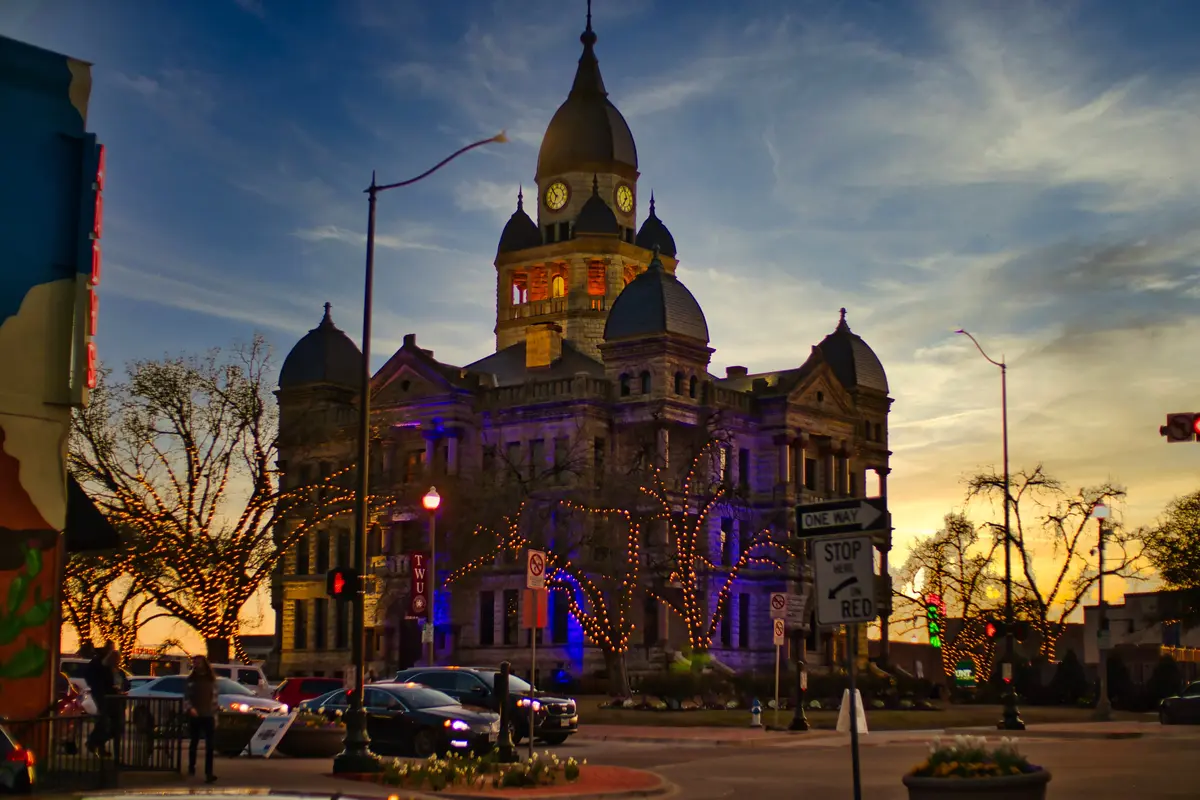
Local Expert Takeaway: Denton makes the most sense for Californians who are bringing equity with them and are done subsidizing the cost of living somewhere that stopped rewarding it. The tax shift is real — no state income tax, a lower sales tax burden, and a home price well below California's statewide typical home value of $773,735 — but the property tax rate at 1.73% is not nothing, and filing your homestead exemption the first year is not optional, it is the most important financial move you make in month one. The city's identity as a university and music town is not marketing; it is what keeps Downtown Denton from feeling like every other North Texas suburb, and it is why people who came for the price end up staying for the place.
Quick Takeaways & FAQs
✅ Denton's typical home price of $350,224 (July 2026) represents a meaningful entry point compared to California's statewide typical home value of $773,735 — California equity often covers a Denton purchase outright.
⚠️ Texas has no state income tax, but Denton's effective property tax rate of 1.73% is real and assessed at market value annually — California's Prop 13 protections do not follow you here.
📍 File your homestead exemption immediately after closing — it is not automatic, it reduces your taxable assessed value substantially under Texas Senate Bill 4 (2025), and missing the deadline means waiting a full year to apply.
How much will I save on income taxes by moving from California to Denton?
Is Denton's property tax really higher than California's, and by how much?
What are home prices like in Denton compared to where I'm moving from in California?
What does the sales tax comparison look like between California and Texas?
What do most California transplants wish they had known before moving to Denton?
Moving to Texas?
Tell us what you need help with and we'll connect you with local resources.
