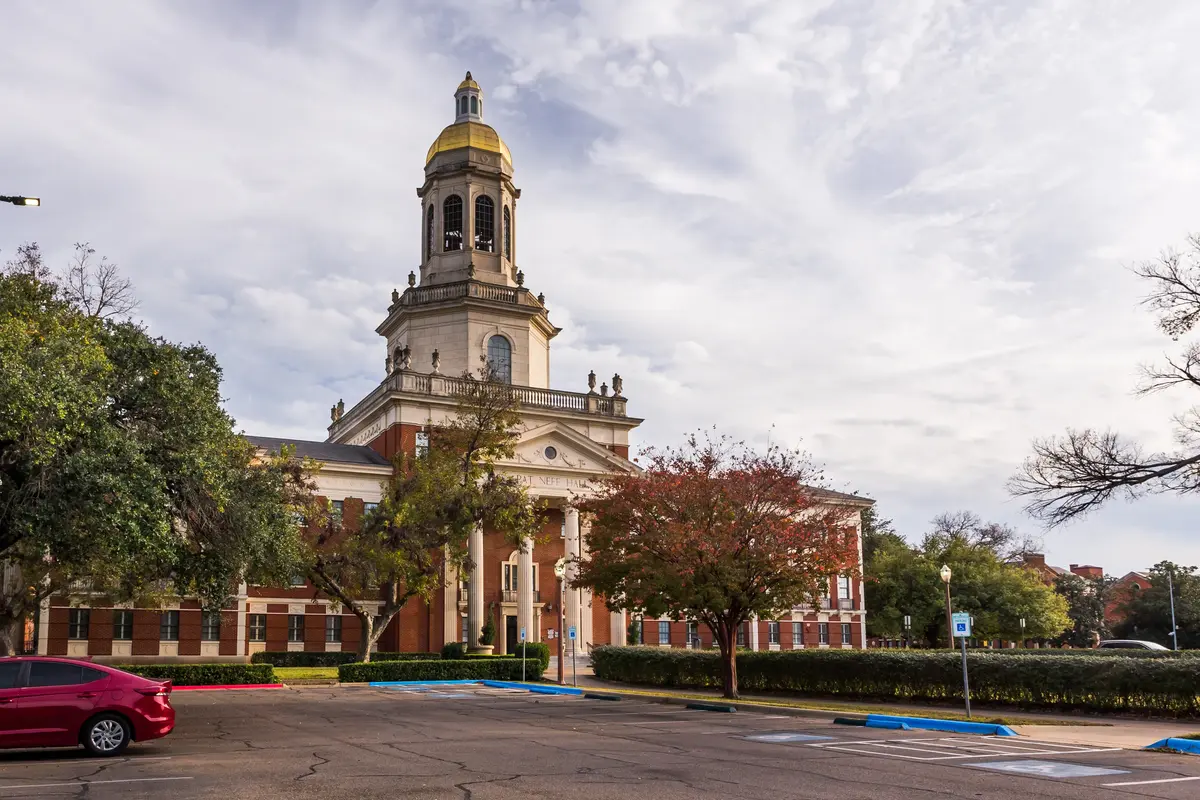
Central Texas · Best Places to Retire · 2026
Best Places to Retire in Central Texas: Every City Ranked
Cities graded on healthcare access, walkability, affordability, climate, and overall quality of life for retirees.
Cities graded on healthcare access, walkability, affordability, climate, and overall quality of life for retirees.
If you're weighing retirement in Central Texas, the choices are wider — and more different from each other — than most buyers expect. This corridor stretches from the Brazos Valley college towns of Bryan and College Station west through the military communities of Killeen, Harker Heights, and Copperas Cove, then north to Waco and south toward Brenham and Navasota. What ties these cities together is proximity to the I-35 spine and a general cost structure well below what you'd pay in Austin or Dallas. What separates them is everything: hospital access, sunny days, whether you'll need a car for every errand, and whether the city has the kind of downtown that makes daily life feel like retirement rather than just a cheaper version of the grind.
The spread across this list is real and worth understanding before you focus on any one place. Cities with established medical infrastructure and revitalized downtowns tend to score well for retirees on multiple dimensions at once; smaller or more car-dependent towns may win on price but ask you to give something up in return. A humid climate is a consistent theme across the eastern half of this region, while the western towns get meaningfully more sunshine. Healthcare access is strong across most of these cities; the real dividers are climate, walkability, and how much daily life you want within a short walk. The sections below go city by city — healthcare, walkability, affordability, climate, and overall livability — so you can see exactly where each place earns its standing and where the trade-offs land.
Each city is scored 1-10 on every dimension below against a fixed statewide scale — never against the other cities in this region — then combined into one weighted Composite score out of 10.
Ranked by overall composite score. Click any city to jump to the full breakdown.
| # | City | Composite | Healthcare | Walkability | Median Price |
|---|---|---|---|---|---|
| 1 | Waco McLennan County | 9.1/10 | 8 | 10 | $197,359 |
| 2 | Bryan Brazos County | 8.0/10 | 10 | 10 | $276,528 |
| 3 | College Station Brazos County | 7.2/10 | 8 | 10 | $349,346 |
| 4 | Killeen Bell County | 7.0/10 | 8 | 6 | $220,448 |
| 5 | Gatesville Coryell County | 6.9/10 | 8 | 6 | $242,969 |
| 6 | Brenham Washington County | 6.7/10 | 8 | 6 | $329,916 |
| 7 | Temple Bell County | 6.5/10 | 8 | 2 | $248,213 |
| 8 | Harker Heights Bell County | 6.2/10 | 10 | 2 | $300,567 |
| 9 | Navasota Grimes County | 5.9/10 | 10 | 4 | $275,180 |
| 10 | Copperas Cove Coryell County | 5.6/10 | 6 | 2 | $227,504 |
#1 Top Overall · McLennan County
Best for retirees who want city amenities at small-town prices.
Waco has quietly become one of the most compelling retirement destinations in Texas, and the price makes the case before anything else: a $197,359 typical home price means retirees on a fixed income can actually own here without stretching. The revitalized downtown anchored by the Magnolia corridor gives the city genuine on-foot energy — independent shops, restaurants, and riverfront green space that most cities twice its size would envy. Multiple hospitals in the city mean emergency care is never a long drive away, and a solidly above-average number of sunny days puts Waco comfortably ahead of the eastern cities in this group for sunshine.
Waco suits retirees who want a real city — with cultural amenities, a recognizable downtown, and strong medical infrastructure — without paying city-level prices. It's a fundamentally different proposition from the smaller towns on this list: more density, more to do, and a sense that the place is still growing into something. Buyers who want quiet rural acreage will look elsewhere, but those who want walkable streets and a weekend agenda will find Waco delivers.

#2 Top Healthcare · Brazos County
Best for retirees who want a 55+ community and university-town energy.
Bryan sits in the Brazos Valley alongside Texas A&M University, and that university presence shapes everything from the city's cultural calendar to its medical infrastructure. Hospital access here is exceptional — a local hospital on-site and additional resources a short drive away give retirees a level of medical confidence that most towns this size can't match. The historic downtown core is genuine, not just a few blocks of wishful signage, and with a $276,528 typical home price, Bryan offers real value compared with the larger metro markets to the south and east.
Bryan has three named 55+ communities — Briarcrest Northwest, Briar Meadows Creek, and The Cloisters — which is a meaningful advantage for retirees who want neighbors at a similar life stage and amenities designed for that. The climate is the honest drawback: humid summers and fewer sunny days than the western cities on this list make the outdoor life less appealing for a good chunk of the year. Buyers coming from drier climates should factor that in.
#3 Top Walkability · Brazos County
Best for retirees who want to live inside a university town's orbit.
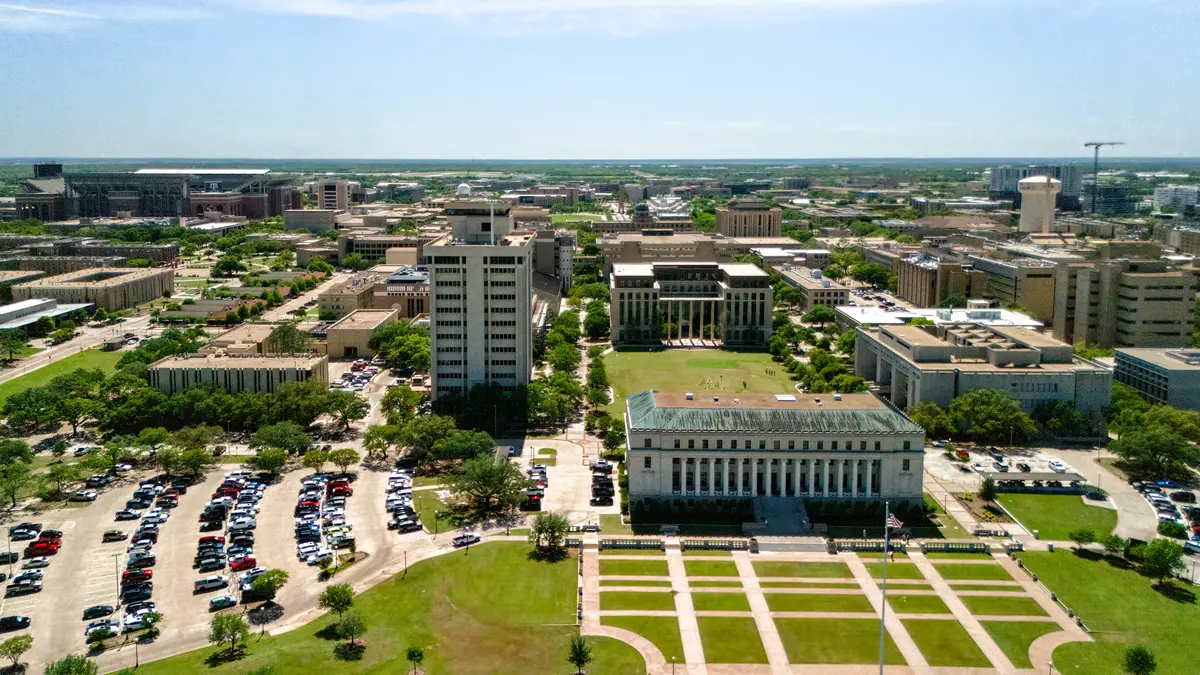
College Station is where Texas A&M anchors everything, and for retirees who want a university-town rhythm — lectures, events, arts programming, and a campus that keeps daily life interesting — that's a genuine asset. The Southside Historic District gives the city a walkable core, and an on-site hospital system means medical access is strong without a long drive. At a $349,346 typical home price, College Station carries a premium that reflects university-town demand, and buyers will feel that in the market.
College Station tends to suit retirees who genuinely engage with university culture and want quality-of-life variety — dining, outdoor spots, and cultural programming — in a mid-size city setting. The climate is the same drawback as neighboring Bryan: hot, humid summers and fewer sunny days than the western towns on this list. If climate ranks high in your priorities, the Bell County cities to the west offer meaningfully better sunshine numbers.
#4 Military Community Hub · Bell County
Best for retirees who prioritize medical access and low purchase prices.
Killeen is one of the larger cities in this group — the 20th-largest incorporated city in Texas — and its size brings services that smaller towns simply don't have. Medical access is solid, with an on-site army medical center complemented by nearby regional hospital options, which matters a great deal for retirees. At a $220,448 typical home price, Killeen is genuinely affordable in a way that leaves budget room for the rest of retirement life.
The honest trade-off in Killeen is walkability: this is a car-dependent city without a recognized downtown core that rewards on-foot living. Retirees who want to walk to coffee, a park, or a restaurant will find that daily life here requires a vehicle for nearly everything. For buyers who prioritize affordability and medical access over urban walkability, Killeen delivers; for those who picture retirement as a walkable downtown life, the city is less suited to that vision.
#5 Top Climate · Coryell County
Best for retirees who want a quiet small-town pace with good sunshine.
Gatesville is a small Coryell County seat that carries the character that comes with that: a quieter pace, a genuine small-town downtown, and a sense of remove from the bustle of the larger metros. Coryell Health is right in town, which is a real advantage — most towns this size require a longer drive for hospital-level care. At a $242,969 typical home price, Gatesville prices follow local wages and local land costs, not outside demand.
Gatesville suits retirees who want low density, a manageable pace, and reasonable proximity to Waco and Killeen without paying city prices. The sunshine here is a genuine plus — Gatesville gets more sun than most of the eastern cities on this list. What you give up is amenity variety: dining options, cultural programming, and retail are limited compared with Bryan, College Station, or Waco, and most trips of any significance will involve a drive.
#6 Top Quality of Life · Washington County
Best for retirees who want historic character and quality-of-life variety.
Brenham punches well above its size on quality of life — for a city of its scale, the mix of historic landmarks, dining, and outdoor character is genuinely impressive. A Baylor Scott & White hospital right in town means retirees don't face long drives for emergency care, which separates Brenham from many small Texas cities. The typical home price of $329,916 reflects the city's appeal: Brenham carries a premium over its immediate rural surroundings, driven by lifestyle demand from buyers who want a slower pace without giving up everything.
Brenham tends to suit retirees drawn to Hill Country-adjacent character, a walkable historic downtown, and a lifestyle that feels intentional rather than default. The climate is the real friction point: fewer sunny days and a Gulf Coast-influenced humidity make this one of the cloudier options in this group. Buyers who place a premium on sunshine will find the western cities — Waco, Gatesville — more satisfying for that reason alone.
#7 Regional Medical Center City · Bell County
Best for retirees who need strong hospital access above all else.
Temple's strongest credential for retirees is its medical infrastructure: Baylor Scott & White's major regional hospital is right in the city, which puts Temple in a different category from smaller towns that require a significant drive for hospital care. At a $248,213 typical home price, Temple is priced accessibly for most buyers coming from larger Texas markets, and the city's position along I-35 keeps broader services within reach. The quality-of-life mix — landmarks, restaurants, outdoor options — is solid for a city of its size.
Temple's honest limitation is walkability: this is a car-dependent city, and retirees who picture a daily routine that unfolds on foot will find Temple a poor match for that vision. The city functions well as a place to own a home and access strong healthcare, but the on-foot urban life that some retirees prioritize simply isn't part of Temple's character. Buyers who rank medical access and affordability above walkability will find Temple's case straightforward.
#8 Top Healthcare · Bell County
Best for retirees connected to the Fort Cavazos community.
Harker Heights sits in the Fort Cavazos orbit, and that proximity shapes both its housing market and its healthcare story: a local hospital right in the city plus the military medical infrastructure nearby gives retirees exceptional access to care. At a $300,567 typical home price, Harker Heights is approaching a price point where buyers will want to feel confident the city's lifestyle justifies it. The city offers a reasonable mix of parks, dining, and outdoor options for daily life.
Harker Heights is a genuinely car-dependent place — daily errands require a vehicle, and there's no walkable downtown core to anchor retirement life on foot. Retirees who want walkability or urban amenities will find the city less satisfying than Waco or Bryan. It tends to suit buyers who are already connected to the Fort Cavazos community, or who prioritize medical access and relative quiet over density and on-foot convenience.
#9 Top Healthcare · Grimes County
Best for retirees who want small-town quiet near a larger metro.
Navasota is a small Grimes County town with a historic downtown and an unexpectedly strong healthcare story: a local hospital on-site and proximity to College Station's medical resources give residents access that most towns this size can't offer. At a $275,180 typical home price, Navasota offers a meaningful price difference from the Bryan-College Station market to the east, which attracts buyers who want that proximity without the university-town premium.
Navasota is genuinely small, and the amenity picture reflects that: dining, cultural programming, and retail options are limited compared with the larger cities on this list, and most substantive errands require a drive. The climate is the other honest drawback — one of the lower sunshine tallies in this group, with the humid, overcast patterns typical of the upper Gulf Coast. Buyers who want a slow-paced small town near a larger metro, with surprisingly good hospital access, will find Navasota worth a serious look.
#10 Affordable Coryell County City · Coryell County
Best for retirees whose top priority is keeping purchase costs low.
Copperas Cove is a mid-size Coryell County city where affordability is the defining argument: at a $227,504 typical home price, it offers real budget room for retirees on a fixed income. The city has no local hospital, but AdventHealth is a short drive away, which is a meaningful distinction — in most non-emergency situations, the proximity works fine, but it's worth factoring in for retirees who prioritize having a hospital in town. Sunshine is decent, though summers run hot.
Copperas Cove is an explicitly car-dependent city with limited walkability and a modest amenity mix — enough for daily basics, but not the kind of variety that makes retirement life feel rich without effort. Retirees who are drawn primarily by price and who already own a vehicle they're comfortable relying on for everything will find Copperas Cove a practical choice. Those who want on-foot access, more dining variety, or a recognized downtown will want to look at Waco or Bryan instead.
Central Texas retirement is rarely about finding the perfect city — it's about deciding which trade-off you can live with: the sunshine and affordability of Waco versus the college-town energy of Bryan-College Station versus the quiet rural pace of Gatesville or Brenham. Healthcare access is strong across this region; the real dividers are climate, walkability, and how much daily life you want within a short walk.
Tell us what you need help with and we'll connect you with local resources.
