Central Texas · Best for Remote Workers · 2026
Best Cities for Remote Workers in Central Texas, Ranked
Cities ranked by a weighted mix of internet access, tax burden, airport convenience, affordability, and everyday quality of life.
Cities ranked by a weighted mix of internet access, tax burden, airport convenience, affordability, and everyday quality of life.
If you have location freedom and you are looking at Central Texas, you are already asking the right questions — but the answers differ more between these cities than most remote workers expect. This corridor stretches from the Brazos Valley college towns in the east to the Fort Hood military communities in the heart of the region, with I-35 cities anchoring the spine and smaller farming and ranching towns filling in the edges. What ties them together is the absence of a state income tax, moderate land costs relative to the major metros, and a lifestyle that runs at a human pace. What separates them is everything else: how far you are from a real airport, how competitive the broadband options are at a given address, how much your property tax bill will weigh on your monthly budget, and how much town you actually have around you on a Saturday afternoon.
The cities that score well for remote workers in this region tend to share two traits — meaningful size, which supports better infrastructure investment and more provider choice, and proximity to a regional airport, which matters more than people expect when a quarterly client meeting or a family visit requires a flight. Smaller towns carry their own appeal, particularly on the tax side, where some of the most rural zip codes carry some of the lightest property tax rates in Texas. But light taxes and low prices are only part of the equation; a town where connectivity requires a plan B is a real constraint for anyone whose livelihood depends on a stable connection. The sections below break down what each city actually delivers for remote workers, city by city.
Each city is scored 1-10 on every dimension below against a fixed statewide scale — never against the other cities in this region — then combined into one weighted Composite score out of 10.
Ranked by overall composite score. Click any city to jump to the full breakdown.
| # | City | Composite | Internet | Property Tax | Median Price |
|---|---|---|---|---|---|
| 1 | Waco McLennan County | 9.0/10 | 9.3 | 5.7 | $197,359 |
| 2 | Killeen Bell County | 8.3/10 | 9.7 | 6.8 | $220,448 |
| 3 | Copperas Cove Coryell County | 8.0/10 | 6.2 | 9.9 | $227,504 |
| 4 | Temple Bell County | 7.7/10 | 8.0 | 6.8 | $248,213 |
| 5 | Bryan Brazos County | 7.7/10 | 7.8 | 6 | $276,528 |
| 6 | College Station Brazos County | 7.6/10 | 8.7 | 5.4 | $349,346 |
| 7 | Harker Heights Bell County | 6.9/10 | 6.0 | 6.8 | $300,567 |
| 8 | Brenham Washington County | 6.9/10 | 4.6 | 9.4 | $329,916 |
| 9 | Gatesville Coryell County | 6.8/10 | 4.3 | 9.9 | $242,969 |
| 10 | Navasota Grimes County | 5.7/10 | 3.2 | 6.6 | $275,180 |
#1 Top Overall · McLennan County
Best for remote workers who want city infrastructure at an accessible price
Waco's size — it is the 24th-largest incorporated city in Texas — translates directly into the kind of broadband competition and provider variety that remote workers depend on. At a typical home price of $197,359, it puts buyers into a market where strong city infrastructure comes without the premium that most Texas metros demand, leaving real room in the budget for a proper home office setup. Waco Regional Airport sits close to the city, which is a meaningful convenience for anyone who still travels regularly for clients or team meetings. The property tax rate runs slightly above the mid-range for Texas, so it is worth pricing that carrying cost into your monthly budget before you make an offer.
For remote workers who want genuine city infrastructure — real provider choice, a walkable downtown with independent dining and coffee, cultural amenities, and an easy airport run — without paying Austin or Dallas prices, Waco is the most complete package in this region. It suits buyers who want urban texture at a price point that leaves room in the budget for a proper home office setup.

#2 Top Internet · Bell County
Best for frequent flyers who prioritize airport access and affordability
Killeen is the 20th-largest incorporated city in Texas, and that population base supports the kind of broadband infrastructure that remote workers need as a baseline. The Killeen-Fort Hood Regional Airport sits very close to the city, giving frequent flyers a rare convenience at this price point. At a typical home price of $220,448, Killeen offers a larger city's connectivity at a price well below what most Texas metros demand. The property tax rate is moderate for Texas — not the lowest you will find in the state, but reasonable enough that it should not reshape the math on a purchase decision.
Killeen suits remote workers who prioritize airport proximity and connectivity above lifestyle variety. The military influence shapes the city's character in ways that some buyers find familiar and others find less compelling, and the dining and cultural scene is more practical than destination-worthy. Buyers who want a fuller amenity set with similar airport access may want to look at Temple, which sits nearby and offers more everyday variety.
#3 Top Property Tax · Coryell County
Best for buyers focused on keeping monthly ownership costs low
Copperas Cove is the 96th-largest incorporated city in Texas, a mid-size city where broadband options are reasonable but not as competitive as you would find in the larger cities on this list — it is worth confirming what providers reach a specific address before you commit. The property tax rate here is one of the lightest in the region, which is a real and durable financial advantage for homeowners: the carrying cost is meaningfully lower, and that difference compounds over the years you own. Killeen-Fort Hood Regional Airport is a short drive away, keeping air travel practical. The typical home price of $227,504 keeps the entry point accessible.
Copperas Cove suits remote workers whose primary concern is keeping the monthly cost of ownership low — the combination of a light tax rate and an accessible home price is genuinely attractive. The trade-off is a more limited amenity set; this is a place to live quietly and work effectively, not a place with a deep dining or cultural scene. Buyers who want both the tax advantage and more town around them should weigh Copperas Cove against nearby Killeen.
#4 I-35 Corridor City · Bell County
Best for remote workers wanting a livable mid-size city with everyday variety
Temple ranks among the 45th-largest incorporated cities in Texas, which puts it in a range where broadband infrastructure is typically solid and provider options are broader than in a small town, though confirming what serves a specific address is always the right step. The city sits along I-35, and while the regional airport is a drive rather than a quick errand, it remains manageable for most travel patterns. The property tax rate is moderate, on the same tier as neighboring Bell County cities, so it is not a burden but it is also not the tax relief story you find in some of the smaller towns. The typical home price of $248,213 keeps Temple well below the major metro markets.
Temple's quality-of-life score reflects a genuine variety of landmarks, dining, and outdoor options for a city its size — it is the kind of place where a remote worker can put together a real daily routine without driving an hour for basics. It suits buyers who want solid infrastructure, a livable downtown, and a mid-size city feel, and it is a strong alternative for anyone drawn to the Killeen area but wanting more lifestyle depth.
#5 Top Airport Access · Brazos County
Best for buyers who want college-town energy with strong airport access
Bryan shares the Brazos Valley footprint with its neighbor, and at the 46th-largest incorporated city in Texas, it carries the infrastructure investment of a real mid-size city. Easterwood Airport sits just miles from the city center — exceptional proximity for a city of Bryan's size and a meaningful advantage for any remote worker who flies regularly. The property tax rate is middle-of-the-road for Texas; no state income tax still helps the overall picture. The typical home price of $276,528 is noticeably below what buyers face in the larger metro markets, and 55+ community options include Briarcrest Northwest, Briar Meadows Creek, and The Cloisters for buyers in that life stage.
Bryan suits remote workers who want genuine college-town energy — live music, independent dining, a real arts scene — at a price point below what College Station demands. The two cities share infrastructure and airport access, but Bryan's character is quieter and more historically rooted, less driven by the university calendar. Buyers who want the Brazos Valley lifestyle without paying a premium for the university address should look hard at Bryan first.
#6 Top Airport Access · Brazos County
Best for frequent travelers who want the richest everyday lifestyle
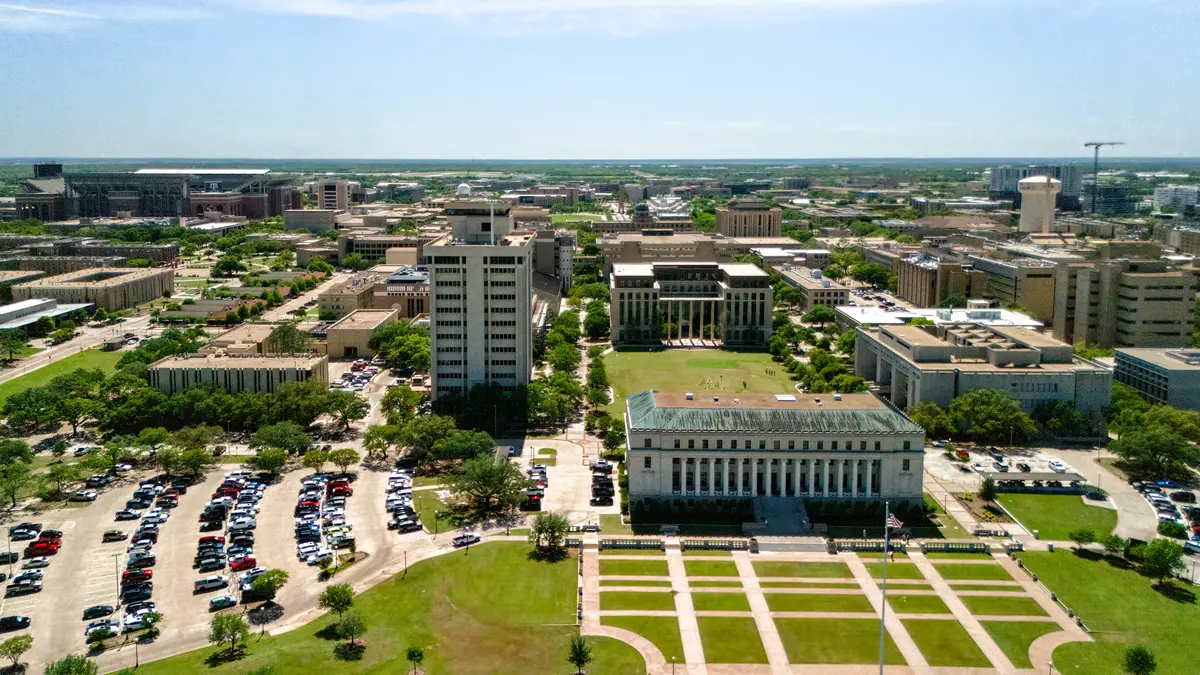
College Station's university scale — it is the 31st-largest incorporated city in Texas — drives real investment in broadband infrastructure, and Easterwood Airport sits exceptionally close to the city, making it one of the most convenient options in this region for frequent flyers. The trade-off is on the cost side: a typical home price of $349,346 puts it above the mid-range for this region, and the property tax rate runs on the heavier side for Texas, adding real carrying cost that is worth pricing into a monthly budget carefully. The quality of life is genuinely strong — walkable areas, dining variety, cultural programming, and outdoor access that a city this size supports well.
College Station suits remote workers who travel often and want the richest everyday lifestyle this region offers, and who can absorb a higher entry price and a heavier tax line in exchange for those conveniences. It is a harder fit for buyers whose primary goal is keeping monthly costs low. Bryan next door delivers much of the same airport access and regional infrastructure at a meaningfully different price.
#7 Residential Bell County Suburb · Bell County
Best for buyers seeking a quieter suburban feel near Killeen's airport
Harker Heights is a smaller Bell County suburb — the 108th-largest incorporated city in Texas — where the population sits at the lower edge of the mid-size range for connectivity purposes; broadband options exist but are less varied than in the larger cities nearby, so verifying what reaches a specific address matters more here than in Killeen or Temple. Killeen-Fort Hood Regional Airport is a short drive away, which is a genuine convenience for a city this size. The property tax rate is moderate, consistent with the rest of Bell County. The typical home price of $300,567 is approaching Austin-area territory, which is a notable constraint given the more limited amenity set.
Harker Heights suits buyers who want a quieter, more residential character than Killeen proper while staying close to its airport and services. The trade-off is paying more for less town — the dining and cultural variety is modest relative to the price. Buyers who can stretch further into Temple or scale back into Copperas Cove will likely find a better fit on either end of the spectrum.
#8 Top Quality of Life · Washington County
Best for remote workers who have solved connectivity and want small-town depth
Brenham is the 159th-largest incorporated city in Texas, a small city where the internet infrastructure picture is the most significant variable for remote workers — at this population size, provider options are limited compared to the larger cities on this list, and fiber availability is not guaranteed at every address. Confirming connectivity before you buy is not optional here; it is the central due-diligence step. The upside is real: Brenham carries one of the lightest property tax rates in the region, a genuine financial advantage that keeps monthly carrying costs well below what most Texas homeowners face. The typical home price of $329,916 reflects the city's appeal as a weekend and relocation destination, elevated beyond typical small-town Texas norms.
Brenham suits remote workers who are willing to do the connectivity homework upfront in exchange for a rich small-town quality of life — the variety of dining, landmarks, and outdoor spaces here is impressive for a city this size. It is a better fit for buyers who already have a confirmed broadband solution than for those still figuring that out. Buyers who want the small-town character without the connectivity uncertainty should look at Gatesville as a comparison point.
#9 Top Property Tax · Coryell County
Best for buyers with a confirmed connectivity solution and low-cost priorities
Gatesville is the 183rd-largest incorporated city in Texas, a small Coryell County seat where the honest picture for remote workers starts with connectivity: at this scale, internet infrastructure is modest, and options that meet the demands of full-time remote work are not guaranteed at every address. That is the central question to resolve before buying here. The property tax rate is among the lightest in the region — effectively at the low end of what Texas towns carry — which is a durable advantage for anyone who can make the connectivity equation work. The typical home price of $242,969 is well below most of the region.
Gatesville suits buyers who are moving from a situation where they already control their connectivity — a Starlink subscriber, someone whose employer covers a dedicated business connection, or a worker whose workflow tolerates occasional limitations — and who want a genuinely affordable, quiet small-town base with low carrying costs. It is not the right fit for remote workers who need to confirm reliable high-speed access without a plan B.
#10 Small Grimes County Town · Grimes County
Best for remote workers who want rural pace and have verified internet options
Navasota is the 260th-largest incorporated city in Texas, a small Grimes County town where remote work is possible but the connectivity picture deserves serious attention before you buy. At this population scale, provider competition is limited and rural-tier speeds are the realistic baseline at many addresses; this is the single most important variable to verify with a specific property before making an offer. The property tax rate is moderate for Texas — not the relief of the lightest-rate towns but not a heavy burden either. Easterwood Airport is a reasonable drive away via SH-6, which is a genuine advantage relative to other towns of this size. The typical home price of $275,180 is competitive given the Brazos Valley location.
Navasota suits remote workers who specifically want a small, slow-paced Texas town and have already confirmed that connectivity works at a given address — perhaps through an existing rural provider or a fixed wireless or satellite solution. Buyers who want the rural character without having to solve the internet problem themselves will find the larger nearby cities a more straightforward choice.
In Central Texas, the remote-worker sweet spot sits where city size, airport proximity, and home prices overlap most favorably. The larger cities give you infrastructure and convenience; the smaller ones offer tax relief and quiet — confirm the actual provider options at any specific address before you buy.
Tell us what you need help with and we'll connect you with local resources.
