
Maybe you've been priced out of a coastal market and someone in a Dallas office told you Arlington is the sweet spot in DFW. Maybe your company is relocating you to the Metroplex and you're trying to figure out whether Arlington or Fort Worth or Grand Prairie makes more financial sense. The honest answer: Arlington sits a little below the national average on overall costs — not dramatically, not in a way that sounds like marketing copy, but measurably, in the categories that matter most to a household budget. Housing is the primary reason, and the absence of a state income tax is the structural advantage that makes the full picture add up.
What people don't expect is where the budget gets squeezed back. Texas summers are punishing, and Arlington's utility bills reflect that — electricity costs run notably above the national average, and air conditioning is not optional from May through September. Most residents own a car, and the transportation math only works because gas prices and overall driving costs run below the national norm. The city's position between Dallas and Fort Worth keeps most commutes manageable — but you are buying a car budget along with your housing budget.
The median household income in Arlington is $75,171, which tells part of the story. The typical home price, at $312,255 as of July 2026 (Zillow Home Value Index), is within reach for households earning near or above that figure, though the income needed to comfortably carry that purchase sits somewhat higher — a gap worth understanding before you make an offer. Renters have more flexibility at the city-wide typical rent, and for buyers who plan carefully, Arlington is genuinely more affordable than most of its DFW peers on the ownership side.
Whether you're deciding between renting and buying, figuring out how Texas's tax structure affects your take-home pay, or comparing Arlington against Fort Worth and Dallas, the sections below break down every major line item — housing, utilities, groceries, transportation, and taxes — so you can build a real budget, not a guess.
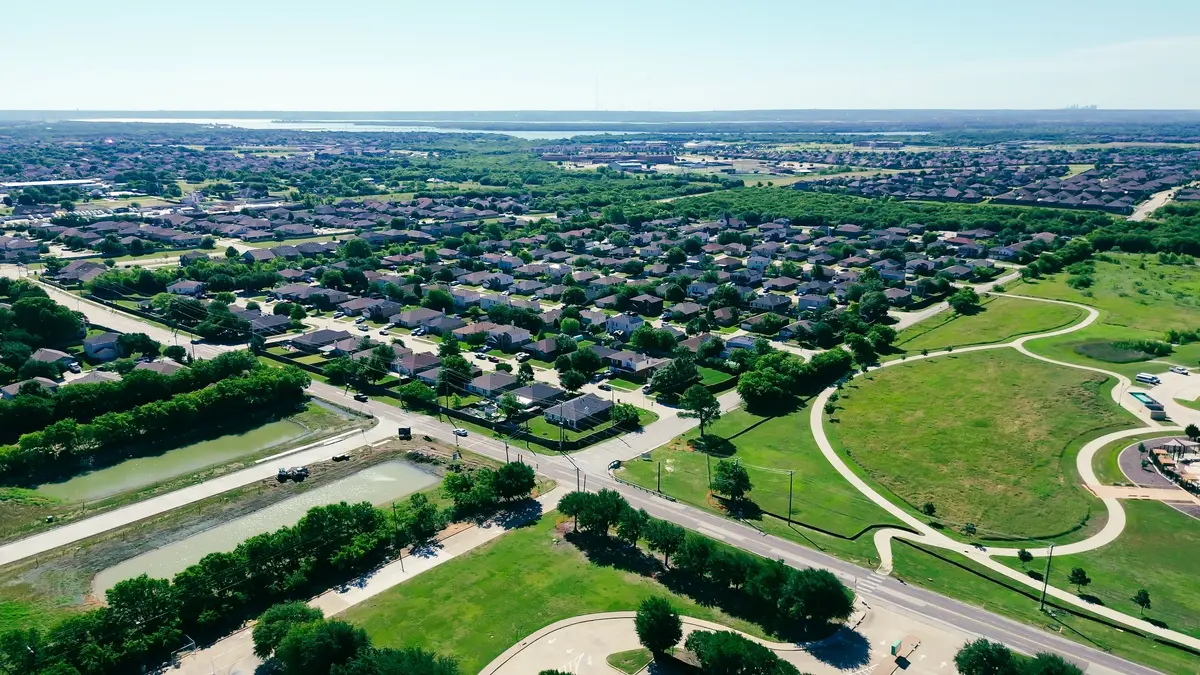
What It Really Costs to Live in Arlington
Arlington's overall cost of living lands modestly below the national average — enough to matter over a year, not enough to feel like a different financial universe from the rest of the country. Housing does the heavy lifting, running noticeably below the national average, which is the single biggest driver of Arlington's overall position.
Groceries come in slightly below the national norm, and transportation costs run meaningfully below — a combination of manageable commute distances and lower regional gas prices. The offset is utilities: electricity and cooling costs run above the national average, a direct consequence of Texas's climate and energy-intensive summers. That's the pattern worth understanding before you set a monthly budget: housing and transportation save you money; utilities spend some of it back.
Compared to Fort Worth, Dallas, and Grand Prairie, Arlington lands at roughly the same price level — the differences between these cities are real but not dramatic, and the choice between them usually comes down to commute direction, neighborhood preference, and school district, not a clear cost winner. For a deeper look at how the neighborhoods within Arlington break down, the best neighborhoods guide covers the geographic and price-tier distinctions.
Housing: Rent vs Buy in Arlington
The typical home price in Arlington was $312,255 as of July 2026 (Zillow Home Value Index). That figure puts ownership within reach of a dual-income household earning near the city median, though the income needed to comfortably carry that purchase is higher than the median household income by roughly $18,000 — a gap that matters when you're stress-testing a budget. Entry-level homes exist in the low-to-mid $200,000s, particularly in the eastern and older parts of the city, though the trade-offs in those areas — age of the home, distance from newer infrastructure, school assignment — are worth understanding before you anchor to the lowest price point.
The effective property tax rate in Arlington is approximately 1.47%. That's a meaningful number in Texas, where the absence of a state income tax is partially offset by property taxes that run higher than the national norm. The city's own tax rate, for the city portion specifically, is comparatively low — lower than Mansfield and several other nearby cities — but the combined rate (city, county, school district, and any special districts) is what hits your escrow. Factor it as a real carrying cost, not a footnote.
Renting at the city-wide typical of $1,525 per month (Zillow ZORI, July 2026) gives households more short-term flexibility and sidesteps the property tax burden entirely. Renting makes the most sense if you're arriving without certainty about which part of Arlington fits your daily life — the city's 99 square miles span genuinely different neighborhoods, and buying in the wrong one is a harder mistake to undo than a lease. For buyers who know where they want to be and plan to stay at least five years, the ownership math generally works in their favor given the price level and the long-term equity trajectory in DFW.
North Arlington runs above the city median on the ownership side. Southwest Arlington and West Arlington neighborhoods sit roughly at it. East Arlington represents the entry point into the market for buyers with tighter budgets. The neighborhoods guide covers the character and trade-offs of each area in full.

Everyday Costs Beyond Housing in Arlington
| Category | Typical Monthly Cost | Notes |
|---|---|---|
| Housing (typical rent) | $1,525/mo | City-wide typical rent. Buying? Use the calculator above for a mortgage estimate. |
| Utilities | $210–$310/mo | Electricity, gas, water, sewer, trash |
| Groceries | $520–$720/mo | Food at home, household of 2–3 |
| Transportation & Gas | $200–$350/mo | Fuel, and transit where it is a real option |
| Phone & Internet | $110–$180/mo | Mobile plan plus home broadband |
| Misc / Discretionary | $250–$480/mo | Dining out, entertainment, subscriptions |
Non-housing figures are estimates for a household of two to three, not a sourced index; housing is the city-wide typical rent (Zillow ZORI, July 2026). Refreshed with the rest of the city data.
The single biggest surprise for people moving here from a milder climate is the electricity bill. Arlington sits inside Texas's deregulated electricity market, which means you can shop among competing retail electric providers for your supply rate — the local utility handles the poles and wires regardless of who you choose for supply. Electricity rates in North Texas are competitive by deregulated-market standards, but summer consumption is the real driver: running air conditioning hard for five to six months means a household paying a reasonable rate on a massive monthly load still ends up with a significant annual utility spend. Shopping your electric provider rate carefully is one of the few genuine ways to manage this cost.
Groceries are a relative bright spot — prices run slightly below the national average, and Texas exempts most grocery purchases from the 8.25% combined sales tax rate, which compounds the savings at the register. Transportation costs run meaningfully below the national average for drivers, and most residents drive: Arlington operates a city-wide shared on-demand rideshare service in place of a traditional fixed-route bus network, covering the city's 99 square miles and connecting riders to regional commuter rail options for trips into Dallas or Fort Worth. It's a real service, but a car is the practical baseline for most households.
Looking to buy in Arlington? Estimate your payment.
Enter your numbers to see an estimated monthly mortgage payment.
Estimate only. Excludes HOA fees and mortgage insurance. The interest rate above is a starting point, not a quoted rate — replace it with your own to see real numbers. Insurance is a flat placeholder, not a Arlington quote.
Arlington vs Nearby Cities: Cost Comparison
| City | Typical Home Price | Typical Rent | Cost vs Arlington |
|---|---|---|---|
| Arlington (this city) | $312,255 | $1,525/mo | — |
| Fort Worth | $298,353 | $1,625/mo | 4% lower |
| Dallas | $309,590 | $1,605/mo | About the same |
| Grand Prairie | $317,295 | $1,619/mo | About the same |
Source — home prices: Zillow ZHVI, July 2026; rent: Zillow ZORI, July 2026. Nearby-city figures are the same series, refreshed together.
Arlington's overall cost picture lands close to Fort Worth, Dallas, and Grand Prairie — the differences are real but narrower than most newcomers expect, so the choice between them tends to come down to commute direction and neighborhood fit rather than a clear budget winner.
Taxes & the Bottom Line for Arlington
Texas levies no personal state income tax — none at the state level, and no Texas city, including Arlington, may impose a local income tax on wages. Residents pay federal income tax, FICA, property taxes, and sales taxes. That's the structural tax advantage that draws people from high-income-tax states, and it's real: a household earning $100,000 that relocates from California or New York typically nets several thousand dollars more per year simply by crossing state lines, even after accounting for higher property taxes.
The sales tax rate in Arlington is 8.25% — the 6.25% Texas state rate plus a 2% local add-on. That applies to most retail purchases, dining out, and services. The grocery exemption is meaningful: most food for home preparation is excluded from both the state and local rate, which softens the impact for households spending heavily at the supermarket.
The effective property tax rate of approximately 1.47% is the number to watch. It's the line item that most often surprises buyers who move from states where property taxes are low and income taxes are high. The city's own portion of that combined rate is comparatively modest — lower than Mansfield and several neighboring cities — but the school district, county, and any applicable special district rates layer on top, and the total is what matters. On a home at the price level described in the housing section above, that rate represents a real annual carrying cost that belongs in any honest budget.
The bottom line: Arlington's tax and cost structure suits households that earn a steady income and plan to own. The income-tax advantage is immediate and durable. The property-tax load is real but predictable. The utility overhead rewards energy-conscious households that shop their electric rate. Buyers stretching to the top of their qualification range may find the combined carrying costs — property tax, utilities, car expenses — tighter than the headline home price suggests. Renters and moderate-income households will find Arlington genuinely competitive with the rest of the DFW market. For anyone making the move from a high-tax state, the full-picture savings are substantial enough to show up clearly in a year-end financial review. For a detailed look at what retirement on a fixed income looks like in Arlington, see the retiring in Arlington guide.

Local Expert Takeaway: Arlington's cost of living is real, not theoretical — the home prices are grounded, the grocery savings are genuine, and the income-tax advantage shows up in every paycheck. What catches people off guard is the utility bill: a Texas summer will test any budget, and shopping your electric provider rate through the deregulated market is one of the smartest first moves you can make after signing a lease or closing on a home. Budget the 1.47% effective property tax rate as a real line item from day one, not an afterthought. Do that, and Arlington's overall cost picture holds up well against the rest of DFW.
Quick Takeaways & FAQs
✅ Arlington's typical home price of $312,255 (July 2026) sits well below most major metros, and the absence of a Texas state income tax puts more of every paycheck back in your pocket.
⚠️ Utility costs run above the national average — Texas summers mean months of heavy air conditioning use, and electricity bills are the budget line most newcomers underestimate.
📍 Arlington's deregulated electricity market lets residents shop among competing retail electric providers for supply rates — comparing plans before your first summer is one of the most practical moves a new resident can make.
Is Arlington, TX cheaper than Dallas or Fort Worth?
What is the typical home price in Arlington, TX?
Does Texas's lack of a state income tax really make a difference in Arlington?
How much are utilities in Arlington, TX?
What is Arlington's combined sales tax rate, and does it apply to groceries?
Moving to Texas?
Tell us what you need help with and we'll connect you with local resources.
