
Most people who retire to La Pine didn't plan to end up here. They came through on a camping trip, or followed a son or daughter who'd relocated to Central Oregon, or got priced out of Bend and started looking south on US-97. Then something clicked. The ponderosa pines, the quiet, the sky. A community small enough — 2,566 people — that you learn your neighbors' names. A price point that actually makes the math work. The typical home here was $406,496 as of July 2026, a figure that gets people's attention when they've been watching Bend listings.
La Pine incorporated as a city only in 2006, which means it lacks some of the civic infrastructure that older Oregon towns accumulated over decades. There's no regional hospital in town, no walkable downtown lined with shops, no commuter rail. What it has instead is elbow room, a genuinely low cost of living by Oregon standards, and a growing cluster of healthcare services that have changed the calculus for retirement here significantly in the last few years. The outdoor access — La Pine State Park, Newberry National Volcanic Monument, Wickiup Reservoir — is world-class and available year-round to anyone who can handle a Central Oregon winter.
Oregon's tax structure helps retirees more than most people realize before they move: no state sales tax and no tax on Social Security benefits are two advantages that show up immediately in a fixed-income budget. Property taxes here carry an effective rate of approximately 0.62%, among the lowest in the state. The trade-off is car dependency — every errand, every doctor's appointment, every grocery run requires a vehicle. That's not a dealbreaker for most retirees, but it is something to plan around honestly before you sign anything.
This guide covers what retirement actually looks like in La Pine: healthcare access and honest distance-to-care reality, the retiree budget picture, walkability and community life, downsizing options, and how La Pine stacks up against the nearby towns that retirees most often compare it to.

Why Retirees Are Choosing La Pine
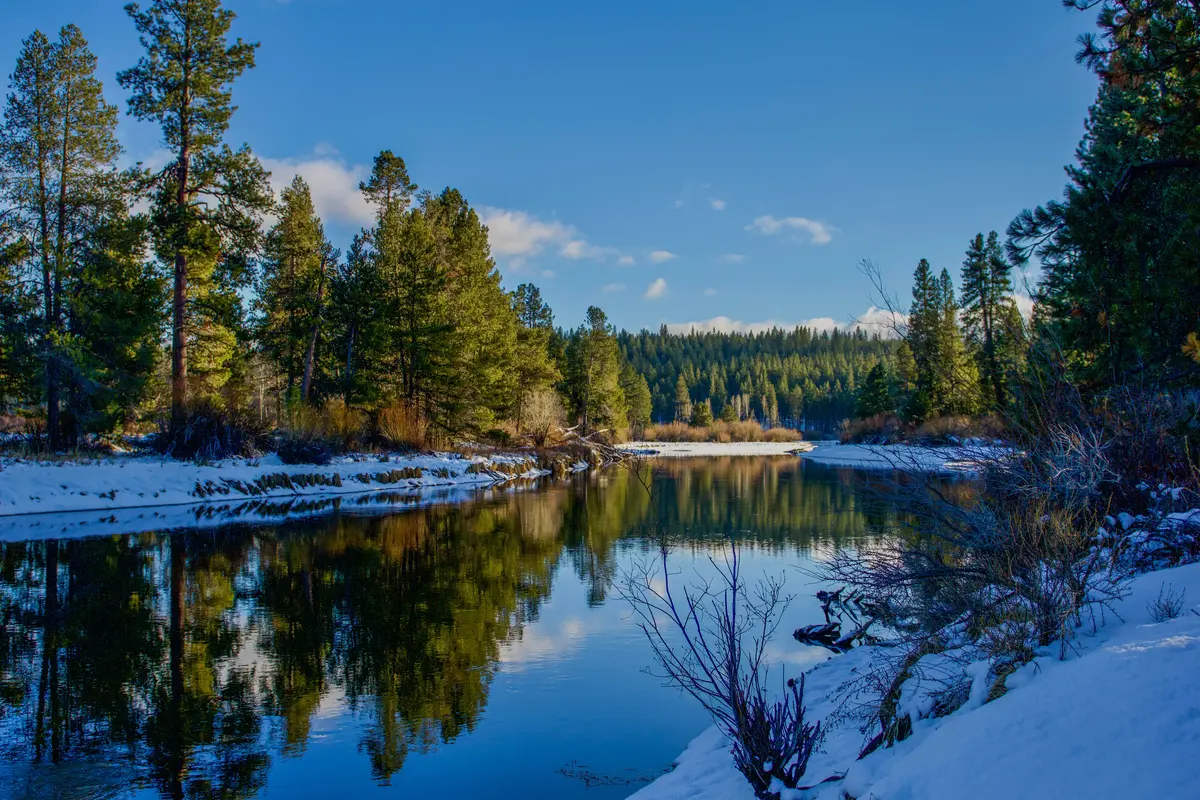
La Pine fits a specific kind of retiree well: someone who wants to own rather than rent, prefers quiet over convenience, and is drawn to outdoor living over urban amenities. The city has a majority of owner-occupied homes and a sparse suburban feel. The social fabric here runs through the outdoors, the senior center, and the kind of small-town familiarity that larger cities stopped offering decades ago.
The financial case is real and not inflated. The typical home was $406,496 as of July 2026 — well below what comparable acreage or ponderosa-pine surroundings would cost closer to Bend. Cost of living runs noticeably below the Oregon statewide average and substantially below Bend's. For a retiree selling a home in a more expensive market and looking to bank the equity difference, La Pine delivers that without requiring a move to a rural area with no services at all.
Who should look elsewhere? Retirees who depend on frequent specialist care, who can no longer drive safely, or who need a walkable daily routine will find La Pine's rural geography genuinely limiting. The nearest full hospital is about 30 miles away. And while healthcare infrastructure has improved meaningfully, advanced care still means a drive to Bend. If that trade-off doesn't fit your health situation or mobility, the comparison table in the final section of this guide points toward towns with deeper on-the-ground options.
Healthcare & Medical Access in La Pine
The healthcare picture in La Pine has changed more in the last few years than almost anything else about the city. Two distinct clinical anchors now serve residents without requiring a drive.
La Pine Community Health Center
La Pine Community Health Center is a Federally Qualified Health Center (FQHC), which means it operates on a sliding-fee scale — patients receive care regardless of insurance status or income. For retirees on Medicare, Medicaid, or limited coverage, that structure matters. The center offers primary care, pediatrics, dental care, behavioral health, and rotating specialist visits covering podiatry, cardiology, orthopedics, dermatology, and psychiatry. A new three-story, 27,000-square-foot Wellness Center was slated to open in 2026, adding diagnostic imaging including CT scans, mammograms, and ultrasounds — services that previously meant a trip to Bend.
St. Charles La Pine Family Care Clinic
St. Charles Health System also operates a family care clinic in La Pine, separate from its Bend hospital campus. The clinic holds a 5-Star designation from the Oregon Health Authority as a Patient-Centered Primary Care Home (PCPCH) — a recognition for coordinated, high-quality primary care. For routine management of chronic conditions, medication oversight, and coordinated referrals, this clinic gives La Pine residents a second credentialed option in town.
The Honest Distance Reality
For emergencies or hospital-level care, St. Charles Bend is the nearest hospital at about 30 miles — the only facility you should plan around as your true medical safety net. That drive, on US-97, is manageable in good conditions but can be complicated in winter weather. Retirees with cardiac conditions, recent surgical histories, or any situation that might require rapid hospital access should weigh this honestly. The in-town clinic options are genuinely strong for primary and routine care; they do not change the fact that a hospital is half an hour away on a good day.
The Retiree Budget in La Pine
Oregon's tax treatment of retirement income is more favorable than the state's income tax rates suggest at first glance. Social Security and Railroad Retirement benefits are not taxed at the state level — no income limit, no phase-out. That's a meaningful baseline for retirees whose income is primarily Social Security.
The picture gets more complicated with other income sources. Pensions, traditional IRA withdrawals, and 401(k) distributions are taxed at Oregon's regular graduated rates, which reach 9.9% at higher income levels. Retirees drawing on tax-deferred accounts should factor that in when projecting their net income. Oregon also has no state sales tax — a benefit that shows up consistently in the day-to-day budget and is easy to underestimate if you're moving from California or another sales-tax state.
Property Taxes
La Pine's effective property tax rate is approximately 0.62%, which places it among the lower rates in Oregon. For retirees 62 or older with household income at or below $60,000 (the 2025 threshold), Oregon offers a property tax deferral program: the state pays the taxes and records a lien at 6% simple interest, repaid when the home sells. That program can meaningfully reduce monthly cash-flow pressure for eligible homeowners.
Daily Cost of Living
La Pine's overall cost of living runs noticeably below the Oregon statewide average and substantially below Bend's. Groceries and services cost less, and housing is dramatically cheaper than in most of the Willamette Valley or the Oregon coast. The budget friction to plan for is transportation: a personal vehicle is effectively required for nearly every errand, and La Pine's geographic isolation means limited retail competition. Fuel, vehicle maintenance, and the occasional drive to Bend for a specialist visit or a larger shopping run add up differently than they would in a city where you can walk to the pharmacy. See the full cost breakdown on the La Pine cost of living page.
Looking to buy in La Pine? Estimate your payment.
Enter your numbers to see an estimated monthly mortgage payment.
Estimate only. Excludes HOA fees and mortgage insurance. The interest rate above is a starting point, not a quoted rate — replace it with your own to see real numbers. Insurance is a flat placeholder, not a La Pine quote.
Walkability, Community & Staying Active in La Pine
La Pine is not walkable in the errand-running sense of the word. Nearly every daily task — groceries, pharmacy, hardware, coffee — means getting in the car. The land-use pattern is spread out, sidewalks are limited, and the commercial core doesn't concentrate the way it does in older Oregon towns. Retirees who are accustomed to walking to a café in the morning or strolling to a farmers market should set that expectation aside before moving here.
What La Pine offers instead is outdoor access that most walkable cities can't match. La Pine State Park runs more than a dozen miles of hiking, biking, and equestrian trails along the Deschutes River. Newberry National Volcanic Monument covers more than 50,000 acres of caldera lakes, lava flows, and the Paulina Falls Trail. Wickiup Reservoir draws wildlife-watchers — bald eagles, sandhill cranes, great blue herons — and offers a genuinely peaceful way to spend a morning. For retirees whose activity looks like a long walk on a trail rather than a walk to a coffee shop, the outdoor environment is exceptional.
The Social Core
The La Pine Senior Activity Center is the primary organized social hub for older adults in the community. It offers fitness programs, events, and regular activities — the kind of place where you'll actually meet people your age who have made the same move you're considering. For a town of 2,566, having a dedicated senior center with real programming matters for the kind of everyday social connection that determines whether retirement in a small town feels rich or isolating.
The weekly Market Day La Pine runs through the warm months and functions as an informal gathering place. Central Perk and Rosland Coffee House serve as low-key spots where regulars become regulars quickly in a town this size. The community is small enough that showing up consistently to the same places means you stop being a stranger within a season.
La Pine gets 157 sunny days a year — fewer than the region's marketing suggests, and something to factor in if winters matter to you. Snow is real, cold is real, and the grey stretches between sunny spells are longer than they are in the Willamette Valley. Retirees who thrive in mountain-climate winters do well here; those who found Portland winters hard tend to find La Pine winters harder.
Right-Sizing: Downsizing in La Pine
No 55+ communities were found in La Pine. That's the honest starting point for any retiree hoping to land in an age-restricted community with shared amenities and a built-in social structure — La Pine doesn't have one.
What the housing stock does offer is a reasonable supply of single-level homes, which is often the more practical concern for retirees downsizing from a two-story family house. The predominant housing type in La Pine is single-family on modest lots, mostly one-story construction built for the rural-residential market that has defined the area for decades. Ranch-style homes and simple one-level layouts are common enough that a buyer specifically looking for step-free living isn't forced into a limited corner of the market.
What to Expect in the Search
The typical home price of $406,496 as of July 2026 covers the full city-wide market — from older construction to newer builds in subdivisions like Huntington Meadows and Newberry Estates. Buyers looking for newer single-level construction with updated finishes should plan on the upper portion of that range or above. Areas like Central La Pine and Ponderosa Pines offer older single-family stock on established lots — a different character from the newer subdivisions, with the trade-offs in condition and finish that older inventory typically carries.
Condos and patio homes are not a meaningful part of the La Pine inventory. This is not a market with a deep supply of low-maintenance attached housing. Buyers coming from suburban Portland or the Bay Area who expect to find a lock-and-leave condo with a homeowners' association should recalibrate — that product largely doesn't exist here. The right mental model is a modest single-level house on a manageable lot, which suits many downsizers well even if it's different from the lifestyle they imagined.
For retirees whose downsizing plan depends on selling a high-equity home in a more expensive market, La Pine's price point means the equity gap can fund a meaningful cushion. That's a practical advantage worth naming: the math of selling in coastal California or the Portland metro and buying in La Pine often produces more financial breathing room than retiring in place would have.
La Pine vs Nearby Retirement Destinations
| City | Cost vs La Pine | Primary Hospital | Walkability | Senior Living Depth | Overall Retirement Fit |
|---|---|---|---|---|---|
| La Pine | Anchor | St. Charles Bend (~30 mi) | Car-dependent; strong trail access | Senior Activity Center; no 55+ communities | Strong for outdoors-focused, car-mobile retirees |
| Bend | Pricier | St. Charles Bend (on-site) | Walkable core; car still useful | Multiple 55+ communities; full senior services | Best overall depth; higher cost of entry |
| Sunriver | Noticeably higher | St. Charles Bend (~20 mi) | Paved path network; car needed for errands | HOA community feel; limited senior programming | Resort lifestyle; premium pricing |
| Gilchrist | Noticeably lower | St. Charles Bend (~35 mi) | Very limited; rural crossroads | Minimal senior infrastructure | Extremely affordable; very limited services |
| Crescent | Noticeably lower | St. Charles Bend (~40 mi) | Car-dependent; small commercial strip | Minimal senior infrastructure | Quiet and affordable; farther from services |
| Sisters | Pricier | St. Charles Bend (~20 mi) | Walkable small-town main street | Growing senior presence; limited 55+ inventory | Walkable charm; noticeably higher prices than La Pine |
Bend wins on nearly every dimension except cost — deeper healthcare, more senior-living options, a walkable core, and the St. Charles hospital campus within the city. If budget allows, it's the stronger retirement platform. Sunriver offers resort-quality amenities and path-network access but comes with a premium price tag and limited services of its own.
Gilchrist and Crescent beat La Pine on price but trade away almost everything else — neither has meaningful senior infrastructure, both sit farther from St. Charles Bend, and the service base is thin enough that driving everywhere becomes a genuine hardship rather than a manageable routine. Sisters is worth a serious look for retirees who put walkability and a functioning main-street scene above all else. For the retiree who wants the quiet ponderosa-pine setting, a lower entry price, and improving healthcare access without going full-rural, La Pine is the clearest answer in Central Oregon's southern corridor.

Local Expert Takeaway: La Pine has quietly become a more realistic retirement option than it was five years ago — the combination of La Pine Community Health Center's expanding services, the St. Charles clinic's PCPCH-rated primary care, and a home price well below the broader Central Oregon market makes the math work for retirees who are mobile, outdoors-oriented, and honest about their need for a car. The La Pine Senior Activity Center keeps the social calendar from going dark in the long winter stretches. What hasn't changed: this is a rural town, the hospital is 30 miles away, and anyone who needs daily walkability or anticipates a future point when driving may no longer be an option should treat La Pine as a scenic destination rather than a retirement home base.
Quick Takeaways & FAQs
✅ Oregon exempts Social Security benefits from state income tax entirely, and La Pine's effective property tax rate of approximately 0.62% is among the lowest in the state — both matter on a fixed retirement income.
⚠️ The nearest hospital is St. Charles Bend, about 30 miles away; retirees with frequent or urgent care needs should weigh that distance honestly before committing to La Pine.
📍 The La Pine Community Health Center — a federally qualified facility with visiting specialists and a new 27,000-square-foot Wellness Center slated to open in 2026 — means more care is available in town than most people expect from a city of 2,566.
Is La Pine a good place to retire if I have ongoing medical needs?
Does Oregon tax Social Security income?
Are there any 55+ communities in La Pine?
Can I get around La Pine without a car in retirement?
How does retiring in La Pine compare to retiring in Bend?
Moving to Oregon?
Tell us what you need help with and we'll connect you with local resources.
