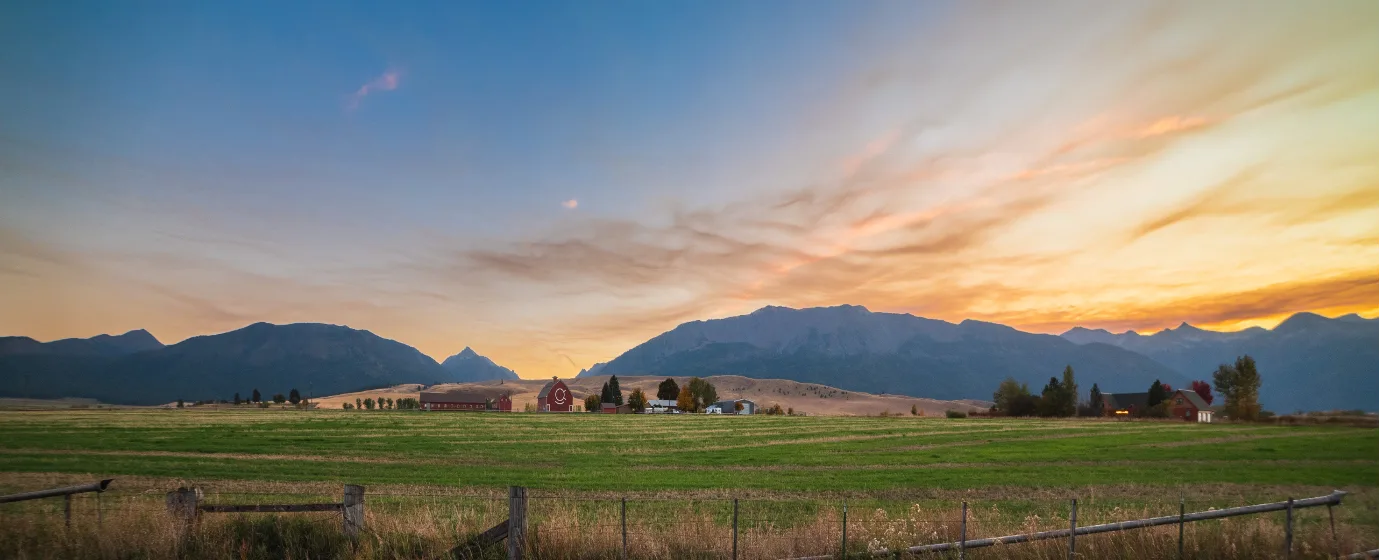
Maybe you've been priced out of Bend, or priced out of the Willamette Valley entirely, and someone mentioned La Grande. Maybe you already know the Wallowas and you're tired of visiting. Either way, the first thing to understand about La Grande as a retirement destination is that it doesn't try to be a resort town — it's a working small city of 13,058 people set in a broad agricultural valley at the base of the Blue Mountains, shaped by I-84, Eastern Oregon University, and a hospital that punches well above its weight for a community this size.
What draws retirees here is rarely a single selling point — it's a combination: a typical home price of $305,990 (Zillow Home Value Index, July 2026) that makes downsizing genuinely achievable, a hospital that serves the entire region, and a university that imports cultural programming most rural Oregon towns simply don't have. The school district, the city, Union County, and Grande Ronde Hospital together form the employment backbone, which means the civic infrastructure — roads, services, parks — stays relatively well-maintained for a town this size.
The lifestyle calculus here involves real trade-offs. Winters are cold and snowy; the city records 192 sunny days a year, which is respectable but not the high-desert sunshine of Bend. Advanced specialty care means a drive, and the nearest major referral centers sit roughly 2.5 hours away in Boise and about 4 hours away in Portland. What you get in return is a cost of living that leaves room in a fixed-income budget, a walkable-enough downtown, four honest seasons, and a geographic position that puts you within reach of some of the most dramatic landscapes in the Pacific Northwest.
Whether you're seriously considering the move or still building your short list, the sections below cover La Grande's healthcare reality, retirement tax picture, daily budget, community life, downsizing options, and how the city stacks up against nearby alternatives.
Why Retirees Are Choosing La Grande
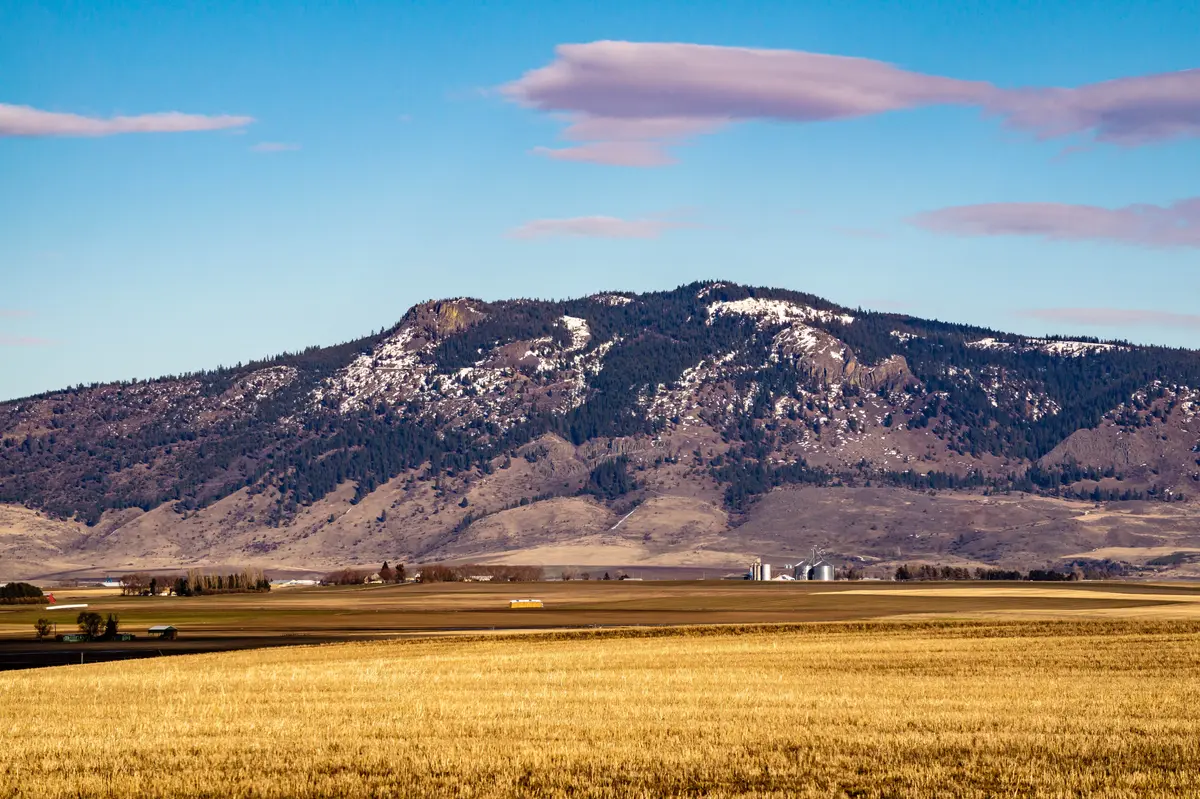
La Grande fits a specific kind of retiree: someone who wants genuine four-season outdoor access, a tight-knit small city rather than an anonymous suburb, and a home price that doesn't require liquidating decades of equity just to get in the door. The typical home sits at $305,990 (July 2026) — a figure that makes it one of the more accessible markets in Oregon, and one that lets buyers arriving from the Willamette Valley or the coast walk away from a sale with meaningful money left over. See the full cost-of-living breakdown for how daily expenses layer on top of that.
Eastern Oregon University keeps the city from feeling purely utilitarian. Lectures, performances, and rotating community events give retirees a calendar of intellectual and arts engagement that rural towns of comparable size rarely sustain. The Grande Ronde River Trail, Ladd Marsh Wildlife Area, and immediate access to the Wallowa-Whitman National Forest mean that staying physically active here is a matter of walking out the door — not driving an hour to find nature.
La Grande is not a great fit for retirees who need walkable urban density, frequent specialist care without travel, or a mild coastal climate. The winters require preparation and a reliable vehicle. Anyone managing a complex chronic condition should think carefully about the drive to advanced care before committing. But for retirees who value affordability, outdoor access, and a genuine community — rather than a retirement-branded development — La Grande makes a compelling case.
Healthcare & Medical Access in La Grande
Grande Ronde Hospital is the anchor of healthcare in Union County — and for a 25-bed Critical Access Hospital, its depth is genuinely unusual. The hospital operates 19 outpatient clinics, a Level IV Trauma Emergency Services Department, and physical, occupational, and speech rehabilitation therapy services. A 98,000-square-foot surgical services expansion completed in late 2024 consolidated five operating rooms into a single modern facility, and in November 2025 the hospital foundation announced a follow-on investment of more than $3.5 million to upgrade imaging, radiology, and nuclear medicine services in the vacated spaces. For retirees, that trajectory matters — this is a hospital expanding, not contracting.
Patients speak well of the care here. U.S. News & World Report has recognized Grande Ronde Hospital for patient experience, and the hospital consistently scores above state and national averages on patient recommendation surveys — a meaningful signal for a facility this size. Day-to-day primary care, post-surgical rehabilitation, and routine specialist visits within the clinic network are genuinely manageable without leaving La Grande.
The honest limitation is specialty depth. For cardiology, oncology, neurology, and other complex subspecialties, the nearest major referral centers are Boise, approximately 2.5 hours away, and Portland, approximately 4 hours. Retirees who rely on regular specialist visits should factor in that travel — both the time and the occasional need for an overnight stay. Planning those trips in advance, and maintaining a relationship with a primary care provider at Grande Ronde who can coordinate referrals, is the practical approach most long-term residents have settled on.
The Retiree Budget in La Grande
Oregon's tax posture for retirees has one headline benefit and one meaningful catch. Social Security and Railroad Retirement benefits are fully exempt from Oregon state income tax at every income level — no threshold, no phase-out. That's a clean win for retirees whose income leans heavily on Social Security. The catch is that pension income, traditional IRA distributions, and 401(k) withdrawals are taxed at Oregon's regular graduated rates, which run from 4.75% to 9.9%. Retirees drawing substantially from pre-tax retirement accounts should model their effective Oregon rate carefully before assuming the state is tax-friendly across the board.
Oregon has no statewide sales tax. Groceries, clothing, medications, and everyday purchases carry no sales tax — a meaningful advantage on a fixed income, where every dollar spent on essentials stays whole. The effective property tax rate in La Grande runs approximately 0.89%, which on a typical home keeps annual tax obligations modest relative to most of the West Coast.
Oregon also offers an income-qualified Property Tax Deferral program for homeowners 62 and older: the state pays county property taxes directly on the homeowner's behalf, with the deferred amount recorded as a lien at 6% simple interest, repaid when the home is sold. Income and ownership requirements apply and are subject to annual adjustment — worth confirming with the Oregon Department of Revenue each year if your household income is near the qualifying line. The engine's mortgage calculator below can help you model what ownership costs look like at current rates.
Day-to-day living on a fixed income in La Grande benefits from the city's compact footprint. Many residents handle groceries, pharmacy runs, and dining with a single vehicle and relatively short drives. The La Grande Farmers' Market supplements fresh produce options during the growing season. Utility costs run moderate — four distinct seasons mean both heating and cooling bills, but the climate is noticeably drier than western Oregon and avoids the extremes that spike utility costs in harsher regions.
Looking to buy in La Grande? Estimate your payment.
Enter your numbers to see an estimated monthly mortgage payment.
Estimate only. Excludes HOA fees and mortgage insurance. The interest rate above is a starting point, not a quoted rate — replace it with your own to see real numbers. Insurance is a flat placeholder, not a La Grande quote.
Walkability, Community & Staying Active in La Grande
La Grande is not a walking city in the metropolitan sense — most errands ultimately require a car — but its compact layout means that distances within the city are short. Residents in neighborhoods near downtown can reach a pharmacy, a coffee shop, or a dining option on foot with reasonable ease. The terrain is relatively flat through the valley floor, which matters for retirees who want to walk for both errands and exercise without dealing with significant elevation change. The South Side and Downtown neighborhoods offer the closest thing to genuine on-foot access.
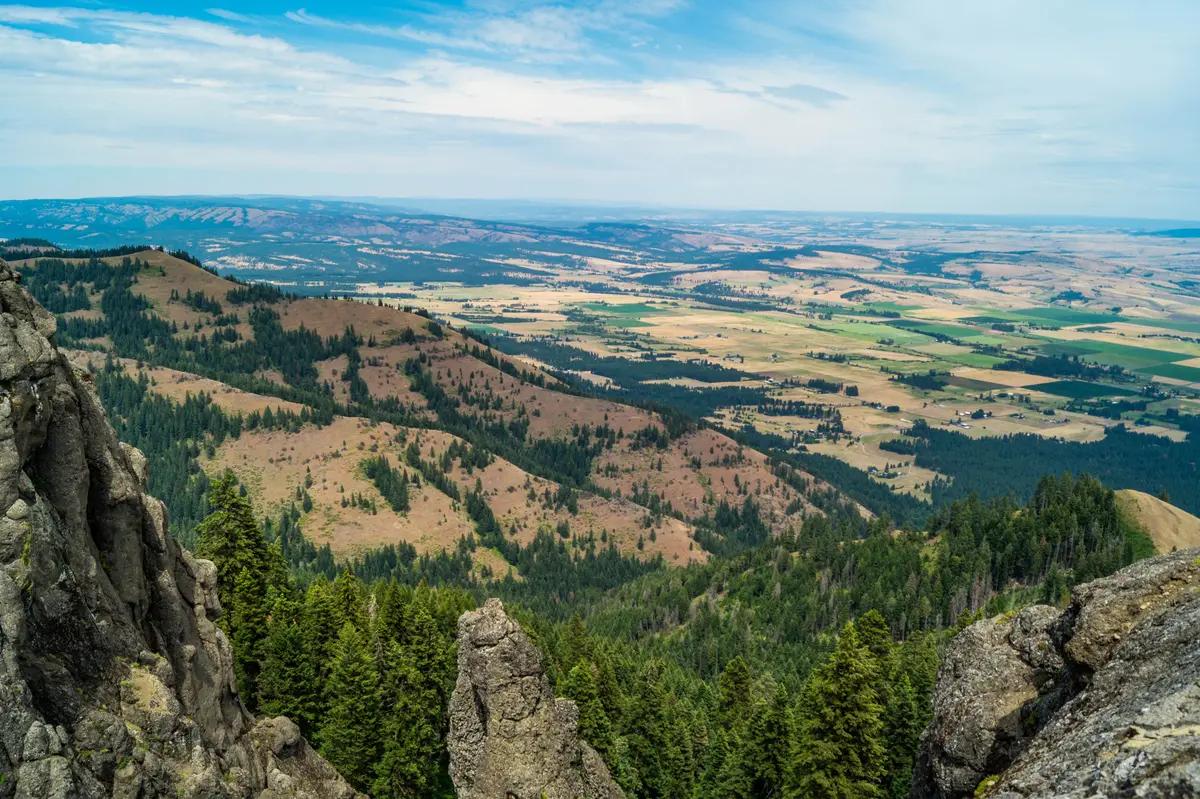
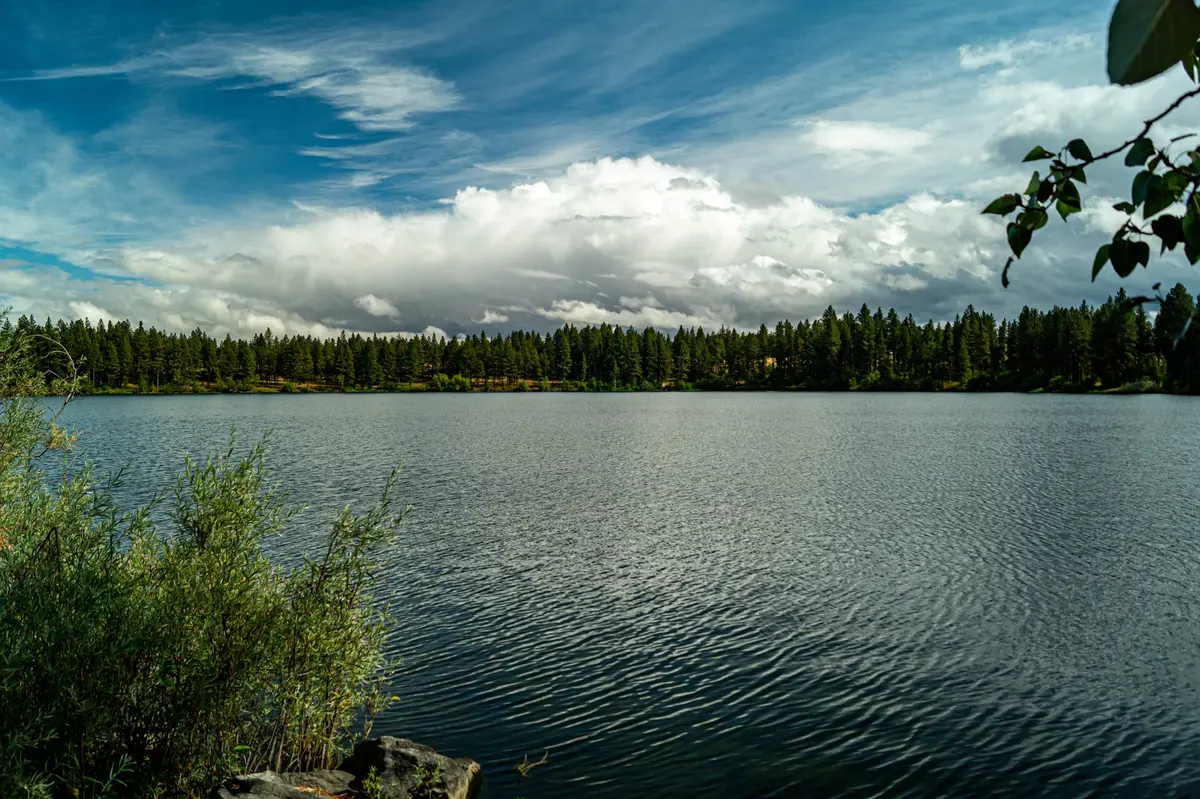
The Grande Ronde River Trail gives walkers and cyclists a scenic corridor that doesn't require driving to a trailhead. Ladd Marsh Wildlife Area, just outside the city, draws a steady stream of birdwatchers who regularly spot eagles, ospreys, and great blue herons along the wetlands. Morgan Lake provides a quieter retreat. For retirees who fish, the Grande Ronde River sees regular fly-fishing activity, and the broader access to the Wallowa-Whitman National Forest means hiking options scale from gentle valley walks to serious backcountry routes depending on fitness level and ambition.
Eastern Oregon University anchors the cultural side of retirement life here in a way that is easy to underestimate. The campus hosts lectures, performances, and community events on a regular schedule — the kind of programming that keeps retired professionals intellectually engaged and socially connected. Community organizations, volunteering through the city and Union County, and the informal social fabric of a small city where neighbors tend to know each other all contribute to a retirement experience that feels embedded rather than isolated. The Liberty Theater, a historic downtown venue, and the Ten Depot Street Historic Depot add cultural touchpoints that feel specific to La Grande rather than imported.
What La Grande does not offer is the density of organized senior programming found in larger retirement-destination cities. If you're expecting a packed activity calendar run by a dedicated recreation department, you'll need to build your own social structure — which many retirees here find they prefer.
Right-Sizing: Downsizing in La Grande
No 55+ age-restricted communities were found in La Grande. That's the honest starting point for any retiree hoping to move into a deeded community with shared amenities and a built-in social structure — that option simply doesn't exist here in the traditional Sun Belt sense.
What does exist is a range of senior living facilities. Grande Ronde Retirement Residence provides both independent living and assisted living options for seniors. Wildflower Lodge operates as an assisted living community. The broader network includes roughly 15 senior living facilities operating in or near the city, spanning adult foster homes through assisted living — a meaningful range for a city of 13,058 people, and evidence that the infrastructure for aging in place has grown to serve the regional population. Senior care costs here run noticeably below what retirees would expect to pay in the Portland metro, which is a real budget advantage for those who anticipate eventually transitioning out of independent living.
For retirees buying rather than renting, the single-family housing stock in La Grande skews older, which means single-level homes exist but require deliberate searching. Ranches and older bungalows on flat lots in the South Side and Greenwood areas are the most common single-level options. Patio homes and condos are a thin slice of the market — La Grande hasn't seen the purpose-built low-maintenance housing development that defines retirement corridors in Sun Belt cities. Buyers who need zero-step entry and no-maintenance exteriors will find the inventory limited and may need to compromise on condition or take on modest updates.
The upside is that the price point makes right-sizing financially realistic. Retirees arriving from higher-cost Oregon markets often find they can purchase outright or carry a very small mortgage, which changes the fixed-income math meaningfully. For neighborhood-level character and housing stock details, the neighborhoods page covers what each area actually looks like on the ground.
La Grande vs Nearby Retirement Destinations
| City | Cost vs La Grande | Primary Hospital | Walkability | Senior Living Depth | Overall Retirement Fit |
|---|---|---|---|---|---|
| La Grande, OR | Anchor | Grande Ronde Hospital (in-city, full Critical Access) | Moderate; flat terrain, car still needed for most errands | Multiple facilities; no 55+ deeded communities | Strong for outdoors-focused, budget-conscious retirees |
| Union, OR | Somewhat lower | Relies on Grande Ronde Hospital in La Grande | Very limited; small town on foot | Minimal | Best for retirees wanting maximum quiet and lower prices, willing to drive for everything |
| Elgin, OR | Noticeably lower | Relies on Grande Ronde Hospital in La Grande | Minimal; rural small town | Very limited | Ultra-affordable and rural; suits self-sufficient retirees with no medical complexity |
| Island City, OR | About the same | Adjacent to La Grande; shares Grande Ronde Hospital | Slightly more suburban; car-dependent | Limited; proximity to La Grande services helps | Good suburban alternative immediately next to La Grande's services |
| Pendleton, OR | Broadly comparable | CHI St. Anthony Hospital (regional critical access) | Modest downtown walkability | Several senior facilities; more organized senior programming | Larger city feel; better for retirees wanting more retail and social infrastructure |
| Baker City, OR | Broadly comparable | Saint Alphonsus Medical Center–Baker City (critical access) | Compact, walkable historic downtown | Several assisted living options; no major 55+ community | Strong historic character; good fit for retirees who value small-city charm and outdoor access |
For retirees whose primary concern is keeping healthcare close and capable, La Grande is the clear winner in this region — Grande Ronde Hospital's scale, its ongoing expansion, and its well-regarded patient experience put it well ahead of what smaller nearby towns can access locally. Union and Elgin offer lower prices, but both depend entirely on driving to La Grande for anything beyond basic care, which matters a great deal as mobility declines.
Island City sits immediately adjacent to La Grande and shares its services, making it a reasonable alternative for buyers who find a specific property there — but there's little practical difference in the retirement experience. Pendleton, roughly 50 minutes away, offers a somewhat larger city feel with more organized senior programming and retail depth, which suits retirees who find La Grande's scale too limited. Baker City draws retirees who want a more walkable historic downtown and a slightly different outdoor recreation flavor, leaning toward high-desert landscape rather than the Wallowas. Neither beats La Grande on hospital access, and neither significantly undercuts it on price.
Local Expert Takeaway: La Grande's retirement case rests on three things that are genuinely rare in combination: a hospital that has been actively expanding rather than cutting services, a home price that makes outright purchase realistic for many buyers downsizing from higher-cost Oregon markets, and a university campus that keeps the cultural calendar alive in a city where you'd otherwise expect it to be thin. The honest counterweight is the drive to advanced specialty care — Boise at roughly 2.5 hours and Portland at roughly 4 hours aren't dealbreakers, but they are a real planning variable, not an afterthought. Retirees who arrive expecting resort-town polish or Sun Belt amenities will be disappointed; retirees who want to spend their mornings on the Grande Ronde River Trail and their evenings at an EOU lecture tend to stay.
Quick Takeaways & FAQs
✅ Grande Ronde Hospital completed a 98,000-square-foot surgical expansion in late 2024 and launched a $3.5 million imaging upgrade in 2025 — meaningful infrastructure for a Critical Access Hospital serving a city of 13,058.
⚠️ Oregon taxes pension and IRA income at rates up to 9.9%, so retirees drawing heavily from pre-tax accounts should model their effective state tax rate before assuming Oregon is retirement-friendly across the board.
📍 No 55+ deeded communities exist in La Grande, but Grande Ronde Retirement Residence and Wildflower Lodge provide independent and assisted living options, and senior care costs here run noticeably below Portland-metro norms.
Is Grande Ronde Hospital adequate for retirees, or will I need to travel for most medical care?
Does Oregon tax Social Security income for retirees?
Are there 55+ communities or active adult neighborhoods in La Grande?
Is La Grande walkable enough for retirees who want to reduce driving?
What is the property tax situation for retirees on a fixed income in La Grande?
Moving to Oregon?
Tell us what you need help with and we'll connect you with local resources.
