
You've done the research and Gold Beach keeps coming up — prices well below the Portland metro, a setting where the Rogue River meets the Pacific, and a small-town pace that metro life rarely offers. But buying your first home in a town of 2,466 people on the southern Oregon coast is a different exercise than buying in Salem or Eugene, and the things that make this market appealing to first-timers are not always the things the listings highlight. The cost of living here is genuinely lower than most Oregon cities, but the income picture is tight: the median household income of $56,014 sits notably below what it takes to carry the typical home at current prices.
The local economy runs on Curry County government, the City of Gold Beach, Curry Health Network, the US Forest Service, and Central Curry School District 1 — plus a seasonal layer of tourism, jet boat guiding, and fishing charters on the Wild and Scenic Rogue River. That employer mix means stable but not high-paying public-sector and healthcare jobs are the backbone of local income. Many residents commute to Brookings — about 35 minutes to Brookings, OR — for work or services. Remote workers and retirees make up a meaningful share of the buyer pool, which shapes the resale dynamics you will encounter as a first-timer entering this market.
The good news: Curry County sits among the more buyer-favorable markets on the Oregon coast. Multiple offers are rare, and homes have typically sold below list price in recent market conditions — a meaningful contrast to the competition first-timers face in the Willamette Valley. The natural setting also comes with natural hazard exposure that requires due diligence, particularly around flood zones and tsunami inundation mapping, which will affect your insurance costs and lender requirements. Understanding those layers before you make an offer is what separates a smooth closing from a stressful one.
This guide walks through what your budget realistically buys in Gold Beach, the step-by-step purchase process, how to frame your affordability math before you tour, and the specific mistakes that cost first-time buyers the most in this market.

The Gold Beach First-Time Buyer Reality
The typical home in Gold Beach was priced at $439,479 as of July 2026 (Zillow Home Value Index). That figure sits noticeably below what you would pay in Brookings or Bandon, and well below the Portland suburbs — but it still requires a household income that the local median does not quite reach. If you are a first-timer working locally, the honest math matters: plan your pre-approval around your actual income and debt load, not the optimistic version.
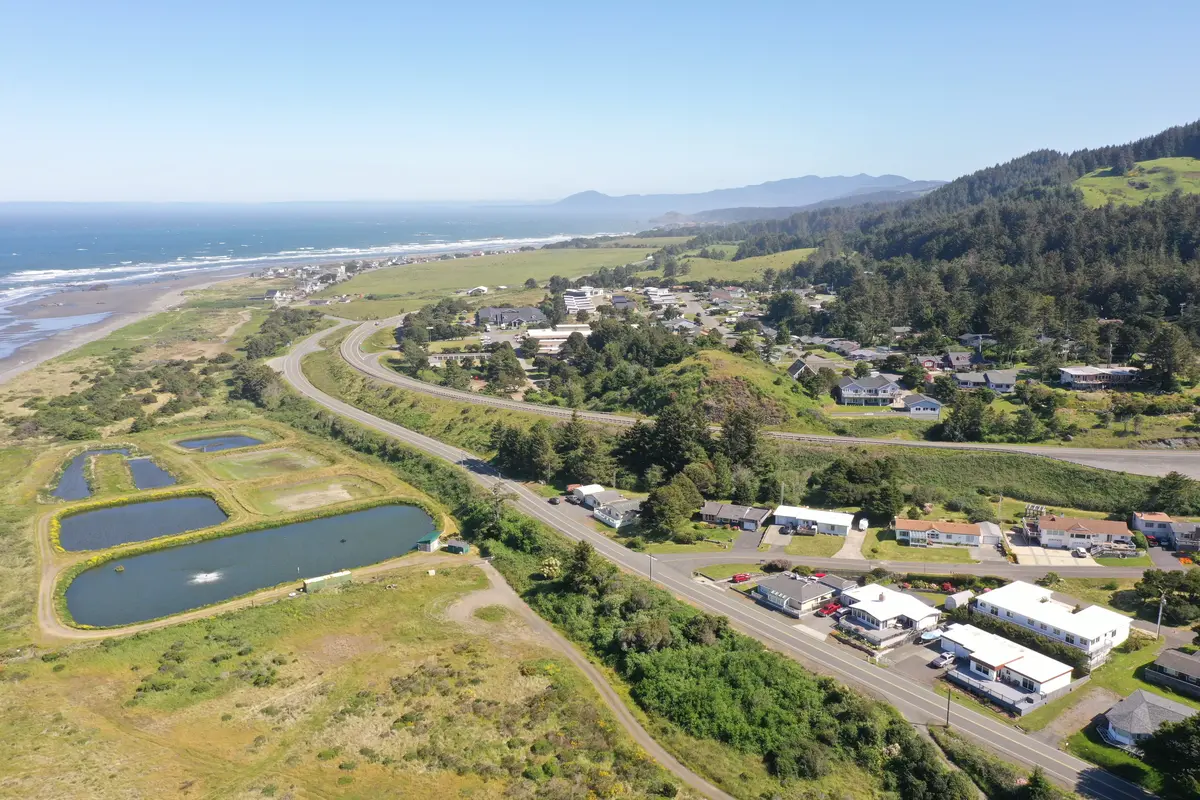
What does that price point buy? Entry-level inventory in Gold Beach tends to be older single-family homes, some with deferred maintenance, in areas like Downtown / In-Town Gold Beach or parts of Wedderburn across the river. Properties in Nesika Beach, Rogue Hills, and Sebastian Shores — with ocean or river views — tend to run above the city-wide figure. Indian Hills and Rogue Shores offer more varied stock. The specific character of each area is worth exploring on the neighborhoods page, but as a first-timer, understand that your entry point is likely a modest inland home, not a bluff-top view property.
The buyer-friendly market conditions here are real and worth using. Sellers are generally negotiable, inspection contingencies are expected, and you have more room to ask for repairs or credits than you would in a competitive metro market. Approximately 27% of Gold Beach residents are 65 or older — a retiree-heavy community — which means sellers are often downsizing or estate-selling, sometimes motivated to close cleanly. That dynamic benefits a patient, well-prepared first-time buyer more than almost any other profile.
The Homebuying Process in Gold Beach, Step by Step
Step 1: Get Pre-Approved — Before You Tour Anything
Pre-approval is not paperwork you file when you find a house you like. It is what tells you what you can actually buy, and in Gold Beach, where the agent and seller pool is small and relationships matter, showing up without one reads as unserious. A pre-approval involves your lender verifying real documents: recent pay stubs, W-2s, two years of tax returns, bank and asset statements, and a government-issued ID. The resulting letter states a loan amount and is typically valid for 30 to 90 days.
Pre-approval is categorically different from pre-qualification, which is just an estimate based on self-reported numbers. Sellers treat pre-approval as a credible signal; pre-qualification carries almost no weight. Get the real thing before you schedule a single showing.
Step 2: Identify the Right Agent and Search Realistically
Gold Beach has a limited agent pool — this is a small coastal town, and the local market knowledge concentrated in a handful of experienced agents is worth more than it would be in a city with dozens of competing brokers. Ask specifically about flood zone experience and natural hazard disclosures; an agent who has worked through FEMA flood map complications locally will save you significant time and money. Start your search anchored to your pre-approved amount, not to a price you hope to reach.
Step 3: Make an Offer With the Right Contingencies
In Gold Beach's buyer-leaning market, you do not need to waive contingencies to win. Include a financing contingency, a home inspection contingency, and an appraisal contingency. These are your protection against structural surprises, lender valuation gaps, and last-minute financing issues. First-timers who skip inspection contingencies in hopes of appearing more competitive in a market like this are taking on risk without a competitive reason to do so.
Step 4: Inspection, Appraisal, and Hazard Review
Schedule your home inspection immediately after your offer is accepted — do not delay. Gold Beach's coastal environment accelerates wood rot, moisture intrusion, and corrosion on older homes in ways you would not see inland. A thorough inspector familiar with coastal Oregon properties is not optional here. Simultaneously, your lender will order an appraisal; if the property is in a designated flood zone, they will require proof of flood insurance before closing, which can affect your budget meaningfully.
This is also the stage to review Oregon's state geological hazard maps for any property near the river mouth or the coast. Lenders and insurers are paying closer attention to Cascadia Subduction Zone exposure, and knowing a property's tsunami inundation zone status before you are under contract saves you from a late withdrawal.
Step 5: Closing
Oregon closings are handled by a title or escrow company. Budget two to five percent of the purchase price for buyer closing costs — this covers lender fees, the appraisal, title insurance, recording fees, and prepaid items. You will sign a large stack of documents, wire your down payment and closing costs, and receive the keys once funding is confirmed. The full process from accepted offer to closing typically runs 30 to 45 days for a financed purchase.
How Much Home Can You Afford in Gold Beach
The table below gives you a concrete starting framework. Down payments shown are the program minimums — a larger down payment reduces your monthly obligation and may improve your rate. Closing cost estimates use the 2%–5% range standard for Oregon buyer transactions; your lender's Loan Estimate will give you the actual figure for your specific loan. All figures are estimates. The calculator below the table lets you model your exact scenario with current rates.
| Scenario | Purchase Price | Down Payment | Est. Closing Costs | Cash Needed at Table |
|---|---|---|---|---|
| FHA (3.5% down) — entry range | $300,000 | $10,500 (3.5%) | $6,000–$15,000 | ~$16,500–$25,500 |
| FHA (3.5% down) — near city median | $440,000 | $15,400 (3.5%) | $8,800–$22,000 | ~$24,200–$37,400 |
| Conventional (3% down) — entry range | $300,000 | $9,000 (3%) | $6,000–$15,000 | ~$15,000–$24,000 |
| Conventional (3% down) — near city median | $440,000 | $13,200 (3%) | $8,800–$22,000 | ~$22,000–$35,200 |
| Conventional (5% down) — modest coastal home | $375,000 | $18,750 (5%) | $7,500–$18,750 | ~$26,250–$37,500 |
| Conventional (10% down) — stronger equity position | $440,000 | $44,000 (10%) | $8,800–$22,000 | ~$52,800–$66,000 |
These scenarios illustrate why cash-to-close planning matters as much as the monthly payment. A buyer stretching to 3% or 3.5% down at the city's typical price point needs to arrive with roughly $25,000–$37,000 in liquid funds before they can close — a figure that catches many first-timers off guard.
Oregon also offers a First-Time Home Buyer Savings Account: contributions of up to $6,125 annually may be deducted from Oregon taxable income through December 31, 2026. It is worth discussing with a tax advisor as part of your savings strategy, separate from and in addition to your down payment accumulation.
One Gold Beach-specific cost to build into your budget: if the property sits in a federally designated flood zone, your lender will require a separate flood insurance policy at closing. That premium varies by zone and elevation — get a quote early, before it surprises your closing disclosure.
Looking to buy in Gold Beach? Estimate your payment.
Enter your numbers to see an estimated monthly mortgage payment.
Estimate only. Excludes HOA fees and mortgage insurance. The interest rate above is a starting point, not a quoted rate — replace it with your own to see real numbers. Insurance is a flat placeholder, not a Gold Beach quote.
Common First-Time Buyer Mistakes in Gold Beach
Touring Before You Have a Pre-Approval Letter
Gold Beach's listing inventory is thin. When a well-priced property appears, the buyers who move quickly are the ones who already have their pre-approval in hand. Shopping without one is not just inefficient — in a small market with limited active listings, it can mean losing the only suitable property in your price range for months. Get pre-approved first, then search.
Underestimating the Cash You Need at Closing
First-timers consistently focus on the down payment and forget that closing costs add another two to five percent on top of it. On a $440,000 purchase with 3.5% down, you could need anywhere from $24,000 to $37,000 in cash to close — and if flood insurance is required, that premium may be due upfront as well. Budget the full cash-to-close number, not just the down payment, before you make an offer.
Skipping the Hazard Zone Research
Gold Beach sits at the mouth of the Rogue River on the Pacific coast. Flood zone mapping, tsunami inundation zones, and wildfire risk all intersect here in ways they do not in most Oregon markets. The mistake is treating this research as something you do after you are under contract — by then, a high-risk flood zone classification can force your budget to absorb a significant insurance cost you did not plan for, or require you to withdraw and restart. Review Oregon's geological hazard mapping and ask your agent about the property's flood zone designation before you fall in love with a house.
Misreading the School District Picture
Central Curry School District 1 holds a C rating, according to Niche, with 366 students enrolled in 2025-26. That is a very small district by any measure, and buyers with school-age children should visit the schools and talk to parents locally rather than relying on aggregate ratings. The full picture is on the schools page. The mistake is assuming a coastal small-town district performs comparably to suburban districts in larger Oregon cities — or assuming the opposite without looking. Make a direct assessment rather than guessing.
Ignoring the Commute and Isolation Reality
US-101 is the primary route in and out of Gold Beach, and the nearest commercial airport — Rogue Valley International-Medford (MFR) at approximately 125 miles inland — requires serious planning for any travel. Personal vehicle ownership is not optional here; it is a daily requirement. First-timers moving from a metro area sometimes underweight how much the geographic remoteness affects everything from grocery runs to specialist medical appointments to job options. If your employment requires in-person presence anywhere beyond Brookings, model that commute honestly before you commit to this zip code.

Local Expert Takeaway: Gold Beach gives first-time buyers something genuinely rare on the Oregon coast: a market where you can negotiate, take time to inspect thoroughly, and expect sellers to engage reasonably — without the bidding-war anxiety of the Willamette Valley. The catch is that the entry price still requires careful cash planning, the flood and hazard due diligence is non-negotiable, and the isolation is real. The buyers who do best here come in pre-approved, with the full closing-cost cash already set aside, having already reviewed Oregon's geological hazard and tsunami inundation maps for the specific properties they want to tour.
Quick Takeaways & FAQs
✅ Gold Beach is one of the more buyer-friendly markets on the Oregon coast — multiple offers are rare and inspection contingencies are standard, giving first-timers real negotiating room.
⚠️ The typical home price of $439,479 (July 2026) sits above what the local median household income comfortably supports, so honest pre-approval math matters more here than optimism.
📍 Properties near the river mouth or the coast may fall in designated flood zones, requiring a separate flood insurance policy — get that quote before you make an offer, not after.
What credit score do I need to buy a home in Gold Beach, Oregon?
Is Gold Beach a buyer's market or a seller's market?
Do I need flood insurance to buy a home in Gold Beach?
How long does it take to close on a home in Gold Beach?
What are the biggest hidden costs first-time buyers miss in Gold Beach?
Moving to Oregon?
Tell us what you need help with and we'll connect you with local resources.
