
You've probably already noticed that Gold Beach is a small town — 2,466 permanent residents small. At that scale, safety feels personal rather than statistical: you know your neighbors, you recognize the cars on your street, and a stranger asking for directions genuinely stands out. That intimacy shapes daily life here in ways that no crime database fully captures, but the numbers are still worth knowing before you decide on a neighborhood.
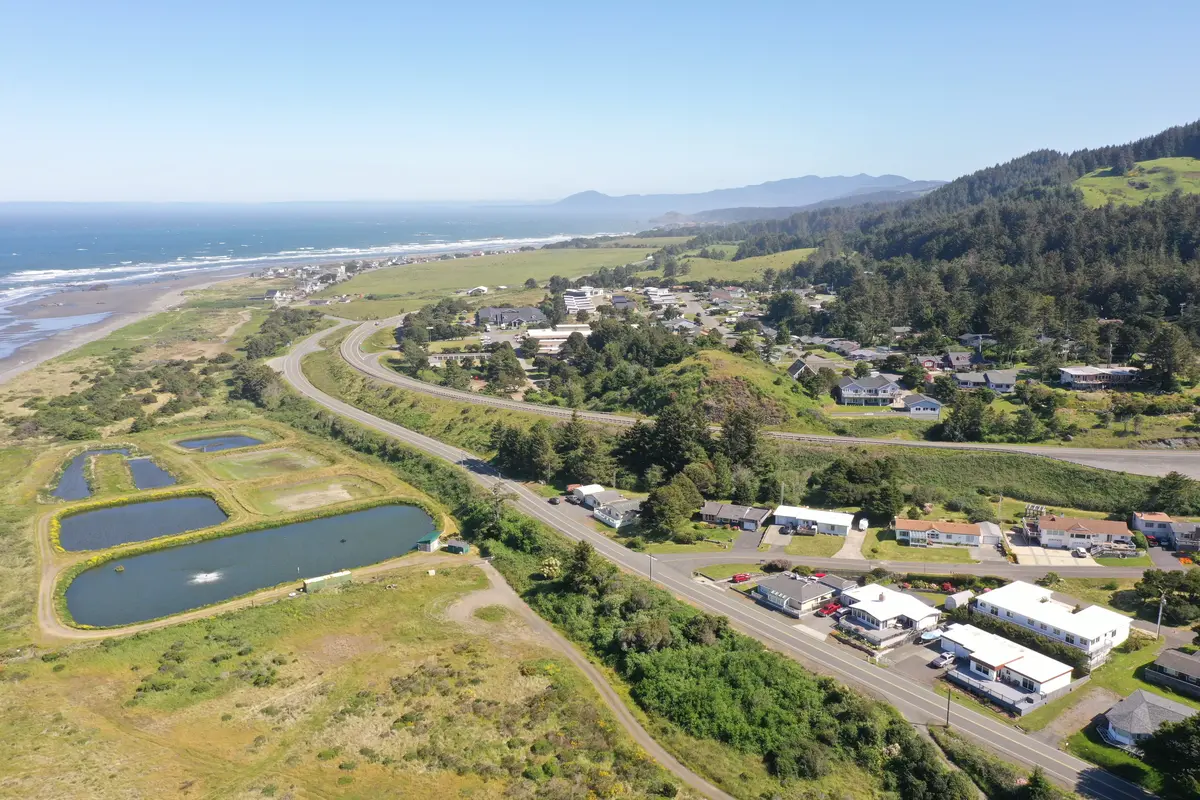
Gold Beach sits at the mouth of the Wild and Scenic Rogue River on the southern Oregon Coast, where US-101 is the main artery and the summer population swells well beyond that permanent 2,466. Salmon fishing charters, jet-boat trips upriver, and coastal recreation draw visitors for months at a stretch, concentrating transient traffic in the commercial zones and along the waterfront. That seasonal surge matters for how you read crime statistics here — more on that below.
The city's economic backbone is a mix of Curry County government, the City of Gold Beach itself, a regional health network, the U.S. Forest Service, and the school district — employers that together create a stable, owner-occupied community with a median age of 53.1 years. Most people who move here are not chasing a job market; they're trading the pace of a larger city for the Rogue, the coast, and the quiet. The cost-of-living picture reflects that trade, with a typical home price of $439,479 (July 2026).
Whether you're seriously considering a move or just doing your homework, this guide breaks down Gold Beach's violent and property crime rates against state and national benchmarks, explains what the neighborhood-level safety picture actually looks like, covers what law enforcement resources exist, and walks through the natural hazards — earthquake, wildfire, flood — that are the other half of the safety conversation on the southern Oregon Coast.

Gold Beach Crime Rates vs. Oregon and National Averages
Gold Beach carries a violent crime rate of 2.2 per 1,000 residents — meaningfully below the Oregon state average of 3.3 per 1,000 and below the national average of 3.7 per 1,000. That gap is not trivial: the city's rate runs about a third lower than the state benchmark.
Property crime tells a similar story. Gold Beach has a property crime rate of 10.5 per 1,000 residents, compared to Oregon's state average of 24.5 per 1,000 and the national average of 18.4 per 1,000. That is a dramatic difference — the state figure is more than double Gold Beach's rate, and even the national figure runs well above it.
One framing that puts those numbers in concrete terms: the estimated annual cost of crime per resident here runs about $458, which sits below the Oregon state average by roughly $92 and below the national average by a small margin. By that measure, Gold Beach residents bear a lighter crime burden in real-world terms than most Oregonians do.
The Tourist-Traffic Distortion
These rates are calculated against the permanent population of 2,466 — and that denominator understates how many people are actually moving through Gold Beach during summer and fall. Salmon season, jet-boat tourism on the Rogue, and coastal recreation bring a seasonal surge that concentrates transient activity in the commercial west side and along the waterfront near the Port of Gold Beach.
Crime rates measured per resident will always look higher in visitor-facing areas for this reason: the incidents happen, but the population count driving the denominator doesn't include the visitors present when they do. That same distortion affects every tourism-dependent coastal town in Oregon, and Gold Beach is no exception. When you see a higher incident concentration in the retail and waterfront corridors, that is largely what you are looking at — not a residential safety failure.
Neighborhood Safety Picture: Where Incidents Concentrate
Gold Beach is compact enough that neighborhood-level crime geography is more about which blocks face visitor traffic than about meaningful distinctions between residential communities. The west side of the city — where retail establishments cluster along US-101 — records the highest raw incident counts. The southeast portions of the city, away from the commercial corridor and the port, report the fewest incidents.
That pattern holds across most of Gold Beach's neighborhoods. Wedderburn, across the Isaac Lee Patterson Bridge on the north bank of the Rogue, sits outside the city proper and shares the quiet, residential character of the hillside areas. Nesika Beach and Indian Hills are further from the commercial core, and residents in those areas tend to describe the day-to-day feel as calm. Rogue Hills, Rogue Shores, Sebastian Shores, and Hunter Creek are predominantly residential, owner-occupied pockets where the crime geography of the tourist corridor simply doesn't apply in the same way.
What This Means Before You Choose a Neighborhood
If you're weighing neighborhoods, the honest question isn't whether Gold Beach is safe in the aggregate — it is, by the benchmarks — but whether a specific block puts you adjacent to the visitor-facing commercial strip. The neighborhood guide covers the character and trade-offs of each area in depth.
Downtown and in-town Gold Beach sit closest to the action on US-101, which means more foot traffic, more transient visitors, and statistically more incidents in the surrounding blocks. That doesn't translate to danger for residents who know the area — but it's the honest geographic reality worth understanding before you settle on a specific part of town.
One thing long-time residents mention: after about six months here, you stop thinking about crime statistics at all. The town is small enough that community familiarity functions as its own informal safety layer. People notice things. That social texture is hard to quantify but easy to feel once you spend a weekend here.
Law Enforcement Coverage in Gold Beach
The Gold Beach Police Department is the city's primary agency, a small department that knows the city block by block. Dispatching and 911 services run through the Curry County Sheriff's Office, which provides a broader coverage network across the county.
Oregon State Police also maintain a presence in the region, patrolling US-101 and working alongside the Sheriff's Office to cover the state highway corridors. For a city of 2,466, that layered coverage — municipal department, county sheriff, and state police all operating in the same geography — is a meaningful resource.
What the Department Actually Does
Beyond patrol, the Gold Beach Police Department's service portfolio includes crime prevention programs, public safety education, traffic management, and community engagement. In a town this size, officers tend to be genuinely embedded in the community rather than purely reactive — the kind of presence where the same faces show up at community events and respond to your street.
Response times are not something any small coastal department will match against a metro, and Gold Beach is honest about operating in a remote context. The trade-off is that the town's scale keeps serious calls rare. A resident call here is unlikely to be triaged behind a stack of higher-priority incidents the way it might be in a larger city.
Looking to buy in Gold Beach? Estimate your payment.
Enter your numbers to see an estimated monthly mortgage payment.
Estimate only. Excludes HOA fees and mortgage insurance. The interest rate above is a starting point, not a quoted rate — replace it with your own to see real numbers. Insurance is a flat placeholder, not a Gold Beach quote.
Natural Hazards: The Safety Conversation the Crime Stats Don't Cover
Crime is one half of the safety picture in Gold Beach. Natural hazards are the other half, and on the southern Oregon Coast they carry real weight. Curry County faces elevated risk across earthquake, wildfire, and flood — driven by the region's geology, its forested terrain, and its coastal position. Earthquake and wildfire exposure in particular rank among the most significant in the state.
Earthquake and Tsunami Risk
A major offshore fault system runs along the entire Oregon Coast, and Gold Beach sits within its projected impact zone. A significant seismic event would generate substantial ground shaking and a subsequent tsunami risk for low-lying coastal areas. The city and county have evacuation route planning in place, and Oregon's emergency management infrastructure is among the more developed on the West Coast for this specific scenario — but the hazard is real and worth understanding before you choose a home here. Elevation and distance from the ocean matter when you are evaluating specific properties.
Wildfire
Wildfire risk in the Curry County region is documented and recurring. In September 2025, the Curry County Sheriff's Office coordinated evacuation requests for lodges along the Rogue River corridor due to wildfires threatening those areas. Flames did not reach the city itself, but the event illustrates how inland fire activity — driven by the forested terrain inland from Gold Beach — can affect the community even when the city proper is not directly threatened.
If you are considering a property in the Rogue Hills or on the inland-facing edges of Hunter Creek, wildfire risk is worth specific attention. Oregon's state forestry regulations establish defensible space requirements for properties in high-risk zones, and those requirements affect both maintenance obligations and insurance.
Flood
Flood risk is present but sits below the county's other hazards. Properties near the Rogue River mouth and lower-lying coastal areas carry more exposure than the hillside neighborhoods. Checking official flood zone maps for any specific parcel before deciding on a neighborhood is a straightforward step that residents in flood-prone areas consistently recommend — the variation within the city is real.
What Residents Experience Day to Day
Statistics describe a city's crime profile in aggregate. What they don't describe is the day-to-day texture of living in a town of 2,466 where most people own their homes and the median age is 53. Residents consistently describe Gold Beach as having a sparse suburban feel with a strong sense of community ownership — literally and figuratively. The community skews toward families with school-age children and retirees, which shapes both who is out and about and what kinds of calls actually reach the police department.
The practical experience for most residents is that Gold Beach feels safe in a way that's almost disorienting if you're moving from a larger city. The Rogue River waterfront, the Port of Gold Beach, the trailheads feeding into the coastal parklands to the south — these are where people spend their outdoor time, and those spaces don't carry the edge that waterfront or trail areas might in a metro context.
The Honest Trade-Offs
Gold Beach's remoteness — about 35 minutes to Brookings and a considerably longer drive to Medford and the broader Rogue Valley — means that emergency services beyond what the local department and a regional medical facility provide require distance. A serious medical emergency or a major incident that outpaces local resources involves real travel time. That's the reality of living on the southern Oregon Coast, and it's worth factoring into your decision alongside the crime numbers.
What surprises people after a few months here is often the inverse of what they expected. People who moved with concerns about isolation and safety tend to report feeling more secure than they did in larger communities — the small-town familiarity works in residents' favor. What catches some newcomers off guard instead is the natural hazard exposure: the earthquake preparedness culture, the wildfire watches in late summer, the occasional coastal storm that makes US-101 impassable for a stretch. Those are the seasonal rhythms that define safety life here more than the crime statistics do.
For a fuller picture of who Gold Beach suits — and the lifestyle trade-offs that come with it — the living in Gold Beach overview covers the community character in more depth.

Local Expert Takeaway: Gold Beach's crime numbers are genuinely favorable — a violent crime rate of 2.2 per 1,000 residents sits well below both state and national benchmarks, and a property crime rate of 10.5 per 1,000 residents is roughly half the Oregon average. The west-side commercial corridor generates most of the city's raw incident counts, driven largely by tourist traffic rather than resident risk. The more pressing safety conversation for anyone seriously considering a move here is natural hazards: Curry County faces significant earthquake and wildfire exposure that belongs in your due-diligence research alongside any crime stats. Understand both, check flood and fire risk on the specific parcel you're considering, and the picture that emerges is of a small coastal town that is safe by the numbers and manageable by the hazards — as long as you go in with eyes open.
Quick Takeaways & FAQs
✅ Gold Beach carries a violent crime rate of 2.2 per 1,000 residents, sitting below both the Oregon state average of 3.3 and the national average of 3.7 — making it one of the safer communities on the southern Oregon Coast.
⚠️ Curry County faces significant earthquake and wildfire exposure — natural hazards are a more pressing safety consideration here than crime statistics, and both deserve research before you decide on a specific property.
📍 The west-side commercial strip along US-101 generates the most raw incidents, inflated by seasonal tourist traffic; the residential hillside neighborhoods and areas like Indian Hills and Hunter Creek report far fewer.
Is Gold Beach, Oregon a safe place to live?
Which parts of Gold Beach have the most crime?
How does Gold Beach's crime rate compare to the rest of Oregon?
What natural hazards should I know about before moving to Gold Beach?
How much police coverage does Gold Beach have?
Moving to Oregon?
Tell us what you need help with and we'll connect you with local resources.
