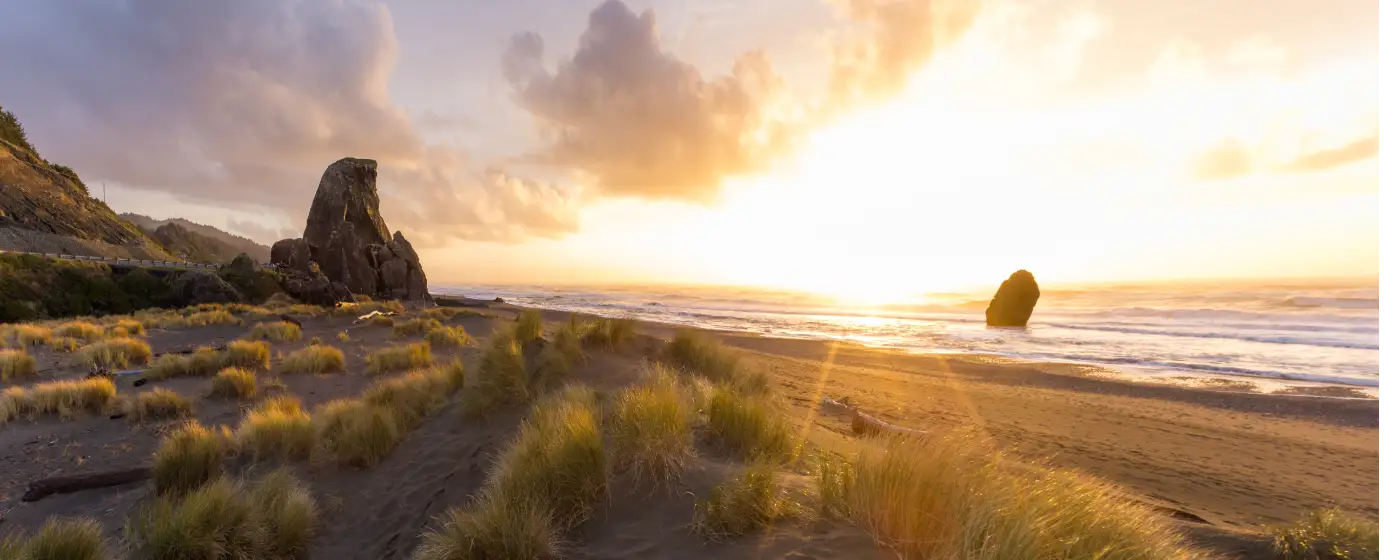
Most small Oregon towns can point to a park or two and call it done. Gold Beach, a city of 2,466 at the mouth of the Wild and Scenic Rogue River, operates on an entirely different scale. The city's own park system is genuinely modest — three maintained parks covering basic community needs. What surrounds it is anything but. Within a short drive in either direction along US-101, residents have access to state scenic corridors that rank among the most photographed coastline in North America, a congressionally protected wild river, and old-growth forest trails that most coastal cities can't claim within an hour's commute. Recreation here isn't an amenity — it's the dominant fact of daily life.
The outdoor scene draws two distinct groups. There are the year-round residents — retirees, remote workers, and tradespeople — who moved specifically to live inside this landscape, and there are the visitors who flow through on US-101, spend a few days, and quietly start researching real estate. The Rogue River is the anchor: it's why the port exists, why the jet boat industry has operated here since 1958, and why fishing culture runs as deep as it does. The coast itself, from Otter Point just north of town to the Samuel H. Boardman State Scenic Corridor stretching south toward Brookings, gives residents a practically inexhaustible supply of beaches, bluffs, and tidepool access that costs nothing to use. Gold Beach's outdoor recreation is, in a real sense, its biggest municipal amenity — one the city didn't have to build or budget for.
The honest trade-off: Gold Beach has 192 sunny days a year, which is meaningfully fewer than many places newcomers move from. The coast runs gray and wet through much of fall and winter, and outdoor recreation here requires a degree of weather tolerance that not everyone arrives with. Trails that look inviting in July can be genuinely exposed and muddy in January. People who thrive here treat the fog and drizzle as part of the aesthetic rather than an obstacle. Those who don't, tend to leave within a year or two — usually to somewhere sunnier rather than larger.
Whether you're considering a move or just researching what daily life looks like, the sections below cover Gold Beach's city parks, the state and federal lands that define the region's outdoor identity, the Rogue River experience, and the trail network that makes this one of the more recreation-rich small cities on the Oregon Coast.
Gold Beach's City Parks: Small System, Clear Purpose
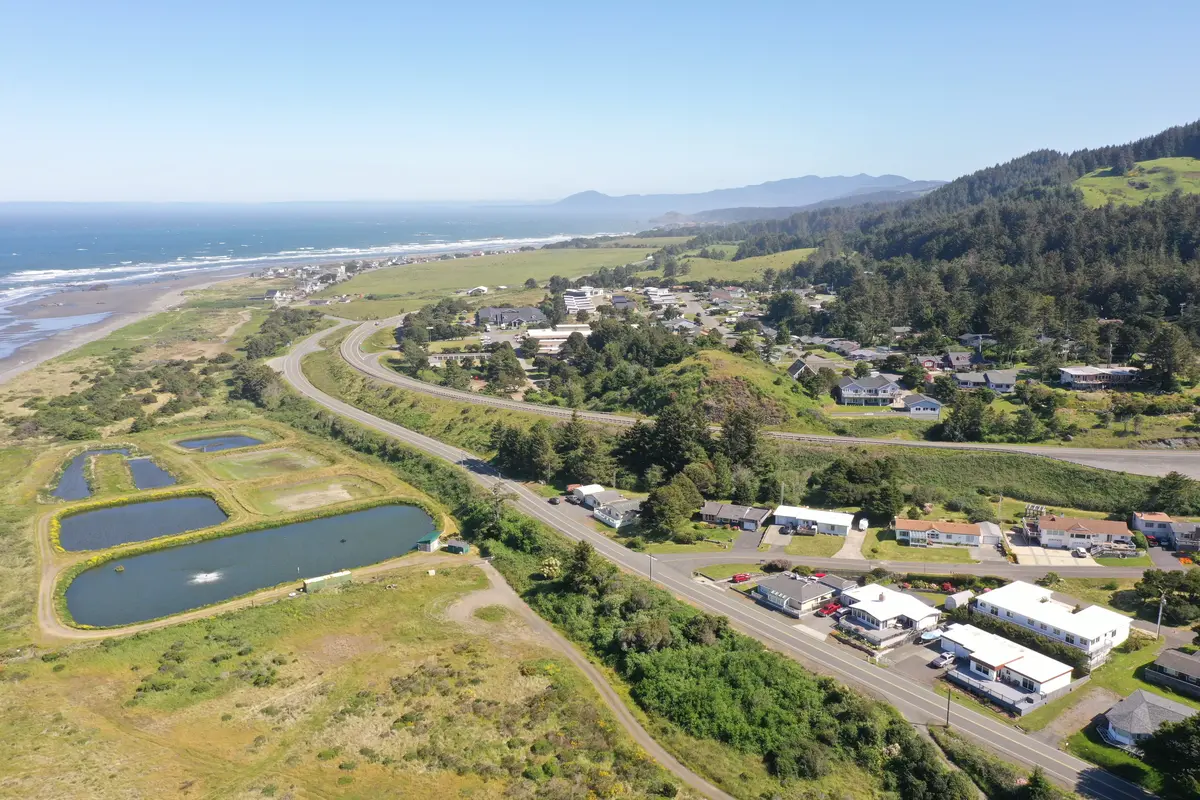
Three parks make up the city's managed system, and each one serves a specific function rather than trying to be everything at once. That clarity is actually useful for residents figuring out where to go.
Buffington Park is the activity hub — a baseball field, tennis and basketball courts, and a playground give it the infrastructure that organized youth sports and casual pickup games both need. Families with kids in Central Curry School District will find themselves here regularly, particularly during the warmer months. It's where the town's recreational baseline lives.
The downtown Pocket Park is exactly what the name suggests: a sitting area with flowerbeds tucked near shops and dining. It's not a destination park — it's the kind of pause point that makes a walkable downtown function, and in a small commercial core like Gold Beach's, that matters more than its footprint suggests.
South Beach Park is the most consequential of the three for people who didn't grow up here. It provides direct beach access, public restrooms, and RV parking, and it's where the city's Visitor Center is housed — making it the practical entry point into Gold Beach for a lot of people who eventually become residents. The beach access alone makes it worth knowing about. On a clear afternoon the view across the river mouth toward Wedderburn is one of the better ones in town.
What this city park system doesn't offer: an aquatic center. Residents who want a lap pool or swim instruction face a drive to Brookings. That's a real gap for families with competitive swimmers or people whose fitness routine depends on indoor aquatics — worth knowing before you move in, not after.
The city maintains these parks by contract rather than with dedicated parks staff. That keeps costs lean but it also means the system isn't positioned to grow quickly. For a town of 2,466, the fundamentals are covered. Everything beyond the fundamentals happens on state and federal land — which, fortunately, is everywhere.
The State Scenic Corridors: What Makes Gold Beach Exceptional
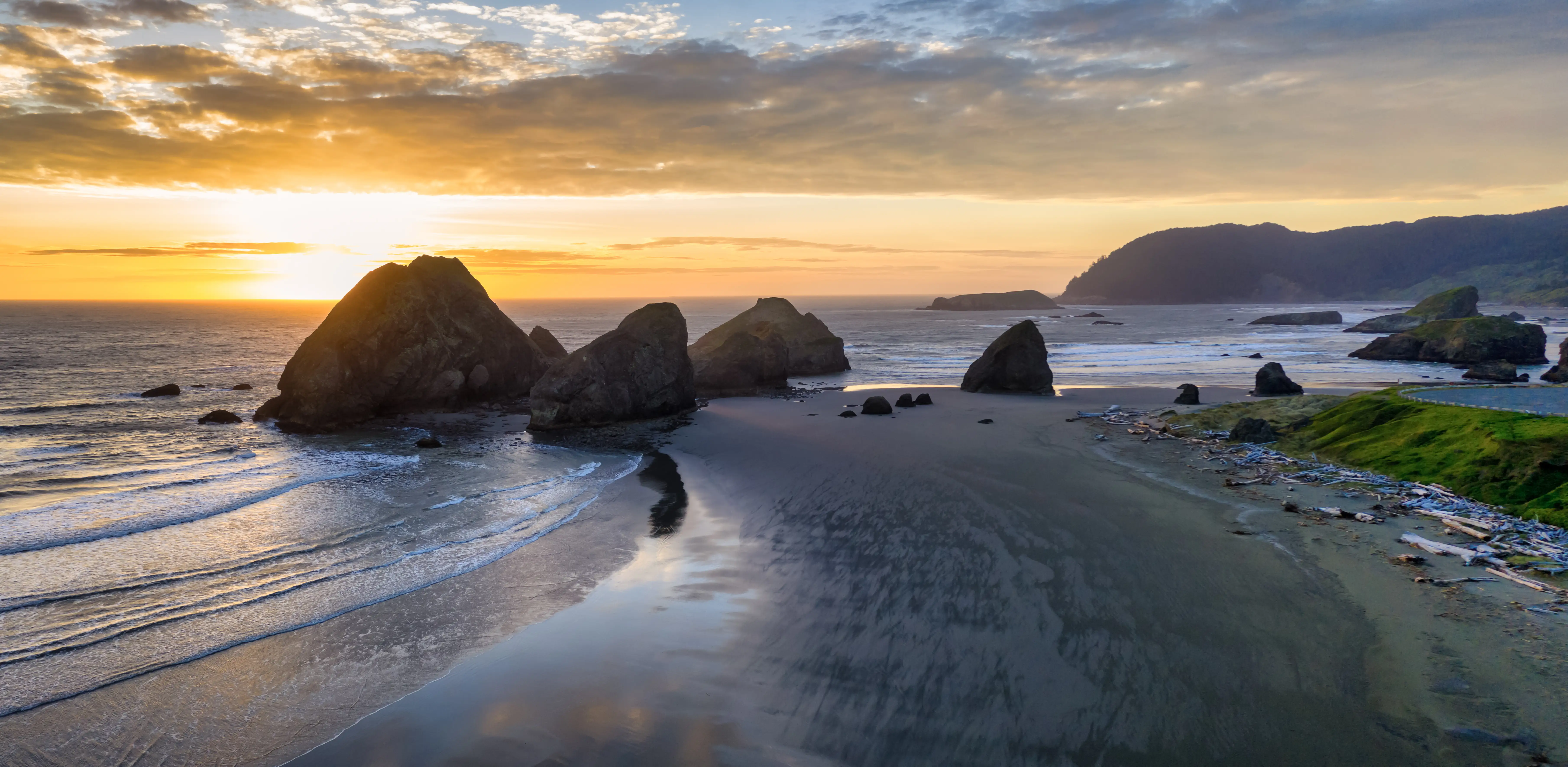
Two state scenic corridors bracket Gold Beach, and together they give residents access to coastal scenery that would anchor the tourism economy of a much larger city. Both are free to enter year-round. Both are underused on weekday mornings in a way that feels almost surreal once you've experienced it.
Cape Sebastian State Scenic Corridor
About six to seven miles south of town along US-101, Cape Sebastian rises to parking lots set more than 200 feet above sea level. The view from the south vista reaches up to 43 miles north along the Oregon coast and nearly 50 miles south toward Crescent City, California. On a clear day in late winter, you can watch gray whales from the overlook during their biannual migration — one of the more accessible whale-watching spots on the entire Oregon Coast, with no boat required.
The cape itself is covered in dense Sitka spruce forest, and the 3.3-mile coastal trail through it is rated moderate. AllTrails identifies the Oregon Coast Trail section from Cape Sebastian as the most popular and most challenging route in the Gold Beach area — which tells you something about who uses it. Expect exposed ridgeline sections, significant elevation, and the kind of view at the top that makes the climb make sense. Mud is a factor in wet months; trail runners and hikers who come from drier climates underestimate it.
Samuel H. Boardman State Scenic Corridor
Twelve miles of US-101 between Gold Beach and Brookings run through the Samuel H. Boardman State Scenic Corridor — 1,400 acres of craggy bluffs, tucked beaches, and offshore rock formations across 13 numbered stops. An 18-mile segment of the Oregon Coast Trail connects them on foot.
| Feature | Detail |
|---|---|
| Total acreage | 1,400 acres |
| Numbered access stops | 13 |
| Oregon Coast Trail segment | 18 miles |
| Entry fee | Free, year-round |
| Location from Gold Beach | South along US-101 toward Brookings |
| Terrain type | Bluffs, secluded beaches, offshore rock formations |
| Best known for | Arch Rock, Natural Bridges, Thomas Creek Bridge viewpoints |
Boardman is the kind of place that residents use differently than visitors do. Visitors stop at the numbered pullouts and move on. Residents park, walk between two or three stops on the trail, and treat a section of it as a regular loop. The approach changes how the corridor feels — less like a scenic drive and more like a backyard trail system with an extraordinary ceiling.
Otter Point State Recreation Site
About three miles north of Gold Beach, Otter Point is smaller and less dramatic than the corridors to the south, but it fills a different role: it's the accessible, low-effort option for a Tuesday afternoon or a quick winter walk. Two beaches — Agate Beach to the north and Bailey Beach to the south — flank the point, and the rockhounding here is genuine. Agate, jasper, and petrified wood turn up after storms. The tidepools are some of the more productive on this stretch of coast, and oystercatchers, sea lions, and seasonal whales give wildlife watchers consistent reasons to return.
Two trail options keep it approachable. The Otter Point Trail covers a half mile to a clifftop viewpoint and earns the easy rating. A 0.65-mile section of the Oregon Coast Trail continues south from there to Bailey Beach. Neither demands much — which is the point. Not every outdoor outing needs to be a 2,000-foot climb.
The Rogue River: Wild, Scenic, and Central to Everything
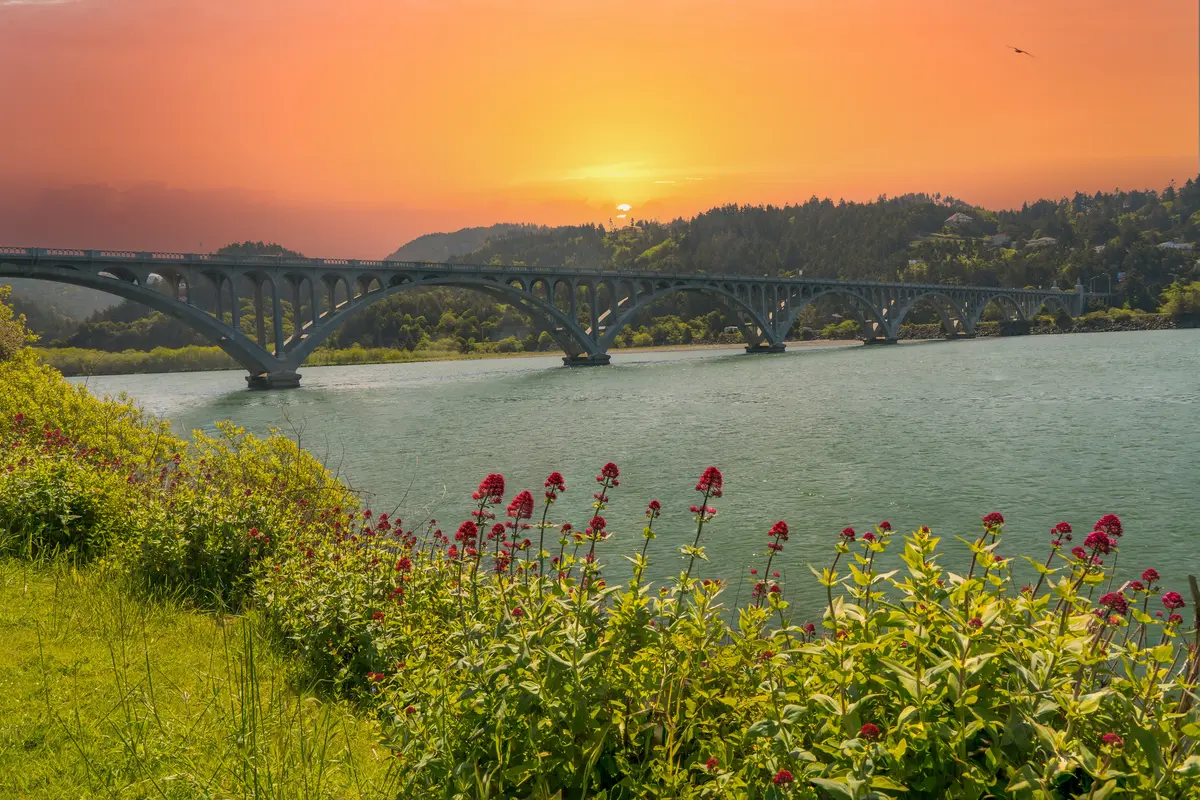
The Rogue River reaches the Pacific at Gold Beach, and that geography is not incidental — it's the reason the town exists in its current form and the reason the recreational culture here feels different from a purely coastal community. The river was designated Wild and Scenic by Congress in 1968, a status that keeps it free-flowing and publicly accessible for as long as federal law holds.
Jet Boats and the River Experience
Jerry's Rogue Jets has operated from the Port of Gold Beach since 1958, making it one of the longer-running outfitters on the entire Oregon Coast. The operation runs three tour distances — 64, 80, and 104 round-trip miles — and is the only commercial jet boat operator with access to the Wild section of the upper river. That designation matters: the Wild section is where the canyon narrows, the human footprint disappears, and the wildlife shifts from casual sightings to something closer to a nature documentary. Bald eagles, ospreys, river otters, and black bears are the standard roster. Longer tours include meal stops at upriver lodges, which means the 104-mile trip functions as a full-day excursion rather than just a ride.
For residents, the jet boats are both a local institution and a practical gateway into upper river country that's difficult to access any other way. Guided fishing trips and off-season private tours extend the season beyond the main tour schedule. If you move to Gold Beach and never take the boat upriver at least once, you've missed the defining geographic experience of the place.
Fishing Culture
The Rogue is one of Oregon's premier steelhead and salmon rivers, and fishing isn't a niche interest here — it's woven into the weekly rhythm of a significant share of the population. The Port of Gold Beach provides boat launch access and moorage. Charter fishing operations work out of the port, and drift boat fishing on the lower river is a year-round pursuit for those who know the runs. Newcomers who don't fish often find themselves picking it up within the first year, partly by proximity and partly because it becomes hard to live on the Rogue and stay uninterested in it.
Kayaking and River Access
The lower Rogue — from the mouth upstream past the Isaac Lee Patterson Bridge toward the estuary — draws sea kayakers and paddlers who want calmer water than the upper canyon provides. The estuary section offers wildlife watching by water, with shorebirds, harbor seals, and the occasional river otter accessible from a kayak in ways that a shoreside trail can't match. There's no rental infrastructure to speak of in town, so kayakers generally bring their own equipment.
Looking to buy in Gold Beach? Estimate your payment.
Enter your numbers to see an estimated monthly mortgage payment.
Estimate only. Excludes HOA fees and mortgage insurance. The interest rate above is a starting point, not a quoted rate — replace it with your own to see real numbers. Insurance is a flat placeholder, not a Gold Beach quote.
Trails, Old Growth, and What Comes Next for Outdoor Residents
The Gold Beach area has approximately 21 mapped trails across all skill levels — 7 rated easy, with 4 that include camping. That spread matters because it means the trail network serves both the casual walker and the multi-day backpacker, which is a wider range than most towns this size can claim.
The Trail Landscape
The Oregon Coast Trail runs through the area in segments, and the sections accessible from Cape Sebastian and Boardman get the most use. But the inland options are worth knowing about. The Francis Shrader Old Growth Trail, accessible through the Gold Beach Ranger District, moves through coastal old-growth forest — a genuinely different experience from bluff-top ocean hiking. The canopy changes the sound, the light, and the pace. It's the trail that surprises people who came here expecting nothing but coast.
Trail maps for the Oregon Coast Trail, the Rogue River Trail, and the Illinois River Trail are available at the Gold Beach Visitors Center at South Beach Park. The Rogue and Illinois River trails both extend into the Siskiyou and Klamath wilderness areas, making them staging points for multi-day backcountry trips. People who move here with serious backpacking habits quickly realize they've landed in a place with more wilderness access than they initially understood.
What Outdoor Life Here Actually Looks Like
Six months in, most people who moved to Gold Beach for the outdoors find themselves in a routine they couldn't have predicted from the outside: a weekday morning walk to Otter Point before the tourists arrive, a weekend run on a Boardman trail section, a steelhead season that reorganizes Saturday mornings from November onward. The activities are not exotic — walking, fishing, paddling — but the settings are consistently exceptional in a way that doesn't wear off the way a novelty does.
What catches newcomers off guard is the weather's effect on planning. The coast doesn't get cold in the way that stops people from going outside, but it does get wet and gray in a way that requires shifting expectations. Trails that feel exposed and gloomy in February are the same trails that earn those 43-mile views in September. Residents who build their routine around the good weather windows — and there are genuine stretches of them, especially late summer and early fall — tend to love it here. Those who move in expecting Pacific Coast Highway in July year-round do not.
For youth sports and school-based activities, the city's parks provide the infrastructure that Central Curry's programs need — more on that at the schools page. And if you want to understand how the outdoor lifestyle stacks up against the cost of living here, the cost-of-living page puts the full picture together.
| Recreation Type | Where | Best For |
|---|---|---|
| Beach access & rockhounding | Otter Point State Recreation Site | Nature Families |
| Bluff & coastal hiking | Samuel H. Boardman Corridor | Nature Views |
| Whale watching & forest hiking | Cape Sebastian State Scenic Corridor | Nature Views |
| Jet boat tours & river wildlife | Wild and Scenic Rogue River / Port of Gold Beach | Nature Families |
| Old-growth forest trail | Francis Shrader Trail / Gold Beach Ranger District | Nature Quiet |
| Youth sports & pickup games | Buffington Park | Families |
| Multi-day backpacking | Rogue & Illinois River Trails (wilderness access) | Nature Privacy |
Local Expert Takeaway: Gold Beach is one of the few places on the Oregon Coast where the outdoor recreation isn't just good — it's structurally inexhaustible. Between Otter Point three miles north, Cape Sebastian six miles south, twelve miles of Boardman Corridor beyond that, and the Wild and Scenic Rogue River running right through the middle of town, residents have more free-access trail, beach, and river than they'll ever fully use. The city's own parks are modest, and there's no aquatic center, but those gaps matter less here than they would anywhere without state land on three sides. The adjustment for newcomers is weather, not access — learn to love a gray morning on the bluff and you've figured out Gold Beach.
Quick Takeaways & FAQs
✅ Gold Beach sits where the Wild and Scenic Rogue River meets the Pacific, giving residents immediate access to world-class fishing, jet boat trips, and estuary paddling from a port that has operated since 1858.
⚠️ There is no municipal aquatic center in Gold Beach — residents who need indoor swim facilities face a drive to Brookings, which is a real gap for families whose fitness routines depend on a pool.
📍 The Samuel H. Boardman State Scenic Corridor, stretching 12 miles south along US-101 with 13 free access points and an 18-mile trail segment, functions as Gold Beach residents' de facto backyard trail system — most visitors drive it; locals walk it.
Are the state parks near Gold Beach free to access?
What is the Rogue River jet boat experience actually like for residents?
How many trails are there around Gold Beach, and are any of them easy?
Does Gold Beach have a swimming pool or aquatic center?
What is the best time of year for outdoor recreation in Gold Beach?
Moving to Oregon?
Tell us what you need help with and we'll connect you with local resources.
