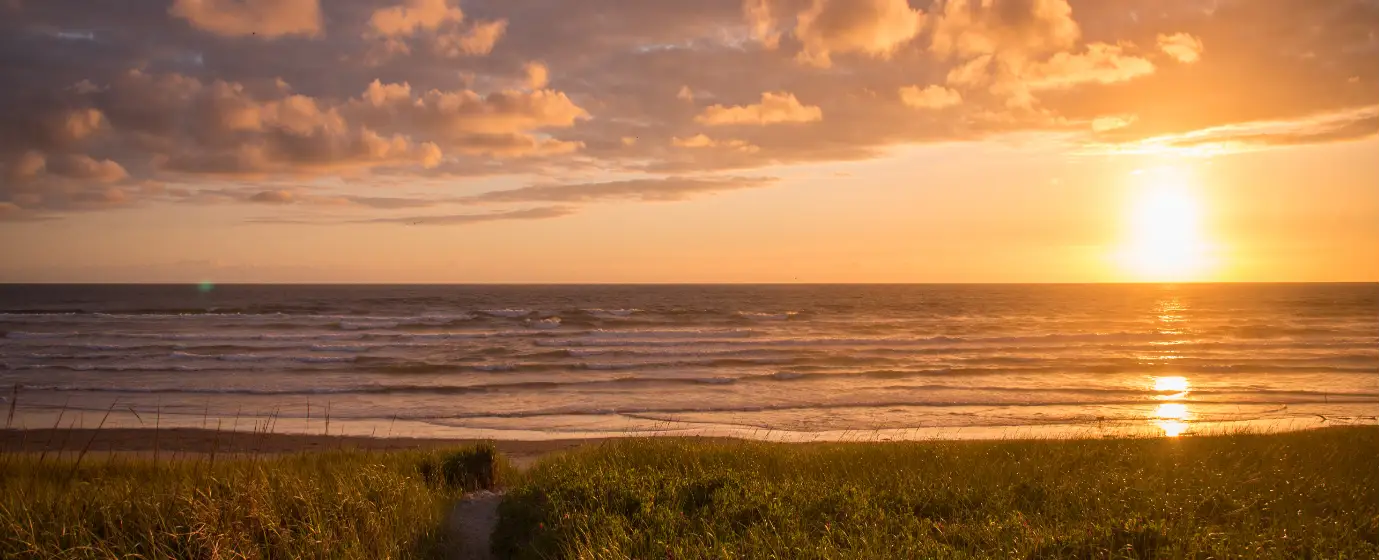
Most Oregon Coast towns sell you on the scenery and leave out the specifics. Gearhart does the opposite — the recreation here is unusually concrete and unusually varied for a city of 1,872 people. You have a state-recognized park that draws visitors from across the region without ever feeling crowded, a golf course that predates the automobile, an estuary system where you can pull Dungeness crab from tidal channels, and eight miles of beach you can actually drive on. The outdoor life is not incidental to Gearhart — it is the whole reason the city exists.
The quieter side of the Oregon Coast — no boardwalk, no carnival rides, no arcade strip — is both Gearhart's appeal and its honest limitation. Recreation here is self-directed. Nobody hands you an itinerary. The people who thrive here show up knowing what razor clamming season means, understanding that 124 sunny days a year leaves plenty of room for gray mornings, and genuinely preferring a dune walk over a crowd. If that description fits, the recreation inventory is remarkably deep for a town this size.
What sets Gearhart apart from neighbors like Seaside and Cannon Beach is not just the beach itself but what surrounds it. The Necanicum Estuary sits at the city's eastern edge, the Golf Links weave through coastal dunes in the middle of town, and Del Rey Beach State Recreation Site anchors the north end near US-101. These aren't separated attractions you drive between — they form an overlapping ecosystem you can move through on foot, on a board, or in a kayak within the same afternoon. For families considering a neighborhood near the coast, the proximity of all three is a real quality-of-life factor.
Whether you're weighing a move or simply figuring out what daily outdoor life here looks like, the sections below break down Gearhart's beach access and conditions, its landmark golf course, the estuary and water recreation, and the seasonal rhythms that shape how residents actually use all of it.
Gearhart Beach and Del Rey Beach State Recreation Site
Gearhart Beach is the city's front yard — and unlike most Oregon Coast beaches, you can drive on it. Vehicle access extends approximately 10 miles north toward Warrenton, which sounds like a novelty until you realize it fundamentally changes how the beach gets used. Families haul gear to spots far from any parking lot. Kite buggies run where the sand is hard and flat. Clamdiggers load their buckets directly into their trucks rather than hauling everything back over the dunes.
The beach itself runs roughly eight miles and stays wide even at high tide. Kite flying, kite buggying, sandcastle building, and bird watching are the low-key daily uses. Razor clamming is the seasonal obsession — the tidal flats here draw experienced diggers from across the region when the season opens, and it is one of those activities that turns into a whole household ritual for families who settle here.
At the south end of Gearhart Beach, where Neacoxie Creek meets the Pacific, beachcombing gets genuinely interesting. Sand dollars appear at low tide. Agates, intact crab shells, and occasionally Japanese glass floats wash up along the high-tide line. The best agate hunting comes in winter and early spring, after storms have turned over fresh material — a seasonal rhythm most newcomers don't discover until their second winter here.
Del Rey Beach State Recreation Site
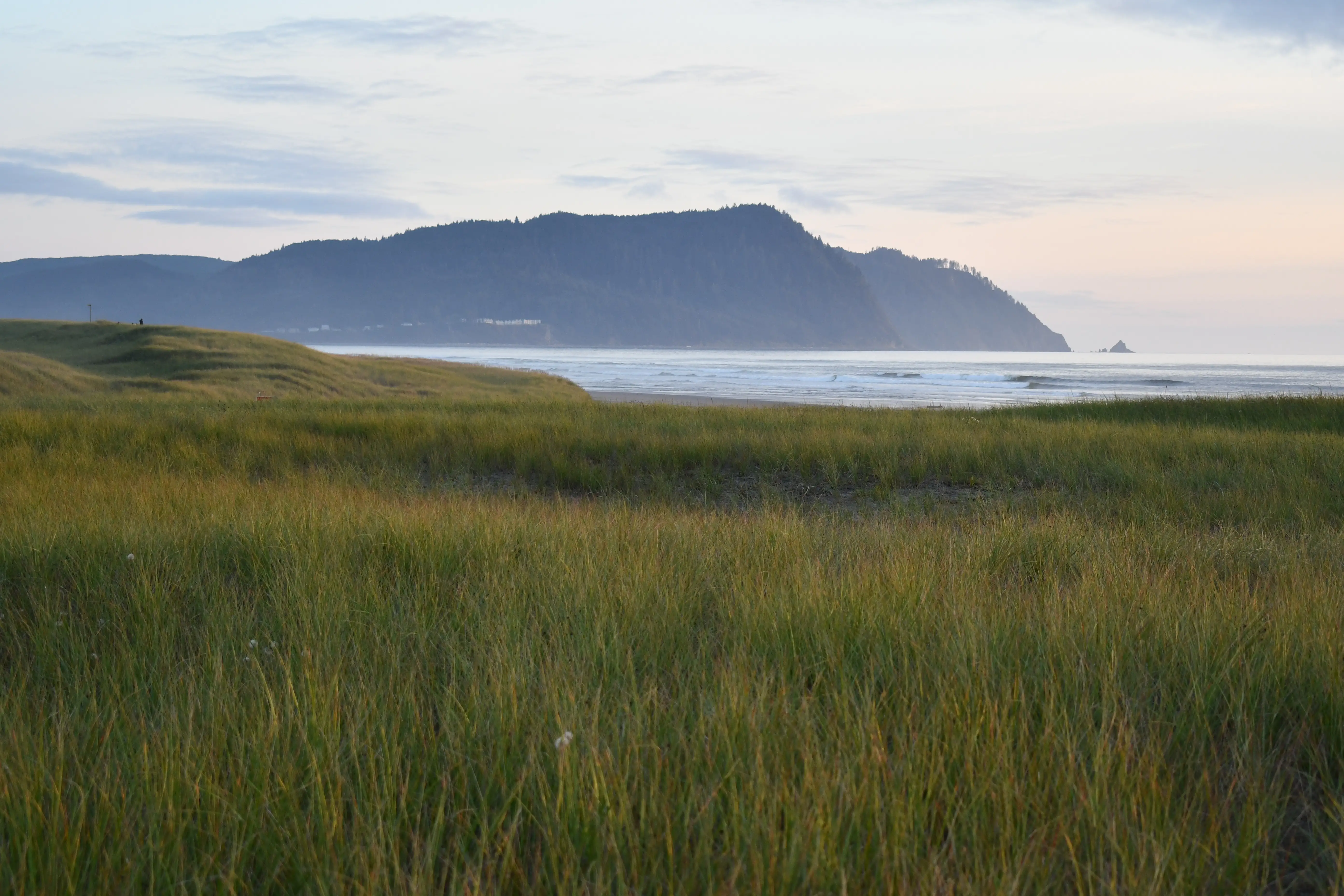
Just off US-101 at the north edge of the city, Del Rey Beach State Recreation Site is one of the quieter Oregon state parks on the coast. The 18.7-acre site was gifted to the state by Clatsop County in 1970 and has remained free to access ever since. A short path over the dunes opens onto a wide beach with clear views of Tillamook Head to the south — the same headland that marks the start of Cannon Beach's more dramatic coastline.
Vehicle access is permitted here too, which makes it a practical launching point for longer beach drives. Dogs are welcome. The City of Gearhart offers a free beach wheelchair rental for residents and visitors with mobility limitations, making this stretch genuinely accessible in a way that most coastal parks aren't.
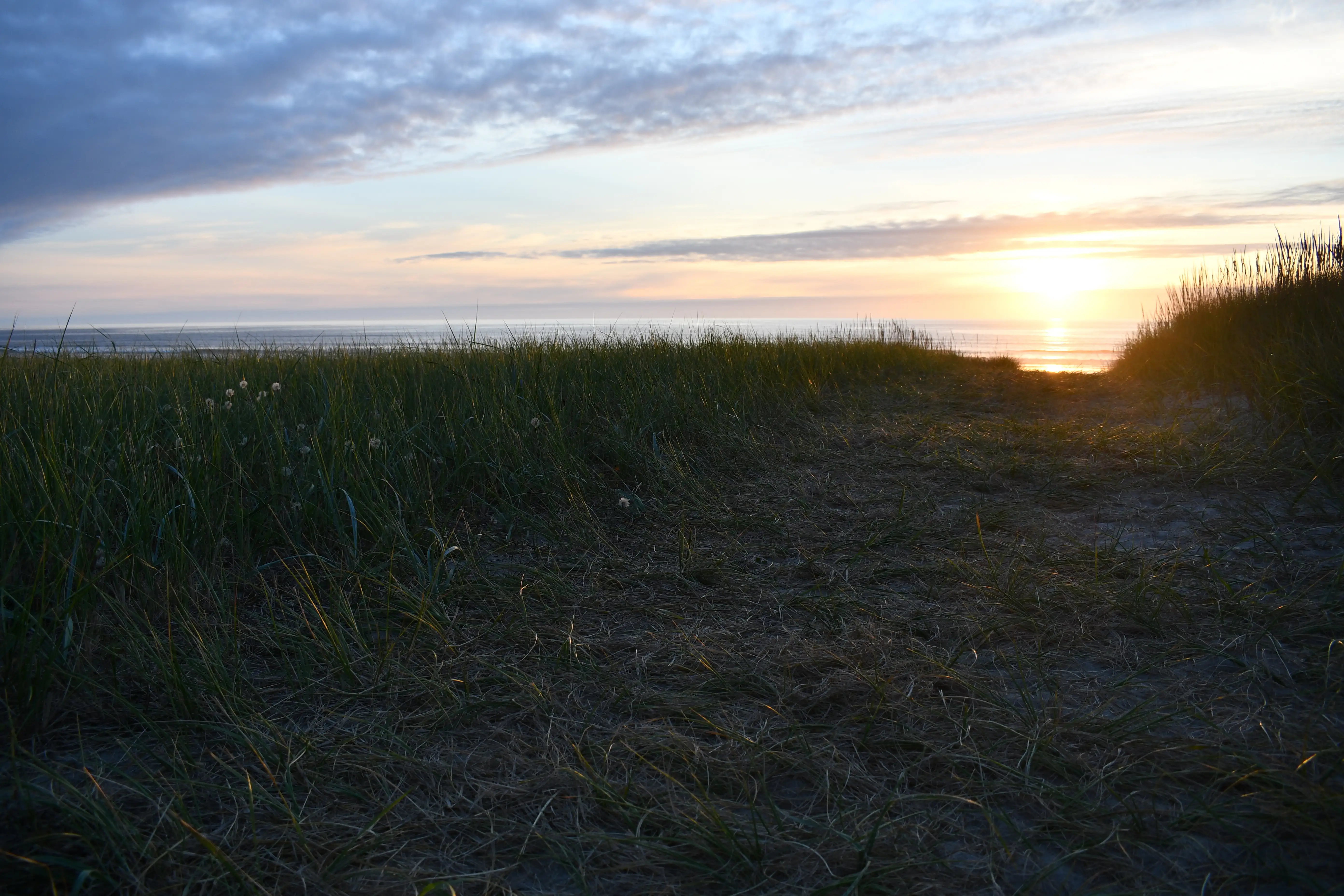
One detail that surprises people: Gearhart doesn't operate beach lighting, so the dunes stay dark after sunset. On clear nights, that's an asset — the stars over the Pacific here are legitimate, and stargazing from the dunes is one of those low-key pleasures residents mention after living here a while.
Bonfire Rules Worth Knowing Before You Move Here
Beach bonfires are allowed within city limits but require a burn permit from the Gearhart Volunteer Fire Department. Fires must stay under three feet by three feet, use only natural untreated wood — no driftwood — and be positioned at least 25 feet from dune grass, or 50 feet during fire season. Fire season runs roughly mid-June through September. Newcomers who skip the permit process tend to find out about it the hard way; this is the kind of local rule that isn't obvious until someone points it out.
Gearhart Golf Links: The Oldest Course West of the Mississippi
The Gearhart Golf Links has a legitimate claim — recognized by the Oregon Golf Association and the course's own documented history — to being the oldest golf course in continuous operation west of the Mississippi River. It was formally established in 1892, started as three holes laid out across coastal sand dunes, and grew to its current 18-hole configuration between 1913 and 1915. That's not marketing copy; it's a verifiable piece of Oregon sports history sitting in the middle of a town of under 2,000 people.
The course is public. Anyone can play it. That combination — a historically significant links course with no membership barrier — is genuinely rare on the West Coast, and it's one of the things that draws golfers from across the region to a city that otherwise has no tourism infrastructure to speak of.
What the Course Actually Plays Like
Gearhart Golf Links is a par-72 course playing approximately 6,200 to 6,550 yards, stretching about a mile from north to south through the coastal dune terrain. A renovation completed between 2013 and 2015 removed hundreds of trees to restore the course's original open links character, adding new tees and expanding fairway sightlines. The result is a course that plays closer to how it did a century ago — wind-exposed, visually spare, and legitimately demanding in the way links golf is supposed to be.
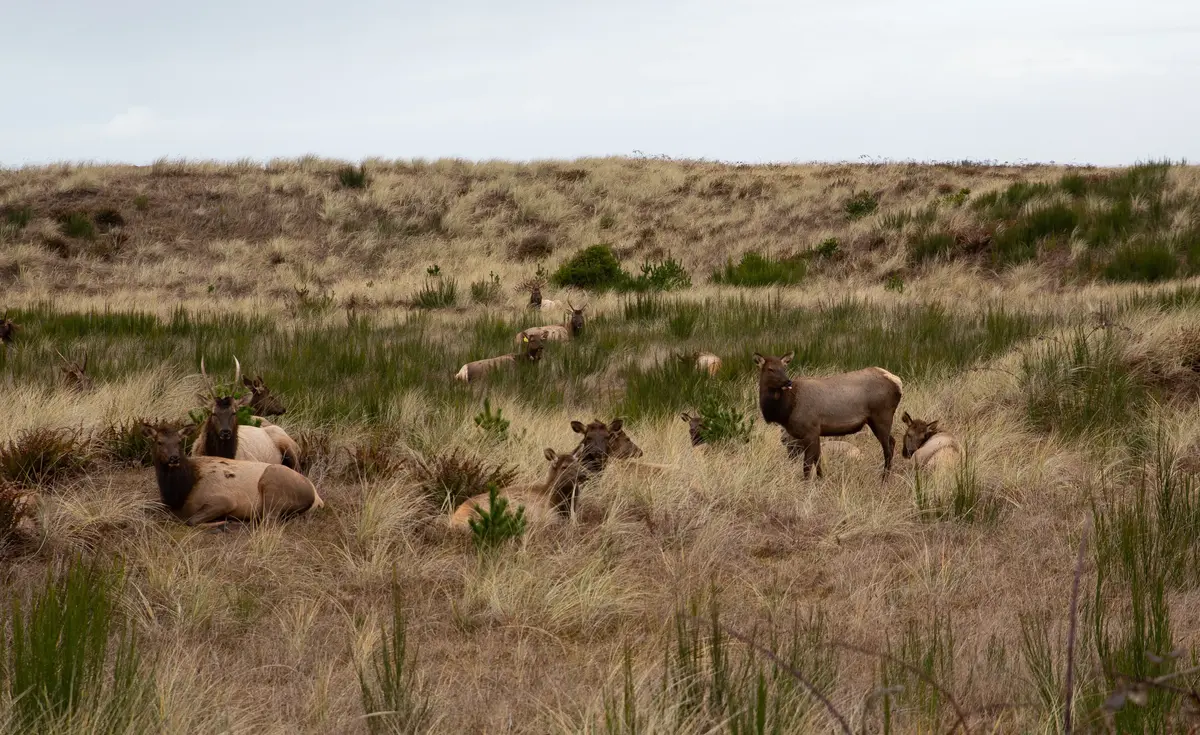
Roosevelt elk roam the course and surrounding dunes year-round. Dawn and dusk sightings are most common, and calving season in June and July brings additional activity. The City of Gearhart maintains a minimum 75-foot distance rule from the elk — posted on signage the course takes seriously. Playing your way through a coastal links while a herd of Roosevelt elk drifts across the fairway is one of those only-in-Oregon experiences that doesn't get old for residents who play here regularly.
After the Round
McMenamins Sand Trap Pub sits adjacent to the course and functions as the natural gathering point after a round. For the full picture of the local dining and social scene near the Links, see the Weekends & Local Favorites section below.
| Feature | Detail |
|---|---|
| Established | 1892 (Oregon Golf Association) |
| Holes / Par | 18 holes, par 72 |
| Yardage | ~6,200–6,550 yards |
| Course type | Links-style, coastal dunes |
| Access | Public — no membership required |
| Last major renovation | 2013–2015 (tree removal, links restoration) |
| Notable wildlife | Roosevelt elk year-round; 75-ft minimum distance required |
Necanicum Estuary: Kayaking, Crabbing, and the Wildest Acre in Town
Between Gearhart and Seaside, the Necanicum Estuary is where three water systems converge — the Necanicum River, Neawanna Creek, and the Neacoxie channels — forming a network of tidal flats, salt marshes, and freshwater channels that Oregon's conservation database recognizes as critical habitat. It is accessible from the Gearhart side, which means residents here have direct entry to one of the coast's more productive natural areas without driving anywhere.
Birdwatchers treat the estuary as a serious site. Migratory birds move through in numbers that reward patience and a decent pair of binoculars. Kayakers use the tidal channels for flat-water exploration — the scale of the estuary makes it navigable without technical skill, and the combination of salt marsh and open water gives you genuine variety in a short paddle.
Fishing and Crabbing
The Necanicum River draws serious anglers for its winter steelhead run, which has a regional reputation. Dungeness crab can be harvested from the estuary waters — the kind of activity that residents integrate into ordinary weekends rather than treating as a destination trip. Boating on the river rounds out the water-recreation picture for households that keep a small vessel.
What makes the estuary recreation meaningful for a relocation decision is that it is right here, accessible without a drive and without fees. For a city this small, having this caliber of natural habitat within the city's footprint is not a given — it's the geographic luck that makes Gearhart's outdoor life punch well above its population size.
A Friction Point Worth Naming
The estuary is a genuine draw, but the access points are informal and not well-signed for newcomers. People who move here expecting marked trailheads and interpretive boards arrive to find a more raw kind of access — you learn the good entry points by talking to neighbors, not by following a map app. That's part of the character here, but it does mean the first season involves some orientation.
Looking to buy in Gearhart? Estimate your payment.
Enter your numbers to see an estimated monthly mortgage payment.
Estimate only. Excludes HOA fees and mortgage insurance. The interest rate above is a starting point, not a quoted rate — replace it with your own to see real numbers. Insurance is a flat placeholder, not a Gearhart quote.
Weekends & Local Favorites: Where Residents Actually Spend Their Time
In a city of 1,872 people, the outdoor spaces and the social spaces overlap almost completely. The places Gearhart residents gather on a weekend are also the places that make the recreation feel inhabited rather than just scenic.
McMenamins Gearhart Hotel and McMenamins Sand Trap Pub anchor the post-round social scene near the Golf Links. The Sand Trap is the 19th-hole gathering spot the course has always had — unpretentious, golf-adjacent, and genuinely local in a way that resort-area bars often aren't. The Gearhart Hotel itself has been drawing people to this stretch of coast for well over a century.
King Tide Bakery and By The Way handle the coffee side of morning beach walks, while Grandma's Corner Restaurant, El Trio Loco, and Prep Kitchen Deli & Catering fill out the casual dining end of things. None of these are destination restaurants in the Cannon Beach sense — they are places residents use routinely, which is its own kind of value in a small town.
The honest seasonal pattern here is worth understanding before you move: summer brings more visitors and more activity on the beach, but the town itself stays quiet by Oregon Coast standards. Fall and winter thin the crowds considerably, and that's when longtime residents say the place really belongs to them — the steelhead run, the storm watching from the dunes, the agate hunting after heavy surf. The people who love Gearhart most tend to love it most in January.
For families with kids, youth sports and activities connect through the Seaside School District — see the schools page for details on what's available. And if you're evaluating neighborhoods based on proximity to the beach access points, the neighborhoods page breaks down which parts of the city sit closest to the Golf Links, the estuary, and Del Rey Beach.
The Accessibility Detail Most People Miss
The free beach wheelchair rental from the City of Gearhart is one of those programs that doesn't get mentioned in travel coverage but matters enormously to residents with mobility limitations or family members who use them. It means the shoreline is genuinely usable, not just scenic, for a wider range of households than the terrain would otherwise allow. It's the kind of civic detail that signals something about how a small city thinks about its own residents.
Local Expert Takeaway: Gearhart's recreation is legitimately varied for a city this small — an eight-mile drivable beach, a public historic golf course with elk on the fairways, and an estuary where you can crab and kayak without leaving the city limits. The catch is that none of it is handed to you with signage and infrastructure. The estuary access points are informal, the beach bonfire rules catch newcomers off guard, and the 124 sunny days a year means you will spend real time outdoors in the gray. Residents who figure out the rhythm — steelhead season, agate storms in February, the first post-round beer at the Sand Trap — tend to stay for decades. The ones who don't are usually the ones who wanted more town along with the beach.
Quick Takeaways & FAQs
✅ Gearhart Golf Links, established in 1892, is the oldest public golf course in continuous operation west of the Mississippi — and anyone can play it.
⚠️ Beach bonfires require a permit and specific rules around fire size and driftwood; newcomers who skip the permit process tend to find out about it from a fire department visit rather than a welcome packet.
📍 The City of Gearhart offers a free beach wheelchair rental, making the shoreline accessible to residents and visitors with mobility limitations.
Can you drive on the beach in Gearhart?
Is Gearhart Golf Links really the oldest golf course west of the Mississippi?
What is razor clamming like at Gearhart Beach?
What can you do at the Necanicum Estuary?
Do you need a permit for a beach bonfire in Gearhart?
Moving to Oregon?
Tell us what you need help with and we'll connect you with local resources.
