
Nearly 30% of Brookings residents are already over 65 — roughly double the national average — and that number tells you something important before you even look at a listing. This is not a place people accidentally retire to. They make a deliberate choice: mild winters, a microclimate that earns Brookings the nickname "Oregon's Banana Belt," dramatic coastal scenery, and a community pace that rewards slowing down. The city of 6,703 sits on US-101 at the far southwestern corner of Oregon, just about 20 minutes north of Crescent City, CA, and far enough from every urban center that its remoteness is either the whole point or the dealbreaker.
What drives retirement life here is largely the outdoors, community events, and a tight social fabric built around a shared appreciation for the coast. The Samuel H. Boardman State Scenic Corridor runs just minutes from downtown. Harris Beach State Park anchors the north end of town. Deep-sea fishing out of the Port of Brookings Harbor draws retirees who want an active hobby within walking distance of where they live. The typical home price sits at $486,371 (Zillow Home Value Index, July 2026) — noticeably below what coastal California commands, and meaningfully below much of the Willamette Valley, though still above the median household income here, a gap worth understanding before you run the numbers on a fixed income. Full cost-of-living context is on the cost-of-living page.
Oregon's tax treatment of Social Security is genuinely retiree-friendly. The state levies no sales tax, which matters on a fixed budget. Property tax rates here are among the lowest in Oregon. The honest tradeoff is healthcare: the nearest hospital is 25 miles south across the California border, and specialist care requires a significant drive to Medford or Grants Pass. For healthy, active retirees, that distance rarely registers. For anyone managing complex or chronic conditions, it is the central question to answer before committing.
Whether you are seriously considering a move or still comparing options along the coast, the sections below cover healthcare access, the retiree budget, walkability and community, downsizing choices, and how Brookings stacks up against nearby retirement destinations.
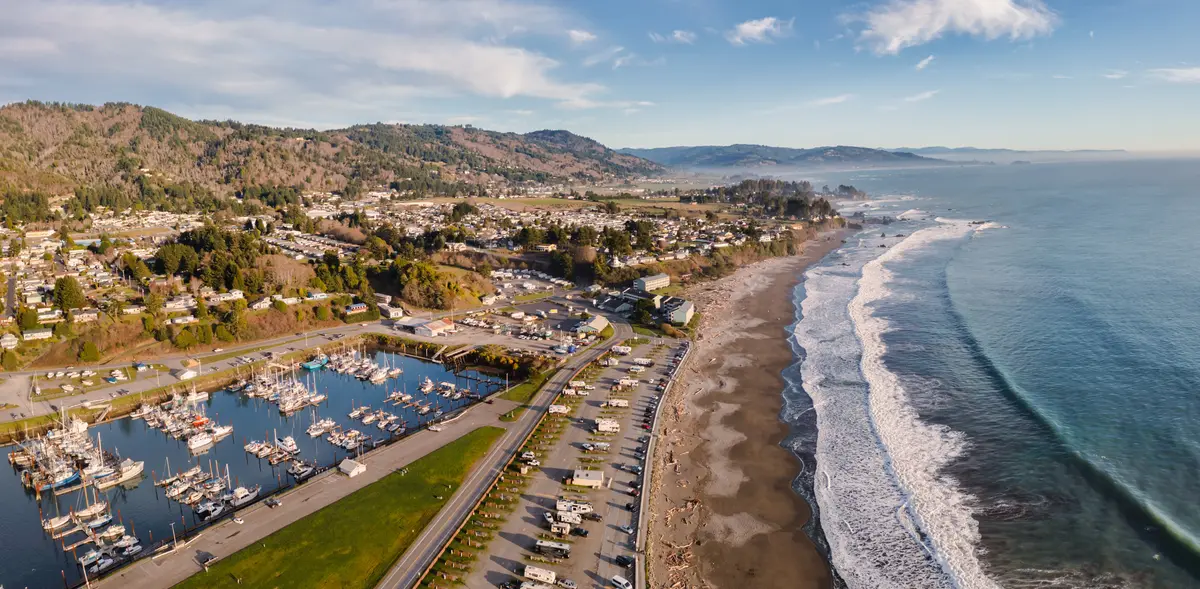
Why Retirees Are Choosing Brookings
The draw is specific. Brookings sits in a genuine microclimate — the Chetco Effect funnels warm, dry air down from the Chetco Mountains and keeps temperatures up to 20 degrees warmer than surrounding coast communities. Winters run mild, with average highs in the mid-50s°F and snowfall averaging just 1 inch per year. For retirees leaving wet Portland winters or brutal inland summers, that climate profile is not a minor perk — it is the primary reason to be here.
The retirees who thrive in Brookings are those who genuinely love the outdoors, are comfortable driving for most errands, and find real satisfaction in a small-town social world. With a population of 6,703 and roughly 191 sunny days a year, this is a place where you will see the same faces at Harris Beach State Park, at the summer concert series, and at the community events that anchor the calendar. The social fabric is unusually developed for a town this size, precisely because so many residents are in the same chapter of life.
The honest case against Brookings is shorter but worth reading. The typical home price is $486,371 (Zillow Home Value Index, July 2026) — see the full breakdown on the cost-of-living page — and the median household income here sits well below what it takes to carry that price, which means equity from a prior home sale or substantial savings matters more than income. Retirees who need regular specialist care, a walkable urban core, or proximity to family in major metro areas will feel the isolation within the first year. Those who want to spend their retirement kayaking, fishing, whale watching, and hiking one of the most dramatic coastlines in the country will wonder why they waited so long.
Healthcare & Medical Access in Brookings
The single most important healthcare fact about Brookings is the distance. Sutter Coast Hospital — the nearest hospital — is about 25 miles south in Crescent City, California. It is a 49-bed acute care facility that explicitly serves both Curry County, Oregon, and Del Norte County, California. For emergencies, surgery, and acute rehabilitation, it is a real facility with 24/7 emergency services and a Joint Commission accreditation for hospice and home health. U.S. News & World Report has recognized it for pneumonia and COPD care, which matters specifically for retirees.
What Sutter Coast does not offer is depth in subspecialties. Cardiology, oncology, orthopedics beyond routine cases, and neurological care at the level a retiree with complex conditions may eventually need all require travel to Medford or Grants Pass — a drive that takes well over an hour each way depending on conditions along US-101 and the mountain passes inland. That is not a reason to rule Brookings out, but it is the central medical calculus every retiree here has to make honestly.
For day-to-day care, Brookings has primary care physicians and some specialist offices within the city, and Pacific View Senior Living — listed among the city's major employers — brings care-oriented services into the local picture. The behavioral health expansion at Sutter Coast (the EmPATH unit) addresses a gap that has been notable along the rural Oregon Coast. Retirees managing well-controlled chronic conditions with established care plans tend to report that local primary care is sufficient for most of what they need. Those anticipating frequent specialist visits or potential hospitalization should map out their care plan before deciding whether 25 miles is a distance they can live with.
The Retiree Budget in Brookings
Oregon's treatment of retirement income is a mixed picture. The good news: Social Security benefits are completely exempt from Oregon state income tax at all income levels. The more complicated news: pension income, IRA withdrawals, and 401(k) distributions are taxed at Oregon's regular graduated rates, which run from 4.75% up to 9.9%. If most of your retirement income comes from those sources and you are drawing at a meaningful level, the state income tax bill is real and worth modeling with a tax professional before you move.
The no-sales-tax environment softens that somewhat. Every grocery run, hardware purchase, and local service avoids the sales tax drag that retirees coming from California feel most acutely. Oregon's Senior Property Tax Deferral Program is worth knowing about: homeowners age 62 or older with household income under $60,000 can defer county property taxes until the property is sold, with the state recording a lien at 6% simple interest. Verify the current income threshold directly with the Oregon Department of Revenue, as it can adjust. The effective property tax rate in Brookings is approximately 0.42% — among the lowest in Oregon — which keeps carrying costs relatively modest for buyers who purchase outright or put down substantially.
Daily costs on a fixed income here reflect the trade-offs of coastal small-town life. Groceries and general goods are comparable to other rural Oregon communities, though a serious shopping trip will mean driving out of town for anything the local stores do not carry. Utilities run moderate given the mild climate — heating costs are genuinely low compared to interior Oregon. The interactive mortgage calculator below the section reflects current purchase scenarios; for the full picture of ongoing costs, the cost-of-living page carries rent and utility context.
Looking to buy in Brookings? Estimate your payment.
Enter your numbers to see an estimated monthly mortgage payment.
Estimate only. Excludes HOA fees and mortgage insurance. The interest rate above is a starting point, not a quoted rate — replace it with your own to see real numbers. Insurance is a flat placeholder, not a Brookings quote.
Walkability, Community & Staying Active in Brookings
Brookings is a car-dependent town for most practical purposes. US-101 is the main commercial corridor, and reaching a grocery store, medical office, or hardware store almost always means driving. The two exceptions worth noting: the harbor area and the Azalea Park neighborhood are genuinely pleasant on foot, with the compact scale of both areas making some on-foot trips realistic for those who live close in. Curry Public Transit runs a Brookings Dial-A-Ride service on weekdays and a Coastal Express along US-101, with reduced fares for riders over 60 — a meaningful option for retirees who are no longer driving, though the absence of service on weekends is a real gap.
Where Brookings earns its retirement reputation is not walkability — it is community density. With nearly 30% of residents over 65, the social infrastructure has grown to match. The recurring event calendar is more active than a town this size typically supports: the Winter Art & Chocolate Festival, the Pirates of the Pacific Festival, a summer American Music Festival series, and gallery walks that give retirees a consistent reason to get out of the house and into the same rooms as their neighbors.
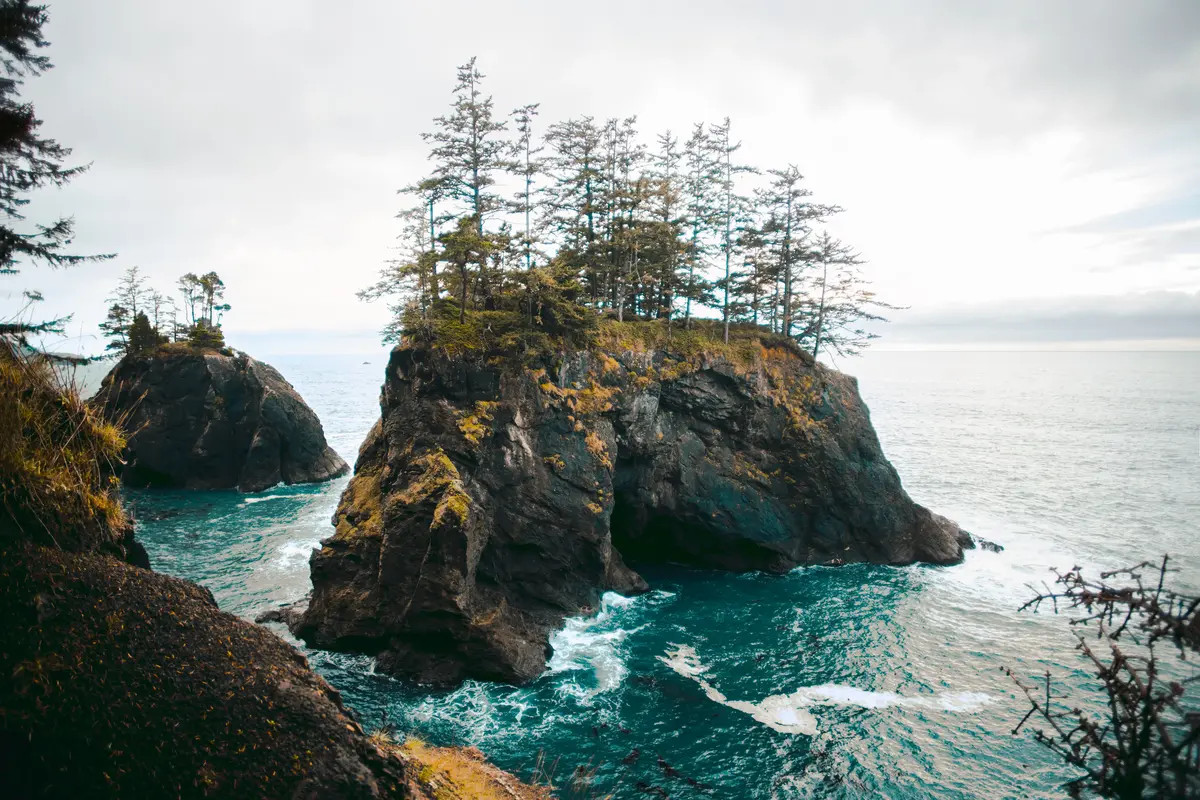
The outdoor life is the other engine of active retirement here. Azalea Park offers disc golf and ball fields. Chetco Point Park has a fenced dog park right at the beach. The Port of Brookings Harbor provides marina access and a walkable stretch of shops and dining. Harris Beach State Park is where residents gather for whale watching — gray whale migration is a genuine seasonal event, not a tourist gimmick. For the fishing-oriented retiree, the Chetco River and the deep-sea boats out of the harbor represent world-class access. Alfred A. Loeb State Park and the Samuel H. Boardman State Scenic Corridor are both within easy range for hiking and photography. The outdoor fabric of daily life here is the reason Brookings consistently appears on lists of Oregon's top retirement towns — and it is the thing that surprises people in the best way six months after arriving.
Right-Sizing: Downsizing in Brookings
No 55+ communities were found in Brookings. That is a straightforward fact with real implications for retirees who are specifically looking for the lock-and-leave, HOA-managed lifestyle that age-restricted communities typically offer. What does exist are care-oriented senior facilities — Pacific View Senior Living is the most prominent — but these are not lifestyle communities designed for active, independent retirees; they are care-level facilities, and the distinction matters.
The downsizing picture in Brookings is primarily the general housing stock, and that stock skews older and single-story in many of the established neighborhoods. Ranchers and single-level homes appear throughout the Harbor area and the Azalea Park neighborhood, and the compact lot sizes common to older coastal towns mean maintenance footprints are generally manageable. The catch is that purpose-built low-maintenance patio homes, condominiums, and attached townhomes — the product type most retirees are specifically seeking when they downsize — are limited in number. When that inventory does come to market, it tends not to sit.
Retirees coming from California cities with large condo markets or from Portland's inner-ring neighborhoods should recalibrate expectations. The supply of truly turn-key, single-level, low-exterior-maintenance homes is not deep. Working with a local agent who tracks the specific neighborhoods where that product concentrates — particularly in the Harbor and closer-in parts of Azalea Park — is the practical move. Neighborhoods like Seacrest Estates and Crown Terrace Heights offer additional options worth exploring for single-level layouts, though terrain varies and some areas involve gentle elevation changes. For the full neighborhood-by-neighborhood breakdown, see the neighborhoods page.
Brookings vs Nearby Retirement Destinations
| City | Cost vs Brookings | Primary Hospital | Walkability | Senior Living Depth | Overall Retirement Fit |
|---|---|---|---|---|---|
| Brookings, OR | Anchor | Sutter Coast Hospital (25 mi, Crescent City, CA) | Car-dependent; harbor area walkable | Care facilities only; no 55+ communities | Strong for outdoor-active, car-comfortable retirees |
| Gold Beach, OR | Somewhat lower | Curry General Hospital (in town) | Car-dependent; smaller commercial core | Limited; small-town senior services | Good fit for those prioritizing an in-town hospital |
| Port Orford, OR | Noticeably lower | Distant; less acute care nearby | Very car-dependent; very small town | Minimal senior infrastructure | Best for truly off-grid, budget-focused retirees |
| Crescent City, CA | Noticeably lower | Sutter Coast Hospital (in town) | Car-dependent; flat terrain | More senior living options than Brookings | Strong if hospital proximity is the top priority |
| Grants Pass, OR | Pricier | Regional medical center in town | More walkable commercial core | Broader 55+ and senior living inventory | Better for retirees needing regular specialist access |
| Medford, OR | Pricier | Full regional hospital system in town | Suburban; car-centric but more amenities | Deepest senior living inventory in the region | Best for medically complex retirees; more urban feel |
Gold Beach is the most direct comparison to Brookings — similar pace, similar coast, similar outdoor focus — and its somewhat lower price point combined with Curry General Hospital being in town makes it worth a hard look for retirees who want that hospital proximity without driving into California. Port Orford is genuinely less expensive but lacks the senior social infrastructure that makes Brookings work so well for retirees; it suits a very specific kind of buyer who wants true remoteness and has no complex healthcare needs.
Crescent City, CA sits noticeably lower on home prices and puts Sutter Coast Hospital in your own backyard rather than 25 miles away — for retirees whose primary concern is emergency access, that matters more than the state line. Grants Pass and Medford both offer more specialist depth, broader 55+ housing inventory, and urban amenities, but they trade the wild-coast setting for an inland valley feel and come at a higher price. The honest summary: if your health is good, your love of the outdoors is real, and your preference is a community where retirement is the shared project, Brookings is hard to beat on the Oregon Coast. If regular specialist visits are already part of your life, the drive calculus tips meaningfully toward Grants Pass or Medford.
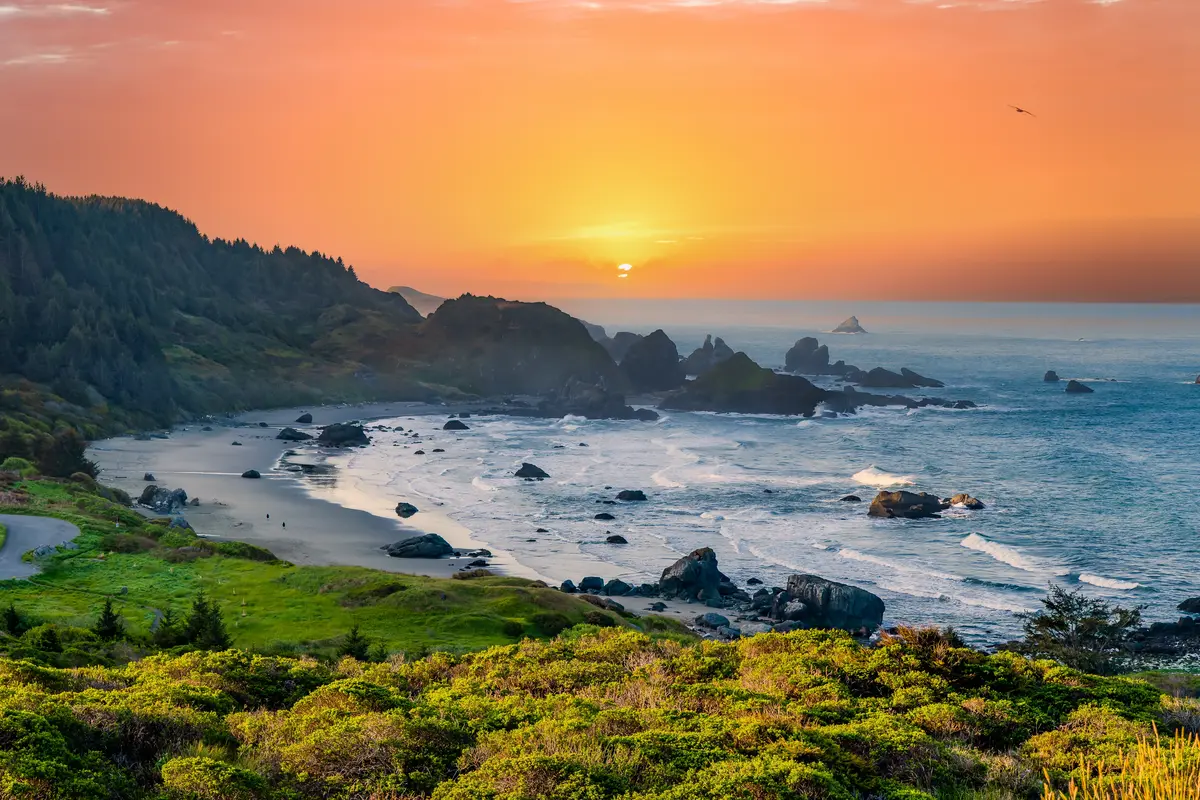
Local Expert Takeaway: Brookings works best as a retirement destination for people who have already made peace with two realities: driving for almost everything practical, and being a long way from a major hospital. The retirees who love it — and many love it deeply — are the ones who spend their mornings at Harris Beach watching the whales, their afternoons on the Chetco River or hiking the Samuel H. Boardman State Scenic Corridor, and their evenings at a gallery walk or a summer concert at the harbor. The community is unusually cohesive for a town this size precisely because nearly a third of the population is in the same stage of life. Oregon's Social Security exemption and the 0.42% effective property tax rate help the budget math work on a fixed income. But anyone managing a condition that requires regular specialist care should map that care plan before signing anything — the 25-mile drive to Sutter Coast Hospital is fine for an emergency; Medford for ongoing specialty care is a different kind of commitment.
Quick Takeaways & FAQs
✅ Oregon exempts Social Security from state income tax entirely, and Brookings's effective property tax rate of approximately 0.42% keeps ongoing ownership costs among the lowest on the Oregon Coast.
⚠️ The nearest hospital is Sutter Coast Hospital, about 25 miles south in Crescent City, CA — sufficient for emergencies and acute care, but specialist visits require a drive to Medford or Grants Pass, which is the central trade-off for retirees with complex medical needs.
📍 Nearly 30% of Brookings residents are over 65, which means the community events, social clubs, and local pace are built around retirement life in a way few towns this size can match.
Does Oregon tax Social Security retirement benefits?
What is the closest hospital to Brookings, Oregon?
Are there any 55+ or active adult communities in Brookings?
Is Brookings walkable enough for retirement without a car?
How does Brookings compare to Gold Beach for retirement?
Moving to Oregon?
Tell us what you need help with and we'll connect you with local resources.
