
If you've been researching Brookings online, you've probably already landed on one of those crime-rating sites that give the city an 'F' — and another that gives it an 'A.' Both scores come from real data. The gap between them is almost entirely methodological: different aggregators use different reporting series, different baseline populations, and different comparison sets. Before you trust either letter grade, it helps to go straight to the figures themselves. Brookings, a coastal city of 6,703 at the southern tip of the Oregon Coast where US-101 meets the Chetco River estuary, carries a violent crime rate of 1.7 per 1,000 residents. That number tells a fundamentally different story than an algorithm-generated letter.
Context matters enormously for a city this size. With a population of 6,703, a handful of incidents in any category moves the per-1,000 rate noticeably — which cuts both ways. When crime drops, it drops sharply on paper; when it rises, it looks alarming even if the raw numbers are small. What the multi-year trend line shows is encouraging: FBI Uniform Crime Report data shows decreasing violent crime and declining property crime over that span. In 2024, the city reported 9 violent crimes and 88 property crimes — a total of 97 reported offenses for the year. For a community of nearly 6,700 people, that is a genuinely modest count.
Safety in Brookings also means something beyond street crime. This is an Oregon Coast city sitting above the Cascadia Subduction Zone fault, and the natural hazard picture — tsunamis, flooding, wildfire smoke — is part of any honest safety conversation here. The city takes that seriously: the Brookings Police Department is the only Curry County law enforcement agency offering full 24/7 coverage, and the city maintains its own emergency preparedness infrastructure including tsunami warning sirens. How you feel about living near the coast with those risk factors in the background is genuinely personal, and this guide addresses it directly.
The sections below cover Brookings's crime rates in full context against state and national benchmarks, the neighborhood-level safety picture, how the local police department operates, natural hazard risks specific to this stretch of coast, and practical things to look into before settling on a neighborhood.
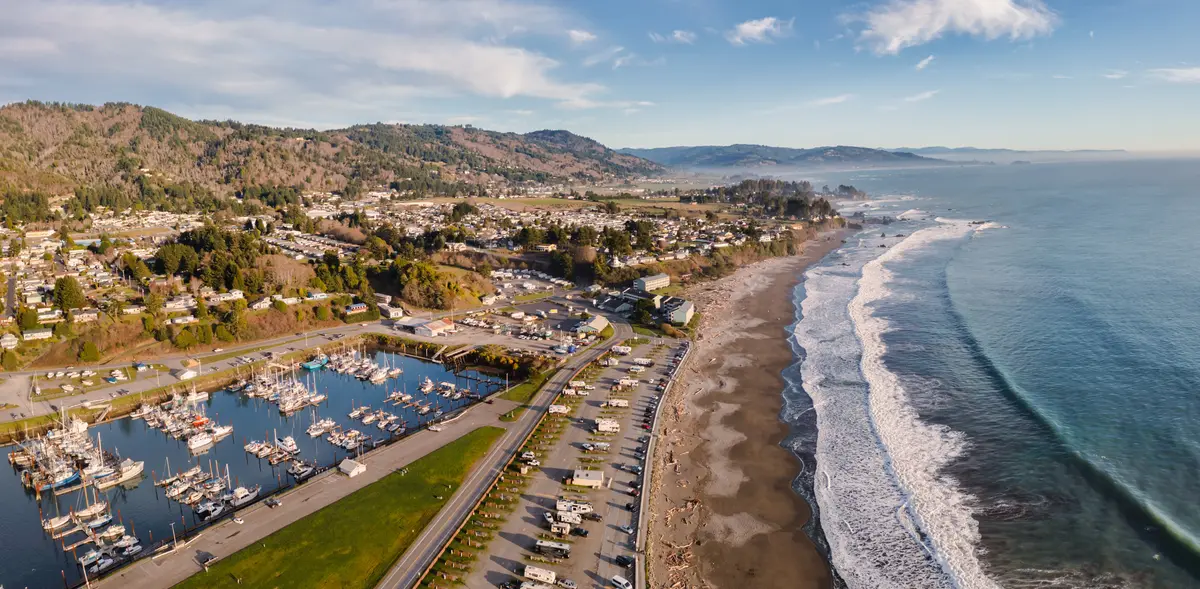
Brookings Crime Rates vs. Oregon and the Nation
The headline figure is straightforward: Brookings carries a violent crime rate of 1.7 per 1,000 residents, well below Oregon's statewide rate of 3.3 per 1,000 and the national rate of 3.7 per 1,000. On the metric that most directly affects how safe people feel day to day, Brookings comes in at roughly half the state average.
The property crime picture is more nuanced. Brookings carries a property crime rate of 14.1 per 1,000 residents, sitting meaningfully below Oregon's statewide rate and well below the national average. That comparison — a city outperforming both state and national property crime benchmarks — is not what most people expect from a small coastal town.
Larceny-theft drives the property crime category here, accounting for approximately 78% of all reported offenses in 2024. That pattern is typical of small tourist-adjacent towns: opportunistic theft from vehicles, gear left on boats at the harbor, and items left visible in parking areas near trailheads and state parks dominate the crime log. It is a real concern, but it is categorically different from the kind of property crime that makes neighborhoods feel unsafe to live in.
One important caveat applies to every rate you see for a city this size. In 2024, Brookings's total reported offense count was 97 incidents. A single bad month — a string of vehicle break-ins at a boat launch, a short spike in retail theft — can push the annual rate noticeably. The per-1,000 figures are real and the right tool for comparison, but they are also more volatile here than they would be in a city ten times larger. The multi-year trend, not any single year's rate, is the more reliable signal.
The Multi-Year Picture
That trend is favorable. Over recent years, Brookings has seen both decreasing violent crime and declining property crime, according to FBI data. The multi-year direction — not the precise annual number — is the figure worth anchoring your sense of this city on.
What this means practically: Brookings is not a crime-free town, and no honest guide would say so. But on the data that most directly affects daily life and personal safety, it outperforms both the state and the country. That is a meaningful starting point for someone deciding whether to move here.
Neighborhood Safety: Where the Differences Are Real
Brookings is small enough that no neighborhood is isolated from the others, but the safety gradient between the northern and southern parts of the city is real and worth understanding before you decide on an area.
Residents consistently describe the northern reaches of the city as the quieter, lower-incident part of town. Neighborhoods like Pacific Heights, Crown Terrace Heights, and the elevated residential areas of Emerald Coast Estates and Driftwood Pointe Estates sit above the commercial core, with the kind of residential street character where neighbors notice unfamiliar activity. Neighborhood-level crime analysis consistently places the northern residential areas at the lower end of the property crime range, while the southern sections carry noticeably higher rates. That gap is meaningful for anyone prioritizing a low-incident environment.
Downtown Brookings and the areas immediately around the commercial corridor carry the higher end of that property crime range. This is common in small coastal cities: the commercial district concentrates foot traffic, short-term visitors, and the kinds of targets — parked cars, storefronts — that opportunistic theft gravitates toward. It does not make downtown feel dangerous to walk through; it does mean that residents parking there should take the same precautions they would in any small-city commercial district.
Harbor: The Calm Side of Town
The Harbor neighborhood, clustered around the Port of Brookings Harbor, has a reputation among residents for being genuinely peaceful. It draws a tight-knit community of fishing and boating households, and the working-port character tends to self-select for people who know their neighbors. If waterfront proximity and community feel are priorities, Harbor consistently comes up in local conversations about where to land.
Azalea Park and Seacrest Estates
Azalea Park — the neighborhood named for the city's signature park — and Seacrest Estates both sit in the mid-range of the city's safety picture. Neither carries the elevated risk of the commercial core nor the relative quiet of the northernmost residential areas. They are solid, established neighborhoods where the safety environment is unremarkable in the best sense of that word.
For a deeper look at what each of these neighborhoods offers in terms of housing character and community feel, the best neighborhoods in Brookings guide covers the full picture.
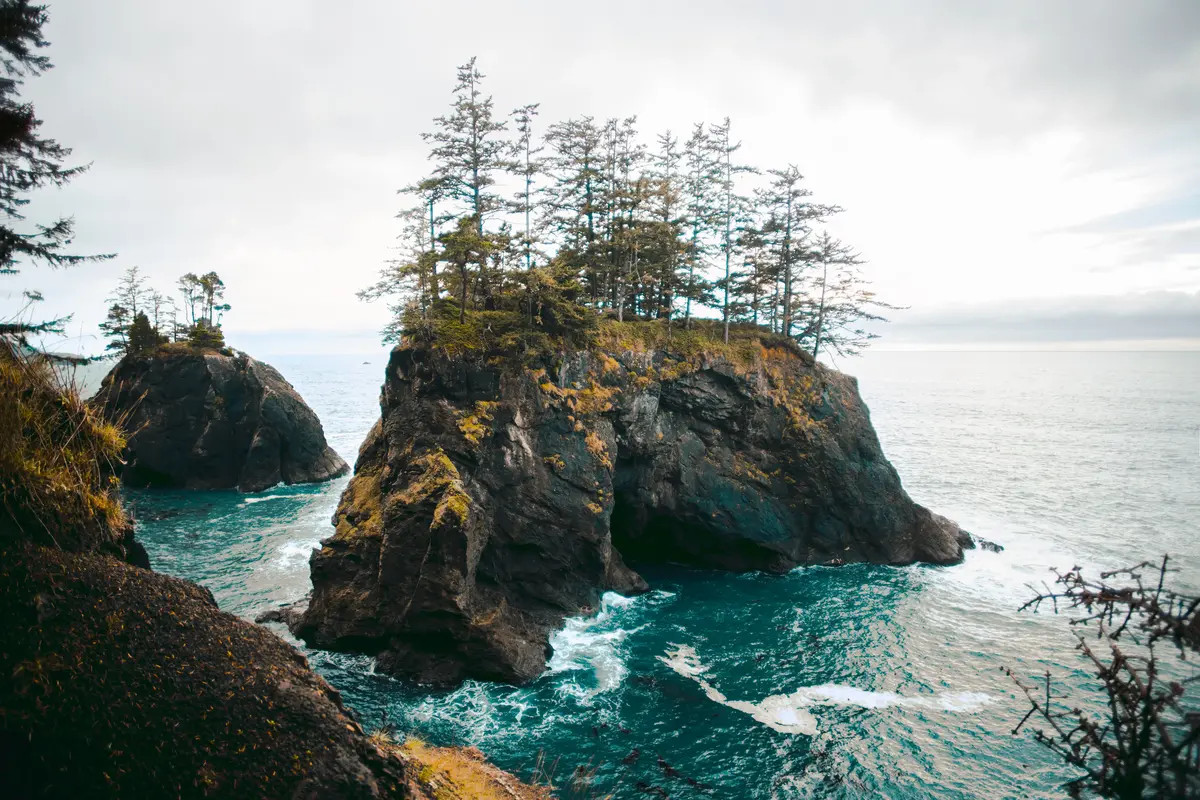
How the Brookings Police Department Works
For a city of 6,703, Brookings carries a notably capable police department. It is the only Curry County law enforcement agency offering full 24/7 coverage — meaning that when the county sheriff's office is stretched across a large rural county, the Brookings Police Department is the one entity that maintains continuous patrol in the city.
Patrol presence is visible throughout the city, and the department is sized appropriately for the population it serves. Residents who have moved here from larger cities sometimes note that officers seem to genuinely know their beats — the kind of familiarity that comes from a small-city department where the same officers cover the same areas over time.
Specialized Units That Matter
Beyond standard patrol, the department runs several programs worth knowing about. The K-9 unit handles apprehension and detection work. A School Resource Officer is embedded in the Brookings-Harbor School District, and a dedicated Community Resource Officer focuses on outreach for residents experiencing homelessness — connecting individuals with housing and support services through partnerships with Curry Community Health, Oregon Coast Community Action, and the Brookings Food Bank. That program is jointly run with Curry County under an intergovernmental agreement, which is relatively sophisticated coordination for a city this size.
The department also participates in the South Coast Interagency Narcotics Task Force (SCINT), a regional unit that handles drug enforcement cases too large for a single small-city department to work alone. It is an honest acknowledgment that a coastal town on US-101 sees drug-related activity that requires regional cooperation — and that the city is set up to address it.
What Locals Notice After Six Months
One thing newcomers often comment on: response times feel genuinely fast for such a remote community. A city this far from major population centers could plausibly have the thin coverage of a rural area. Instead, the 24/7 model means a resident calling in a property crime at 2 a.m. on a Tuesday gets a real response. That is not a given on the southern Oregon Coast, and it is one of the practical reasons people who care about public safety tend to view Brookings favorably compared to more rural neighboring communities.
Looking to buy in Brookings? Estimate your payment.
Enter your numbers to see an estimated monthly mortgage payment.
Estimate only. Excludes HOA fees and mortgage insurance. The interest rate above is a starting point, not a quoted rate — replace it with your own to see real numbers. Insurance is a flat placeholder, not a Brookings quote.
Natural Hazards: The Safety Conversation Nobody Skips
Anyone doing honest research on safety in Brookings will land on the Cascadia Subduction Zone conversation. The fault runs offshore along a long stretch of the Pacific Coast, and the Oregon Coast sits in its direct path. This is not a reason to avoid the coast — millions of people live here and do so knowingly — but it is a real part of the safety picture that deserves clear-eyed attention rather than a footnote.
Tsunami Risk
The Oregon Department of Geology and Mineral Industries (DOGAMI) has produced detailed tsunami inundation maps specifically for Brookings and Curry County. The city has a tsunami warning siren system and an official protocol: residents in inundation zones are directed to move immediately to higher ground without waiting for additional instruction. The city publishes its inundation maps through its Emergency Preparedness resources, and reviewing those maps for any property you are considering in lower-lying areas is basic due diligence here.
The harbor area carries a specific vulnerability. A DOGAMI maritime study found that because of how quickly a Cascadia Subduction Zone tsunami would reach the Chetco River, anyone at the Port of Brookings Harbor marina at that moment would not have time to move a vessel — the only viable response is immediate evacuation on foot to high ground. That finding does not make the harbor neighborhood uninhabitable; it does mean that households living in or near low-lying harbor areas should have a clear, practiced evacuation plan.
The broader infrastructure gap is real: Oregon emergency leaders have estimated that additional vertical tsunami evacuation structures are needed along the coast, and small coastal communities are working to fund them. Brookings is not uniquely exposed compared to other southern Oregon Coast cities, but it is exposed. Knowing that context is part of living here responsibly.
Wildfire Smoke and Fire Risk
Wildfire smoke is a recurring seasonal reality in Brookings, driven by fires in the surrounding Klamath Mountains and ranges to the south. The city itself sits in a relatively humid coastal zone where direct fire risk to structures is lower than in inland areas, but smoke events can roll in for days at a stretch in late summer. People with respiratory conditions should factor that in. It is the kind of thing that surprises newcomers who associated the Oregon Coast with cool, damp air year-round.
For properties near the harbor or in lower-elevation areas, reviewing DOGAMI's flood and tsunami inundation maps alongside any neighborhood research is the right step before settling on a location.
Practical Safety Research Before You Choose a Neighborhood
The gap between 'Brookings is safe' and 'this specific block is the right fit for me' is real, and worth bridging with a few targeted steps before you settle on an area.
Start with the DOGAMI Maps
If any neighborhood you're considering sits near the harbor, the Chetco River corridor, or low-lying areas along US-101, pull DOGAMI's tsunami and flood inundation maps before going further. These are free, publicly available, and specific to Brookings. A property in an inundation zone is not necessarily a bad choice — plenty of residents live there and are comfortable with the risk — but it should be a conscious one, not a discovery after the fact.
Understand the North-South Gradient
The property crime variation between the northern and southern parts of the city is meaningful enough to be worth factoring into neighborhood research. Elevated areas like Pacific Heights, Crown Terrace Heights, and the newer residential developments in Emerald Coast Estates and Driftwood Pointe Estates consistently appear in resident conversations about where the city feels most settled and quiet. The commercial core and southern approaches carry the higher end of the property crime range — not a reason to avoid them, but worth understanding if a low-incident environment is a priority.
Visit at Different Times of Year
Brookings draws visitors in summer, and the character of commercial areas shifts noticeably between the tourist season and the quieter months from October through April. What feels lively and busy in July can feel sparse in February. Neither version is wrong, but people who move here having only visited in summer sometimes find the off-season quieter than they expected. If you are sensitive to the social texture of a small town varying by season, a fall or winter visit gives you the fuller picture.
For context on how neighborhoods compare in terms of housing type, community feel, and what each area is like to actually live in, the Brookings neighborhood guide covers all eight canonical areas in detail. The living in Brookings overview has more on day-to-day life and who this city tends to suit.
Talk to the Community Resource Officer Program
The Brookings Police Department's Community Resource Officer program is a direct line into how the department understands the city's social challenges. If you have specific questions about a block, a commercial corridor, or how the city is managing the homelessness-related concerns that show up in any coastal Oregon community, the department's CRO program is the place to start — not anonymous neighborhood forums, which tend to reflect individual bad experiences rather than the statistical picture.
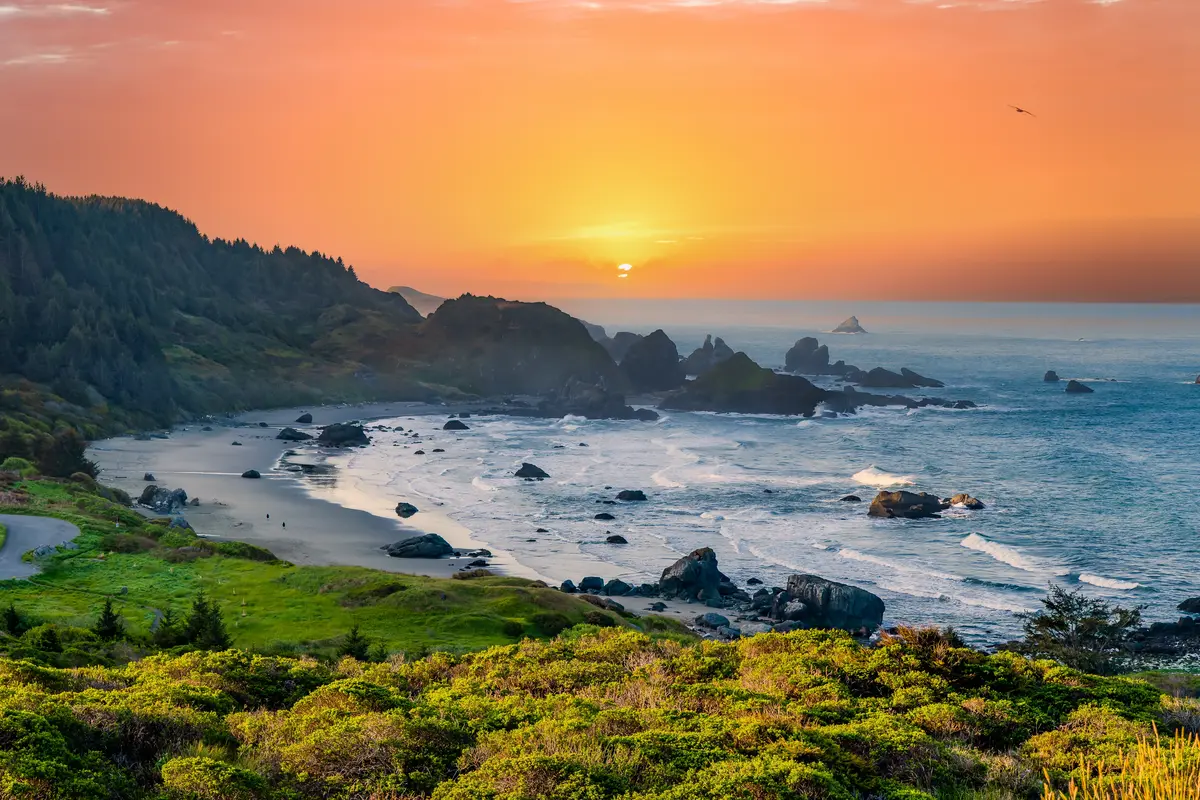
Local Expert Takeaway: Brookings is a genuinely safer-than-average place to live on the metrics that matter most — violent crime well below state and national rates, property crime below both benchmarks, and a multi-year downward trend. The honest additions to that picture: larceny-theft is real and concentrated around commercial areas and the harbor, the northern residential neighborhoods consistently outperform the southern ones on property crime, and the Cascadia Subduction Zone is not an abstraction here. Anyone choosing between neighborhoods in Brookings should pull DOGAMI's inundation maps alongside everything else — the tsunami risk is the one safety variable that most people moving from inland markets haven't had to think about before.
Quick Takeaways & FAQs
✅ Brookings carries a violent crime rate of 1.7 per 1,000 residents — roughly half the Oregon state average and well below the national figure.
⚠️ Property crime is real and concentrated in commercial and southern areas of the city, with opportunistic larceny-theft driving the majority of reported incidents.
📍 The northern residential areas of Brookings — including Pacific Heights and Crown Terrace Heights — show the city's lowest property crime odds based on neighborhood-level patterns.
Is Brookings, Oregon a safe place to live?
Which neighborhoods in Brookings are the safest?
How does Brookings handle tsunami risk?
What type of crime is most common in Brookings?
How does the Brookings Police Department compare to other small Oregon cities?
Moving to Oregon?
Tell us what you need help with and we'll connect you with local resources.
