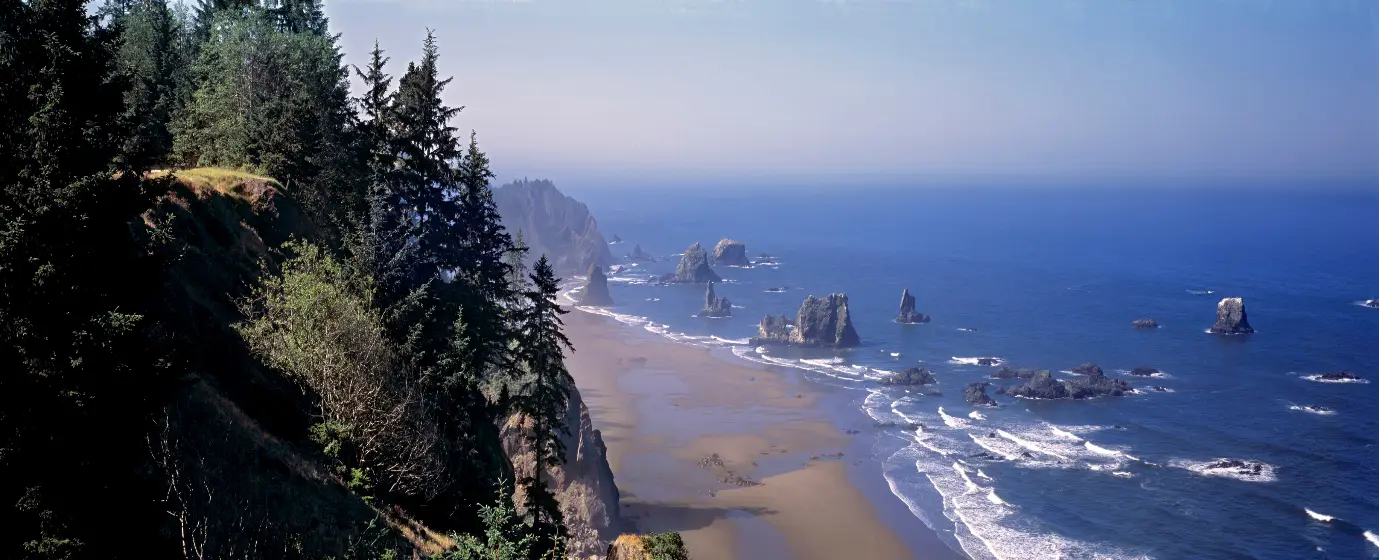
You've probably done the math already. California coastal prices are out of reach, the tax burden keeps climbing, and someone — a colleague, a relative, a Reddit thread — mentioned the Oregon Coast. Brookings keeps coming up because it sits at a sweet spot that genuinely is hard to find: ocean views, mild weather, and home prices that still leave room in your budget. California was the single largest source of Oregon arrivals in the United Van Lines 2025 National Movers Study, accounting for 22% of all inbound moves, and state economist research points to Curry County — Brookings' home — as one of the places those Californians are actually landing. This is not an accident.
Brookings is a city of 6,703 people on the southern Oregon coast, where US-101 hugs the shoreline above a working harbor. The Brookings-Harbor School District, the City of Brookings, and Curry County are the anchors of the local employment base. Remote workers have become a significant and growing part of the community — many people here work from home, or commute south about 20 minutes to Crescent City, CA for services not available in town. The city draws retirees, outdoor enthusiasts, and location-independent workers who prioritize ocean access and cost-of-living relief over proximity to a metro job market.
The headline cost advantage is real. Oregon's grocery and utility costs run noticeably below California's coastal metros, and Brookings' typical home price of $486,371 (Zillow Home Value Index, July 2026) sits noticeably below California's statewide typical home value of $773,735. Property taxes here run at an effective rate of 0.42% — lower than both the Oregon statewide average and California's. Oregon also has no state sales tax at any level, which adds up quietly across every grocery run and hardware store purchase. The trade-off is a smaller-city reality: fewer specialists in routine care, a longer drive for major retail or entertainment, and a school district that is improving but not yet at the level many California transplants expect.
Whether you're seriously considering the move or still in the research phase, the sections below break down the home price and tax comparison, the daily-life shift, the climate surprise that most newcomers don't see coming, the outdoor access that makes residents stay, and the honest friction points that take some adjustment.
The Home Price Reality: What Your California Money Actually Buys
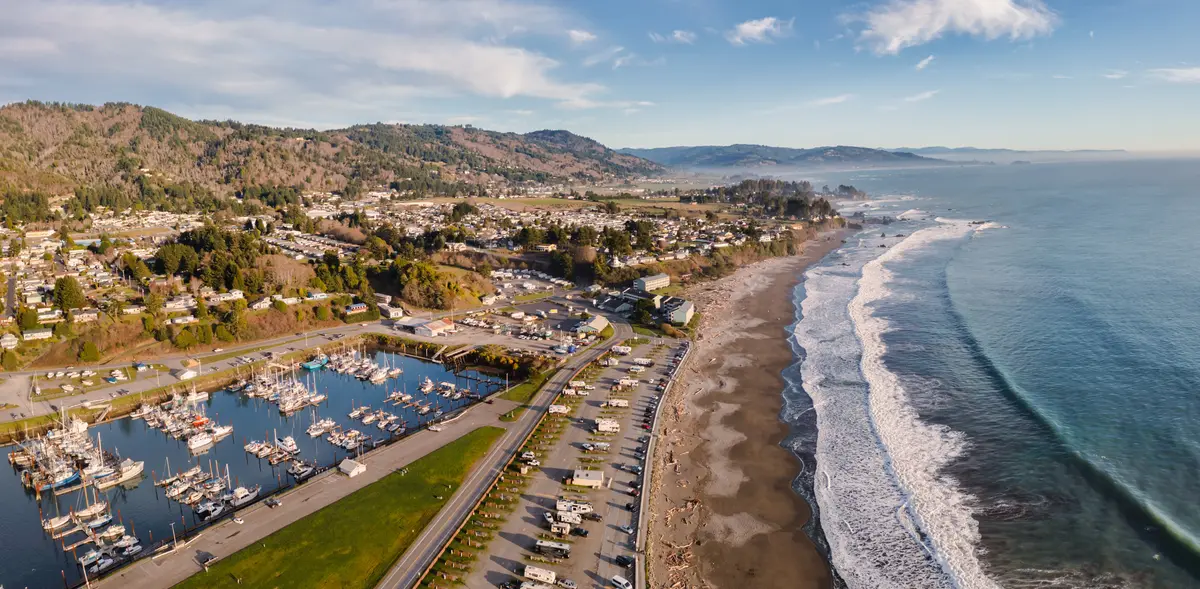
The comparison is straightforward, and it holds up. California's statewide typical home value of $773,735 (Zillow Home Value Index) is the benchmark most Californians are measuring against — and Brookings' typical home price of $486,371 (Zillow Home Value Index, July 2026) comes in noticeably below it. For a buyer who spent years watching Bay Area or Southern California prices sprint away, that gap is meaningful in a way no spreadsheet fully captures until you're standing in a house with an ocean view and a manageable offer.
What does that price range get you here? Entry-level homes — older construction, smaller lots, inland from the bluffs — start in the low-to-mid $300,000s. The mid-range buys a solid three-bedroom in neighborhoods like Azalea Park or Pacific Heights, where the streets are quiet and the Chetco River access is close. Crown Terrace Heights and Seacrest Estates sit at the upper end of the local market, with ridge and ocean views and larger parcels that attract buyers prioritizing scenery and space. Harbor, the community just south of Brookings around the port, tends to draw buyers who want walkability to the marina and a more village-like feel.
One honest note on affordability: Brookings' median household income of $74,933 sits below what's needed to comfortably carry the typical home here. That gap means this is a market where equity from a California sale does significant work. Cash buyers and buyers arriving with large down payments from a California home sale are common, and they are part of what keeps prices firmer than the local income base would otherwise suggest. If you're coming without California equity behind you, the first-time homebuyer page walks through financing options worth knowing.
Roughly 71.85% of Brookings residents own their homes — a homeownership rate that reflects both the retiree-and-remote-worker demographic and the cultural shift you'll notice immediately if you're coming from a coastal California market where renting is the default. This is a town where people put down roots, and the housing stock reflects that.
Neighborhood Snapshot
| Neighborhood | Character | Best For |
|---|---|---|
| Downtown Brookings | Commercial core, walkable streets, older housing stock | Walkable First-Time |
| Harbor | Port-adjacent, marina views, village feel | Views Renter-Friendly |
| Azalea Park | Established residential, near the park, family-oriented streets | Families Quiet |
| Pacific Heights | Elevated setting, mix of older and newer builds | Views Value |
| Seacrest Estates | Residential, wooded lots, coastal access nearby | Nature Privacy |
| Crown Terrace Heights | Ridge-top lots, ocean and river views, upper-tier builds | Luxury Views |
| Driftwood Pointe Estates | Newer construction, larger parcels | Families Quiet |
| Emerald Coast Estates | Coastal-adjacent, premium positioning | Luxury Nature |
For a deeper look at what distinguishes each area, the best neighborhoods page covers the geographic divides that matter most before you make an offer.
The Tax Picture: Where You Come Out Ahead and Where It's More Complicated
The property tax math is the clearest win. Brookings' effective property tax rate of 0.42% sits well below both California's effective property tax rate of 0.71% and the Oregon statewide effective rate of approximately 0.81%. On a home near the city median, that difference is real money every year — and it compounds over a decade of ownership in a way that makes Brookings one of the more tax-efficient places to buy on the entire West Coast.
The sales tax story is equally straightforward. California's statewide base sales tax rate of 7.25% — the highest in the nation before local add-ons — simply does not exist in Oregon. No state sales tax. No city or county sales tax either; Oregon law prohibits local governments from levying one. That shift shows up every week: groceries, building materials, major appliances, vehicles. Californians usually notice this more than they expect to in the first six months.
The Income Tax Trade-Off You Need to Understand
Income tax is where the picture gets more nuanced, and most online summaries get this wrong. California's top state income tax rate of 13.3% applies only to the highest earners — and for most people earning below roughly $725,000, California's effective income tax bill is actually lower than Oregon's, despite the higher headline rate. Oregon's top rate of 9.9% kicks in at a much lower income threshold, which means a household earning $120,000 in Brookings pays more in state income tax than the same household would have paid in California.
If you're a remote worker who has relocated and now pays Oregon taxes on your earnings, run the numbers carefully before assuming you've escaped a high-tax state. The sales tax elimination is real; the income tax trade may surprise you depending on your bracket. A tax professional familiar with both states is worth the conversation before your first Oregon filing.
California vs. Brookings: Tax and Price at a Glance
| Category | California | Brookings, Oregon |
|---|---|---|
| Typical home value | $773,735 (Zillow Home Value Index) | $486,371 (Zillow Home Value Index, July 2026) |
| Effective property tax rate | 0.71% | 0.42% |
| State income tax (top rate) | 13.3% | 9.9% (Oregon) |
| State sales tax | 7.25% base (before local add-ons) | None — Oregon has no state or local sales tax |
| Grocery costs | Among the highest in the nation in coastal metros | Noticeably lower than California coastal markets |
| Homeownership rate | Higher renter share in coastal metros | ~71.85% owner-occupied |
For the full cost-of-living breakdown — utilities, groceries, and transportation — the cost of living page covers those in detail.
The Banana Belt Microclimate: Better Than You've Heard, Wetter Than You Expect
Brookings markets itself as Oregon's Banana Belt, and the claim is not spin. The Chetco Effect — warm, dry Foehn-type winds descending from the Chetco Mountains — creates a microclimate that genuinely sets Brookings apart from the rest of the Oregon Coast. Summer highs average around 68°F. Winter highs hold near 56°F. At sea level, snow is essentially a non-event. The city averages 191 sunny days a year, which is low by California beach standards but remarkable for a town this far north on a Pacific coastline.
What the Banana Belt marketing quietly omits: November through April brings persistent rain and drizzle. Not dramatic Pacific storms every week, but the gray, wet, low-ceiling pattern that defines coastal Oregon winters. Summer fog is also common right along the water, and there are weeks in June and July where the sun breaks through only in the afternoon. Californians from the inland valleys find the adjustment harder than those coming from the Bay Area or San Diego's marine layer belt.
The Six-Month Surprise
The thing most California transplants don't expect is the combination of mild temperatures and genuine seasonal isolation. The climate never gets harsh — but the coast road in winter, with rain and reduced visibility on US-101, can make the drive to Crescent City or north toward Gold Beach feel slower and more tiring than the mileage suggests. People who move here for the summers and don't fully account for the winter rhythm sometimes reconsider by spring.
If 191 sunny days a year and a mild, temperate range sound like a relief from California summers that routinely push past 100°F inland, Brookings delivers that relief convincingly. If you need more consistent sunshine to stay in good spirits through a long season, that's worth weighing honestly before you sign anything.
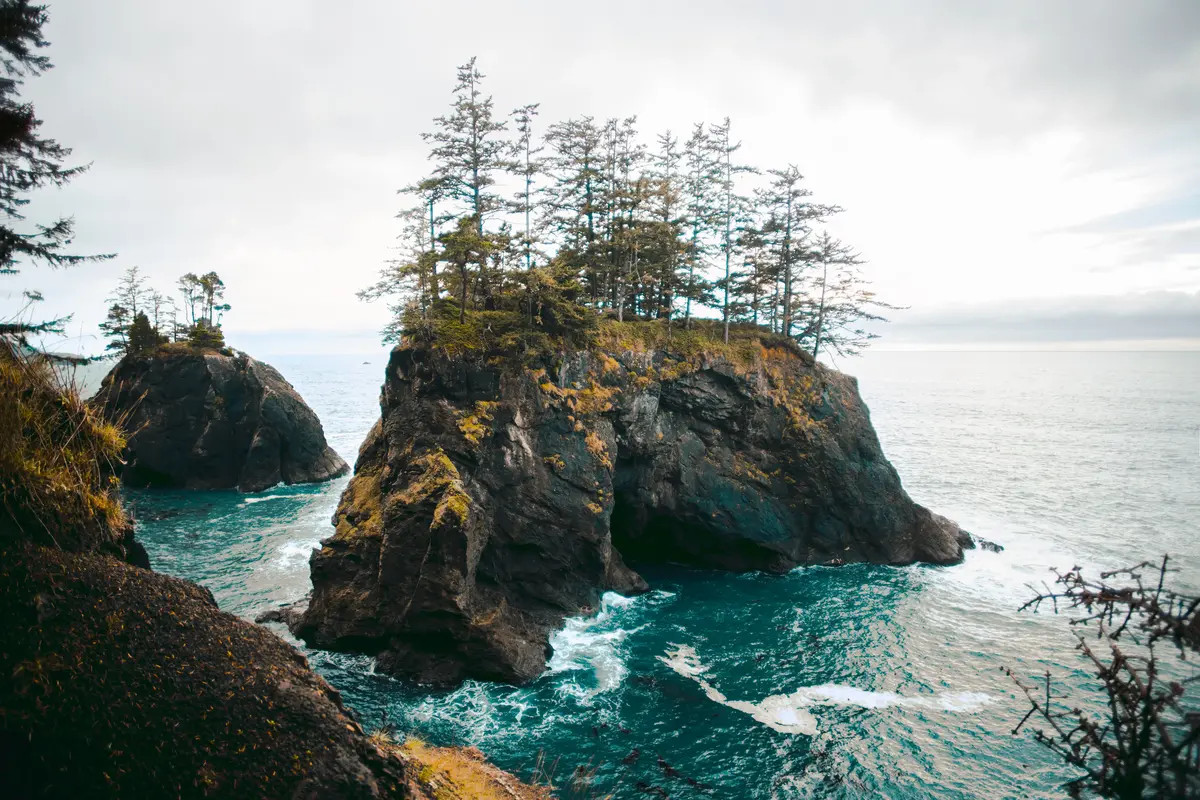
The outdoor payoff for tolerating the wet season is significant. The Samuel H. Boardman State Scenic Corridor runs just north of town along US-101, and serious hikers consider it one of the finest stretches of coastline in the Pacific Northwest. Harris Beach State Park is practically in the city itself — tide pools, offshore sea stacks, and the kind of beach access that California coastal towns charge for or restrict entirely. Deep-sea and river fishing on the Chetco River draws anglers from across the region. For everything the parks and trails offer, the parks and recreation page goes deeper.
Looking to buy in Brookings? Estimate your payment.
Enter your numbers to see an estimated monthly mortgage payment.
Estimate only. Excludes HOA fees and mortgage insurance. The interest rate above is a starting point, not a quoted rate — replace it with your own to see real numbers. Insurance is a flat placeholder, not a Brookings quote.
Daily Life in a Small Coastal Town: What Changes and What You Give Up
Brookings has a population of 6,703. That number matters more than it sounds. There is no Trader Joe's, no major shopping mall, and no multi-screen cinema. A serious shopping trip means driving — either about 20 minutes to Crescent City, CA or considerably farther north toward Medford. Anything you can't source locally, you'll be ordering online. Californians from smaller cities or exurban areas adjust to this faster than those arriving from well-served suburban metros.
What's here is genuinely good for a town this size. The dining scene includes a handful of well-regarded local options — Hungry Clam for casual seafood, Zola's on the Water for harborside dining, Mattie's Pancake House for breakfast, Pacific Sushi & Grill Brookings Oregon for a reliable sushi option, and Superfly Martini Bar & Grill for evenings out. For coffee, Bell & Whistle Coffee House, Compass Rose Cafe, Honeybee Bakery, Cosmic Grind Organic Coffee Espresso Smoothies and Bobaa, and Dutch Bros Coffee cover the spectrum from drive-through to sit-down. The Azalea Park area is a genuine gathering point — azalea blooms in late spring, the park grounds well maintained, and a sense that this is where the town exhales.
The homeownership culture here is different from coastal California metros in ways that are hard to quantify. About 71.85% of residents own their homes. Neighbors tend to know each other. The rhythm is slower and more rooted. For families, the Brookings-Harbor School District 17C holds a C- rating, according to Niche, with 1,221 students enrolled in 2025-26. On 2024-25 state assessments, 20.2% of students reached math proficiency and 35.6% reached reading proficiency — figures that represent a meaningful step down from what many California transplants are leaving behind. The district fields competitive interscholastic athletics programs and maintains a genuine community identity, but parents with strong academic expectations should read the full picture on the schools page.
Getting In and Out of Town
US-101 is the spine of the city and the primary route for everything — north toward Gold Beach and Port Orford, south toward Crescent City. The nearest major airports are Rogue Valley International-Medford (MFR) and Arcata-Eureka (ACV, CA), both roughly 110 miles away. Flying in and out requires planning; this is not a place where a last-minute flight change is a minor inconvenience. Remote workers who travel occasionally learn quickly that building in a buffer day before departures is standard practice here.
For healthcare, premiums run noticeably below what you were paying in California, though you will drive farther for specialist care. The full picture on what that means for retirees and families is on the retiring page.
Who Thrives Here — and Who Leaves
The profile of a Brookings transplant who stays is fairly consistent: someone who came for the price and the landscape, stayed for the community and the pace, and made peace with the driving reality. Remote workers in their 40s and 50s, retirees arriving with California home equity, and outdoor-first households all find what they came for. The owner-occupancy rate north of 70% means you're surrounded by people who made the same bet and chose to stay.
People who leave Brookings — and some do, usually within two to three years — tend to cite the same things. The distance to medical specialists matters more than it seemed when they moved. Teenagers who outgrow what a city of 6,703 offers start pushing for something larger. The winter gray accumulates. And the income tax structure that surprised them on their first Oregon return becomes a recurring frustration for higher earners who assumed the California escape was a flat tax win.
The Honest Trade Summary
| What You Gain | What You Give Up |
|---|---|
| Home prices noticeably below California's statewide typical | Local job market thin — most professional roles require remote work or a commute |
| Effective property tax rate of 0.42% — below both CA and the OR average | Oregon income tax hits harder than California for most earners |
| No sales tax at any level | Major retail and entertainment require a drive out of town |
| Mild Banana Belt microclimate, virtually no snow | November–April is persistently wet and gray |
| World-class fishing, state parks, and coastal hiking at your doorstep | School district test scores below what many CA transplants expect |
| Small-town owner-occupancy culture, lower density | Nearest major airport is roughly 110 miles in either direction |
The California-to-Brookings move makes the most financial sense for buyers arriving with equity from a California sale — the price gap and the property tax advantage compound over time in a way that is genuinely compelling. For buyers starting from scratch, the picture is more nuanced, and a careful look at the cost of living breakdown alongside the living in Brookings hub will give you the full context.
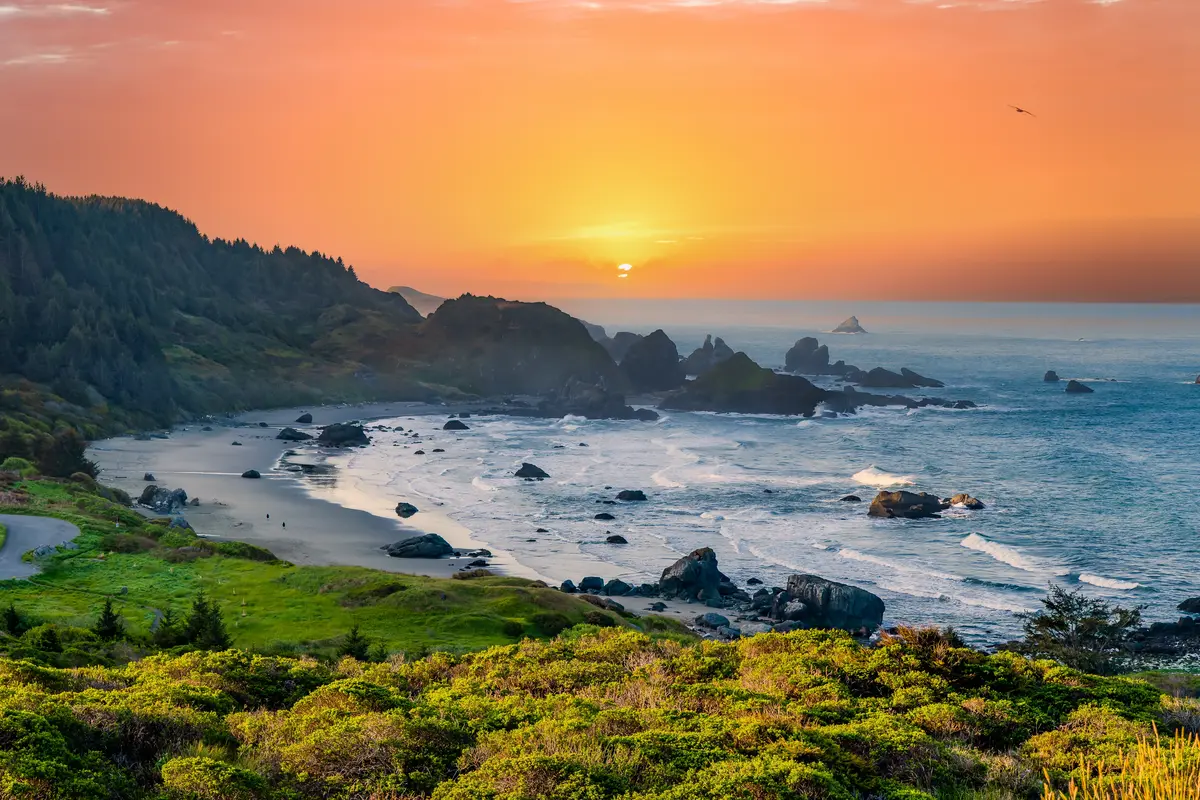
Local Expert Takeaway: The Californians who land in Brookings and stay are usually the ones who did the math AND visited in February. The price advantage is real — a typical home at $486,371 (July 2026) versus California's statewide typical — and the 0.42% property tax rate and zero sales tax add up year after year. But the Pacific Coast winter between Harris Beach and the Chetco River is genuinely wet, the drive to Rogue Valley International-Medford for a flight takes planning, and Oregon's income tax bracket structure means the tax escape is less complete than the headlines suggest. Come for a week in January before you make an offer. If you leave still wanting to come back, you'll do fine here.
Quick Takeaways & FAQs
✅ Brookings' effective property tax rate of 0.42% sits well below California's — and below the Oregon statewide average — making it one of the clearest financial wins for buyers crossing the border.
⚠️ Oregon's income tax bracket structure means most earners pay more state income tax here than they did in California, despite the lower headline rate — run your actual numbers before assuming the move is a tax cut.
📍 Roughly 71.85% of Brookings residents own their homes, a rate far above coastal California metros, and that ownership culture shapes the community in ways you notice within the first few weeks.
Is Brookings, Oregon actually cheaper than California to live in?
What is the income tax situation for remote workers moving from California to Oregon?
What is Brookings' Banana Belt climate actually like for someone moving from California?
How far is Brookings from a major airport?
What should California buyers know about Brookings' schools before moving?
Moving to Oregon?
Tell us what you need help with and we'll connect you with local resources.
