If you're choosing between staying in California and moving to Post Falls, the decision usually comes down to one thing you can see on paper and one thing you can't. The thing you can see: home prices that are dramatically lower than nearly every California metro, a flat state income tax that tops out at 5.3%, and a Spokane commute of about 20 minutes via the interstate. The thing you can't see on a spreadsheet: Post Falls in February, when the Spokane River freezes at its edges and the temperature drops into the teens, and you realize that "four seasons" was not a selling point anyone was exaggerating.
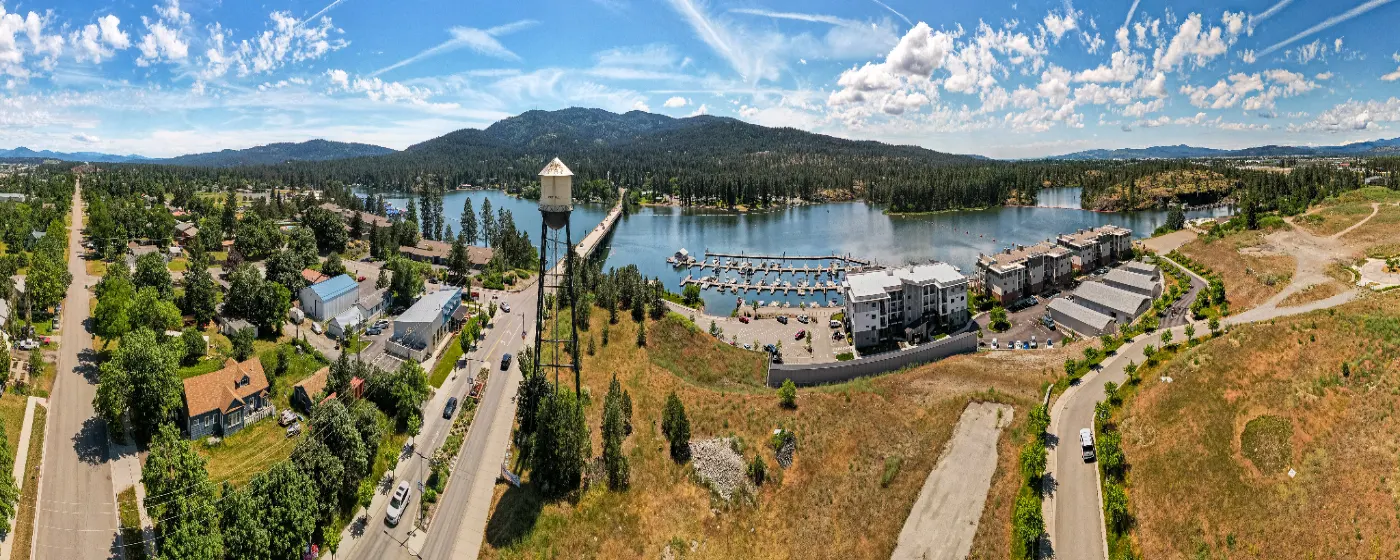
Post Falls sits on the Idaho-Washington border in Kootenai County, straddling I-90 between Coeur d'Alene to the east and Spokane Valley to the west. It has grown 21% since April 2020, ranking No. 84 nationally among cities with more than 20,000 residents for that growth rate — and Kootenai Metropolitan Planning Organization projections suggest the city could reach 105,838 residents by 2045, which would make it the largest city in North Idaho. That growth is not accidental. Major employers including Buck Knives, Sysco distribution, Cabela's, and Ground Force Manufacturing have anchored a local economy that attracts working families, not just retirees. Post Falls School District #273 serves the city, and the community skews younger and more working-class than neighboring Coeur d'Alene.
Post Falls home values sit well below coastal California prices — a gap that, for a buyer arriving from the Bay Area or Silicon Valley, can feel disorienting in the best way. The effective property tax rate sits at approximately 0.60%, which is actually slightly below California's statewide effective rate of around 0.70%. Idaho's 6% sales tax applies with no additional county or city layer on top. The trade-off, and it is real: Idaho wages tend to run lower than California wages in comparable roles, and the city's own Housing Needs Analysis found that prices here are already "largely unaffordable for local workers." You may be getting a meaningful discount relative to the Bay Area — but don't assume you're moving somewhere cheap by Idaho standards. See the full breakdown on the Post Falls cost of living page.
Whether you're weighing a corporate relocation, a remote-work escape from Bay Area prices, or a lifestyle reset after years in Los Angeles or San Diego, the sections below break down what California buyers actually encounter in Post Falls — from the tax math and the home-buying reality to the cultural adjustments, commute patterns, and the specific moments that catch transplants off guard at month six.
The Home Price Reality: California vs. Post Falls
The number that stops most California buyers mid-scroll is $518,467 — the Zillow Home Value Index median for Post Falls as of February 2026. For a deeper look at how it breaks down by neighborhood and what you get in each price tier, see the Post Falls neighborhoods guide.
For context: the median sold price in the Silicon Valley corridor in early 2026 was well above $1.3 million, and even the Inland Empire — long the affordability escape valve for Southern California buyers — was running above $550,000. Post Falls is noticeably below both of those markets, and substantially below coastal California prices.
| Market | Typical Home Value (2026) | Effective Property Tax Rate | State Income Tax (Top Rate) |
|---|---|---|---|
| Post Falls, ID | $518,467 | ~0.60% | 5.3% flat |
| Silicon Valley / Bay Area, CA | Well above $1.3M | ~0.70% (Prop 13 context varies) | Up to 13.3% |
| Los Angeles, CA | Above $900K | ~0.70% | Up to 13.3% |
| San Diego, CA | Above $850K | ~0.70% | Up to 13.3% |
| Sacramento, CA | Above $490K | ~0.70% | Up to 13.3% |
| Inland Empire (Riverside/SB), CA | Above $550K | ~0.70% | Up to 13.3% |
California figures are approximate market-level values for early 2026 used for directional comparison only. Post Falls figure is the Zillow Home Value Index, February 2026.
What California's property tax figure often obscures is Proposition 13: longtime California homeowners pay tax on assessed values that may be decades old. If you are a buyer in California right now, you are paying on current market value, and that 0.70% rate lands on a much larger number than it does in Post Falls. The practical result is that new buyers often pay more in annual property tax on a California home than they would on a comparably-priced Idaho home — and in this case the Idaho home is already far less expensive to begin with.
What Your Down Payment Actually Buys Here
A 20% down payment on a median Post Falls home is roughly $104,000. That same down payment in the Bay Area or Los Angeles would leave you far short of a median purchase. Californians arriving with equity from a sale — especially from coastal markets — often find themselves in a position to pay cash or put down 40–50%, which meaningfully changes their monthly picture.
The catch: Post Falls is no longer a place where you can browse without urgency. The city's Housing Needs Analysis identified a shortfall of nearly 2,400 units needed over the next five years. Inventory moves, and homes priced near or below the median tend to attract multiple offers, including from other well-capitalized out-of-state buyers who share your logic.
The Tax Shift: What California Transplants Actually Save (and Owe)
The income tax difference between California and Idaho is the most consequential financial change most California transplants experience — and the one most underestimated before the move.
State Income Tax: Flat vs. Graduated
Idaho taxes all taxable income at a flat 5.3%, a rate locked in by state legislation effective January 1, 2025, and unchanged for 2026. California uses a graduated bracket system running from 1% to 13.3% at the top. If you were earning above roughly $1 million in California, you were paying 13.3% on every dollar above that threshold to the state — not counting federal. In Idaho, everyone pays the same 5.3%, whether you earn $60,000 or $600,000.
California also assesses a State Disability Insurance payroll deduction of 1.3% in 2026, with no wage cap. Idaho has no equivalent. For a W-2 earner making $200,000 in California, that SDI line alone costs $2,600 per year — a deduction that disappears entirely when you cross into Idaho.
| Tax Type | California | Idaho (Post Falls) | Notes |
|---|---|---|---|
| State income tax (top rate) | 13.3% | 5.3% flat | Idaho rate set by legislation, effective 2025 |
| State income tax (entry rate) | 1% | 5.3% flat | Idaho has no bracket structure |
| State disability insurance (SDI) | 1.3% (no wage cap, 2026) | None | California-only payroll deduction |
| Sales tax | 7.25% base (higher in many counties) | 6.0% flat | No county or city layer in Post Falls |
| Effective property tax rate | ~0.70% | ~0.60% | Post Falls buyers pay on current purchase price |
| Capital gains (state level) | Up to 13.3% (taxed as ordinary income) | 5.3% flat | Significant for home-sale equity reinvestment |
For a complete breakdown of how Idaho's tax structure affects your take-home in Post Falls specifically, see the Post Falls cost of living page.
What the Numbers Mean in Practice
A household earning $150,000 in California and paying the 9.3% marginal rate owes the state roughly $13,950 in income tax on income in that bracket — before SDI. The same household in Post Falls owes Idaho 5.3% on all taxable income, with no SDI on top. The annual difference is measurable enough that many California transplants describe the first Idaho tax filing as disorienting in the best possible way.
Remote workers who establish Idaho residency and legally sever California ties stand to gain the most. The key word is legally: California's state tax authority is aggressive about residency audits for high earners who claim to have left. If you work remotely for a California-based company, the source-of-income rules are worth reviewing with a CPA before you assume the full savings apply in year one.
The Sales Tax Simplicity
Post Falls charges Idaho's flat 6% sales tax with no additional county or city layer. No district taxes, no special assessments that vary by zip code. Compared to parts of Los Angeles County where the combined rate approaches 10.25%, the simplicity alone is noticeable at the register.

What Californians Should Expect in the First Six Months
IRS migration data for tax years 2022–2023 shows California losing approximately 100,397 net tax filers and $11.9 billion in adjusted gross income to other states — and Idaho has ranked among the top per-capita destinations for California out-migrants for multiple consecutive years. That means Post Falls has absorbed enough California arrivals that the culture-shock patterns are well-documented. Here is what actually catches people off guard.
The Weather Is Not a Metaphor
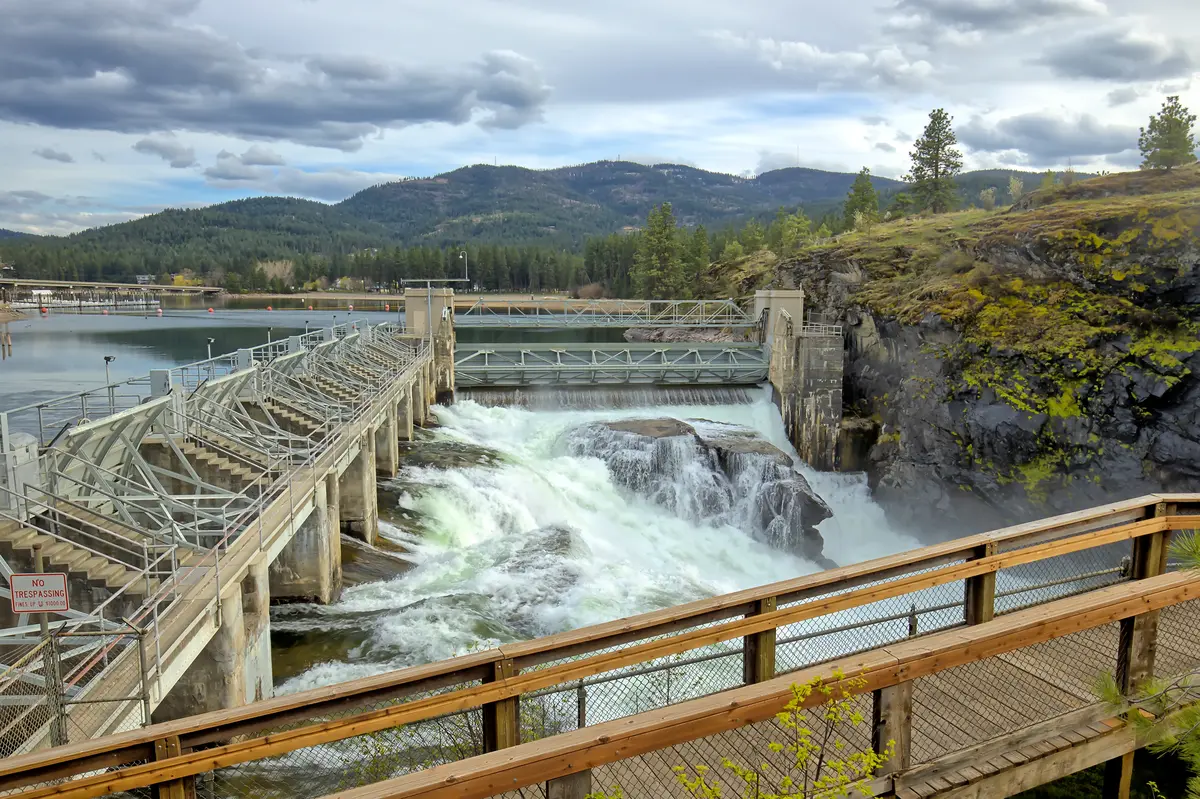
Everyone knows North Idaho gets cold. What Californians underestimate is the duration. Post Falls typically sees snow from November through March, with temperatures routinely dipping below 20°F in December and January. The Spokane River at Q'emiln Park can be gorgeous in those conditions — but your morning commute on the interstate during a January ice event is a different experience than anything a San Diego driver has navigated.
By month three, most transplants have either bought proper winter tires or learned that all-season tires from California are inadequate on the Stateline corridor in February. This is not a dramatic problem; it is a $700–$900 set-up cost that surprised buyers consistently mention they wish someone had flagged before the first snowfall.
The Grocery and Services Gap
Post Falls does not have a Trader Joe's — the nearest location is in Spokane. There is no Whole Foods closer than Coeur d'Alene or Spokane. If your household runs on a particular specialty grocer or farmers' market ecosystem, budget time for the adjustment. The local restaurant scene on E 4th Ave has grown meaningfully, with independent dining options anchoring a stretch of downtown that feels more Coeur d'Alene than small-town Idaho. But the density of dining options is still well below what most California transplants are used to, and delivery apps cover a narrower geographic footprint than in urban California.
The Commute Is Real — But Manageable
About 79.3% of Post Falls workers commute to jobs outside the city, with Spokane roughly 20 minutes away under normal conditions. The chokepoint to know: the interchange between Post Falls and Spokane Valley backs up predictably on weekday mornings between 7:30 and 8:30 a.m. and again from 4:45 to 6:00 p.m. Locals heading to Spokane proper often leave before 7:15 a.m. or after 9:00 a.m. to avoid the worst of it. The commute that reads as "20 minutes" in research materials reads as 35–40 minutes on a Tuesday in January when it has snowed overnight. Build that buffer into your planning.
The Political and Cultural Shift
Post Falls and Kootenai County lean strongly conservative. This is not a secret, but California transplants from urban areas — especially the Bay Area — occasionally arrive expecting a culture similar to Bend or Boise and find something considerably more rural-Idaho in character. Gun culture is visible and normalized. Neighbors are generally friendly and direct, but the community's values on land use, government services, and development are different from most California cities. Transplants who engage rather than compare tend to settle in faster.
Where families actually gather is telling: Falls Park along the Spokane River draws parents with kids on summer weekday mornings, and the North Idaho Centennial Trail is a genuine social hub for cyclists and runners who want to know their neighbors by name within six months. The outdoor lifestyle is not a marketing line — it is the connective tissue of the community.
Looking to buy in Post Falls? Estimate your payment.
Enter your numbers to see an estimated monthly mortgage payment.
Estimate only. Excludes HOA fees and mortgage insurance. The interest rate above is a starting point, not a quoted rate — replace it with your own to see real numbers. Insurance is a flat placeholder, not a Post Falls quote.
The Growth Equation: What a Fast-Growing City Means for Buyers
Post Falls grew 21% between April 2020 and July 2025, and Kootenai County's housing stock expanded at least 2.5% in a single year between 2024 and 2025. Idaho led all 50 states in annual housing-unit growth at 2.1% for the period ending July 2025. For a buyer, this creates a specific set of conditions that California transplants — accustomed to California's chronic undersupply — may find unfamiliar.
New Construction Is Everywhere — and Comes With Caveats
Drive through the Prairie Falls, Foxtail, or North Prairie areas and you will see active framing on lots that were fields two years ago. New construction gives buyers options that simply don't exist in supply-constrained California markets. The catch is infrastructure lag: roads, schools, and services are playing catch-up with development across the city. The 2025 Comprehensive Plan Update acknowledged this directly, incorporating a Fiscal Impact Analysis to address exactly that tension.
The city's own Housing Needs Analysis found that nearly 2,400 new units are needed over the next five years — and simultaneously noted that prices are already "largely unaffordable for local workers." What that means for a California buyer: you are not moving into a cheap market. You are moving into a market that is still less expensive than where you came from but is under sustained upward price pressure from migration-driven demand.
What Growth Means for Resale Value
Projections from the Kootenai Metropolitan Planning Organization suggest Post Falls could reach 105,838 residents by 2045 — effectively doubling the current population. That level of projected growth, if it materializes, historically supports property values. It also means more traffic, more development in currently open areas, and a city that may look quite different in ten years from the one you moved to.
Buyers who tend to fare well in Post Falls are those who buy with at least a five-to-seven-year horizon and choose locations where infrastructure is already established rather than promised. The neighborhoods guide covers which areas have that foundation and which are still catching up.
The Builder Incentive Reality
Unlike California builders in late-cycle markets, Post Falls builders have been actively offering incentives — rate buy-downs, lot premiums waived, upgrade packages — to move inventory in new subdivisions. This is more favorable to buyers than the multiple-offer dynamics on resale homes priced near or below the median. California buyers who know how to negotiate new construction contracts (or bring someone who does) can find better value in the new-build market than in resale right now.
Making the Move: Practical Steps for California Transplants
Moving from California to Post Falls is logistically straightforward. Making the financial and legal transition correctly is where California transplants most often stumble — and where a few specific steps prevent expensive mistakes.
Establishing Idaho Residency
California's state tax authority monitors high earners who claim to have left the state. To establish Idaho residency cleanly: get your Idaho driver's license within 90 days of arrival, register your vehicles in Idaho, update voter registration, and document your physical presence with utility records, lease agreements, or a closing statement. If you have continuing California-source income after the move — stock options vesting, rental properties, California clients — work with a CPA experienced in residency audits before you file your first split-year return. The income tax savings are real, but California will claw back what it can if the paperwork is thin.
The Buying Process in a Fast-Moving Market
Post Falls uses Idaho's standard purchase and sale agreement process, which differs from California's CAR forms. Pre-approval in hand before you tour is not optional in this market — sellers see California buyers with large down payments as strong counterparties, but not if they're not ready to move. The typical earnest money in Post Falls runs 1–3% of purchase price. Inspection periods and timelines are generally shorter than California buyers expect, often 10–15 days rather than the 17-day default California buyers are accustomed to. For a step-by-step overview of Idaho's buying process, see the Post Falls homebuyer guide.
What You Would Not Do If Moving Here
Do not buy in a new subdivision along the far western edge of West Seltice without driving that stretch of Seltice Way at 7:45 a.m. on a Tuesday first. The growth out there is real, but the road infrastructure has not kept pace, and the morning backup at the Spokane Street interchange catches buyers by surprise after they've already committed to a 30-minute daily commute that was advertised as 12 minutes. Location within Post Falls matters more than the city-versus-California price story suggests.
Schools, Safety, and the Things This Guide Doesn't Own
Post Falls School District #273 serves the city, and school quality is a primary research question for families. For current ratings, boundary maps, and what parents report after a year or two, the Post Falls schools page covers it in detail. Safety figures are analyzed in full on the safety page.
The Lifestyle Adjustment That Takes the Longest
Most California transplants settle the financial side within 90 days. The adjustment that takes longer is the pace. Post Falls does not have the density of entertainment, dining, or cultural programming that a Los Angeles or Bay Area resident has built their weekends around. What it has instead is the Spokane River running through Falls Park, the North Idaho Centennial Trail connecting the city to Coeur d'Alene and beyond, Treaty Rock Park with its direct access to the Post Falls Community Forest, and a Saturday morning in late June that looks nothing like anything in Southern California. Whether that trade is a gain or a loss depends entirely on what you were looking for when you started searching.

Local Expert Takeaway: The California-to-Post-Falls move math works most clearly for buyers bringing coastal equity and remote income: you arrive with a down payment that covers a substantial share of a $518,467 median home, swap California's graduated income tax (up to 13.3% plus 1.3% SDI) for Idaho's flat 5.3% with no SDI equivalent, and trade a two-hour Bay Area commute for a 20-minute interstate run to Spokane. The honest caveat is that Post Falls is already outrunning local wages — the city's own analysis says so — and you are moving into a market under construction pressure, not a discovery. Drive Seltice Way before you sign, budget for winter tires, and hire a CPA who has handled California residency splits before you file your first Idaho return.
Quick Takeaways & FAQs
✅ Post Falls's $518,467 typical home value (Zillow Home Value Index, February 2026) is dramatically below coastal California prices, giving equity-rich California sellers significant purchasing power on arrival.
⚠️ Idaho's flat 5.3% income tax is a genuine improvement for most California earners, but high-income remote workers need CPA guidance on California residency rules before assuming they've cleanly left the tax base.
📍 The interchange between Post Falls and Spokane Valley backs up noticeably between 7:30–8:30 a.m. on weekdays — locals heading to Spokane leave before 7:15 a.m. or after 9:00 a.m. to avoid it.
How much cheaper is it to buy a home in Post Falls compared to California?
What is Idaho's state income tax rate compared to California's?
Will California still tax me after I move to Post Falls?
Is Post Falls still affordable, or has migration from California already pushed prices up?
What do California transplants most commonly say they wish they'd known before moving to Post Falls?
Moving to Idaho?
Tell us what you need help with and we'll connect you with local resources.
