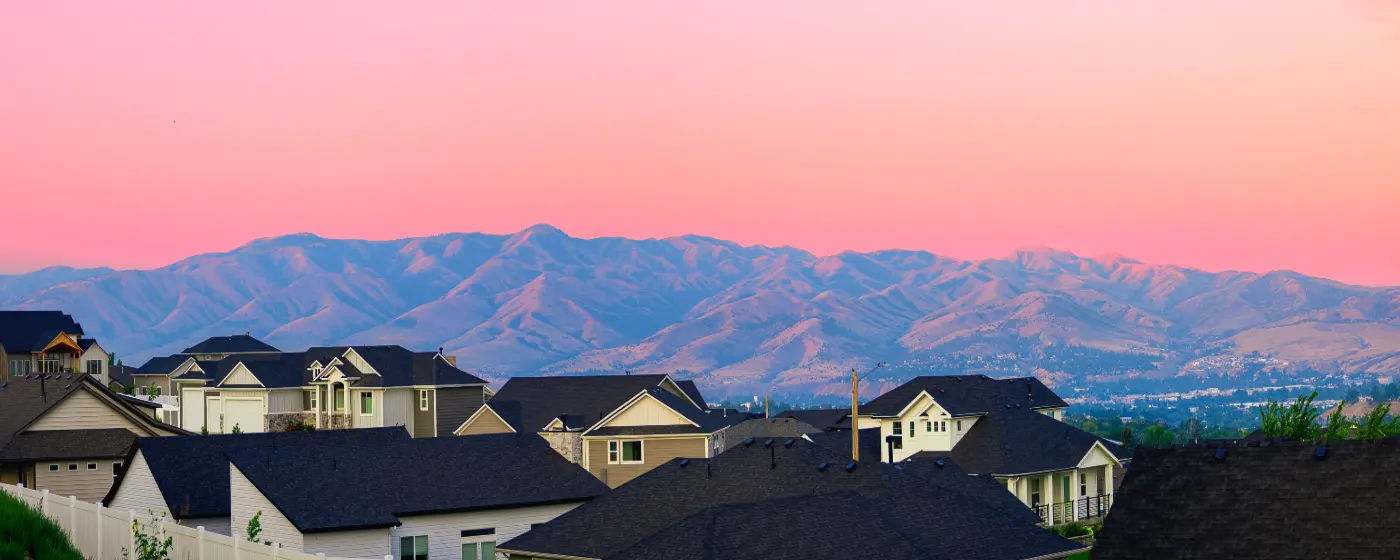
Maybe your financial planner ran the numbers and said southeastern Idaho makes sense. Maybe a sibling already landed in Pocatello and keeps mentioning how far a dollar goes. Or maybe you drove through on I-15 and thought the city looked smaller — and more manageable — than you expected. Pocatello sits at the confluence of the Portneuf River valley and the high desert plateau, bisected by I-15 and anchored by two institutions that matter enormously to retirees: Portneuf Medical Center and Idaho State University. Those two anchors shape daily life here more than almost anything else — they mean surprisingly deep healthcare for a city of 59,000, and a cultural calendar that doesn't go quiet between seasons.
The city's economic backbone runs on ISU's academic employment, Portneuf Medical Center's 1,600-person workforce, and manufacturing plants including ON Semiconductor and Amy's Kitchen — but what matters for retirees isn't the job market, it's what that mix produces: a stable, year-round community that doesn't hollow out in winter or boom-and-bust with seasonal tourism. The population skews toward working families and university households, which keeps the city's energy grounded without the frenetic pace of faster-growing Idaho markets.
On cost of living, Pocatello is genuinely affordable — roughly 7% below the national average overall, with housing running noticeably below the national norm. That gap translates directly into purchasing power for anyone downsizing from a higher-cost market. The cost-of-living page has the full breakdown, but the short version is that fixed-income budgets stretch meaningfully further here than in Boise, Twin Falls, or most of coastal America. The Portneuf Greenway, Zoo Idaho, and the trails threading into the surrounding hills give active retirees outdoor options within minutes of most neighborhoods.
Whether you're seriously weighing a move or still in the research phase, the sections below cover what Pocatello's retirement picture actually looks like: healthcare access, the tax posture for retirees, daily budget realities, walkability and community life, downsizing inventory, and an honest comparison with nearby alternatives.
Why Retirees Are Choosing Pocatello
Pocatello is a genuine fit for retirees who want a real city — hospitals, performing arts, a university, distinct neighborhoods — without paying a real-city price for it. The typical home price sits at $318,721 (Zillow Home Value Index, 2026), which means a downsizing buyer from almost any coastal or Sun Belt market arrives with serious equity to spare. That's not a rounding error; it's the difference between carrying a mortgage into your 70s and owning outright.
The retirees who thrive here tend to share a few traits. They're comfortable with winters that bring real snow — Pocatello averages over 40 inches annually, and the surrounding hills can make icy roads a legitimate inconvenience from December through February. They value proximity to an actual hospital over proximity to a beach. And they don't need a walkable urban core for every errand — most of daily life in Pocatello happens by car, and the flat valley floor makes driving easy well into later decades.
Who should look elsewhere? Retirees who need walkable access to restaurants, shops, and medical offices without a car will find Pocatello frustrating outside of historic Old Town. Anyone expecting the amenity density of Boise or the outdoor-recreation-tourism infrastructure of Sun Valley will be underwhelmed. And if your retirement vision centers on a mild four-season climate, the cold winters and short springs here are worth taking seriously before you commit.
Healthcare & Medical Access in Pocatello
The Anchor: Portneuf Medical Center
Portneuf Medical Center, at 777 Hospital Way, is the healthcare story in Pocatello — and it's a better one than most cities this size can tell. The 205-bed facility is a DNV-accredited teaching hospital that has served eastern Idaho since 1907. For a regional center of 59,000 people, the depth of services is genuinely unusual.
The hospital operates a Level II trauma center, which means it can handle serious emergencies without an immediate transfer. The oncology program holds QOPI certification — a quality benchmark from a national oncology standards body — so cancer patients have access to chemotherapy and oncology management locally. Cardiac care, orthopedics, robotics-assisted surgery, a wound care clinic, and a Level 3 NICU round out what's available on-site.
What It Means in Practice
For most retirement-age healthcare needs — joint replacement, cardiac monitoring, cancer treatment, wound management, routine specialist visits — you don't have to leave Pocatello. That's a significant quality-of-life reality that many retirees only appreciate after they've moved somewhere with a smaller hospital and found themselves driving 90 minutes for a cardiology follow-up.
The honest caveat: highly specialized tertiary care — organ transplant, complex neurosurgery, advanced pediatric cardiology — still routes to Boise (roughly two and a half hours via I-15) or Salt Lake City (about three hours). If you have a pre-existing condition that requires a subspecialist not available in a regional hospital, confirm Portneuf's coverage before you buy. For most retirees, though, Portneuf's footprint is more than adequate.
Supporting Infrastructure
Beyond Portneuf, Pocatello has a solid network of primary care clinics, physical therapy practices, dental offices, and home health agencies — in part because Portneuf's 1,600-person workforce attracts and trains providers who also staff outpatient settings. ISU's teaching clinic adds a training-based primary care option that often has shorter waits than private practices. Optometry, audiology, and rehabilitation services are available locally without a trip to Idaho Falls or Boise.

The Retiree Budget in Pocatello
Idaho's Tax Posture for Retirees
Idaho's treatment of Social Security income is straightforward and favorable: the exemption is full, with no income cap. Whatever you receive from Social Security is invisible to the Idaho State Tax Commission. That's not means-tested — it applies regardless of whether your household income is $30,000 or $130,000.
Pension, IRA, and 401(k) distributions do get taxed, at Idaho's flat 5.3% income tax rate — reduced from 5.695% after Governor Little signed House Bill 40 in 2025, the largest income-tax cut in state history. For a retiree drawing $40,000 annually from an IRA, that's a modest but real bill. Combined with no state tax on Social Security, Idaho's overall posture is meaningfully friendlier than states that tax all retirement income at full rates.
Property Taxes and the Circuit Breaker
Pocatello's effective property tax rate is approximately 0.71% — on the lower end for Mountain West cities. Idaho's Circuit Breaker program can reduce that bill further: qualifying homeowners aged 65 and older with income under $39,130 (2025 threshold) receive a reduction of $250 to $1,500 on their annual property tax. If your retirement income falls in that range, it's worth filing for — the application goes through the Bannock County Assessor's office.
Day-to-Day Costs on a Fixed Income
Pocatello's overall cost of living runs approximately 7% below the national average, with groceries, utilities, and services generally tracking below most comparable regional cities. Dining out at a local independent restaurant in Old Town typically runs $12–$20 per person for lunch or dinner — not fine dining, but not fast food either. Gas prices track national averages closely given I-15 access, and most errands by car involve short distances on flat valley roads.
The practical budget advantage compounds over time. Lower housing costs mean more capital preserved or invested. Lower property taxes mean less annual drain. And Social Security income arriving untouched by state taxes means less tax planning friction. For retirees on a fixed income, those three factors together make Pocatello's budget picture noticeably more comfortable than the headline numbers might suggest.
Looking to buy in Pocatello? Estimate your payment.
Enter your numbers to see an estimated monthly mortgage payment.
Estimate only. Excludes HOA fees and mortgage insurance. The interest rate above is a starting point, not a quoted rate — replace it with your own to see real numbers. Insurance is a flat placeholder, not a Pocatello quote.
Walkability, Community & Staying Active in Pocatello
The Walkability Reality
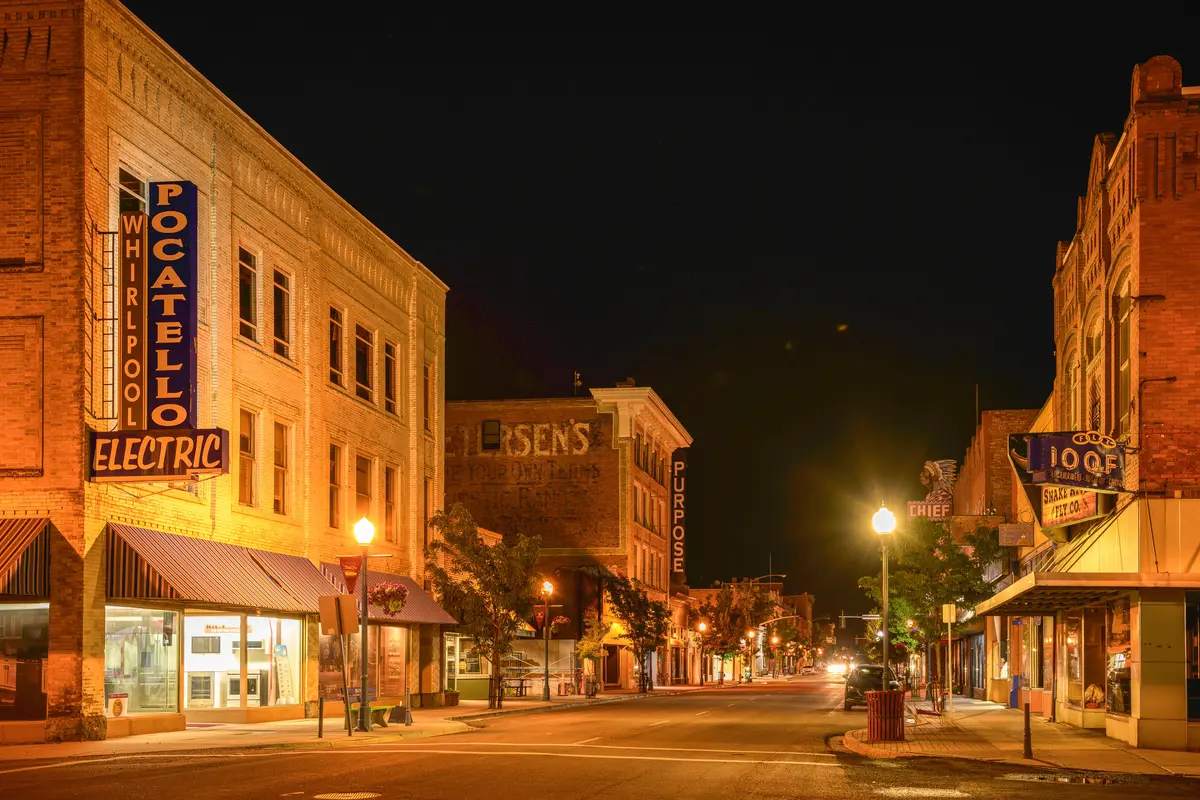
Old Town scores a 58 on Walk Score — the highest in the city — meaning daily errands are possible on foot if you live close to Center Street or Main Street. Outside of that compact historic core, Pocatello is car-dependent. The East Bench neighborhoods, the Chubbuck Corridor, and South Gate all require a car for virtually everything. That's worth sitting with honestly if you're planning to age in place and eventually stop driving.
The terrain adds another variable. Much of Pocatello is flat along the valley floor, which is manageable. But the East Bench rises sharply from downtown, and neighborhoods up that slope involve hills that aren't comfortable on foot for everyone. If walkability is a priority, concentrate your search in or adjacent to Old Town and the lower University District.
The Portneuf Greenway
The Portneuf Greenway is Pocatello's best active-retirement asset. The paved multi-use trail follows the Portneuf River through the heart of the city, connecting neighborhoods without requiring you to navigate traffic. It's flat, accessible, and stays usable for most of the year. Retirees who build a morning walk or bike ride along the Greenway into their routine find it becomes the social backbone of the week — you see the same faces, you stop and talk.
Community Life and Cultural Programming
Idaho State University is an underappreciated retirement asset. The Stephens Performing Arts Center hosts touring productions, symphonies, and theatrical performances on a schedule that keeps the cultural calendar busy through the academic year. Holt Arena hosts events ranging from ISU football to rodeos. Many ISU continuing-education and lifelong-learning programs are available to seniors at reduced or no cost — check the university's Osher Lifelong Learning Institute (OLLI) programming specifically.
The Museum of Clean and the Idaho Museum of Natural History give retirees volunteer and docent opportunities if staying engaged with the community matters to you. The Fort Hall Replica and Zoo Idaho add to the roster of places where retirees in Pocatello often find themselves helping out, not just visiting. For a city this size, the volunteer infrastructure is unusually developed.
Where People Gather
Old Town is the social gravitational center for retirees who want to be around people without committing to a structured activity. The concentration of independent cafés, the weekend farmers market in season, and the proximity to the Greenway make it the neighborhood where you'll see the most spontaneous community interaction. Jim Dandy Brewing on E Lander St operates seven days a week and draws a mixed-age crowd comfortable for retirees who want a casual evening out. Off The Rails Brewing on S Main St fills a similar niche in the heart of Old Town.
Right-Sizing: Downsizing in Pocatello
What the Market Offers
Pocatello's housing stock skews toward single-family homes built between the 1940s and 1990s — many of them two-story, which matters for retirees thinking about long-term mobility. Single-level ranch homes exist throughout the valley, particularly in South Gate and the Chubbuck Corridor, but they move quickly when priced well. If single-level living is non-negotiable, plan to be patient or flexible on location.
Condos and townhomes are a thinner slice of Pocatello's inventory than in larger Idaho markets. What exists tends to cluster near the University District and in newer Chubbuck-area developments. Prices for a well-maintained condo or townhome generally run noticeably below the city-wide home price median, making them a realistic right-sizing option for retirees who want to eliminate yard maintenance without taking a loss on the transition.
55+ and Active-Adult Options
Pocatello does not have the depth of purpose-built 55+ communities you'd find in a retirement-destination market like Sun Valley or Meridian. There is no large-scale active-adult campus on the scale of a Del Webb development. What you will find are smaller manufactured-home communities with age restrictions, a handful of senior apartment complexes with income tiers, and independent-living facilities attached to assisted-living campuses — the latter being a sensible choice for retirees who want the option to age in place within a single community without relocating again.
Assisted living and memory care facilities operate in Pocatello and Chubbuck. If a continuum of care — independent living transitioning to assisted living on the same campus — is part of your planning, research those options early. Waitlists at the more established facilities can run six to eighteen months for preferred unit types.
The Practical Downsizing Math
The financial case for downsizing to Pocatello from a higher-cost market is straightforward. A retiree selling a median-priced home in the Boise metro can often purchase a comparable Pocatello home outright and still have capital remaining. That outcome — no mortgage, lower property taxes, and lower maintenance costs on a smaller single-level home — is the retirement budget reset many people are looking for but can't execute in markets where prices have accelerated sharply. The downsizing inventory isn't limitless, but the price point is real.
Pocatello vs Nearby Retirement Destinations
| City | Cost vs Pocatello | Primary Hospital | Walkability | Senior Living Depth | Overall Retirement Fit |
|---|---|---|---|---|---|
| Pocatello | Anchor | Portneuf Medical Center (205-bed, Level II trauma, QOPI cancer) | Car-dependent; Old Town walkable | Moderate; limited 55+ campuses | Strong value play with real hospital depth |
| Idaho Falls | Somewhat pricier | Eastern Idaho Regional Medical Center (Level II trauma, larger metro footprint) | Car-dependent; more retail density | Moderate; more new construction options | Larger amenity base; higher cost threshold |
| Twin Falls | Comparable | St. Luke's Magic Valley Medical Center (Level II trauma) | Car-dependent; flat terrain | Moderate; growing senior housing sector | Warmer winters; similar hospital quality |
| Blackfoot | Noticeably cheaper | Bingham Memorial Hospital (critical access level) | Limited; small-town grid | Thin; few dedicated senior communities | Best for budget-first retirees comfortable with fewer services |
| American Falls | Noticeably cheaper | Power County Hospital District (critical access) | Very limited | Very thin | Rural lifestyle; trade healthcare depth for price |
| Boise | Significantly pricier | St. Luke's / St. Al's systems (full academic medical depth) | Best in Idaho; walkable core districts | Deep; largest 55+ selection in state | Best amenities; hardest budget math for fixed-income retirees |
Cost comparisons are qualitative reads relative to Pocatello's market; see the cost-of-living page for specific figures.
Idaho Falls beats Pocatello on retail variety and has a hospital system of comparable regional standing, but you'll pay more for that step up in amenity access. Twin Falls offers a similar price band with a milder winter climate — a real consideration if Pocatello's cold season is your hesitation. Blackfoot and American Falls make sense only if budget is the overriding factor and you're comfortable with critical-access hospital coverage rather than a full-service regional medical center. Boise has everything — deeper senior living inventory, walkable neighborhoods, Idaho's most complete hospital systems — but the cost gap is substantial, and the affordability that makes retirement math work in Pocatello largely evaporates there. For retirees whose primary concerns are healthcare access, a manageable cost of living, and a genuine city rather than a suburb, Pocatello holds up as the most practical compromise in eastern Idaho.

Local Expert Takeaway: Pocatello's retirement case rests on three things that rarely come packaged together: a real regional hospital with Level II trauma and QOPI-certified cancer care, a home price well below national norms, and Social Security income that arrives untouched by state taxes. The catch is walkability — outside of Old Town and the Portneuf Greenway corridor, you will need a car for essentially everything. Retirees who anchor themselves near Old Town, build a Greenway walking routine, and take advantage of ISU's Osher Lifelong Learning Institute programming tend to find Pocatello more engaging than the city's modest reputation suggests. The ones who struggle moved here expecting Boise's amenity density at Pocatello's price — that combination doesn't exist anywhere in Idaho.
Quick Takeaways & FAQs
✅ Portneuf Medical Center's Level II trauma center and QOPI-certified cancer program give Pocatello retirees hospital depth that most comparably priced small cities simply cannot match.
⚠️ Walkability outside of historic Old Town is genuinely limited — retirees who plan to age in place without driving should focus their housing search on the Old Town and lower University District area or plan carefully.
📍 Idaho exempts Social Security income from state taxes entirely, and the Circuit Breaker program can reduce property taxes by up to $1,500 per year for qualifying homeowners 65 and older — apply through the Bannock County Assessor's office.
Does Idaho tax Social Security income?
What hospital serves retirees in Pocatello?
Are there 55+ or active-adult communities in Pocatello?
Is Pocatello walkable for retirees?
How does Pocatello's retirement cost compare to Boise?
Moving to Idaho?
Tell us what you need help with and we'll connect you with local resources.
