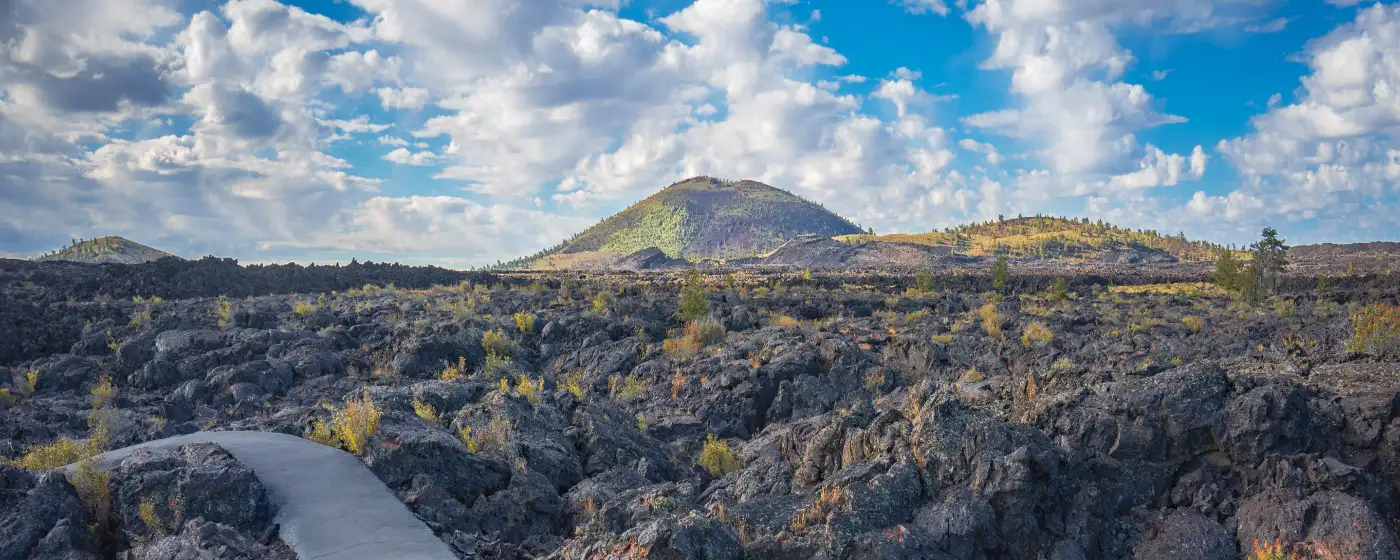
What Is Living in Blackfoot, Idaho Like?
You've probably been priced out of Idaho Falls or Pocatello and someone mentioned Blackfoot. Or your employer — maybe Idaho National Laboratory up the highway, or a manufacturer along the Snake River Plain — is pulling you east. Either way, you likely didn't expect a city with a world-record potato chip on display, a fairground that pulls 250,000 visitors every September, and a downtown in the middle of a $25 million-plus revitalization push. Blackfoot sits at 4,502 feet on the flat south bank of the Snake River, straddling I-15 and US-91, with Idaho Falls exactly 25 minutes north. It's the county seat of Bingham County and, at around 13,500 people, genuinely small — the kind of place where neighbors wave from porches and you'll recognize faces at Jensen Grove Park on a Saturday.
The economic backbone here is a mix of public sector and manufacturing. Blackfoot School District #55 and a major regional health system together account for a significant share of local employment, while Premier Technology (precision metal fabrication) and Woodgrain Millwork anchor the manufacturing side of town. The real job magnet, though, is Idaho National Laboratory — roughly 25 miles up I-15 — which draws engineers, nuclear scientists, and support staff who choose Blackfoot for its prices and commute. The district holds a B- rating, according to Niche, which is honest rather than exceptional, and the median resident age of 34.7 years signals a city that skews young and working-family.
The numbers that push people over the line: a Zillow Home Value Index figure of $334,424 (February 2026), noticeably below Idaho's statewide median, and an effective property tax rate of approximately 0.49% — among the lower rates in the region. Daily life runs at a pace that newcomers from larger metros often find disorienting in the best way. Jensen Grove Park functions as the city's backyard, with a lake, paved trails, and a skate park. The Eastern Idaho State Fair every September transforms the entire city for nine days. There is no public transit; a car is not optional here. For a fuller picture of what housing actually costs and how utility and grocery bills stack up, the cost-of-living page has the full breakdown.
Whether you're seriously considering a move or still in the research phase, the sections below cover why people are choosing Blackfoot right now, what a typical day here actually looks like, the current housing market, commute realities, and where locals spend their weekends.
Blackfoot at a Glance
Looking to buy in Blackfoot? Estimate your payment.
Enter your numbers to see an estimated monthly mortgage payment.
Estimate only. Excludes HOA fees and mortgage insurance. The interest rate above is a starting point, not a quoted rate — replace it with your own to see real numbers. Insurance is a flat placeholder, not a Blackfoot quote.
Why Are People Moving to Blackfoot?
The short answer: affordability combined with access. Blackfoot lets you buy a real house — not a starter condo — while keeping a reasonable commute to one of the most significant research employers in the American West.
The Idaho National Laboratory Effect
Idaho National Laboratory, roughly 25 miles northwest on the high desert plain, is the single biggest driver of in-migration to this part of eastern Idaho. Scientists, engineers, and skilled tradespeople cycle through or settle permanently, and many choose Blackfoot over Idaho Falls specifically because the price gap between the two cities is meaningful. The commute up US-20 is simple and largely traffic-free outside of shift-change windows.
That pattern — INL employment, Blackfoot address — is one of the most common relocating-buyer profiles here. It also means the city has a more technically educated workforce than its size might suggest, which quietly shapes everything from school parent involvement to the volunteer fire department's skill base.
Manufacturing and Local Employers
Premier Technology on the west side of town does precision metal fabrication for defense and commercial clients, and has been a consistent local employer for decades. Woodgrain Millwork's presence in the manufacturing corridor adds another anchor. These are hands-on, shift-work jobs that keep a segment of the workforce planted here permanently — not commuting out.
The school district and the regional health system together employ a substantial share of the city. For a city of 13,500, that institutional stability matters: even in slow economic periods, those payrolls don't disappear overnight.
The Downtown Revitalization Factor
Buyers who are early to a city's turning point tend to do well. Blackfoot's mayor announced a multi-phase investment of more than $25 million in downtown infrastructure in early 2025 — sewer system upgrades, street rehabilitation on Pendlebury Lane and Meridian Road, sidewalk improvements on East Airport Road, and the coming Twin Bridges Landing Park. A new welcoming arch is planned for Pacific Street.
None of that changes Blackfoot overnight. But it does signal that the city is actively investing in itself rather than coasting — something buyers in speculative markets pay a premium to bet on elsewhere.
Who Actually Moves Here
| Buyer Type | Why Blackfoot Works | Best For |
|---|---|---|
| INL / tech commuters | 25-minute drive to INL; home prices well below Idaho Falls | Commuter Value |
| Young families | Affordable single-family homes; Jensen Grove Park; growing school enrollment | Families First-Time |
| Manufacturing workers | Premier Technology, Woodgrain Millwork on-site; no commute needed | Value Quiet |
| Remote workers leaving larger metros | Dramatically lower housing costs; outdoor access; Idaho tax environment | Value Nature |
| Retirees downsizing from Boise or the coast | Low property tax rate; slower pace; proximity to Idaho Falls amenities | Quiet Value |
| First-time buyers priced out of Idaho Falls | Entry-level inventory available; buyer-friendly market pace | First-Time Value |
The profile that tends to not thrive here: someone who needs a walkable urban core with restaurants, nightlife, and cultural density within steps of home. Blackfoot is a small agricultural city, and it presents itself honestly as one.
What Daily Life Feels Like in Blackfoot
Nobody warns newcomers about September. The Eastern Idaho State Fair runs nine days — September 4 through 12 in 2026 — at the fairgrounds on Park Street, and it draws roughly 250,000 visitors to a city of 13,500. Traffic on US-91 through town backs up in ways that have nothing to do with the rest of the year. Parking in the neighborhoods nearest the fairgrounds becomes an improvised community negotiation. If you buy near the fairgrounds, this is simply part of the calendar.
The Pace Is Real
On any given weekday morning, Blackfoot moves slowly. The main commercial corridor doesn't have the gridlock of a larger city, errands get done without circling for parking, and the school drop-off line at the elementary schools clears quickly. Longtime residents describe this as the entire point of living here.
The catch is that "slow" extends to services and retail. Blackfoot has grocery stores, pharmacies, and the everyday staples — but specialty shopping, a wider restaurant selection, or a larger hospital requires the drive to Idaho Falls. Most residents make that trip at least a couple of times a month and have folded it into their routine without resentment.
Where People Actually Gather
Jensen Grove Park is the social center of gravity. On weekday evenings and weekend mornings, the paved loop around the lake draws walkers, cyclists, and parents with strollers in numbers that might surprise someone who thought they were moving to a sleepy farm town. The park's pavilions host birthday parties, church gatherings, and community events throughout the summer.
After six months here, newcomers consistently notice how much social life organizes around school activities, church communities, and the park — rather than bars or restaurant scenes. That's not a criticism. It's the actual texture of life in a small agricultural city in eastern Idaho, and it's worth knowing before you move.
Seasonal Reality
Winters at 4,500 feet on the Snake River Plain are cold and occasionally windy in ways that feel different from mountain-city winters. The flat terrain means wind has nowhere to break. January temperatures regularly drop well below freezing, and the occasional January inversion can settle a gray lid over the valley for days at a time. Summers, by contrast, are warm and dry with long days — the kind of evenings that make Jensen Grove Park irresistible.
The Idaho Potato Museum on NW Main Street is a legitimate anchor for the curious: the world-record potato chip lives there alongside genuine agricultural history, and the attached Potato Station Cafe makes it a reasonable lunch stop on a downtown errand. Smokin' Gun BBQ on East Walker Street has drawn regional attention — a June 2026 feature in East Idaho News put it squarely on the map for visitors and locals alike.
For schools, the full schools breakdown covers boundary details, elementary options, and the district's specific programs. For trails, outdoor access, and what Jensen Grove Park offers season by season, see the parks page.
The Blackfoot Housing Market Right Now
Blackfoot's median home value sits at $334,424 as of February 2026, according to the Zillow Home Value Index — meaningfully below Idaho's statewide median and well below what buyers encounter in Idaho Falls or Pocatello. That figure was down approximately 5.5% from the prior year, which is significant: this is a market that cooled, and it is currently buyer-friendly.
The pace confirms that. As of July 2026, homes in Blackfoot spent a median of 65 days on the market — not the frantic multiple-offer environment that defined Boise-area suburbs a few years ago. You can take time to look at a property twice, get an inspection, and think. That's a genuinely different experience from what buyers have faced elsewhere in Idaho.
What the Numbers Mean in Practice
The effective property tax rate of approximately 0.49% is low by most regional standards. On a home at the city median, that keeps annual carrying costs well below what buyers pay in higher-rate states or counties. Some areas of town carry different character and price expectations — for the neighborhood-by-neighborhood breakdown, the best neighborhoods page covers the specifics of Old Town, Jensen Grove, West Bridge, and the others.
The broader Idaho mortgage rate environment has eased from its late-2023 peak near 8% to the mid-6% range as of 2026, which has helped stabilize demand here without reigniting the urgency of 2021–2022. Inventory moves at a measured pace. Sellers have adjusted expectations. For first-time buyers or anyone moving from a more competitive metro, Blackfoot currently offers negotiating room that's genuinely rare in Idaho right now — see the first-time homebuyer page for what the buying process looks like here in practice.
One honest caveat: Blackfoot is not a market where prices are obviously headed sharply upward. The downtown revitalization investment is real and the growth rate is steady, but buyers expecting rapid appreciation should calibrate expectations carefully. The city's value proposition is stability and affordability, not a flipping opportunity.
Blackfoot Neighborhoods
Blackfoot has several distinct areas — each with its own character and appeal. Here’s a breakdown to help you narrow down where to focus your home search.
🏡 Old Town
Old Town is Blackfoot's historic core, with established tree-lined streets, older craftsman-style homes, and walkable distance to the Idaho Potato Museum and downtown businesses along NW Main Street. It suits buyers who want character over newness and don't mind older construction and the mixed-use energy of a working downtown.
🏠 Riverside
Riverside sits closer to the Snake River, offering a quieter residential feel with larger lots in some sections and proximity to the natural corridor along the water. It tends to attract families and buyers looking for a calmer setting without sacrificing easy access to the I-15 on-ramp.
🌳 West Bridge
West Bridge is on the western side of the railroad divide, giving it a slightly removed feel from downtown's activity — which is either a feature or a drawback depending on what you're after. The area has a mix of mid-century and more recent construction and appeals to buyers who want lower traffic and a quieter street environment.
🏘 Jensen Grove
The Jensen Grove area is the most sought-after family address in Blackfoot, anchored by Jensen Grove Park's lake, trails, skate park, and pavilions directly accessible from neighborhood streets. Homes here move faster than the city average precisely because the park is the city's most consistent social anchor year-round.
🏔 Groveland
Groveland is a quieter residential area with a suburban feel and a mix of single-family homes on standard city lots, drawing families with school-age children and buyers who want predictable neighborhood character. Streets here are calm and the area connects easily to the main commercial corridors without being on them.
🌆 Moreland
Moreland sits on the outer edges of the Blackfoot city area, with a more rural residential character and larger parcels in some sections — the right fit for buyers who want a little land without leaving the city entirely. It's a longer drive to Jensen Grove Park but a shorter one to the open landscape of the Snake River Plain.
Pros & Cons of Living in Blackfoot
The Pros
- Affordable housing well below state and national averages
- Strong agricultural economy with diverse employment from healthcare to manufacturing
- Close-knit community with longstanding annual traditions like the Eastern Idaho State Fair
- Easy access to Idaho Falls
- Pocatello
- and INL employment centers
The Cons
- Limited local shopping and dining compared to nearby cities
- Below-average school test scores despite decent graduation rates
- Property crime rate slightly above national average
Getting Around & Commuting in Blackfoot
There is no public transit in Blackfoot. No bus routes, no light rail, no rideshare infrastructure to lean on. A car is the baseline assumption for every errand, every commute, every school pickup. If you've been living somewhere with meaningful transit, build that shift into your planning.
The I-15 Corridor
The dominant commute pattern runs north on I-15. Idaho Falls is 25 minutes up the interstate under normal conditions — a flat, straight shot across the Snake River Plain with almost no grade change. Most days, that drive is genuinely easy. The complication is that I-15 is the only practical corridor, which means any incident, construction project, or significant weather event affects everyone simultaneously. In January ice storms, that 25-minute drive can stretch considerably.
The INL commute via US-20 toward Arco is a separate pattern — longer in miles but similarly uncongested for most of the day. Scientists and engineers on rotating schedules often find the early-morning or off-peak drive almost entirely traffic-free.
Getting Around Inside the City
Within Blackfoot itself, the grid is flat and logical. The railroad tracks that run through the city center create a practical east-west divide, and the bridges across them are the chokepoints worth knowing. Broadway Street and Jensen Grove-area roads handle most of the local volume, and rush hour in Blackfoot is more of a mild traffic pulse than an actual bottleneck — school dismissal windows on Judicial Street and near the middle school create the most consistent delays locals plan around.
Meridian Road safety improvements are slated for 2026 as part of the city's infrastructure program, which will matter to anyone buying on the west side of town. East Airport Road is also getting sidewalk upgrades, improving walkability near that corridor incrementally.
Regional Access
| Destination | Approximate Drive | Primary Route | Notes |
|---|---|---|---|
| Idaho Falls | ~25 min | I-15 North | Daily commute corridor; freeway conditions vary in winter |
| Idaho National Laboratory | ~45–55 min | I-15 N to US-20 W | Off-peak drive usually clear; early shifts avoid congestion entirely |
| Pocatello | ~35 min | I-15 South | University, regional hospital, larger retail |
| Idaho Falls Regional Airport | ~30 min | I-15 North | Nearest commercial airport; direct flights to Salt Lake City, Seattle, Denver |
| Shelley | ~10 min | US-91 North | Small town; some residents choose Shelley for even lower prices |
| Salt Lake City | ~3 hr | I-15 South | Major hub for connecting flights and specialty shopping |
Idaho Falls Regional Airport is the practical gateway for most Blackfoot residents — a 30-minute drive, and direct connections to Salt Lake City, Seattle, and Denver cover most travel needs without a full-day commitment.
What Newcomers Underestimate
Most people moving from a larger metro underestimate how completely life here reorganizes around the car. It's not just commuting — it's the grocery run to a bigger store in Idaho Falls, the specialist medical appointment in Pocatello, the Costco trip. Building in 30 extra minutes for those errands, factoring them into weekly routines, is what separates residents who adapt quickly from those who spend their first year frustrated.
Schools in Blackfoot
Families relocating to Blackfoot have public, private, and higher-education options nearby. Here’s a quick overview.
🎓 School District
Blackfoot School District #55 serves K–12 students across Blackfoot and the surrounding area. Rated B- (source: Niche.com).
🏆 Graduation Rate
The 4-year high-school graduation rate here is approximately 89.9%.
📚 Higher Education
Idaho’s public universities — Boise State, the University of Idaho, and Idaho State — offer four-year degrees statewide, with community colleges (CWI, CSI, NIC) providing two-year and workforce programs.
🌐 Online Learning
Boise State Online and University of Idaho Online offer fully accredited online degrees for remote learners across the state.
Safety in Blackfoot
A quick look at how Blackfoot compares on the numbers that matter most when weighing a neighborhood or a move.
🛡 Violent Crime
Approximately 3.5 per 1,000 residents.
🔒 Property Crime
Approximately 22.1 per 1,000 residents.
Compared to the FBI’s most recent national data (2024), Blackfoot’s violent crime is about the same as the national average (about 3.6 per 1,000), and property crime is above the national average (about 17.6 per 1,000).
Against Idaho as a whole, Blackfoot’s violent crime is about one and a half times the state average, and property crime is about three times the state average (Bureau of Justice Statistics, Crime Known to Law Enforcement, 2024 (tables 2 and 3)).
Crime rates can vary a lot within a single city, so the citywide numbers above are only a starting point. Some neighborhoods in Blackfoot run well below these averages, while others run higher — the kind of block-by-block detail that matters most when you’re actually choosing where to live. The full guide below breaks it down neighborhood by neighborhood.
Working in Blackfoot
Blackfoot’s largest employers span several industries — here are some of the anchors of the local job market.
🏥 Bingham Memorial Hospital
Healthcare
🎓 Blackfoot School District #55
Education
💼 Premier Technology
Metal fabrication
🏭 Woodgrain Millwork
Manufacturing
💼 Idaho National Laboratory
Nearby, nuclear research
Parks & Recreation in Blackfoot
Some of the outdoor spaces that shape everyday life in Blackfoot.
🌱 Jensen Grove Park
Blackfoot residents don’t have to go far for green space — spots like Jensen Grove Park are part of everyday life here, whether that’s a morning walk, a weekend hike, or just somewhere to unwind outside. The full guide below covers more of what Blackfoot has to offer for parks and outdoor recreation.
Retiring in Blackfoot
Blackfoot draws retirees for its balance of amenities, outdoor access, and cost. Here’s what to weigh.
🌤 Climate
Blackfoot sits at 4,502 feet on the Snake River Plain, which means genuinely cold winters with temperatures that regularly drop well below freezing and occasional wind that has nothing to break it on the flat terrain. Summers are warm, dry, and long — the kind of July and August evenings that make Jensen Grove Park's trails a daily habit. Spring and fall are short but pleasant.
🍴 Lifestyle
Daily pace here is deliberate and low-pressure. The Idaho Potato Museum and the Blackfoot Performing Arts Center anchor the cultural calendar, and the Eastern Idaho State Fair every September is the city's signature community event. A wider restaurant and retail selection is 25 minutes north in Idaho Falls, which most retirees factor into a weekly routine without much friction.
🏚 55+ Communities
Blackfoot has smaller-scale senior living options and assisted living facilities serving the Bingham County area, though the dedicated active-adult community infrastructure found in larger Idaho metros is limited here. Many retirees are drawn by the low property tax rate and the proximity to Idaho Falls, where additional senior services and healthcare options are available. For the full picture on healthcare access and retirement-specific resources, see the retiring in Blackfoot page.
✈ Getting Around
Blackfoot is a driving city with no public transit — a car is essential. Within the city, the flat grid is easy to navigate and distances are short. Idaho Falls Regional Airport, about 30 minutes north on I-15, offers direct flights to Salt Lake City, Seattle, and Denver, making regional and national travel manageable for retirees without the hassle of a major hub airport.
🏛 Idaho Taxes for Retirees — What to Know
- Social Security is not taxed — Idaho does not tax Social Security benefits at the state level, regardless of income.
- Flat state income tax — Idaho has a flat income tax (5.3% for 2026). Other retirement income — pension distributions and 401(k)/IRA withdrawals — is taxed as ordinary income at that rate.
- Narrow retirement deduction — Idaho’s Retirement Benefits Deduction is limited: it reaches only certain government pensions (federal CSRS, Idaho firefighter/police, and military retirement) for those 65+ (or 62+ if disabled), and is reduced by Social Security received.
- Sales tax is the tradeoff — The state sales tax is 6.0%, and Blackfoot adds no local sales tax on general retail, so the combined rate is 6.0% (Idaho State Tax Commission, 2026). Groceries are taxed, but a grocery tax credit offsets part of it; prescription drugs are exempt. A small number of resort cities add a local option tax, usually on lodging, alcohol, and prepared food rather than general retail.
- Low property taxes, with senior relief — Idaho property taxes are relatively low. Homeowners 65+ who own and occupy their home may qualify for the “circuit breaker” Property Tax Reduction based on income.
- No estate or inheritance tax — Idaho has no estate, inheritance, or gift tax.
- Capital gains — Capital gains are taxed as ordinary income, though Idaho allows a deduction of up to 60% of the net gain on qualifying Idaho property.
Tax laws change frequently and individual situations vary. This is general information, not tax advice — always consult a qualified Idaho tax professional or CPA for personalized retirement tax planning.
Weekends & Local Favorites in Blackfoot
Ask a Blackfoot resident where they spend Saturday morning and the answer is almost always Jensen Grove Park. The paved trail system loops the lake and connects to the skate park, basketball courts, and multiple playgrounds — families with kids, older residents on bikes, and teenagers at the skate park all share the same few acres in a way that works surprisingly well. Summer weekends bring out pavilion reservations for gatherings of every description.
The Fair Changes Everything in September
The Eastern Idaho State Fair at 97 Park Street is the city's defining annual event, and it is genuinely large for a city this size — nine days, rodeos, a demolition derby, tractor pulls, live concerts, 4-H livestock exhibits, and carnival rides running through September 12 in 2026. Locals either love or strategically avoid the traffic. Either way, it's one of the region's best fairs, and if you have school-age kids, the 4-H dimension is a significant part of the community calendar year-round.
Food and Downtown
Smokin' Gun BBQ on East Walker Street earned a feature in East Idaho News in June 2026 for good reason — it's the kind of place that puts Blackfoot on the regional food map for visitors who assumed there was nothing worth stopping for. The Potato Station Cafe inside the Idaho Potato Museum on NW Main Street is a practical lunch stop downtown, especially if you have out-of-town visitors who haven't seen the record-setting potato chip yet. The museum itself is worth the walk-through regardless of how long you've lived here.
Downtown Blackfoot's restaurant and café scene is small and evolving. The honest characterization: there are good spots and the selection is growing, but a full Saturday of dining variety still tends to pull people toward Idaho Falls. That's changing incrementally as downtown investment picks up.
History and Culture
The Bingham County Historical Museum and the Blackfoot Performing Arts Center round out the cultural calendar. The Performing Arts Center hosts community productions and regional touring acts that give the city a cultural programming presence larger than its population might suggest. The historical museum offers context on the agricultural and railroad history that shaped the entire Snake River Plain — genuinely interesting if you want to understand why this city is where it is.
Getting Outside
The Snake River itself is accessible within the city, and the broader eastern Idaho landscape — desert uplands, the Portneuf Range to the south, the high desert toward INL — is within reasonable driving distance for hiking, fishing, and hunting. Blackfoot sits at the convergence of several distinct ecosystems, which means serious outdoors people find the variety satisfying rather than limiting. The parks and recreation page goes deeper on trails, the river, and seasonal outdoor options from this part of the state.
Top Things Locals Say About Blackfoot
The best intel about a city comes from the people who actually live there. Here’s what Blackfoot residents say when newcomers ask the questions everyone’s thinking.
“I knew it was small, but I didn't realize how much of my social life would just happen at Jensen Grove Park. Within three months, I knew more neighbors from trail walks than I had in two years at my last place.”
— Recent Blackfoot home buyer
“What's the most surprising thing about living in Blackfoot?”
The September fair catches everyone off guard the first year. You see the fairgrounds on Park Street when you're house-hunting and it looks dormant. Then early September arrives and 250,000 people descend on a city of 13,500. The traffic on US-91 through town has its own rhythm for those nine days. After the first year you just build it into the calendar and either lean in or plan your grocery runs strategically.
“What do locals love most about Blackfoot?”
Jensen Grove Park comes up constantly — it's the kind of place where you run into people you know on a Tuesday evening, not just a Saturday. The affordable housing is the other thing people mention once they've been here a year and can see what their friends in Idaho Falls are paying. And the INL commute is genuinely manageable; that 25-minute drive on I-15 is low-stress compared to what people gave up in larger metros.
“What should newcomers to Blackfoot know?”
The railroad tracks through the city center divide things in a way that matters day to day. The bridges across them — especially near the downtown core — are the chokepoints during school dismissal windows. Do your school pickup timing research before you assume any route is quick. Also: build the Idaho Falls run into your weekly routine from day one. Fighting that reality for six months is the most common newcomer frustration.
“Can you live in Blackfoot without a car?”
Realistically, no. There is no public transit system at all — no bus routes, nothing. The city grid is flat and manageable for short trips by bike in good weather, and some residents near downtown walk to the Idaho Potato Museum area or Jensen Grove Park. But for groceries beyond the basics, any medical specialty care, or the hardware and retail that daily life actually requires, a car is non-negotiable.
Cities Near Blackfoot
Other communities near Blackfoot worth a look — each with its own character and price point.
| City | Distance | Best For | Vibe | Median Rent | Median Buy |
|---|---|---|---|---|---|
| Shelley | 10 mi | Budget buyers, rural quiet | Tiny, agricultural, tight-knit | $950 | $293,030 |
| Pocatello | 25 mi | University access, more amenities | College town, more urban, hillier | $1,000 | $310,000 |
| Idaho Falls | 25 mi | Jobs, retail, larger city feel | Regional hub, busier, pricier | $1,200 | $380,000 |
More Helpful Guides for Blackfoot
Going deeper on Blackfoot? Our blog series covers everything from first-time buying to retiring here — explore the guides below.
Local Expert Takeaway: Blackfoot's real proposition in 2026 is this: you get a genuine house at a price that Idaho Falls buyers can't touch, a 25-minute interstate shot to one of the West's major research employers, and the kind of small-city life where Jensen Grove Park actually functions as a community living room. The Eastern Idaho State Fair is your September anchor event whether you plan for it or not. Smokin' Gun BBQ on East Walker Street and the Potato Station Cafe at the Idaho Potato Museum are the two verified spots locals point visitors toward without hesitation. The downtown investment is real and underway. If you need urban density, keep looking — but if you want space, stability, and a low-tax state with room to breathe, Blackfoot makes a strong, honest case.
Quick Takeaways & FAQs
✅ Home values at $334,424 (February 2026 Zillow Home Value Index) sit well below Idaho's statewide median, giving buyers genuine purchasing power that's increasingly rare in the region.
⚠️ There is zero public transit in Blackfoot — a car is not optional, and the nearest major shopping, specialty services, and hospital are a 25–30 minute drive in Idaho Falls.
📍 The Eastern Idaho State Fair brings 250,000 visitors to a city of 13,500 every September — if you buy near the fairgrounds on Park Street, plan your schedule around nine days of serious traffic.
Is Blackfoot, Idaho a good place to live?
How far is Blackfoot from Idaho Falls?
What are the major employers in Blackfoot, Idaho?
What is the housing market like in Blackfoot, Idaho right now?
What is the Eastern Idaho State Fair and how does it affect living in Blackfoot?
Helpful Links for Moving to Blackfoot
Moving to Idaho?
Tell us what you need help with and we'll connect you with local resources.
