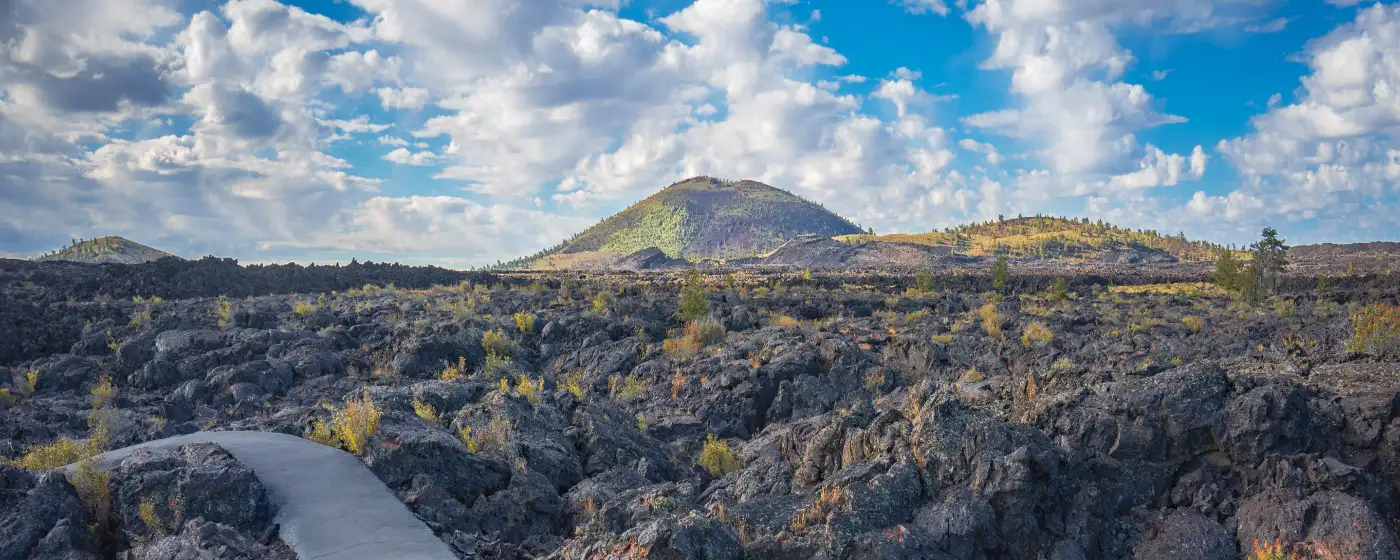
If you're pricing yourself out of your California zip code and someone mentioned Blackfoot, Idaho, your first reaction was probably to Google the population. It's around 13,500 people — smaller than many California neighborhoods. But the numbers that follow that figure are the ones that actually change the conversation: a typical home value of $334,424 (Zillow Home Value Index, February 2026), a flat state income tax of 5.3%, and a total cost of living roughly 11.5% below the U.S. average. Blackfoot sits in Bingham County in eastern Idaho, straddling I-15 about 25 minutes south of Idaho Falls and less than an hour north of Pocatello. The Snake River runs along its western edge. The Portneuf Range rises to the east. This is not a suburb of anywhere — it is its own place, with its own economy and its own pace.
The economic backbone here is a mix of education, manufacturing, and proximity to one of the country's major research institutions. The Blackfoot School District and manufacturers like Premier Technology and Woodgrain Millwork anchor local employment. Idaho National Laboratory — the federal nuclear research facility — draws engineers and scientists who often settle across the region, including Blackfoot. The city also anchors something larger: it hosts the Idaho Potato Museum on NW Main Street and runs the Eastern Idaho State Fair each September at the fairgrounds on Fairgrounds Road. If you're relocating for remote work or a lower cost base rather than a specific local job, Blackfoot's location gives you fast access to Idaho Falls' broader job market without paying Idaho Falls prices.
Californians who land here consistently report the same early surprise: how far a paycheck goes. Groceries, gas, restaurants, and utilities all run noticeably below what most California metros charge. The verified cost-of-living index sits at approximately 88.5 on BestPlaces (where 100 equals the national average). The catch on the tax side — and there is one — is that Idaho taxes groceries at the full 6% state sales tax rate, though a refundable grocery tax credit of $155 per person partially offsets that. Property taxes in Blackfoot run at an effective rate of approximately 0.49%, which sounds like a win until you read the fine print about Idaho's lack of anything resembling Proposition 13. For a full breakdown of Blackfoot's cost of living, that page covers utilities, groceries, and the full tax picture.
This guide focuses on what California residents specifically need to understand before making the move: the home price gap, the income and property tax shift, the lifestyle adjustments, and the honest trade-offs that don't show up on a relocation spreadsheet. The sections below cover the California-to-Blackfoot price comparison, the full tax picture, what daily life actually looks like, who thrives here and who doesn't, and the practical steps for making the transition.
The Home Price Gap: What Your California Equity Actually Buys Here
The California statewide median home price sat at approximately $843,390 in Q1 2026, per the California Association of Realtors. Blackfoot's typical home value, by comparison, was $334,424 (Zillow Home Value Index, February 2026). That gap — roughly half a million dollars — is not a rounding error. It is the central financial fact of this move.
For a California seller arriving with significant equity, that figure reshapes the entire transaction. The purchase price drops dramatically, the loan structure changes accordingly, and the monthly financial picture looks fundamentally different at Blackfoot's price point than at California's.
What the Entry Point Looks Like
Older and smaller homes in Blackfoot's established neighborhoods tend to represent the lower end of the market. Newer construction commands a premium but still lands well below anything comparable in most California metros. For neighborhood-by-neighborhood character and which areas suit different buyer types, the best neighborhoods in Blackfoot page breaks that down in detail.
No Prop 13 — Read This Before You Close
Here is what catches California buyers off guard more than anything else: Idaho has no equivalent of Proposition 13. In California, your assessed value is locked at the purchase price and can rise no more than 2% per year regardless of what the market does. Idaho assessed values reset with market appreciation each year. If Blackfoot home values climb — and they have moved upward over the past several years — your annual property tax bill climbs with them.
Blackfoot's current effective property tax rate is approximately 0.49%, which is below Idaho's own statewide median and well below California's typical effective range of roughly 0.7% to 1.1% depending on county and how long a California owner has held their home. At Blackfoot's current typical value, the annual property tax obligation is modest. The risk is that it does not stay modest if values appreciate and there is no Prop 13 floor to protect you. Factor that into your long-term hold math before you close.
| Metric | Blackfoot, ID | California (Statewide) |
|---|---|---|
| Typical / Median Home Value | $334,424 (ZHVI, Feb 2026) | ~$843,390 (Q1 2026) |
| Effective Property Tax Rate | ~0.49% | ~0.7%–1.1% (varies by county) |
| Prop 13 / Assessment Lock | No equivalent | Yes — 2% annual cap |
| Estate / Inheritance Tax | None | None (state level) |
| Home Price Relative to US Avg | Noticeably below | Significantly above |
| Typical Equity Freed by Move | — | Often substantial for long-term owners |
* ZHVI = Zillow Home Value Index.
One sentence sums up the math: the purchase price drops dramatically, the tax rate drops modestly, and the only structural downside is losing the Prop 13 ceiling — a real risk in a rising market, but one many California buyers willingly accept given the entry-price difference.
California vs. Idaho Taxes: The Full Paycheck Picture
The income tax shift alone is worth running the numbers on before you move. California's top marginal income tax rate is 13.3%. Idaho moved to a flat rate of 5.3% effective January 1, 2025 — signed into law as HB 40 by Governor Brad Little in March 2025, down from the previous 5.695%. For a household earning $150,000, the difference between those two rates is significant even before you account for deductions.
The comparison isn't clean because California's rate is marginal (lower income is taxed at lower brackets), while Idaho's flat 5.3% applies across all taxable income. But for middle-to-upper earners relocating from California's higher brackets, the direction is unmistakably favorable. Idaho also has no state-level disability insurance payroll deduction — in California, SDI runs approximately 1.1% of wages. That's another line item that quietly disappears from your pay stub on day one in Idaho.
Sales Tax: Lower Rate, One Catch
Idaho's statewide sales tax is 6.00%, with a combined state-and-local average of roughly 6.03%. California's combined rate reaches as high as 10.75% in some jurisdictions. The difference adds up across everyday purchases — but the catch is groceries. Idaho taxes food at the full 6% rate, whereas California exempts most grocery purchases from sales tax entirely.
The state partially offsets this with a refundable grocery tax credit: $155 per person per year as of 2025 (raised from $120 by HB 231, signed March 2025), worth $620 annually for a family of four. A citizen-led initiative to repeal the grocery tax entirely was actively circulating for signatures as of August 2025, targeting the November 2026 ballot. That is a live policy question — do not budget around a repeal that hasn't passed yet.
Gas Tax and Everyday Recurring Costs
Blackfoot is car-dependent. There is no meaningful public transit, and driving is the primary mode of getting anywhere. Idaho's gas tax is 33 cents per gallon. California's is 61.2 cents per gallon. For a household putting 20,000 miles a year on two vehicles, that gap is felt at the pump every single week.
| Tax Category | Blackfoot / Idaho | California |
|---|---|---|
| State Income Tax | Flat 5.3% | Up to 13.3% (marginal) |
| Sales Tax (combined avg) | ~6.03% | Up to ~10.75% |
| Grocery Tax | 6% (credit of $155/person offsets) | Exempt (most foods) |
| Gas Tax (per gallon) | $0.33 | $0.612 |
| SDI Payroll Deduction | None | ~1.1% of wages |
| Estate / Inheritance Tax | None | None (state level) |
| Prop 13 Assessment Lock | No equivalent | Yes |
The overall tax picture favors Idaho for most California households — especially those in higher income brackets or those who drive frequently. The grocery tax is the one item that cuts the other way for families, though the refundable credit takes the edge off for smaller households.
What Daily Life in Blackfoot Actually Looks Like
Month one in Blackfoot feels like a reset. Month six is when Californians usually either feel settled or start to feel the friction. The city is quiet in a way that takes adjustment — not unpleasant, but genuinely different from even a mid-size California town.
What People Do Here
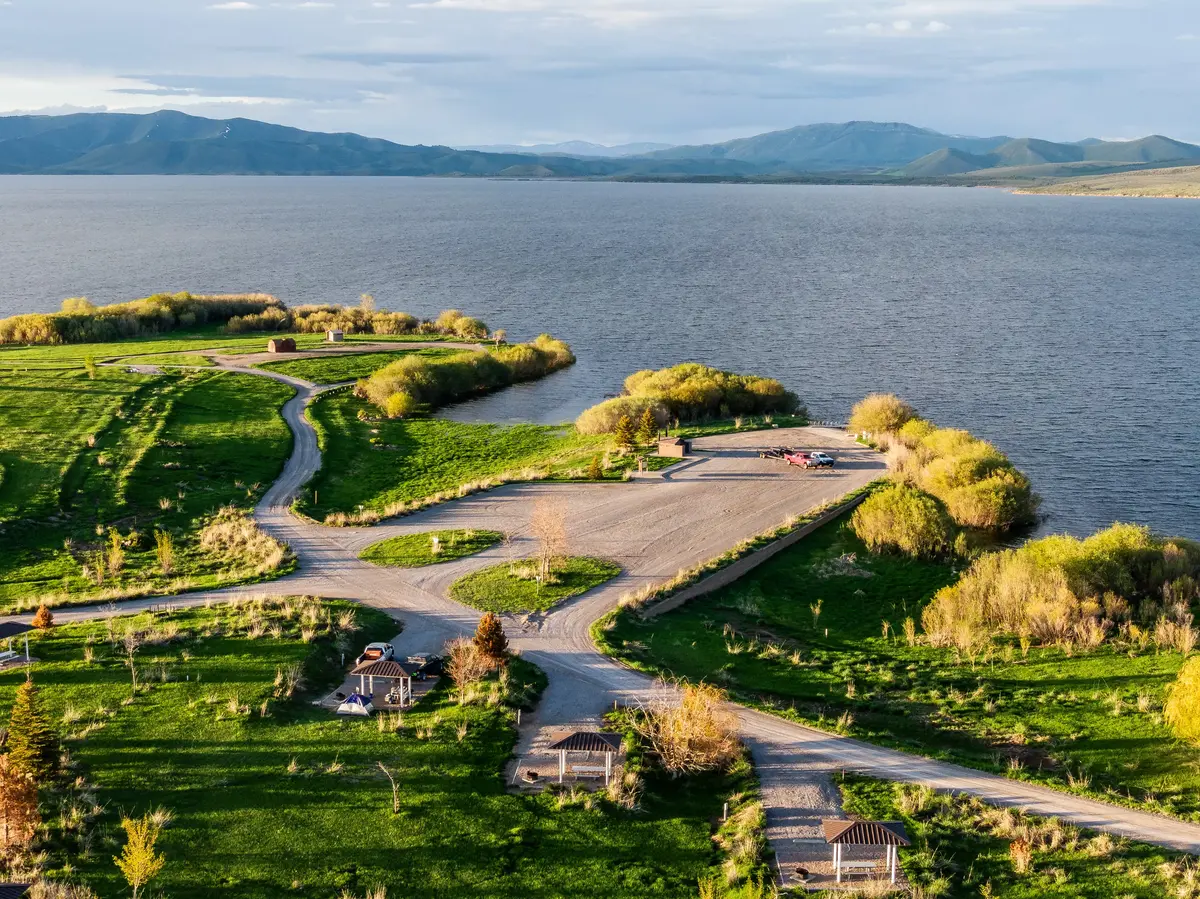
Jensen Grove Park is the city's social hub — a 60-acre lakeside park off Judicial Drive where families gather on summer evenings, community events run through the warmer months, and outdoor recreation fills the calendar. The Eastern Idaho State Fair at the fairgrounds on Fairgrounds Road draws the entire region each September and functions as one of the bigger social events of the year for longtime residents.
For a sit-down meal, the Teton House — operating in a building over 100 years old and under new ownership as of December 2024 — is Blackfoot's option when you want something beyond a chain. The Potato Station Cafe, attached to the Idaho Potato Museum on NW Main Street, is genuinely worth a stop: it's casual, local, and specific to Blackfoot in a way that almost nothing else in small-town Idaho is. Neither of those is a restaurant row. If a wide dining selection matters to you, Idaho Falls is 25 minutes up I-15 and has more options.
The Honest Trade-offs
There is no Trader Joe's in Blackfoot. There is no Whole Foods. The nearest options for specialty groceries are in Pocatello or Idaho Falls. If weekend farmers-market culture or walkable retail was part of your California routine, you will feel that absence.
Driving is not optional here — it's structural. The city's layout rewards car ownership, and the lack of any transit infrastructure means every errand involves getting in a vehicle. For households coming from Bay Area cities where a car sat unused for weeks at a time, that is a genuine lifestyle shift, not a minor inconvenience.
What Surprises People After Six Months
The thing most California transplants don't anticipate is how much of their social life in California was built on proximity to density — the spontaneous dinner, the weekend trip to a coastal town, the concert venue within an hour. Blackfoot doesn't offer that. What it offers instead is access to Snake River fishing, nearby Palisades Reservoir, and winter skiing within reasonable driving distance of eastern Idaho — outdoor recreation that is real, not curated. That trade satisfies some households completely and leaves others restless within a year. Knowing which type you are before the move is the most important homework you can do. For more on outdoor options, see the parks and recreation page.
Looking to buy in Blackfoot? Estimate your payment.
Enter your numbers to see an estimated monthly mortgage payment.
Estimate only. Excludes HOA fees and mortgage insurance. The interest rate above is a starting point, not a quoted rate — replace it with your own to see real numbers. Insurance is a flat placeholder, not a Blackfoot quote.
Who Thrives in Blackfoot — and Who Tends to Move Back
The buyers who do well in Blackfoot share a few common traits. They have a clear reason to be in eastern Idaho — a job at Idaho National Laboratory, a family connection, a remote-work arrangement that makes geography irrelevant, or a deliberate decision to trade urban amenities for lower costs and quieter surroundings. The buyers who struggle are the ones who moved primarily because of price and assumed the lifestyle would feel similar to California.
Who Finds the Right Fit Here
Parents with school-age children who prioritize outdoor access, a slower pace, and a community where kids still play outside unsupervised tend to settle in quickly. Blackfoot School District #55 serves the city; for school ratings and what the district offers, the schools page covers that in detail. Remote workers with California salaries — earning coastal wages while paying eastern Idaho prices — find the arbitrage genuinely transformative. Engineers and researchers commuting to Idaho National Laboratory near Arco use Blackfoot as a lower-cost base than Idaho Falls, with easy highway access.
Who Tends to Leave
People who move here without a social anchor — no family nearby, no employer tying them to the area, no prior connection to small-town Idaho — often find the isolation compounds over time. The city's entertainment and dining options are limited by design, not by oversight. There is no nightlife to speak of. The nearest mid-size city, Pocatello, is about 35 minutes south; Idaho Falls is 25 minutes north. If your mental model of a good weekend involves spontaneous options within walking distance, Blackfoot will consistently disappoint.
California transplants who moved primarily chasing real estate value without researching the day-to-day reality are the most common reason people leave within two years. The savings are real. The lifestyle shift is also real. Both things are true at the same time.
The Commuter Reality
Idaho Falls is the region's commercial hub, and many Blackfoot residents make that 25-minute highway run regularly. Morning traffic heading toward Idaho Falls — roughly 7:00 to 8:30 a.m. — can slow near the Idaho Falls interchange, particularly in winter when highway conditions deteriorate. The local approach: leave by 6:45 a.m. or wait until 9:00. The commute is manageable by most standards, but in a January snowstorm on I-15, it earns respect. For more on commuting patterns and local employers, see living in Blackfoot.
Practical Steps for Making the Move from California
Relocating from California to Blackfoot involves a few specific logistics that are worth addressing before you find yourself surprised by them. The transaction process in Idaho differs from California in meaningful ways, and the timeline from decision to close tends to move faster than what many California buyers are used to.
Establish Idaho Residency Promptly
Idaho's income tax benefit starts on the day you become a resident — which in practice means the day you establish domicile, obtain an Idaho driver's license, and register your vehicles. California can be aggressive about claiming continued residency for tax purposes, particularly for higher earners who maintain any California ties. Consult a tax professional before the move, not after, to make sure the residency break is clean.
Understand Idaho's Property Tax Structure Before You Buy
You already know there's no Prop 13 equivalent. What you also need to know: Idaho offers a homeowner's exemption that reduces the taxable assessed value on a primary residence — currently capped at $125,000 of assessed value. Apply for it at the Bingham County Assessor's office after closing; it is not automatic. Missing the application window costs you a full year of the benefit.
Financing at This Price Point
At Blackfoot's typical price point of $334,424, buyers coming from California with substantial equity often find they can put down a larger percentage — or in some cases purchase outright — which changes the loan product and qualification calculus significantly. First-time buyers who don't carry California equity should look at Idaho Housing and Finance Association programs, which offer down payment assistance for qualifying buyers. The first-time homebuyer page covers those options in detail.
Budget for the Car-Dependent Reality
Two reliable vehicles are not a luxury in Blackfoot — they're infrastructure. If you're moving from a California household that has been car-light by design, budget for the vehicle acquisition, insurance, and maintenance costs as part of your relocation math. Idaho's gas tax of 33 cents per gallon helps offset the driving volume compared to what you paid at the California pump, but the volume itself is unavoidably higher.
Timing the Move Around the Agricultural Calendar
Blackfoot's economy runs on an agricultural rhythm. The Eastern Idaho State Fair in early September draws regional traffic that affects short-term rentals and temporary housing availability. If you're planning a summer arrival with an extended rental period before closing, book early — inventory in a city of 13,500 is not abundant, and the window between listing and lease tends to be short. Winter moves are logistically harder: I-15 sees significant snow and ice between November and March, and moving a full household in January requires more planning than the same move in June.
Local Expert Takeaway: California buyers who move to Blackfoot with clear eyes do well here. The home price gap is real and significant — roughly half a million dollars between the California statewide median and Blackfoot's typical value. The income tax drop from California's top rate to Idaho's flat 5.3% is immediately felt in take-home pay. What the spreadsheet doesn't capture: there is no Prop 13 floor protecting your property tax bill if values rise, groceries are taxed at 6% (partially offset by a $155-per-person annual credit), and the lifestyle requires genuine comfort with small-town Idaho — Jensen Grove Park on a summer evening, the Potato Station Cafe on Main Street, and a 25-minute highway run to Idaho Falls for anything the city doesn't have. If that trade works for your household, the financial case for Blackfoot is among the strongest in the region.
Quick Takeaways & FAQs
✅ Blackfoot's typical home value of $334,424 (Zillow Home Value Index, February 2026) is dramatically below California's statewide median, often freeing substantial equity for relocating sellers.
⚠️ Idaho has no Proposition 13 equivalent — your assessed value can rise with the market each year, which matters if Blackfoot home prices continue to appreciate.
📍 The Potato Station Cafe on NW Main Street, attached to the Idaho Potato Museum, is one of the few genuinely local dining experiences in the city — worth knowing on your first visit.
How much cheaper is Blackfoot, Idaho compared to California for buying a home?
What happens to my California income taxes when I move to Blackfoot?
Does Idaho have Proposition 13 like California?
Is Blackfoot a good place to move for remote workers from California?
Are groceries taxed in Idaho the way they are in California?
Moving to Idaho?
Tell us what you need help with and we'll connect you with local resources.
