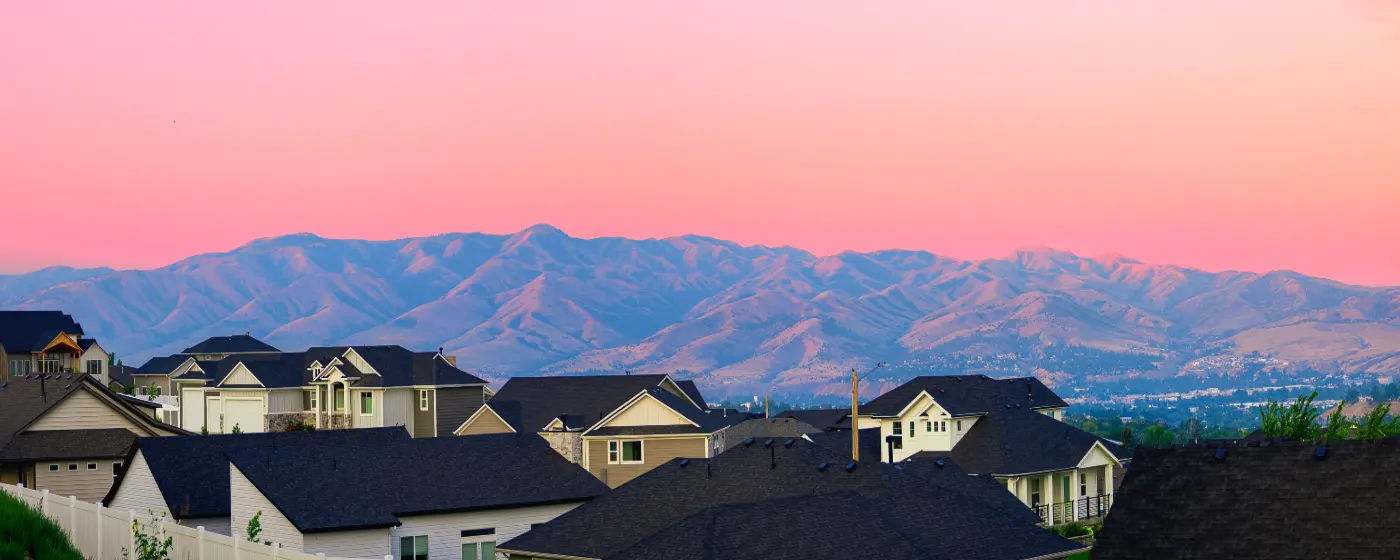
Most Californians who end up in Pocatello didn't have it on their radar six months before they moved. They got priced out of Sacramento or tired of the Bay Area commute, started running the numbers on Idaho, and landed on a city that costs a fraction of what they left behind. Pocatello sits at the crossroads of I-15 and I-86 in eastern Idaho's Portneuf Valley, roughly 160 miles southeast of Boise and about 50 miles south of Idaho Falls — close enough to a regional hub, far enough to feel like its own place. The Portneuf River bisects the city, and the surrounding mountains are never out of sight. This isn't suburban sprawl grafted onto a freeway. It's a small, working city with a genuine downtown and a campus that anchors the whole thing.
Idaho State University is the economic spine of Pocatello, employing thousands and drawing students from across the region. ON Semiconductor, Amy's Kitchen, and Bannock County government round out the major employer base alongside public-sector and healthcare institutions. That mix — education, manufacturing, and public services — gives the city a stability that pure tech-hub towns don't always have. The Pocatello-Chubbuck School District 25 serves the area, and families tend to cluster in neighborhoods like Alameda and the East Bench where schools are most accessible. For a detailed look at how the schools stack up, the Pocatello schools page breaks it down neighborhood by neighborhood.
Pocatello's overall cost of living sits approximately 7% below the U.S. national average — by some measures the most affordable city in Idaho. That makes it an outlier even within a state that's already cheaper than California. The Portneuf Greenway connects Old Town, ISU, and the river corridor via paved, largely ADA-accessible walking and biking trails, and Zoo Idaho gives families a free-admission anchor for weekends. What you give up versus Los Angeles or San Francisco is obvious: fewer dining options, less nightlife, no ocean. What surprises people after six months is how quickly they stop missing it.
Whether you're being relocated here for work, chasing housing affordability, or just done with California's tax climate, the sections below break down the home price comparison, the tax math, what everyday costs actually look like, the lifestyle shift, and the honest reasons some California transplants eventually leave.
The Home Price Gap: What $318,721 Actually Means Coming from California
The number that stops most California buyers cold is Pocatello's typical home value of $318,721 (Zillow Home Value Index, 2026). California's statewide median sale price hit $843,390 in Q1 2026. That is not a rounding difference — it is a different category of housing market entirely.
For a buyer coming out of Los Angeles or the Bay Area, the practical implication is this: a home that would cost well over a million dollars in a desirable California suburb can be replicated in Pocatello's better neighborhoods for a fraction of the price. Older construction in areas like the North End starts meaningfully below the city median, while the East Bench and Alameda neighborhoods — where square footage is larger and lots are more generous — sit closer to or above it. For a full breakdown of what each neighborhood delivers at various price points, see the Pocatello neighborhoods guide.
The down payment math changes completely. A 20% down payment on a California median home runs roughly $168,000. That same percentage on a Pocatello home is closer to $64,000 — money many California sellers have sitting in their equity check after closing. Some buyers arriving from California are effectively paying cash or putting down 40–50% after the sale of their previous home, which resets their monthly financial picture in a way that took years to achieve in California.
Pocatello's effective property tax rate is 0.71%. California's effective rate is approximately 0.7% — nearly identical on paper. The difference is what that rate is applied to. On a $318,721 Pocatello home, the annual tax bill is a fraction of what a California homeowner pays on a home worth two to three times as much. That compounding effect — lower purchase price, lower rate base — is where the real savings compound year over year.
One thing to calibrate: Pocatello is not a market where prices have stayed flat. ISU's enrollment, remote-worker migration, and regional employer growth have all pushed values upward over the past several years. You are still buying at a significant discount to most Western markets, but the window of entry-level pricing that existed pre-2020 has largely closed. Move quickly on properties you're serious about — well-priced homes in Alameda and the East Bench rarely sit more than a week or two.
The Tax Math: Idaho vs. California, Line by Line
For many California transplants, the income tax change alone justifies the move. Idaho levies a flat individual income tax rate of 5.3% (effective January 1, 2025, reduced from 5.695%). California's top marginal rate is 13.3%. If you earn $150,000, the difference between those two rates is not abstract — it is a five-figure annual swing.
| Tax Category | Pocatello / Idaho | California (major cities) |
|---|---|---|
| State income tax | 5.3% flat rate | Up to 13.3% marginal |
| Effective property tax rate | 0.71% | ~0.70% |
| Sales tax (combined) | 6.0% (no local add-on) | 7.25% state base; 10.25%–10.75%+ in major cities |
| Grocery tax | 6% (with refundable Food Tax Credit) | Exempt from sales tax |
| Estate / inheritance tax | None | None at state level |
| Cost-of-living index | 97.7 (Idaho, national avg = 100) | 142.2 (national avg = 100) |
The grocery tax is the one Idaho wrinkle that catches California transplants off guard. Idaho taxes groceries at the full 6% rate — California exempts them. Idaho partially offsets this with a refundable Food Tax Credit of $155 per person per year (raised in the 2025 legislative session from $120), with an option to submit receipts for up to $250 per person. For a family of four, that credit recovers a meaningful portion of what you pay in grocery taxes annually. It doesn't fully close the gap, but it's a more intentional offset than most states bother with.
The sales tax story is straightforwardly better. Pocatello's total sales tax rate is 6% — the Idaho state rate — with no county or city surcharge layered on top. If you've been paying 10.25% in Sacramento or over 10.5% in Los Angeles, buying a car, appliances, or furniture in Pocatello produces noticeable savings on any significant purchase.
Idaho also has no estate tax or inheritance tax, which matters for buyers who are older, moving assets, or planning transfers. It's not the headline number, but it's part of the overall tax picture that makes Idaho attractive to people exiting California's comparatively aggressive tax environment.

Everyday Costs: Groceries, Utilities, and What Your Paycheck Actually Buys
The home price gap gets the headlines, but the everyday cost difference is what Californians feel every single week after the move. Idaho's overall cost-of-living index is 97.7 against California's 142.2, with the national average set at 100. That 44-point gap shows up in the grocery store, at the gas station, and on your utility bill.
Food costs in Pocatello run approximately 31% below the national average. That matters in a practical sense: the same weekly grocery run that costs $250 in a major California metro tends to run noticeably less in Pocatello. The independent grocery options along the main commercial corridors supplement the standard national-chain stores. You won't find a Trader Joe's — the nearest is considerably farther afield — but the overall grocery bill shrinks regardless.
Utilities in eastern Idaho reflect both the colder winters and the lower baseline cost of power in the region. Heating bills from November through March are real, and anyone moving from coastal California will need to budget for them. The flip side: summers in Pocatello are dry and temperate enough that air conditioning costs stay manageable, and you avoid the oppressive humidity that drives up energy use elsewhere.
Transportation costs drop for most California transplants simply because traffic — and therefore the time cost of driving — is dramatically lower. The chokepoint locals know well is the stretch of Yellowstone Avenue heading north toward Chubbuck during the 5 p.m. hour, where a light-cycle backup can add ten to fifteen minutes. The workaround is cutting east on Quinn Road before hitting that corridor entirely. But compared to the 405 or Highway 50 at rush hour, that problem barely registers.
For a full breakdown of utilities, groceries, and transportation costs in context, see the Pocatello cost of living page. The short version: most Californians find their monthly discretionary income expands meaningfully within the first quarter of living here, even accounting for the income adjustment if they're taking a local job rather than keeping a remote salary.
Looking to buy in Pocatello? Estimate your payment.
Enter your numbers to see an estimated monthly mortgage payment.
Estimate only. Excludes HOA fees and mortgage insurance. The interest rate above is a starting point, not a quoted rate — replace it with your own to see real numbers. Insurance is a flat placeholder, not a Pocatello quote.
The Lifestyle Shift: What California Didn't Prepare You For
Everyone who moves here from the Bay Area or Southern California says the same thing by month three: they didn't realize how much mental energy they were spending on logistics. The commute, the parking, the background noise of a city that never fully quiets down. Pocatello doesn't have those problems. It also doesn't have some of the things you took for granted.
What Gets Better Immediately
The Portneuf Greenway is the lifestyle asset that converts the most skeptics. The trail system runs from Old Town through the ISU campus and into the surrounding public lands along the Portneuf River — paved, largely accessible, and genuinely usable on a Tuesday morning. Within thirty minutes of downtown Pocatello you have access to Mink Creek and Scout Mountain for hiking and mountain biking. For people who were driving two hours out of Los Angeles to reach anything resembling public land, this is the adjustment that feels most dramatically positive.
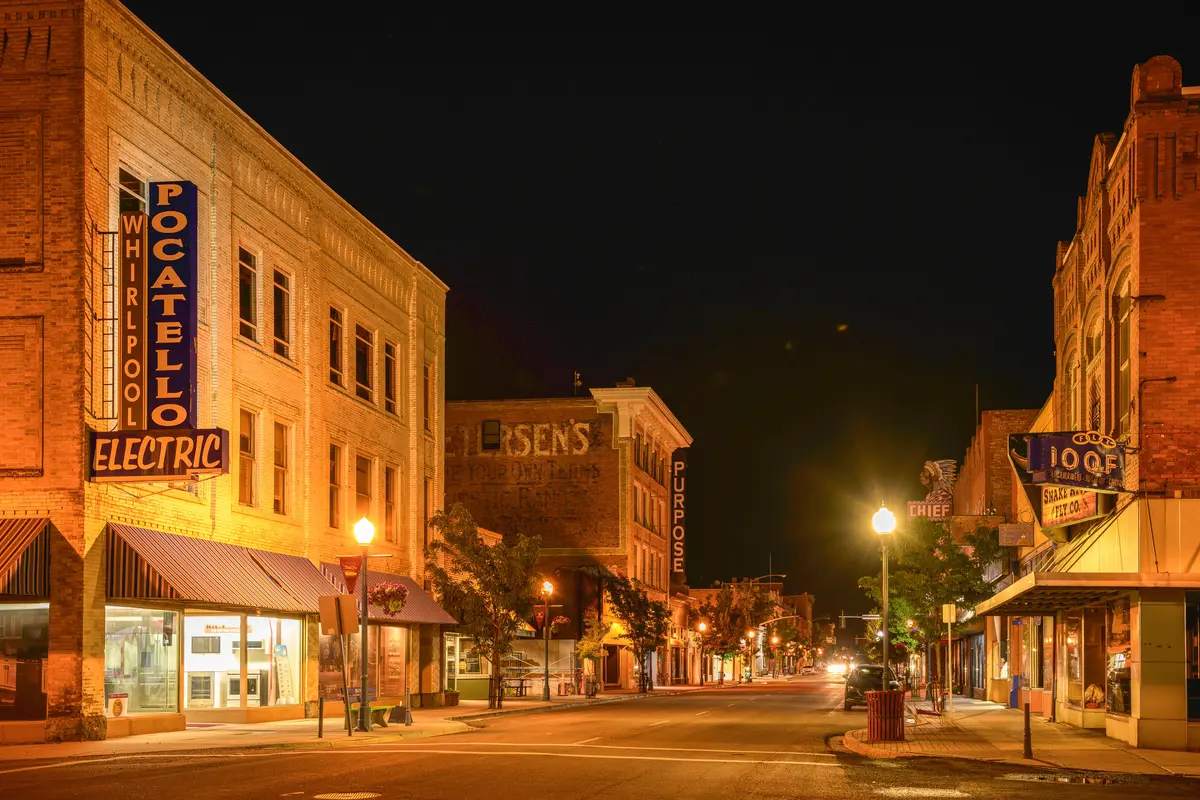
Old Town has a working restaurant-and-brewery district that is small but real. Portneuf Valley Brewing on S 1st Ave, Jim Dandy Brewing on E Lander St, and Off The Rails Brewing on S Main give the downtown area a Friday-night energy that surprises people expecting a sleepy college town. The Stephens Performing Arts Center on the ISU campus brings in regional and national acts that you wouldn't expect from a city of 59,000.
What Takes Adjustment
Dining options thin out quickly beyond the downtown core and a few commercial strips. If you were in the habit of choosing between twenty restaurants on a Saturday night, Pocatello will feel limiting for the first six months. The city does not have the retail density California transplants expect — no Apple Store, no Whole Foods, no major fashion retail concentration. Amazon fills the gap for most people, but it's worth knowing before you arrive.
Winters are real. Pocatello averages meaningful snowfall and genuine cold from late November through February. Californians who've never owned a snow shovel or driven on ice need a full season to calibrate. The good news is that the city plows efficiently and the ISU campus keeps the city moving through the season.
Where People Actually Gather
The social fabric in Pocatello is tighter and more neighborhood-based than California transplants expect. People meet at ISU sporting events in Holt Arena, on the Greenway trail on weekend mornings, and at the downtown brewery taprooms that function as the city's informal living room. The Fort Hall Replica and the Idaho Museum of Natural History pull families in regularly. Zoo Idaho, free to enter, ends up being the spot many parents default to on a weekday afternoon when they need somewhere to go.
For a detailed look at how employers, the economy, and daily commute logistics fit together, see the living in Pocatello guide.
Honest Reasons Some California Transplants Eventually Leave — and Who Stays
The cost savings are real and the outdoor access is genuine. But Pocatello is not the right fit for everyone who moves here from California, and the people who leave usually cite the same handful of things.
Why People Move Out
Career ceiling is the most common reason. Pocatello's economy is anchored by ISU, ON Semiconductor, and Amy's Kitchen, alongside public-sector institutions. If your field is tech, entertainment, finance, or anything that requires a dense professional ecosystem, remote work can bridge that gap for a few years — but when the remote arrangement ends or when you want to move up, the local market is thin. People who arrived on a remote salary and then lost that arrangement have had to choose between a pay cut and leaving.
The second reason is social: not everyone finds it easy to build a community outside the ISU-adjacent world. If you're in your thirties, don't have kids, and don't have a natural entry point like a workplace or a church, Pocatello can feel isolating in ways that coastal cities with their built-in density of strangers don't. This doesn't mean it's unfriendly — it's genuinely welcoming — but the onus of building a social life is more on you.
A smaller group leaves simply because the winters wore them down. A California transplant who romanticized mountain living sometimes discovers they actually don't enjoy being cold for four months. There's no shame in it, but it's worth a hard look before committing to a purchase.
Who Stays and Thrives
The Californians who put down roots here tend to share a few things. They either have a remote-work arrangement with no geographic ceiling, or they're in education, skilled manufacturing, or a field where Pocatello's employer base is competitive. They have kids, or they're building toward having them, and the school-cost-to-outcome ratio relative to California's private-school-dependent markets looks dramatically better here. And they genuinely use the outdoors — not as a talking point, but as a weekly habit that the Portneuf Valley, the Caribou Range, and the access to southeastern Idaho's public lands makes easy.
If you're choosing between staying in California and making this move, the honest question isn't whether Pocatello is cheaper. It is, substantially. The question is whether your income travels with you, and whether a quieter, smaller, colder city gives you more of what you actually want from daily life — or less. For guidance on the buying process once you've made that decision, the Pocatello first-time homebuyer page covers loan programs, down payment options, and what to expect from the local market.

Local Expert Takeaway: The Californians who make this move work — and stay — are the ones who treat the financial reset as a tool, not just a relief. The gap between a $843,390 California median and Pocatello's $318,721 typical home value is real money that can fund a paid-off car, a fully funded retirement account, or a decade of financial breathing room. Use that margin intentionally. Walk the Portneuf Greenway before you buy to understand which neighborhoods sit closest to the trail. Spend a Friday night on S 1st Ave at Portneuf Valley Brewing or on S Main at Off The Rails Brewing to calibrate whether Old Town's scale feels like home or like a compromise. The city will tell you fairly quickly which one it is.
Quick Takeaways & FAQs
✅ Pocatello's typical home value of $318,721 (Zillow Home Value Index, 2026) is well below the California statewide median — California buyers often arrive with enough equity to dramatically reduce or eliminate a mortgage.
⚠️ The grocery tax at Idaho's full 6% rate surprises most California transplants, who are used to groceries being exempt from sales tax — budget for it and claim the annual Food Tax Credit.
📍 The Portneuf Greenway trail system connects Old Town, Idaho State University, and the Portneuf River corridor through paved, accessible trails — it's the outdoor amenity that converts the most skeptical California transplants within their first month.
How much cheaper is Pocatello than California for housing?
What is Idaho's income tax rate compared to California?
Does Idaho tax groceries?
What do California transplants say they miss most after moving to Pocatello?
Is Pocatello a good fit if I'm keeping my California remote job?
Moving to Idaho?
Tell us what you need help with and we'll connect you with local resources.
