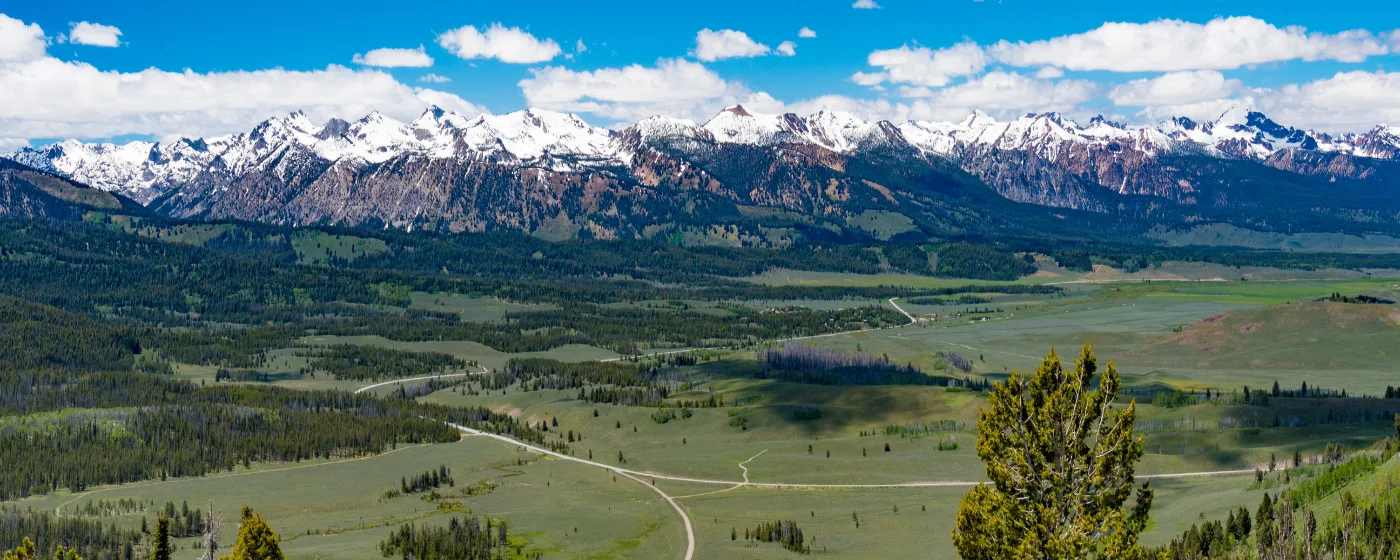
You've probably heard that Idaho is more affordable than the coastal states people are fleeing — and that's largely true. But Salmon sits in its own category even within Idaho. This is a small city of about 3,300 people tucked into the Lemhi Valley along U.S. Highway 93, roughly 160 miles from the nearest commercial airport in Idaho Falls. The geographic isolation that makes Salmon feel genuinely remote is also the primary force that shapes what things cost here — in both directions.
On paper, Salmon's overall cost of living scores 90.4 on the BestPlaces index, meaning total expenses run roughly 9.6% below the U.S. average and noticeably below the average Idaho city. The median household income in Salmon is $42,844, which is modest, and that figure is the lens through which housing affordability here needs to be read. The cost structure looks favorable on a spreadsheet, but it works best when your income is not also dependent on Salmon's local wage market.
What you spend money on in Salmon looks different from city life. There is no public transit, no Costco, and no Trader Joe's — the nearest Costco is in Idaho Falls, a drive many residents make monthly to stock up. Electricity rates run well below the national average thanks to Idaho's hydropower grid. Groceries are below the U.S. average in index terms, but Salmon's remote supply chain adds a quiet markup that you notice over time. The property tax rate is approximately 0.45% — among the lowest in the country. The tax picture has one notable wrinkle: Idaho fully taxes groceries at 6%, the highest state-level grocery tax rate in the U.S. as of 2026.
Whether you're comparing Salmon to Boise, looking at it as a soft landing after selling somewhere more expensive, or just trying to figure out what monthly life actually costs here, the sections below break down housing, everyday expenses, nearby-city comparisons, and the full tax picture so you can run the real numbers before you move.

What It Really Costs to Live in Salmon
The honest posture on Salmon's cost of living is this: housing is genuinely affordable by any Idaho or national standard, but it comes packaged with a rural income ceiling and a lifestyle that requires a car for nearly everything. The Zillow Home Value Index placed the typical home value at $329,001 as of February 2026 — a figure well below Idaho's statewide index and a fraction of what the same square footage commands in Boise, Sun Valley, or any major Western metro.
What drives that number is isolation, not distress. Salmon is not a city people priced out of Boise discovered last year and bid up. Demand is steady but thin, the buyer pool is small, and most sales are locals trading within the market rather than outside investors arriving with cash. That keeps prices grounded — but it also means appreciation has historically been slower here than in Idaho's high-growth corridors.
The practical trade-off is that low housing costs coexist with transportation expenses that run higher than you'd expect. Every Costco run to Idaho Falls, every specialist appointment out of town, every Boise trip for a concert or major shopping adds up. Salmon's cost advantage is real, but it is most meaningful for people whose lives genuinely fit within the valley — not those who need to leave it frequently.
Housing: Rent vs Buy in Salmon
The Buying Market
Entry-level homes in Salmon — older single-family construction, smaller lots, properties that need updating — come onto the market starting in the low-to-mid $200,000s. The typical home value of $329,001 (Zillow Home Value Index, February 2026) represents move-in-ready, well-maintained properties across the broader market. Newer or riverfront-adjacent homes push above that figure, though the ceiling rarely approaches what you'd see in resort towns elsewhere in Idaho.
The effective property tax rate in Salmon is approximately 0.45% — less than half the U.S. median effective rate. That is a real and meaningful advantage for owners. To estimate your specific monthly mortgage payment, use the calculator below — it will incorporate current rates, your down payment, and your purchase price.
The Rental Market
The rental market in Salmon is small and moves fast when vacancies open. Two-bedroom rentals typically run in the $800–$1,100 per month range, though the inventory is limited enough that you may find yourself on a waiting list or locked into a lease before you expected. Single-family rentals occasionally hit the market above that range, particularly for larger homes or properties closer to the river.
Rent vs. Buy: The Real Question
Renting first makes sense here if you're relocating and haven't spent significant time in the valley across all four seasons. Winters in the Lemhi Valley are serious — cold, occasionally icy on the roads, and long enough to recalibrate how you feel about a property's sun exposure and insulation. Buying after a year gives you a grounded read that a summer visit simply can't.
If you have a reasonable down payment and your income is stable, buying at current prices is defensible given the low property tax rate and the stability of the local market. The downside risk is limited liquidity: Salmon's thin buyer pool means selling quickly, if life circumstances require it, is harder than in a metro market.

Everyday Costs Beyond Housing in Salmon
Idaho's electricity rates are a genuine bright spot — approximately 12.35¢ per kilowatt-hour as of mid-2026, roughly 35% below the national average, driven by the state's heavy hydropower infrastructure. Statewide, the average household spends approximately $210–$215 per month on combined utilities (electricity, gas, water, sewer, and trash). Salmon winters mean heating bills climb from November through March, so budget toward the higher end of that range seasonally.
Groceries run below the U.S. average in index terms, but Salmon's supply chain reality adds a quiet premium compared to Boise or Twin Falls. The nearest large-format grocery options are a significant drive, so most households shop locally for daily needs and make periodic bulk runs to Idaho Falls. Transportation is the category that surprises newcomers most: no public transit exists, every errand requires a car, and the cost of those longer out-of-town supply runs accumulates in fuel and time in ways that don't show up in standard cost-of-living indexes. The typical local commute, with most services based in town, is only about 8 minutes — which softens the daily fuel burn considerably.
| Category | Typical Monthly Cost | Notes |
|---|---|---|
| Housing (2BR Rent) | $800 – $1,100 | Rental inventory is thin; vacancies move quickly. Owners: use the mortgage calculator above for a payment estimate. |
| Utilities | $180 – $250 | Idaho electricity rates ~12.35¢/kWh; budget higher Nov–Mar for heating. Rocky Mountain Power serves Salmon. |
| Groceries | $400 – $600 | Below U.S. average in index terms; remote supply chain adds modest upward pressure vs. larger Idaho cities. |
| Transportation & Gas | $200 – $350 | No public transit; all car-dependent. Factor in periodic supply runs to Idaho Falls (~160 miles). Local commute ~8 min. |
| Medical & Personal Care | $150 – $300 | Basic care is available locally; some services require travel to larger cities. Budget for occasional out-of-town trips. |
| Phone & Internet | $100 – $160 | Rural broadband options are improving but limited; satellite internet (Starlink) is a common choice for reliable speed. |
| Misc / Discretionary | $150 – $300 | Dining at local spots along Main Street, an evening at Bertram's Salmon Valley Brewery; outdoor gear and licensing fees. |
These are estimates for a single adult or couple renting in Salmon. Actual costs vary by household size, lifestyle, and how often you leave the valley for supplies or services.
Looking to buy in Salmon? Estimate your payment.
Enter your numbers to see an estimated monthly mortgage payment.
Estimate only. Excludes HOA fees and mortgage insurance. The interest rate above is a starting point, not a quoted rate — replace it with your own to see real numbers. Insurance is a flat placeholder, not a Salmon quote.
Salmon vs Nearby Cities: Cost Comparison
| City | Median Home Price | Typical 2BR Rent | Cost vs Salmon |
|---|---|---|---|
| Salmon, ID | $329,001 | $800 – $1,100/mo | — (baseline) |
| Challis, ID | ~$280,000 – $310,000 | ~$700 – $950/mo | Modestly cheaper |
| Leadore, ID | ~$200,000 – $250,000 | Very limited inventory | Noticeably cheaper; far more limited services |
| North Fork, ID | ~$250,000 – $300,000 | Minimal rental market | Slightly cheaper; unincorporated, few amenities |
| Elk Bend, ID | ~$240,000 – $290,000 | Minimal rental market | Slightly cheaper; rural community, limited services |
| Carmen, ID | ~$280,000 – $340,000 | Minimal rental market | About the same; smaller community north of Salmon |
Salmon is the clear regional services hub among its neighbors — Challis is the only one with comparable (though smaller) amenities — and that hub status is reflected in its home prices sitting at the top of the local range. If the communities immediately surrounding Salmon look cheaper, the catch is almost always the same: fewer services and longer drives for everything.
Taxes & the Bottom Line for Salmon
State Income Tax
Idaho moved to a flat 5.3% individual income tax rate effective January 1, 2025 — reduced from the prior 5.695% rate under HB 40, signed by Governor Brad Little in March 2025. It is a flat rate, meaning every dollar of taxable income is taxed at the same percentage regardless of bracket. Idaho does not tax Social Security benefits, which is a meaningful advantage for retirees considering Salmon.
Sales Tax and the Grocery Wrinkle
Idaho's state sales tax is 6%, and it applies fully to groceries at the register — no exemption. As of 2026, Idaho holds the highest state-level grocery tax rate in the country after Mississippi reduced its rate in July 2025. The state partially offsets this with a refundable food tax credit of $155 per person on your state income tax return. A family of four can claim up to $620 in annual credits, potentially wiping out most of their grocery tax burden — but only if you actively claim it when you file. Salmon has no local option sales tax layered on top, unlike Idaho resort communities such as Ketchum.
Property Tax
The effective property tax rate of approximately 0.45% is one of Salmon's most compelling financial arguments. At the home-price level discussed earlier in this guide, that rate keeps annual property taxes well below what buyers pay in most Western states. The Homeowner's Exemption available to Idaho primary residents further reduces the taxable value of an owner-occupied home, which compounds the advantage.
The Bottom Line
Salmon fits comfortably for households who can work remotely at out-of-market wages, retirees drawing Social Security and pension income, or anyone whose lifestyle genuinely centers on what the Lemhi Valley offers. The cost structure can strain for households whose income is pegged to local wages — the $42,844 median household income leaves little margin when a vehicle repair, an out-of-town medical trip, or a home heating system replacement lands. The taxes are low, the housing is affordable by Idaho standards, and the utilities are cheap. The honest catch is that Salmon's cost of living math works best when your income doesn't also depend on Salmon.
Local Expert Takeaway: Salmon's cost-of-living advantage is real but conditional. The 0.45% property tax rate, below-average electricity costs, and a typical home value well under $330,000 (Zillow Home Value Index, February 2026) make the monthly math look appealing on a spreadsheet. The variable the spreadsheet misses is the Idaho Falls run — when your nearest Costco, big-box hardware store, and out-of-town services are 160 miles away, transportation costs and time erode part of what the low housing number gives back. Budget honestly for those supply runs, claim the $155-per-person grocery tax credit when you file your Idaho return, and if you're new to the valley, rent for a season before committing to a purchase. The market moves slowly enough that waiting a year won't price you out.
Quick Takeaways & FAQs
✅ Salmon's effective property tax rate of approximately 0.45% is less than half the U.S. median — one of the strongest arguments for owning here.
⚠️ Idaho fully taxes groceries at 6% — the highest state-level grocery tax in the U.S. as of 2026 — and the refundable $155-per-person food tax credit only helps if you actively claim it on your return.
📍 Bertram's Salmon Valley Brewery on Main Street is the kind of local anchor that makes Salmon feel like a real small city rather than a wide spot in the road — the social fabric matters when you're deciding whether the cost trade-offs are worth it.
What is the typical home price in Salmon, Idaho?
How much does it cost to rent a two-bedroom apartment in Salmon, ID?
Is the cost of living in Salmon, Idaho lower than the U.S. average?
What is Idaho's state income tax rate, and does it apply to Social Security?
Does Idaho tax groceries, and is there any relief for Salmon residents?
Moving to Idaho?
Tell us what you need help with and we'll connect you with local resources.
