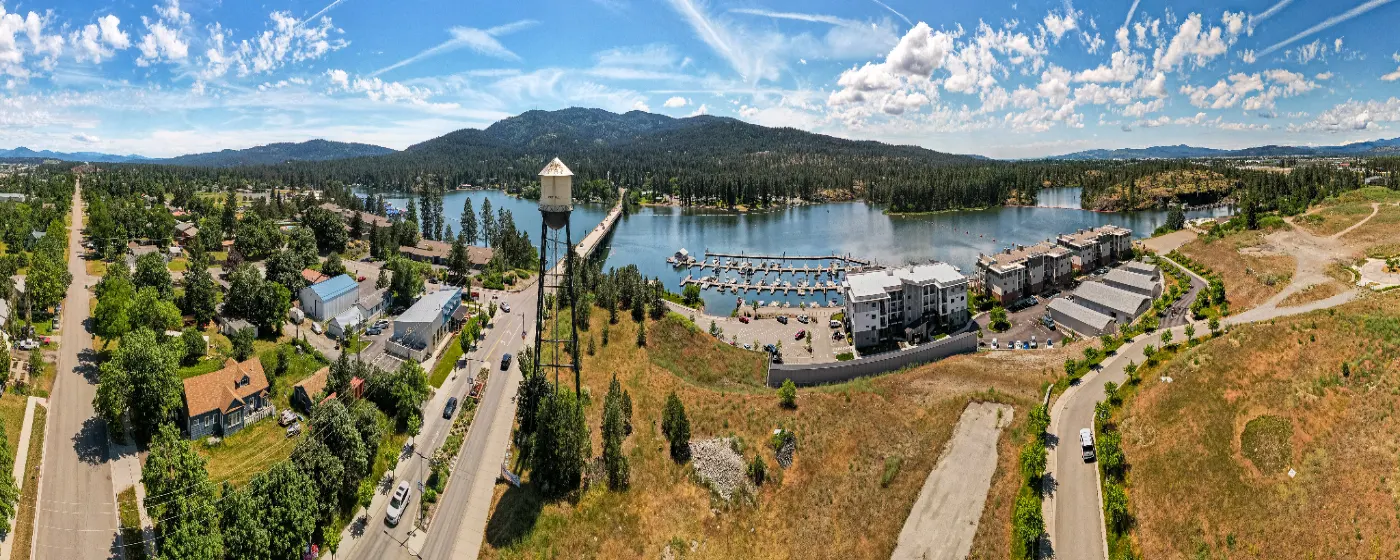
Maybe your financial planner ran the numbers and Idaho came up as the most tax-efficient state for your Social Security income. Maybe you visited Coeur d'Alene on vacation, fell for the lake and the pines, and later discovered that Post Falls — ten miles to the west — offers a noticeably calmer pace at a more accessible price. Or maybe you're simply done with high-cost-of-living states and want four seasons, a river trail outside your door, and a community that hasn't yet been overrun by the growth it's attracting. Post Falls sits on the Spokane River in Kootenai County, anchored by I-90 and about twenty minutes from Spokane. That access to a real metro — with its airport, university hospital system, and cultural amenities — is one of the most underrated parts of retiring here.
Post Falls is growing fast, and that creates a specific tension for retirees: the infrastructure is catching up to the population, not ahead of it. The city had fewer than 35,000 residents a decade ago and is now pushing past 48,000. What that means on the ground is that specialty medical care still leans on Coeur d'Alene and Spokane, traffic on East Seltice Way during evening hours is genuinely frustrating, and the senior living inventory — while expanding — can run tight in the most desirable categories. None of that is disqualifying. But it's the kind of thing you only find out after you've already signed a lease.
The cost picture is a genuine draw. The typical home value in Post Falls sits at $518,467 (Zillow Home Value Index, February 2026) — meaningfully below what comparable homes trade for in Coeur d'Alene, and dramatically below the Pacific Coast markets that many retirees are leaving. Idaho's property tax rate is among the lowest in the region. Idaho exempts Social Security from state income tax entirely, which matters enormously on a fixed income. And day-to-day living — groceries, gas, dining — runs noticeably below what most West Coast transplants are used to paying. For more detail on the full cost of living in Post Falls, that page has the complete breakdown.
Whether you're weighing Post Falls seriously or just starting to research North Idaho retirement, this guide covers the six things that matter most: who this city genuinely fits, how healthcare access works, what your retirement budget looks like, how walkable and social daily life is, what the downsizing market offers, and how Post Falls stacks up against nearby alternatives.
Why Retirees Are Choosing Post Falls
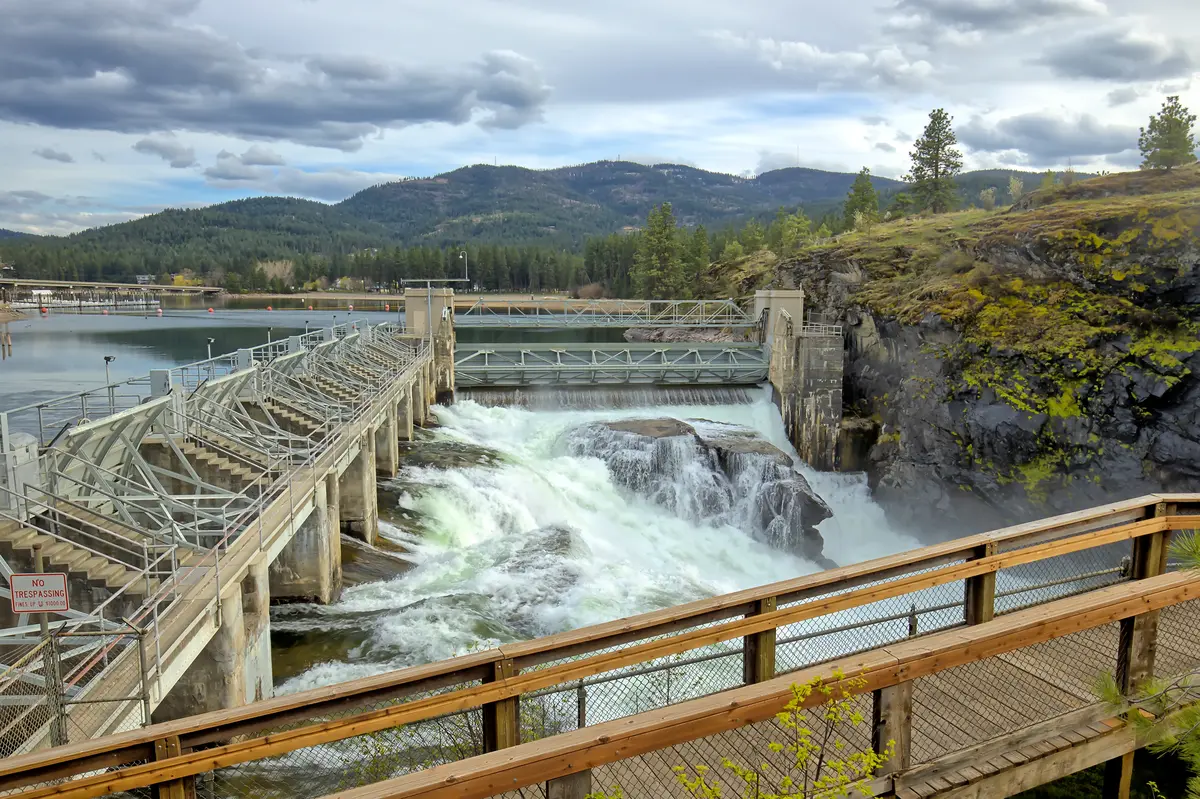
Post Falls fits a specific retiree profile extremely well: active adults in their late 50s through early 70s who want outdoor access, low taxes, a real sense of community, and proximity to a mid-size city without actually living in one. If that's you, the case is easy to make. The North Idaho Centennial Trail runs directly through the city. Q'emiln Park sits on the Spokane River and stays busy with walkers year-round. Falls Park, just off the Spokane River, is walkable from several established neighborhoods. And Spokane — with its airport, its regional medical centers, and its restaurants and arts scene — is roughly 20 minutes west on I-90 on a good day.
The retirees who tend to leave, or who come and regret the choice, usually fall into one of two camps. The first group underestimates the winters. Post Falls gets real snow — typically 40 to 50 inches a season — and while the city manages roads reasonably well, getting around comfortably between November and February requires either confidence driving in winter conditions or a home situated close to services. The second group moved here expecting Coeur d'Alene's walkable downtown and resort-town energy, then discovered they'd landed in a faster-growing, more suburban city where most errands require a car.
The sweet spot: retirees who drive, stay active, have realistic expectations about a small-but-growing city's limitations, and want their fixed income to stretch further than it does anywhere on the coast. For buyers who want the full picture on what everyday life looks like, the living in Post Falls overview is worth reading alongside this guide.
Healthcare & Medical Access in Post Falls
What's Right Inside the City
Post Falls is unusually well-served for a city its size, and the options have been expanding. Northwest Specialty Hospital, a dedicated surgical facility on the city's south side, has earned Healthgrades recognition for its Outpatient Joint Replacement Award — relevant for a retiree population that statistically leans on orthopedic procedures. If you need a knee or hip replacement handled close to home, this is a real asset.
Northern Idaho Advanced Care Hospital handles long-term acute care for Kootenai County residents — the kind of bridge care between a hospital stay and returning home that many families only discover they needed after a health event. That facility is also actively expanding, adding an inpatient rehabilitation unit alongside its existing long-term acute care beds. That expansion matters: post-acute rehab is one of the hardest things to access locally in smaller North Idaho communities.
The newest addition is Post Falls ER & Hospital, a Nutex Health micro-hospital at 497 S Beck Road that opened in 2024. At roughly 25,000 square feet, it's not a full-service acute-care campus — but its 24/7 emergency department, 12 ER beds, 5 inpatient beds, in-house pharmacy, and full imaging suite including MRI and CT make it a meaningful option for urgent situations where you don't want to fight traffic to Coeur d'Alene.
The Ten-Mile Reality
Kootenai Health in Coeur d'Alene is the regional anchor most Post Falls residents ultimately rely on for anything beyond routine and specialty surgical care. It's the largest medical center in North Idaho, recognized nationally for cardiac surgery and prostate care. On a normal weekday, you're looking at 15 to 25 minutes from central Post Falls. In rush hour on East Seltice Way — the most direct route — that can stretch uncomfortably.
For genuinely complex cases: Spokane's major hospital systems are approximately 25 to 35 minutes west. The city's larger regional medical centers include facilities with strong oncology programs and trauma care. If advanced cancer treatment, complex cardiac intervention, or neurology is a priority concern, you'll use Spokane — and that commute is manageable, but worth planning around.
The honest summary: for orthopedics, post-acute rehab, emergency care, and routine specialist visits, Post Falls and Coeur d'Alene together cover most of what a retiree needs. For anything requiring a tertiary center, you're looking toward Spokane — which is close enough to be practical, but far enough to feel like a trip.
The Retiree Budget in Post Falls
Social Security and Retirement Income
Idaho's tax treatment of Social Security is about as favorable as it gets: the state exempts 100% of Social Security benefits from income tax, with no income cap on the exemption. That's a material advantage over states that phase out the exemption as income rises, and it's one of the primary tax reasons retirees from higher-tax states target North Idaho specifically.
The catch is that Idaho does tax other retirement income. Withdrawals from traditional IRAs, 401(k)s, and most pensions are treated as ordinary income and taxed at Idaho's flat rate. That rate has shifted with legislative changes in recent years — consult tax.idaho.gov or a CPA familiar with Idaho law before projecting your actual liability, since third-party aggregators cite figures that are sometimes a tax year behind. If your retirement income is primarily Social Security supplemented by modest IRA draws, Idaho is genuinely competitive. If you have a large traditional IRA or a pension, the calculus is more nuanced.
Property Taxes and the Circuit Breaker
Post Falls's effective property tax rate is approximately 0.60% — notably below the national median of roughly 0.89%. On a home at the city's typical value, that rate stays manageable on a fixed income and is one reason North Idaho retirees often report lower ongoing housing costs than they expected coming from coastal markets.
If your income qualifies, Idaho's Circuit Breaker program can reduce that burden further. Homeowners age 65 and older with 2025 income under $39,130 can apply for a reduction of $250 to $1,500 on their property tax bill. Applications are accepted January 1 through April 15 at the Kootenai County Assessor's office. Many retirees don't know about this program until their second or third year here — apply in your first January if you might qualify.
Day-to-Day Costs
Groceries, dining out, and everyday services run noticeably below major West Coast cities, though Post Falls is no longer the bargain it was five years ago as the region has grown. For a fuller breakdown of what a monthly budget actually looks like — utilities, groceries, transportation — see the Post Falls cost of living page. Idaho also has no estate or inheritance tax, which matters for retirees thinking about what they leave behind.
Looking to buy in Post Falls? Estimate your payment.
Enter your numbers to see an estimated monthly mortgage payment.
Estimate only. Excludes HOA fees and mortgage insurance. The interest rate above is a starting point, not a quoted rate — replace it with your own to see real numbers. Insurance is a flat placeholder, not a Post Falls quote.
Walkability, Community & Staying Active in Post Falls
The Walkability Reality
Post Falls is a car-dependent city for most errands. If you're imagining leaving the car in the garage and walking to the pharmacy, the grocery store, and a coffee shop on the same trip, you'll want to be very deliberate about where you buy or rent. Most of the city's commercial activity clusters along Seltice Way and the surrounding commercial corridors — functional, but not particularly pedestrian-friendly in terms of sidewalk continuity or crossing infrastructure.
The exception is the trail system. Approximately 10 miles of the paved North Idaho Centennial Trail runs east–west through the city, connecting directly to Coeur d'Alene to the east and — at the Idaho-Washington state line — to the Spokane River Centennial Trail, which extends another 39 miles westward. This is Idaho's designated Millennium Legacy Trail, and for a retiree who wants to walk or bike daily without a car, it's the single best asset the city has. Q'emiln Park and Falls Park both connect to the trail system and give you river access within a short walk or ride from most of the western and central neighborhoods.
Senior Centers and Social Life
The Kootenai County senior center network anchors much of the organized social life for older adults in the area, offering fitness programs, meal service, and regular activities. The Post Falls Senior Center on Spokane Street draws regulars for its weekly programming, and the proximity to Coeur d'Alene means access to a broader calendar of events, classes, and performing arts at venues along the lake.
Volunteering is a significant part of how many retirees build community here. The Post Falls Food Bank, local trail maintenance groups associated with the Centennial Trail, and regional Habitat for Humanity programs all draw active retirees who want structured engagement without a full-time commitment. The city is growing fast enough that civic involvement — planning commissions, library boards, parks committees — has genuine need for experienced people.
For a social evening out, Post Falls Brewing Company on N Spokane Street is a genuine local gathering spot: a taproom that draws a mixed crowd and hosts regular events without the tourist overlay you get at some Coeur d'Alene venues. It's the kind of place where regulars actually know each other.
Right-Sizing: Downsizing in Post Falls
What the Market Offers
Post Falls has more senior housing depth than most cities its size, with at least 20 options across the independent living, assisted living, and memory care spectrum as of 2025. Garden Plaza of Post Falls offers independent and assisted living on a single campus — the kind of continuum-of-care setup that lets couples age in place even when one partner's needs change before the other's. Guardian Angel Homes operates facilities with up to 126 assisted living units. Northern Idaho Advanced Care Hospital's expanding rehabilitation unit means that the transition from hospital to assisted care to independent living has more local infrastructure behind it than it did even two or three years ago.
Single-Level and Patio Home Inventory
For retirees who want to own and aren't ready for senior living, the single-level and patio home market in Post Falls is competitive but real. Newer developments on the city's north and west sides — areas like Foxtail and North Prairie — tend to have more ranch-style construction than the older central neighborhoods, which often feature two-story homes built for families. The Prairie Falls area has seen relatively recent construction with single-level floor plans that appeal to downsizers.
Inventory tightens when you add the constraint of a single level, a larger lot, and proximity to the Centennial Trail all at once. Buyers who are flexible on one of those three tend to find options. Buyers who need all three quickly discover they're competing for a narrow slice of the market and may need to expand their search toward Hayden or Rathdrum, where newer inventory is also appearing.
The Honest Inventory Read
The 55+ active-adult community format — the kind of deed-restricted, age-qualified subdivision common in Sun Belt retirement markets — is not well-established in Post Falls the way it is in, say, the Phoenix metro or coastal Oregon. What exists is more of a mix: senior apartment and independent living communities alongside general market patio homes and condos that happen to attract older buyers. If a structured, age-qualified neighborhood community is essential to your retirement plan, you may find the local options thinner than expected and worth supplementing with a look at developments just outside city limits.
Post Falls vs Nearby Retirement Destinations
| City | Cost vs Post Falls | Primary Hospital | Walkability | Senior Living Depth | Overall Retirement Fit |
|---|---|---|---|---|---|
| Post Falls, ID | Anchor | Northwest Specialty Hospital + Kootenai Health 10 mi east | Car-dependent for errands; excellent trail access | 20+ options; growing fast | Nature Value |
| Coeur d'Alene, ID | Noticeably pricier | Kootenai Health (on-site) | Walkable downtown core; car needed elsewhere | Strong; more established options | Walkable Lifestyle |
| Hayden, ID | About the same | Kootenai Health ~15 mi south | Suburban; car required | Moderate; expanding | Quiet Low-key |
| Rathdrum, ID | Noticeably cheaper | Kootenai Health ~20 mi south | Small-town walkability; limited services | Limited; few dedicated senior communities | Privacy Rural Value |
| Liberty Lake, WA | About the same to slightly pricier | Regional Spokane hospital systems ~20 mi west | Good trail access; suburban errands | Moderate; growing | Access Trails |
| Spokane Valley, WA | Noticeably cheaper | Multiple Spokane systems nearby | Suburban; car-heavy but improving | Extensive; large metro supply | Value Services |
Coeur d'Alene beats Post Falls on walkability and has Kootenai Health literally in town — if those two factors are non-negotiable, the price premium is the trade-off you accept. Rathdrum and Spokane Valley are the value plays: both cost less, and Spokane Valley in particular gives you the depth of the full Spokane medical ecosystem within a short drive. Liberty Lake sits in a Washington state tax environment that has its own advantages and disadvantages for retirement income — notably, Washington has no state income tax at all, which changes the calculus significantly for retirees with large IRA balances. Hayden is Post Falls's quieter neighbor to the north — similar price range, lower density, fewer services, and the same dependence on Kootenai Health. For most active retirees who want outdoor access, a growing local healthcare infrastructure, and the Idaho tax advantage on Social Security, Post Falls threads the needle better than any of these alternatives — but if walkability or hospital proximity matters most, Coeur d'Alene is the honest answer even at a higher price.

Local Expert Takeaway: The retirees who thrive in Post Falls are the ones who did the homework first: they picked a neighborhood within a mile of the North Idaho Centennial Trail, applied for the Circuit Breaker property tax reduction in their first January, and booked their annual specialist visits at Kootenai Health in Coeur d'Alene rather than assuming everything they need is five minutes away. The city's healthcare footprint is genuinely growing — Northwest Specialty Hospital for orthopedics, Northern Idaho Advanced Care for post-acute rehab, and the new Nutex micro-hospital on Beck Road for emergencies — but Kootenai Health is still the regional anchor for anything complex, and the 10-mile drive matters more when you're 75 than when you're 62. Come here for the tax environment, the trail system, and the river. Go in clear-eyed about the winters and the car dependence, and you'll be one of the retirees who tells everyone else to move here.
Quick Takeaways & FAQs
✅ Idaho exempts 100% of Social Security benefits from state income tax with no income cap — one of the strongest Social Security tax postures in the country, and a primary financial reason retirees target North Idaho.
⚠️ Post Falls is growing faster than its senior services infrastructure, which means 55+ community options are expanding but inventory in the most desirable categories — single-level homes near the trail — runs tight and competitive.
📍 The North Idaho Centennial Trail's 10-mile stretch through Post Falls connects directly to Coeur d'Alene in one direction and the broader Spokane trail network in the other — an unusually strong active-retirement asset for a city this size.
Is Social Security taxed in Idaho if I retire in Post Falls?
What hospital do Post Falls retirees actually use for serious medical care?
Are there 55+ or active-adult communities in Post Falls?
What is the property tax rate in Post Falls, and is there a senior discount?
How does Post Falls compare to Coeur d'Alene for retirement?
Moving to Idaho?
Tell us what you need help with and we'll connect you with local resources.
