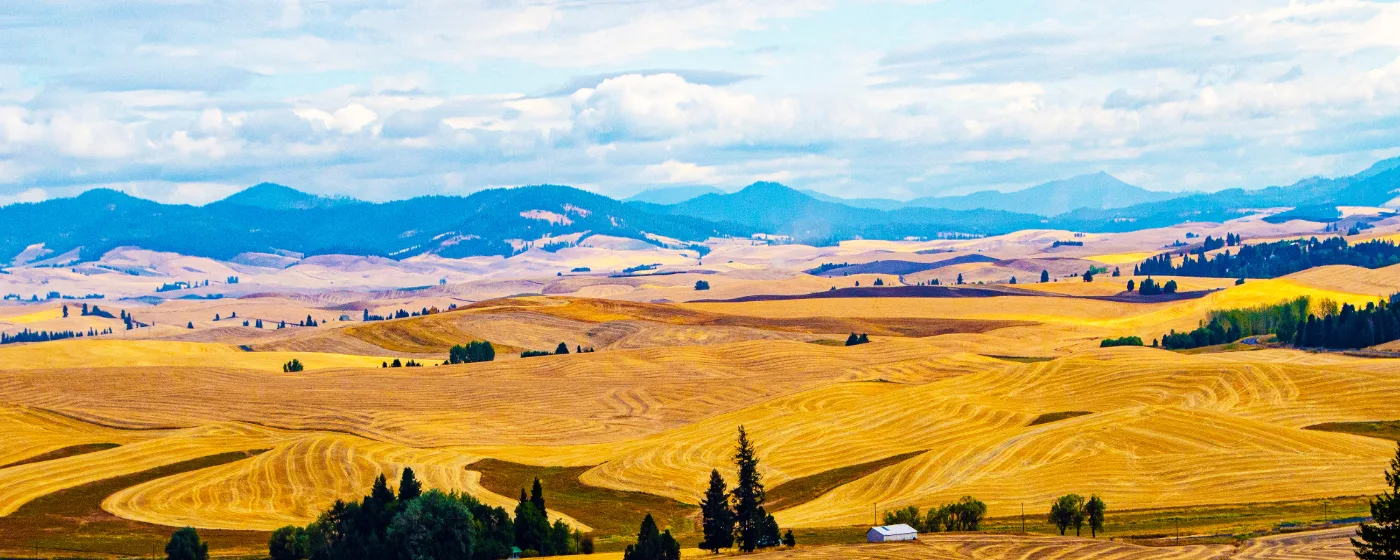
Maybe you've attended a University of Idaho football game and found yourself thinking the town felt livable. Maybe you're a professor wrapping up a career and wondering if Moscow can hold you into retirement. Or maybe you've simply been priced out of bigger Pacific Northwest cities and someone pointed you toward this small Idaho college town on the Washington state line. Whatever brought you here, Moscow surprises most people the same way: it punches well above its weight for a city of 26,000, and the University of Idaho's presence means the cultural calendar, the walking paths, and the sense of intellectual community never really go quiet — even in January.
The economic backbone is the University of Idaho itself, alongside Schweitzer Engineering Laboratories and Gritman Medical Center, which is Moscow's own nonprofit hospital and one of the top-ranked critical access hospitals in the country. That hospital matters enormously if you're evaluating this place as a long-term home. The broader workforce and civic identity revolve around education, research, and healthcare — which shapes the kind of community retirees actually find here: curious, politically mixed, outdoors-oriented, and genuinely neighborly in a way that larger cities tend to lose.
Housing costs sit well below Boise and noticeably below anything in western Washington or Oregon, which means equity from a higher-cost market goes meaningfully further here. Daily life on a fixed income is manageable: independent cafés and delis line Main Street, the Saturday Farmers Market at Friendship Square has been running for 50 years, and the Latah Trail connects much of the city without a car. Idaho's tax treatment of Social Security income is favorable, and the effective property tax rate is modest by national standards. The honest catch is that Moscow is genuinely remote — advanced specialty care means a drive, and winters on the Palouse are colder and snowier than most West Coast retirees expect.
Whether you're seriously considering a move or still early in the research, the sections below cover Moscow's healthcare access, retiree budget and tax picture, walkability and social life, downsizing options, and how Moscow stacks up against nearby retirement alternatives.
Why Retirees Are Choosing Moscow
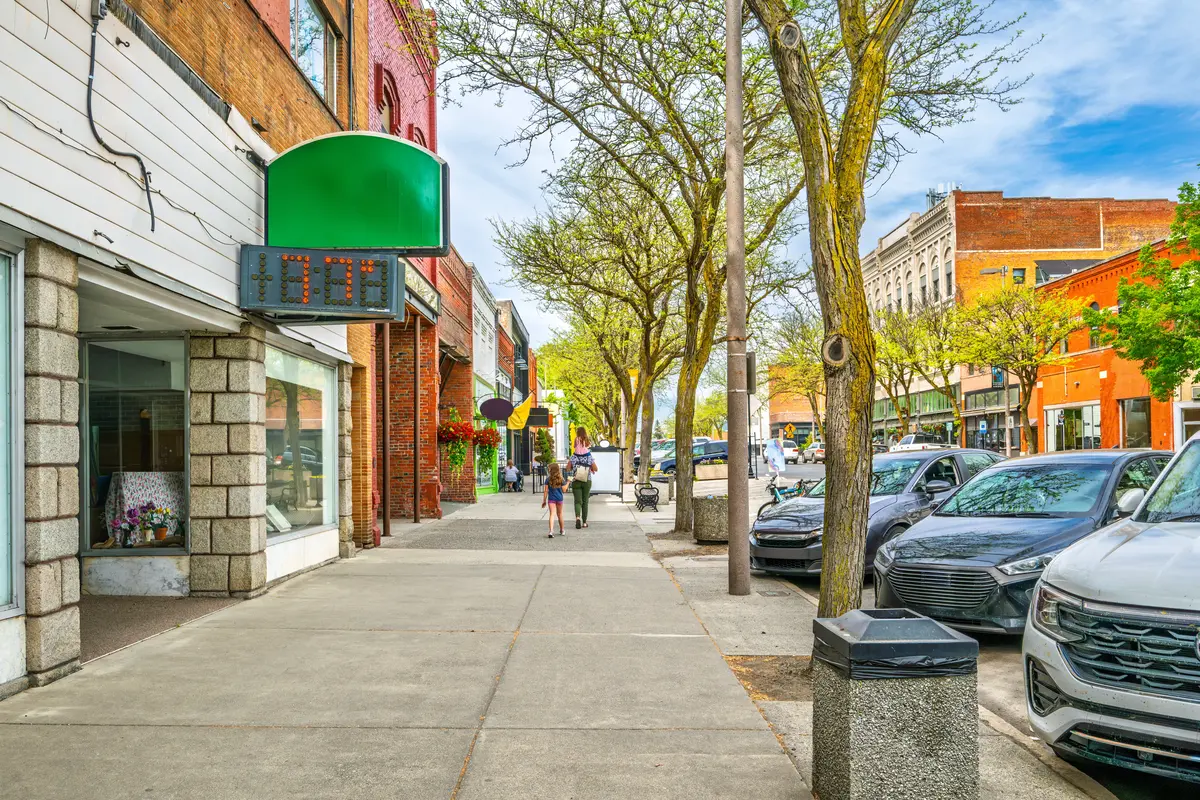
Moscow fits a specific kind of retiree well: someone who wants intellectual stimulation without big-city prices, who values walkable access to coffee shops and live music, and who doesn't need a freeway to a major metro within 30 minutes. The University of Idaho's 1,585-acre campus is effectively a public amenity — free lectures, performing arts at the Kenworthy Performing Arts Centre, the UI Arboretum and Botanical Garden, and a constant rotation of events that give retirees easy ways to stay engaged without organizing their own social calendar.
For buyers arriving from Seattle, Portland, or the Bay Area, Moscow's price point represents a genuine step down in housing costs — enough that many retirees can buy outright or carry a very modest mortgage, which changes the fixed-income math considerably. The full picture on home prices and rents is on the Moscow cost of living page.
Moscow is not a fit for everyone. If you need routine access to a cardiologist, oncologist, or neurologist within 20 minutes, you should look at Lewiston first — it has a larger hospital with deeper specialty depth, and it sits about 30 miles south. If winters bother you and you want mild year-round weather, the Palouse will test your patience: expect real snow from November through March and mud-season roads in early spring. And if on-foot access without a car is non-negotiable for every errand, Moscow's Walk Score of 48 — highest in Idaho, but still not urban — means you'll still need a vehicle for most grocery runs and medical appointments.
Healthcare & Medical Access in Moscow
Gritman Medical Center: What's Here
Gritman Medical Center at 700 S. Main St. is Moscow's anchor hospital — a nonprofit critical access facility that covers far more ground than its size suggests. Around-the-clock emergency and surgical care, comprehensive diagnostic imaging, a critical care unit, orthopedic surgery, neurosurgery, and gastroenterology are all on-site. The Moscow Family Medicine QuickCARE walk-in clinic handles same-day needs without a full ER visit, which matters on a practical level for retirees managing routine flare-ups.
Gritman has been ranked among the Top 100 Critical Access Hospitals in the United States and holds The Joint Commission's Gold Seal of Approval for Hospital Accreditation — recognition that carries real weight for a facility serving a rural county. Six regional primary care clinic locations across Latah County extend that reach for patients who don't live right in town.
The Honest Limitation
Gritman's own 2026–2028 Community Health Needs Assessment flags growing access to primary and specialty care as a top priority, with active provider recruitment underway. That transparency is reassuring, but it also signals that some specialty appointments run long wait times or require travel. Complex cardiac procedures, advanced cancer treatment, and certain surgical subspecialties route to Pullman Regional Hospital across the state line — roughly 10 minutes away — or further to Spokane's hospital network, about 90 miles northwest. Providence Sacred Heart Medical Center in Spokane is the regional tertiary referral center for the most involved cases.
If you have an existing specialist relationship that requires frequent visits, map that drive before you commit. Moscow-to-Spokane is manageable as an occasional trip; it's harder if you're doing it twice a month in winter weather on US-95.
What the University Connection Adds
The University of Idaho's health sciences programs mean Moscow has a higher-than-average concentration of health-educated residents and a culture that takes preventive care seriously. The university's relationship with regional medical education also supports provider pipeline — something that rural towns of this size don't always have going for them.
The Retiree Budget in Moscow
Idaho's Tax Treatment of Retirement Income
Idaho fully exempts Social Security benefits from state income tax — automatically, for all filers, regardless of income level. That's a meaningful line item for retirees whose income comes primarily from Social Security. You don't need to apply or qualify; the exemption is built into how Idaho processes returns.
The story changes for other retirement income. Withdrawals from 401(k) accounts, IRAs, and most pension distributions are taxed at Idaho's flat state income-tax rate. Idaho has no estate or inheritance tax, which matters for estate planning but doesn't affect your monthly cash flow. If you're weighing Idaho against a state like Nevada or Washington that has no income tax at all, the difference is real — and worth running through your specific withdrawal strategy before you finalize a move.
Property Tax Relief for Seniors
Moscow's effective property tax rate sits at approximately 0.70% — below the national average and well below what retirees transferring from California, Oregon, or Washington typically pay. On top of that baseline, Idaho's Circuit Breaker program reduces annual property taxes by $250 to $1,500 for qualifying homeowners aged 65 and older whose 2025 income was under $39,130. Applications run January 1 through April 15 at the Latah County Assessor's office. For retirees living primarily on Social Security, that income threshold is achievable, and the savings are automatic once you qualify.
Daily Life on a Fixed Income
Moscow's Main Street independent dining scene — cafés, delis, and a local bagel shop that draws a loyal morning crowd — skews toward practical price points rather than destination-restaurant pricing. The Saturday Farmers Market at Friendship Square, celebrating its 50th year in 2026, runs May through October and draws more than 5,000 visitors weekly during peak season; it's a genuine weekly grocery supplement, not just a tourist attraction. The Tuesday Market at the Latah County Fair and Event Center (1021 Harold Ave) runs June through mid-October and adds live music and a relaxed evening pace to the routine.
See the full cost-of-living breakdown — including rent ranges and utility costs — on the Moscow cost of living page.
Looking to buy in Moscow? Estimate your payment.
Enter your numbers to see an estimated monthly mortgage payment.
Estimate only. Excludes HOA fees and mortgage insurance. The interest rate above is a starting point, not a quoted rate — replace it with your own to see real numbers. Insurance is a flat placeholder, not a Moscow quote.
Walkability, Community & Staying Active in Moscow
The Geographic Reality
Moscow carries a Walk Score of 48 — the highest of any city in Idaho, according to Redfin's 2024 analysis. That ranking is real, and if you land in the right part of town, you'll feel it. The University District and the blocks around East City Park are the sweet spots: Main Street restaurants, the downtown farmers market, the 1912 Center, the Kenworthy Performing Arts Centre, and several independent cafés are all reachable on foot from a well-positioned address.
Away from that core, Moscow gets less walkable quickly. West Moscow and South Hill neighborhoods require a car for most errands. The terrain is gentle by Palouse standards — the town sits on rolling hills, not dramatic grades — but the bike infrastructure is genuinely useful: a Bike Score of 58 (second in Idaho) reflects a connected trail network including the Latah Trail and Paradise Path, both of which see year-round use from residents who've figured out how to layer properly.
Where Retirees Actually Connect
The 1912 Center on East Second Street functions as Moscow's community gathering hub — arts programming, community events, and civic meetings rotate through regularly. The University of Idaho's free and low-cost public events — lectures, concerts, athletic events, and the arboretum — give retirees a built-in social infrastructure that most small towns simply don't have. Silos & Social at the Latah County Grain Growers complex operates as a café and market kitchen with a community feel that draws a cross-generational crowd.
Hunga Dunga Brewing Co. has become one of the spots where Moscow's multigenerational mix actually mingles, especially on weekend afternoons. The Latah County Historical Society and the Appaloosa Museum and Heritage Center both draw engaged volunteers — a real option for retirees who want purposeful involvement rather than passive recreation.
What Surprises People After Six Months
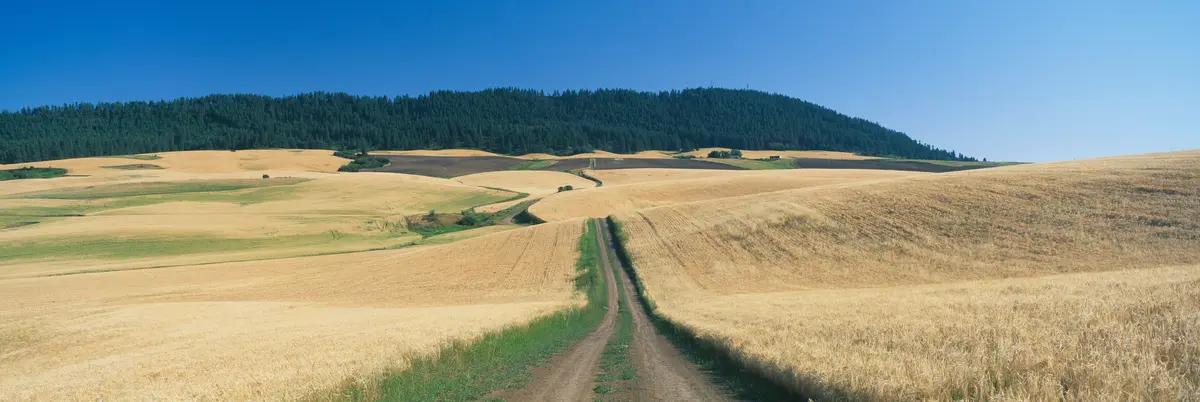
The university's rhythm becomes your rhythm. When classes are in session, the coffee shops fill up and the streets have energy; when students leave in May, the town gets noticeably quieter. Most retirees find that transition pleasant rather than disorienting — the summers here, with the farmers market in full swing and the Palouse hills green before they turn gold, tend to be what keeps people.
Right-Sizing: Downsizing in Moscow
What the Market Actually Offers
Moscow's housing inventory skews toward older single-family homes — many of them in the Fort Russell Historic District and the College Hill area, built between 1900 and 1960, full of character but short on single-level floor plans. If a ranch-style layout or zero-step entry is a hard requirement, you'll need to search deliberately. They exist, but they're not the dominant product type here.
Condominiums and townhomes are a thinner slice of Moscow's market than you'd find in Boise or Coeur d'Alene. What's available tends to cluster near the university, which keeps prices from softening much even as sizes shrink — smaller square footage doesn't always mean a meaningfully lower price point in Moscow's compressed market. Inventory in any given quarter is limited enough that buyers who need a very specific product type — single-level, low-maintenance, attached — sometimes wait six to twelve months for the right unit to surface.
Purpose-Built 55+ and Active-Adult Options
Moscow does not have a large footprint of purpose-built 55+ communities the way that Sun Belt markets or even Coeur d'Alene do. What exists is a handful of assisted living and memory care facilities, along with some independent senior housing managed through regional providers. For retirees who want a formal active-adult community with amenity-rich common spaces, Lewiston — about 30 miles south — has meaningfully more depth in that category, and it's worth touring options there before assuming Moscow can match them.
New construction in Moscow tends to service the university-adjacent rental market first and the broader ownership market second. Buyers looking for a newly built, low-maintenance home often end up in Pullman, Washington, just across the border, or in the newer subdivisions along Moscow's western edge — where the compromise is a quieter, more suburban feel in exchange for a floorplan that won't require modifications.
The Practical Downsizing Move
The most common pattern among retirees who do settle here: they sell a larger home in a higher-cost market, arrive in Moscow with significant equity, and buy a well-kept older ranch on the south or west side for cash or a small mortgage — then put the difference to work. That strategy works here in a way it simply can't in most Pacific Northwest cities. The catch is that finding the right property takes patience, and the inspection history on older Palouse homes should include a close look at foundations, insulation, and heating systems before you commit.
Moscow vs Nearby Retirement Destinations
| City | Cost vs Moscow | Primary Hospital | Walkability | Senior Living Depth | Overall Retirement Fit |
|---|---|---|---|---|---|
| Moscow, ID | Anchor | Gritman Medical Center — Top 100 Critical Access, full ER, some specialty | Highest in Idaho; walkable core near UI and downtown | Limited 55+ inventory; some assisted living | Quiet Walkable Core |
| Pullman, WA | About the same | Pullman Regional Hospital — smaller critical access; Spokane referrals nearby | Similar to Moscow; compact college-town layout | Thin; mainly university-market housing | College Town Near Moscow |
| Lewiston, ID | Noticeably cheaper | St. Joseph Regional Medical Center — larger regional hospital with broader specialty depth | More car-dependent; spread-out layout | Stronger — more assisted living and 55+ options | Value Healthcare Focus |
| Coeur d'Alene, ID | Pricier | Kootenai Health — large regional medical center with robust specialty services | Moderate; lakefront downtown walkable but car needed overall | Strong — multiple active-adult and 55+ communities | Amenity-Rich Scenic |
| Potlatch, ID | Noticeably cheaper | No local hospital; routes to Moscow or Lewiston for care | Minimal; small rural town, car essential | Very limited | Rural Privacy Nature |
| Troy, ID | Noticeably cheaper | No local hospital; Gritman in Moscow is the nearest ER | Minimal; rural, car-dependent | Very limited | Quiet Privacy |
Lewiston is the clearest alternative for retirees who put healthcare access first: St. Joseph Regional Medical Center offers specialty depth that Gritman can't match, the cost of living runs noticeably lower, and 55+ housing options are more plentiful. The downside is a less walkable layout and a town identity built more around industry and commerce than arts and education.
Coeur d'Alene wins on amenities, scenery, and senior living inventory, but you pay for it — prices run well above Moscow's, and the community has a different character: more resort-town, more transient, less rooted in the academic and civic life that makes Moscow feel like a place where you'll actually know your neighbors. Pullman is almost interchangeable with Moscow for day-to-day life — the two cities are 10 minutes apart and share a regional identity — but Pullman offers less in terms of cultural anchors and slightly thinner medical infrastructure. Troy and Potlatch suit retirees who want true rural quiet and don't mind driving 30 minutes for groceries or a doctor's visit; neither is a realistic option if healthcare proximity is a priority.
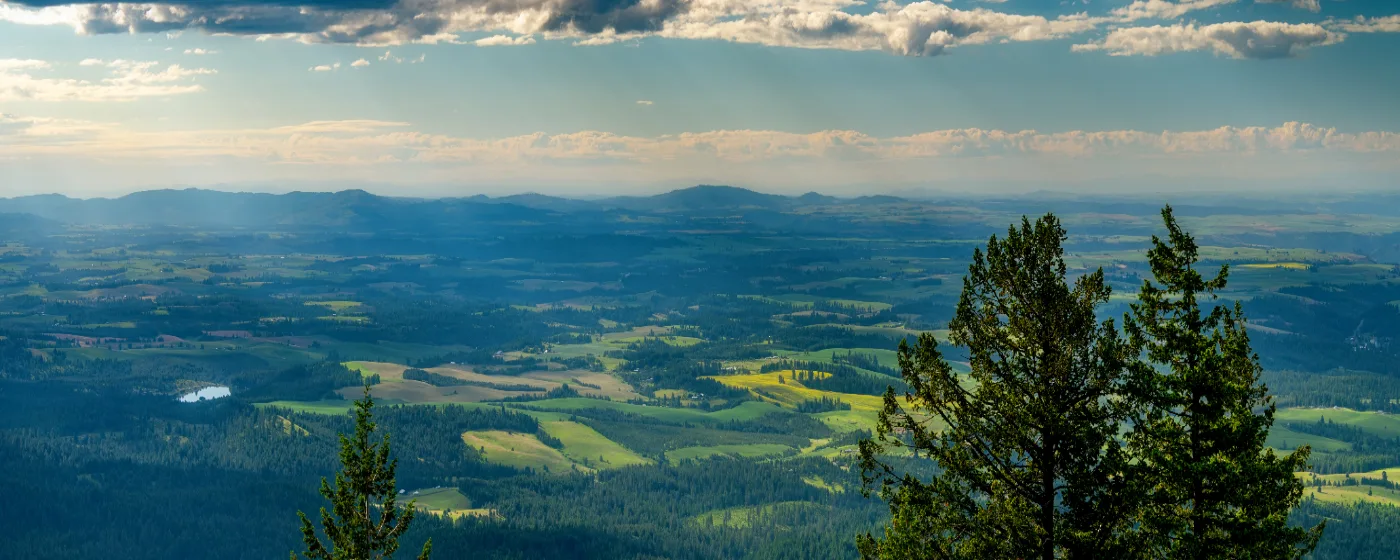
Local Expert Takeaway: Moscow works best for retirees who want an intellectually engaged small-town life with manageable housing costs and don't need a large hospital within 10 minutes. Gritman Medical Center handles more than you'd expect from a critical access facility, the Saturday Farmers Market at Friendship Square anchors the weekly routine from May through October, and Idaho's Social Security exemption puts real money back in your pocket each year. The honest trade-offs are thin 55+ housing inventory, specialty care that sometimes routes to Spokane, and winters that surprise transplants from the Pacific Coast. Get clear on your healthcare needs first — then walk a few blocks from East City Park toward Main Street and see if the town feels like yours.
Quick Takeaways & FAQs
✅ Idaho fully exempts Social Security benefits from state income tax, and Moscow's effective property tax rate of approximately 0.70% is well below national averages — a genuine advantage for fixed-income retirees.
⚠️ Advanced specialty care isn't always on-site at Gritman: complex cardiac and cancer cases typically route to Spokane, roughly 90 miles away — a real consideration before committing to Moscow as a permanent home.
📍 The Moscow Farmers Market at Friendship Square celebrated its 50th anniversary in 2026 and draws more than 5,000 visitors on peak Saturdays — it's the social and practical anchor of the weekly routine for many retirees here.
Does Idaho tax Social Security benefits for retirees?
What hospital serves retirees in Moscow, Idaho?
Is there a property tax break for seniors in Moscow and Latah County?
Are there 55+ or active-adult communities in Moscow, Idaho?
How does retiring in Moscow compare to retiring in Lewiston, Idaho?
Moving to Idaho?
Tell us what you need help with and we'll connect you with local resources.
