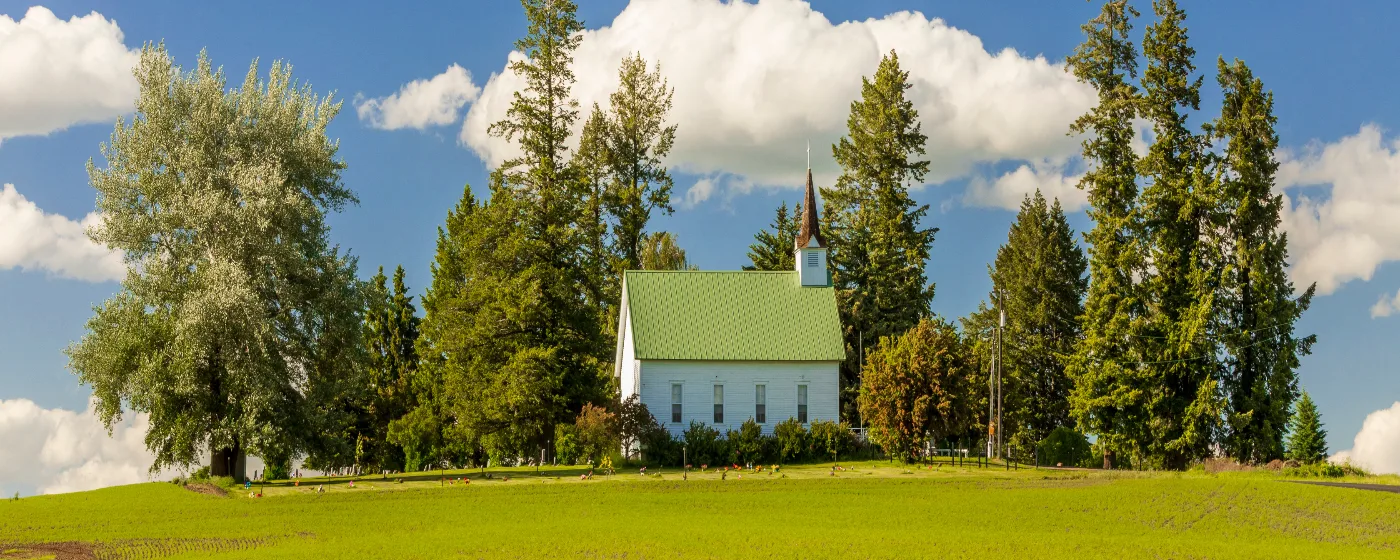
What Is Living in Potlatch, Idaho Like?
Maybe you've priced yourself out of Boise or Coeur d'Alene and someone mentioned that north-central Idaho still has homes in the low $200,000s. Maybe the University of Idaho or Washington State University is pulling you toward the Moscow-Pullman corridor and you're looking for somewhere quieter to actually live. Potlatch — a small Latah County city of about 922 people, sitting at 2,572 feet along Idaho State Highway 6, roughly six miles from the Washington state line — is the kind of place that surprises people once they arrive. It was purpose-built in 1906 as a company town for what was then the world's largest white pine sawmill, and that planned, grid-street DNA still shows in how orderly and intact the place feels, a century later.
The economic backbone for most residents isn't in Potlatch itself — it's in the Moscow-Pullman corridor, roughly 22 minutes down the road. The University of Idaho anchors Moscow's employment, and Washington State University does the same across the state line in Pullman. The Potlatch School District serves local families, and the district holds a C- rating, according to Niche. Families with school-age children should read the schools page carefully before making a decision — the district's size and resource base are the real story there, not any single metric.
On the cost-of-living side, Potlatch is genuinely affordable by any Idaho standard. The typical home value sits at $219,837 (Zillow Home Value Index, 2026) — noticeably below statewide medians that have climbed well above $460,000 in recent years — and an effective property tax rate of approximately 0.70% keeps the annual carrying cost low. Day-to-day life runs on a car; nearly 88% of residents drive to work and there is no public transit. What you get in exchange is walkable historic streets, Laird Park Campground on the Palouse River minutes away, and St. Joe National Forest starting about 20 minutes from your front door.
Whether you're seriously considering a move or still in the research phase, the sections below break down Potlatch's employer landscape, housing market, commute patterns, daily rhythms, and weekend life — so you can make a real decision, not just a spreadsheet one.
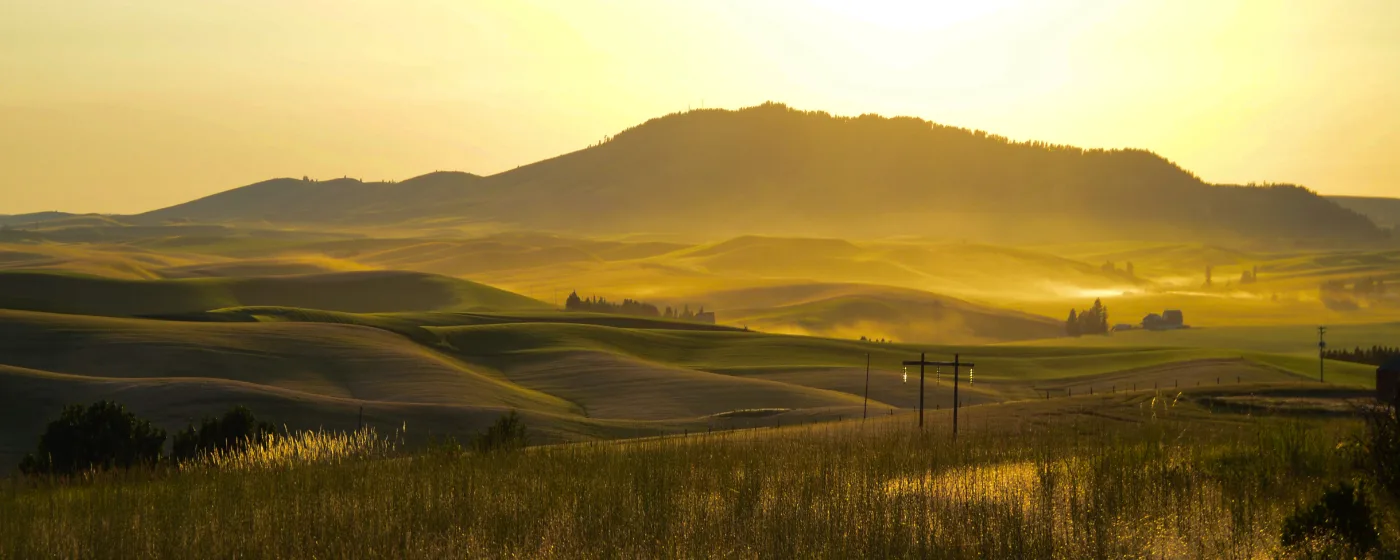
Potlatch at a Glance
Looking to buy in Potlatch? Estimate your payment.
Enter your numbers to see an estimated monthly mortgage payment.
Estimate only. Excludes HOA fees and mortgage insurance. The interest rate above is a starting point, not a quoted rate — replace it with your own to see real numbers. Insurance is a flat placeholder, not a Potlatch quote.
Why Are People Moving to Potlatch?
The short answer is affordability plus proximity. Potlatch offers access to two major university employment hubs — the University of Idaho in Moscow and Washington State University in Pullman — without requiring you to pay Moscow or Pullman prices to live there.
The Employer Pull
The University of Idaho is the dominant draw for most Potlatch-area workers who commute into Moscow. Faculty, staff, graduate students, and contractors all make this drive. Washington State University pulls a parallel crowd across the state line into Pullman, Washington. Between the two institutions, the corridor supports thousands of jobs in education, research, administration, and healthcare-adjacent services.
The Potlatch School District is itself one of the largest local employers in town proper. Beyond the school district, local retail, services, and small businesses round out what's available without a commute.
Who Actually Chooses Potlatch
| Buyer Type | Why Potlatch Works | The Trade-Off |
|---|---|---|
| Commuter | 22-min drive to Moscow universities; home prices well below Moscow | Every errand, every day, requires a car |
| Value | Among the most affordable entry points in Latah County | Limited local amenities; thin resale market |
| Families | Quiet streets, low traffic, outdoor access on the doorstep | School district ratings trail regional peers |
| First-Time Buyers | Typical home value of $219,837 makes ownership achievable early | Rural lending can have quirks; see the homebuyer page |
| Nature | St. Joe National Forest ~20 min; Laird Park on the Palouse River nearby | Spokane airport is a 90-minute drive for travel |
| Quiet | Sub-1,000 population means genuine small-town pace | No nightlife, limited dining options in town |
People also move here after visiting the Potlatch Historic District — the company-town grid, the WI&M Railway Depot, the intact Pine Street commercial blocks — and realizing they want that sense of place rather than a newer suburb.
What People Don't Anticipate
After six months, newcomers consistently mention the same thing: how completely the rhythm of life shifts around the Highway 6 corridor. Moscow for groceries, Moscow for a restaurant, Moscow for a doctor. It's not a hardship, but it does mean Potlatch's affordability comes bundled with a commuter lifestyle even on weekends.
People who move out of Potlatch most often cite the school district's limited extracurricular offerings and the thin local job market — if you lose the university-corridor job, options nearby are narrow.
What Daily Life Feels Like in Potlatch
Potlatch has the structure of a planned town because it was one. The grid streets, the organized blocks between 5th and 7th on Pine Street, the preserved WI&M Railway Depot — daily life here has a coherence that newer Idaho suburbs lack.
The Morning Routine
Most mornings start at Red Fir Coffee House & Boutique on 6th Street, which functions as the de facto community gathering spot. It's a coffee house and boutique in one — the kind of place where you'll know your neighbors' orders within a month of moving here. On Highway 95, the Tamarack Cafe draws the early-morning crowd looking for a full breakfast before the drive into Moscow or Pullman.
There is no Safeway, no Target, no chain pharmacy in Potlatch. The nearest full grocery run is in Moscow. Locals plan accordingly, combining it with the commute rather than making a separate trip.
The Pace
With a population under 1,000, Potlatch moves slowly — deliberately so. Kids ride bikes on streets with almost no traffic. The Potlatch Historical Society maintains a free walking tour guide (pick it up at City Hall) of the historic district, and on a weekend afternoon you'll see families working through it. It's not performative small-town tourism; it's genuinely how some residents spend a Saturday.
Seasonal Surprises
New residents from lower elevations underestimate the winters at 2,572 feet. Snow comes earlier and stays longer than in Moscow, and Highway 6 can get slick in ways that stretch that 22-minute commute considerably. Budget for a decent set of winter tires — locals treat it as non-negotiable.
Summers, by contrast, are the reward: the Palouse River trail access, Laird Park open from late May through October, and long evenings that make the forested ridgelines feel genuinely close. The school district's community events, the 4th of July gathering, the IHSAA sports seasons — these are where you actually meet Potlatch people.
What Locals Love
Longtime residents point to two things consistently: the lack of traffic (there are no traffic lights in town) and the immediate access to public land. You can be on a Forest Service trail inside 20 minutes, which in most of Idaho now requires a much longer drive and a higher real estate budget to achieve.
The Potlatch Housing Market Right Now
The typical home value in Potlatch is $219,837 (Zillow Home Value Index, 2026). In a state where median prices have climbed steeply, that figure stands out — and it's real, not a distortion of a few foreclosures pulling the number down.
The catch is volume. Potlatch is a very small market. Homes don't turn over frequently, which means when one comes available in a particular area of town, it may be the only comparable listing for months. Buyers who need to move quickly or who have highly specific requirements often find the inventory frustrating. For the full breakdown of what homes cost and what rents look like across different areas, see the cost of living page.
What the Market Actually Looks Like
The housing stock is older on average — many homes trace back to the company-town era and the decades that followed. That means character, established trees, and larger lots in some pockets, but also the possibility of deferred maintenance that newer construction avoids. A thorough inspection is especially important here.
The effective property tax rate of approximately 0.70% is genuinely low, adding meaningful long-term value for buyers comparing monthly carrying costs with other Idaho markets.
Some areas of town carry more cachet than others — proximity to the historic district and the Pine Street corridor tends to command more interest than peripheral streets — but pricing differences across Potlatch's small footprint are more about condition and lot size than location within the city. For neighborhood-level character detail, the best neighborhoods page covers each area.
Market Pace
When a well-priced home in good condition hits the Potlatch market, it moves. The pool of buyers who want exactly this — affordable, historic, close to the Moscow corridor — is small but motivated. Sitting on a decision tends to mean watching the listing disappear.
Potlatch Neighborhoods
Potlatch has several distinct areas — each with its own character and appeal. Here’s a breakdown to help you narrow down where to focus your home search.
🏡 North Hill
North Hill sits on elevated ground above the town center and draws buyers who want a bit of separation from the main commercial corridor; the housing stock here tends toward larger lots with mature trees, and the slightly higher vantage gives some properties long views across the Palouse terrain.
🏠 South Hill
South Hill offers a quieter residential feel on the south end of Potlatch's grid, with single-family homes that reflect the town's older building stock; it suits buyers who want to be away from any foot traffic while staying within easy reach of Highway 6 for the Moscow commute.
🌳 Downtown Potlatch
Downtown Potlatch — centered on the Pine Street Historic District between 5th and 7th Streets — is where the WI&M Railway Depot, Red Fir Coffee House & Boutique on 6th Street, and the antique shops concentrate, making it the most walkable part of the city and the best fit for buyers who want to feel the town's company-era character daily.
🏘 Pine Street Area
The Pine Street Area is the heart of Potlatch's National Register Historic District, and homes here sit alongside the commercial blocks that have defined the town since 1906; buyers drawn to historic architecture and an on-foot connection to local shops tend to prioritize this pocket above others.
🏔 6th Street District
The 6th Street District anchors the daily-life layer of Potlatch, with Red Fir Coffee House & Boutique as the neighborhood's social center; housing here is compact and close to the core, suiting buyers who want to minimize driving within the town itself.
🌆 Elm Street Corridor
The Elm Street Corridor runs through a quieter residential stretch on the east side of Potlatch's grid, with a mix of modest single-family homes and larger parcels; it's a practical choice for buyers prioritizing space and lower price points over proximity to the historic downtown.
Pros & Cons of Living in Potlatch
The Pros
- Affordable small-town living with low property taxes
- Convenient access to University of Idaho and Washington State University
- Tight-knit community with strong local pride
- Historic company town character with preserved architecture
The Cons
- Limited local employment opportunities
- Small population means fewer amenities and services in town
- Most residents commute to Moscow or Pullman for work
Getting Around & Commuting in Potlatch
Owning a car in Potlatch is not optional — it's the entire infrastructure. Approximately 87.9% of residents drive to work, and zero percent use public transportation. There is no bus route, no rideshare service operating regularly, and no train. If that constraint sits well with you, everything else about Potlatch works smoothly.
The Core Commute
Moscow is the destination for the majority of working commuters: roughly 22 minutes on a clear day via Highway 6 west toward US-95. This route carries most of the daily traffic load and is the one to evaluate in all four seasons before committing to a Potlatch address.
Pullman, Washington — home to Washington State University — is accessible by continuing through Moscow and crossing the state line, adding perhaps another 15 minutes to the Moscow run. Faculty and staff who split time between both campuses do this drive regularly.
Longer Hauls
| Destination | Approximate Drive | Primary Route | Key Use |
|---|---|---|---|
| Moscow, ID | ~22 min | Hwy 6 → US-95 | University jobs, groceries, medical |
| Pullman, WA | ~35–40 min | Hwy 6 → US-95 → WA-270 | Washington State University employment |
| Troy, ID | ~15 min | Hwy 6 | Small-town services, local errands |
| Lewiston, ID | ~1 hr | US-95 S | Regional retail, Lewiston-Nez Perce County Airport |
| Coeur d'Alene, ID | ~1.5 hr | US-95 N | Specialty retail, regional healthcare |
| Spokane, WA | ~90 min | US-95 N → I-90 | Spokane International Airport, major retail |
Spokane International Airport is the nearest commercial-air gateway — plan around 90 minutes each way for any flight. Residents who travel frequently for work tend to factor this into the overall calculus of whether Potlatch is the right base.
The Winter Variable
The average commute time reported by US News is about 30 minutes — but that average includes good-weather days. Highway 6 between Potlatch and the junction with US-95 gets icy and snow-packed in winter, and a 22-minute commute can become a 40-minute one without warning. Locals who commute to Moscow consistently recommend leaving 15 minutes early from November through March and keeping an eye on the Idaho 511 road conditions app.
The upside: the drive itself, in all seasons, runs through some genuinely beautiful Palouse and forested terrain. It's not an industrial corridor commute.
Schools in Potlatch
Families relocating to Potlatch have public, private, and higher-education options nearby. Here’s a quick overview.
🎓 School District
Potlatch School District serves K–12 students across Potlatch and the surrounding area. Rated C- (source: Niche.com).
🏆 Graduation Rate
The 4-year high-school graduation rate here is approximately 87.2%.
📚 Higher Education
Idaho’s public universities — Boise State, the University of Idaho, and Idaho State — offer four-year degrees statewide, with community colleges (CWI, CSI, NIC) providing two-year and workforce programs.
🌐 Online Learning
Boise State Online and University of Idaho Online offer fully accredited online degrees for remote learners across the state.
Working in Potlatch
Potlatch’s largest employers span several industries — here are some of the anchors of the local job market.
🎓 University of Idaho
Education
🎓 Washington State University
Education
🎓 Potlatch School District
Education
💼 healthcare facilities
💼 local retail and services

Retiring in Potlatch
Potlatch draws retirees for its balance of amenities, outdoor access, and cost. Here’s what to weigh.
🌤 Climate
Potlatch sits at 2,572 feet in north-central Idaho, which means four distinct seasons with real winters. Snow arrives earlier than in lower-elevation Idaho cities and stays longer — typically November through March. Summers are mild and dry with long evenings, and the fall foliage in the surrounding forests is genuinely spectacular.
🍴 Lifestyle
Daily life centers on the historic Pine Street corridor, morning coffee at Red Fir Coffee House & Boutique on 6th Street, and outdoor recreation in the surrounding national forests. The pace is slow and intentional — this is small-town Idaho without apology. Moscow, 22 minutes away, handles the restaurant and cultural programming needs that Potlatch itself doesn't offer.
🏚 55+ Communities
Potlatch does not have dedicated active-adult or 55+ developments — the housing stock is a mix of older single-family homes across the city's compact grid. Retirees who choose Potlatch typically do so for the affordability and outdoor access rather than organized senior amenities, with Moscow and Lewiston providing more structured senior services nearby. For the full picture on healthcare access and retirement living, see the retiring page.
✈ Getting Around
A personal vehicle is the only practical option in Potlatch. The city has no public transit, and daily errands require driving to Moscow or Troy. Spokane International Airport is approximately 90 minutes away for air travel. The driving itself — through Palouse farmland and forested terrain — is pleasant in good weather, though winter highway conditions require attentiveness.
🏛 Idaho Taxes for Retirees — What to Know
- Social Security is not taxed — Idaho does not tax Social Security benefits at the state level, regardless of income.
- Flat state income tax — Idaho has a flat income tax (5.3% for 2026). Other retirement income — pension distributions and 401(k)/IRA withdrawals — is taxed as ordinary income at that rate.
- Narrow retirement deduction — Idaho’s Retirement Benefits Deduction is limited: it reaches only certain government pensions (federal CSRS, Idaho firefighter/police, and military retirement) for those 65+ (or 62+ if disabled), and is reduced by Social Security received.
- Sales tax is the tradeoff — The state sales tax is 6.0%, and Potlatch adds no local sales tax on general retail, so the combined rate is 6.0% (Idaho State Tax Commission, 2026). Groceries are taxed, but a grocery tax credit offsets part of it; prescription drugs are exempt. A small number of resort cities add a local option tax, usually on lodging, alcohol, and prepared food rather than general retail.
- Low property taxes, with senior relief — Idaho property taxes are relatively low. Homeowners 65+ who own and occupy their home may qualify for the “circuit breaker” Property Tax Reduction based on income.
- No estate or inheritance tax — Idaho has no estate, inheritance, or gift tax.
- Capital gains — Capital gains are taxed as ordinary income, though Idaho allows a deduction of up to 60% of the net gain on qualifying Idaho property.
Tax laws change frequently and individual situations vary. This is general information, not tax advice — always consult a qualified Idaho tax professional or CPA for personalized retirement tax planning.
Weekends & Local Favorites in Potlatch
Weekends in Potlatch tend to split between the town itself and the public land surrounding it — and that split is actually what draws a lot of residents here in the first place.
In Town
The WI&M Railway Depot on the north end of town is the anchor of a weekend walk. The old Washington, Idaho, and Montana Railway depot now serves as a local museum with vintage rail cars on display outside, and the attached shop carries local artwork and artisanal goods — the kind of place you stop for 20 minutes and end up staying an hour. For antique and specialty shopping, Lucky Feather Antiques, Potlatch Antiques and Second Hand Store, and Monkeyshine Apparel and Gifts are the local circuit along the Pine Street corridor.
Coffee at Red Fir Coffee House & Boutique on 6th Street is where most weekend mornings start. It's also where local information travels fastest — if something is happening in Potlatch, someone at Red Fir knows about it.
The Potlatch Historic District
The Potlatch Commercial Historic District — listed on the National Register of Historic Places in 1986 and anchored on Pine Street between 5th and 7th Streets — is worth a proper walking tour. Pick up the free guide from City Hall, courtesy of the Potlatch Historical Society, and spend an hour reading the town's company-town architecture in context. It reads differently once you know that every building was placed deliberately in 1906.
Getting Outside
Laird Park Campground on the Palouse River is the closest outdoor anchor, operating from May 20 through October 30. The Civilian Conservation Corps built its sandy beach in 1933, and the half-mile interpretive trail and trout fishing make it a genuine local resource rather than just a picnic area. The campground is managed by the USDA Nez Perce-Clearwater National Forests.
St. Joe National Forest — nearly 870,000 acres — starts about 20 minutes from Potlatch. Hiking, dispersed camping, and fall hunting draws residents out on nearly every dry weekend between June and October. For a full picture of the trail and recreation options accessible from Potlatch, the parks and recreation page has the detail.
A Realistic Picture
Potlatch does not have a restaurant row or a downtown bar scene. The Tamarack Cafe on Highway 95 covers the casual-dining end of things. For a full dinner out, most residents drive to Moscow — and many build it into a Friday routine rather than treating it as a sacrifice. That mental shift, from "we don't have much" to "Moscow is 22 minutes," is the one that determines whether Potlatch's lifestyle actually fits you.
Top Things Locals Say About Potlatch
The best intel about a city comes from the people who actually live there. Here’s what Potlatch residents say when newcomers ask the questions everyone’s thinking.
“I knew the commute would be part of it, but I didn't expect how much I'd stop thinking of it as a commute. Highway 6 into Moscow runs through Palouse farmland and timber — by month three I was actually looking forward to the drive.”
— Recent Potlatch home buyer
“What's the most surprising thing about living in Potlatch?”
How intact the company-town layout still feels. Once you pick up the walking tour guide at City Hall and do the Pine Street Historic District route, you start seeing the whole city differently — the grid, the depot, the old commercial blocks between 5th and 7th. Most people who've lived here for years have never actually done the walking tour, which is a shame.
“What do locals love most about Potlatch?”
The access to public land without the crowds. Laird Park on the Palouse River is minutes away, St. Joe National Forest is 20 minutes out, and on a summer weekend you're not fighting Boise traffic to get to a trailhead. That combination of affordable housing and immediate outdoor access is genuinely rare in Idaho right now.
“What should newcomers to Potlatch know?”
Plan your Moscow trips intentionally. Grocery runs, medical appointments, specialty shopping — locals batch all of it into one or two weekly trips rather than making separate drives each time. Also: Highway 6 west of town gets icy fast in winter. Don't let a good November lull you into thinking December will be the same.
“Can you live in Potlatch without a car?”
There is genuinely no way to do it. There's no bus, no regular rideshare, and the nearest full grocery store is in Moscow. Even walking within Potlatch is comfortable on the historic grid streets, but you cannot get to anything essential without driving. If you don't have a car, Potlatch is not the right fit.
Cities Near Potlatch
Other communities near Potlatch worth a look — each with its own character and price point.
| City | Distance | Best For | Vibe | Median Rent | Median Buy |
|---|---|---|---|---|---|
| Moscow | 14 mi | University workers, students, amenity seekers | College town energy, walkable core | $1,400 | $380,000 |
| Pullman | 18 mi | WSU staff, cross-state commuters | Washington college town, active campus feel | $1,350 | $370,000 |
| Troy | 8 mi | Rural buyers wanting small-town services | Quiet, agricultural, close-knit | $1,100 | $280,000 |
More Helpful Guides for Potlatch
Going deeper on Potlatch? Our blog series covers everything from first-time buying to retiring here — explore the guides below.
Local Expert Takeaway: Potlatch works best as a base, not a destination. You live here for the affordability, the historic grid streets, and the proximity to national forest land — and you drive to Moscow for everything else. The WI&M Railway Depot walk, a morning at Red Fir Coffee House on 6th Street, and a summer afternoon at Laird Park on the Palouse River are genuinely good. The school district's limitations are real and worth reading carefully on the schools page before you commit. If the 22-minute Moscow commute sounds manageable in January on a snowy Highway 6, Potlatch will likely exceed your expectations.
Quick Takeaways & FAQs
✅ Potlatch's typical home value of $219,837 (Zillow Home Value Index, 2026) is one of the most accessible entry points in all of Latah County.
⚠️ There is zero public transit in Potlatch, and winter highway conditions on the Moscow commute route can add 15–20 minutes without warning — a car and winter tires are essential.
📍 The WI&M Railway Depot museum and the Pine Street Historic District offer a free walking-tour guide available at City Hall — most new residents discover it only after a neighbor mentions it.
What is the typical home price in Potlatch, Idaho?
How far is Potlatch from Moscow, Idaho?
Is Potlatch, Idaho a good place to raise a family?
What are the major employers near Potlatch, Idaho?
Is it possible to live in Potlatch without a car?
Helpful Links for Moving to Potlatch
Moving to Idaho?
Tell us what you need help with and we'll connect you with local resources.
