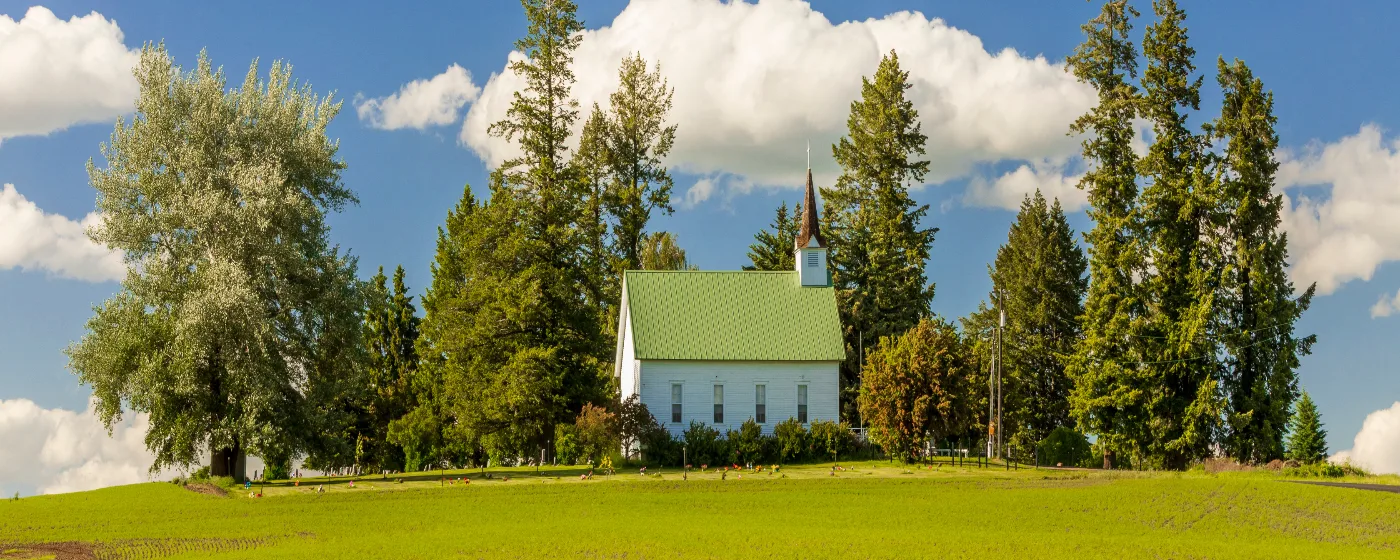
Most families who move to Potlatch from a larger city expect a small school and get one — but the size surprises them more than they anticipated. Potlatch School District No. 285 serves the entire town and surrounding rural Latah County with exactly two schools and 462 students total. That's not a typo. The PreK–12 experience here happens in two buildings, separated by grade bands, within a few blocks of each other in a town of fewer than a thousand people. For some families, that intimacy is precisely the point. For others, it raises real questions worth examining before you sign a lease or make an offer.
The district's economic backbone is modest but committed: roughly $11,740 per student annually, a total budget of approximately $6.4 million, and a staff that wears multiple hats by necessity. Potlatch Jr./Sr. High School has been recognized by the district as among the top three Idaho Schools of Excellence within the Class 2A classification — a self-reported distinction in the official 2025–26 student handbook, covering a pool of just 18 schools statewide across all divisions. The University of Idaho and Washington State University are both within commuting range of Moscow, roughly 22 minutes south on Highway 95, which means some families who work in higher education settle here precisely because the school district is small enough to feel personally accountable.
The honest picture on academics sits below Idaho's statewide averages on standardized assessments — districtwide math proficiency is 30% versus the state's 41%, and reading is 44% versus 55%. Those numbers matter, and this guide won't soften them. But they coexist with a graduation rate around 80%, approximately 75% of graduates moving on to college, technical programs, or military service, and an athletics program that has punched well above its weight in Class 2A competition. Potlatch is a place where a kid can letter in three sports, lead the FFA chapter, and still know every teacher by name. For outdoor recreation options that complement school-age life here, the parks and recreation page covers what's available locally.
Whether your family is relocating from Moscow, transferring from a larger Idaho district, or moving here from out of state, the sections below break down Potlatch's district structure, its two schools, standout programs, youth sports, honest academic tradeoffs, and who this district is — and isn't — the right fit for.
Potlatch School District at a Glance
Potlatch School District No. 285 is about as lean as a public school district gets in Idaho. Two campuses, two principals, 462 students, and a coverage area that stretches into the surrounding agricultural and timber land of Latah County. There are no magnet schools, no district-wide choice programs, and no attendance zone decisions to stress over — your address puts your kids in this district, and this district has two stops.
| Metric | Potlatch SD | Idaho Statewide |
|---|---|---|
| Total enrollment | 462 students (2024–25) | — |
| Number of schools | 2 | — |
| Per-pupil spending | ~$11,740/year | — |
| Math proficiency | 30% | 41% |
| Reading proficiency | 44% | 55% |
| Graduation rate | ~80% | — |
| Post-secondary continuation | ~75% of graduates | — |
| IHSAA classification | Class 2A, District II | — |
The proficiency gap relative to state averages is real and consistent across both schools. It is the single most important academic data point for families weighing this district against alternatives in Moscow or elsewhere in Latah County.
What the numbers don't capture is the staff-to-student relationship. A 13:1 ratio at the elementary level and 15:1 at the junior-senior high means your child's teacher is genuinely likely to know them — not as a face in a crowd, but by name, learning style, and family situation. That dynamic changes what school feels like day to day, even when aggregate test scores lag.
Potlatch Elementary School: PreK Through 6th Grade
The First Stop for Families
Potlatch Elementary School covers PreK through 6th grade and enrolls approximately 249 students — making it the larger of the district's two campuses by headcount. The student-teacher ratio of 13:1 is among the more favorable in rural north-central Idaho, and in practice, it means your kindergartner or third-grader is in a classroom where the teacher can give individual attention rather than managing crowd control.
State assessment data from the 2023–24 school year shows 42% of students scoring at or above proficient in reading and 32% in math. Both figures trail Idaho's statewide averages, and families moving from higher-performing suburban districts — say, anything in the Boise metro — will feel that gap. The honest read: Potlatch Elementary is a caring, low-ratio school where academic acceleration is harder to find than personalized support.
What Works Here
The elementary program benefits directly from its size. Multi-grade friendships form naturally, older kids interact with younger ones in hallways and at recess, and the school culture reflects the town itself — straightforward, cooperative, and rooted in outdoor and agricultural life. If your child struggled in a larger, more anonymous school setting, the shift here can be genuinely significant.
The district's spending of approximately $11,740 per student annually allows for reasonable staffing levels given the enrollment. That's not a wealthy district budget, but it's not bare-bones either — and the elementary school benefits from the stability of a staff that tends to stay put in a community where housing is accessible and roots run deep.
Best for: Families who prioritize small class sizes, individualized teacher attention, and a school culture that mirrors a tight-knit rural community over one optimized for academic performance rankings.
Potlatch Jr./Sr. High School: 7th Through 12th Grade
One Building, Two School Identities
Potlatch Jr./Sr. High School at 130 6th Street serves grades 7 through 12 in a single building with approximately 213 students. The combined junior-senior model means a 7th grader and a 12th grader share hallways daily — which sounds unusual until you've seen how it plays out. Younger students get mentored by older ones in ways that larger schools can't replicate. The downside is that some families feel the high school experience lacks the developmental separation they expected.
The student-teacher ratio is 15:1 across grades 7–12. State assessment proficiency sits at 27% in math and 47% in reading for the 2023–24 school year — the math figure in particular should give families with mathematically gifted students pause, since advanced coursework options are limited by the size of the student body and teaching staff.
Where the School Earns Its Reputation
The district's own 2025–26 student handbook reports Potlatch Jr./Sr. High among the top three Idaho Schools of Excellence within the Class 2A classification — a distinction covering just 18 schools across all IHSAA divisions statewide. That recognition sits alongside a graduation rate of approximately 80% and a post-secondary continuation rate of around 75%, figures that suggest students who get to the finish line are leaving with real plans.
The school requires two PE credits to graduate, and one of those credits can be earned through IHSAA sport participation — a policy that directly encourages athletic involvement and is worth knowing if your teenager is on the fence about joining a team.
Extracurriculars Beyond Sports
The school fields active student chapters in FFA (Future Farmers of America), BPA (Business Professionals of America), and FCCLA (Family, Career and Community Leaders of America). Dance, theatre, and visual arts programs round out the options. For a school of 213 students in grades 7–12, that is a genuinely diverse activity menu — though "diverse" is relative, and a student whose interest runs to robotics, debate, or a 40-person orchestra section will find those specific outlets absent.
Best for: Students who thrive with personal relationships with teachers and coaches, who benefit from visible leadership opportunities in a small program, and who are drawn to agricultural, vocational, or trade-adjacent extracurriculars alongside a traditional college-prep track.Looking to buy in Potlatch? Estimate your payment.
Enter your numbers to see an estimated monthly mortgage payment.
Estimate only. Excludes HOA fees and mortgage insurance. The interest rate above is a starting point, not a quoted rate — replace it with your own to see real numbers. Insurance is a flat placeholder, not a Potlatch quote.
Youth Sports and Athletics at Potlatch High School
Small School, Serious Athletics
Potlatch High School competes in the Idaho High School Activities Association (IHSAA) Class 2A, District II classification for the 2026–28 cycle. In a school with 213 students in grades 7–12, that classification is accurate — but the athletic output has been anything but ordinary at the 2A level.
The school's official IHSAA sports roster covers a wide range for a program this size: baseball, boys' and girls' basketball, cheer, boys' and girls' cross country, football, boys' golf, softball, boys' and girls' track and field, volleyball, and boys' and girls' wrestling. Football is played under 8-man rules, which is standard for Class 2A in Idaho and produces a fast-paced game that draws strong community turnout on Friday nights.
| Sport | Gender | Season |
|---|---|---|
| Football (8-man) | Boys | Fall |
| Volleyball | Girls | Fall |
| Cross Country | Boys & Girls | Fall |
| Basketball | Boys & Girls | Winter |
| Wrestling | Boys & Girls | Winter |
| Baseball | Boys | Spring |
| Softball | Girls | Spring |
| Track & Field | Boys & Girls | Spring |
| Golf | Boys | Spring |
| Cheer | Mixed | Year-round |
A Winning Culture
The district-reported record is notable: multiple recent state championships or top-four finishes in baseball, softball, track and field, basketball, volleyball, and football. The football program made the IHSAA 2A state playoffs in October 2025, competing against Hagerman. At this classification level, state playoff appearances require winning records against schools across a large geographic region — it's not a participation milestone.
One practical reality worth knowing: in a school this size, most varsity rosters have room. A student who was a bench player at a 4A or 5A school elsewhere in Idaho may find genuine playing time and a starting role here. That dynamic cuts both ways — the level of competition is lower than larger classifications — but for a teenager who wants to actually play rather than practice, it matters enormously.
The PE Credit Connection
Because the district allows one of the two required PE credits to be fulfilled through IHSAA sport participation, sport involvement isn't just extracurricular — it's structurally encouraged. A student who plays two sports effectively satisfies their PE graduation requirement through athletics, freeing up a class period for an elective or additional coursework.
Rec Leagues and Off-Campus Options
No Potlatch-specific recreational league programs were independently verifiable at the time of this writing. Families interested in youth rec sports beyond the school program should contact Potlatch City Hall directly or check the district activities site at activities.psd285.org for current community league information. Moscow, roughly 22 minutes south, hosts a broader range of club and recreational youth sports programs through its parks and recreation department — families with serious club-sport aspirations typically look there for travel teams and specialized coaching.
Best for: Families whose kids want to compete in multiple sports, earn real playing time, and be part of a program where athletics are central to the school's identity and community calendar.Academic Realities: What the Test Scores Actually Mean
The Numbers, Plainly
Districtwide math proficiency is 30% — meaning roughly seven out of ten students are not testing at or above the Idaho standard for their grade level. Reading proficiency is 44%, which is better but still 11 points below the state average. Public School Review's statewide ranking puts the district at 2 out of 10 for academic performance. These are not numbers to rationalize away.
What they don't tell you: why. Rural districts like Potlatch often see lower proficiency rates that correlate with economic factors, limited access to test preparation resources, and a curriculum that doesn't always optimize for standardized assessment performance. Proficiency scores measure a real thing, but they don't measure the whole school experience.
What Motivated Students Can Access
A student who is self-motivated and has family support at home can navigate the academic environment here effectively. The 15:1 ratio at the high school level means teacher access is real — if a student wants help, they can get it. The proximity of the University of Idaho in Moscow also creates practical opportunities: dual-enrollment courses and early college options are worth exploring with the counseling office, particularly for juniors and seniors who have exhausted the in-house course catalog.
Parents who arrived expecting a rigorous honors track, AP courses across multiple disciplines, or a large STEM program will feel the gap. Those options simply don't exist at scale in a school with 213 students across six grade levels. The counseling load is manageable because the student population is small, but the menu of advanced coursework is narrow for the same reason.
The College Pipeline
Approximately 75% of graduates continue to post-secondary education, technical school, or military service — a figure the district reports in its official handbook. For a school with an 80% graduation rate and the academic profile described above, that continuation rate reflects something real about student motivation and community expectations. Potlatch families tend to value work, direction, and practical outcomes, and that culture shows up in what graduates do next.
Who This District Is Not the Right Fit For
Potlatch School District is genuinely excellent at some things and genuinely limited at others. The families who struggle here most are those who didn't fully reckon with the second list before moving.
If Academic Acceleration Is a Priority
A student who tested into a gifted program in Boise, Coeur d'Alene, or out of state will find no equivalent program in Potlatch. There is no dedicated gifted-and-talented track, no AP course catalog with a dozen options, and no large-group academic competitions like Science Olympiad or Quiz Bowl that require deep rosters. A high-achieving student here will need family engagement and outside resources — online coursework, dual enrollment in Moscow — to reach the ceiling they're capable of.
If Specialized Electives Matter
A teenager who arrived from a school with orchestra, a film production class, robotics, or an esports team will find that those specific programs don't exist here. The extracurricular menu is real but narrow: FFA, BPA, FCCLA, sports, theatre, and visual arts cover most of what's offered. Parents who want a comprehensive arts or STEM elective sequence should look at the Moscow School District before making a final decision.
If Club Sports Are Central
Families with a child on a competitive travel team — club volleyball, select baseball, youth soccer — will spend significant time driving to Moscow or beyond for practice, tournaments, and coaching. Potlatch's school sports program is strong at the 2A level, but there is effectively no local club sports infrastructure in the town itself. That's not a dealbreaker, but it's a real time and logistics commitment that catches some families off guard after month three.
If the Family Is Accustomed to a Large District's Resources
A counselor who covers 200+ students across six grade levels can offer more individualized attention than a 500-student caseload — but that same counselor has fewer referral networks, fewer specialized staff, and fewer internal intervention programs than a large district might deploy. Families with kids who need specialized learning support, IEP resources, or mental health services should ask the district directly and specifically what it can provide before assuming the support structure is equivalent to what a larger school offered.
Local Expert Takeaway: Potlatch School District is a place where your kid will be known — by their teachers, their coaches, and the town itself. That matters more than people expect. The academic numbers trail state averages, and families who need advanced coursework or specialized support will have to supplement with Moscow's resources 22 minutes south. But if your family values small ratios, genuine athletic opportunity, and an extracurricular culture built around FFA, competitive 2A sports, and community connection, this district delivers something most suburban schools can't manufacture. Grab a coffee at Red Fir Coffee House on 6th Street some weekday morning and you'll probably run into a teacher, a coach, and three parents all at the same counter. That's the district in miniature.
Quick Takeaways & FAQs
✅ Potlatch Jr./Sr. High has earned recognition among Idaho's top three Class 2A Schools of Excellence and has produced multiple state championship finishes in baseball, softball, track, basketball, volleyball, and football.
⚠️ Districtwide math proficiency sits at 30% versus Idaho's 41% statewide average — families prioritizing academic rankings or AP-heavy course catalogs will find this district a poor match.
📍 The high school at 130 6th Street allows one of two required PE graduation credits to be earned through IHSAA sport participation, making multi-sport athletes a natural fit for the program.
How many schools are in Potlatch School District?
How do Potlatch schools compare academically to the rest of Idaho?
What sports does Potlatch High School offer?
Are there rec leagues or club sports for kids in Potlatch?
What extracurriculars beyond sports does Potlatch High School offer?
Moving to Idaho?
Tell us what you need help with and we'll connect you with local resources.
