
Moscow sits in the Palouse hills of north-central Idaho, straddling US-95 and sharing a state line with Pullman, Washington roughly ten minutes to the west. That proximity shapes everything about how money works here. The University of Idaho anchors the local economy, fills the rental market, and keeps about 60% of households renting rather than owning — an unusually high share for a town this size. The result is a city where rents are driven partly by student demand near campus and partly by a much tighter pool of family-scale housing than you'd find in a typical Idaho city of similar population.
Moscow's overall cost of living sits remarkably close to the national average — a BestPlaces index score of 99.1 out of 100 — but that headline number conceals a meaningful split: groceries run noticeably below the U.S. average, electricity rates are among the lowest in the region thanks to Avista Utilities, and housing costs are moderately below the national benchmark. What makes Moscow feel expensive to some newcomers isn't any single line item — it's the combination of a college-town rent premium near the University of Idaho campus and a for-sale market that has appreciated well beyond what median household incomes of $57,022 easily support.
Compared to Boise or the Treasure Valley, Moscow prices are considerably lower. Compared to the surrounding Palouse towns — Troy, Genesee, Potlatch — Moscow commands a meaningful premium for its walkable core, cultural amenities like the Kenworthy Performing Arts Centre and the 1912 Center, and immediate access to the university. The honest takeaway: Moscow is not a cheap Idaho market the way rural north-central Idaho can be, but it is a genuinely affordable one by Pacific Northwest standards, especially for renters willing to live a few blocks from the action.
Whether you're deciding between renting and buying, comparing Moscow to Pullman across the border, or trying to figure out what Idaho's tax structure means for your paycheck, the sections below break down Moscow's housing costs, everyday expenses, a city-by-city price comparison, and the full tax picture.
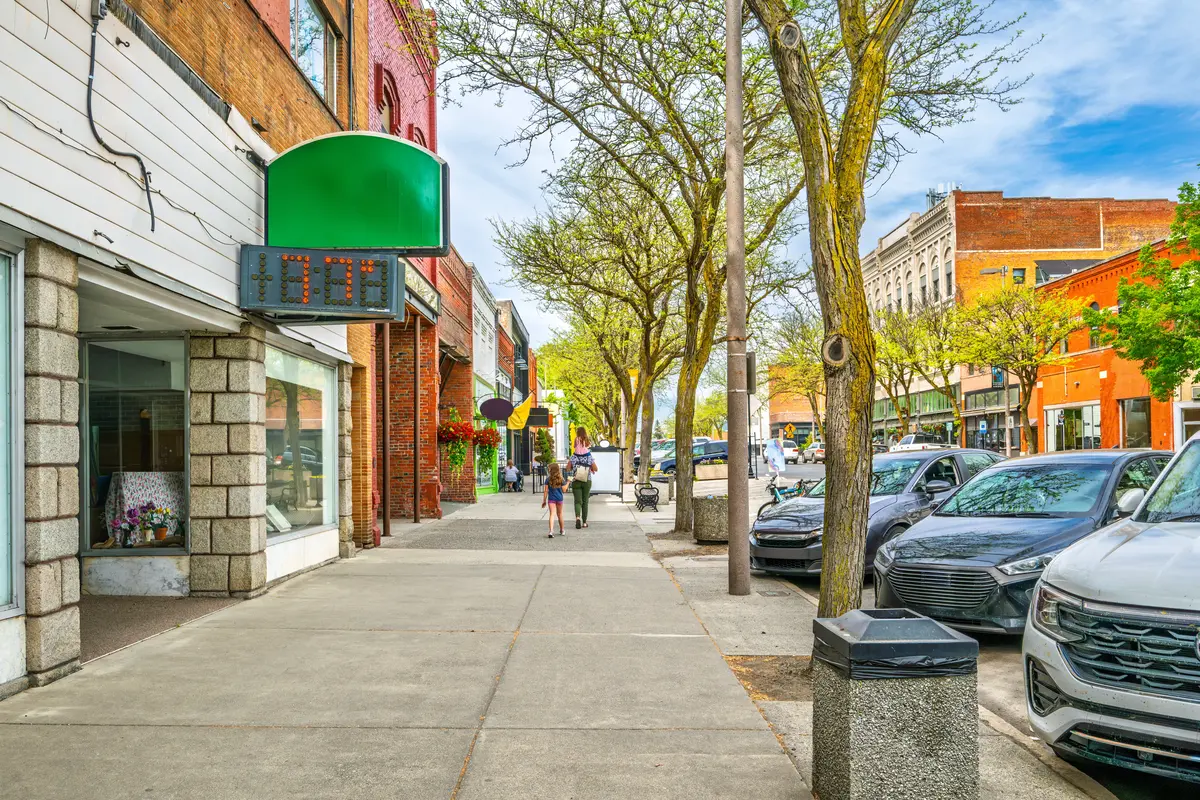
What It Really Costs to Live in Moscow
The Zillow Home Value Index for Moscow stood at $444,039 as of May 2026 — a figure that reflects the city's university-driven demand and limited for-sale inventory rather than simple Palouse land costs. That number is roughly 14% below the national housing benchmark, but it sits well above what a household earning the local median can comfortably absorb without a substantial down payment.
On every non-housing line — groceries, utilities, gas — Moscow runs equal to or below national averages. Food costs are approximately 17% under the U.S. norm, electricity from Avista runs about a third cheaper per kilowatt-hour than the national rate, and Idaho's modest gasoline tax keeps pump prices competitive. The city is walkable and bikeable enough that a second car is genuinely optional for many residents, which quietly reduces the monthly transportation burden compared to more spread-out Idaho communities.
The practical posture: Moscow is a mid-cost city where the housing line item dominates the budget calculus. Get the housing decision right — rent vs. buy, location relative to campus, and realistic down-payment timeline — and the rest of the budget tends to fall into place more easily than in most western college towns.
Housing: Rent vs Buy in Moscow
The For-Sale Market
Entry-level ownership in Moscow — older construction, smaller lots, some deferred maintenance — typically starts in the low-to-mid $300,000s. The city-wide median of $444,039 (Zillow Home Value Index, May 2026) represents the realistic midpoint for move-in-ready homes. Homes clustered on the more affordable end of the city tend to be further from the University of Idaho campus; for specifics on which areas offer which price points, the best neighborhoods guide maps that out in detail.
Moscow's effective property tax rate is approximately 0.70% — well below the national average and one of the genuine financial advantages of owning here versus comparable college towns in Oregon or Washington. That low rate meaningfully reduces the annual carrying cost of a home relative to the sticker price.
The Rental Market
Roughly 60% of Moscow households rent, and the market reflects it. Two-bedroom apartments average approximately $1,055 per month as of August 2026 — noticeably below the national average of roughly $1,750. One-bedroom units average around $886. Those figures are city-wide; expect to pay toward the higher end of any range for units within walking distance of the University of Idaho campus, and closer to the lower end in west Moscow and outlying streets.
The rent-vs-buy calculus here is genuinely close. Renters benefit from one of the more affordable two-bedroom markets in the Pacific Northwest. Buyers benefit from a low property-tax rate and meaningful long-term appreciation — but need to enter with realistic equity, because the gap between a $444,039 purchase price and a $57,022 median household income is not a small one to bridge.
Use the mortgage calculator below to model a purchase payment at your specific down payment and rate — monthly ownership costs vary considerably based on those inputs.

Everyday Costs Beyond Housing in Moscow
Avista Utilities serves Moscow's electrical grid, and its rates average approximately 12.35¢ per kilowatt-hour — about a third below the national average. A typical monthly electric bill for a two-bedroom unit runs well under $100 in mild months, with heating costs rising in winter. Natural gas supplements electric heating for many homes. Grocery costs run approximately 17% below U.S. norms, so a single adult can realistically budget around $331 per month and a family of four around $1,075. The Moscow Farmers Market on East City Park and independent grocery options on Main Street give residents alternatives to the standard chains.
Transportation spending is lower than in most Idaho cities of comparable size. Moscow's compact grid means many residents walk or bike to the University of Idaho campus, downtown, or evening spots. Pullman, Washington — with its own shopping, Costco, and Washington State University services — is a ten-minute drive, effectively doubling the retail access without a significant fuel cost. Idaho's gasoline tax of 33 cents per gallon keeps fill-up costs competitive.
| Category | Typical Monthly Cost | Notes |
|---|---|---|
| Housing (2BR rent) | $950–$1,150 | City-wide range; owners should use the mortgage calculator above for a purchase estimate |
| Utilities (electric + gas) | $90–$140 | Avista electric averages ~12.35¢/kWh; higher in winter heating months |
| Groceries | $300–$380 (single adult) | ~17% below U.S. average; estimate $1,000–$1,150 for a family of four |
| Transportation & Gas | $150–$250 | Lower for walkers/bikers near campus; rises with commuting distance |
| Phone & Internet | $90–$150 | Multiple ISPs serve the city; university employees may have plan options |
| Misc / Discretionary | $200–$400 | Dining at local restaurants, independent cafés along Main Street, live events at the 1912 Center; personal care |
These are estimates for planning purposes. Individual costs vary based on household size, lifestyle, and distance from campus.
Looking to buy in Moscow? Estimate your payment.
Enter your numbers to see an estimated monthly mortgage payment.
Estimate only. Excludes HOA fees and mortgage insurance. The interest rate above is a starting point, not a quoted rate — replace it with your own to see real numbers. Insurance is a flat placeholder, not a Moscow quote.
Moscow vs Nearby Cities: Cost Comparison
| City | Median Home Price | Typical 2BR Rent | Cost vs Moscow |
|---|---|---|---|
| Moscow, ID | $444,039 | ~$1,055/mo | — (baseline) |
| Pullman, WA | ~$370,000–$400,000 | ~$1,100–$1,300/mo | Slightly lower purchase price; rent comparable to higher |
| Lewiston, ID | ~$290,000–$320,000 | ~$850–$1,000/mo | Noticeably cheaper across the board |
| Troy, ID | ~$280,000–$310,000 | Limited rental inventory | Cheaper to buy; very limited rentals |
| Genesee, ID | ~$250,000–$290,000 | Very limited inventory | Cheaper, but rural trade-offs apply |
| Potlatch, ID | ~$240,000–$280,000 | Very limited inventory | Meaningfully cheaper; 25+ min commute to Moscow |
Lewiston offers the most accessible full-service alternative — with a larger retail base — at a price point noticeably below Moscow's. The smaller Palouse towns (Troy, Genesee, Potlatch) can cut purchase costs significantly, but buyers trade away walkability, rental liquidity, and the cultural density that the university brings.
Taxes & the Bottom Line for Moscow
Idaho Income Tax
Idaho moved to a flat income-tax rate of 5.3% effective January 1, 2025 — reduced from the prior 5.695% under legislation signed in March 2025. For a household earning Moscow's median income, that flat structure is straightforward to plan around. There is no separate city or county income tax layered on top.
Sales Tax
Idaho's statewide sales tax is 6.00%, with a combined state and local average of 6.03% — below the national average and a genuine advantage over Washington State's higher combined rates just across the Pullman border. Groceries are technically subject to sales tax in Idaho, but the state partially offsets this with a food tax credit of $155 per person (tax year 2025), claimable on your Idaho return. Residents who track grocery receipts carefully can claim a credit up to $250.
Property Tax
Moscow's effective property-tax rate of approximately 0.70% is well below the national average of roughly 1.0–1.1%. For buyers at the city-wide median home price discussed above, that rate translates to a carrying cost that is meaningfully lower than comparable college towns in Oregon or Washington — a real long-term advantage for owners who stay put.
Other Tax Advantages
Idaho levies no estate tax or inheritance tax, which matters for long-term property owners and retirees relocating from states with heavier estate-planning burdens.
The Bottom Line
Moscow's tax environment is genuinely favorable — flat income tax, below-average sales tax, low property-tax rate, and no estate tax. Where the budget gets tight is the housing-to-income ratio: the city's home prices have outpaced local wages, and buyers without significant outside equity or dual incomes may find ownership a stretch. Renters earning near or above the median household income will find Moscow's overall cost structure manageable, particularly if they live close enough to campus to reduce transportation costs. Those relocating from higher-cost Pacific Northwest markets will likely find the adjustment comfortable; those arriving from other rural Idaho towns may find Moscow's university-premium pricing a real adjustment.

Local Expert Takeaway: Moscow's cost of living is almost precisely at the national average on paper, but the internal math is lopsided: groceries, utilities from Avista, and transportation all run well below U.S. norms, while the for-sale housing market carries a college-town premium that a $57,022 median income doesn't fully absorb. Two-bedroom rents around $1,055 per month make renting genuinely competitive here, and Idaho's flat 5.3% income tax plus a 0.70% property-tax rate make ownership rewarding for those who can get in. If you're working at the University of Idaho, Schweitzer Engineering, or another major local employer and can put meaningful equity toward a purchase, the tax structure rewards you over time. If you're arriving on a single entry-level salary, rent near the 1912 Center or along the Main Street corridor first — then reassess once you know the market.
Quick Takeaways & FAQs
✅ Two-bedroom apartments in Moscow average approximately $1,055 per month as of mid-2026 — well below the national average for a university city with this level of walkability and amenities.
⚠️ The gap between Moscow's $444,039 median home price and its $57,022 median household income is wide, making ownership a meaningful financial commitment that requires realistic equity planning.
📍 Idaho's food tax credit of $155 per person partially offsets the 6% sales tax on groceries — file your Idaho return carefully, because most newcomers miss this credit in their first year.
What is the median home price in Moscow, Idaho?
How much does it cost to rent a two-bedroom apartment in Moscow, ID?
Is Moscow, Idaho cheaper than Pullman, Washington?
What is Idaho's income tax rate for Moscow residents?
Are utilities expensive in Moscow, Idaho?
Moving to Idaho?
Tell us what you need help with and we'll connect you with local resources.
