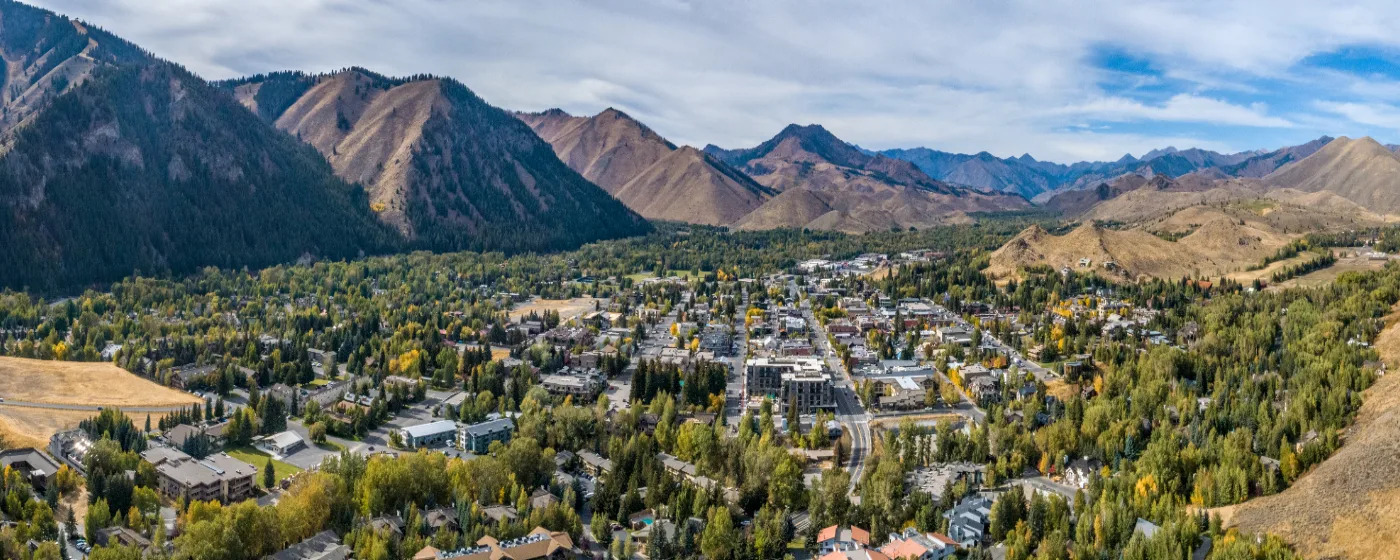
The median age in Ketchum is approximately 54 — meaning this small Wood River Valley town is already running at near-retirement speed. Sit at one of the coffee shops on Fourth Street West, and you're surrounded by people who skied Bald Mountain that morning and have dinner reservations at a well-regarded local restaurant that evening. Ketchum at 5,750 feet elevation isn't a place people drift into accidentally in retirement. It takes deliberate choice, and typically, real money. The Zillow Home Value Index for Ketchum stands at $1,556,144 as of 2026 — entry cost that immediately sorts who this guide is for.
What drives daily life here is the Wood River Valley itself: the trail system threading along the river, Bald Mountain lifting to 9,150 feet above town, and Sun Valley Resort as a cultural and recreational anchor that punches far above Ketchum's population of 3,672. The Sun Valley Museum of Art, the Ore Wagon Museum, the Sawtooth Botanical Garden, and the Ernest Hemingway Memorial aren't decorative additions — they're what give this tiny city the cultural texture of a college town. Retirees who've come from Seattle, the Bay Area, or Denver often say month six feels like arriving somewhere that was built for exactly this chapter of life.
The honest counterweight: Ketchum is remote. Twin Falls is 80 miles south on Highway 75. Boise is nearly 160 miles away. If your retirement plan involves grandchildren visits every weekend or frequent specialist medical appointments, the geography will chafe. But for retirees who want low crime, a tight community, walkable streets, and mountains out every window — with Friedman Memorial Airport (SUN) just 15 minutes away in Hailey offering direct flights to major Western cities — it's a trade-off many find entirely worth making.
Whether you're seriously weighing a move or still in early research mode, this guide covers what retirement in Ketchum actually costs, where the healthcare sits, how daily life works without a car, what downsizing your footprint looks like here, and how the town stacks up against nearby alternatives.
Why Retirees Are Choosing Ketchum
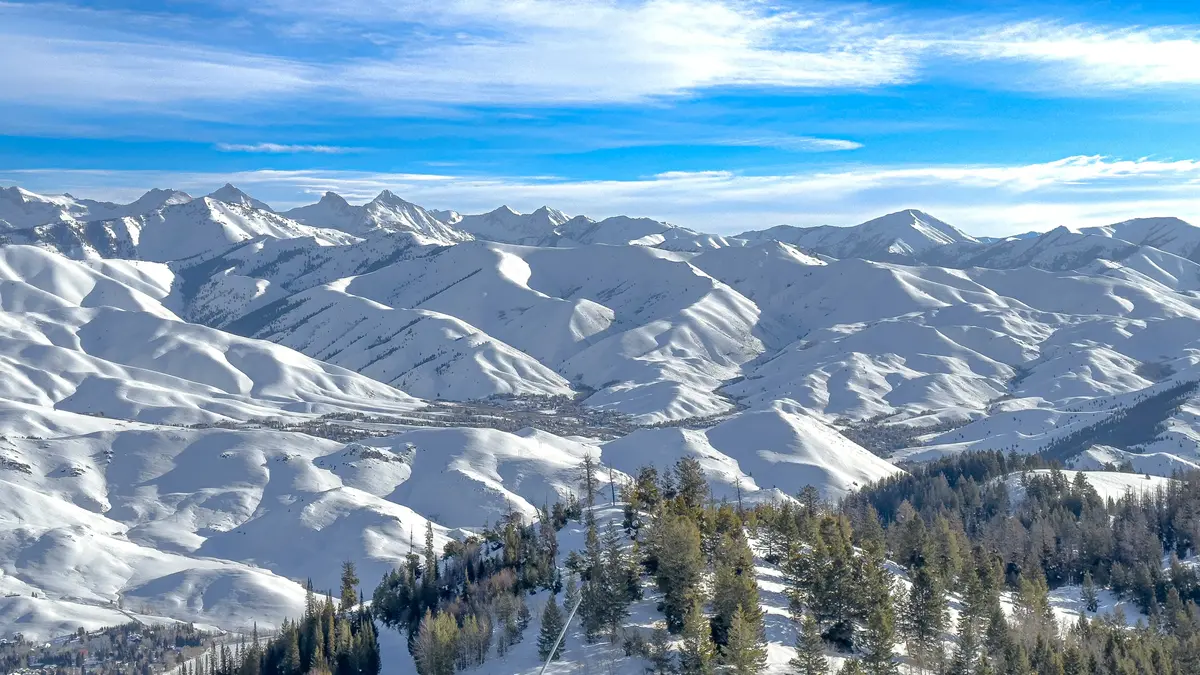
Ketchum works exceptionally well for a specific kind of retiree: someone in their late 50s or 60s, still physically active, who wants a walkable small town with genuine cultural life and doesn't need to squeeze every dollar. The outdoor calendar alone — Nordic skiing on groomed trails at the golf course in winter, fly fishing the Big Wood River in summer, hiking the Adams Gulch trail network in fall — is reason enough for many. The community's median age near 54 means retirees don't feel like outliers; they're the demographic majority.
Who shouldn't move here? Anyone whose retirement budget requires stretching. The housing market is priced at resort levels, and there is no meaningful lower-cost tier to ease entry. Retirees on Social Security alone, or those whose income depends primarily on 401(k) draws without substantial accumulated wealth, will find the housing costs prohibitive regardless of Idaho's favorable tax posture. The same goes for anyone who anticipates needing frequent, specialized medical care: Ketchum has a solid community hospital, but tertiary medical systems are hours away.
The retirees who thrive here tend to arrive with a paid-off property or significant equity from a more expensive market, a genuine love of mountain seasons including real winter, and an appetite for a social life built around trails, arts events, and local institutions rather than urban conveniences. Ketchum rewards that profile generously. For anyone else, Hailey or Bellevue — just down the valley — offer meaningfully lower cost at modest lifestyle sacrifice.
Healthcare & Medical Access in Ketchum
What's On the Ground
For a town of under 4,000 residents, Ketchum's healthcare infrastructure is remarkable. St. Luke's Wood River Medical Center at 100 Hospital Drive in Ketchum operates 24-hour emergency care, inpatient and outpatient surgery, diagnostic imaging, infusion services, intensive care, physical and occupational therapy, and screening mammography — a full-service community hospital, not merely an urgent care clinic. For routine and moderate-acuity medical needs, most retirees will find this adequate without ever leaving the valley.
The Honest Distance Reality
Cardiology, oncology, neurosurgery, and other subspecialty care are a different story. St. Luke's Boise — the nearest major tertiary medical center — is roughly 150 miles south, which in winter conditions on Highway 75 through Shoshone can be a two-and-a-half to three-hour drive. Retirees managing ongoing complex conditions should plan for that reality before buying, not after. St. Luke's Magic Valley in Twin Falls, about 80 miles south, offers broader specialty depth than Wood River and is the more realistic middle-ground destination for cardiology or orthopedic subspecialty appointments.
ADA Transport & Air Access
Mountain Rides — Ketchum's completely fare-free public transit system — operates paratransit ADA service and a Community Health Transportation route to Twin Falls medical facilities at no cost to riders. For retirees who stop driving, this is not a token offering: it's a genuine mobility lifeline to regional specialty care. Friedman Memorial Airport in Hailey also provides access to larger medical centers in Seattle, Salt Lake City, or San Francisco for retirees who need care at a major academic medical system — a meaningful advantage over retirement destinations with no nearby airport.
The overall picture: excellent for primary care and moderate medical needs, realistic planning required for anything requiring subspecialty depth. That gap is smaller than in many remote mountain towns of similar size, but it remains the single most important healthcare variable retirees should stress-test before committing.
The Retiree Budget in Ketchum
Idaho's Tax Posture for Retirees
Idaho fully exempts Social Security benefits from state income tax, regardless of income level — a meaningful structural advantage for retirees whose primary income stream is Social Security. For everyone drawing from IRAs, 401(k)s, or most private pensions, Idaho applies a flat income tax rate of approximately 5.8%. That rate applies to most retirement-account distributions without the partial deductions that some other states extend; only a narrow category of government pensions — primarily CSRS, certain military pay, and Idaho public safety pensions — qualifies for any deduction.
Property Tax: The Surprise Upside
Ketchum's effective property tax rate is approximately 0.36% — well below Idaho's own statewide median and less than half the U.S. median rate. On a high-value property, this matters enormously: the carrying tax burden is proportionally modest even on a seven-figure purchase. Idaho's Circuit Breaker program provides additional relief for homeowners 65 and older with annual income under $39,130, reducing the annual property tax bill by $250 to $1,500. A separate deferral program allows residents 65-plus with income under $60,000 to postpone property tax payments entirely until the home sells or transfers — relevant for asset-rich, income-moderate retirees who bought years ago.
Estate Planning
Idaho levies no estate tax, no inheritance tax, and no gift tax. The federal exemption threshold for 2026 rises to $15 million, meaning essentially no Ketchum retiree estate faces taxation at either level. For retirees with children or grandchildren as heirs, this is a clean inheritance structure.
Daily Cost of Living on a Fixed Income
Groceries and dining carry a resort-market premium that is genuinely noticeable. Expect to pay more for a routine grocery run than in Boise or Twin Falls — the nearest full-scale grocery options and the logistics of mountain supply chains push prices up. A morning coffee at one of the independent cafés along Fourth Street West runs in line with urban café pricing. The full breakdown of day-to-day expenses is covered in detail on the Ketchum cost of living page. The interactive calculator following this section can help you model mortgage carrying costs against your specific down payment and retirement income scenario.
Looking to buy in Ketchum? Estimate your payment.
Enter your numbers to see an estimated monthly mortgage payment.
Estimate only. Excludes HOA fees and mortgage insurance. The interest rate above is a starting point, not a quoted rate — replace it with your own to see real numbers. Insurance is a flat placeholder, not a Ketchum quote.
Walkability, Community & Staying Active in Ketchum
Can You Actually Get Around Without a Car?
Downtown Ketchum is genuinely walkable in a way that surprises people from car-dependent retirement markets. The downtown corridor along Main Street and Fourth Street concentrates groceries, restaurants, galleries, and services within a compact grid. U.S. News data show 5.6% of Ketchum workers commute on foot and 6.2% by bicycle — numbers that would be remarkable for any American small town, let alone one at 5,750 feet with real winters. The terrain is relatively flat through the core neighborhoods; the hills begin in earnest once you head up toward Trail Creek or Adams Gulch.
Mountain Rides: The Retirement Wildcard
Mountain Rides operates its entire bus network — Valley Route, Hailey Route, and Blue Route — completely free of charge, seven days a week, year-round, using zero-emissions electric buses. The system connects Ketchum, Sun Valley, Hailey, and Bellevue. For retirees who are aging out of driving, or who simply prefer not to keep a second car, this is a genuine safety net rather than a symbolic gesture. The Wood River Trail system, which runs paved through the valley, extends the car-free range further still for cyclists and pedestrians.
Community and Culture
The Sun Valley Museum of Art anchors a cultural calendar well out of proportion to Ketchum's size — lectures, film series, gallery exhibitions, and summer festival programming attract nationally recognized artists and speakers. The Sawtooth Botanical Garden near Hailey draws retirees as volunteers and regular visitors through the growing season. The Ore Wagon Museum and the Ernest Hemingway Memorial give the town historical texture that many resort communities lack.
What locals actually do on a given Friday: the Wood River Trail fills with walkers by 7 a.m., the farmers' market runs seasonally in the downtown core, and the arts calendar keeps evenings full in a way that retirees from larger cities consistently find sustaining rather than underwhelming. The community is small enough that you'll know your neighbors within weeks.
Who Struggles Here
Retirees who need a large, organized senior center with daily programming — the model common in Sun Belt retirement cities — will not find that infrastructure in Ketchum. The active-lifestyle culture skews informal: hiking groups, ski clubs, volunteer conservation organizations, and arts committees rather than structured senior activity centers. If your retirement vision is built around that kind of organized senior programming, Hailey has more of it and Twin Falls more still.
Right-Sizing: Downsizing in Ketchum
The Inventory Reality
Downsizing in Ketchum means something different than in most American markets. The housing stock is predominantly single-family homes and mountain condominiums — not the ranch-style patio homes or purpose-built 55-plus communities common in retirement-focused markets. Inventory is chronically thin, and competition from second-home buyers and seasonal visitors is real. If your downsizing plan involves waiting for the right unit to come available, budget both time and flexibility.
Condo Living in the Valley
The most practical downsizing path for many retirees is a condominium near the base of Bald Mountain in the River Run area, or one of the golf-view units adjacent to the Bigwood Golf Course corridor. These properties often feature single-level interiors or elevator access, reduced exterior maintenance, and proximity to the Wood River Trail. The catch is that Ketchum condo prices are not significantly lower than detached homes on a per-square-foot basis — the market doesn't reward downsizing with the discount buyers might expect from other markets.
Single-Level Living
Truly single-level homes with no-step entry are available but not abundant. The Warm Springs and West Ketchum areas include some flatter parcels with more accessible construction. It's worth being explicit with your search criteria about accessibility needs — snow removal, driveway grades, and interior step counts all matter differently at this latitude and elevation than in warmer retirement markets.
The Hulen Meadows Option
Hulen Meadows, north of downtown near the Sawtooth National Recreation Area boundary, offers a quieter, more rural texture than the downtown core or River Run. Some retirees choose it specifically for the sense of space and separation from resort-season traffic. The compromise is slightly greater car dependency for errands and medical appointments. It suits the retiree who wants land and views more than walkable convenience.
What You Won't Find Here
Age-restricted 55-plus communities in the traditional sense — gated, amenity-heavy, purpose-built active-adult developments — do not currently exist in Ketchum proper. Retirees who want that model should look at larger Idaho markets such as Boise or the Treasure Valley. What Ketchum offers instead is a de facto retirement community of the organic kind: a small city where the median resident age is already near 54 and the culture is built around the outdoor and cultural interests that define active retirement, without the formal age-restriction architecture.
Ketchum vs Nearby Retirement Destinations
| City | Cost vs Ketchum | Primary Hospital | Walkability | Senior Living Depth | Overall Retirement Fit |
|---|---|---|---|---|---|
| Ketchum, ID | Benchmark | St. Luke's Wood River Medical Center (on-site ER, surgery, ICU) | Strong downtown core; free Mountain Rides bus | Organic community; no formal 55+ developments | Luxury Nature Best for active, asset-rich retirees |
| Sun Valley, ID | About the same | Same St. Luke's Wood River (minutes away) | Resort-village walkability; less everyday utility | Minimal; resort-focused rather than retirement-focused | Luxury Suits ultra-premium lifestyle; fewer community roots |
| Hailey, ID | Noticeably cheaper | Same St. Luke's Wood River (12 min north) | Compact downtown; more everyday services | Slightly better organized senior programming | Value Families Best value in the Wood River Valley for retirees |
| Bellevue, ID | Significantly cheaper | St. Luke's Wood River (~20 min north) | Limited; car-dependent for most errands | Minimal dedicated senior infrastructure | Value Entry-level Wood River Valley; trade-off on amenities |
| Twin Falls, ID | Dramatically cheaper | St. Luke's Magic Valley (full regional medical center) | Suburban; car-dependent | Multiple senior communities and organized programs | Quiet First-time Best for retirees prioritizing healthcare depth and budget |
| McCall, ID | Noticeably cheaper | McCall Hospital (small critical-access); Boise for specialists | Small walkable core; seasonal crowds | Limited formal options; similar organic retirement culture | Nature Comparable mountain lifestyle at lower entry cost; less cultural depth |
Hailey is the most logical alternative for retirees who want the same Wood River Valley lifestyle — same hospital, same Mountain Rides transit, same trail access — at a meaningfully lower housing cost. The lifestyle gap between Ketchum and Hailey is smaller than the price gap suggests; the primary difference is proximity to downtown Ketchum's restaurants and cultural venues.
Twin Falls wins clearly on healthcare depth and organized senior living, but it's a regional city rather than a mountain resort town, and retirees who chose Ketchum for its character and community will find Twin Falls a poor substitute. McCall offers the closest lifestyle analog at lower cost, but its cultural infrastructure — arts, dining, programming — is considerably thinner, and the nearest major hospital is in Boise. For retirees who prioritize physical activity, community connection, and cultural life alongside low crime and mountain scenery, Ketchum remains the highest-expression option in Idaho — at a price that reflects exactly that.
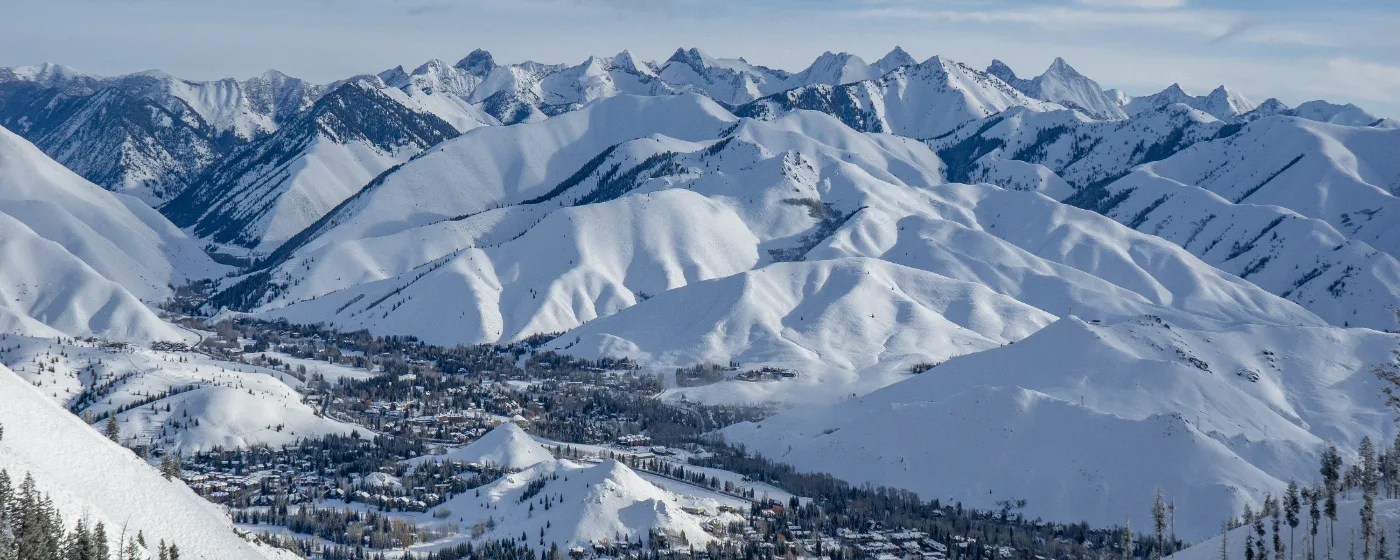
Local Expert Takeaway: Ketchum's retirement appeal is real, but it's specific. The combination of St. Luke's Wood River Medical Center on Hospital Drive, the completely free Mountain Rides bus network, a walkable downtown where you can hit the grocery store and independent cafés on Fourth Street West without a car, and a community median age already near 54 creates a retirement environment that functions better day-to-day than the remote location and small population would suggest. The people who leave — and some do — tend to cite the cost of groceries and services, the isolation from family in winter, or the eventual mismatch between a mountain-terrain lifestyle and reduced mobility. If those variables don't apply to your situation, the case for Ketchum in retirement is genuinely strong.
Quick Takeaways & FAQs
✅ Idaho fully exempts Social Security from state income tax, and Ketchum's effective property tax rate of approximately 0.36% keeps annual carrying costs modest even on a seven-figure home.
⚠️ The nearest subspecialty and tertiary medical care is roughly 80–150 miles away in Twin Falls or Boise — a real planning constraint for retirees managing complex or ongoing health conditions.
📍 Mountain Rides runs a completely fare-free bus network seven days a week connecting Ketchum, Sun Valley, Hailey, and Bellevue — including free ADA paratransit and Community Health Transportation to Twin Falls medical facilities.
Is Ketchum a good place to retire on a fixed income?
Does Idaho tax retirement income?
What hospital serves Ketchum retirees?
Are there 55-plus or active-adult communities in Ketchum?
Can you get around Ketchum without a car in retirement?
Moving to Idaho?
Tell us what you need help with and we'll connect you with local resources.
