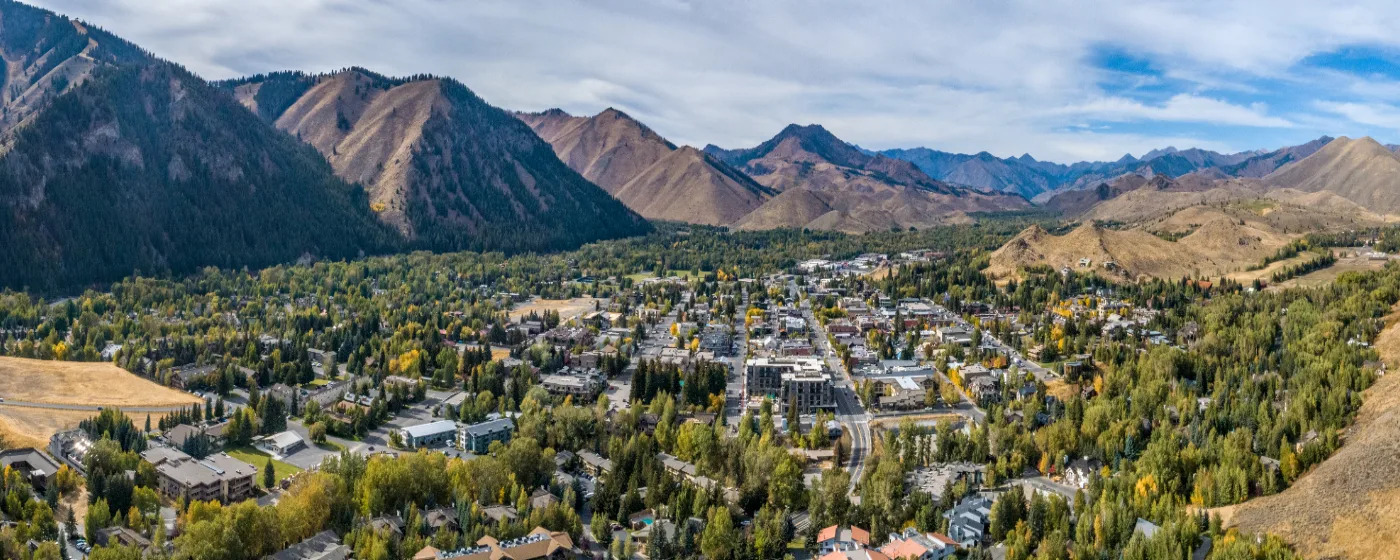
Most people come to Ketchum for one season and end up reorganizing their entire life around staying for all four. That's not an accident — it's what happens when a town of fewer than 4,000 people sits at the base of a 9,150-foot mountain with 220 inches of average annual snowfall, a free 36-mile trail system threading through the valley, and a Forest Service trailhead that puts 33 miles of singletrack within walking distance of downtown. Outdoor recreation here isn't a weekend hobby. It's the reason the town exists in its current form, and it shapes almost everything about daily life, from when locals eat dinner to how they structure their work schedules around powder days.
What separates Ketchum from other mountain towns is the density of access. You don't drive 45 minutes to reach a trailhead. Adams Gulch is minutes from Main Street. The Wood River Trail runs right through town. Bald Mountain's River Run base area is so close that some residents ski to lunch and walk home. Sun Valley Resort — the employer anchoring much of the local economy — opened the country's first chairlift in 1936, and the infrastructure built around that legacy means the recreation amenities here are genuinely world-class, not aspirationally so. The Blaine County Recreation District manages trail systems, winter grooming, and river access points that most similarly sized towns could never fund.
Outdoor recreation here runs year-round in a way that surprises people who picture Idaho as purely a winter destination. The same mountain that draws expert skiers in February becomes a lift-accessed mountain biking venue by July. The Wood River Trail transitions from a cycling commuter route in summer to a groomed cross-country ski corridor in winter. The Big Wood River, accessible at multiple points along that trail, draws fly fishers from May through October. And the Sawtooth Botanical Garden — a five-acre high-altitude garden off Highway 75 — offers a quieter, slower way to experience the landscape that even longtime residents sometimes overlook.
Whether you're considering a move to Ketchum or already have a contract pending, the sections below break down the Wood River Trail system, Bald Mountain's four-season calendar, the Adams Gulch trail network, and the smaller parks and gardens that round out daily outdoor life here.
The Wood River Trail: Ketchum's Everyday Outdoor Infrastructure
The Wood River Trail is the closest thing Ketchum has to a public utility. It's free, paved, open year-round, and connects this town to Sun Valley, Hailey, and Bellevue across a full system of 36.1 miles — including the northern loop and spurs maintained by the Blaine County Recreation District.
The core multi-use path runs more than 20 miles through the valley floor, following the Big Wood River corridor. In summer, you'll find road cyclists, trail runners, dog walkers, and commuters sharing the path from early morning through dusk. In winter, the BCRD grooms sections for cross-country skiing and snowshoeing, which means the trail's utility doesn't drop off when the temperature does — it just changes character.
What the Trail Actually Connects
The northern segment runs through Sun Valley and loops back toward River Run, Bald Mountain's base area. The southern segments push down through Hailey and toward Bellevue, making it genuinely possible to commute by bike from Hailey to Ketchum without touching Highway 75. That's not a small thing in a valley where the highway can back up during ski season.
The trail also doubles as fishing access infrastructure. The BCRD maintains designated fishing access points along the Big Wood River corridor within the trail system — a detail most people miss until their second summer here. If fly fishing is part of why you're considering this area, the trail is your map to the river.
The Garden Stop Most Cyclists Skip
The Sawtooth Botanical Garden sits directly on the Wood River Trail at 11 Gimlet Road, just off Highway 75. Most cyclists roll past it without stopping, which is genuinely their loss. The five-acre nonprofit garden, founded in 1994, represents south-central Idaho's full range of high-altitude biomes across five themed areas: Sagebrush Steppe, Lava Rock, Alpine, Montane, and Riparian gardens, plus a stream-side section, a xeriscape garden, and a 1,550-square-foot greenhouse.
The grounds are open dawn to dusk every day of the year at no charge. The visitor center runs Memorial Day weekend through the first Sunday in October, Monday through Saturday, 9 am to 5 pm. One corner of the garden — the Garden of Infinite Compassion — was blessed by the 14th Dalai Lama during a 2005 visit, which is either a trivia fact or a meaningful detail depending on your disposition.
| Trail Segment / Feature | Distance / Detail | Season | Best For |
|---|---|---|---|
| Full Wood River Trail system | 36.1 miles total | Year-round | Nature Commuter |
| Core paved multi-use path | 20+ miles | Year-round | Walkable |
| Winter groomed sections | Selected corridors | Dec–Mar | Nature |
| Big Wood River fishing access | Multiple BCRD sites | May–Oct | Nature |
| Ketchum–Hailey bike commute | ~12 mi one-way | Apr–Nov | Commuter |
| Sawtooth Botanical Garden access | 11 Gimlet Rd, on-trail | Year-round (grounds) | Families Nature |
The trail's real value isn't any single segment — it's that it removes the car from a significant portion of daily life in the Wood River Valley, something few mountain towns of this size can claim.
Bald Mountain: Four Seasons on a 9,150-Foot Backyard
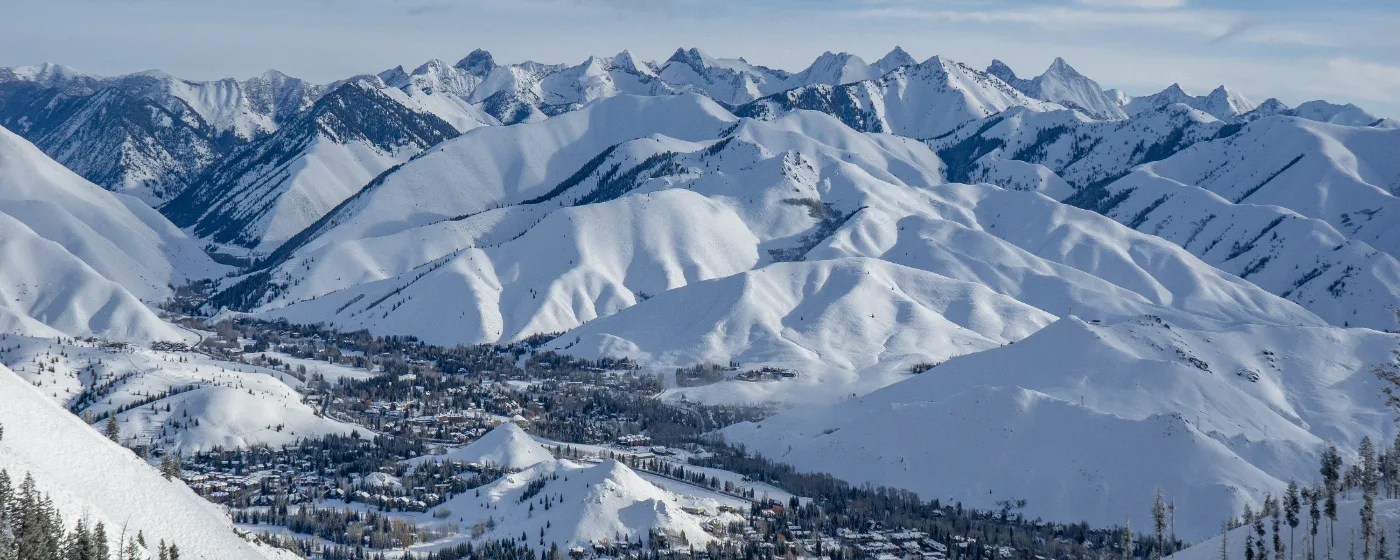
Locals call it Baldy, and they talk about it the way people in other places talk about the weather — constantly, specifically, with strong opinions. Bald Mountain at Sun Valley Resort tops out at 9,150 feet with a 3,400-foot continuous vertical drop, which puts it among the largest uninterrupted vertical drops at any ski resort in the country.
The mountain first opened for lift-served skiing in 1939–40, three years after Sun Valley installed what was then the first chairlift in the United States. That history matters less than the skiing itself, but it does explain why the lift infrastructure here is so mature — 15 lifts serving 2,054 skiable acres with an average annual snowfall of 220 inches.
Reading the Terrain Distribution
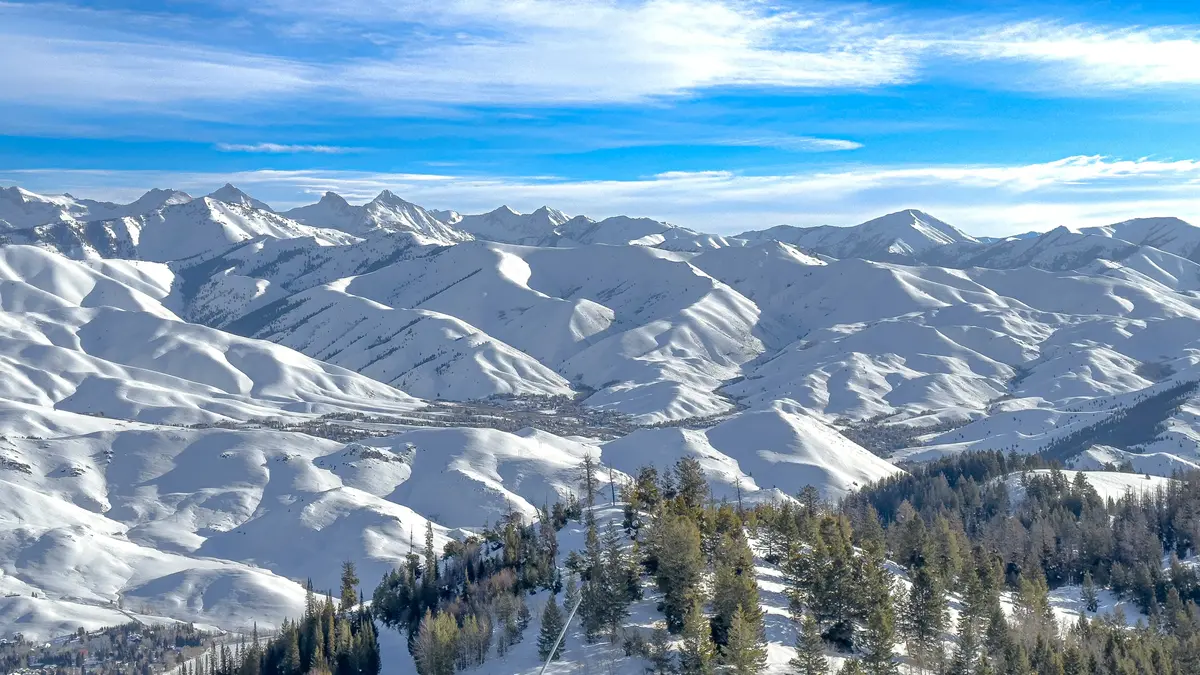
Of the 75 named trails on Baldy, 36% are rated easiest, 42% more difficult, and 22% most difficult. That breakdown tells you something important: this is not primarily a beginner mountain. The upper mountain terrain favors confident intermediates and above, and the expert runs — particularly on the north-facing Warm Springs side — are genuinely challenging. Beginners are better served starting on Dollar Mountain, the smaller peak operated by Sun Valley Resort on the opposite side of town.
After six months here, most new residents hit the same realization: the season runs longer than they expected. Baldy typically opens in late November and runs into mid-April, and in strong snow years the top elevations hold skiable conditions well past that. Missing a powder day because of a meeting becomes a real source of local anguish.
The Summer Mountain That Surprises Everyone
The transition to warm-weather recreation is more complete than at most comparable resorts. By July, Bald Mountain runs lifts for mountain biking with approximately 3,000 vertical feet of descent — the kind of lift-accessed riding that draws dedicated mountain bikers from across the region. The River Run base area hosts outdoor concerts during summer, turning the space at the foot of the mountain into a live music venue on warm evenings.
| Mountain Spec | Detail |
|---|---|
| Summit elevation | 9,150 ft |
| Vertical drop | 3,400 ft (continuous) |
| Skiable acres | 2,054 |
| Named trails | 75 |
| Terrain mix | 36% easiest / 42% more difficult / 22% most difficult |
| Lifts | 15 |
| Average annual snowfall | 220 inches |
| Summer mountain biking descent | ~3,000 vertical ft, lift-accessed |
| Historic distinction | First U.S. chairlift installed 1936; Baldy opened 1939–40 |
If you're buying in Ketchum primarily because of skiing, understand that proximity to Baldy isn't evenly distributed across neighborhoods. The River Run and Warm Springs areas sit closest to the two main base areas — a detail worth factoring into your search. For a fuller breakdown, see the Ketchum neighborhoods guide.
Adams Gulch: The Trailhead That Starts at Your Doorstep
Adams Gulch is the reason people move to Ketchum specifically rather than a comparable mountain town with better highway access. The most popular trailhead on the entire Ketchum Ranger District of the Sawtooth National Forest sits just outside downtown — close enough that trail runners leave from their front doors, log 6 miles in the hills, and make it back for coffee at a café on 4th St W before 8 am.
The USDA Forest Service trail system here covers roughly 15 named trails across 33 miles, ranging from mellow valley-floor loops to sustained climbs with technical sections that challenge experienced mountain bikers and trail runners. Motorized vehicles are prohibited throughout, with the narrow exception of Old Adams Gulch Road and Eve's Gulch — which means the trails stay quiet and the wildlife encounters are frequent.
Calibrating Your First Visit
The flexibility of Adams Gulch is its underrated strength. A 1.5-mile loop works for families with young kids or anyone easing into altitude. An 8-mile route with significant elevation gain is a legitimate workout for fit hikers. Most locals settle into a handful of preferred loops and run them obsessively through the season — the kind of trail familiarity that comes only from living somewhere, not visiting it.
Late May through early July brings the wildflower bloom that makes the lower trails genuinely striking — lupine and arrowleaf balsamroot cover the open slopes in patterns that photograph well but are better experienced in person, at elevation, with no one else around. By mid-July, the crowds thin as visitors head back to Baldy's summer bike park, which means locals reclaim the gulch for the best hiking weeks of the year.
What You Give Up
Adams Gulch trails are not groomed in winter. Once snow arrives, access depends on conditions, and the trails transition to a more informal backcountry feel. Skiers who prefer structured groomed outings gravitate toward the Wood River Trail system's groomed corridors for winter use. Adams Gulch in winter rewards people comfortable making their own way — those who aren't will find the groomed alternatives more satisfying from December through March.
Parking at the main Adams Gulch trailhead can get competitive on weekends during peak season, particularly on summer mornings. The practical solution most locals adopt: start before 7:30 am or go on a weekday. The trails themselves thin out quickly once you're a mile in, regardless of how full the lot looked.
Best for: Trail runners, mountain bikers, wildflower hikers, and anyone who wants serious singletrack within a short distance of downtown Ketchum.Looking to buy in Ketchum? Estimate your payment.
Enter your numbers to see an estimated monthly mortgage payment.
Estimate only. Excludes HOA fees and mortgage insurance. The interest rate above is a starting point, not a quoted rate — replace it with your own to see real numbers. Insurance is a flat placeholder, not a Ketchum quote.
Seasonal Recreation Beyond the Signature Spots
Ketchum's outdoor calendar has a rhythm that takes one full year to internalize. Most people moving here understand the winter story before they arrive. Fewer grasp how completely the town pivots in the shoulder seasons — and how much quieter, and in some ways better, those months are for people who actually live here rather than visit.
Spring: The Weeks Nobody Talks About
Late April through early June is mud season, which locals discuss with a mixture of resignation and affection. Trail conditions in Adams Gulch can be poor, the Wood River runs high with snowmelt, and the resort has typically closed for the season. But the Big Wood River corridor along the trail system comes alive for fly fishing, and the Sawtooth Botanical Garden's grounds reopen to visitors eager to see what survived the winter. It's the season that filters out the people who moved here only for skiing.
Summer: The Underrated Season
By July, Ketchum runs two parallel outdoor programs simultaneously. The mountain biking crowd takes Baldy's lifts for gravity-fed descents while hikers and trail runners fill Adams Gulch in the mornings. Evening outdoor concerts at the River Run base area draw a mix of locals and summer visitors. The Wood River Trail becomes a true commuter corridor — people cycling between Ketchum and Hailey without touching the highway.
Youth sports programs through the Blaine County Recreation District use the valley's parks and fields through the summer months. For specifics on youth programming and school-tied activities, the Ketchum schools page has the full breakdown.
Fall and Winter: The Core Seasons
September and October are, by consensus among longtime residents, the best months to be in Ketchum. The summer visitors have thinned, the aspen groves above town turn yellow against the sagebrush slopes, and Adams Gulch trails are in their best condition of the year — dry, firm, and uncrowded. This is when people who live here actually feel like they have the place to themselves.
Winter pivots everything back toward Baldy and the groomed Wood River Trail system. Cross-country skiing on the groomed trail corridor, snowshoeing through the valley, and the structured rhythm of ski-town life take over from roughly Thanksgiving through mid-April. After a powder night, the bar at Pioneer Saloon on Main St N fills early with people comparing run counts — the specific social ritual that signals you've crossed from visitor to local.
| Season | Primary Recreation | Local Favorite Spot | Crowd Level |
|---|---|---|---|
| Late Nov – mid-Apr | Alpine skiing, Nordic skiing, snowshoeing | Bald Mountain / Wood River Trail groomed sections | High (ski season) |
| Late Apr – Jun | Fly fishing, early hiking, botanical garden | Big Wood River access points, Sawtooth Botanical Garden | Low |
| Jul – Aug | Mountain biking, hiking, trail running, concerts | Adams Gulch, River Run base area | Moderate–High |
| Sep – Oct | Hiking, trail running, cycling | Adams Gulch, Wood River Trail | Low (best kept secret) |
The honest trade-off is this: Ketchum's recreation calendar is extraordinary, but it is inseparable from the resort town infrastructure that makes it possible — which means peak-season crowds, pricing, and the occasional sense that the town is performing itself for an audience. The people who thrive here long-term are the ones who learn to live in the shoulder seasons as fluently as the peak ones.
Local Expert Takeaway: The thing most newcomers don't anticipate: you will restructure your daily schedule around recreation within three months of moving here. Not because anyone pressures you to, but because Adams Gulch is ten minutes from downtown, the Wood River Trail runs past your grocery run, and missing a bluebird powder day on Baldy starts to feel like a genuine error in judgment. The outdoor infrastructure in Ketchum isn't an amenity list — it's the operating system the town runs on. Build your calendar around it from day one.
Quick Takeaways & FAQs
✅ The Wood River Trail system totals 36.1 miles of free, year-round paved path connecting Ketchum to Sun Valley, Hailey, and Bellevue — groomed for Nordic skiing in winter.
⚠️ Bald Mountain's 3,400-foot vertical drop and resort-town pricing make Ketchum one of the most expensive places in Idaho to access lift-served skiing regularly.
📍 Adams Gulch trailhead, the most-used in the Ketchum Ranger District, sits minutes from downtown — 33 miles of non-motorized trails starting practically at the edge of the neighborhood grid.
Is the Wood River Trail free to use?
Can beginners ski Bald Mountain at Sun Valley Resort?
How close is Adams Gulch to downtown Ketchum?
Is outdoor recreation in Ketchum truly year-round, or is it really just a ski town?
What is the Sawtooth Botanical Garden and is it worth visiting?
Moving to Idaho?
Tell us what you need help with and we'll connect you with local resources.
