
Maybe you've been watching your California property tax bill climb on a home that costs four times what the same square footage would run in South Central Washington. Maybe your employer went remote and suddenly the Yakima Valley — semi-arid, agricultural, genuinely affordable — entered the conversation. Whatever brought Sunnyside onto your radar, the first thing Californians consistently say after six months here is some version of: I didn't realize how much of my paycheck I was handing to Sacramento. Sunnyside sits along the Yakima Valley Highway about 35 minutes southeast of Yakima, surrounded by hop yards and vineyards, with Interstate 82 connecting it north toward Ellensburg and south into the Tri-Cities. Daily life here runs at a fundamentally different pace than anything coastal California produces.
The city of roughly 16,317 anchors the southern end of Yakima County — the second-most populous city in the county — and its economic backbone is agricultural in a way that shapes both the landscape and the community. Darigold's dairy processing plant is among the largest employers. The Sunnyside School District employs a significant portion of residents. And Yakima Valley's hop and wine operations define the seasonal rhythm of the region in ways that tourists notice and residents live inside. This is not a suburb of somewhere larger; it is its own working city, and the people who thrive here tend to prefer that.
On cost, Sunnyside is hard to argue with. The city's overall cost of living index sits at 96 against a national average of 100 — placing it among the four least expensive cities in Washington state out of 192 measured. Housing costs run roughly 14.6% below the national average. For a full breakdown of utilities, groceries, and day-to-day expenses, see the Sunnyside cost of living page. Health insurance premiums run noticeably below what most Californians were paying, though you will drive farther for specialist care than you would have in a major metro.
Whether you're in the early research phase or actively comparing neighborhoods and tax scenarios, the sections below break down Sunnyside's price and tax picture against California, what the cultural adjustment actually looks like, the seasonal realities no one warned you about, and the honest trade-offs that every California transplant eventually confronts.
The Home Price Reality: California vs. Sunnyside
The number that stops most Californians mid-scroll: Sunnyside's typical home price is $298,958 (Zillow Home Value Index, 2026). California's statewide median sits at approximately $785,000. That gap is not a rounding error — it represents a structurally different housing market, not just a cheaper version of what you left.
What That Gap Actually Buys You
In coastal California, $298,958 is a down payment. In Sunnyside, it is a three-bedroom house with a yard, often with a two-car garage, on a street where neighbors know each other's names. Buyers coming from Sacramento, Fresno, or the Inland Empire tend to absorb this faster than those arriving from the Bay Area or Los Angeles, but even Central Valley transplants report a genuine moment of recalibration when they see what the same monthly outlay actually purchases here.
For a neighborhood-by-neighborhood breakdown of what different areas offer at various price points, see the best neighborhoods in Sunnyside page.
Property Tax: The Counterintuitive Math
Sunnyside's effective property tax rate is 0.82%. California's effective rate runs approximately 0.76% statewide — so the rates are actually close. What differs enormously is the base they apply to. On a $785,000 California home, even 0.76% produces a substantial annual bill. On a $298,958 Sunnyside home at 0.82%, the annual dollar amount is dramatically smaller — that math is straightforward even before you factor in Proposition 13 protections that many California long-term owners carry. If you're selling a California home and buying in Sunnyside, there is a real possibility you eliminate your mortgage entirely and own the replacement property outright.
| Metric | California (Statewide) | Sunnyside, WA |
|---|---|---|
| Typical / Median Home Price | ~$785,000 | $298,958 (ZHVI, 2026) |
| Effective Property Tax Rate | ~0.76% | 0.82% |
| State Income Tax (wages) | Up to 13.3% | $0 (no income tax on wages) |
| Combined Sales Tax | 7.25% base + local (often 9–10.25%) | 8.4% (as of Jan 2026) |
| Capital Gains Tax | Up to 13.3% (taxed as income) | 7% excise on gains above ~$278,000 |
| Cost of Living Index | Above national average | 96 (national avg = 100) |
* ZHVI = Zillow Home Value Index.
The one area where Sunnyside doesn't beat California outright is sales tax. Sunnyside's combined rate is 8.4% as of January 2026. California's base is 7.25%, but most California cities layer on local add-ons that push totals above Sunnyside's — so for most transplants, the final sales tax experience is comparable or slightly better here.
The Income Tax Difference: What Washington Actually Saves You
Washington levies no state income tax on wages for households earning under $1 million. For anyone who spent years watching California take a progressive bite out of every paycheck, this takes some time to feel real.
The $100,000 Earner Scenario
A household earning $100,000 in California faces a meaningful state tax bill under California's progressive structure — one comparison puts the savings at approximately $5,762 per year for that income level when moving to Washington. Across a decade, that is real money, not a marginal rounding difference. Compounded with the housing price gap, many Californians find their net financial position shifts substantially within the first two to three years of making the move.
What Changes in 2028 — and Who It Affects
Washington did sign new income tax legislation (ESSB 6346, March 2026) that takes effect January 1, 2028. It imposes a 9.9% tax on household income above $1 million. For the overwhelming majority of people relocating to Sunnyside, this is irrelevant — the $0 income tax on wages below that threshold remains accurate for current planning purposes. If your household clears seven figures, talk to a tax advisor about how Washington's evolving structure affects your specific situation.
Capital Gains: A Real Difference for Home Sellers
If you're selling a California home with significant appreciation before you move, pay attention here. California taxes capital gains as ordinary income — up to 13.3% at the top rate. Washington applies a 7% excise tax on long-term capital gains, but only on amounts above approximately $278,000 (2025 indexed threshold). For many sellers liquidating a long-held California property, the difference in how those gains are taxed is one of the more consequential numbers in the entire move calculation. This is worth a conversation with a CPA before you close escrow on the California side.
California's top marginal state income tax rate of 13.3% is the highest in the nation — a distinction that Washington does not share in any comparable form for wage earners. That asymmetry is the single largest financial shift most California transplants experience in year one.
The Lifestyle Adjustment: What Californians Don't See Coming
The financial case for this move assembles itself quickly. The cultural adjustment takes longer, and it's worth being honest about what that involves.
The Climate Is Not What You're Used To
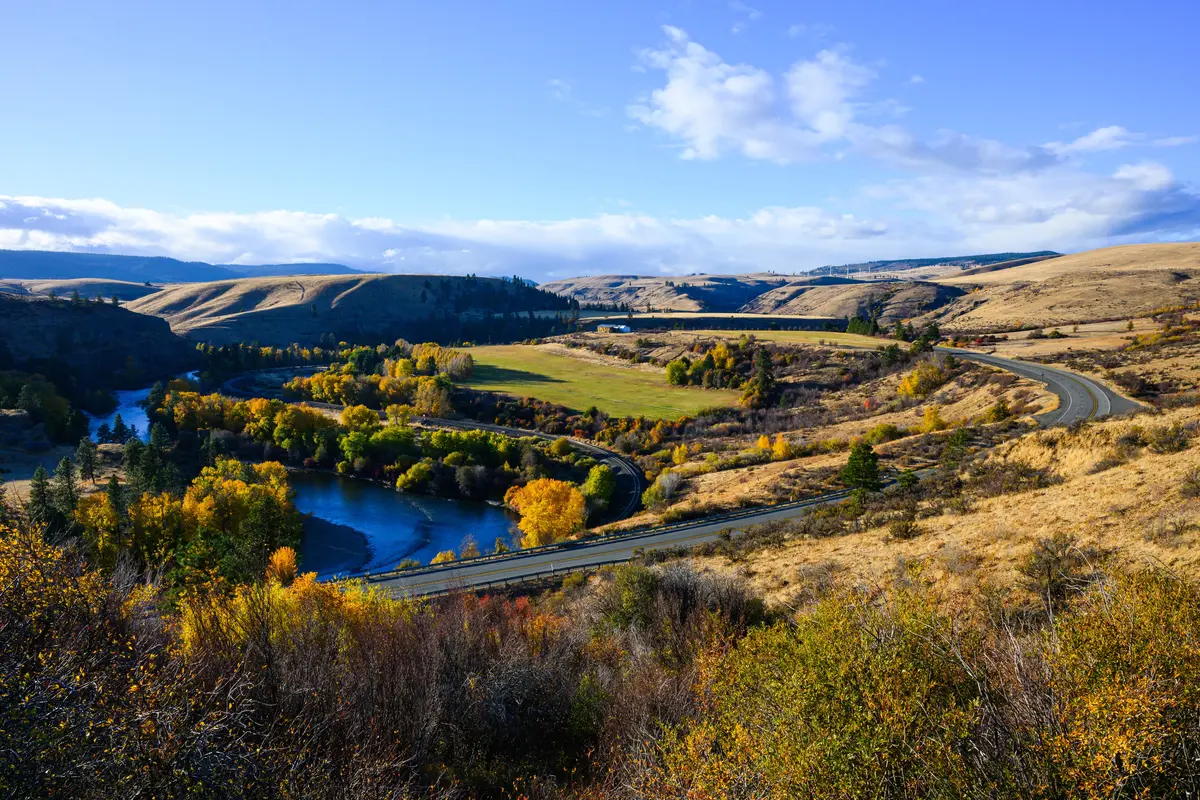
Sunnyside's climate is semi-arid in a way that surprises people who picture the Pacific Northwest as perpetually green and rainy. Average annual precipitation runs about 7 inches — roughly the same as Los Angeles. Average snowfall sits around 8.8 inches. Summers are warm and dry, with average highs in the mid-60s annually (the July average runs considerably warmer). If you're coming from San Diego or the Bay Area's marine layer, the lack of humidity and the flat, open horizon will feel stark at first. Most people who stay come to love it. Some genuinely miss the coast and find that love never quite arrives — that is an honest reason people move back.
What You Won't Find — and What's Actually Here
There is no Trader Joe's in Sunnyside. The nearest is a drive toward the Yakima or Tri-Cities area. That fact, trivial on paper, signals something real about daily commerce: you adapt your shopping habits or you make longer runs less frequently. What Sunnyside does have is genuine agricultural abundance — local farm stands, a hop and wine culture that produces quality you can access without a tourism premium, and a food scene built around the community rather than trend cycles. A brewpub along the Yakima Valley Highway draws locals for meals made with regional ingredients, and a café-bistro format on the north side of town carries a regular crowd that returns by habit rather than novelty. These are not consolation prizes for what the city lacks — they are the actual texture of life here.
Where People Actually Gather
South Hill Park and Sunnyview Park are where families with kids cluster on weekend mornings, not a curated downtown plaza. The high school sports calendar — WIAA athletics — functions as genuine community theater in the best sense: people show up, people know the players, and Friday nights have a specific social gravity that has no equivalent in a California suburb of comparable size. Newcomers who plug into that rhythm find community faster than those who keep looking for the kind of social infrastructure they had in California.
The morning espresso-stand culture that Californians instinctively look for exists here in a low-key, drive-through format. An established local bakery carries the kind of early-morning regulars that signal a place people have trusted for years. Neither is a third-wave coffee experience — both are places where people actually live their mornings.
Looking to buy in Sunnyside? Estimate your payment.
Enter your numbers to see an estimated monthly mortgage payment.
Estimate only. Excludes HOA fees and mortgage insurance. The interest rate above is a starting point, not a quoted rate — replace it with your own to see real numbers. Insurance is a flat placeholder, not a Sunnyside quote.
What the Move Actually Costs — and Where the Savings Show Up
Californians arriving in Sunnyside typically experience three distinct phases of financial recalibration: the initial shock of low home prices, the slower realization of what no state income tax does to monthly cash flow, and — around month six — the moment they notice how much their grocery and utilities bills have changed.
The Broader Cost Picture
Sunnyside's cost of living index of 96 (national average = 100) places it among the most affordable cities in Washington state. It runs noticeably below the average for Washington state cities — meaning it is meaningfully cheaper not just compared to California but compared to Seattle, Bellevue, or Olympia. The full breakdown of utilities, transportation, and grocery costs lives on the cost of living page, but the short version is: most California transplants find their monthly expenses drop across nearly every category except the occasional long drive to access services they took for granted.
The Trade-Off That Catches People Off Guard
Services thin out as you get farther from Yakima. Specialists in medicine, niche retail, professional services — the density of options a major California metro produces disappears. Most routine needs are met locally. When they're not, the nearest larger city is a 35-minute drive to Yakima, and the Tri-Cities are reachable for a broader range of options. That drive is just part of the calculus, and people who underestimate it in the research phase tend to be the ones who find the adjustment harder than expected.
Schools: Set Expectations Accurately
The Sunnyside School District carries a C rating — not a strength of the city, and worth understanding clearly before you commit if schools are a primary driver of your decision. A fuller picture of the district's specific programs, boundaries, and what parents actually report is on the Sunnyside schools page. Some California families for whom school district quality is non-negotiable choose to look at neighboring communities in the broader Yakima Valley instead.
| Category | California (General) | Sunnyside, WA | Direction of Change |
|---|---|---|---|
| Typical Home Price | ~$785,000 | $298,958 | Dramatically lower |
| State Income Tax | Up to 13.3% | $0 on wages | Major savings |
| Property Tax Rate | ~0.76% | 0.82% | Comparable; dollar bill much lower |
| Sales Tax | 7.25%+ local (often 9–10.25%) | 8.4% | Comparable or slightly better |
| Cost of Living Index | Well above 100 | 96 | Lower |
| Specialist / Advanced Care Access | Dense metro access | Drive to Yakima or beyond | Reduced access |
| School District Rating | Varies widely | C rating | Below average |
Who Thrives Here — and the Honest Reasons People Leave
Not everyone who moves from California to Sunnyside stays. Knowing why people leave is at least as useful as knowing why they come.
Who Tends to Make It Work
The people who put down roots in Sunnyside generally share a few things: they have a reason to be in the Yakima Valley specifically — a job at Darigold or with an agricultural operation, a family connection, a deliberate choice to be somewhere smaller — and they are not expecting the city to approximate the California life at lower cost. The ones who arrive treating Sunnyside as a cheaper version of where they came from tend to find the gaps more irritating than the savings are satisfying. Those who arrive treating it as a genuinely different kind of place — with different rhythms, a different social fabric, and different rewards — report the adjustment as harder than expected but ultimately worth it.
Remote Workers: The Specific Calculation
Sunnyside has seen its share of remote workers arriving from California. The financial math is compelling: no income tax, a home price a fraction of what they sold in Sacramento or San Jose, and a pace of life that pairs well with a home office. The friction points are reliable internet access in some outlying areas and the eventual reality that the nearest airport with consistent regional flight options requires a drive. For people whose work is genuinely location-independent and who are not tied to frequent business travel, these are manageable. For those who need to be in a California city quarterly, the logistics add up.
The Real Reasons People Move Back
The most common honest answer from people who returned to California: they missed the coastal access, the density of cultural and entertainment options, and — especially if they had teenagers — a school environment they felt better about. A smaller percentage simply found that the financial savings did not compensate for the social isolation of being far from the networks they had built over decades in California. These are legitimate reasons. The move to Sunnyside is not right for everyone, and the people who are clearest about that tend to make better decisions on both sides of the move.
For a fuller picture of who the city suits across different life stages, the living in Sunnyside page covers the buyer and renter types who tend to find the best fit here — including the commute dynamics for those working in Yakima and the employment landscape more broadly.
Local Expert Takeaway: The financial case for leaving California and landing in Sunnyside is genuinely strong — and it's most durable for people who want to own a home outright, eliminate state income tax on wages, and live inside the agricultural rhythm of the Yakima Valley rather than alongside it. Spending an evening at a local brewpub on the Yakima Valley Highway or a weekend morning at a neighborhood bakery gives you the clearest read on whether the texture of this city matches what you're actually looking for. The ones who do the homework on schools, drive times, and service access before they arrive — rather than after — are the ones who tend to stay.
Quick Takeaways & FAQs
✅ Washington's zero income tax on wages saves a household earning $100,000 an estimated $5,762 per year compared with California — one of the largest single financial shifts in the move.
⚠️ Sunnyside's school district carries a C rating, and families for whom school quality is the top priority should research the district carefully before committing.
📍 Sunnyside gets roughly 7 inches of rain per year — drier than Los Angeles — so the 'rainy Washington' expectation needs a reset before you arrive.
How much cheaper are homes in Sunnyside compared to California?
Does Washington state really have no income tax?
Is sales tax higher in Sunnyside than California?
What's the weather like in Sunnyside compared to California?
What do California transplants say they wish they'd known before moving to Sunnyside?
Moving to Washington?
Tell us what you need help with and we'll connect you with local resources.
