Maybe you've been priced out of West Seattle or Burien and someone mentioned SeaTac. Maybe you're taking a job with Alaska Airlines or the Port of Seattle and need a 15-minute commute to the airport campus. Either way, the first thing you need to understand about SeaTac is the divide that shapes almost every buying decision: International Boulevard — the commercial spine running north-to-south through the city — separates the airport-adjacent activity zone to the east from the quieter, more residential neighborhoods climbing the hill to the west. Where you land on that divide determines your noise exposure, your walkability, and frankly, your day-to-day quality of life.
SeaTac's economy orbits Seattle-Tacoma International Airport more directly than almost any other city in the region. Alaska Airlines is headquartered here; Swissport International handles ground operations; FedEx Freight runs logistics from the industrial perimeter. That concentration of shift-based, 24-hour employment shapes the community in real ways — this is a working city, not a bedroom suburb, with a median household income of $81,104 and a housing stock that skews toward modest mid-century ranch homes rather than new construction. Highline Public Schools serves the whole city and carries a C+ district rating, so school-boundary awareness matters before you make an offer; see the full breakdown on the SeaTac schools page.
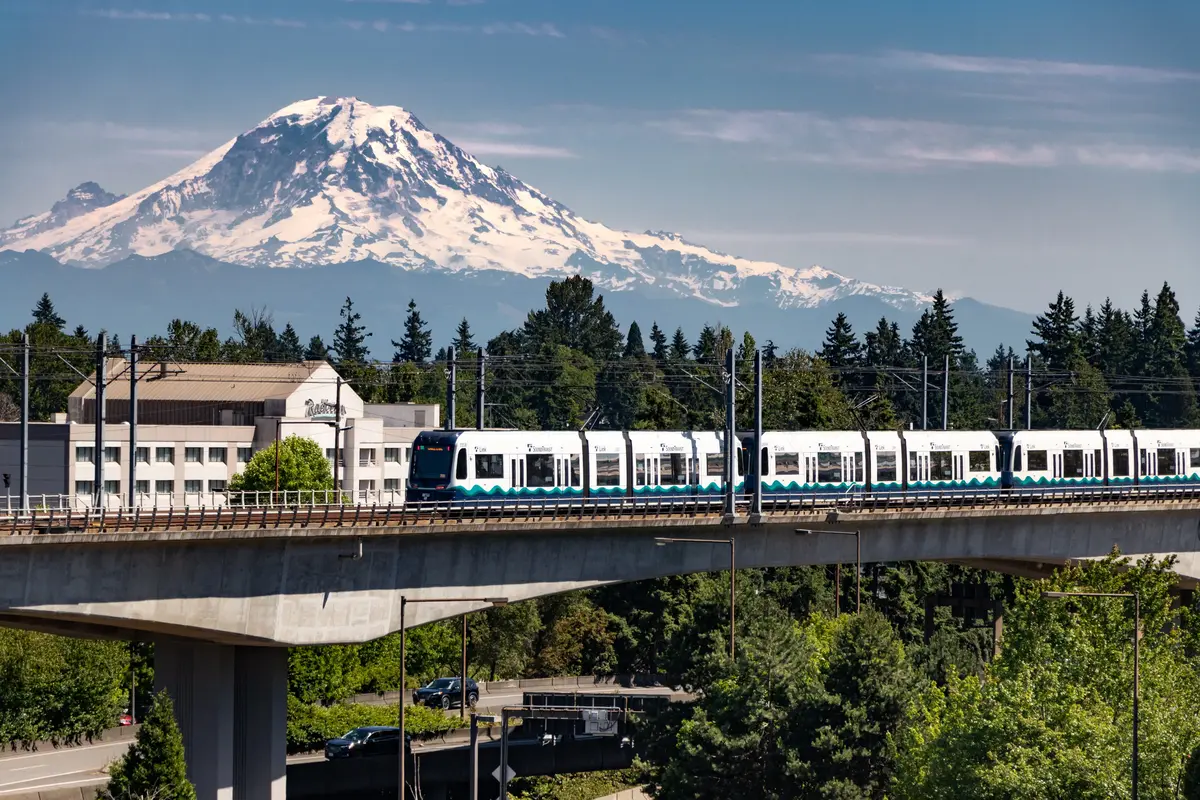
The citywide typical home value sits at $524,875 (Zillow Home Value Index, 2026) — noticeably below what you'd pay in Normandy Park or Des Moines to the south, and significantly below Seattle proper. That relative affordability is the headline, but it comes with real trade-offs: jet noise is a genuine daily presence across most of the city, and the International Boulevard corridor still has more work to do before it delivers the walkable, transit-oriented feel the city is actively planning toward. Two Sound Transit light rail stations — SeaTac/Airport and Angle Lake — give the city transit access that most King County cities at this price point simply can't match, with roughly 10,000 daily boardings at the airport station alone.
Whether you're weighing a purchase or sizing up the rental market, the sections below break down SeaTac's seven neighborhoods by price, character, buyer type, and honest trade-offs — plus the mistakes buyers consistently make when they treat this city as one uniform market.
The SeaTac Reality
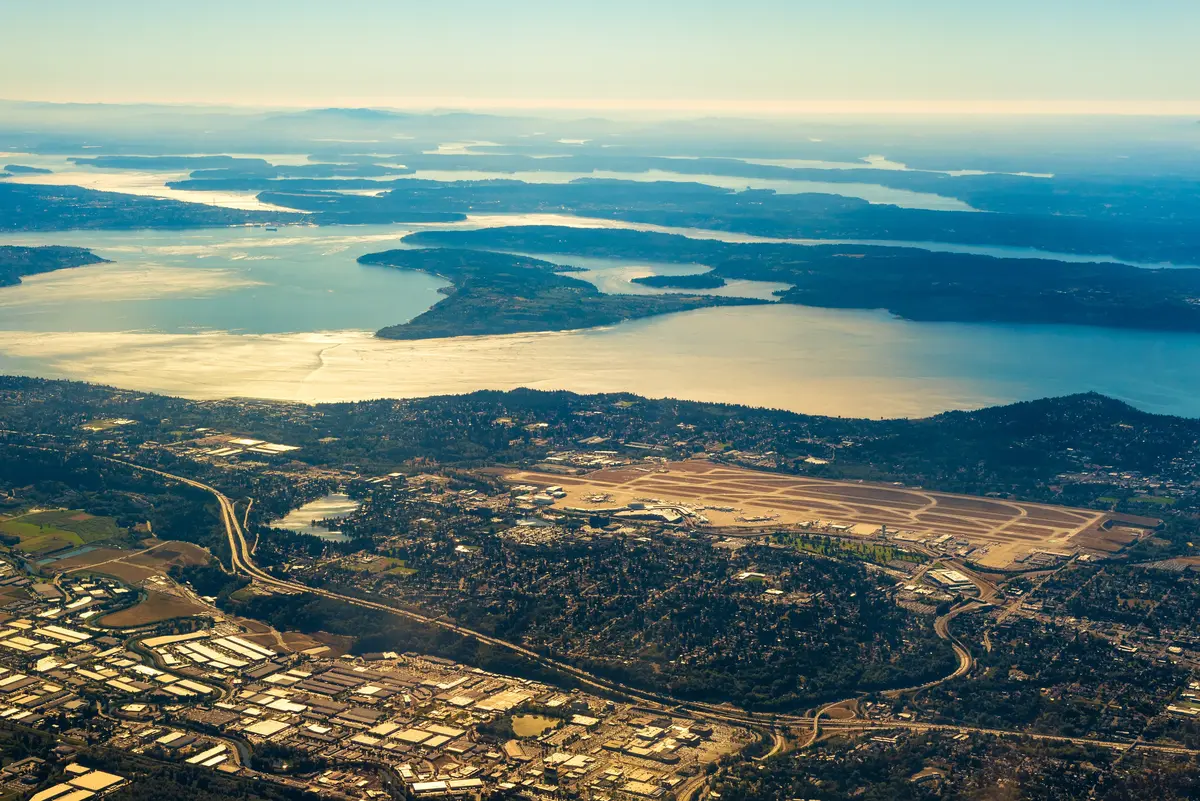
The single most important thing to understand before buying in SeaTac: the flight-path overlay and International Boulevard together create a city of genuinely distinct micro-environments, not one uniform neighborhood market. The airport's runways run roughly north-to-south on the city's eastern edge, and the departure and arrival corridors push noise westward in a pattern that is loudest close to International Blvd and measurably quieter as you move up the ridge toward 24th Avenue South and Military Road South. Buying without understanding where your specific address falls in that gradient is the most common mistake relocating buyers make here.
The second divide is more subtle: the neighborhoods that voted to incorporate SeaTac — Angle Lake, Manhattan, Riverton Heights, Bow Lake — have a distinct identity from the northern residential areas like North Hill and McMicken Heights, which feel more like unincorporated King County suburbia that was eventually absorbed into the city. That history shapes lot sizes, street grids, and even the feel of community gatherings. North Hill and McMicken Heights read as classic Pacific Northwest residential — mature Douglas firs, wide lots, cul-de-sacs — while the southern founding neighborhoods are denser and more transit-oriented by design.
The third factor shaping this market is the Envision SeaTac 2044 Comprehensive Plan, adopted in December 2024, which rezoned over 480 parcels citywide. If you're buying near the International Boulevard corridor or around the Angle Lake station, you're buying into a city that is actively reshaping its zoning — and that creates both opportunity and uncertainty for buyers who want a stable, low-density street for the long term.
Neighborhoods at a Glance
| Neighborhood | Best For | Price Range | Vibe |
|---|---|---|---|
| North Hill | Families Quiet | $480,000–$560,000 | Mature trees, cul-de-sacs, farthest from airport noise |
| McMicken Heights | First-Time Value | $460,000–$530,000 | Mid-century ranches, the Highline SeaTac Botanical Garden nearby |
| Angle Lake | Commuter Transit | $490,000–$580,000 | Light rail terminus, waterfront park, dense and active |
| Bow Lake | Families Privacy | $470,000–$545,000 | Residential pockets, manufactured home community, industrial edge |
| Riverton Heights | First-Time Commuter | $450,000–$520,000 | One of SeaTac's founding neighborhoods, modest and practical |
| SeaTac City Center | Walkable Transit | $495,000–$575,000 | International Blvd corridor, World Table District dining, evolving |
| Manhattan | Value Nature | $440,000–$515,000 | Historic founding community, airport-adjacent, large lots persist |
Price ranges reflect the mid-2026 market for single-family homes; condos and manufactured homes sit below these bands in most neighborhoods.
Best Neighborhood by Buyer Type
| Buyer Type | Best Neighborhood | Why |
|---|---|---|
| First-Time Buyer | McMicken Heights | The city's most accessible entry-level price band with a walkable connection to the Highline SeaTac Botanical Garden and a quieter position on the western ridge. |
| Luxury Buyer | Angle Lake | The highest concentration of recently updated and new-construction homes, plus the prestige of a waterfront park address and two-station light rail access. |
| Walkability Seeker | SeaTac City Center | International Boulevard's World Table District puts 30 independent multicultural restaurants and cafés within walking distance, more than anywhere else in the city. |
| Families with Kids | North Hill | The farthest distance from primary flight corridors means the quietest streets, and the residential cul-de-sac grid suits households with school-age children. |
| Commuters | Angle Lake | The Angle Lake light rail station — southern terminus of Sound Transit's 1 Line, with a 1,160-space parking garage — puts downtown Seattle roughly 30 minutes away without touching I-5. |
| Large-Lot Buyers | Manhattan | Manhattan retains some of the largest remaining single-family lots in SeaTac, a legacy of its founding-community era before the airport reshaped the surrounding land. |
| Renters | SeaTac City Center | The highest density of apartment and mixed-use rental product sits along International Boulevard, with the best transit access for car-free living. |
Looking to buy in SeaTac? Estimate your payment.
Enter your numbers to see an estimated monthly mortgage payment.
Estimate only. Excludes HOA fees and mortgage insurance. The interest rate above is a starting point, not a quoted rate — replace it with your own to see real numbers. Insurance is a flat placeholder, not a SeaTac quote.
Most Popular Neighborhoods, Ranked
1. Angle Lake
Angle Lake is the neighborhood that gets the most attention from buyers who want light rail access without paying Seattle prices — and for good reason. The Sound Transit 1 Line's southern terminus sits at 19935 28th Avenue South, with a 1,160-space parking garage that fills early on weekday mornings. The trade-off is noise and density: you're close to the airport's southern approach path, and the Envision SeaTac 2044 rezoning is already pushing denser development into the blocks around the station. Angle Lake Park's 10 acres of fishing and shoreline access soften the urban feel, but this is not a quiet neighborhood — it's an active, transit-forward one.
Best for: Commuters, transit-dependent buyers, and households prioritizing rail access over quiet streets. Price range: $490,000–$580,000.
2. North Hill
North Hill sits at the northern, elevated end of SeaTac — the neighborhood that feels the least like the airport city you drove through to get there. Streets here are shaded by mature conifers, lots tend toward a quarter-acre and above, and the departure corridors pass farther to the south. The downside is that North Hill is the least walkable area in the city; you will need a car for groceries and errands, and the ridge road network can feel circuitous. Families with school-age children tend to settle here and stay.
Best for: Families prioritizing quiet and space over transit proximity. Price range: $480,000–$560,000.
3. SeaTac City Center
SeaTac City Center is the city's most actively transforming neighborhood — International Boulevard is mid-update under the new SeaTac Central Subarea Plan, and the World Table District launched in March 2026 now spotlights 30 multicultural restaurants, cafés, and markets along the corridor, including Chontong Thai Cuisine at 16005 International Blvd and Las Palmas Restaurant at 19840 International Blvd. The future Food Truck Village planned near 200th Street and International Boulevard signals where city investment is headed. Buyers who purchase here today are betting on that trajectory, but the corridor is still very much a work in progress, and flight noise along International Blvd is among the most persistent in the city.
Best for: Buyers who want walkable dining and transit access at the city's mid-range price point, and who can tolerate an evolving streetscape. Price range: $495,000–$575,000.
4. McMicken Heights
McMicken Heights is where practical buyers land: the price band is the most forgiving on the western ridge, the Highline SeaTac Botanical Garden — a free, 10.5-acre community garden at 13735 24th Avenue South — is one of the better-kept green-space secrets in South King County, and the mid-century ranch housing stock means more square footage per dollar than newer construction. The catch is that the homes need updating; buyers expecting move-in-ready condition will find the inventory thin at this price. McMicken Heights and Angle Lake together form the city's largest residential section by population.
Best for: First-time buyers and value-focused buyers willing to take on older housing stock. Price range: $460,000–$530,000.
5. Riverton Heights
Riverton Heights is one of SeaTac's original founding communities — it voted to incorporate the city — and it carries the practical, unpretentious character of that lineage. The housing is modest, the streets are sensible, and the price band is among the lowest in the city for single-family homes. What you give up is amenity density: Riverton Heights doesn't have a destination park or a dining corridor; its appeal is fundamentally about value and short airport-area commutes. Riverton Heights Park at 3011 S. 148th Street is the neighborhood's main gathering anchor.
Best for: Buyers prioritizing budget and airport-area commute convenience over neighborhood amenities. Price range: $450,000–$520,000.
6. Bow Lake
Bow Lake sits in an awkward middle zone between the residential western ridge and the industrial perimeter near the airport's northern cargo facilities. The Bow Lake Estates Manufactured Home Park is one of the notable housing forms here, which creates an unusually mixed ownership profile — some buyers find genuine value in site-built homes on the residential streets; others are put off by the industrial adjacency along the eastern edge. Families do put down roots here, but it's worth previewing the specific block carefully before committing, because the character shifts noticeably from street to street.
Best for: Buyers comfortable with industrial adjacency who want a detached home at the lower end of the price range. Price range: $470,000–$545,000.
7. Manhattan
Manhattan is the quietest founding community in SeaTac's history — a one-room school once stood at what is now the airport's southwest corner — and that history left behind some of the largest surviving residential lots in the city. The trade-off is location: Manhattan is the closest residential area to the airport's western perimeter, and buyers who don't do a flight-noise audit before closing consistently report surprise at the overhead activity. If you can identify a street with favorable noise exposure, the lot sizes and relative affordability make Manhattan the most compelling value play in SeaTac for buyers who want land.
Best for: Large-lot buyers and value hunters who do a thorough noise audit before offering. Price range: $440,000–$515,000.
Common Mistakes Buyers Make in SeaTac
Treating International Boulevard as the Dividing Line — When the Runway Corridors Are
Most buyers assume noise tracks the boulevard. It doesn't — it tracks the departure and arrival corridors, which angle westward. A home on the east side of Military Road South can actually be quieter than one on the west side of International Blvd depending on runway configuration. The only reliable method is visiting on different days and different wind directions, or pulling an FAA flight track overlay for the specific parcel.
Skipping the School Boundary Check Because "Highline Is Highline"
Parents often assume that because the whole city feeds into Highline Public Schools, boundaries don't matter. They do — elementary school assignments vary by street, and specific feeder patterns into Highline High School versus Tyee High School shift the peer network and extracurricular options significantly. The schools page has the full boundary breakdown; checking it before narrowing your neighborhood shortlist is worth the 20 minutes.
Buying in Bow Lake Without Walking the Block First
The Bow Lake area looks cohesive on a map and more affordable than Angle Lake to the south. In practice, the blocks closest to the cargo and freight facilities along the airport's northeastern perimeter feel entirely different from the quieter residential streets a quarter-mile west. Buyers who rely on aerial views instead of an in-person walk often close on a home and then spend the first six months recalibrating their expectations about truck traffic and industrial lighting at night.
Underestimating the Rezoning Exposure Near Angle Lake Station
The Envision SeaTac 2044 plan rezoned over 480 parcels citywide, with the highest concentration of new multifamily zoning around the Angle Lake and SeaTac/Airport station areas. If you're buying a detached home within a few blocks of either station expecting the surrounding streetscape to stay low-density, you are likely to be surprised within five years. This isn't inherently bad — density raises transit ridership and often lifts property values — but buyers who want a quiet, stable residential block should focus their search on North Hill and the upper McMicken Heights streets, not the station-adjacent corridors.
Best Areas to Rent in SeaTac
| Area | Ideal For | Typical Rent Range | Trade-off |
|---|---|---|---|
| SeaTac City Center / International Blvd | Transit Walkable | $1,500–$2,100/mo (1–2 BR) | Flight noise and an evolving streetscape; not yet a polished urban feel |
| Angle Lake Station Area | Commuters Renters | $1,700–$2,300/mo (1–2 BR) | Highest rents in the city; newer buildings but limited street-level amenities |
| McMicken Heights | Families Value | $1,400–$1,900/mo (2–3 BR) | Older rental stock; fewer in-unit amenities but quieter streets |
| North Hill | Quiet Families | $1,500–$2,000/mo (2–3 BR) | Car required for almost everything; limited rental inventory |
| Riverton Heights / Bow Lake | Value Entry-Level | $1,300–$1,800/mo (2 BR) | Industrial adjacency in parts of Bow Lake; least amenity access |
SeaTac's rental market is driven heavily by airport-area workers and transit-dependent households, which keeps vacancy low near both light rail stations year-round. Renters who prioritize budget over transit access will find the best per-square-foot value in McMicken Heights and Riverton Heights, where older single-family rentals occasionally appear at the lower end of these ranges.

Local Expert Takeaway: SeaTac rewards buyers who do their homework at the block level, not the city level. The real dividing line isn't International Boulevard — it's how far west of the departure corridor your specific address sits. North Hill and upper McMicken Heights near the Highline SeaTac Botanical Garden on 24th Avenue South offer the quietest streets at prices still well below the Seattle metro median. Angle Lake is the pick if light rail proximity matters more than quiet — the 1,160-space parking garage at the station and walkable access to Angle Lake Park make it the most transit-ready address in South King County at this price point. And if you're buying near the City Center or along International Boulevard, you're getting in early on a corridor the city is actively betting on, with the World Table District's 30-restaurant lineup already giving the area a legitimate identity.
Quick Takeaways & FAQs
✅ Two Sound Transit light rail stations — SeaTac/Airport and Angle Lake — give SeaTac more rail transit access per square mile than almost any other city in King County at this price point.
⚠️ Jet noise is a genuine, daily presence across most of SeaTac; buyers who skip an in-person noise audit at multiple times of day consistently report regretting it after move-in.
📍 The Envision SeaTac 2044 Comprehensive Plan rezoned over 480 parcels in December 2024 — if you're buying near either light rail station, expect the surrounding streetscape to densify within the next five years.
Which SeaTac neighborhood has the least airplane noise?
What is the typical home price in SeaTac?
Is Angle Lake a good neighborhood to buy in SeaTac?
Which SeaTac neighborhood is best for first-time buyers?
How is walkability in SeaTac neighborhoods?
Moving to Washington?
Tell us what you need help with and we'll connect you with local resources.
