
You've probably run the numbers more than once. No state income tax. Home prices well below what you left behind. Twenty minutes to downtown Seattle. On paper, SeaTac looks like the move that finally makes the math work. But people who relocate here from the Bay Area or Los Angeles often say the same thing around month four: the city doesn't look or feel like what they pictured when they booked the flight. SeaTac is a working, airport-anchored community built around Sea-Tac International Airport — not a polished suburb with craft coffee on every corner. That gap between expectation and reality is worth closing before you make an offer.
The economic backbone here is aviation and logistics. Alaska Airlines calls SeaTac home, and the Port of Seattle, Swissport International, and FedEx Freight round out a job base concentrated in trades and operations rather than tech campuses. That shapes everything from the median household income of $81,104 to the demographic mix to the rhythm of daily life. K–12 students attend Highline Public Schools, which holds a C+ rating, according to Niche — families with school-age children should review individual campuses carefully, since performance varies significantly across the district. Details on individual schools are covered on the SeaTac schools page.
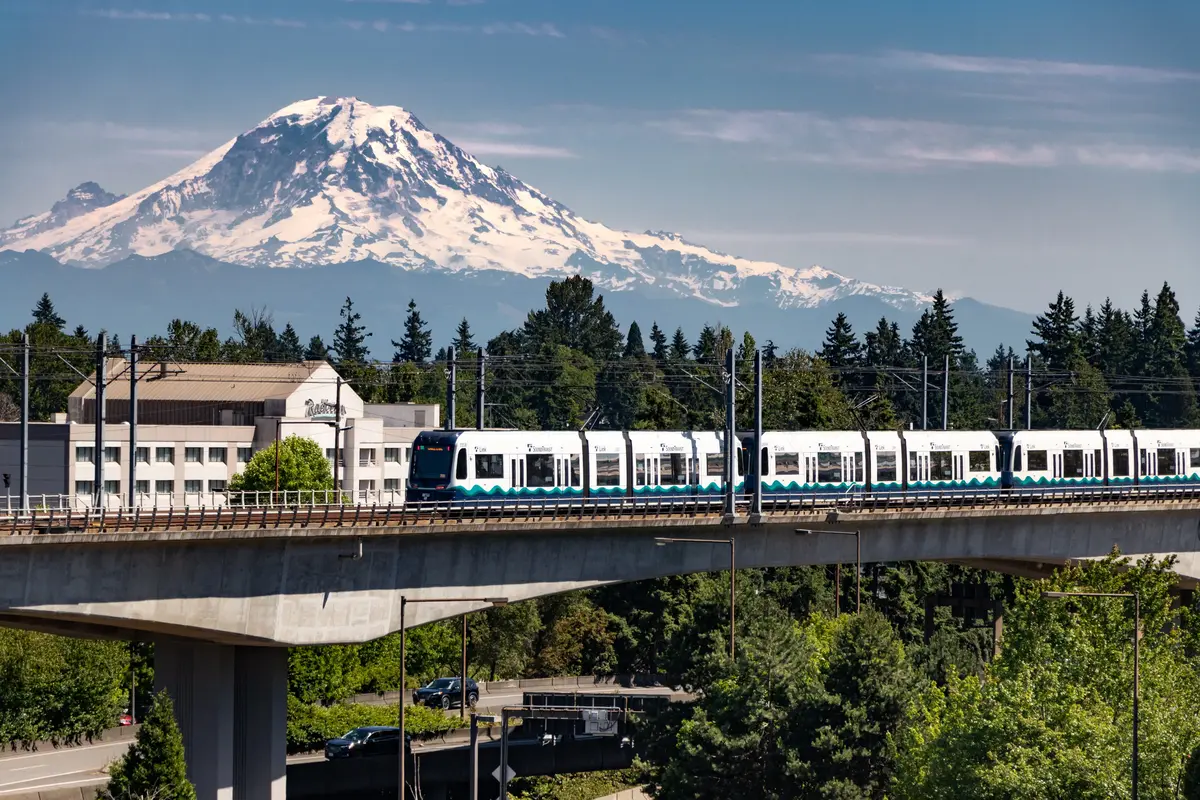
The cost picture is genuinely favorable compared to most California markets. The Zillow Home Value Index puts the typical SeaTac home at $524,875 (2026), a figure that reads as almost unreal to buyers coming from the Bay Area or coastal Southern California. Washington collects no personal state income tax on wages or salaries — through at least the end of 2027. Angle Lake station puts Link Light Rail inside city limits, so a car-free commute into Seattle is a real option, not a theoretical one. For a fuller breakdown of day-to-day costs, the SeaTac cost-of-living page has the detail.
Whether you're a California renter who's been priced out and someone mentioned this place, or a homeowner cashing out equity and looking to land somewhere cheaper and wetter, the sections below break down what the California-to-SeaTac financial shift actually looks like, what surprises people after they arrive, and what you should weigh honestly before you commit.
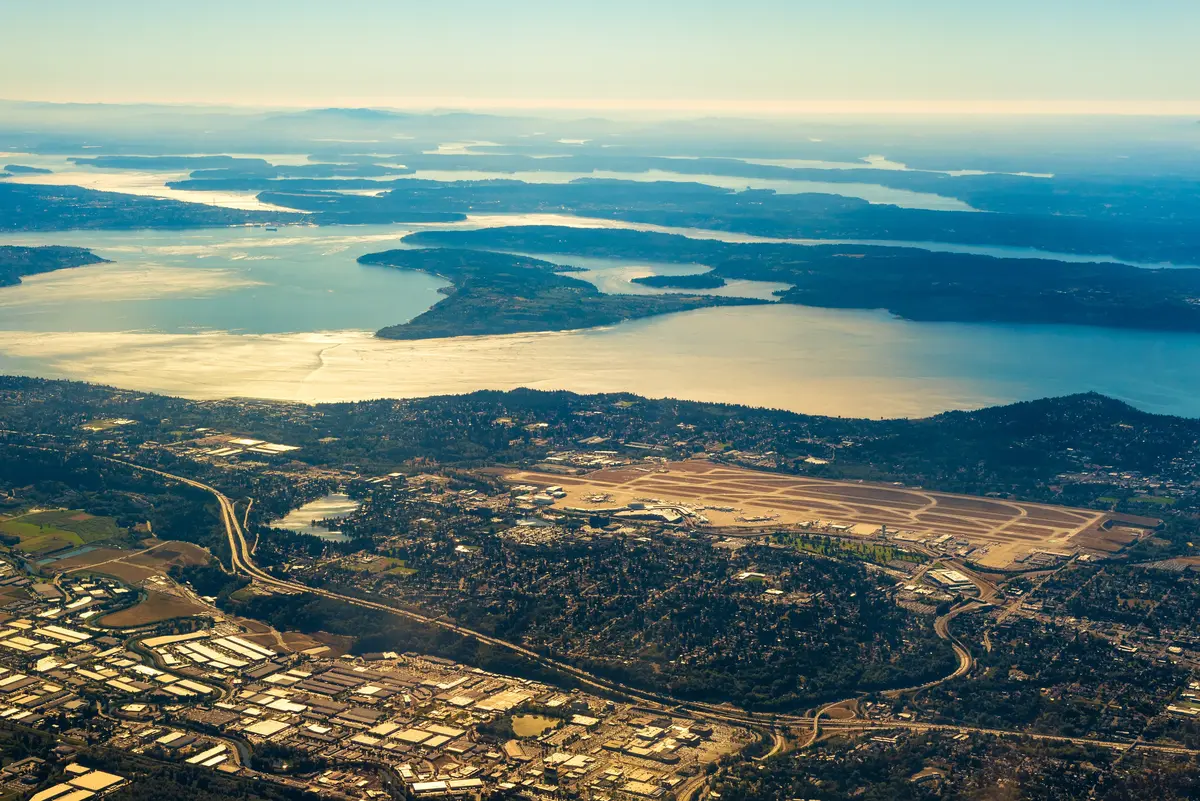
The Home Price Reality: What California Equity Buys You Here
The $524,875 typical home value (Zillow Home Value Index, 2026) is the number that starts most California conversations about SeaTac. Buyers arriving from the Bay Area, where the median sold price in many counties exceeds $1.3 million, are often able to purchase here outright or carry a mortgage that feels comparatively modest. Even Southern California transplants — used to Los Angeles County medians well above $800,000 — find SeaTac's price point represents a meaningful step down in financial pressure.
What that price buys in SeaTac is real but not spectacular. You're looking at older construction, often 1960s–1980s ranch-style homes, in a city where airport proximity is a constant. The trade-off between price and setting is honest here: you get affordability in exchange for jet noise, dense commercial corridors along International Boulevard, and a neighborhood feel that is more working-class practical than manicured.
The effective property tax rate of 0.82% is another number worth internalizing. High-cost California counties typically run effective rates between 1.1% and 1.2% — and those rates apply to valuations that are often dramatically higher. The combination of lower assessed value and a lower rate means your annual property tax burden here will be noticeably below what you carried in California. For neighborhood character and how prices vary across SeaTac's distinct areas, the neighborhoods page covers the geography in detail.
| Metric | SeaTac, WA | California Comparison |
|---|---|---|
| Typical home price (2026) | $524,875 (Zillow Home Value Index) | Bay Area medians often exceed $1.3M; LA County well above $800K |
| Effective property tax rate | 0.82% | 1.1–1.2% typical in high-cost CA counties |
| State income tax on wages | None (through end of 2027) | Up to 13.3% marginal rate |
| Combined sales tax rate | 10.4% (groceries and Rx exempt) | 7.25–10.75% depending on county; groceries often taxed |
| Link Light Rail access | Angle Lake station in city limits | Varies widely; most CA suburbs car-dependent |
| Commute to major city center | ~20 min to downtown Seattle | Often 45–90 min in Bay Area or LA |
One thing the table can't show: Washington exempts groceries and prescription medications from sales tax entirely, which offsets part of that 10.4% headline rate for everyday spending.
The Income Tax Advantage — And the Sales Tax Catch
Washington has no personal state income tax on wages or salaries — not a low rate, not a phased rate, zero — through at least the end of 2027. For a household earning $150,000 in California and paying the state's graduated income tax, the annual savings here can run into the thousands of dollars. That's not a rounding error; it's a material improvement in monthly cash flow that compounds every year you stay.
High earners should note one specific caveat. The Washington legislature passed Senate Bill 6346 in 2026, which creates a 9.9% income tax on adjusted gross income exceeding $1 million, effective January 1, 2028. For most relocating Californians, this is irrelevant. For those earning above that threshold — think senior tech executives, high-producing physicians, or investors with significant capital distributions — it's worth factoring into any long-term planning.
The Sales Tax Trade-Off
The offset to Washington's income tax advantage is SeaTac has a combined state and local sales tax rate of 10.4% — the 6.5% state base rate plus King County and local add-ons. That's higher than the California statewide base of 7.25%, though comparable to what residents in high-tax California jurisdictions like Los Angeles or Alameda County were already paying.
The meaningful difference: Washington exempts groceries and prescription medications from sales tax statewide. California taxes groceries in some contexts and many prepared foods everywhere. For a family doing a full weekly grocery run, that exemption has real dollar value that partially offsets the higher headline rate.
The honest summary: if you earn wages, Washington's tax structure almost certainly benefits you compared to California. If you make most of your income through investments, consult a tax professional before assuming you've escaped California's reach entirely — residency rules and sourced income are more complicated than the zero-rate headline suggests.
Renting First: What California Tenants Should Know
Most California transplants rent for at least six months before buying — smart, given how differently SeaTac's neighborhoods read on the ground versus on a map. If that's your plan, the rental market here offers genuine relief compared to what you left.
As of mid-2026, the average apartment in SeaTac rents for approximately $1,601 per month, with one-bedrooms averaging around $1,450 per month. That's meaningfully below Seattle proper's average of approximately $2,112 per month, and well below what most California coastal markets charge. For context, a comparable one-bedroom in San Francisco or a comparable coastal Southern California market could run two to three times that figure.
Washington's Rent Protections
California renters are used to AB 1482, which caps annual rent increases at 5% plus local CPI and requires 90 days' notice. Washington's HB 1217, signed in May 2025, is actually more protective on the notice requirement: landlords must give 180 days' notice before raising rent. The 2026 statewide cap under that law is 9.683% — higher than California's typical cap in a low-inflation year, but the longer notice window gives tenants more runway to plan or negotiate.
The catch with renting near Sea-Tac Airport is the same one that affects buying: proximity to the flight path means noise, and the densest rental stock sits along International Boulevard, a commercial corridor that is functional rather than pleasant to walk at night. Renting in North Hill or McMicken Heights puts you in a quieter residential setting, though the trade-off is less walkability and more car dependence.
One thing California renters genuinely don't expect: how much the airport's 24-hour operations affect sleep. The airport handles overnight cargo and early international departures, and the sound profile at 5 a.m. is not the same as a quiet suburb. Spend a night near your prospective rental before signing a lease.
Looking to buy in SeaTac? Estimate your payment.
Enter your numbers to see an estimated monthly mortgage payment.
Estimate only. Excludes HOA fees and mortgage insurance. The interest rate above is a starting point, not a quoted rate — replace it with your own to see real numbers. Insurance is a flat placeholder, not a SeaTac quote.
Daily Life: What's Different, What's Better, What's Harder
The most disorienting thing for California transplants isn't the weather — everyone knows it rains. It's International Boulevard itself. The main commercial spine of SeaTac is not a walkable downtown with boutiques and wine bars. It's a dense, multi-lane airport-service corridor lined with motels, car rentals, shuttle services, and a remarkable spread of independent restaurants. That last part is actually one of SeaTac's genuine strengths.
The World Table District
In February 2026, the City of SeaTac and Explore Seattle Southside formally launched the World Table District — a recognized dining corridor along International Boulevard and Military Road spotlighting 30 independently owned restaurants, cafés, and markets ahead of FIFA World Cup 2026. The range is genuinely global: East African, Somali, Middle Eastern, Thai, Latin American. Zain Restaurant & Bakery Café on Military Road South, a Somali-owned spot confirmed open through 2026, is one of the district's named participants and gives you a sense of the caliber on offer. If you came from the Bay Area or a diverse part of Los Angeles, this is one place where SeaTac meets your expectations rather than disappoints them.
What the Weather Actually Feels Like
The Seattle-area gray is real, and SeaTac sits squarely in it. From November through February, you may go weeks without seeing direct sunlight. Californians who moved here for a summer visit and made an offer have been known to reconsider by March. A good rain jacket and attention to your wellness routine aren't optional recommendations — they're infrastructure.
Health insurance premiums in Washington typically run noticeably below what most California plans charged, and routine care costs are generally comparable. The honest caveat is that highly specialized treatment often means traveling — SeaTac is not a research-medicine hub, and for advanced care in specific specialties, residents drive or fly rather than finding everything locally.
Angle Lake Park gives residents a genuine waterfront within the city — a lake with a swimming beach and trails that functions as SeaTac's version of a neighborhood gathering spot on summer weekends. It's not the Pacific Coast, but it's accessible and free, and on a rare sunny July afternoon it fills up fast.
For everything outdoors beyond the city limits — trails in the Cascade Range, skiing at Summit at Snoqualmie, the Sound — SeaTac's location is genuinely convenient. That access is one of the clearest lifestyle upgrades over most California metros, where outdoor destinations require navigating gridlock before you even get started.
What Californians Get Right — and Get Wrong — About SeaTac
The case for SeaTac is easy to make to a California audience: no income tax, home prices at a fraction of coastal California, Light Rail to Seattle, and shorter commutes than almost anywhere in the Bay Area. All of that is true. The case against it is shorter but worth reading before you make an offer.
What People Get Right
The financial math genuinely works. Buyers who cashed out California equity and moved here own outright or carry manageable mortgages. Renters who were paying San Francisco or comparable coastal California rates feel immediate, concrete relief. The commute to Seattle via Link Light Rail — the Angle Lake station is within city limits — removes a variable that wrecked daily life for many people in California metros. Workers employed by Alaska Airlines, the Port of Seattle, or airport-adjacent logistics employers may find they live closer to work here than they ever did in California.
What People Get Wrong
SeaTac is not a suburb in the conventional California sense. There's no downtown with a farmers market and a main-street espresso scene. The airport is not background noise — it is the defining physical and economic fact of the city, and it shapes everything from noise levels to traffic patterns to the character of the commercial districts. Buyers who expect the amenity profile of an affluent California suburb at SeaTac prices will be disappointed.
The school district is another recalibration. Highline Public Schools holds a C+ rating, according to Niche, and performance varies significantly by campus. Families moving from California districts they considered mediocre may find the adjustment meaningful. The schools page breaks down individual campuses.
Property crime in SeaTac runs higher than in many surrounding suburbs — 37 per 1,000 residents — partly driven by the density of airport-adjacent commercial activity along International Boulevard. That's a fact worth weighting when choosing a specific block, not a reason to cross the city off entirely. The safety page has the full breakdown.
People move out of SeaTac for two consistent reasons: noise fatigue from the airport and a desire for better schools. Both are predictable before you arrive. If either is a hard limit, be honest about that before you sign anything rather than hoping it won't bother you as much as you thought.

Local Expert Takeaway: The California-to-SeaTac move makes the most financial sense for people whose jobs are tied to the airport corridor or who can work remotely — the income tax savings and lower home price are real and immediate. What it doesn't buy you is the polished suburban amenity profile many Californians expect. Spend a weekday and a Saturday morning here before committing: walk International Boulevard, eat at one of the World Table District restaurants like Zain Restaurant & Bakery Café on Military Road South, and sit in a residential block in North Hill or Bow Lake long enough to hear the flight patterns. The city reveals itself quickly to anyone willing to look at it honestly.
Quick Takeaways & FAQs
✅ Washington's zero state income tax on wages — versus California's rate of up to 13.3% — delivers immediate, year-one financial relief for most relocating households.
⚠️ SeaTac is not a quiet suburb: Sea-Tac Airport operates around the clock, and the city's main commercial corridor is built around aviation services, not neighborhood walkability.
📍 Angle Lake station puts Link Light Rail inside city limits, making a car-free commute to downtown Seattle genuinely practical — not just theoretically possible.
How much cheaper are SeaTac homes compared to California?
Does Washington State really have no income tax?
Is the sales tax in SeaTac higher than California?
Can I commute to Seattle from SeaTac without a car?
What do California transplants most often regret about moving to SeaTac?
Moving to Washington?
Tell us what you need help with and we'll connect you with local resources.
