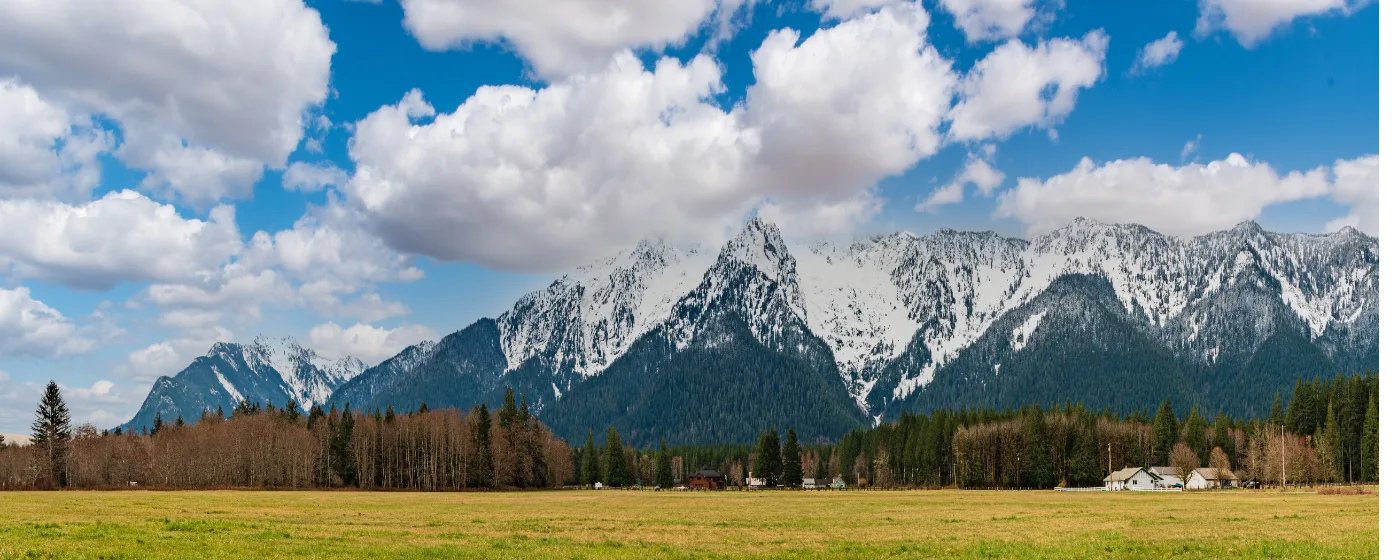
Most people sizing up Lynnwood focus on the light rail connection to Seattle, the Alderwood Mall corridor, or the price gap versus Bellevue. What catches them off guard — usually around month three — is how much usable green space sits inside a city of 41,000 people. Over 350 acres of parkland, more than 100 acres of natural open space, 14 miles of trails, and a Puget Sound beach that requires a forest hike just to reach it: this is not the landscape most newcomers picture when they think "Seattle suburb."
The outdoor system here pulls in three distinct directions. There's the urban-nature corridor at Scriber Lake Park, freshly upgraded with a $5.5 million ADA-accessible boardwalk that opened in June 2025. There's the Interurban Trail, a 12-foot-wide paved path following the ghost of a 1910 electric trolley line that once connected Alderwood Manor to Seattle and Everett. And out in the Meadowdale neighborhood, there's a 108-acre hike-in park on Puget Sound that routinely earns a 4.7-star average across more than 3,700 AllTrails reviews — the highest-rated trail destination in the city. These aren't amenities that showed up on a planning spreadsheet; they're places locals actually use on weekday evenings and rainy Saturday mornings.
What Lynnwood doesn't have is a sprawling lakefront downtown or a ski resort at the edge of town. The trade-off is access: the Interurban Trail connects north toward Everett and south toward Seattle-area destinations, Meadowdale puts you on Puget Sound in under an hour of hiking, and the new light rail station means car-free access to the broader regional trail and park network. For families and active adults who want outdoor options woven into daily life — not a weekend drive away — the system here punches well above what the city's size would suggest. Whether you're weighing a move or just learning what Lynnwood offers, the sections below cover every major park, the trail network, the seasonal quirks, and what the outdoor life here actually looks like day to day.
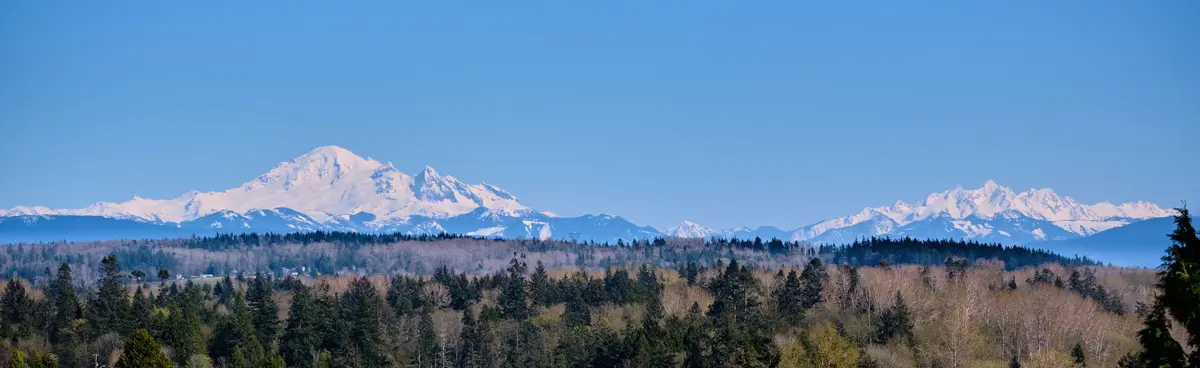
Scriber Lake Park: Lynnwood's Urban Nature Anchor
There is exactly one public lake inside Lynnwood's city limits, and the city has spent $5.5 million making sure you can walk around it in any season, in any weather, without sinking into a wood-chip trail during a February flood event.
The New Boardwalk — What Changed in 2025
Before June 2025, the path around Scriber Lake was a soft-surface wood-chip loop that became impassable during Lynnwood's wettest months — which is to say, roughly October through March. The city replaced approximately 1,100 linear feet of that trail with an 8-foot-wide elevated boardwalk, creating a fully ADA-accessible half-mile loop that stays open year-round, including during the seasonal flooding that used to close the old path. The project was funded by $2.5 million from Washington State's Recreation and Conservation Office, $2 million from the American Rescue Plan Act, and the balance from Snohomish County Partnership Projects and the Lynnwood Parks Foundation.
Three water-facing viewpoints are built into the boardwalk design, and a floating dock connection improves lake access. The shoreline and wetland habitat were restored as part of the same project — so the upgrade served ecology as much as accessibility.
What You're Walking Through
Scriber Lake Park covers 22 acres and functions as a genuine wildlife habitat in the middle of a suburban grid. Osprey hunt the lake. A resident beaver has been documented in the wetlands. River otters appear with enough regularity that longtime residents treat a sighting as routine rather than remarkable. Largemouth bass and perch draw anglers to the floating dock.
The surrounding forest and hillside habitat support waterfowl populations that make the park worth visiting even in December, when most of Lynnwood's recreation options feel bleak. This is the park where you'll find parents pushing strollers at 7 a.m. and birders with spotting scopes at dusk — often on the same afternoon.
Connecting Out: The Scriber Creek Trail
The park doesn't end at the boardwalk loop. The Scriber Creek Trail, a soft-surface walking path, links Scriber Lake Park to Sprague's Pond Mini Park, Scriber Creek Park, and eventually the Interurban Trail, forming a continuous greenway corridor through the city's midsection. That connection matters for anyone who wants to combine a nature walk with a longer trail run or a bike commute — the Interurban picks up where the soft surface leaves off.
The Interurban Trail: Lynnwood's Backbone for Walkers and Cyclists
The Interurban Trail through Lynnwood follows the exact route of an electric trolley that ran between Alderwood Manor, Seattle, and Everett from 1910 to 1939. The trolley is gone. The right-of-way became one of the most useful pieces of infrastructure in the city.
What You Get in Lynnwood Specifically
Nearly 4 miles of 12-foot-wide paved surface pass through Lynnwood — wide enough for cyclists and pedestrians to share without the friction that makes narrower multi-use paths frustrating. The surface is maintained well enough for road bikes, which matters in a region where trail grit is a seasonal reality.
Regionally, the paved trail currently totals 11.8 miles, running from the Seattle city limits north toward Everett. The long-term plan — a joint project between Snohomish County, the cities of Everett and Lynnwood, and Public Utility District No. 1 of Snohomish County — targets 18.8 miles of completed paved surface. Lynnwood's segment is already one of the most complete stretches.
Who Actually Uses It
Weekday mornings bring commuter cyclists heading south toward Mountlake Terrace. Weekend afternoons shift toward recreational runners, families on hybrid bikes, and people walking dogs in the buffer of green space that lines most of the trail's Lynnwood segment. It is not a wilderness experience — you're aware of the city around you — but the tree canopy and grade-separated crossings make it feel more insulated than a sidewalk.
The honest friction point: the trail's southern end in Lynnwood requires some navigation through surface streets before picking up the connected network into King County. If you're planning a long ride from Lynnwood down toward Shoreline, map the route in advance. The gap sections are workable but not obvious on first attempt.
Heritage Park and the Trolley That Started It All
At 19921 Poplar Way, where Poplar Way meets Alderwood Manor Parkway, Heritage Park gives the Interurban Trail its best historical footnote. The 2.8-acre park, purchased by the city in 1999, preserves several of Alderwood Manor's original structures: a 1930s Superintendent's Cottage and Water Tower, the Humble House (now a genealogy center operated by the Sno-Isle Genealogical Society), and the Wickers Building — Alderwood Manor's first general store and post office.
The centerpiece is Interurban Trolley Car No. 55, a 1909 single-ended wooden electric rail car, fully restored, and the only surviving trolley from that era still sited along the former Interurban route. It's not a museum you pay to enter — it's a park stop that takes about 20 minutes and gives the trail its whole backstory in physical form. Kids who've just biked the trail find it satisfying in a way that interpretive signage alone never quite achieves.
Meadowdale Beach Park: The Hike-In Puget Sound Experience
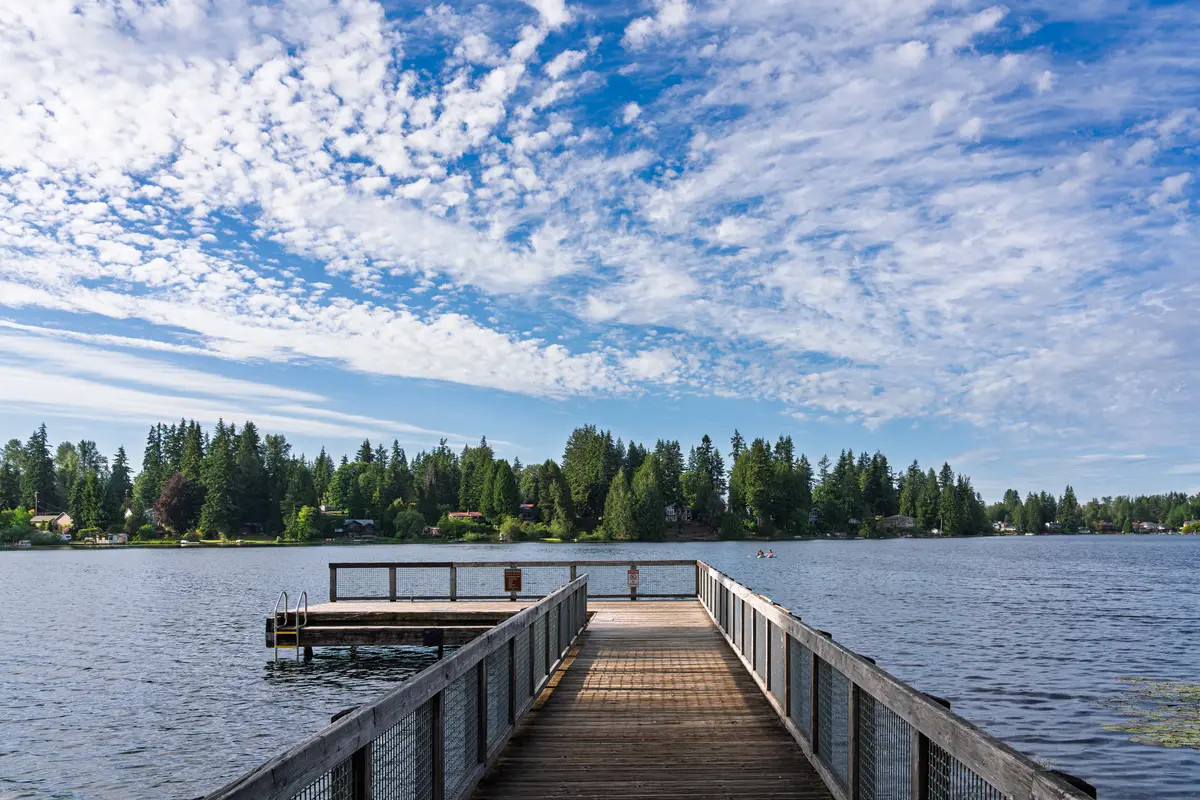
Meadowdale Beach Park sits at 6026 156th St SW in Lynnwood's Meadowdale neighborhood, and it earns its 4.7-star average from more than 3,700 AllTrails reviews the hard way: you have to walk in. There's no drive-up beach access. That's the whole point.
The Lunds Gulch Trail
The signature route — Lunds Gulch Trail — covers 2.4 to 2.5 miles round-trip through mature second-growth Douglas fir forest, dropping roughly 400 feet from the trailhead to a creek estuary and Puget Sound beach. The descent is steady enough to feel earned without being technical. At the bottom: Brown's Bay, views of the islands, and on a clear day the full spread of the Olympic Mountains across the water.
The return climb is what catches people off guard. Newcomers treat this as a casual beach stroll and arrive at the trailhead in flip-flops. The 400-foot gain back up is real, especially on a warm July afternoon. Bring actual shoes and more water than you think you need.
How Big It Actually Is
At 108 acres, Meadowdale Beach Park is managed by Snohomish County rather than the City of Lynnwood — but its address puts it squarely in the Meadowdale neighborhood. Since 1996, Lynnwood has partnered with the Brackett's Landing Foundation and Snohomish County to purchase an additional 77 acres in Lunds Gulch using Snohomish County Conservation Futures Program funds. That ongoing land acquisition has kept the buffer around the trail in protected status rather than allowing it to be developed up to the park boundary.
The result is a forest corridor that feels significantly larger than a day-use county park. You're unlikely to hear traffic at the bottom of the gulch. The creek estuary supports habitat that the county has actively worked to restore, and the beach itself has no concessions, no rentals, and no amenities beyond a restroom near the trailhead — which is exactly why it stays worth the trip.
When to Go — and When to Skip It
Summer weekends between 10 a.m. and 2 p.m. bring the largest crowds, and the limited trailhead parking fills quickly. Early morning on a weekday — even in July — gives you the forest almost entirely to yourself. In fall and winter, the trail stays open and the forest is arguably at its best: the Douglas fir canopy closes out the noise, the creek runs full, and the beach is reliably uncrowded. The downside is that the beach itself can be rocky and cold enough in winter that it functions more as a viewpoint than a destination in its own right. Plan accordingly.
Families with school-age children should note that youth outdoor programs and nature activities tied to parks like Meadowdale are worth exploring through community programming available in Lynnwood — structured access alongside independent hiking can make the most of what the park system offers.
Looking to buy in Lynnwood? Estimate your payment.
Enter your numbers to see an estimated monthly mortgage payment.
Estimate only. Excludes HOA fees and mortgage insurance. The interest rate above is a starting point, not a quoted rate — replace it with your own to see real numbers. Insurance is a flat placeholder, not a Lynnwood quote.
Lynnwood's Park System: The Full Picture
Scriber Lake, the Interurban Trail, and Meadowdale Beach get most of the attention — but the system behind them is what makes daily life here work for people who want outdoor access woven into routine, not just weekend trips.
The Numbers at a Glance
| Park / Asset | Size / Extent | Type | Best For |
|---|---|---|---|
| Scriber Lake Park | 22 acres | Community park / nature refuge | Nature Families |
| Meadowdale Beach Park | 108 acres | Hike-in waterfront park | Views Nature |
| Heritage Park | 2.8 acres | Historical / cultural park | Families Quiet |
| Interurban Trail (Lynnwood segment) | ~4 miles paved | Multi-use paved trail | Commuter Transit |
| Scriber Creek Trail | Soft surface, multi-park connector | Nature / walking trail | Nature Walkable |
| City-wide trail network | 14 miles total | Mixed surface | Families Commuter |
| Natural open space | 100+ acres | Undeveloped habitat | Privacy Nature |
The 17-park system covers the full city — from the Cedar Valley and North Lynnwood edges to the Scriber Lake corridor near City Center.
Seasonal Rhythms Newcomers Don't Expect
The Puget Sound winter — gray, wet, persistent from November through March — reshapes outdoor life here in ways that take a full first year to understand. The Scriber Lake boardwalk was specifically engineered to stay accessible during flooding events, which means it's one of the few Lynnwood outdoor destinations that doesn't require good weather to be useful. Meadowdale Beach Park stays open year-round but the creek can flood the lower section of Lunds Gulch after heavy rain, occasionally closing the beach access itself — check conditions before making the drive.
Summer in Lynnwood brings warm but rarely hot temperatures, and the window of reliable dry weather (late June through mid-September) is when Meadowdale fills fastest and the Interurban Trail sees its heaviest recreational use. If you're moving from a climate with a longer summer, the shortness of prime outdoor season here is the adjustment that takes most people the longest to accept.
The Honest Gap
Lynnwood has no public swimming lake. Scriber Lake is the only lake in city limits and it is not designated for swimming. Residents who want lake swimming typically drive to Edmonds, Mountlake Terrace, or further into Snohomish County. For on-foot access to water recreation — fishing, kayaking, a Puget Sound beach — Meadowdale Beach Park is the answer, but it requires the hike and doesn't offer boat launch infrastructure. If a drive-up swimming beach matters to your family, it's worth factoring that gap into your decision. Neighborhood selection also affects how quickly you can access different parts of the park system from home — Meadowdale residents have the beach almost in their backyard, while those near City Center are closest to Scriber Lake.

Local Expert Takeaway: Lynnwood's outdoor system is better than the city's suburban reputation suggests, but it rewards people who understand its shape. Scriber Lake Park is the everyday anchor — the new boardwalk makes it genuinely usable in January, not just July. Meadowdale Beach Park is the crown jewel, but treat it as a destination hike, not a beach stroll: the 400-foot climb back up Lunds Gulch in summer heat surprises first-timers every time. The Interurban Trail is the connective tissue for anyone who wants to fold movement into a daily commute or a regular run. What's missing — a public swimming lake, a drive-up waterfront — is real, and residents make peace with it by treating Meadowdale and the regional trail network as the payoff for living somewhere that kept its green space intact.
Quick Takeaways & FAQs
✅ The new $5.5 million Scriber Lake Park boardwalk opened in June 2025, creating a fully ADA-accessible half-mile loop around Lynnwood's only public lake that stays open even during winter flooding.
⚠️ Lynnwood has no public swimming lake — Scriber Lake is off-limits for swimming, and residents who want lake swimming drive to Edmonds or further into Snohomish County.
📍 Meadowdale Beach Park's Lunds Gulch Trail earns a 4.7-star AllTrails average from over 3,700 reviews, but the trailhead parking fills fast on summer weekends — arrive before 9 a.m. or go on a weekday.
Is Scriber Lake Park open year-round, and can you swim in it?
How hard is the hike at Meadowdale Beach Park?
Can you bike the Interurban Trail through Lynnwood?
What is Heritage Park, and is it worth visiting?
Does Lynnwood have a public swimming beach or pool?
Moving to Washington?
Tell us what you need help with and we'll connect you with local resources.
