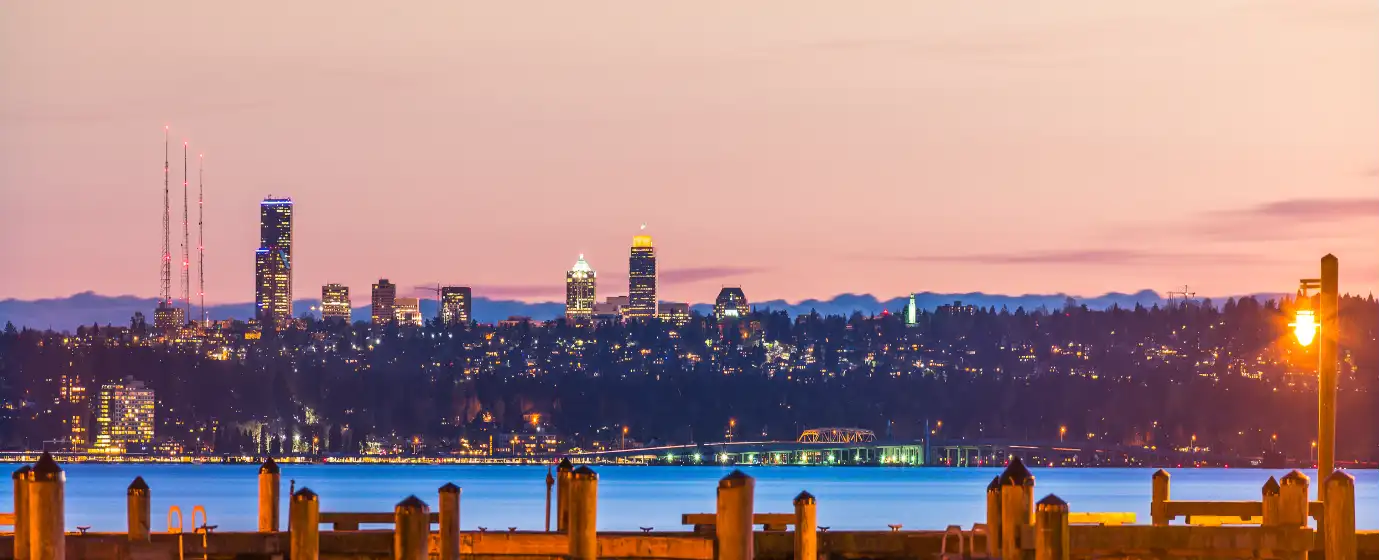
Maybe your company transferred you to Google's Kirkland Urban campus. Maybe you've been watching Bay Area prices climb for a decade and finally ran the numbers. Maybe someone from the Seattle office mentioned Kirkland offhand and you pulled it up on a map and thought: that waterfront actually looks like the Pacific Coast without the freeway traffic. Whatever brought you here, the case for Kirkland is genuinely strong — but it is not the frictionless upgrade that social media makes it look like. The rain is real. The prices are real. And the cultural adjustment from California to the Pacific Northwest is subtler than people expect, and it tends to land around month four.
Kirkland sits on the eastern shore of Lake Washington, roughly 25 minutes from downtown Seattle via SR-520, flanked by Bellevue to the south and Redmond to the east. The Google Kirkland Urban campus anchors the local tech economy, and Tableau/Salesforce maintains a significant presence nearby. The Lake Washington School District — rated A by Niche — serves the city, and it is one of the primary reasons families with school-age children choose Kirkland over comparable suburbs. The median household income here is $150,414, which tells you something about who already lives here and what the competitive landscape for housing looks like. For full detail on employers and who the city suits best, see the living in Kirkland guide.
Kirkland's overall cost of living runs roughly 79% above the national average, driven almost entirely by housing. Yet for someone moving from San Francisco or the broader Bay Area, Kirkland's cost of living runs meaningfully lower — roughly 32% below San Francisco's. That gap is real. It does not mean Kirkland is affordable in any absolute sense; the median sale price was $1,323,750 as of November 2025. But for a California buyer who has already accepted that a seven-figure home is the entry point to a desirable suburb, Kirkland competes differently than it does for someone moving from Portland or Phoenix. The full cost breakdown — utilities, groceries, transportation — lives on the cost of living page.
Whether you are a tech worker being relocated, a Bay Area family seeking a school district you can trust, or someone who has simply had enough of California's tax structure, the sections below break down the California-to-Kirkland comparison on home prices, taxes, lifestyle, and what actually surprises people once they get here.
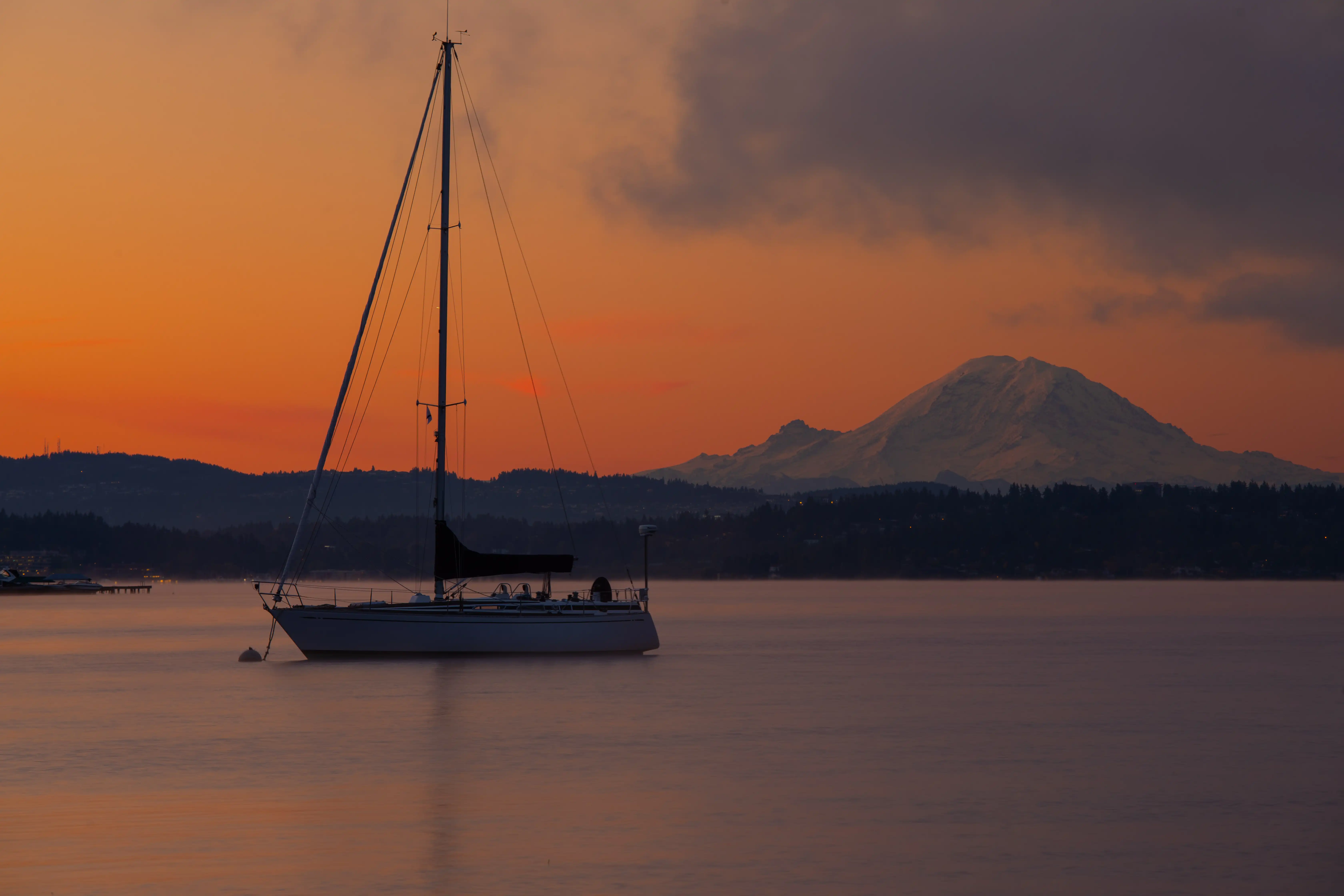
The Home Price Reality: What Your California Budget Buys Here
Kirkland's median sale price of $1,323,750 (November 2025, Redfin) lands in a range that Bay Area buyers recognize immediately — and that surprises everyone else. This is not a city where California equity unlocks a dramatic upgrade in square footage. What it unlocks is a different trade-off: more land, older construction, and neighborhoods that feel like actual neighborhoods rather than subdivisions.
Entry Point vs. Median
Entry-level detached homes in Kirkland — typically older ranch-style construction in Rose Hill or Totem Lake — start in the high $800,000s to low $900,000s. The median reflects strong demand across the city's established neighborhoods. You are not getting a deal. You are getting a different market with different fundamentals.
For a Bay Area buyer who sold a modest home in the East Bay or a condo in San Jose, the equity often covers a substantial down payment in Kirkland without stretching into uncomfortable territory. That math does not work for someone coming from Sacramento or Fresno, where prices run noticeably lower and the equity gap is real. Know which buyer you are before you start touring.
What the Neighborhood Breakdown Looks Like
Kirkland's best neighborhoods page covers the geographic character of each area in detail. The short version: the downtown waterfront corridor and Juanita carry a premium for walkability and water proximity. Finn Hill and Norkirk offer more land per dollar. Bridle Trails is equestrian-zoned and draws a specific buyer willing to pay for the pastoral feel inside a tech corridor.
One thing California buyers consistently underestimate: the lot sizes here are smaller than they look in listing photos. A 6,000-square-foot lot in Kirkland is not unusual; a 10,000-square-foot lot is genuinely spacious. If your California home sat on a half-acre, prepare to recalibrate.
| Factor | Bay Area (CA) | Kirkland (WA) | What It Means for You |
|---|---|---|---|
| Median sale price (2025) | ~$1.3M–$1.6M (Santa Clara/Alameda Co.) | $1,323,750 | Comparable range; different product type |
| Entry-level detached | $900K+ (outlying East Bay) | High $800Ks–low $900Ks | Similar floor; Kirkland often more square footage |
| Effective property tax rate | ~1.1%–1.3% (new buyer, Prop 13 reset) | 0.82% | Meaningful annual savings on a $1.3M home |
| Lot sizes (typical suburban) | 5,000–8,000 sq ft (Peninsula) | 5,000–9,000 sq ft | Roughly comparable; neither is spacious |
| Market pace | Highly competitive; frequent overbids | Competitive; 10–21 days typical DOM | Fast markets; inspection waivers still common |
| New construction availability | Very limited in established areas | Limited; mostly infill and ADUs | Both markets skew toward existing stock |
The property tax comparison deserves more attention than it typically gets. California's Proposition 13 caps annual reassessment increases at 2% per year for existing owners — but when you buy, the clock resets to full purchase price. On a $1.3 million home, California's 1% base rate plus local bonds typically produces an effective rate of 1.1% to 1.3%. At Kirkland's 0.82% rate, the annual savings on the same purchase price are real and recurring.
The Tax Shift: Where You Win, Where You Don't
Washington has no state income tax on wages or salary. If you are currently paying California's graduated income tax — which reaches a top marginal rate of 13.3%, and climbs to a true effective ceiling of 14.6% when the uncapped State Disability Insurance payroll tax is included — moving to Kirkland is the largest single-year financial change most relocating Californians ever make. For a household earning $300,000 in salary, the state income tax savings alone can exceed $30,000 annually.
The Income Tax Elimination Is Real
This is not a technicality. Washington taxes neither wages nor salaries at the state level. Your W-2 income crosses the border untouched by Olympia. For tech workers, dual-income professional households, and anyone with a meaningful salary — this is the number that makes the spreadsheet work even when the home price looks similar to what you left.
One exception worth knowing: Washington does tax long-term capital gains at 7% to 9.9% above a threshold. If you are selling California investments and planning to reinvest, or if you receive RSU income structured as capital gains, do not assume the zero-tax benefit extends automatically to every income type. This is a nuance that catches relocated tech workers who assumed all state tax exposure was gone.
What You Give Up: Sales Tax
Washington funds its government partly through a notably high sales tax. In Kirkland specifically, the combined King County rate runs approximately 10.2% to 10.3% — composed of Washington's 6.5% base plus county and local levies. Groceries purchased for home consumption are exempt, which takes the sting out of the weekly Costco run. But restaurant meals, clothing, electronics, and prepared food are taxable at the full rate.
Compare that to California's statewide base of 7.25%, with local add-ons typically pushing major city rates to 9% to 10.75%. The gap between the two states' sales taxes is real but narrower than most people expect — California's highest-rate cities (Los Angeles at 10.25%, for example) are not far off from Kirkland's rate. The income tax elimination is where the meaningful money is.
| Tax Category | California | Washington (Kirkland) | Net Impact |
|---|---|---|---|
| State income tax (wages) | Up to 13.3% marginal; 14.6% true top rate with SDI | 0% | Large annual savings for six-figure earners |
| State income tax (capital gains) | Taxed as ordinary income (up to 13.3%) | 7%–9.9% above threshold | WA is still lower; not zero |
| Effective property tax rate | ~1.1%–1.3% for new buyers (Prop 13 reset) | 0.82% | WA wins on an equivalent purchase |
| Combined sales tax | 7.25% base; 9%–10.75% in major cities | ~10.2%–10.3% (Kirkland/King Co.) | Roughly comparable; groceries exempt in WA |
| State SDI / payroll tax | Uncapped SDI adds ~1.3% at top wages | No equivalent SDI | Additional WA advantage for high earners |
| Estate / inheritance tax | None at state level | Washington levies a state estate tax | WA disadvantage for wealth transfer planning |
The honest summary: for a W-2 household earning above $150,000, the Washington tax structure is materially more favorable than California's. The sales tax is higher in absolute terms, but it does not come close to offsetting the income tax elimination. Run your own numbers — a household at the median Kirkland income of $150,414 saves somewhere in the range of five figures annually on state income tax alone.
Health insurance premiums for comparable coverage run noticeably below what most Californians pay in the individual and employer markets, though you may drive farther for specialist care than you were accustomed to near major California metro centers. Routine care access in Kirkland itself is solid.
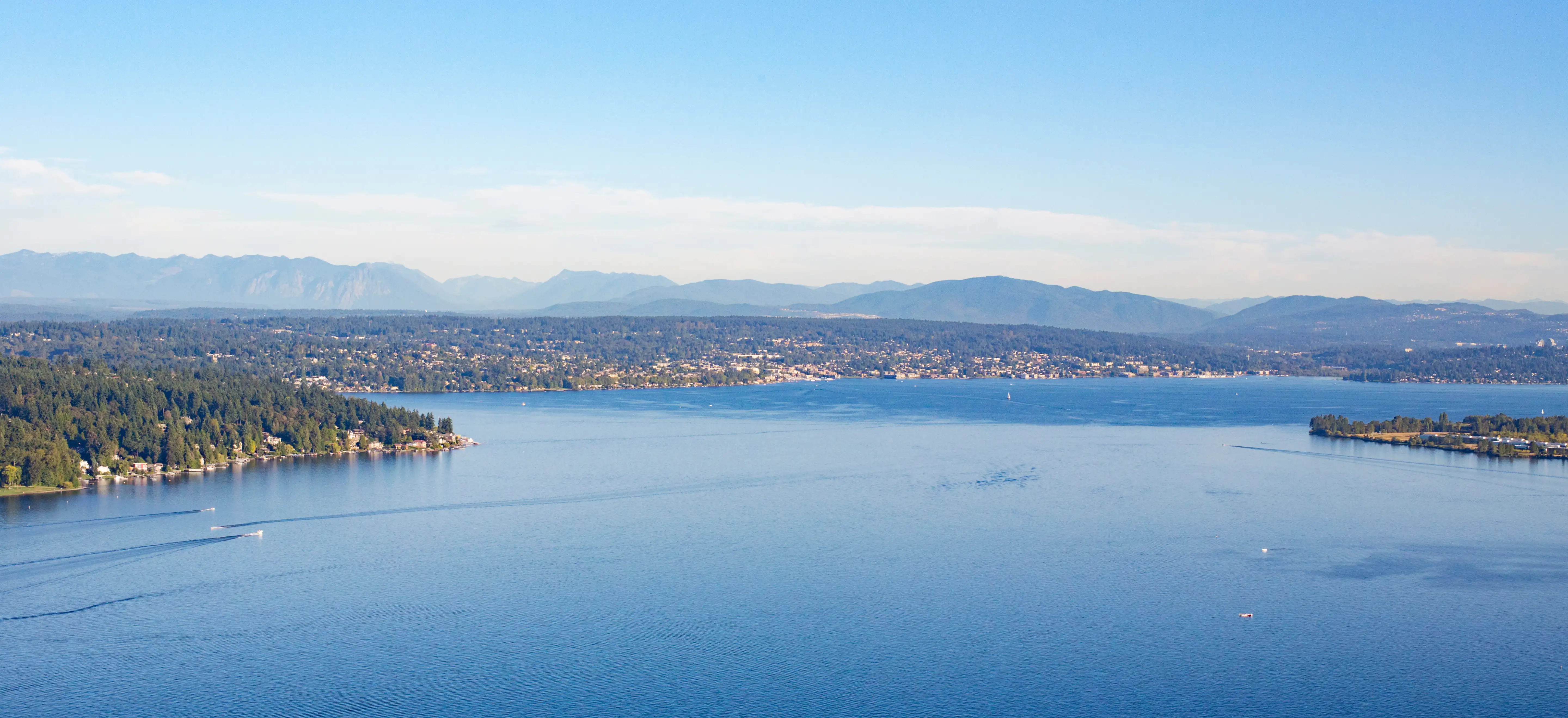
What California Life Doesn't Prepare You For
Six months in, California transplants say variations of the same thing: I knew about the rain. I didn't know I'd stop seeing the sun from November to March and not care, and then care a lot, and then stop caring again. The gray is not a weather event in Kirkland. It is a season. It lasts roughly five months. Supplements for seasonal mood support show up in people's medicine cabinets here the way sunscreen does in San Diego.
The Rain Is Overstated. The Gray Is Not.
Kirkland receives meaningfully less annual rainfall than Seattle's reputation suggests — and dramatically less than most of coastal California. The precipitation total is lower; the cloud cover is higher. It is overcast more often than it is actually raining. Californians who moved here for the outdoor access — Lake Washington kayaking, the Burke-Gilman Trail, the Cascade Range an hour east — often find they adapt faster than expected. The ones who struggle are those who needed sunshine as a baseline mood condition.
The Quiet Culture Shock
Pacific Northwest culture is less immediately warm than California's. Neighbors do not necessarily introduce themselves in the first week. Social circles form slowly. The phenomenon has a name — the Seattle Freeze — and while Kirkland is arguably friendlier than central Seattle, the adjustment is real. California transplants who came from communities with strong neighborhood social infrastructure (block parties, front-porch culture, school pickup chitchat) often find the first six months lonelier than expected.
Marina Park and Peter Kirk Park are where Kirkland's social life actually happens — summer weekends bring families, food trucks, outdoor concerts at the Kirkland Performance Center, and a recognizable Pacific Northwest version of the California park scene. Getting there is the work of the first year.
The Things People Move Back For
It is worth saying plainly: some Californians leave Kirkland. The ones who go back most often cite the same three reasons — family proximity, the gray winters, and missing the specific food and cultural density of the Bay Area or Los Angeles. Kirkland has strong fine-dining options along NE Juanita Drive and in the downtown waterfront corridor that would hold their own in any California city. But the breadth of options — the density of neighborhoods, cuisines, and scenes — is not comparable to a major California metro. If restaurant variety and cultural programming were core to your quality of life, adjust expectations deliberately rather than discovering the gap after you close.
The flip side: people who moved here for the outdoor access, the school district, and the financial reset tend to stay. The Lake Washington School District consistently delivers on its A-grade reputation, and the combination of lower state income taxes and genuine proximity to the Cascade Range is a quality-of-life argument that is hard to find anywhere else on the West Coast.
Looking to buy in Kirkland? Estimate your payment.
Enter your numbers to see an estimated monthly mortgage payment.
Estimate only. Excludes HOA fees and mortgage insurance. The interest rate above is a starting point, not a quoted rate — replace it with your own to see real numbers. Insurance is a flat placeholder, not a Kirkland quote.
The Lifestyle Comparison: What Kirkland Has and What It Doesn't
Kirkland does not try to be San Francisco or Los Angeles. It is a mid-sized lakefront city of roughly 95,000 people that punches well above its weight on schools, outdoor access, and dining quality — but it is not a metropolis, and buyers who move here expecting one end up frustrated.
What Kirkland Does Well
The waterfront is genuinely exceptional. Marina Park and the Kirkland waterfront public art collection stretch along Lake Washington in a way that no California suburb replicates — the combination of public access, walking paths, sculpture, and sight lines to the Olympic Mountains on a clear day is the kind of thing that appears in listing photography because it is actually there. The Burke-Gilman Trail connects Kirkland to Redmond and eventually to Seattle without requiring a car.
The downtown waterfront corridor delivers the walkable mixed-use experience that most California suburbs promised and did not deliver — independent coffee shops, restaurants ranging from casual to the fine-dining tier, and a Saturday farmers market. Chainline Brewing Company's taproom at Uptown Court is the kind of anchor a neighborhood like this needs, and it functions as one. For families, the schools page covers Lake Washington School District in depth — the district-wide proficiency rates and Lake Washington High School's 10/10 GreatSchools rating are the draws that close the deal for many relocating families.
What Kirkland Doesn't Have
No Trader Joe's in the city itself — the nearest locations are in Bellevue or Seattle. No major league sports team in Kirkland; you are driving to Seattle for those. The nightlife ceiling is lower than any major California city. Transit from Kirkland into Seattle is functional but not seamless — the 25-minute commute reference assumes SR-520 is moving, which it is not during peak hours. See the living in Kirkland page for the honest commute picture.
| Category | California Equivalent | Kirkland Reality | Best For |
|---|---|---|---|
| Waterfront access | Beach cities (Malibu, Santa Cruz) | Lake Washington — public, walkable, free | Families Nature |
| Fine dining | Dense SF/LA neighborhoods | Strong per-capita; fine-dining options in the waterfront corridor | Luxury |
| School district | Top CA districts (well-rated Bay Area districts) | Lake Washington SD — A-rated, 92% grad rate | Families School |
| Walkability | Urban CA neighborhoods | Downtown only; most areas are car-dependent | Walkable |
| Outdoor proximity | Coast, Sierra Nevada (1–2 hr drive) | Cascade Range ~1 hr; Mt. Rainier ~1.5 hr | Nature |
| Tech job density | Bay Area (FAANG cluster) | Google, Tableau/Salesforce, Redmond corridor | Tech Commuter |
| Cultural events | Major CA venues | Kirkland Performance Center; Seattle nearby | Luxury |
The parks and trails deserve more than a bullet point — the parks and recreation page covers what the Burke-Gilman connection and the lakefront access actually look like day-to-day. For safety context beyond what the numbers say, the safety page breaks down where Kirkland's low violent crime rate actually applies by area.
Making the Move Work: Practical Advice for California Buyers
The California-to-Kirkland move works best when you treat it as a trade, not an upgrade. You are trading California's income tax burden and its association with specific regional culture for Washington's tax structure, a specific school district, and a pace of life that rewards patience. Going in with that framing sets you up to succeed. Going in expecting a direct upgrade on every dimension sets you up for a difficult first year.
Budget Reality for the Transition Year
Moving costs from California to Washington for a family-size household typically run $8,000 to $15,000 for a professional move. Temporary housing in Kirkland — if you want to rent before buying — runs on the higher end of the Seattle metro rental market, but that page-level detail lives on the cost of living page. The practical advice: budget for six months of higher monthly costs before the income tax savings compound into meaningful cash flow. The first year is a break-even year for most buyers. Year two is when the math becomes obvious.
What to Do Before You Close
Drive SR-520 in both directions during peak hours before you commit to a specific neighborhood. The difference between a Bridle Trails commute and a Juanita commute to the Google campus or downtown Seattle is meaningful at 8 a.m. Do this twice — once on a Monday, once mid-week — before you make an offer anywhere. The second thing: visit in January or February, not just in summer. Kirkland in July is objectively beautiful. Kirkland in February tests your relationship with overcast skies in a way that a summer visit simply cannot.
The Buying Process Is Different Here
Washington does not use buyer-broker agreements the same way California does post-2024 NAR settlement; the state has adapted, but the norms are still evolving. Inspection contingencies are less commonly waived here than they were at the 2021–2022 peak, but in competitive multiple-offer situations — which still occur regularly in Kirkland's price tier — be prepared to move within 24 to 48 hours of a listing going live. The first-time homebuyer page covers Washington-specific loan programs and what the buying process looks like step by step, even if you are not a first-time buyer in the technical sense.
The Honest Bottom Line
Californians who thrive in Kirkland tend to share a profile: they came for a specific reason (school district, tech employer, tax relief), they spent the first year building a social circle rather than waiting for one to appear, and they made peace with the winters before the first November hit. The ones who struggle came for a vague sense of "better" without defining what better meant to them. Kirkland is a specific place with specific strengths. It rewards people who know exactly what they are coming for.
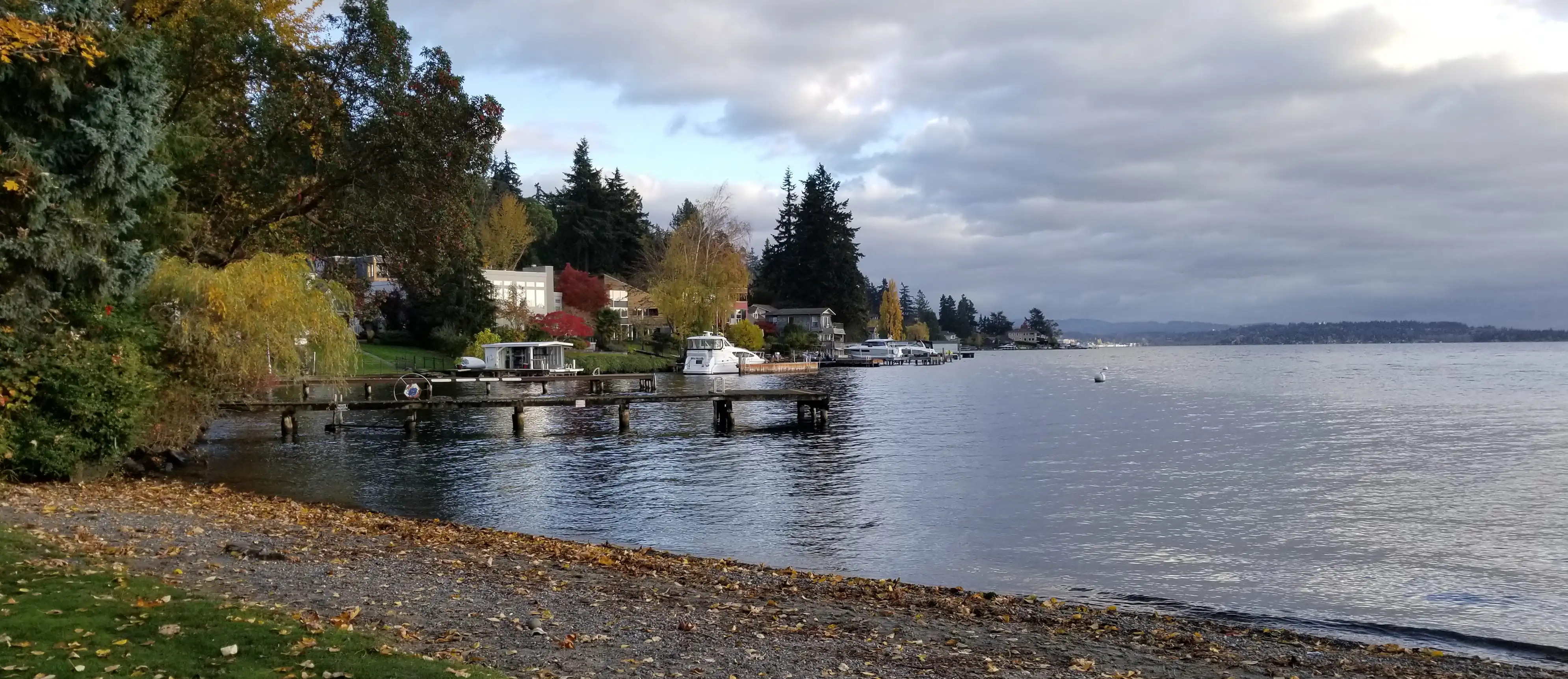
Local Expert Takeaway: Californians moving to Kirkland get the income tax elimination they came for, a school district that genuinely delivers, and a lakefront city where Marina Park on a July evening looks like the Pacific Coast without the commute. What they don't get is California's density of culture, restaurant options, or sunshine. The buyers who do best here are the ones who visited in February, drove SR-520 at 8 a.m., explored the downtown waterfront dining scene, and still said yes.
Quick Takeaways & FAQs
✅ Washington's zero state income tax on wages saves a six-figure earning household tens of thousands annually compared to California's top rate of 14.6% — the single largest financial change most relocating Californians experience.
⚠️ Kirkland's median sale price of $1,323,750 (November 2025) sits in the same range as many Bay Area suburbs, so California equity helps but doesn't buy a dramatic size or quality upgrade.
📍 The Pacific Northwest's 'Seattle Freeze' is real even in friendlier Kirkland — new arrivals consistently say the social adjustment takes longer than the financial one, and visiting in February before committing is advice that comes from everyone who didn't.
How much do I actually save on taxes by moving from California to Kirkland, WA?
Is Kirkland, WA really cheaper than the Bay Area?
What is the Seattle Freeze and will it affect me moving to Kirkland?
How do Kirkland's schools compare to what I had in California?
What surprises California buyers most after moving to Kirkland?
Moving to Washington?
Tell us what you need help with and we'll connect you with local resources.
