
Maybe your company is sending you to the south Puget Sound region and someone in your carpool mentioned Gig Harbor. Maybe you've been priced out of closer-in Tacoma neighborhoods and a friend said to look across the Narrows. Either way, your first look at the market will produce the same reaction: these are not starter-home prices. The Zillow Home Value Index for Gig Harbor stood at $764,493 in June 2026 — and that figure sits well above what most first-time buyers expect when they hear the words "small waterfront town." What the number doesn't immediately tell you is that meaningful entry points exist below it, if you know where to look and what trade-offs to accept.
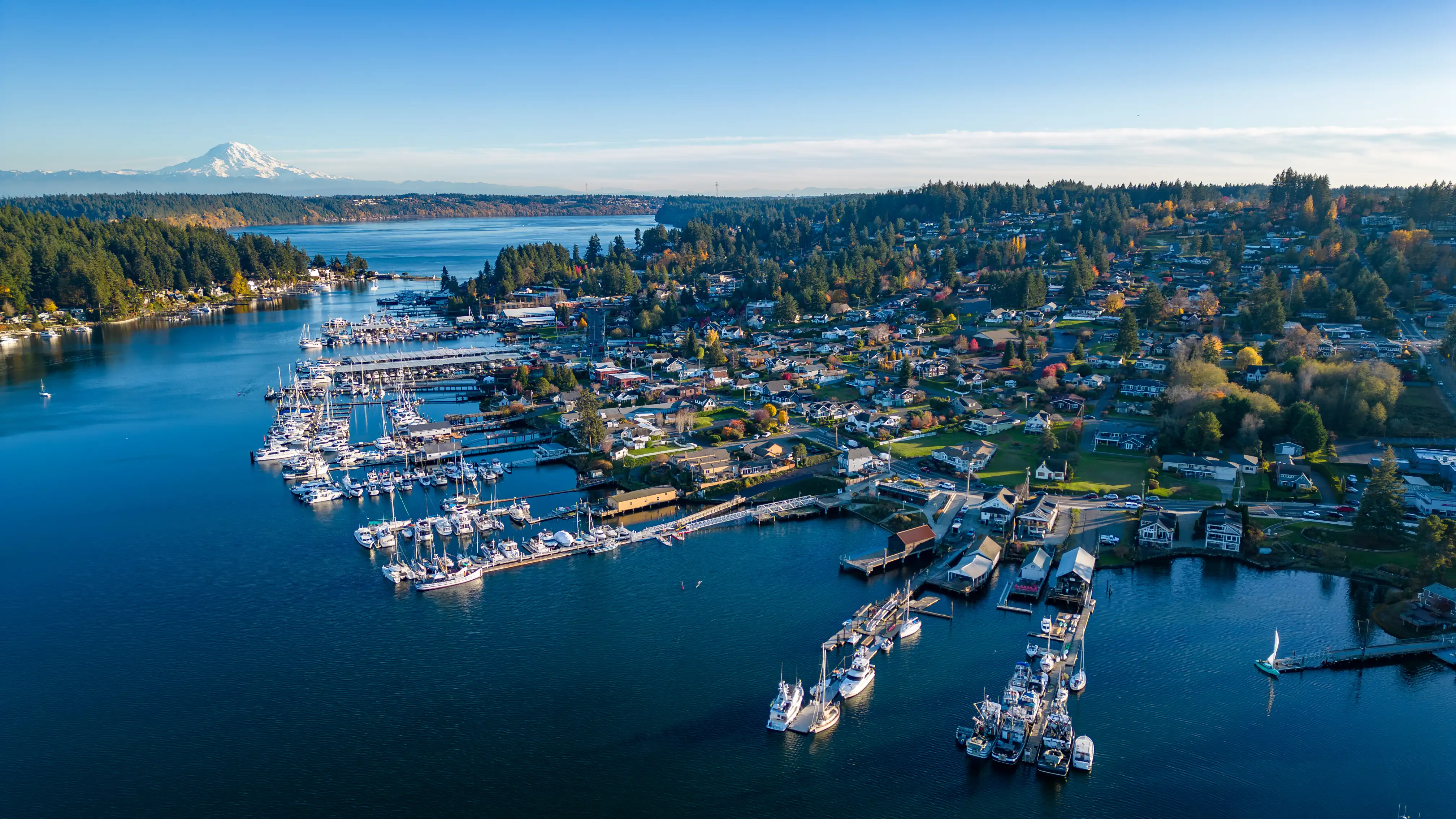
The economic and community backdrop matters here. Gig Harbor draws buyers from across the Puget Sound region, and the combination of the harbor setting, strong community identity, and proximity to major employment centers explains why prices here don't behave like a typical suburb of comparable size. The Tacoma Narrows Bridge is the daily hinge that Gig Harbor life swings on — it connects the peninsula to the broader metro and shapes both the town's character and its semi-insular feel. That access, combined with the waterfront atmosphere, is exactly why first-time buyers compete hard for entry-level inventory. See the full cost-of-living breakdown for how Gig Harbor compares to neighboring markets.
The good news for first-timers: the market has softened slightly from its pandemic peak — the June 2026 Zillow Home Value Index reflects a 2.7% year-over-year decline — and days on market have stretched to an average of 47 days (NWMLS, April 2026), giving buyers more time to think than they had in 2021 or 2022. Entry-level condos and inland neighborhoods such as Artondale, Rosedale, and Point Fosdick offer price points meaningfully below the citywide figure. The waterfront and the downtown village near Harborview Drive command a significant premium; if your budget can't reach there, you're in good company among first-time buyers who choose a different neighborhood first and work toward the harbor later.
This guide walks through what a first-timer's budget actually buys in Gig Harbor right now, the step-by-step purchase process as it plays out locally, an honest look at the cash you'll need at the table, and the mistakes buyers most commonly make in this specific market.

The Gig Harbor First-Time Buyer Reality
The citywide Zillow Home Value Index of $764,493 (June 2026) is the honest starting point — but it is not a ceiling, and it is not a floor. In April 2026, closed sales ranged from roughly $100,000 for vacant land and entry-level condos all the way to $2.3 million for waterfront estates. The median price per square foot sat at $349 that same month, which means a 1,200-square-foot condo or townhouse can price out below $450,000 — a materially different conversation for a first-time buyer than the headline figure suggests.
The structural constraint is supply. Gig Harbor is a peninsula. Shoreline regulations and the absence of large developable parcels keep the downtown and waterfront housing stock effectively fixed. New construction is concentrated almost entirely in Gig Harbor North, near Burnham Drive and the Costco corridor, while everything closer to the harbor and Skansie Brothers Park stays tight. First-time buyers who insist on walkable distance to the waterfront village — the stretch along Harborview Drive near Eddon Boat Park — will find themselves competing against buyers with significant equity behind them.
The practical move for first-timers: target inland neighborhoods. Artondale, Rosedale, and Point Fosdick routinely see entry-level detached homes below the citywide median, and Gig Harbor North offers newer construction at relatively more accessible price points. The compromise is that you're car-dependent for almost everything, and the harbor's atmosphere that drew you here in the first place is a short drive away rather than a walk. That compromise is real — but so is the equity you'd be building at a price your lender can actually approve. For a full picture of who this city suits best, see the living in Gig Harbor overview.
The Homebuying Process in Gig Harbor, Step by Step
Step 1: Get a Real Pre-Approval — Not an Estimate
In Gig Harbor, sellers will not entertain an offer without a lender letter. Not a pre-qualification based on self-reported income — an actual pre-approval backed by verified pay stubs, two years of tax returns, and two to three months of bank statements. Skipping the documentation step and generating an online estimate is the single most common mistake first-timers make before they even start touring.
A strong pre-approval gives you a rate lock window — typically 30 to 60 days — and produces a Loan Estimate that spells out your fees, rate, and loan terms before you lock. From the point of signing that Loan Estimate to closing, local lenders report an average of about 22 days. Budget your timeline accordingly when you're writing an offer.
Step 2: Shop With a Budget, Not a Wish List
Identify your maximum purchase price before you tour a single home. In a market where sellers received an average of 99.6% of list price as recently as April 2026, there is almost no room to fall in love with a home and then negotiate it down to your budget. Start with what the lender approved, subtract your estimated closing costs, and that remainder is your actual shopping ceiling.
Work with an agent who understands the micro-geography. The difference between a home in Artondale and one in the downtown Historic District is not just price — it's a fundamentally different daily life, and an agent who shows you both without flagging that distinction isn't serving your interests.
Step 3: Writing a Competitive Offer
With 47 average days on market (NWMLS, April 2026) and the market shifting toward more balanced conditions, you have more negotiating room than buyers did two years ago — but well-priced homes in desirable pockets still move fast. An escalation clause can help if you're targeting something in Gig Harbor North's newer construction, where competition remains tighter. Your agent should pull recent sold comps within the specific neighborhood, not citywide, because price per square foot varies significantly between inland and waterfront areas.
Step 4: Inspection and Appraisal
Do not waive the inspection contingency in Gig Harbor. Older homes in the downtown Historic District and on the waterfront frequently have deferred maintenance, aging septic systems if they sit on larger parcels, or marine-environment wear on windows and decks that a walk-through won't reveal. The inspection is the step first-timers most often treat as a formality — it is not. Budget for a general inspection plus a sewer scope on any older property.
The appraisal is ordered by your lender and is largely out of your control, but if the appraised value comes in below your offer price, you'll need to make up the gap in cash, renegotiate, or walk. In a softening market this matters more than it did at peak — ask your agent how recent appraisals in the neighborhood have been tracking against list prices.
Step 5: Closing
Washington State uses escrow-based closings, typically handled by a title and escrow company rather than a real estate attorney. You'll sign a large stack of documents — often remotely via digital notary — and funding typically occurs the same day or the following business day. Make sure your down payment and closing-cost funds have been sitting in your account long enough to satisfy the lender's seasoning requirements (usually 60 days for sourced funds).

How Much Home Can You Afford in Gig Harbor
The table below uses approximate, illustrative figures to help you see the cash required at different entry points. Closing costs are estimated at 2%–4% of the loan amount — the actual range is 2%–6%, and your Loan Estimate will give you the real number. These are estimates only; the interactive calculator below this section runs your specific scenario.
| Scenario | Purchase Price | Down Payment | Est. Closing Costs | Cash Needed at Table |
|---|---|---|---|---|
| FHA (3.5% down) — entry condo | $420,000 | ~$14,700 (3.5%) | ~$8,200–$16,000 | ~$23,000–$31,000 |
| Conventional (3% down) — entry condo | $420,000 | ~$12,600 (3%) | ~$8,200–$16,000 | ~$21,000–$29,000 |
| FHA (3.5% down) — inland detached | $575,000 | ~$20,125 (3.5%) | ~$11,100–$22,000 | ~$31,000–$42,000 |
| Conventional (5% down) — inland detached | $650,000 | ~$32,500 (5%) | ~$12,500–$25,000 | ~$45,000–$57,500 |
| Conventional (10% down) — near citywide median | $764,493 | ~$76,449 (10%) | ~$13,800–$27,500 | ~$90,000–$104,000 |
| Conventional (20% down) — near citywide median | $764,493 | ~$152,899 (20%) | ~$12,200–$24,500 | ~$165,000–$177,500 |
All figures are estimates for budgeting purposes only. Actual closing costs vary by lender, loan type, title company, and transaction. The interactive calculator below runs your specific scenario with current rates.
A few things the table makes clear: the gap between a 3% and a 20% down payment isn't just the down payment itself — closing costs are a fixed cash requirement regardless of how much you put down, and first-timers consistently underestimate them. At the entry-condo level, plan for roughly $21,000–$31,000 in total cash to close, minimum. At the citywide median with a lower down payment, the cash-needed figure climbs quickly past $90,000.
Washington has no state income tax, which does meaningfully affect take-home pay and therefore how much of your income you can put toward housing — lenders will factor your gross income against a debt-to-income ratio of no more than approximately 43% for the housing payment. The effective property tax rate in Gig Harbor is approximately 0.94%, which is relatively moderate by Puget Sound standards; see the cost-of-living page for full tax context.
Looking to buy in Gig Harbor? Estimate your payment.
Enter your numbers to see an estimated monthly mortgage payment.
Estimate only. Excludes HOA fees and mortgage insurance. The interest rate above is a starting point, not a quoted rate — replace it with your own to see real numbers. Insurance is a flat placeholder, not a Gig Harbor quote.
Common First-Time Buyer Mistakes in Gig Harbor
Touring Homes Before You Have a Lender Letter
This is the most predictable mistake, and it happens constantly. A buyer spends three weekends touring homes along Harborview Drive and Peacock Hill, falls in love with a property, and then discovers during the pre-approval process that their debt-to-income ratio is too high, or their bank statements show recent large deposits the lender needs to document for 60 days. The home is gone. Get the lender letter first — then schedule the first tour.
Waiving the Inspection to Win a Bidding War
In 2021 and 2022, waiving inspection contingencies was common in Gig Harbor. The market has shifted. With homes averaging 47 days on market and seller concessions becoming more common, you rarely need to waive the inspection to win anymore — and in a peninsula environment where older homes face consistent marine moisture, salt air on windows and framing, and septic systems on non-sewered parcels, skipping the inspection is a risk that can cost tens of thousands of dollars post-closing. Keep the contingency.
Underestimating the Peninsula's Geographic Reality
Gig Harbor sits at the end of a peninsula, and that geography shapes daily life in ways a weekend open-house visit doesn't fully reveal. Many buyers who relocated here say the same thing around month three: the peninsula's contained, semi-insular feel seemed like a selling point during the house hunt and felt more constraining once it was their permanent routine. Before making an offer, spend a full weekday — not just a Saturday afternoon — experiencing what getting on and off the peninsula actually involves at your real schedule. That's the kind of thing to learn before you're under contract, not after.
Underbudgeting for Cash to Close
First-time buyers consistently fixate on the down payment and treat closing costs as an afterthought. In Gig Harbor, where purchase prices are high even at the entry level, 2%–4% of the loan amount in closing costs is a significant dollar figure. At a $575,000 purchase price with 3.5% down, you're looking at a loan of roughly $554,875 — and 2%–4% of that loan is $11,000 to $22,000 on top of your down payment. That cash needs to be liquid and sourced well before closing day. Budget for it from the beginning, not after you're already under contract.
Shopping by ZIP Code Instead of By Neighborhood Character
All of Gig Harbor shares a ZIP code, but a home in the downtown Historic District near Skansie Brothers Park and a home in Gig Harbor North near the big-box retail corridor are very different daily experiences. First-timers who search broadly and then compare prices without accounting for what each neighborhood actually delivers often end up in the wrong place — either overpaying for a downtown address they can't afford to maintain, or buying in a convenient but characterless section of Gig Harbor North without realizing how different it feels from the harbor waterfront that attracted them in the first place. Be deliberate about which version of Gig Harbor you're actually buying into.
Local Expert Takeaway: Gig Harbor rewards first-time buyers who do the homework early and aim inland. Get the lender letter before you tour anything. Target Artondale, Rosedale, or Gig Harbor North for realistic entry-level pricing, and budget at least $23,000–$42,000 in total cash to close depending on your loan type and price point — closing costs here are not a rounding error. January and February are historically the lowest-competition months to make your move, before spring listings build and multiple-offer situations return. If your budget truly can't reach a detached home, an entry-level condo gives you a Gig Harbor address and a starting point for building equity in one of the stronger-performing markets in Pierce County.
Quick Takeaways & FAQs
✅ Entry-level condos and inland neighborhoods like Artondale and Rosedale offer purchase prices meaningfully below the citywide Zillow Home Value Index of $764,493, giving first-time buyers a real foothold without competing against waterfront money.
⚠️ Gig Harbor sits at the end of a peninsula, and that geography shapes daily life in ways that often surprise buyers who only visited on weekends — spend a full weekday experiencing the area before committing to a purchase.
📍 Sellers in Gig Harbor expect a verified lender letter — not an online pre-qualification estimate — before entertaining offers, so gathering your pay stubs, tax returns, and bank statements before your first tour is non-negotiable.
What credit score do I need to buy a home in Gig Harbor?
How long does it take to buy a home in Gig Harbor from start to close?
Is Gig Harbor a buyer's or seller's market right now?
Can I find a home in Gig Harbor under $500,000?
What is the best time of year to buy in Gig Harbor?
Moving to Washington?
Tell us what you need help with and we'll connect you with local resources.
