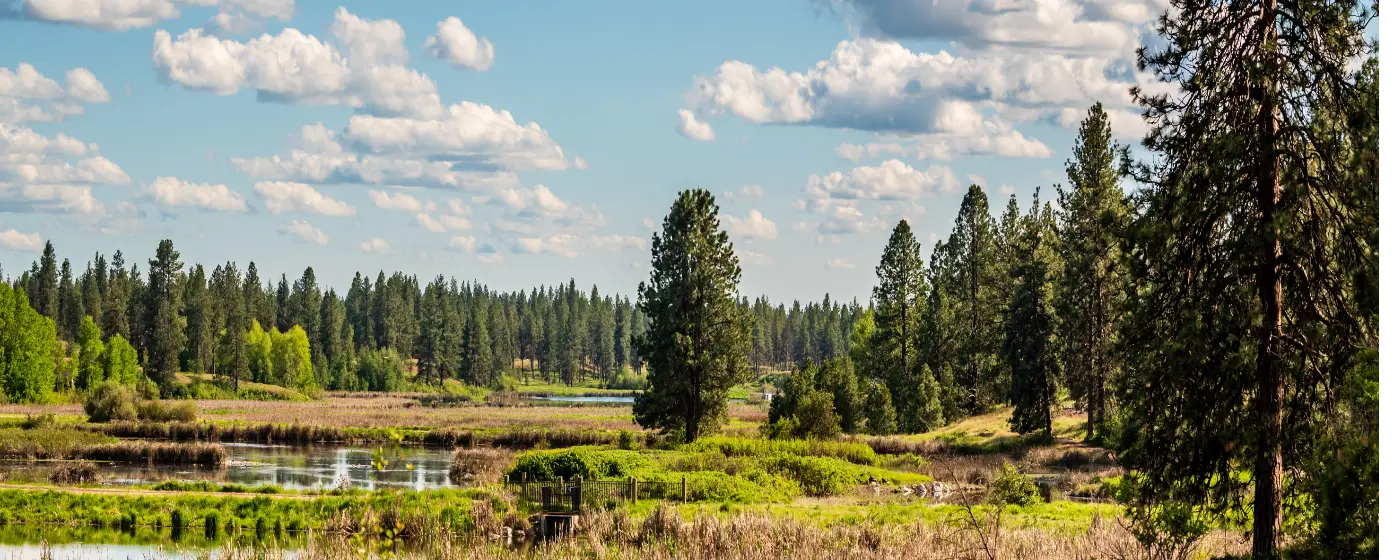
Most people who retire to Cheney weren't planning on it. They moved to the Spokane area for family or familiarity, started looking at what their money could actually buy, and discovered that a small city 17 miles southwest of downtown Spokane had something increasingly rare: real homes at real prices, a walkable historic core, and a built-out senior living infrastructure that would make sense in a city three times its size. The Zillow Home Value Index puts the typical home value at $415,802 (2026) — well below the broader Spokane metro — and Washington's absence of any state income tax means every dollar of Social Security, pension, or IRA withdrawal stays whole at the state level.
What drives daily life here isn't the university alone, though Eastern Washington University gives Cheney a cultural pulse that most small towns lack — lectures, performances, a library system, and a steady stream of people who have chosen to stay in an intellectually active environment. The city's year-round calendar also draws retirees who want low-key community engagement without big-city congestion. Fairchild Air Force Base, just north on Highway 904, contributes a population cohort that retires in place, and that veteran-retiree culture shapes the town's character in ways you'll notice quickly.
The trade-off is honest: Cheney is a small town, and small-town limitations apply. For a routine check-up or a prescription refill, CHAS Health's federally qualified health center on 2nd Street handles it locally. For a cardiac event, a cancer center, or advanced imaging, you're looking at a roughly 25-minute drive into Spokane — and that distance is the single most important variable for any retiree weighing this city seriously. On a fixed income, though, the math is often compelling: no state income tax on retirement income, an effective property tax rate of approximately 0.83%, grocery staples and prescriptions both exempt from Washington's sales tax, and senior-specific property tax relief programs that can further reduce the annual bill.
Whether you're seriously considering a move here or just starting to map the Inland Northwest retirement landscape, the sections below break down Cheney's healthcare access, retiree tax posture, daily budget, walkability and community life, downsizing options, and how it stacks up against the most relevant nearby alternatives.
Why Retirees Are Choosing Cheney
Cheney isn't competing with a Sun Belt resort town. It competes on substance: low cost, low congestion, and a genuine small-city community that doesn't evaporate after Labor Day. The Zillow Home Value Index puts the typical Cheney home at $415,802 (2026) — a figure that lets many retirees downsize with cash left over or buy outright after selling a larger home elsewhere. For a retiree couple moving from the Seattle suburbs or from out of state, that price difference is often the deciding number.
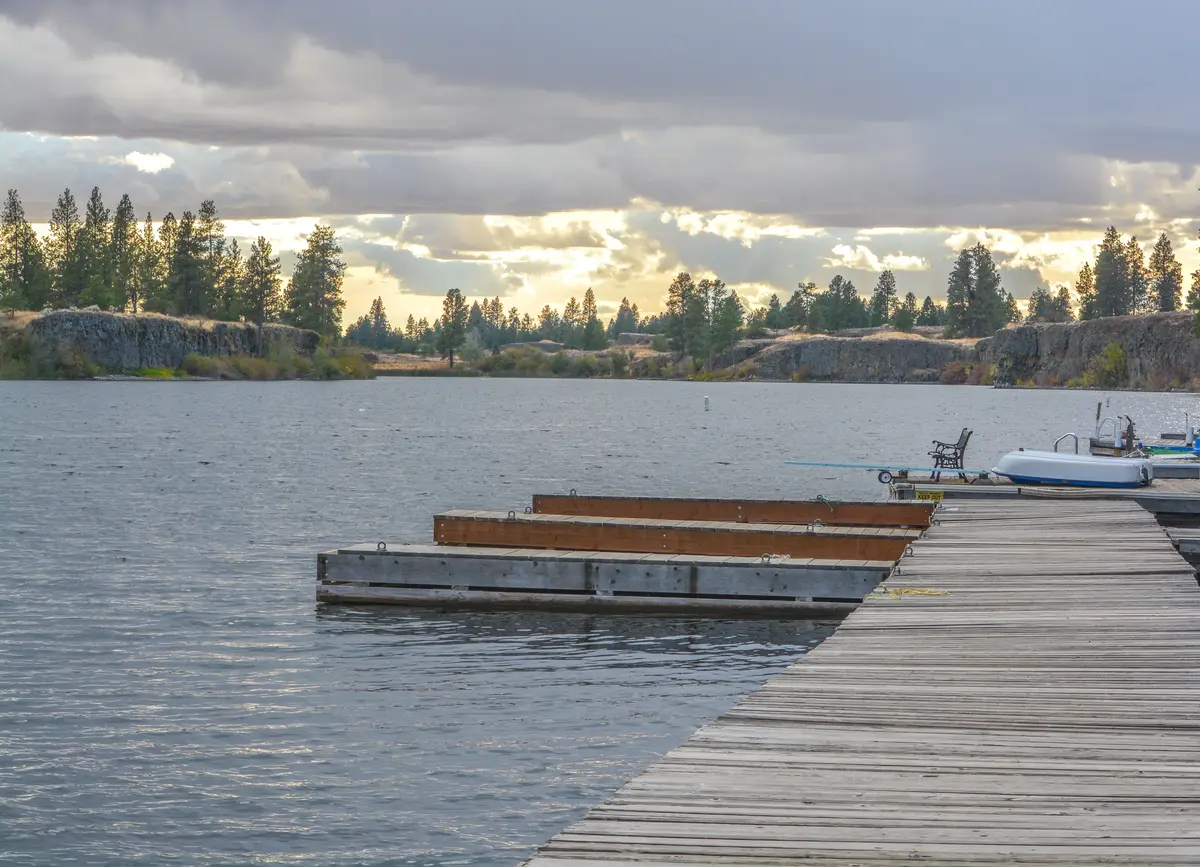
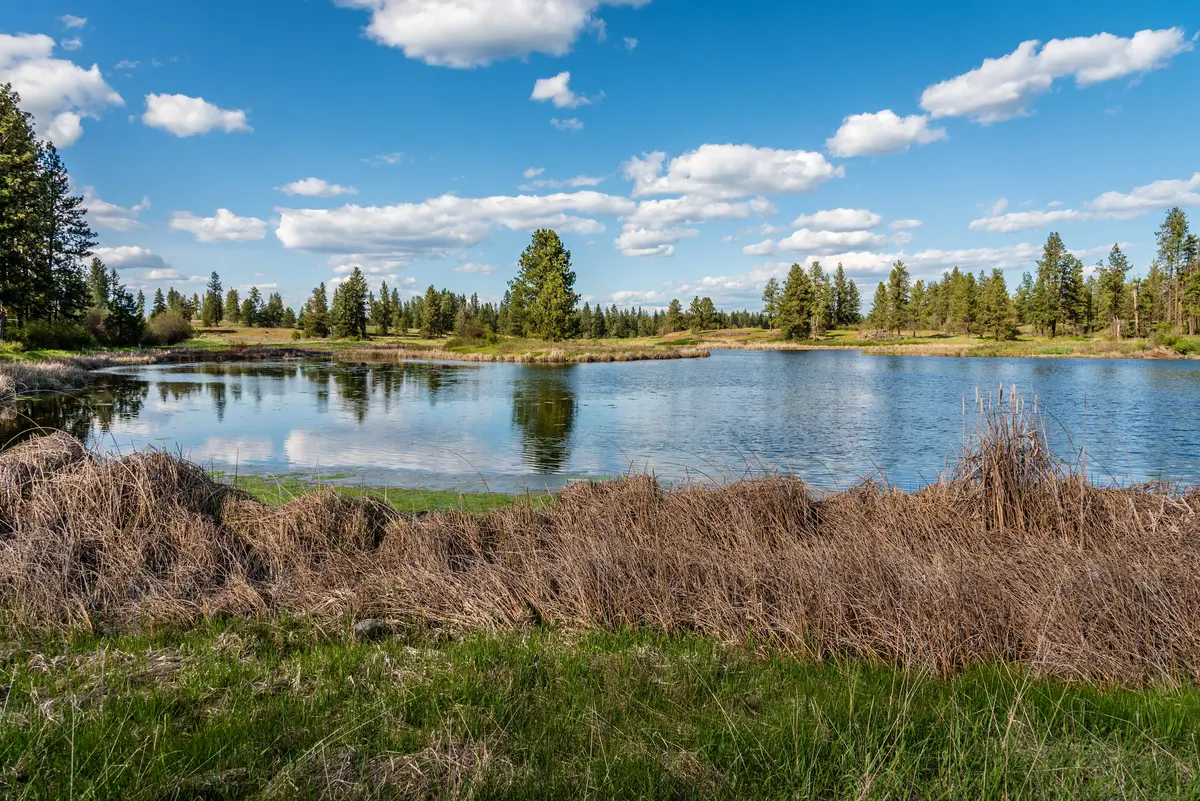
The fit is strongest for retirees who are healthy and mobile. If you drive confidently and have no immediate need for hospital-level care on a daily basis, the 25-minute Spokane corridor works fine — you're not isolated, you're just not walking distance from a trauma center. Retirees who prioritize outdoor access over urban amenities also land well here: Turnbull National Wildlife Refuge is six miles south of downtown, with more than 10 miles of trails including three accessible routes and a boardwalk at Blackhorse Lake. The Columbia Plateau Trail's Cheney Trailhead puts 130 miles of paved multi-use trail within reach of town. Active retirees who want nature without a mountain commute find that combination hard to replicate at this price point.
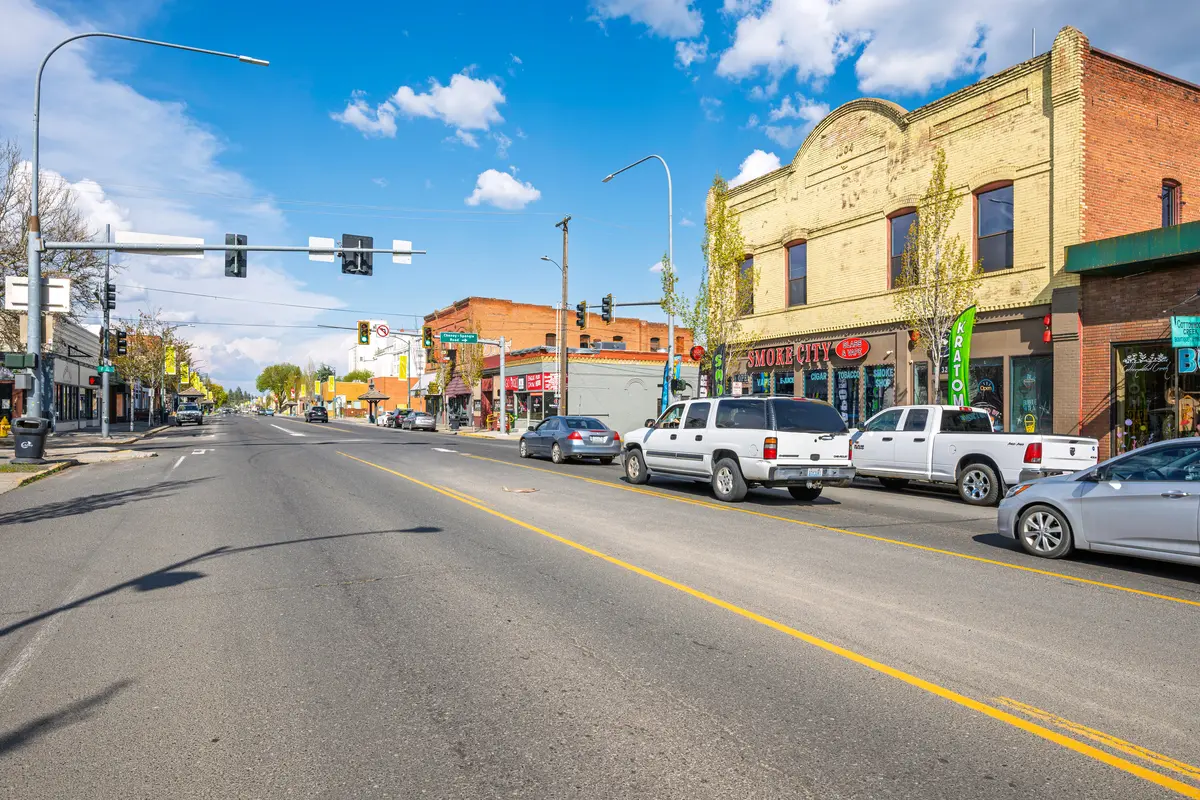
The honest caveat: if you need frequent specialist appointments, don't drive, or are prioritizing walkable urban amenities — independent restaurants, a performing arts district, a dense transit network — Cheney will frustrate you. The downtown core along 1st and 2nd Streets has the Farmhouse Cafe, Arturo's Mexican Restaurant, and Barrelhouse Pub & Pizza, plus a handful of local services, but it's a small-town main street, not a walkable urban village. Retirees who thrive here tend to own cars, enjoy quieter rhythms, and genuinely want to be in a place where neighbors still wave.
Healthcare & Medical Access in Cheney
What's Available Right in Town
CHAS Health operates a federally qualified health center at 1720 2nd St in Cheney, and it covers more than most small-town clinics: primary care, dental, pharmacy, behavioral health, women's health, and nutrition services — all in one location, for patients regardless of insurance status. For routine Medicare-covered visits, prescription management, and preventive care, this is a genuine local resource, not a stopgap.
Cheney Care Center adds a critical layer. This 54-bed, nonprofit, Medicare- and Medicaid-certified skilled-nursing facility sits on the Cheney Care Community campus less than two miles from Eastern Washington University. It provides 24-hour licensed nursing, seven-day-a-week physical, occupational, and speech therapy, and on-site ancillary services including podiatry, audiology, and dental hygiene. That's a level of post-acute and long-term care infrastructure that most cities of 12,800 people simply don't have in-house.
The Honest Gap: Advanced and Specialty Care
Cardiology, oncology, orthopedic surgery, neurology, advanced imaging — none of these live in Cheney. Major hospital systems serving the region are in Spokane, roughly 25 minutes northeast on Interstate 90. For a planned procedure or a scheduled specialist visit, 25 minutes is manageable. For a cardiac emergency or a stroke, that distance is a real variable, and retirees with known cardiovascular or neurological risks should factor it in explicitly.
The practical reality most Cheney retirees settle into: CHAS Health handles routine care locally, and Spokane handles everything else. Many retirees schedule specialist appointments on the same day as Spokane errands — the drive is easy, I-90 is uncongested outside commute hours, and the Spokane medical corridor is well organized once you know it. The adjustment is psychological more than logistical, but it's real.
Senior Living and Assisted Care Inventory
Cheney Assisted Living at 2229 N. 6th St offers assisted living and memory care for up to 32 residents, with a registered nurse on site, therapy services, fitness classes, and transportation for community outings; starting rates run approximately $5,907 per month. Across the broader inventory, SeniorGuidance.org lists five assisted-living facilities within the city, and SeniorLivingNearMe.org tracks approximately 20 senior living, housing, and retirement community options total — a depth that is genuinely unusual for a city this size and reflects Cheney's long-standing role as a regional care hub for southwest Spokane County.
The Retiree Budget in Cheney
Washington's Tax Posture for Retirees
Washington has no personal income tax — full stop. Social Security, pension income, IRA withdrawals, and 401(k) distributions are all untaxed at the state level. You won't even file a Washington income-tax return. For retirees moving from Oregon, California, or any state that taxes retirement income, this is an immediate and significant budget improvement.
Washington does have a long-term capital gains tax of 7% above a $278,000 annual standard deduction (indexed), but it explicitly exempts transactions through retirement accounts — 401(k)s, IRAs, Roth IRAs, and defined-benefit plans are not affected. Retirees with significant taxable investment accounts outside of retirement vehicles should consult a Washington estate attorney for their specific situation, but for most people drawing primarily from retirement accounts, the exposure is minimal.
Property Tax Relief for Seniors
Washington's senior property tax exemption program allows qualifying homeowners aged 61 or older — or those who are disabled — to freeze their assessed home value and receive partial exemptions or deferrals based on income. The 2026 program operates on three income tiers, with deeper relief for lower-income seniors. A separate deferral program lets qualifying seniors defer taxes entirely with a lien on the property, preserving cash flow without selling the home. Either program, applied to Cheney's approximately 0.83% effective property tax rate, can meaningfully reduce the annual tax bill for eligible households.
Daily Cost of Living on a Fixed Income
Washington's sales tax exempts both grocery food and prescription drugs — two categories that hit retirees on fixed incomes hardest. The combined state-plus-local sales tax rate in Cheney can reach into the 8.5%–9% range for other purchases, so it's worth knowing what is and isn't taxed before you budget. For full details on day-to-day costs in Cheney, including rent and utility benchmarks, see the cost-of-living page.
A practical note on daily life: breakfast at the Farmhouse Cafe on 1st Street and dinner at Arturo's Mexican Restaurant on 2nd St represent the kind of low-key, affordable local dining that suits a fixed-income lifestyle. Neither is a white-tablecloth splurge. Cheney's overall daily cost profile rewards retirees who don't need or want big-city luxury — the budget stretches further here than in Spokane, and noticeably further than in most western Washington markets.
Looking to buy in Cheney? Estimate your payment.
Enter your numbers to see an estimated monthly mortgage payment.
Estimate only. Excludes HOA fees and mortgage insurance. The interest rate above is a starting point, not a quoted rate — replace it with your own to see real numbers. Insurance is a flat placeholder, not a Cheney quote.
Walkability, Community & Staying Active in Cheney
The Walkability Reality
Cheney's downtown is compact and mostly flat, which helps. Errands along 1st and 2nd Streets — the post office, CHAS Health, a few local eateries, the library — are genuinely walkable if you live within the historic downtown core. Expand that radius to a full grocery run or a medical appointment, and you're back in the car. This is a driving city for most of its residents, and retirees who need to age out of driving will eventually need to weigh that honestly.
What Cheney does offer on foot — or close to it — is meaningful outdoor access. The Columbia Plateau Trail's Cheney Trailhead connects directly to 130 miles of multi-use trail, and the terrain is gentle enough that it suits a wide range of fitness levels. Turnbull National Wildlife Refuge, six miles south, has three accessible trails and a boardwalk at Blackhorse Lake designed for visitors who can't handle rough terrain. The 5-mile auto tour route through the refuge is open year-round and is a legitimate leisure activity that requires no physical exertion — a practical option as mobility changes over time.
Community and Social Life
Eastern Washington University is the social infrastructure anchor that most small towns don't have. EWU's public lecture series, community programs, and performing arts events are open to the broader community, and many retirees quietly integrate the university calendar into their own. The public library on 1st Street serves as a low-key community hub — book clubs, community meeting space, and a regular flow of people who have been in this city a long time.
The veteran and military-retiree community centered around Fairchild Air Force Base creates a tight social network that can feel immediately welcoming if you have that shared background — and slightly opaque if you don't. One thing newcomers notice after six months: Cheney's social life is genuinely relationship-driven. The city doesn't have a dense enough restaurant or entertainment district to generate casual social contact the way Spokane's South Hill does. You make friends intentionally, through organizations, volunteering, or the university — not by accident at a coffee shop. Retirees who are naturally introverted, or who already have social anchors here, find this suits them well.
Right-Sizing: Downsizing in Cheney
What the Market Offers Downsizers
Cheney's senior living inventory is disproportionately deep for its size. SeniorLivingNearMe.org counts approximately 20 senior living, housing, and retirement community options across the city — a figure that includes independent living, assisted living, memory care, and skilled nursing options. For a city of roughly 12,800 people, that breadth reflects both the town's historic care-infrastructure role and the ongoing demand from retirees who moved here intentionally.
Single-level ranch homes and older construction bungalows are the most common downsizing entry point. Areas of Cheney with post-1970s construction tend to offer single-story homes, attached garages, and manageable yards that suit retirees who want to own without maintaining a large property. The historic downtown core has older homes that need more maintenance, which is worth factoring into any downsizing calculation.
Assisted Living and the Cheney Care Community Campus
For retirees who want or need a continuum of care — where you start in independent or assisted living and can transition to skilled nursing without moving off campus — the Cheney Care Community campus is the local anchor. Cheney Care Center's 54 skilled-nursing beds and Cheney Assisted Living's 32-resident facility at 2229 N. 6th St represent two points on that continuum. Assisted living starting rates run approximately $5,907 per month at Cheney Assisted Living, which is broadly consistent with northwest regional rates and meaningfully below what equivalent care costs in larger markets like Seattle or Portland.
One honest limitation: purpose-built 55+ active-adult communities with amenities like resort-style pools, pickleball courts, and gated entries — the kind you'd find in Sun Belt retirement markets — don't exist in Cheney. The inventory here runs toward functional, community-oriented care settings rather than lifestyle-resort models. Retirees who want the latter will find more options in Spokane's South Hill or in Spokane Valley. What Cheney offers instead is real value, a genuine community feel, and the ability to age in place within a single small city rather than being pushed to progressively cheaper suburban rings as care needs grow.
Cheney vs Nearby Retirement Destinations
| City | Cost vs Cheney | Primary Hospital Access | Walkability | Senior Living Depth | Overall Retirement Fit |
|---|---|---|---|---|---|
| Cheney | Anchor | CHAS Health locally; major systems ~25 min in Spokane | Flat downtown core; car needed for most errands | ~20 options for a city of 12,800 — unusually deep | Value Nature Strong for healthy, mobile retirees on a budget |
| Spokane | Noticeably pricier | Multiple major hospital systems in-city | South Hill and downtown offer genuine on-foot access | Extensive — largest inventory in the region | Walkable Best for retirees who want urban amenities and in-city hospital access |
| Medical Lake | About the same or slightly cheaper | No local hospital; Spokane ~20 min | Very limited; car-dependent small town | Thin — fewer dedicated senior options | Quiet Appeals to retirees wanting extreme quiet; limited services |
| Airway Heights | Slightly cheaper | No local hospital; Spokane ~20 min | Limited; strip-commercial layout | Growing but still limited | Value Lower entry cost but fewer community amenities than Cheney |
| Spokane Valley | Somewhat pricier | Regional medical center on-site; Spokane systems nearby | Moderate — more suburban than urban | Strong — multiple senior communities and care facilities | Families Commuter Good balance of services, but more suburban in character |
| Rural areas west of Cheney | Comparable or slightly cheaper | No local hospital; Cheney or Spokane required | Rural; essentially no walkable errands | Very limited | Privacy Rural appeal only; not recommended for retirees with emerging care needs |
Spokane is the clear winner on healthcare depth and walkable urban life — the trade-off is a noticeably higher price point and the congestion that comes with a city ten times Cheney's size.
Medical Lake and Airway Heights are cheaper, but both have thinner senior living infrastructure and fewer daily-life amenities; retirees who choose them typically already have deep local ties or are prioritizing extreme quiet over services. Spokane Valley hits a middle ground — more services than Cheney, more suburban than Spokane proper — and suits retirees who want a bit more infrastructure without committing to a full urban environment. Rural areas further west are appealing early in retirement but only work well before driving limitations or care needs change the math. For retirees who want genuine value, a real sense of community, and enough senior living infrastructure to age in place without relocating again, Cheney's case is stronger than its size suggests.
Local Expert Takeaway: Cheney's retirement proposition is straightforward: Washington keeps all your retirement income tax-free, the property tax rate sits at approximately 0.83% with senior exemptions available on top of that, and the Cheney Care Community campus means you can move here healthy and age in place without eventually leaving the city. The honest limit is healthcare depth — CHAS Health at 1720 2nd St handles routine care well, but any serious cardiac or oncology need goes to Spokane. If you drive, that's 25 minutes on I-90. If you don't, that's the one variable that needs a plan before you sign anything.
Quick Takeaways & FAQs
✅ Washington's no-income-tax environment means Social Security, pension, and IRA withdrawals are completely untaxed at the state level — one of the most retiree-friendly tax structures in the country.
⚠️ Advanced medical care — cardiology, oncology, surgery — requires a 25-minute drive to Spokane; retirees with significant health conditions should treat that commute as a daily variable, not an occasional inconvenience.
📍 Turnbull National Wildlife Refuge, six miles south of downtown, has three accessible trails and a boardwalk at Blackhorse Lake — a year-round outdoor amenity purpose-built for visitors across a range of mobility levels.
Is Social Security taxed in Washington State if I retire in Cheney?
What hospital is closest to Cheney, WA for retirees?
Are there 55+ or active-adult communities in Cheney?
Does Washington State offer property tax relief for senior homeowners in Cheney?
How does retiring in Cheney compare to retiring in Spokane?
Moving to Washington?
Tell us what you need help with and we'll connect you with local resources.
