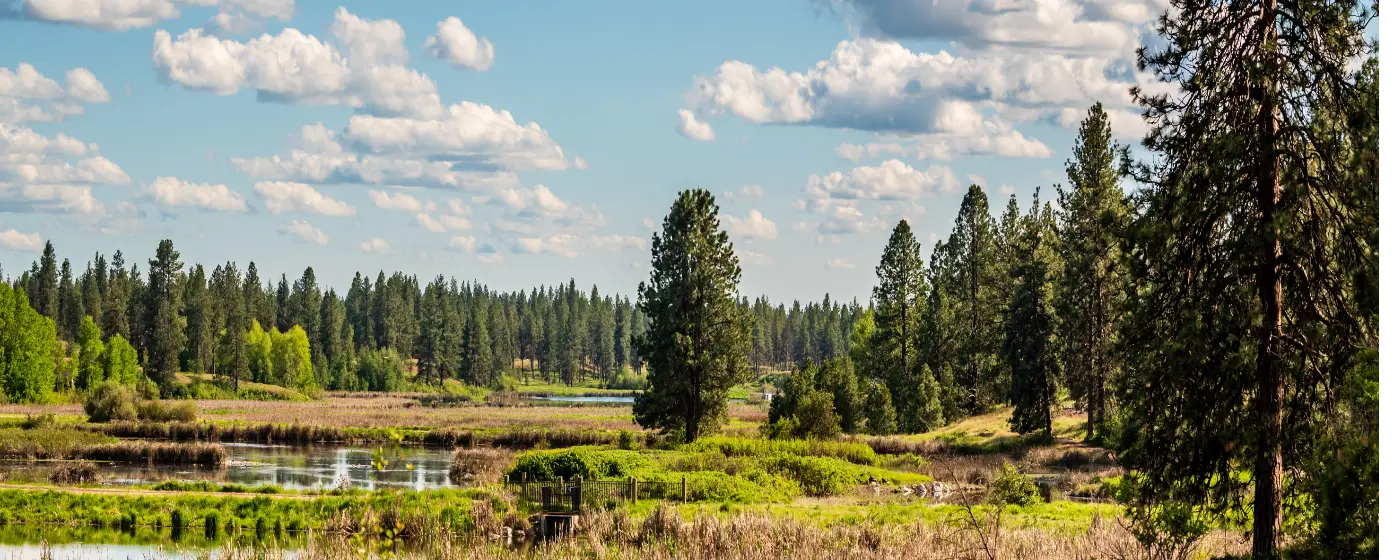
Most people researching Cheney focus on Eastern Washington University or the commute to Spokane. What they miss — until they're already here — is that this small city of roughly 12,800 people sits at the edge of one of the most ecologically distinct landscapes in the American West. The Channeled Scablands begin practically at the city limits. A 23,000-acre national wildlife refuge is fewer than five miles away. A 130-mile rail-trail starts its southern run right here. Outdoor access that would be marketed as a major amenity in a larger city is just... Tuesday in Cheney.
That proximity to nature isn't accidental. Cheney's position on the basalt plateau of eastern Washington, southwest of Spokane along Highway 904, puts it at the convergence of ponderosa pine forest, wetland ecosystems, and open steppe — terrain shaped by the same ancient floodwaters that carved the Columbia Basin. The city's nine municipal parks handle the everyday needs: youth sports, playgrounds, picnic shelters. But the real draw for anyone who runs, rides, birdwatches, or fishes is the public land that begins where the city's edges fade into wheat fields and scabrock.
For newcomers moving from denser metros, the recreational calculus here genuinely surprises people. There is no entrance fee at Turnbull National Wildlife Refuge. The paved stretch of the Columbia Plateau Trail is free and starts within city limits. Fish Lake, two miles up the Cheney-Spokane Highway, prohibits gasoline motors — meaning the water stays quiet enough to actually hear the birds. Cheney's neighborhood landscape adds another layer: parks like Sutton Park are woven into residential areas, not cordoned off at the city's edge.
Whether you're weighing a move or already committed, the sections below break down Cheney's municipal park system, Turnbull National Wildlife Refuge, the Columbia Plateau Trail, and Fish Lake — covering what each offers, when to go, and what locals know that the trailhead signs don't say.
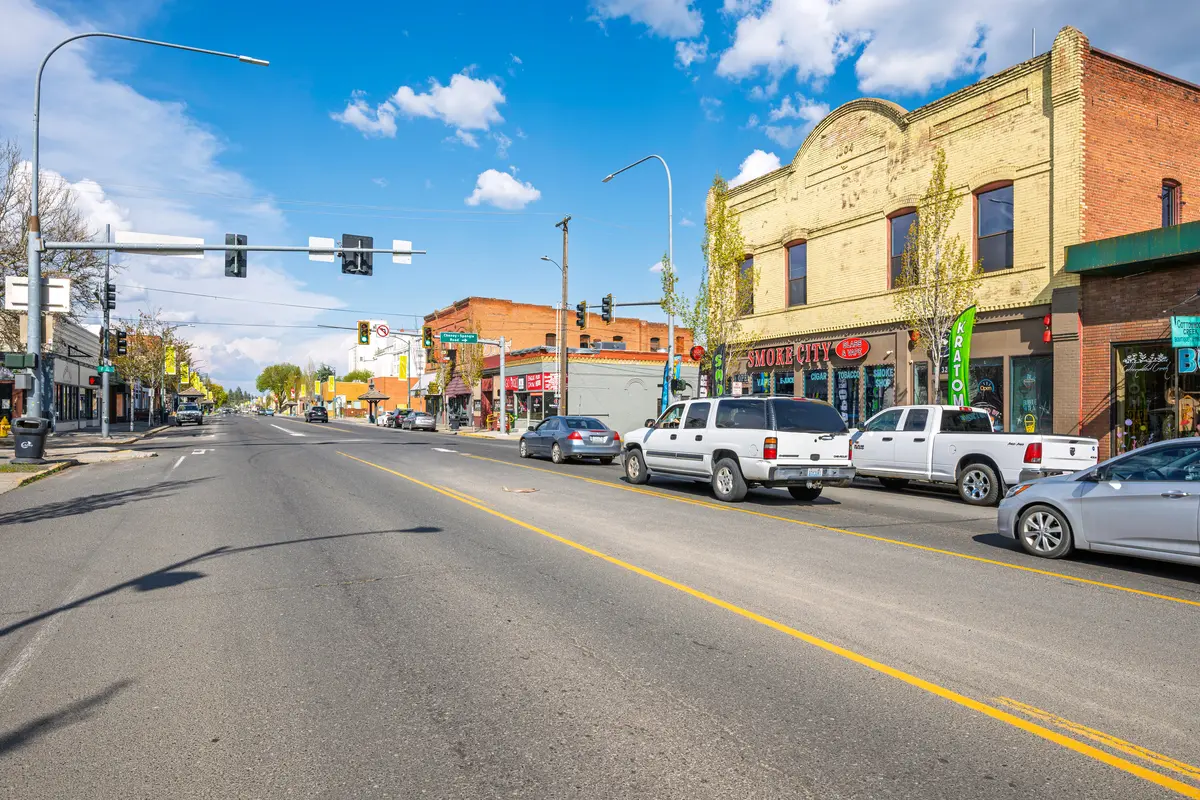
Cheney's Nine Municipal Parks: What's Actually There
The Cheney Parks & Recreation Department, based at 615 4th Street, manages nine city parks — a respectable number for a city this size, and one that gives most residential areas walkable access to green space. Programming runs year-round: after-school activities for youth, recreational classes for adults, trips and seasonal events, and adaptive programs for individuals with disabilities. It's a full-service department, not a mow-and-maintain operation.
Sutton Park stands out as the top-rated city park in the 99004 ZIP code, and it earns that distinction through design rather than scale. It anchors the Sutton Park neighborhood on the city's west side with shaded open lawn, sports facilities, and the kind of unprogrammed space that makes it genuinely useful on a Tuesday afternoon rather than just on summer weekends.
What the Municipal System Covers
| Feature | Details |
|---|---|
| Number of parks | 9 city-managed parks |
| Top-rated park | Sutton Park (Yelp, March 2026, 99004 ZIP) |
| Programming served | Preschoolers through seniors; adaptive programs for disabilities |
| Program types | After-school youth, adult fitness classes, seasonal trips, special events |
| Administration address | 615 4th Street, Cheney |
| Youth sports connection | Leagues and activities coordinated through the parks system; see the schools page for full detail |
What Locals Know
The parks system is functional but modest. You won't find an aquatic center or a multi-sport complex within the city's nine parks — those needs typically get met in Spokane, about 25 minutes east. What the system does well is proximity: for parents with young children in neighborhoods like Amber Meadows or Golden Hills, having a usable park within walking distance matters more than amenity density.
One honest friction point: summer weekend afternoons at the more popular parks can feel crowded relative to their size, partly because Eastern Washington University students fill the city's population and use public space heavily from September through May. If you move here expecting the parks to feel like a quiet neighborhood amenity year-round, the university calendar is worth knowing.
Turnbull National Wildlife Refuge: The Outdoors Asset Nobody Warns You About
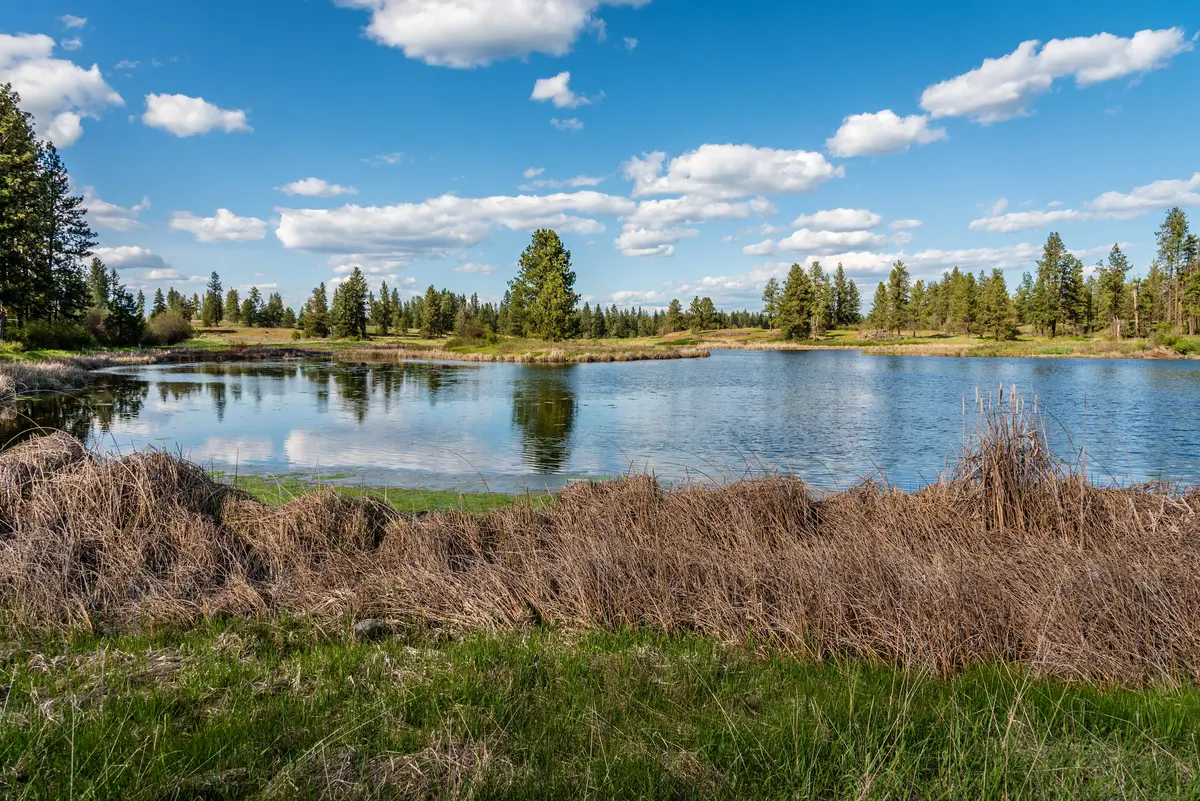
Five miles south of downtown Cheney on Cheney-Plaza Road sits a place that legitimately reshapes how newcomers think about the area. Turnbull National Wildlife Refuge covers over 23,000 acres of the Channeled Scablands, a landscape so geologically specific that it holds a designation unique within the entire National Wildlife Refuge System. Ponderosa pine forest, seasonal wetlands, meadow steppe, and riparian corridors layer on top of basalt formations carved by ancient catastrophic floods. No other refuge looks like this.
The Wildlife Reality
Turnbull supports 44 mammal species and over 200 bird species. That second number matters more than it looks on paper: this is considered one of eastern Washington's premier migratory bird corridors, and the spring and fall windows — roughly March through May and September through November — bring species counts that draw serious birders from across the region. Wildflowers peak in mid-May, which coincides with early migration season and makes for one of the genuinely spectacular days you can have outdoors in eastern Washington without driving far.
Trumpeter swans appear on the trail during migration season. Deer, elk, and moose move through the refuge throughout the year. The public use area covers 3,300 acres, and from March 1 through August 15 all visitors must stay on designated trails and roads — a nesting-season rule that's enforced, not just suggested.
Trails at Turnbull
| Trail | Distance / Notes | Accessibility |
|---|---|---|
| Pine Lake Loop | Short loop; interpretive signage | Accessible |
| Kepple Peninsula Interpretive Trail | Short loop; wetland views | Accessible |
| Blackhorse Lake Boardwalk | Boardwalk surface; lake views | Accessible |
| Stubblefield Trail | ~4.4 miles; longer backcountry feel | Standard trail |
| Bluebird Trail | Named for nesting bluebird boxes along route | Standard trail |
| System total | Over 10 miles of designated trails | Mix of surfaces |
Entrance is free. Hours run 6 am to 6 pm from November through April, extending to 6 am to 9 pm from May through October. That extended summer window is more useful than it sounds — late evening light over the wetlands in July is genuinely worth the drive from wherever you're coming from inside the city.
What Surprises People After Six Months
New residents often discover Turnbull through the Columbia Plateau Trail passing through it — and then realize they've been driving past a free, world-class wildlife area every time they run errands south of town. The most common reaction from people who've lived here a year: "I had no idea this was right here." The refuge doesn't market itself the way a state park would, there's no entry booth, and it sits off a county road that most Cheney commuters never take. Finding it on purpose, rather than by accident, is one of the better things you can do in your first month here.
The Columbia Plateau Trail: 130 Miles Starting Here
The Columbia Plateau State Park Trail is a 130-mile rail-trail built on an abandoned 1908 Spokane, Portland & Seattle Railroad corridor, running from Fish Lake near Cheney south toward Pasco. Of those 130 miles, 23 miles between Cheney and Lincoln County are currently developed for public use — and Cheney holds the most accessible entry point in the entire system.
Surface, Users, and Seasons
The northernmost 3.75 miles — from Fish Lake Regional Park down to the Cheney Trailhead — are paved asphalt. That matters because it opens the trail to a wider mix of users: cyclists, hikers, inline skaters, and in winter, snowshoers and Nordic skiers who don't need groomed conditions to enjoy it. The remaining 19.25 miles of the northern segment are crushed gravel, better suited to mountain bikes, trail runners, and hikers comfortable with variable footing.
| Segment | Surface | Distance | Best For |
|---|---|---|---|
| Fish Lake to Cheney Trailhead | Paved asphalt | 3.75 miles | Nature Cyclists |
| Cheney to Lincoln County line | Crushed gravel | 19.25 miles | Hiking Trail running |
| Through Turnbull NWR | Mixed | 4.75 miles | Wildlife viewing |
| Full developed segment | Mixed | 23 miles | Multi-use |
| Total planned trail length | — | 130 miles | Future expansion |
| Winter use (paved segment) | Asphalt / snow | 3.75 miles | Snowshoe / Nordic |
The Wildlife-Viewing Window
The 4.75-mile stretch through Turnbull National Wildlife Refuge is where the trail becomes something more than a recreational corridor. Deer, elk, moose, and over 200 bird species use this section year-round. Spring migration (March through May) and fall migration (September through November) are the windows most locals plan around — trumpeter swans in particular are a regular sighting that visitors from outside the region find genuinely unexpected.
The trail's railroad origin shows in how it moves through the landscape: near-zero grade, gradual curves, wide sightlines through the scablands. That flatness makes it more accessible than most eastern Washington trail options, and also makes it deceptively long-feeling — you can cover eight miles out-and-back without any significant climb, which is either a feature or a frustration depending on what you're training for.
Getting On the Trail from Cheney
The Cheney Trailhead is the practical starting point for most in-town users. The Fish Lake Trailhead, two miles northeast on the Cheney-Spokane Highway, adds the paved northern segment and connects to the county park's facilities. Neither trailhead requires a fee; Washington State Discover Pass rules apply for parking at the state park trailhead. If you move to Cheney's west side, you can be on the trail in under ten minutes from most residential streets.
Looking to buy in Cheney? Estimate your payment.
Enter your numbers to see an estimated monthly mortgage payment.
Estimate only. Excludes HOA fees and mortgage insurance. The interest rate above is a starting point, not a quoted rate — replace it with your own to see real numbers. Insurance is a flat placeholder, not a Cheney quote.
Fish Lake and Water Recreation Near Cheney
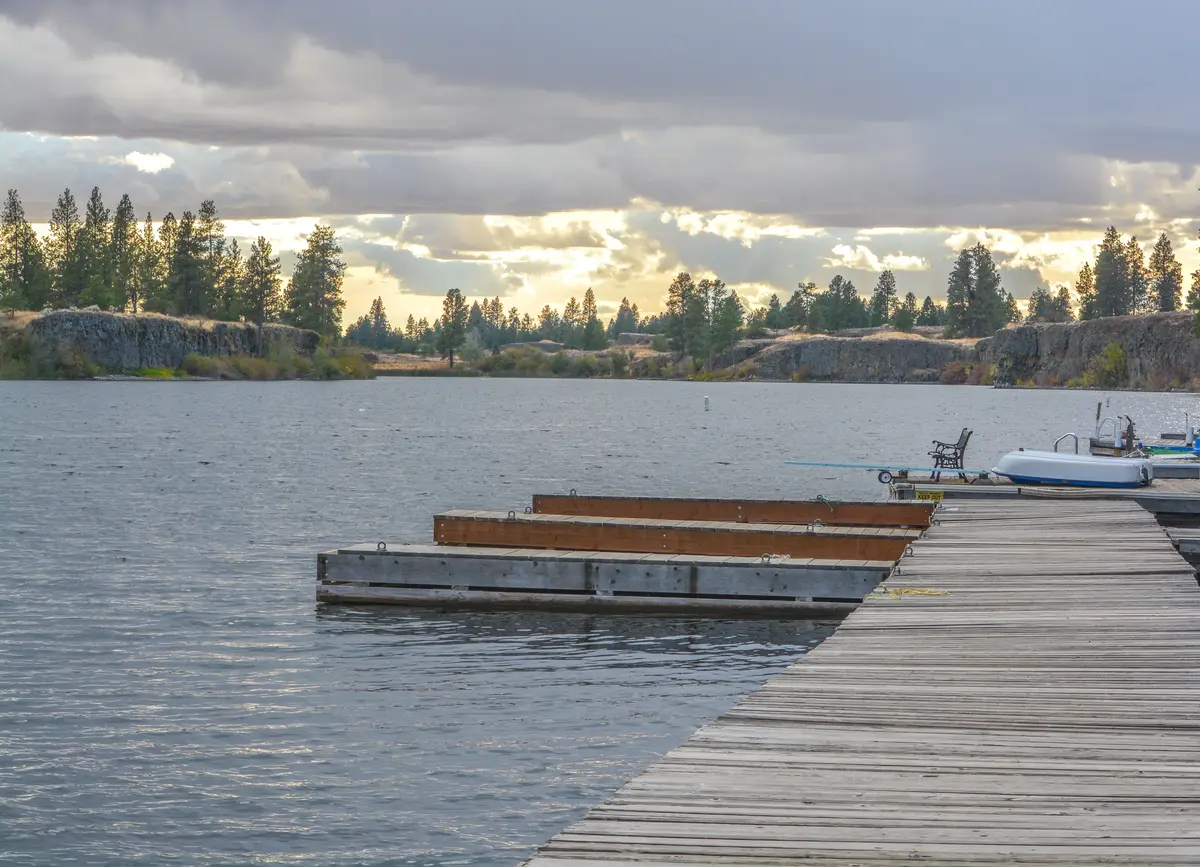
Fish Lake sits approximately two miles northeast of Cheney on the Cheney-Spokane Highway — close enough to reach on a bicycle via the Columbia Plateau Trail's paved northern segment, which starts at the lake's edge. At 43 acres (Washington Department of Fish & Wildlife figure), it's not a large body of water, but its no-gasoline-motors rule defines the experience in a way that a size measurement can't: the lake is quiet, the surface is calm, and the bird activity around the shoreline is audible.
Fishing Specifics
Fishing season runs from the last Saturday in April through September 30. Target species include rainbow trout, yellow perch, pumpkinseed sunfish, and eastern brook trout — a mix that supports both serious anglers and families fishing with kids for the first time. Non-motorized watercraft — kayaks, canoes, hand-powered rowboats — are permitted, making the lake genuinely usable rather than just fishable from shore.
| Detail | Information |
|---|---|
| Size | 43 acres (WDFW figure) |
| Location | ~2 miles northeast of Cheney on Cheney-Spokane Hwy |
| Motor restrictions | Gasoline-powered boats prohibited |
| Fishing season | Last Saturday in April through September 30 |
| Target species | Rainbow trout, yellow perch, pumpkinseed sunfish, eastern brook trout |
| Trail connection | Columbia Plateau Trail (paved) starts at Fish Lake Regional Park |
| Future development | 14-acre adjacent parcel acquired by Spokane County; possible swimming beach, boat access, camping (plans pending) |
What's Coming
Spokane County recently completed acquisition of a 14-acre private resort adjacent to its existing Fish Lake County Park. Future development plans potentially include a swimming beach, boat access improvements, and a camping facility — none of which exist yet, but the acquisition signals meaningful long-term investment in the area. For anyone buying a home in Cheney today, that expansion is worth knowing about: it could substantially change how Fish Lake functions as a recreation asset within a few years.
The Broader Water Picture
Fish Lake is the primary water recreation destination within a short ride or drive of Cheney proper. Medical Lake — a small city about 8 miles northwest — has its own namesake lake with a broader range of water activities, and Spokane's Riverside State Park adds riverfront access for paddlers willing to make the drive. Cheney itself is a plateau town, not a waterfront town, so Fish Lake's no-wake quiet is genuinely the local experience rather than a consolation prize. Most people who fish or paddle here come to appreciate the absence of jet skis more than they expected to.
Local Expert Takeaway: Cheney's outdoor assets are stacked in a way that only becomes obvious once you're living here. Turnbull National Wildlife Refuge is free, five miles out, and genuinely world-class for birding — most new residents stumble onto it via the Columbia Plateau Trail rather than researching it deliberately. The paved section of that trail from Fish Lake down to the Cheney Trailhead is the everyday workout corridor locals actually use: flat, wide, no fee, accessible by bike from most of the city's west side neighborhoods. Fish Lake is small but quiet in the way that expensive private lakes try to be. If you're moving here from a larger city and wondering where people go on weekends, the answer is almost always some combination of those three places — often in the same afternoon.
Quick Takeaways & FAQs
✅ Turnbull National Wildlife Refuge — 23,000 acres, over 200 bird species, free admission — sits fewer than five miles from downtown Cheney.
⚠️ The city's nine municipal parks are functional and well-distributed across residential areas, but lack a major aquatic or multi-sport complex; those needs require a trip to Spokane.
📍 The Columbia Plateau Trail's paved northern segment starts at Fish Lake and connects directly to the Cheney Trailhead — a genuinely useful car-free recreation loop for residents on the city's west side.
Is Turnbull National Wildlife Refuge really free to enter?
Can you bike from Cheney to Fish Lake on the Columbia Plateau Trail?
What are the best months to visit Turnbull NWR for birding?
Are there any swimming lakes or beaches near Cheney?
How many miles of trails does the Cheney region actually have?
Moving to Washington?
Tell us what you need help with and we'll connect you with local resources.
