San Antonio Metro · Best for Remote Workers · 2026
Best Cities for Remote Workers in the San Antonio Metro, Texas — Ranked
Cities ranked on internet infrastructure, property tax burden, airport convenience, home affordability, and overall quality of life for people who work from home.
By Todd Davidson, Relocation Writer & Housing Market Analyst, Updated September 2026
If you work from home and you're considering a move to the San Antonio metro, the choice between its surrounding cities is not just a lifestyle decision — it's a financial one. Texas has no state income tax, which shifts the real recurring cost of ownership onto property taxes, and those rates vary enough between cities to matter meaningfully on a monthly budget. Layer in how close each city sits to San Antonio International Airport, whether the local infrastructure can support a video-call-heavy workday, and what you actually have to do when you close the laptop, and the gap between these cities widens fast.
The cities in this comparison span a wide range of characters: from a fast-growing river city with deep infrastructure investment to quiet Hill Country towns where you'll want to confirm broadband coverage before signing anything, and from established Bexar County suburbs sitting minutes from the airport to more remote addresses where the trade-off is price and peace over connectivity and convenience. Some cities deliver a rich roster of local restaurants, parks, and landmarks that make a work-from-home life feel full; others are honest bedroom communities where San Antonio does the heavy lifting on entertainment. The sections below break down how each city performs across the five factors that matter most to remote workers in this region.
How This Ranking Was Built
Each city is scored 1-10 on every dimension below against a fixed statewide scale — never against the other cities in this region — then combined into one weighted Composite score out of 10.
Internet Speed — 25%Weighted contribution to the composite score, graded 1-10 against a fixed statewide scale.
Tax Burden — 20%Weighted contribution to the composite score, graded 1-10 against a fixed statewide scale.
Airport Access — 20%Weighted contribution to the composite score, graded 1-10 against a fixed statewide scale.
Affordability — 20%Weighted contribution to the composite score, graded 1-10 against a fixed statewide scale.
Quality of Life — 15%Weighted contribution to the composite score, graded 1-10 against a fixed statewide scale.
Top 14 Cities: Best for Remote Workers Snapshot
Ranked by overall composite score. Click any city to jump to the full breakdown.
| # | City | Composite | Internet | Property Tax | Median Price |
|---|
| 1 | New Braunfels
Comal County | 7.6/10 | 8.6 | 6.8 | $351,190 |
| 2 | Schertz
Guadalupe County | 6.8/10 | 6.3 | 8.7 | $315,578 |
| 3 | Converse
Bexar County | 6.4/10 | 5.8 | 5.6 | $243,003 |
| 4 | Live Oak
Bexar County | 6.2/10 | 4.3 | 5.5 | $244,551 |
| 5 | Boerne
Kendall County | 6.2/10 | 5 | 10 | $562,046 |
| 6 | Seguin
Guadalupe County | 6.0/10 | 6.2 | 4.2 | $274,107 |
| 7 | Cibolo
Guadalupe County | 5.9/10 | 6.1 | 5.9 | $336,323 |
| 8 | Leon Valley
Bexar County | 5.8/10 | 3.6 | 5.5 | $264,962 |
| 9 | Universal City
Bexar County | 5.8/10 | 4.7 | 3.9 | $266,030 |
| 10 | Floresville
Wilson County | 5.7/10 | 3.1 | 10 | $357,825 |
| 11 | Selma
Bexar County | 5.4/10 | 3.7 | 3.6 | $287,687 |
| 12 | Gonzales
Gonzales County | 5.3/10 | 2.7 | 5.8 | $249,933 |
| 13 | Pleasanton
Atascosa County | 4.5/10 | 3.6 | 2 | $260,145 |
| 14 | Alamo Heights
Bexar County | 4.3/10 | 2.8 | 3.9 | $739,289 |
Property Tax
6.8/10
out of 10
Airport Access
7.8/10
out of 10
Affordability
5.1/10
out of 10
Quality of Life
10/10
out of 10
Median Price
$351,190
2026 market price
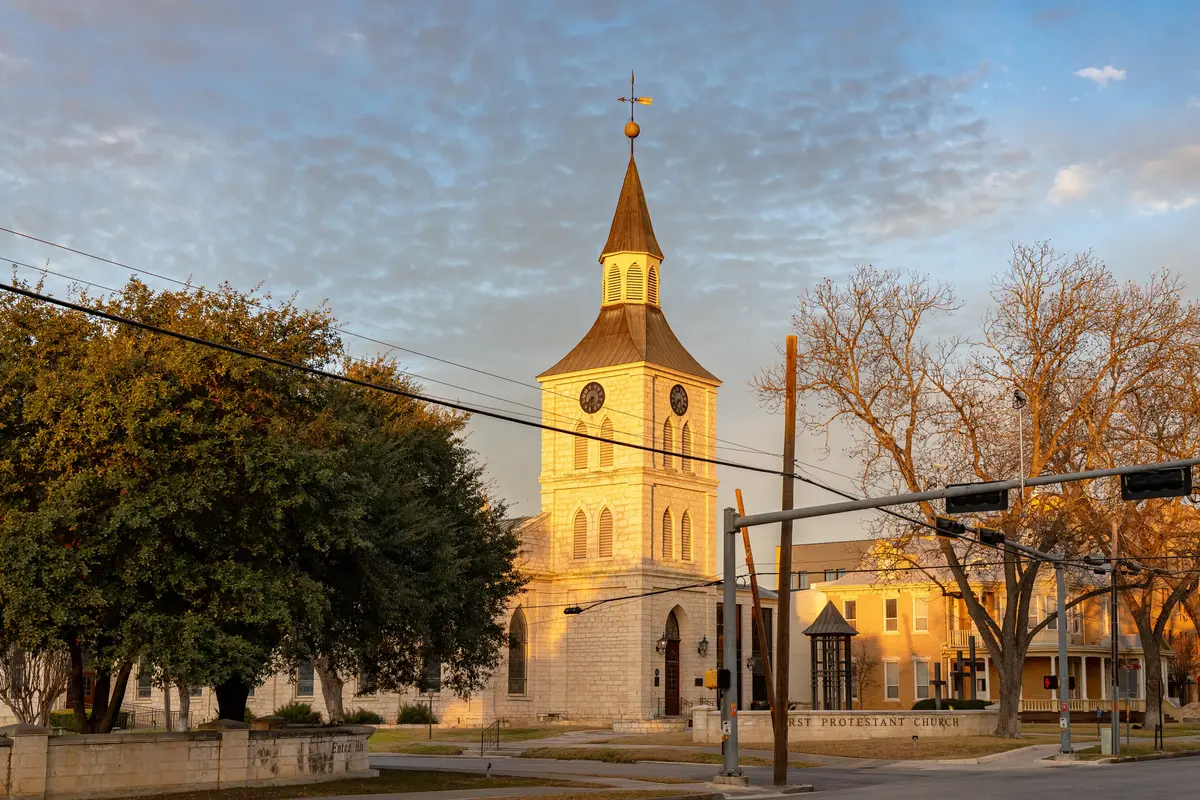
New Braunfels is the most fully realized city on this list for remote workers who want a complete local life. At its scale — the 33rd-largest incorporated city in Texas — it carries the kind of infrastructure investment that gives remote workers real provider options, and its roster of restaurants, parks, the Guadalupe River, and the historic Gruene district means weekday cabin fever rarely builds. I-35 and SH-46 give commuters and frequent errand-runners genuine flexibility. The typical home price of $351,190 reflects all of that — this is not a city where you're paying a premium for nothing.
New Braunfels suits remote workers who want a genuinely active local life and are willing to pay for infrastructure rather than hunt for it. It has a character Schertz and Cibolo lack — an identity built around the river and the Hill Country edge, not just the proximity to San Antonio. Buyers on a tighter budget will look elsewhere, but those who prioritize quality of life alongside connectivity will find the trade-off worthwhile here.

Property Tax
8.7/10
out of 10
Airport Access
8.9/10
out of 10
Affordability
5.9/10
out of 10
Quality of Life
3.5/10
out of 10
Median Price
$315,578
2026 market price
Schertz sits at a sweet spot for remote workers who fly regularly and want to keep their carrying costs in check. Its property tax rate is on the lighter side for this region, which meaningfully affects what a typical home actually costs month to month — a real advantage worth pricing in before you compare it against cities that look cheaper at the surface. The 84th-largest incorporated city in Texas, it has the population base to support solid broadband options, and I-35 and I-10 both run through it, keeping the airport within easy reach. The typical home is $315,578.
The honest caveat about Schertz is that its local amenity list is thin — most of what makes weekend life satisfying here requires a trip toward San Antonio. Buyers who work from home but don't need their city to entertain them, and who value a favorable tax burden and airport convenience over a walkable restaurant scene, will find Schertz a disciplined, practical choice. The 55+ community of Scenic Hills also makes it worth a look for older remote workers.
Property Tax
5.6/10
out of 10
Airport Access
9.5/10
out of 10
Affordability
8.1/10
out of 10
Quality of Life
2/10
out of 10
Median Price
$243,003
2026 market price
Converse makes a strong case for remote workers whose priority is keeping housing costs low and airport runs short. At $243,003 for a typical home, it sits well below most Bexar County neighbors, and its position just off I-10 and Loop 1604 makes San Antonio International Airport genuinely easy to reach — a real advantage for anyone whose remote work still involves occasional in-person travel. It is the 114th-largest incorporated city in Texas, which puts it in a range where broadband availability is decent but not as diverse as larger cities; confirming which providers reach your specific address before buying is the right move.
Converse is honest about what it trades away for that affordability: local amenities within city limits are sparse, and most dining, entertainment, and errand-running will pull you toward greater San Antonio. It suits remote workers who spend their days at a desk, want a low home price with easy airport access, and are comfortable building their social and recreational life outside the city's own boundaries.
Property Tax
5.5/10
out of 10
Airport Access
10/10
out of 10
Affordability
8.0/10
out of 10
Quality of Life
3/10
out of 10
Median Price
$244,551
2026 market price
Live Oak is one of the closest cities on this list to San Antonio International Airport, and for remote workers who fly frequently that proximity carries real daily-life value — no early alarm panic, no traffic gambling before a flight. A small city at the 182nd-largest incorporated city in Texas, buyers should verify internet service options at the address level before committing. The typical home price of $244,551 is one of the more accessible entry points in Bexar County, though the property tax rate sits slightly above the regional midpoint and is worth factoring into monthly cost estimates. I-35 and Loop 1604 provide the main access corridors.
Live Oak suits price-sensitive remote workers who want to be embedded in the broader San Antonio metro without paying for it and who don't need much from their immediate city — the local amenity list is thin. Buyers who fly even occasionally will appreciate the airport's proximity more than almost anywhere else in this comparison. Those who want a rich walkable local life on their doorstep will find it lacking.
Property Tax
10/10
out of 10
Airport Access
7.1/10
out of 10
Affordability
1/10
out of 10
Quality of Life
8.7/10
out of 10
Median Price
$562,046
2026 market price
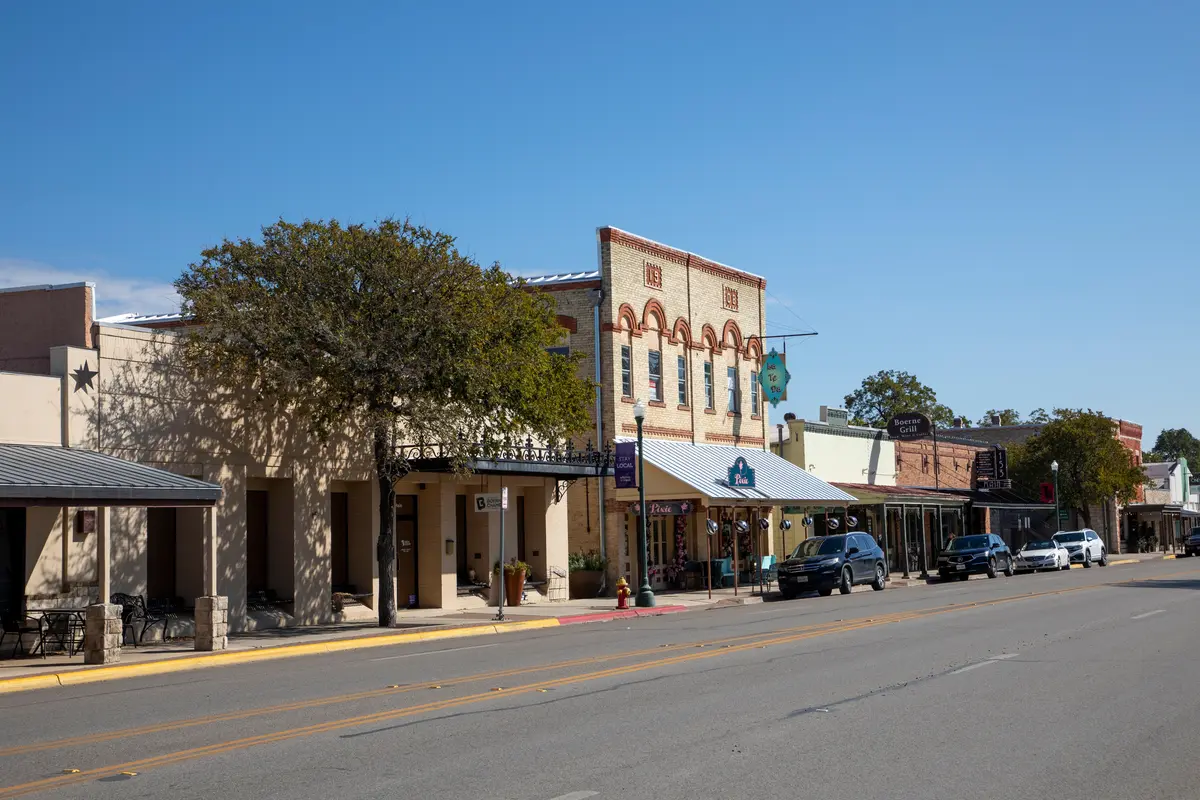
Boerne is the Hill Country city on this list, and it reads differently from every other entry here. Its property tax rate is on the lighter side for the entire region — genuinely favorable for homeowners — but those savings are attached to a typical home price of $562,046, which reflects persistent demand from buyers who want the Hill Country aesthetic, I-10 access, and a local life built around an active Main Street and outdoor landscape. At the 140th-largest incorporated city in Texas, it has a mid-sized town character, and buyers should confirm broadband availability at the address level, particularly outside the core.
Boerne suits remote workers for whom the Hill Country setting is a genuine priority and who have the budget to buy into it. The quality of life here — the local dining, the trails, the character of downtown — is real and not overrated. What it is not suited for is buyers who need strong infrastructure certainty on day one or who are stretching to afford their home; a heavier monthly carrying cost attached to a high purchase price is the defining trade-off.
Property Tax
4.2/10
out of 10
Airport Access
6.7/10
out of 10
Affordability
7.1/10
out of 10
Quality of Life
6/10
out of 10
Median Price
$274,107
2026 market price
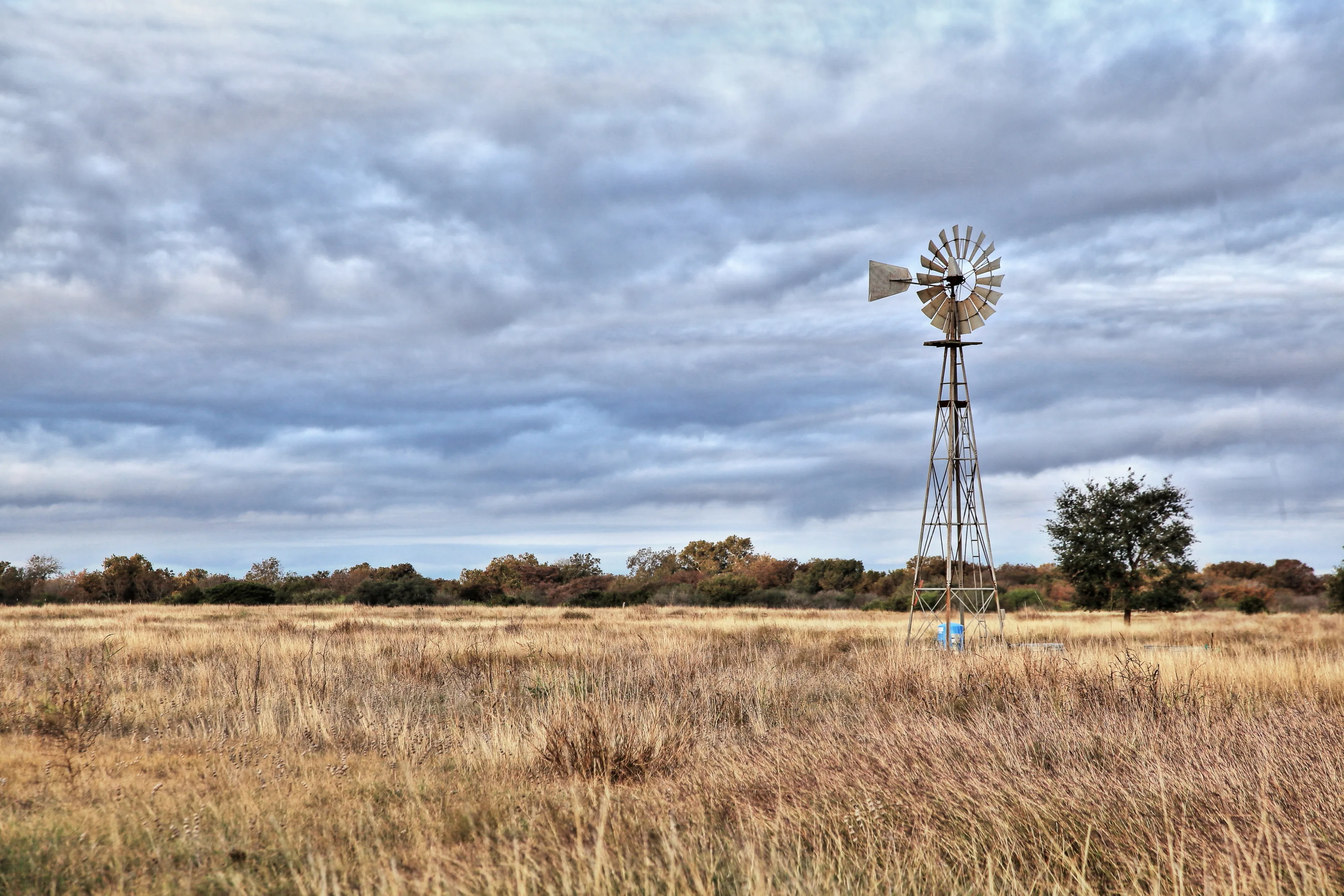
Seguin is a working city with a real local identity — the Guadalupe River runs through it, it has a historic downtown square, and at the 93rd-largest incorporated city in Texas it has enough population base to support reasonable connectivity for most remote-work setups. The typical home price of $274,107 puts it in accessible territory, driven by local wages and a working-town economy rather than resort or corridor demand. The honest counterweight is the property tax rate, which lands on the heavier end for this region and adds meaningful carrying cost on top of the home price — buyers who focus only on the purchase price and miss the tax burden sometimes feel it later.
Seguin suits remote workers who want a small city with genuine local character and a price point shaped by local economics rather than metro spillover. It is a more independent choice than the I-35 corridor suburbs — farther from the metro's gravity, with its own restaurants, parks, and civic life. Those who want the shortest possible airport run or the most robust infrastructure options will find those attributes stronger elsewhere on this list.
Property Tax
5.9/10
out of 10
Airport Access
8.4/10
out of 10
Affordability
5.4/10
out of 10
Quality of Life
3/10
out of 10
Median Price
$336,323
2026 market price
Cibolo is a fast-growing city between San Antonio and Seguin, built largely on new residential development along the I-35 and I-10 corridors. At the 98th-largest incorporated city in Texas, it has enough population now to support decent broadband availability, and the airport is reachable without battling deep urban traffic. The typical home price of $336,323 is above many other cities on this list, and the property tax rate is above the regional sweet spot — meaning buyers should price both carefully into their monthly budget before falling for a new-construction asking price.
Cibolo suits remote workers who want new or newer construction, a suburban environment, and easy interstate access, and who lean on San Antonio for entertainment and amenities rather than expecting them at the front door. Its local roster of landmarks and restaurants is thin for its price point. Buyers who want more return on that premium in terms of local daily life will find New Braunfels or Boerne a more complete offer.
Property Tax
5.5/10
out of 10
Airport Access
9.7/10
out of 10
Affordability
7.4/10
out of 10
Quality of Life
2.5/10
out of 10
Median Price
$264,962
2026 market price
Leon Valley is a small, fully enclosed city inside the San Antonio metro, sitting just off Loop 410 and SH-16. At the 228th-largest incorporated city in Texas, it is genuinely compact, and remote workers should verify broadband options at the specific address level before buying — at this scale, provider choice tends to be limited rather than metro-grade. The typical home price of $264,962 is meaningfully below the metro norm, and airport access is outstanding — San Antonio International is essentially a short straight shot from most Leon Valley addresses. The property tax rate sits slightly above the regional midpoint.
Leon Valley suits buyers who want to stay inside the San Antonio footprint, keep home costs down, and have the airport nearby for frequent travel — but who are comfortable driving into San Antonio proper for most of their dining and entertainment. It is not a city that generates its own gravitational pull; it works best as a home base for people whose social and professional worlds are largely elsewhere.
Property Tax
3.9/10
out of 10
Airport Access
9.7/10
out of 10
Affordability
7.3/10
out of 10
Quality of Life
3/10
out of 10
Median Price
$266,030
2026 market price
Universal City sits on the northeastern edge of the metro, adjacent to Randolph Air Force Base, and its position gives it outstanding proximity to San Antonio International Airport — a short, uncomplicated trip for frequent flyers. At the 155th-largest incorporated city in Texas, it has a mid-range infrastructure character; broadband is adequate for most remote setups but worth confirming at the address before signing. The typical home price of $266,030 is accessible relative to the broader metro. The property tax rate, however, is on the higher end of this region and deserves honest attention when calculating monthly cost.
Universal City suits remote workers whose main priorities are keeping the home purchase price down and staying close to the airport, and who are comfortable that most of their off-hours life will be built around greater San Antonio rather than walkable local options. The local amenity list is slim. Buyers who want a richer on-the-ground lifestyle in their own city, or a lighter tax burden, will find stronger fits elsewhere on this list.
Property Tax
10/10
out of 10
Airport Access
6.7/10
out of 10
Affordability
4.9/10
out of 10
Quality of Life
4/10
out of 10
Median Price
$357,825
2026 market price
Floresville is the county seat of Wilson County, a small town with a genuine agricultural character sitting southeast of San Antonio. Its property tax rate is among the most favorable in this entire comparison — a real and durable financial advantage for homeowners that makes the monthly carrying cost lighter than almost anywhere else here. The typical home price of $357,825 is moderate for what it buys in terms of land and small-town lifestyle. At the 271st-largest incorporated city in Texas, however, internet infrastructure is genuinely limited, and remote workers should treat provider confirmation at the address level as a non-negotiable step before committing.
Floresville suits remote workers who have confirmed reliable broadband at their specific address, want a very low property tax burden, and are drawn to a quieter, more rural pace of life. The airport run is a longer haul than it is from most Bexar County cities on this list, so it works best for those who fly occasionally rather than often. Buyers who need metro-grade infrastructure certainty or a short airport commute should look toward the Bexar County cities instead.
Property Tax
3.6/10
out of 10
Airport Access
9.3/10
out of 10
Affordability
6.7/10
out of 10
Quality of Life
3.5/10
out of 10
Median Price
$287,687
2026 market price
Selma is a small city north of San Antonio where the airport is genuinely close — a meaningful daily-life convenience for anyone who travels for work. At the 223rd-largest incorporated city in Texas, provider options tend to be more limited than in the larger nearby suburbs, and confirming broadband at a specific address before buying is the right discipline here. The typical home price of $287,687 is below many comparable Bexar County addresses. The property tax rate, however, is on the higher end of this comparison and adds real carrying cost that buyers sometimes underestimate when focused on the purchase price.
Selma suits remote workers who want a low purchase price, easy airport access, and a quiet suburban base without requiring much from the city itself — local dining and entertainment options are limited, and residents rely heavily on San Antonio. The high property tax burden relative to what the city itself offers is the sharpest trade-off here. Buyers who want more from their local environment for a similar price point have options worth exploring elsewhere on this list.
Property Tax
5.8/10
out of 10
Airport Access
5.1/10
out of 10
Affordability
7.8/10
out of 10
Quality of Life
6/10
out of 10
Median Price
$249,933
2026 market price
Gonzales sits at the outer edge of this region, a genuine small town with its own civic identity built around a historic courthouse square and the Guadalupe River. The typical home price of $249,933 reflects that distance from the metro core, and the airport trip is a longer haul — this is a city that works for remote workers who travel occasionally rather than constantly. At the 318th-largest incorporated city in Texas, broadband infrastructure is limited, and confirming which providers reach a specific address is the most important pre-purchase step a remote worker can take here. The property tax rate is slightly above mid-range for the region.
Gonzales suits remote workers who genuinely want small-town life — not suburban proximity to San Antonio, but an independent community with its own restaurants, river parks, and local events — and who have either confirmed reliable broadband or have a backup plan. The lifestyle it offers at its price point is distinctive. Buyers who need robust infrastructure certainty, a short airport run, or easy access to metro amenities will find the distance a meaningful daily friction.
Property Tax
2/10
out of 10
Airport Access
6.3/10
out of 10
Affordability
7.5/10
out of 10
Quality of Life
3/10
out of 10
Median Price
$260,145
2026 market price
Pleasanton is the county seat of Atascosa County, a small city with a rural south Texas character that sits well outside the Bexar County infrastructure footprint. Its property tax rate is on the higher end for Texas statewide, meaning the monthly carrying cost undercuts some of the purchase-price advantage. At the 230th-largest incorporated city in Texas, internet infrastructure is limited at small-town scale, and remote workers should treat address-level provider confirmation as a prerequisite — not an afterthought. The typical home price of $260,145 reflects that distance and rural character.
Pleasanton suits a narrow profile of remote worker: someone who has confirmed reliable broadband, rarely flies, is drawn specifically to a rural south Texas pace of life, and is disciplined about pricing in the property tax burden alongside the home price. Those who can run that checklist honestly and come out satisfied will find it genuinely affordable and genuinely quiet. Those who need airport access, metro infrastructure, or a richer local amenity scene will find the trade-offs stack up faster than the price tag suggests.
Property Tax
3.9/10
out of 10
Airport Access
10/10
out of 10
Affordability
1/10
out of 10
Quality of Life
4/10
out of 10
Median Price
$739,289
2026 market price
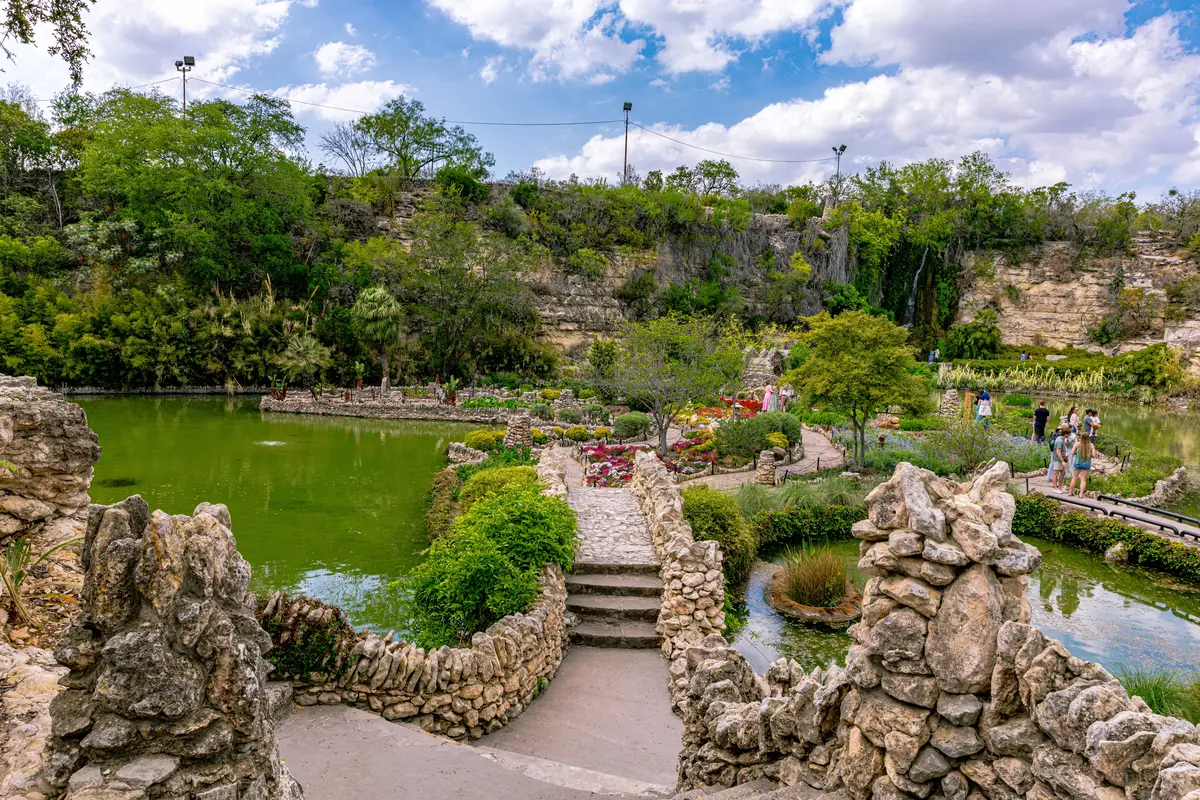
Alamo Heights is an affluent enclave fully surrounded by San Antonio, with outstanding proximity to the airport and a walkable character that most cities on this list cannot match. At the 307th-largest incorporated city in Texas, it is one of the smallest by population in this comparison, and internet provider options at small-city scale tend to be more limited than in the larger suburbs — worth verifying at the address. The typical home price of $739,289 is driven by the neighborhood's historic character, location, and school district. The property tax rate lands near the high end of the regional range, which compounds meaningfully against that purchase price.
Alamo Heights suits remote workers for whom neighborhood prestige, airport proximity, and walkable urban character are the primary values — and for whom the purchase price and carrying cost are manageable. It is not a city that competes on affordability, and the local amenity list within city limits is modest relative to its price. Buyers who want a lower financial footprint while still staying close to the airport have options in the Bexar County suburbs; buyers who want this specific character at this specific address are paying for something real.
The San Antonio metro rewards remote workers who match the right city to their actual working style. If you fly often and want a full local life, the cities closest to the airport with stronger infrastructure earn their price premiums. If you rarely fly and can verify broadband at the address level, the outlying towns offer genuine value — just go in with eyes open on property taxes, which vary more across this region than most buyers expect.
Want to see what's for sale in these neighborhoods?
Sign up for listing alerts — get notified when homes hit the market.
Get Listing Alerts →
Frequently Asked Questions
Which San Antonio metro city offers the best combination of internet infrastructure and quality of life for remote workers?
New Braunfels is the strongest all-around option for remote workers who want both solid infrastructure and a rich local life. Its size supports real provider competition and infrastructure investment, and it has the most diverse roster of parks, restaurants, and outdoor activities in the region. Boerne is a strong alternative for those drawn to Hill Country character, though buyers there should confirm broadband at the address level before committing, particularly outside the town center.
How much does property tax vary across these cities, and why does it matter for remote workers?
Property tax is the primary recurring cost of homeownership in Texas since there is no state income tax, and the rates across this list vary enough to meaningfully change a monthly budget. Cities like Floresville and Schertz sit on the more favorable end of the range, while Universal City, Selma, and Pleasanton carry rates on the higher end statewide. Because rates are set by overlapping local districts — county, city, school district, and sometimes a municipal utility district — two homes on the same street can carry different rates. Always confirm the exact rate for a specific address with the county appraisal district before making an offer.
Which cities in this comparison are best for remote workers who fly frequently for work?
Live Oak, Leon Valley, Universal City, and Alamo Heights all sit within a short, uncomplicated drive of San Antonio International Airport — making them genuinely practical for people who board a plane regularly. Schertz and Converse are also easy airport runs. Cities at the outer edge of the region — Gonzales, Floresville, Pleasanton, and Seguin — involve a longer trip and work better for those who travel occasionally rather than often.
Is rural living in cities like Gonzales or Pleasanton realistic for a remote worker, or will internet connectivity be a problem?
It can work, but it requires more due diligence than a suburban purchase does. At the population scale of Gonzales and Pleasanton, provider competition is limited compared to larger cities, and coverage can vary block by block. The right step before buying in either city is to contact providers directly and, ideally, test service at the specific address. Buyers who confirm reliable connectivity and rarely need to fly will find genuine value in both places; those who discover a coverage gap after closing are in a difficult position.
Which city in the San Antonio metro offers the best value for remote workers who do not need to fly often?
Seguin and Gonzales both offer accessible home prices, genuine small-city character, and a reasonable quality of life for buyers who are not anchored by airport proximity. Seguin's property tax rate is worth pricing carefully, but the city has a real local identity with a historic square and river access. Gonzales sits farther out and has a more limited infrastructure profile, but at its price point it appeals to buyers who have confirmed broadband and genuinely want a quieter, more independent lifestyle. Converse and Live Oak are worth considering for buyers who want lower prices without leaving the Bexar County infrastructure footprint.
Moving to Texas?
Tell us what you need help with and we'll connect you with local resources.

Todd Davidson
About the Author
Todd Davidson is the founder of The Move Genie, a premier digital resource offering in-depth city guides, neighborhood profiles, and localized market insights for communities nationwide. Drawing on an extensive background in home financing and real estate, he established the platform to streamline the relocation process, helping families make confident, data-driven decisions when comparing new areas.